Is Antalya Worth Visiting? An Honest, No-Fluff Assessment
Antalya draws over 10 million tourists a year, but is it actually worth your time and money? This guide cuts through the resort-brochure hype to give you a clear-eyed look at what the city delivers, what it oversells, and who it suits best.
Plan and book this trip
Tools from our partner Travelpayouts help you compare flights and hotels. If you book through them, we may earn a commission at no extra cost to you.
Flights
Hotels map
TL;DR
- Yes, Antalya is worth visiting for most travelers, but not for the same reasons — beaches, Roman ruins, waterfalls, and mountain canyons all coexist within an hour of the city center.
- April to June and September to October are the sweet spots: manageable heat, thinner crowds, and lower prices than July-August peak. See the best time to visit Antalya for a month-by-month breakdown.
- It is not just a beach resort. Kaleiçi old town, the Antalya Museum, Hadrian's Gate, and Perge ruins offer serious historical depth.
- Budget travelers can do it cheaply; luxury seekers have world-class all-inclusive resorts in Belek and Lara. The city genuinely works across price points.
- The biggest honest drawback: some beach areas and the resort strip around Lara can feel generic and overcrowded in July and August.
What Antalya Actually Is (And What It Isn't)
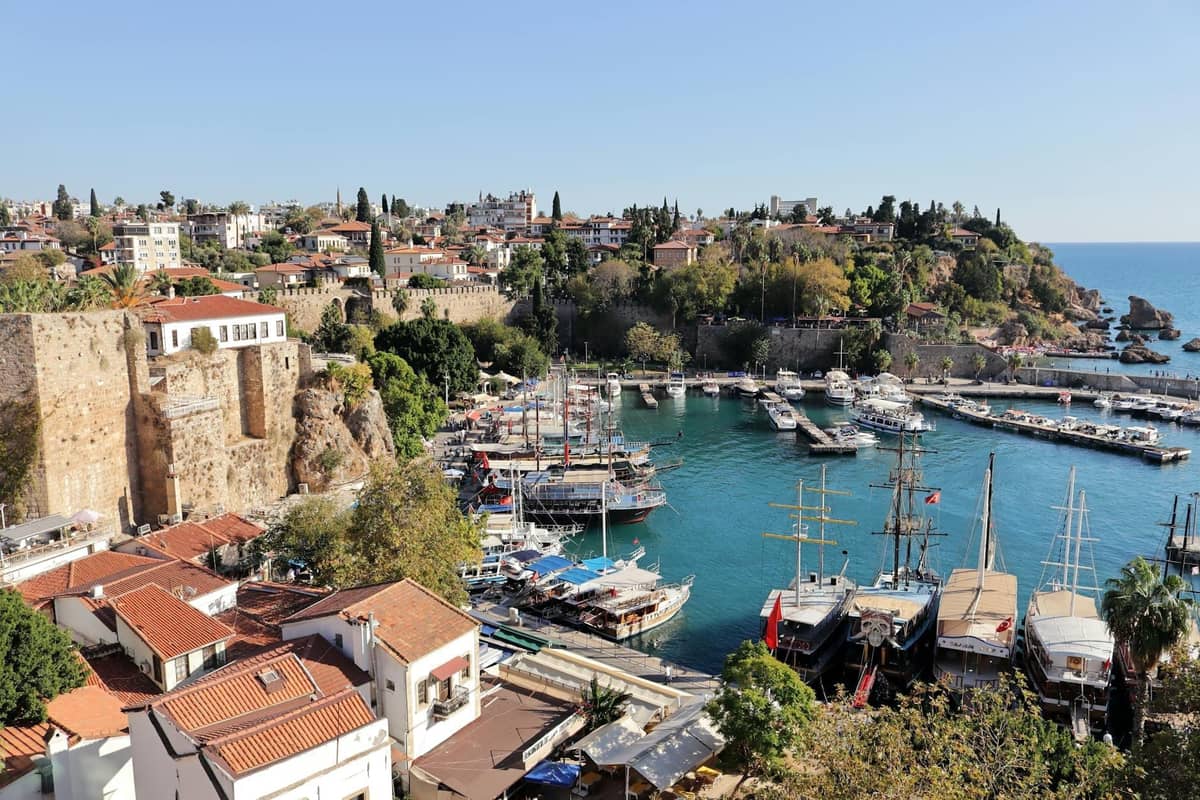
Antalya is the capital of Antalya Province on Turkey's southern Mediterranean coast, a city of roughly 1.5 million residents that anchors what is broadly called the Turkish Riviera. It sits on a low cliff overlooking a Roman-era harbor, with the Taurus Mountains rising sharply to the north. That geography alone explains a lot: you can swim in the sea in the morning, walk Roman streets at midday, and stand beside a canyon waterfall by late afternoon.
The most common misconception is that Antalya is just a sun-and-sand package holiday destination. It is also that, especially in Lara and Belek, but reducing Antalya to its all-inclusive strip is like judging Istanbul by its airport hotels. The city's old quarter, Kaleiçi, sits inside intact Roman walls and contains a working harbor, Ottoman mosques, medieval towers, and one of Turkey's top archaeological museums.
ℹ️ Good to know
Don't confuse Antalya with Alanya (130 km east) or Antakya (a completely different city in Hatay Province near the Syrian border). All three are distinct destinations with different characters.
The Case For Visiting: What Antalya Gets Right
Few cities on the Mediterranean can match Antalya's sheer variety. Within the city limits or a short drive, you have blue-flag beaches, 2,000-year-old ruins, waterfalls, mountain-and-sea viewpoints, and a genuinely atmospheric old town. That density of options is rare, and it is the main reason the city attracts over 17 million tourists annually despite having a resident population of around 1.5 million.
- Historical depth Hadrian's Gate (built 130 AD), the Yivli Minaret, Hıdırlık Tower, and the sprawling ruins at Perge and Aspendos are all accessible as day trips. The Antalya Museum holds one of Turkey's finest collections of Roman-era statuary.
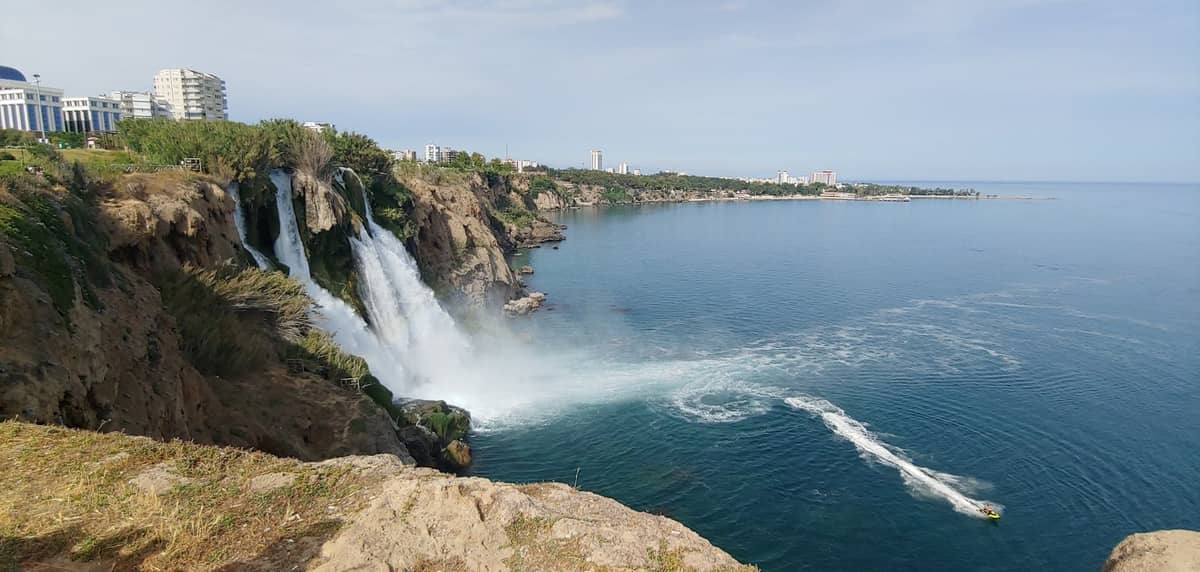
- Natural variety Düden Waterfalls (both upper and lower), Köprülü Canyon for white-water rafting, and the beaches of Konyaaltı and Lara give you wildly different landscapes within 30-60 minutes of the city center.
- Price competitiveness Compared to equivalent Mediterranean destinations like the Amalfi Coast or the Greek islands, Antalya delivers significantly more value. Turkish Lira exchange rates have historically favored European and North American visitors, making dining, transport, and activities affordable.
- Climate With over 300 sunny days per year, the window for a comfortable visit is long. Even winter stays are viable for sightseeing, though the sea drops to temperatures most people won't want to swim in.
- Accessibility Antalya Airport (AYT) connects to dozens of European cities via direct charter and scheduled flights, often at competitive prices. The airport sits roughly 13 km northeast of the city center.
For families, the range is especially strong. Land of Legends theme park, the Antalya Aquarium (one of the world's largest tunnel aquariums), and the beaches of Konyaaltı and Lara all serve different ages well. See our dedicated Antalya with kids guide for specifics.
The Honest Drawbacks: What Antalya Gets Wrong
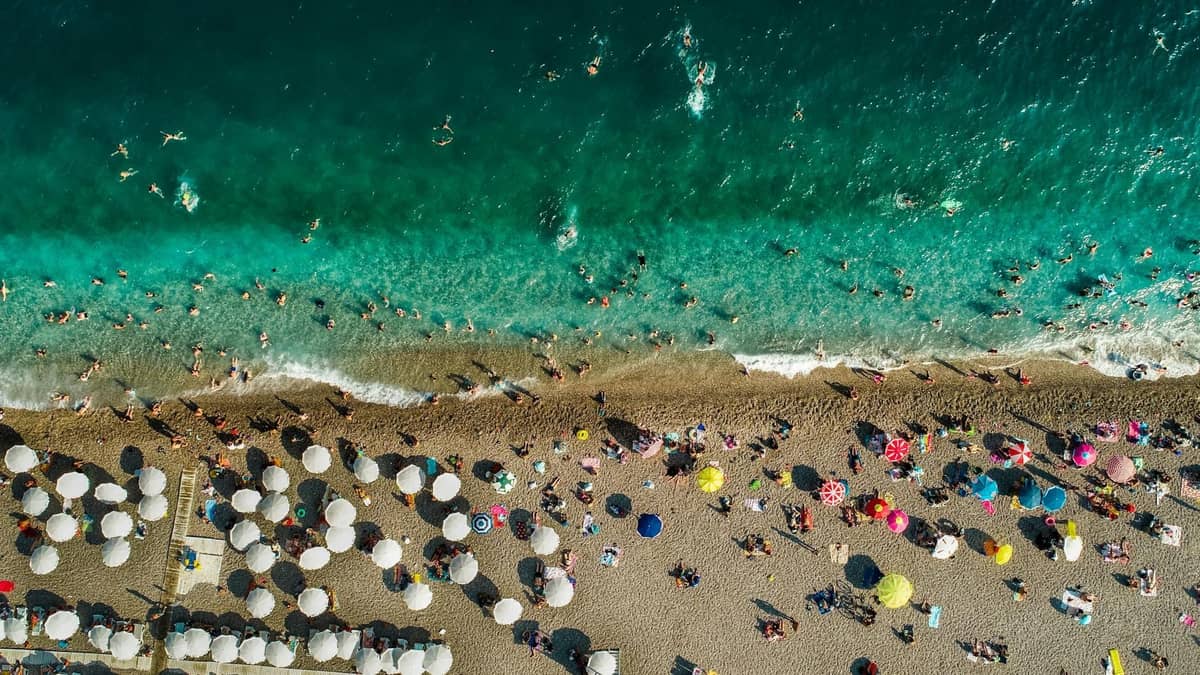
No fair assessment skips the negatives. July and August in Antalya are genuinely oppressive. Temperatures regularly sit above 35°C (95°F), crowds at popular sites spike, and beach access at Lara and Konyaaltı becomes a contact sport. If you are heat-sensitive or dislike crowds, high summer is a legitimate reason to reconsider the timing rather than the destination.
The all-inclusive resort belt around Lara is, frankly, an international bubble. You could spend a week at a large resort hotel and see almost nothing of actual Turkish culture, food, or daily life. That is a feature for some travelers, not a flaw, but if you want cultural immersion, you need to make a deliberate effort to leave the resort strip and spend time in Kaleiçi or the local markets.
⚠️ What to skip
Tourist-oriented restaurants lining Kaleiçi's harbor can charge two to three times local prices for mediocre food. Walk two streets inland from the waterfront and quality improves sharply while prices drop. Check our guide on common scams and overpriced traps before you go.
Some travelers find the sheer scale of tourism infrastructure — carpet shops, tour touts, souvenir stalls — in Kaleiçi tiresome. It is present, though more manageable than Istanbul's Grand Bazaar area. Reading up on Antalya scams and safety tips before you arrive will save you money and frustration.
Who Should (and Shouldn't) Visit Antalya
Antalya works very well for certain types of travelers and less well for others. Here is a direct breakdown.
- History and archaeology enthusiasts Perge, Aspendos, Termessos, and Side are all within day-trip range. The density of ancient sites around Antalya is exceptional, rivaling much better-known destinations in Greece and Italy.
- Couples seeking a mix of beach and culture The combination of a charming old town, good restaurants, boat trips, and easy access to beaches makes it a strong pick. Our Antalya for couples guide covers the best options.
- Budget travelers Turkey's cost of living and favorable exchange rates make Antalya one of the more affordable Mediterranean beach destinations. Street food, public transport, and local restaurants are all genuinely cheap.
- Package holiday seekers The all-inclusive infrastructure around Belek and Lara is world-class if that is what you want. Just know you are trading local experience for convenience.
- Travelers wanting 'undiscovered' Europe Antalya is not that. It is a major, well-trodden international resort city. If you want untouched, look elsewhere.
💡 Local tip
Three days covers the city core (Kaleiçi, the museum, beaches, waterfalls). Budget 7 nights if you want to add Perge, Aspendos, a boat trip, and at least one canyon or waterfall excursion. Ten days gives you comfortable room for day trips to Side or Termessos.
When to Go: Seasons, Crowds, and Climate Realities
Antalya has a classic Mediterranean climate: hot, dry summers and mild, rainy winters. The city claims over 300 sunny days per year, which is accurate but can be misleading — 300 sunny days includes many days in November and February that are pleasant for walking but too cold for swimming.
April through June is arguably the best window for most travelers. Temperatures sit between 20-30°C, the sea is warm enough for swimming by late May, and crowds are noticeably lighter than the summer peak. September and October are equally good, with the added bonus of sea temperatures that remain warm from months of summer heat. For a full breakdown, the best time to visit Antalya guide covers each month with crowd and weather context.
Winter (December through February) is genuinely viable for a sightseeing-focused trip. Ancient sites like Termessos and Perge are far more atmospheric without summer heat and crowds. The trade-off is that some beach facilities and smaller restaurants close, and there is a real chance of rain. Still, average winter temperatures hover around 10-15°C, which is mild by northern European standards.
What to Actually Do: Getting Beyond the Beach
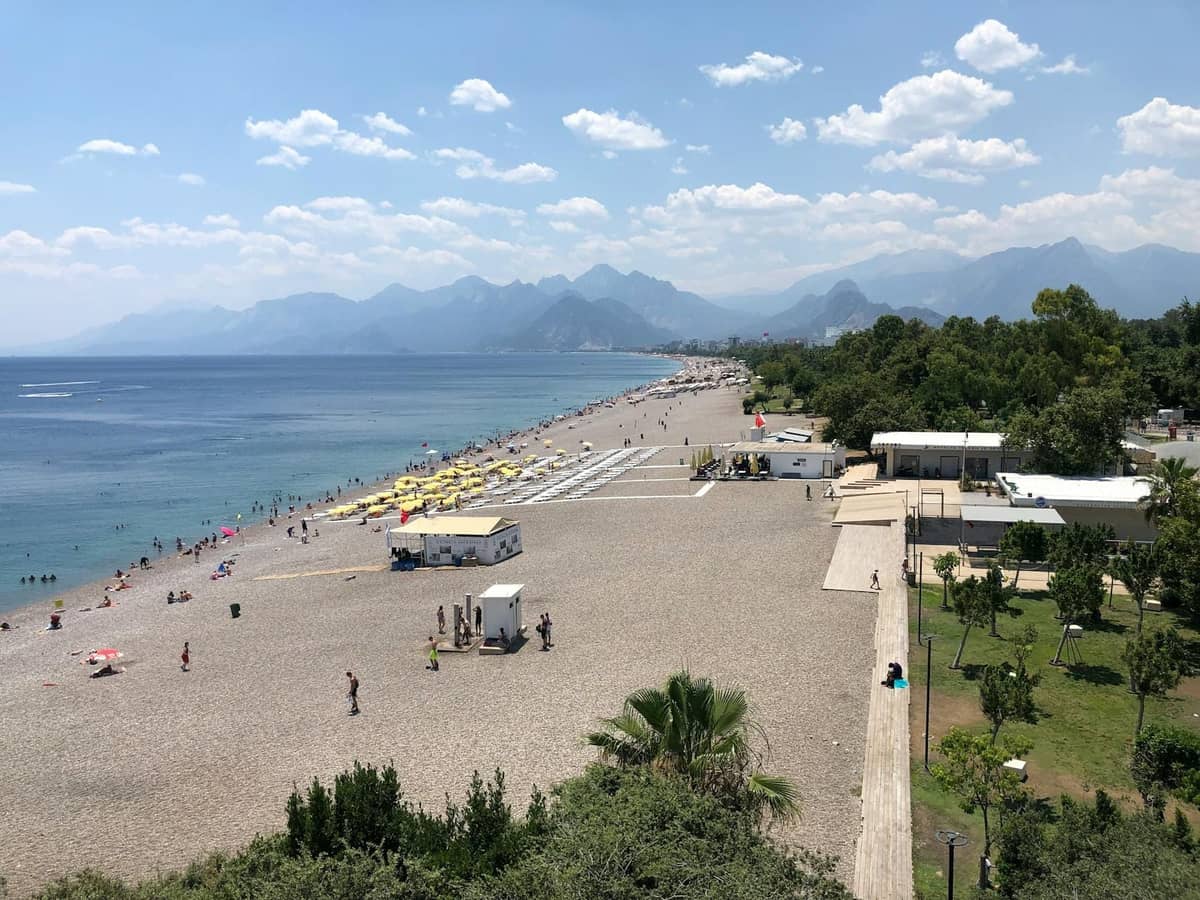
The beach case sells itself. Konyaaltı Beach is a long pebbly stretch backed by the Taurus Mountains — the mountain backdrop is genuinely dramatic. Lara Beach has finer sand and calmer water but is more developed and commercialized. Both are free to access, though sun lounger rentals add cost.
Beyond the water, the Kaleiçi old town walking tour is a half-day well spent. Hadrian's Gate marks the entrance to the old quarter, the Yivli Minaret defines its skyline, and the Antalya Museum is a legitimate world-class institution that most visitors spend two to three hours in.
For day trips, the ancient theater at Aspendos is one of the best-preserved Roman theaters on Earth, and the hillside city of Termessos (about 30 km northwest of the city) rewards visitors with dramatic mountain scenery and almost no crowds even in peak season. The day trips from Antalya guide covers logistics and priorities for both.
✨ Pro tip
The Düden Waterfalls are split into two separate sites: the Upper Düden Falls are in a park inland, while the Lower Düden Falls drop directly into the sea from a cliff face and are best viewed from a boat tour. Most visitors only see one. Budget time for both.
Active travelers have strong options too. White-water rafting at Köprülü Canyon runs through one of Turkey's most scenic river gorges and is a full-day excursion from the city. Hiking the Lycian Way, boat tours along the coast, and the Tünektepe cable car for panoramic views above the city round out the options. None of these require a rental car if you book through a tour operator.
FAQ
Is Antalya worth visiting for just 3-4 days?
Yes, three to four days is enough to cover the city highlights: Kaleiçi old town, the Antalya Museum, one or both Düden Waterfalls, and beach time. You won't have time for major day trips like Aspendos or Termessos at that length, so extend to 5-7 days if ancient ruins are a priority for you.
Is Antalya better than other Turkish Mediterranean resorts?
It depends what you want. Antalya city is better for history and variety than Alanya or Marmaris. Kaş is smaller and more intimate if you want a relaxed alternative. Fethiye offers better access to the Turquoise Coast. Antalya's main advantage is that it functions as a proper city alongside being a resort, giving you more options in one place.
How safe is Antalya for tourists?
Antalya is generally considered safe for tourists. Petty theft exists in crowded areas as it does in any major tourist city, but violent crime against visitors is uncommon. Standard precautions apply: watch your wallet in markets, be skeptical of overly friendly strangers with business propositions, and keep copies of important documents.
Is Antalya expensive?
Relative to Western Europe, Antalya is affordable. Local restaurants, street food, public buses, and entrance fees to most sites are all low-cost. Where costs escalate is at waterfront tourist restaurants, resort hotels, and organized group tours. Budget travelers can live very comfortably; the all-inclusive hotel market caters to mid-range and luxury spenders.
Do I need to speak Turkish to visit Antalya?
No. English is widely spoken in tourist areas, hotels, restaurants, and tour operations. German is also commonly understood given the large number of German visitors. Outside tourist-heavy areas, basic Turkish phrases help, but are not required for a comfortable visit.