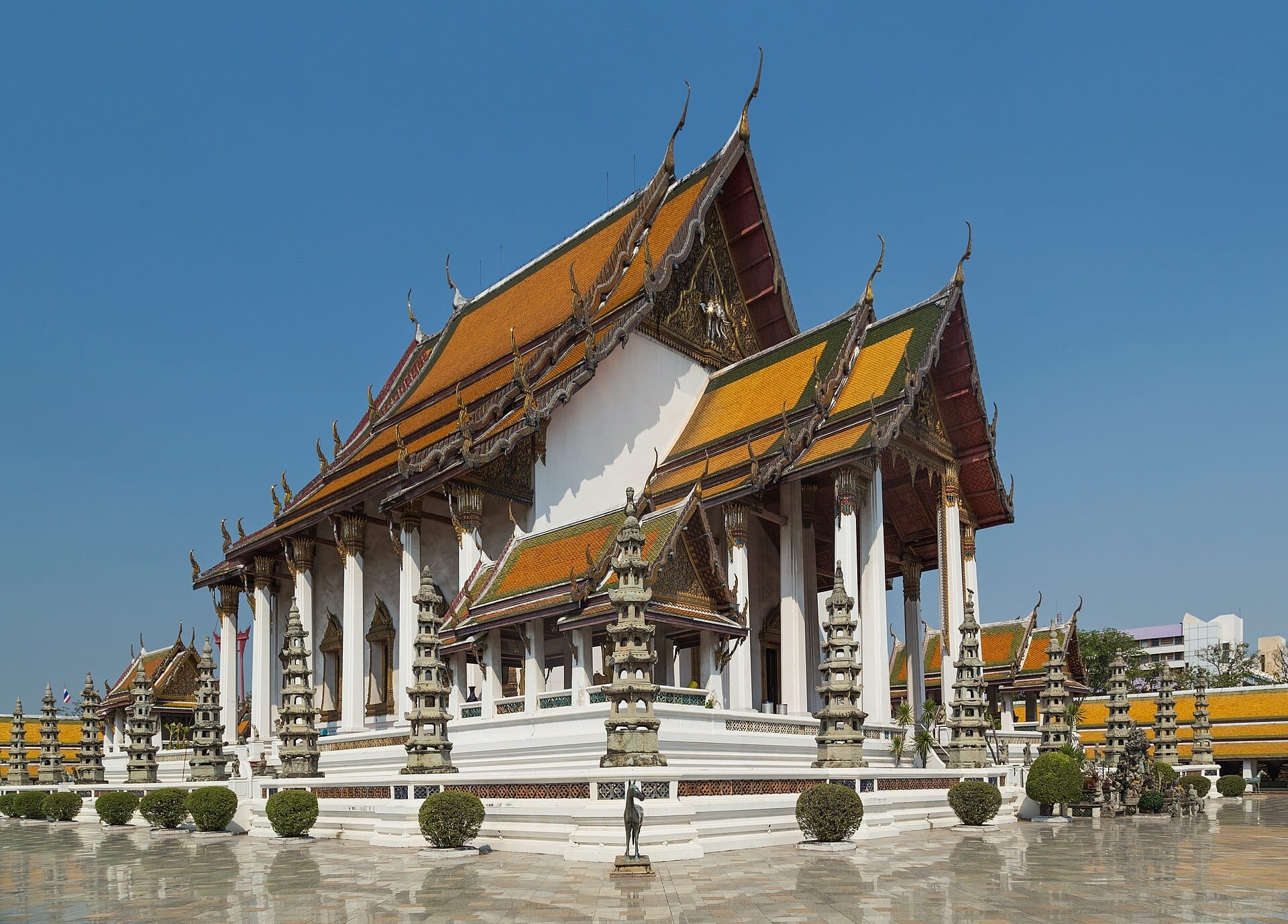
Rattanakosin is Bangkok's original royal island, the ceremonial and spiritual heart of the city since its founding in 1782. Packed onto a tight grid of canals and river bends, this district holds a concentration of temples, palaces, and museums that no other part of Bangkok can match. It rewards slow exploration on foot, but it also demands patience with crowds and heat.
Rattanakosin is the oldest part of Bangkok, a compact island of royal monuments, gilded temples, and open ceremonial plazas that has anchored Thai identity for over two centuries. The Grand Palace, Wat Pho, and Wat Phra Kaew all sit within walking distance of each other here, making this the single densest concentration of significant sights in the entire country. For first-time visitors to Bangkok, this neighborhood is essentially non-negotiable.
Orientation
Rattanakosin occupies an artificial island on the east bank of the Chao Phraya River in the western half of central Bangkok. King Rama I chose this site deliberately in 1782, positioning the new capital on a defensible bend in the river and then digging a canal, Khlong Banglamphu, to complete the island's eastern boundary. The result is a roughly rectangular zone about two kilometers wide and three kilometers deep, enclosed by water on all sides.
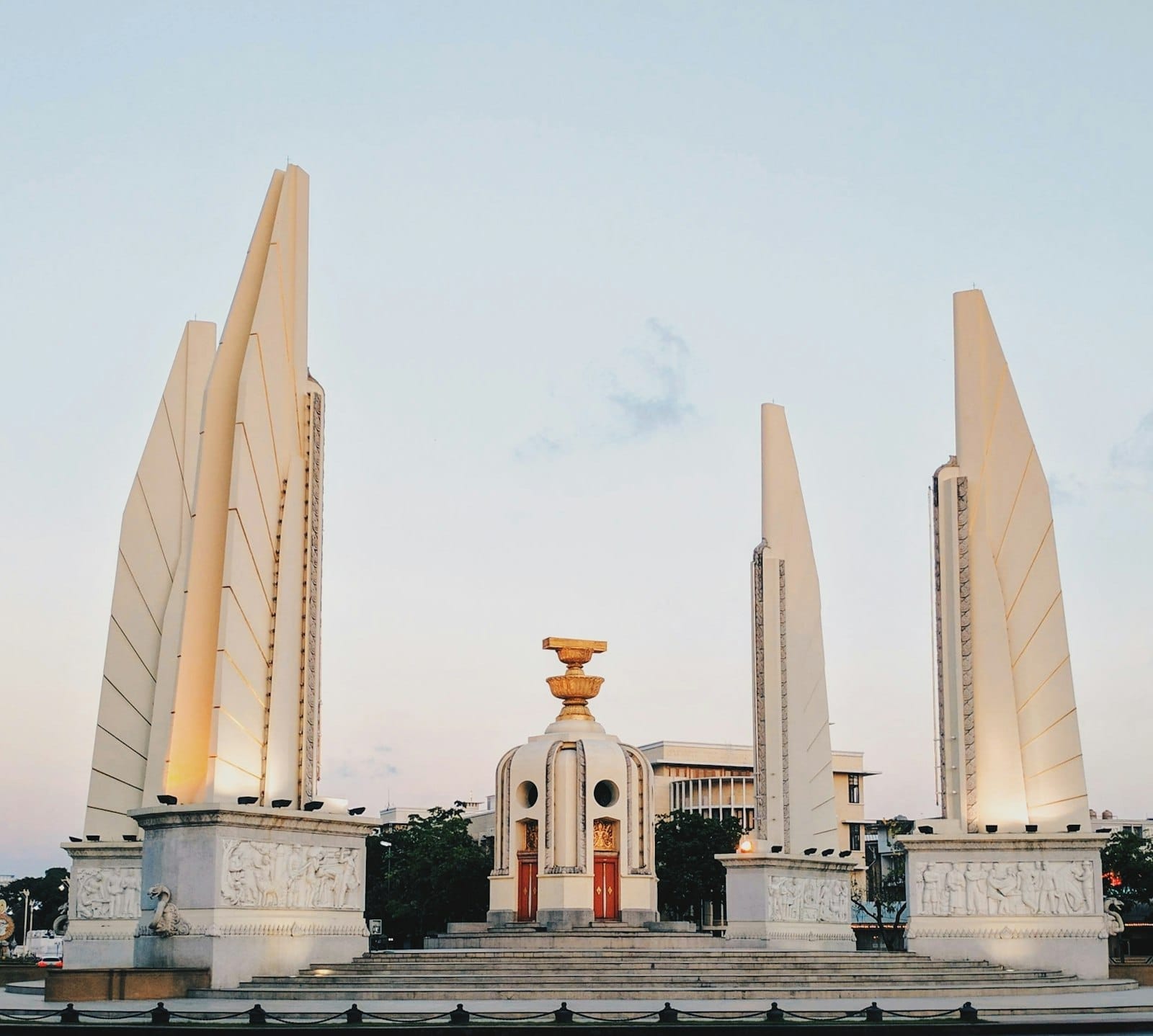
The neighborhood's northern boundary runs along Khlong Banglamphu, which separates it from Banglamphu and the Khao San Road backpacker strip. To the south, Khlong Ong Ang forms the edge before the city transitions toward Chinatown along Yaowarat Road. The Chao Phraya defines the entire western flank, with ferry piers at Tha Chang and Tha Tien providing the most atmospheric entry points from the river side. Rattanakosin connects eastward to the Democracy Monument area via Ratchadamnoen Avenue, one of Bangkok's few grand European-style boulevards, modeled loosely on the Champs-Élysées after a redesign in the 1930s.
There is no BTS Skytrain or MRT subway station within the island itself, which is a genuine inconvenience but also the reason the area has retained much of its character. The closest MRT station is Sanam Chai, which opened in 2019 as part of the Blue Line extension and sits just outside the island's southeastern corner, within a ten-minute walk of Wat Pho. Most visitors arrive by river ferry, tuk-tuk, or taxi, and then cover the interior entirely on foot.
ℹ️ Good to know
The MRT Sanam Chai station (Blue Line) is the most convenient rail access point, placing you within easy walking distance of Wat Pho and the Grand Palace complex. From the station, walk west along Sanamchai Road toward the river.
Character & Atmosphere
Rattanakosin runs on a completely different clock from the rest of Bangkok. The neighborhood comes alive earliest at the monks' alms-giving circuits, which begin around 6am near the major temples. By 7am, the streets around Sanam Luang (the large oval field north of the Grand Palace) see food vendors setting up, civil servants crossing the plaza on their way to government offices, and pigeons working the pavement in numbers that feel almost coordinated. The air at this hour is still relatively cool, the light is flat and golden, and the whole district feels genuinely functional rather than staged for tourism.
By 9am, tour buses begin arriving at Tha Chang pier and the mood shifts. The lanes between Tha Chang, the Grand Palace entrance, and Wat Pho fill with groups following guides holding colored umbrellas, vendors selling temple wraps to visitors in shorts who've been turned away at the gate, and the steady percussion of tuk-tuks idling outside. The heat intensifies rapidly after 10am, turning the open plaza around the palace complex into something that requires genuine commitment. By early afternoon, Sanam Luang is almost empty except for kite flyers and the occasional school group sheltering under the few trees along the edges.
The streets east of the palace complex, particularly around Thanon Maharat and the lanes that run down to the river, feel more like a working neighborhood even during peak tourist hours. Small herb and amulet markets operate along the outer wall of Wat Mahathat, drawing local buyers and Buddhist practitioners more than tourists. The closer you get to the river at Tha Tien, the more visible the everyday life of the area becomes: longtail boat operators, vendors selling river snacks, and the constant movement of the Chao Phraya express boats.
After dark, Rattanakosin empties out almost completely. Most of the major temples and attractions close by 5pm, and the neighborhood lacks the bars and restaurants that keep other parts of Bangkok animated into the night. The area around Khao San Road immediately to the north transforms completely after sunset, but Rattanakosin itself becomes quiet, with locals eating at small noodle shops near the canal and the illuminated spires of the Grand Palace and Wat Arun across the river providing a backdrop that the crowds of the day make easy to forget.
What to See & Do
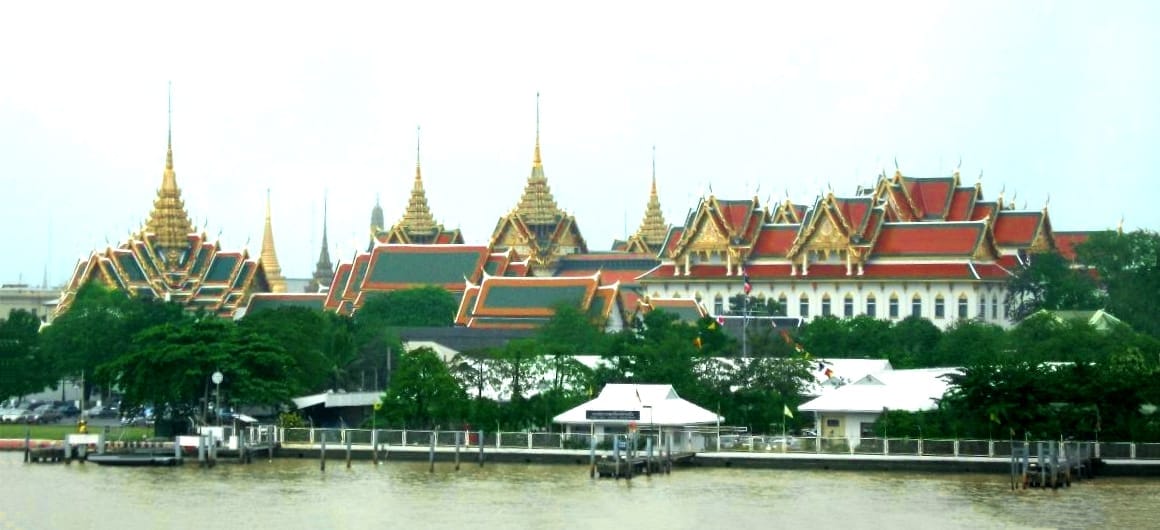
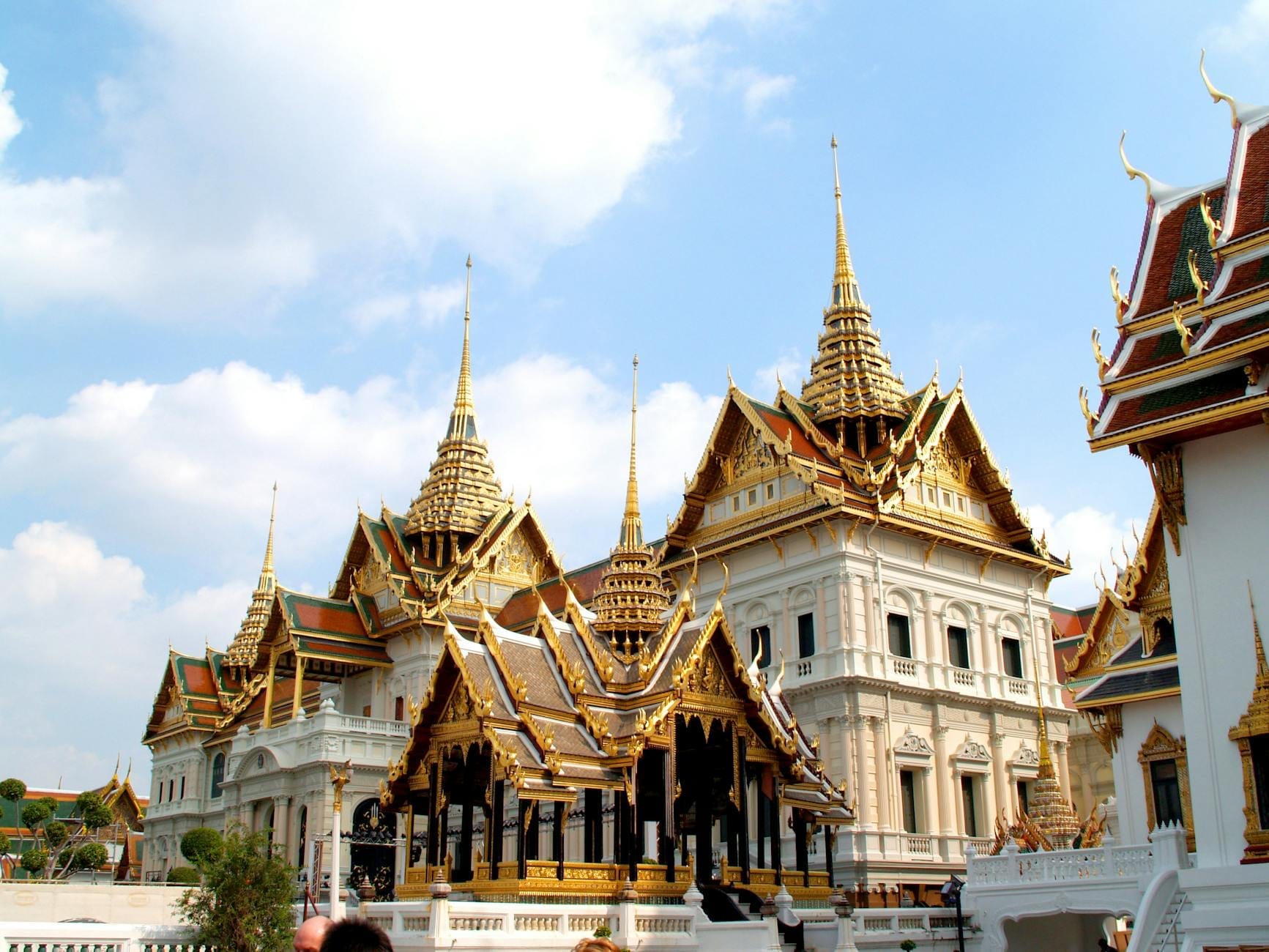
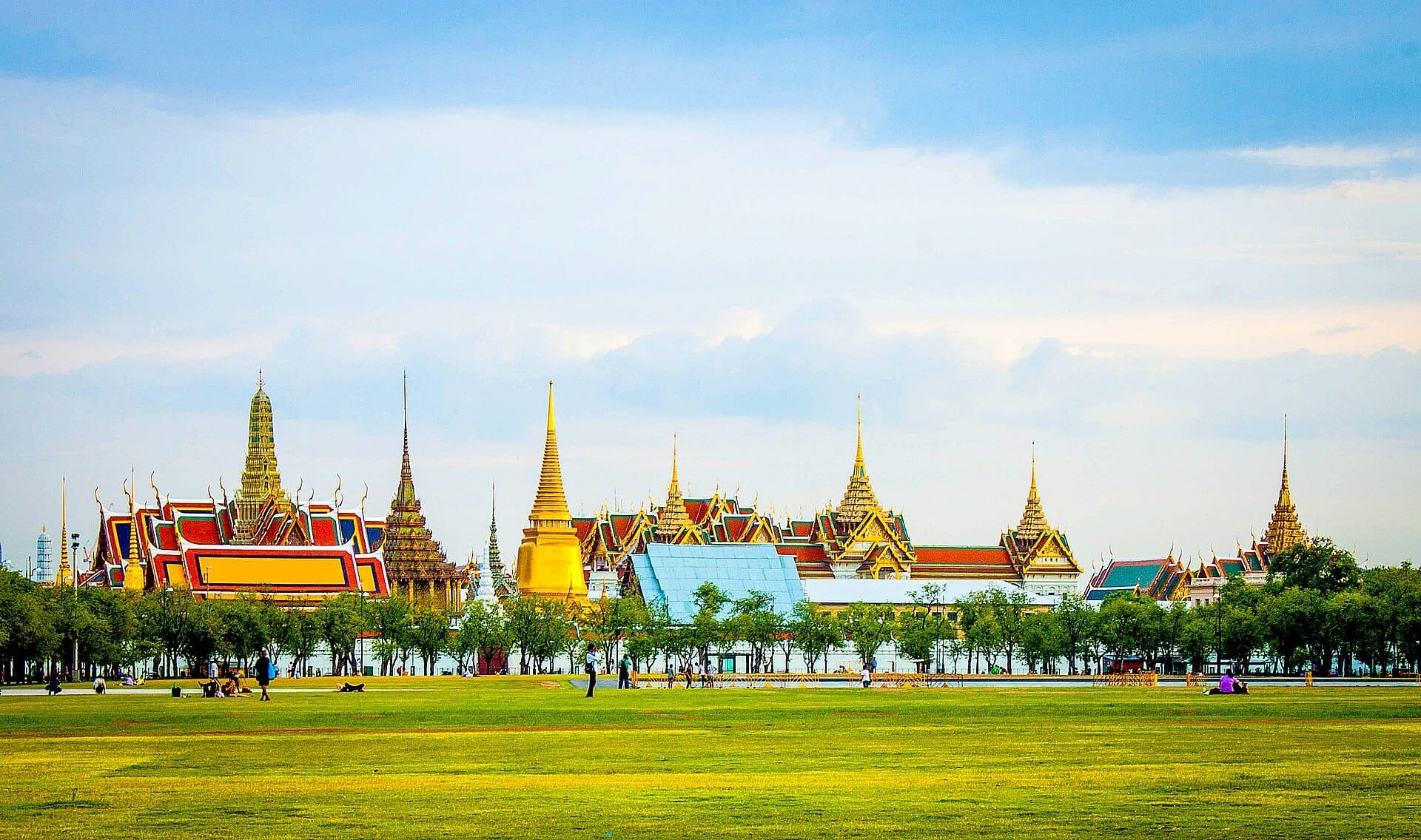
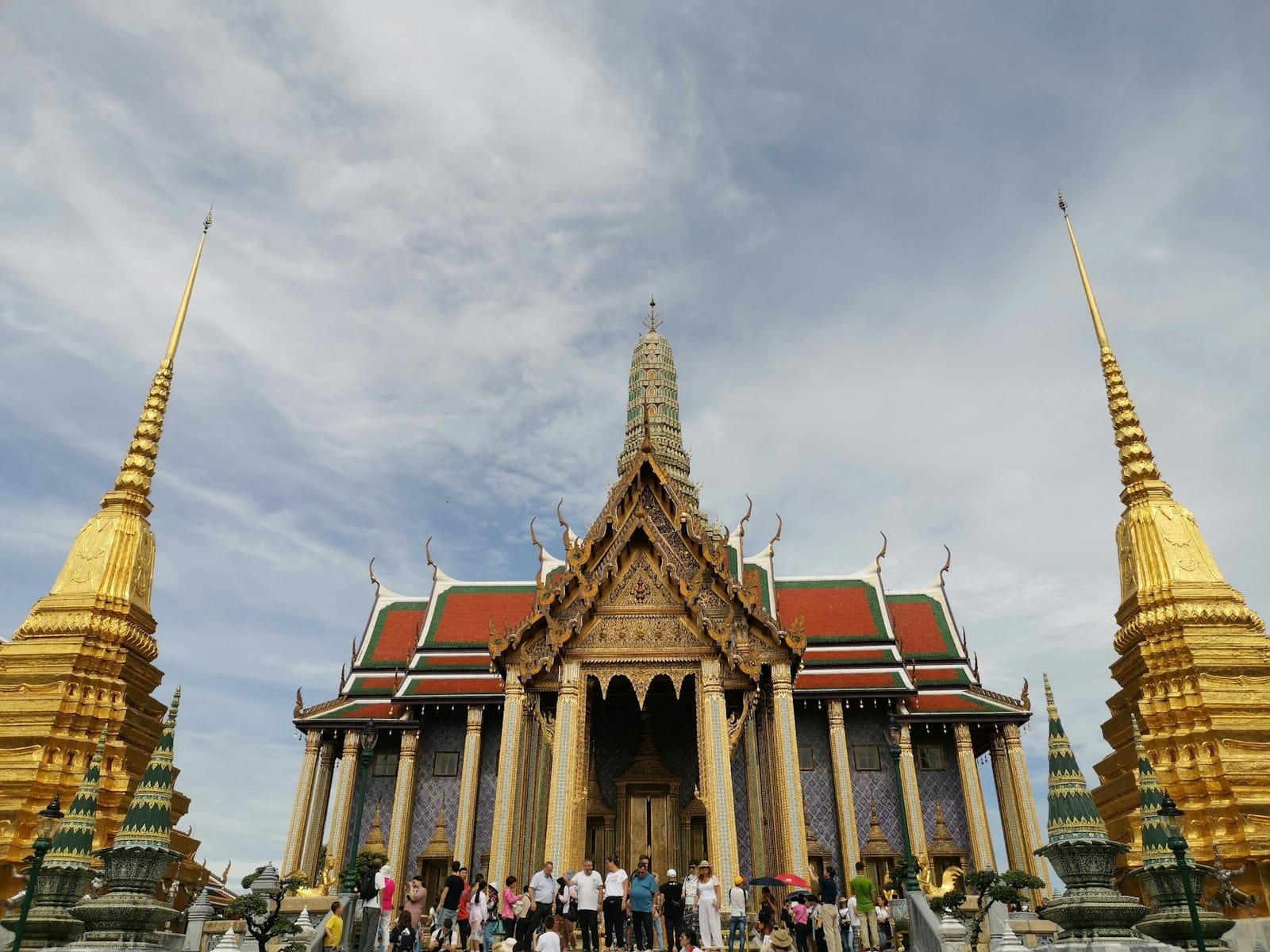
The centerpiece of the entire island is the Grand Palace complex, which includes the Wat Phra Kaew (Temple of the Emerald Buddha). Together they occupy a walled precinct of nearly 220,000 square meters in the island's southwestern quadrant. Entrance is through the single gate on Na Phra Lan Road. Plan for at least two hours, bring water, and be prepared for a strict dress code: shoulders and knees must be covered, and sarongs are available for loan at the gate.
Immediately south of the palace complex, Wat Pho is in many ways a more rewarding visit. The reclining Buddha here is 46 meters long, covered in gold leaf, and housed in a building so narrow that photographing it in full is essentially impossible, which somehow makes it more impressive in person. Wat Pho is also one of Thailand's oldest centers of traditional medicine and massage, and licensed massage practitioners operate within the temple compound. A one-hour traditional Thai massage here, in the shade of a centuries-old wat, is one of those Bangkok experiences that holds up against any expectation.
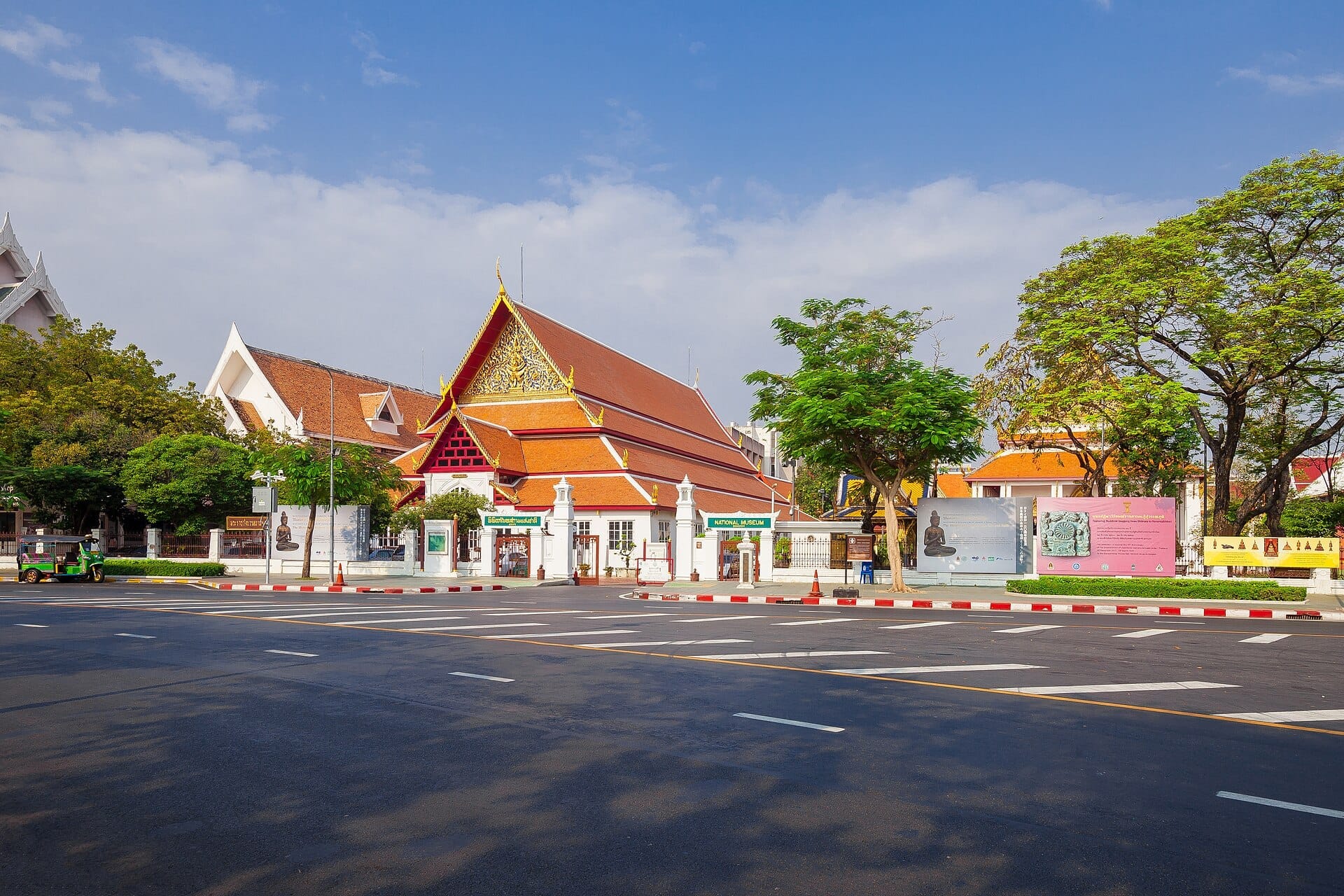
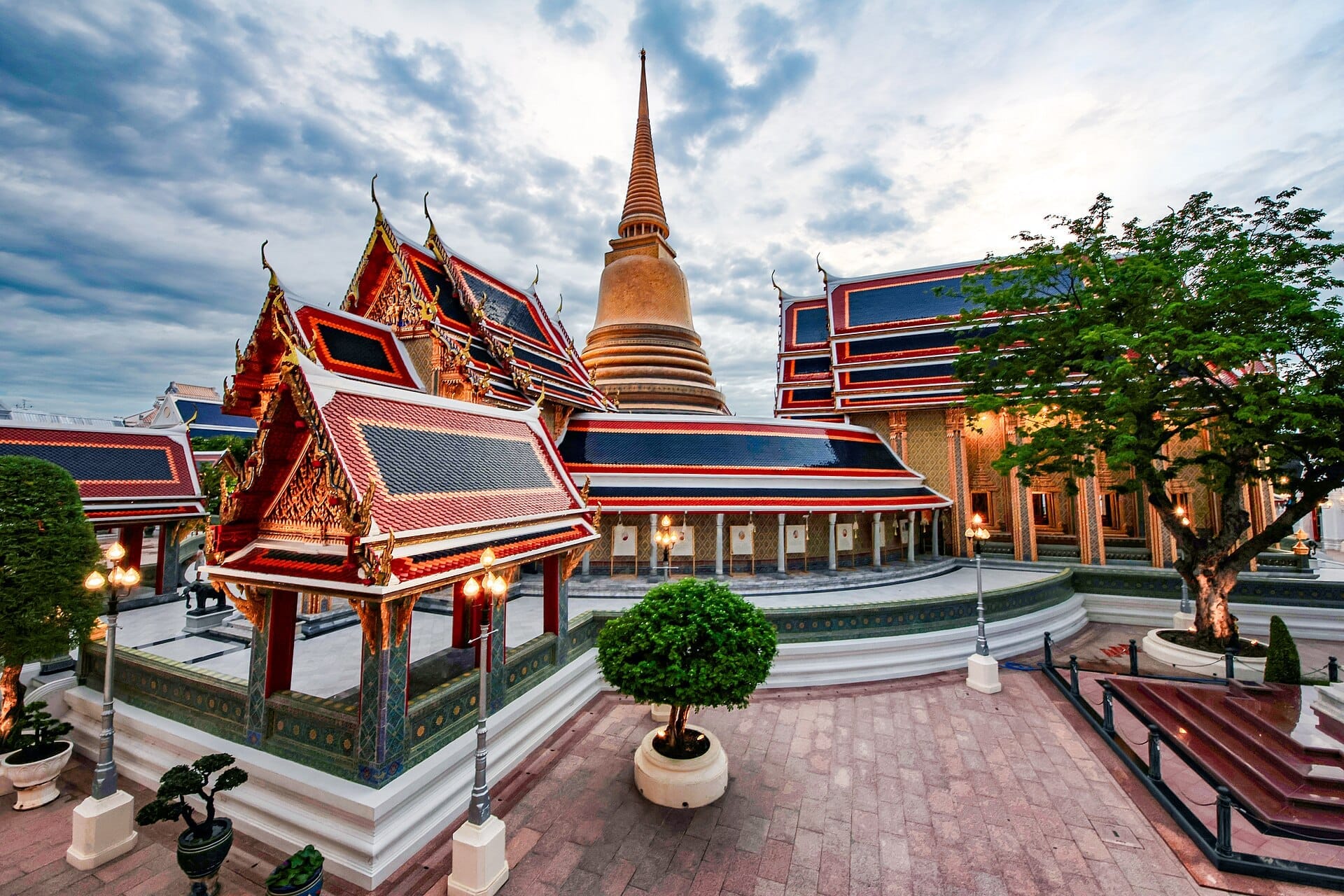
Along the river, Sanam Luang is the broad ceremonial field north of the palace, used for royal cremations, national celebrations, and kite flying. It connects visually to the Wat Mahathat and the surrounding university buildings that form Bangkok's academic and spiritual nerve center. The Bangkok National Museum sits on the northwest corner of Sanam Luang and houses the largest collection of Thai antiquities in the world, a genuinely undervisited institution that most people walk past on their way to the palace.
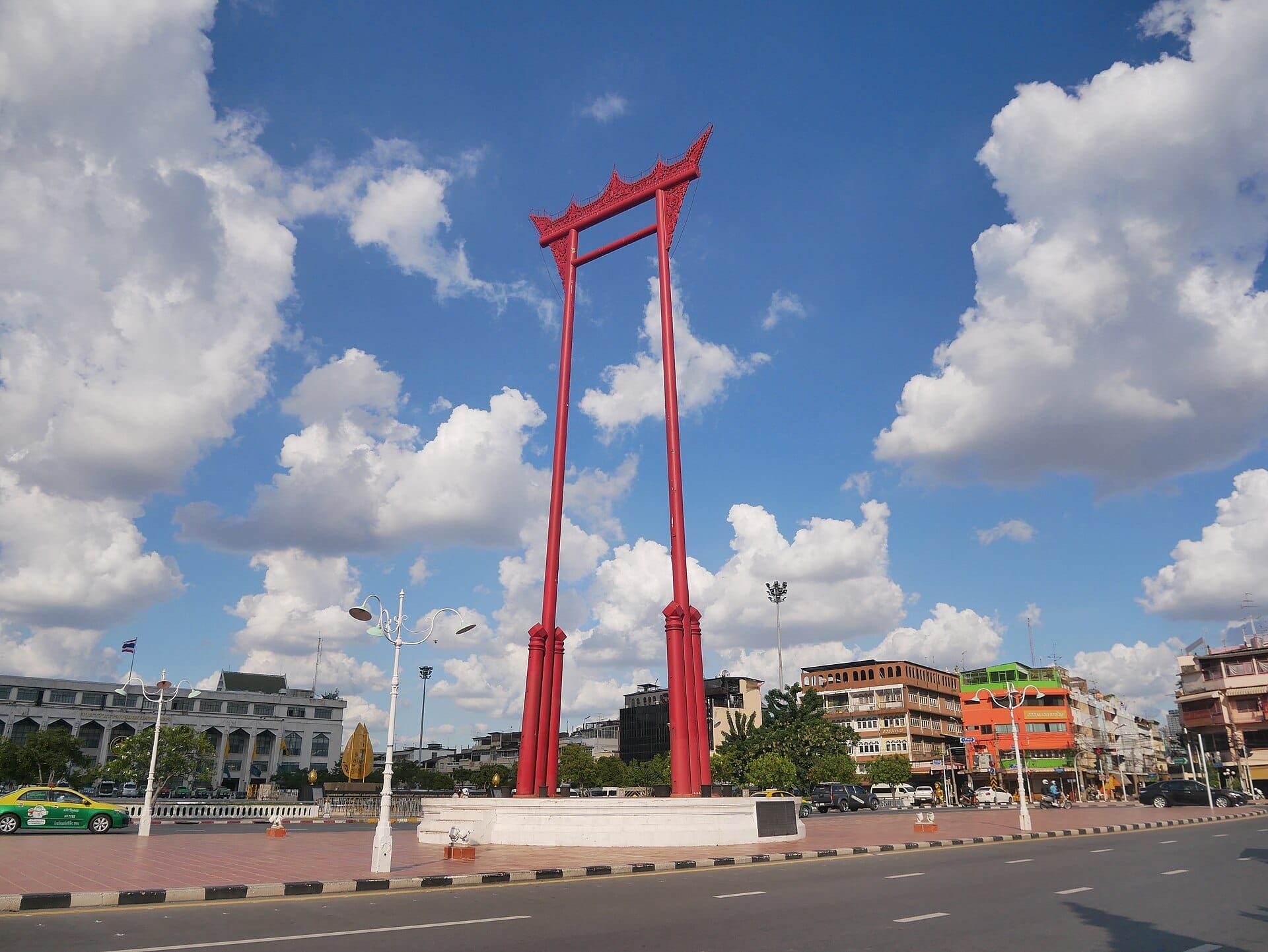
Wat Suthat and the Giant Swing: A short walk east of the palace area, this is one of Bangkok's most architecturally significant temples, with the restored Giant Swing standing in the plaza outside.
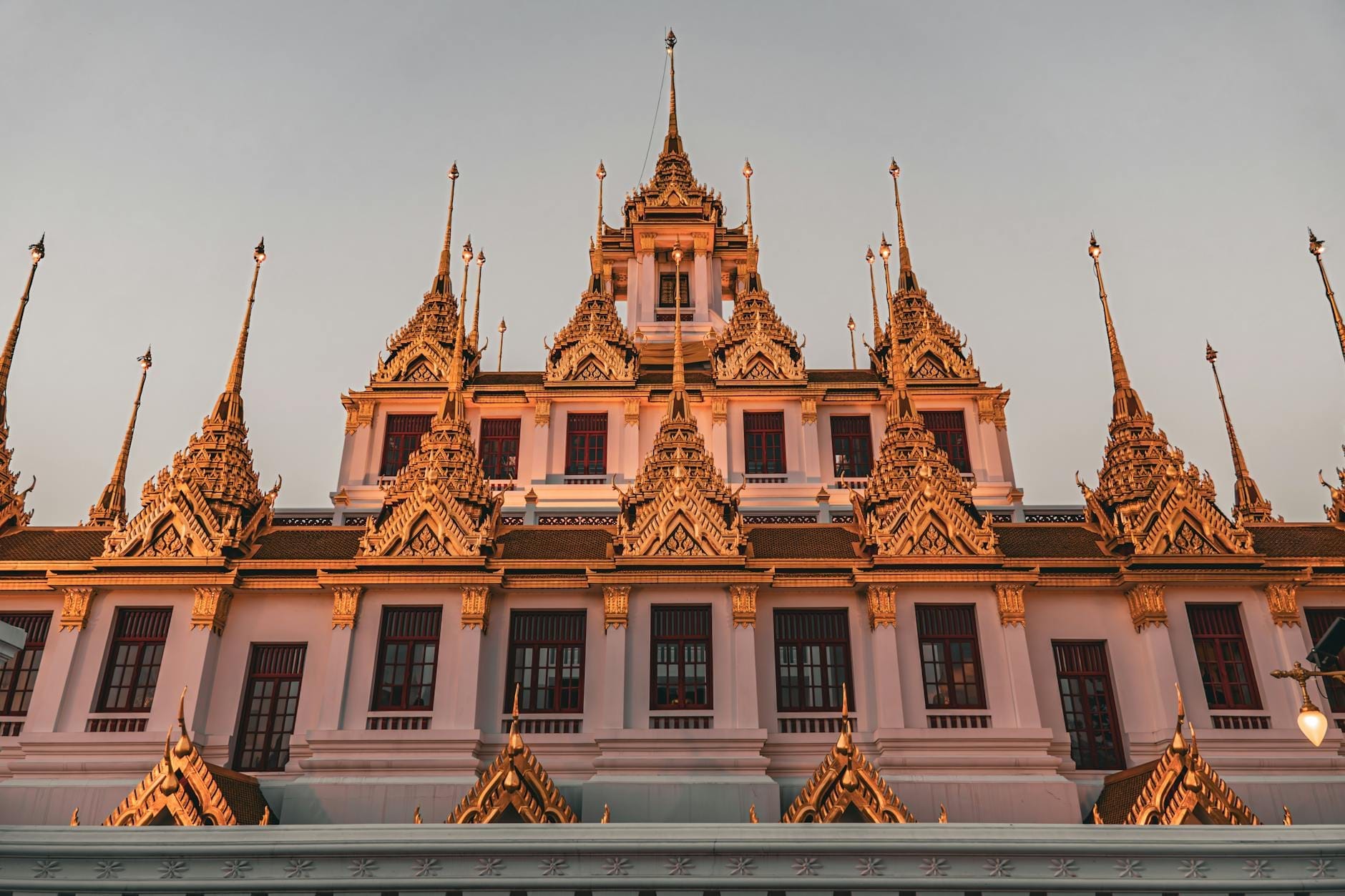
Wat Ratchanatdaram Loha Prasat: A remarkable metal spire temple on Ratchadamnoen Avenue, often overlooked because it sits in the shadow of the Democracy Monument nearby.
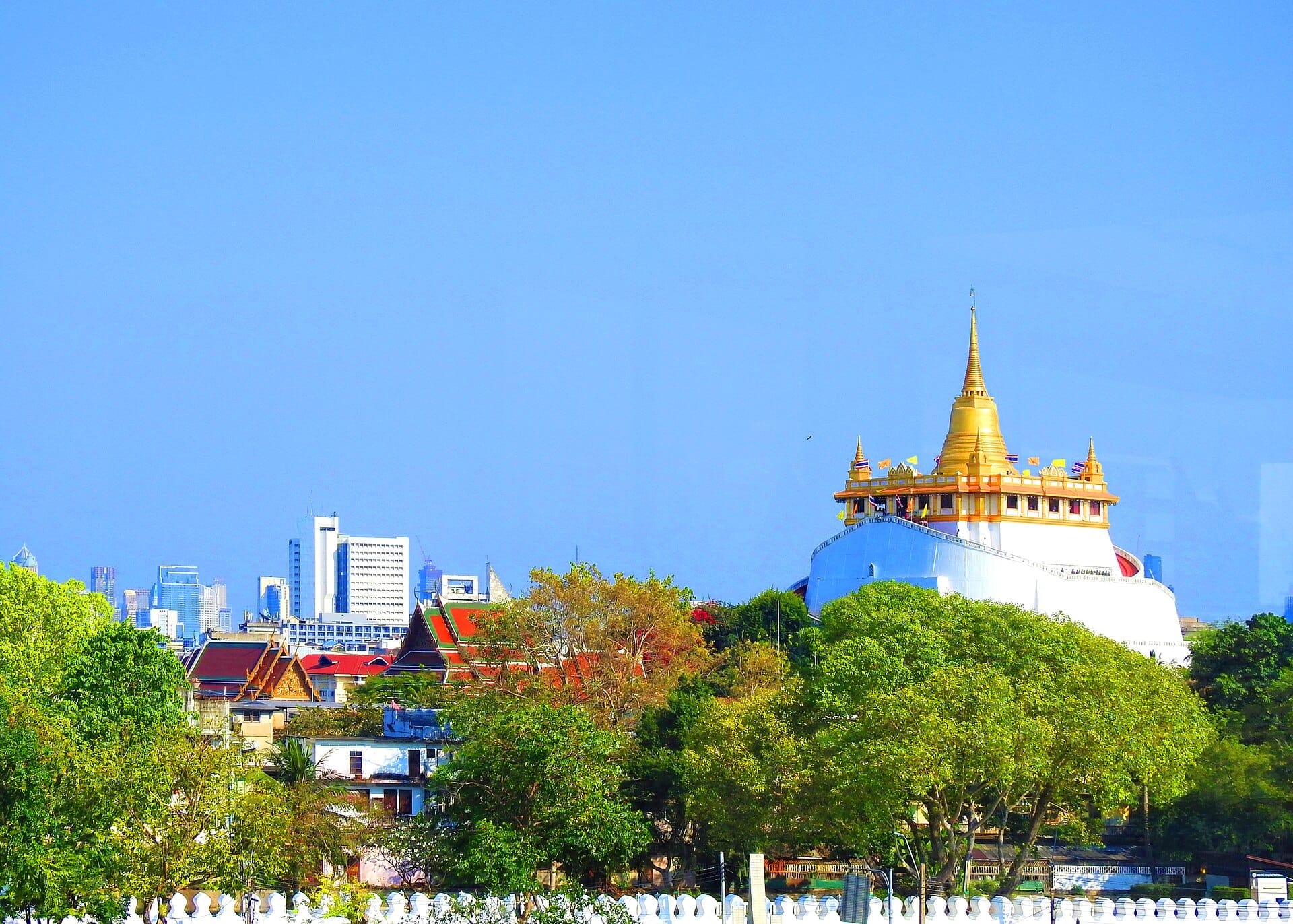
Wat Saket and the Golden Mount: Just outside Rattanakosin's eastern edge, the artificial hill topped with a gilded chedi offers the best elevated view over the old city.
The amulet market along Thanon Maharat: A narrow-lane market selling Buddhist amulets, protective charms, and religious artifacts, operating most days near Wat Mahathat.
Talat Noi: Technically across the canal to the south, this riverside neighborhood of old Chinese shophouses is a 15-minute walk from Wat Pho and offers a completely different texture.
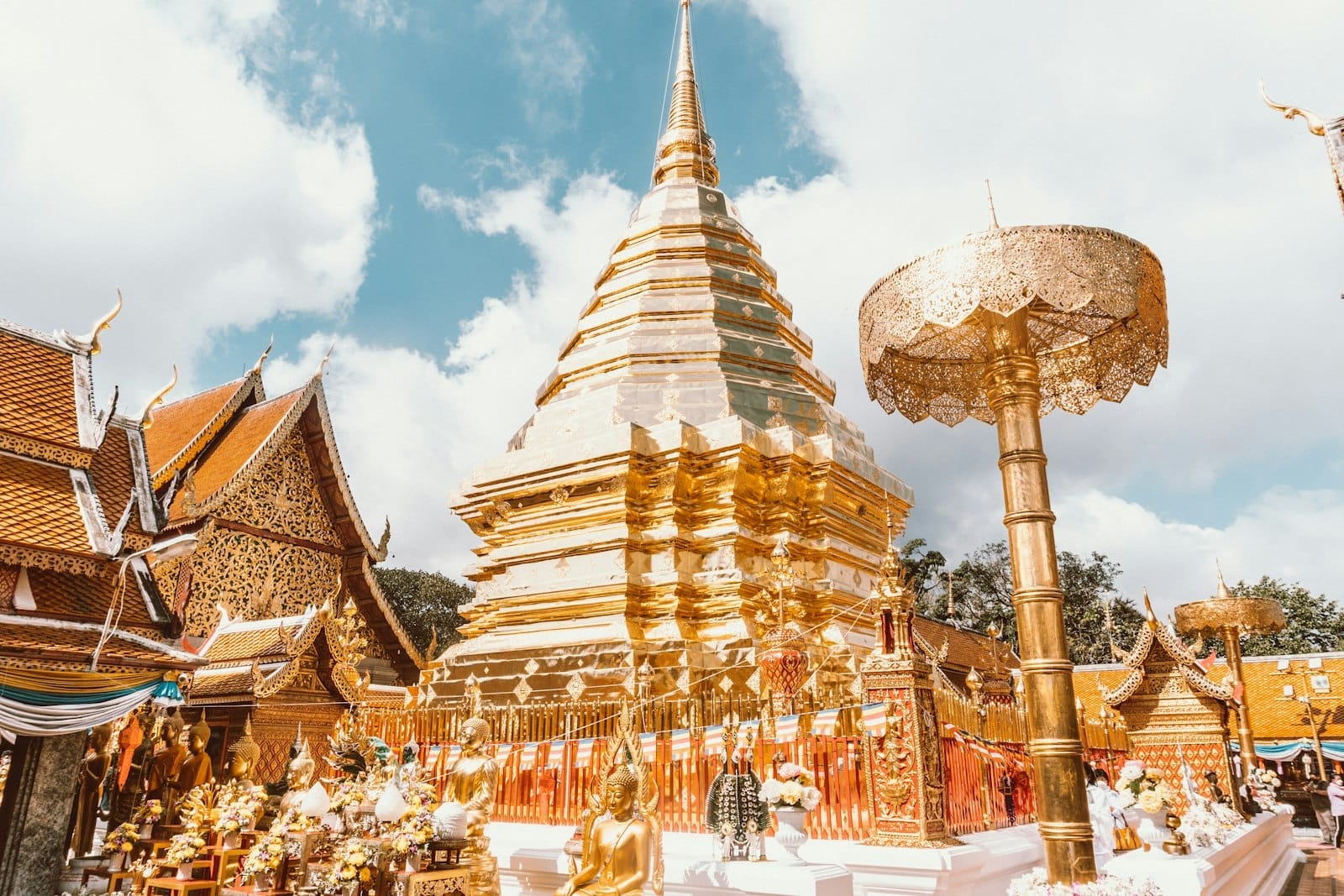
Across the river in Thonburi, visible from almost anywhere along Rattanakosin's waterfront, Wat Arun (the Temple of Dawn) is a short cross-river ferry ride from Tha Tien pier. The 70-meter Khmer-influenced prang encrusted with ceramic tile fragments is best seen from the Rattanakosin side at sunrise, but climbing it in the late afternoon when the crowds thin out is well worth the effort.
💡 Local tip
Visit the Grand Palace and Wat Pho on weekday mornings, ideally arriving at opening time (8:30am). By 10am the heat and tourist volume both become significant. Save Wat Arun for late afternoon when the light hits the ceramic-tiled prang from the west and the tour groups have mostly departed.
Eating & Drinking
Rattanakosin is not a neighborhood where you come to eat. That is a fact worth stating plainly. The area around the Grand Palace entrance is lined with mediocre tourist-facing restaurants charging inflated prices, and most of the sit-down options within easy walking distance of the main attractions follow a similar pattern: English menus, photos of every dish, and food that bears only a passing resemblance to what Thai people actually eat.
The exceptions are at the edges. The lanes around Tha Tien pier, on the river south of Wat Pho, have a small cluster of local restaurants and food stalls where boat operators, temple workers, and neighborhood residents eat. The food here is cheap, genuinely good, and completely unpretentious. Look for the pad thai stalls and the rice and curry shops with rotating metal trays of pre-made dishes displayed at the front. If you follow Thanon Maharat north from Tha Chang pier, a covered market runs along the wall of Wat Mahathat selling fresh fruit, grilled meat, sticky rice, and Thai sweets at market prices.
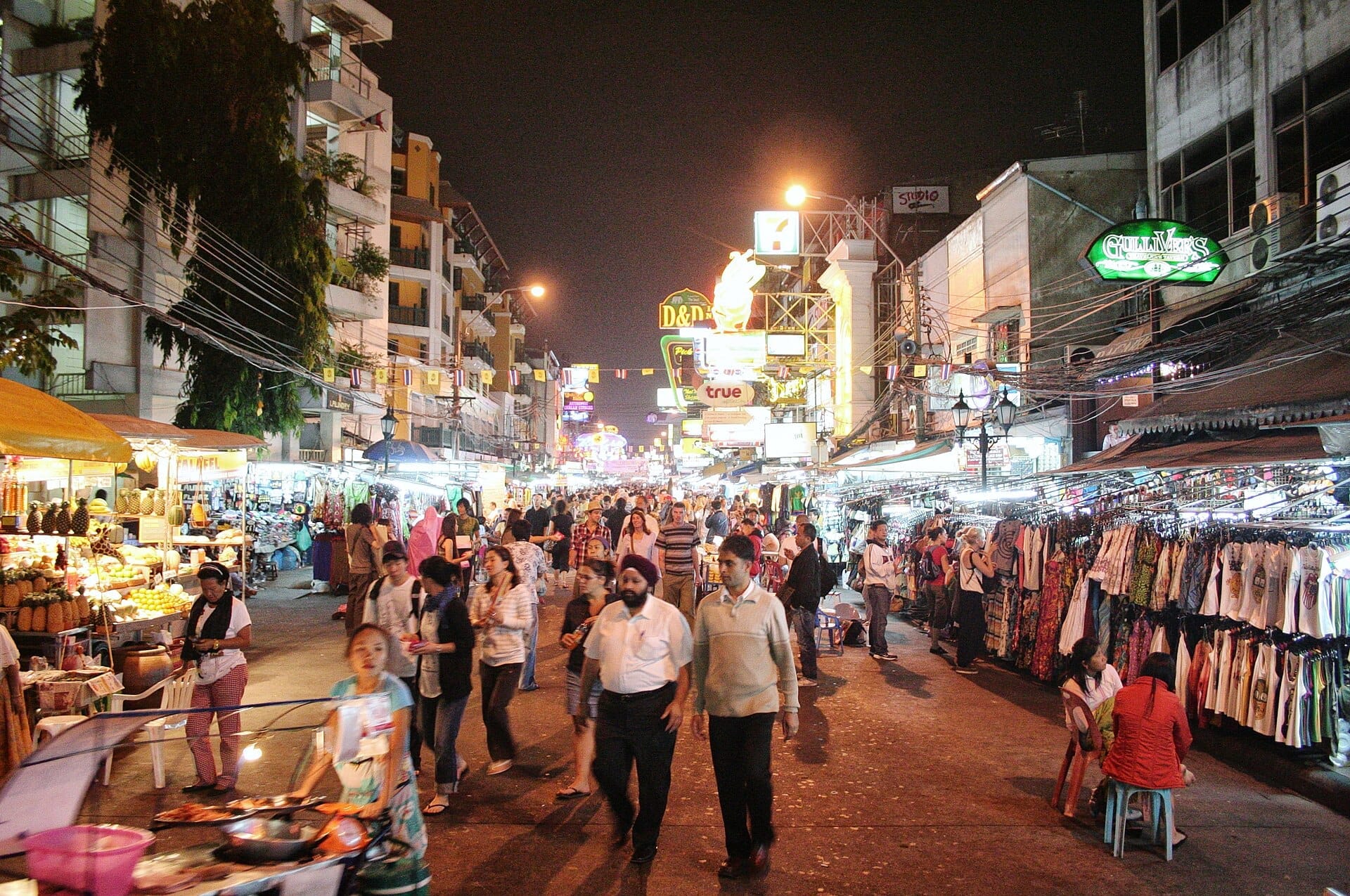
For a more structured food experience in this part of the city, the broader area rewards exploration. The Bangkok street food scene is best experienced in the late afternoon and evening, when the stalls around Khao San Road to the north and the Chinatown corridor to the southeast both come fully alive. Neither is a long journey from Rattanakosin's boundaries.
There are no significant cocktail bars or late-night drinking spots within Rattanakosin proper. The closest options are on Khao San Road, which is a five-minute walk north from the Democracy Monument area, or along the river at the hotels that have rooftop bars with views toward Wat Arun. If you're staying in Rattanakosin and want a drink at the end of the day, most visitors make the short journey to Banglamphu.
Getting There & Around
The MRT Blue Line's Sanam Chai station, which opened in 2019, is the most practical rail option and drops you near the southeastern corner of the island, a ten-minute walk from Wat Pho's main entrance along Sanamchai Road. From central Sukhumvit, the journey takes around 30 minutes with one transfer at Hua Lamphong or Silom. This route is significantly faster and cheaper than a taxi during peak hours.
The Chao Phraya Express Boat is arguably the most pleasant way to arrive. Orange-flag express boats stop at Tha Chang (N9) for the Grand Palace area and Tha Tien (N8) for Wat Pho. From Sathorn/Central pier near Saphan Taksin BTS station, the ride north takes about 20 minutes and costs 15-50 baht on the express service. The piers are well-signed and the boats run from around 6am to 7pm.
Within Rattanakosin, walking is both the most efficient and the most rewarding way to move. The Grand Palace, Wat Pho, Sanam Luang, the National Museum, and the amulet market are all within a 15-minute walk of each other. Tuk-tuks are available throughout the area but are primarily aimed at tourists; negotiate firmly before getting in and be aware that drivers often attempt detours to friendly shops en route. Songthaews (shared pickup trucks) are less common here than in other parts of the city.
⚠️ What to skip
Be wary of any person near the Grand Palace entrance who tells you it is closed for a special ceremony or holiday and offers to take you somewhere else instead. This is one of Bangkok's most persistent tourist scams. The palace closes only on a handful of specific dates published on its official website; on all other days it opens at 8:30am.
Where to Stay
Rattanakosin has a limited but growing accommodation scene. For many years, serious hotel options were almost nonexistent within the island itself, with most visitors staying in the Banglamphu backpacker district to the north or the riverside hotels in the Silom and Sathorn areas to the south. That picture has changed somewhat as boutique hotels have opened in restored shophouses and older buildings around the Maharat and Tha Tien areas, offering rooms within genuine walking distance of the main sights.
Staying in Rattanakosin makes most sense if your primary purpose is exploring the temples and palace, and if you plan to structure your days around early morning visits before the crowds arrive. The trade-off is access: getting to Sukhumvit or Silom for dinner or nightlife takes 30-45 minutes, and the neighborhood itself goes quiet well before 10pm. For travelers who want to be near the action in the evenings, the adjacent Banglamphu area offers a far wider range of accommodation at various price points and has its own distinct energy.
If you're still deciding where to base yourself in Bangkok, the Where to Stay in Bangkok guide breaks down every major neighborhood by traveler type and explains the trade-offs between location, transit access, and nightlife. Rattanakosin suits history-focused visitors and those on short stays who want maximum sightseeing efficiency in the first two days.
Practical Notes
Dress code enforcement at the Grand Palace and Wat Pho is consistent and non-negotiable. Shorts above the knee and sleeveless tops will result in being turned away or directed to a sarong rental. Lightweight long trousers and a short-sleeved shirt with coverage to the shoulder satisfies both temples. Closed-toe shoes are not required but sandals are fine. Avoid buying sarongs or wraps from street vendors near the entrance; the temple provides loaner wraps at no charge.
The Grand Palace and Wat Pho charge separate entrance fees, and neither accepts the Bangkok tourist card for discounts. Water is sold at kiosks throughout both complexes, and shade is available in temple buildings and along covered walkways. For context on the best time of year to visit Rattanakosin and the broader city, the best time to visit Bangkok guide covers seasonal weather patterns, festival dates, and crowd levels across the year.
ℹ️ Good to know
The Songkran water festival in April transforms Rattanakosin dramatically. Sanam Luang and Ratchadamnoen Avenue become ceremonial centers for the Buddhist new year, with processions, sand chedis, and large-scale water fights in the streets. It is one of the most atmospheric times to be in this part of Bangkok, but it also draws very large crowds.
TL;DR
Best for: First-time Bangkok visitors, temple and history enthusiasts, travelers on 2-3 day itineraries who need to cover the essential royal sights efficiently.
Key attractions: Grand Palace, Wat Phra Kaew, Wat Pho, Bangkok National Museum, Sanam Luang, Wat Arun across the river.
Honest trade-off: Outstanding sightseeing density but poor nightlife, limited quality dining within the neighborhood, no direct BTS access, and intense heat during peak daytime hours.
Best arrival strategy: Chao Phraya Express Boat to Tha Chang pier, or MRT Blue Line to Sanam Chai, arriving before 9am on weekdays.
Not ideal for: Travelers whose priority is food, nightlife, or shopping. Those planning extended stays in Bangkok will likely want to base themselves elsewhere and visit Rattanakosin as a day trip.
From the riverside spectacle of ICONSIAM to the bargain floors of MBK, this guide covers Bangkok's 10 best shopping malls by district with straightforward takes on what each one actually does best.
Bangkok's street food scene is one of the most rewarding in Southeast Asia, but knowing where to go and what to order separates a great meal from a mediocre one. This guide breaks down the best dishes, neighborhoods, and markets so you can eat confidently and affordably.
From the 15,000-stall maze of Chatuchak to the sizzling woks of Yaowarat after dark, this guide covers Bangkok's best markets with candid reviews, practical tips, and the best times to visit each one.
From the dazzling Grand Palace complex to quiet neighborhood temples with barely a tourist in sight, this guide covers Bangkok's 10 most rewarding temples with frank reviews and practical visiting tips.
Bangkok's tropical climate means timing your visit matters more than most cities. This guide breaks down every season, key festivals, crowd levels, and price shifts so you can pick the right window for your trip.
Songkran is Thailand's New Year and the world's largest water fight, and Bangkok does it on a scale unlike anywhere else. This guide covers the best spots to celebrate, practical logistics, cultural context, and practical advice on what to skip.
From glittering temple complexes and chaotic night markets to rooftop observation decks and hidden neighborhoods, this guide covers 20 of the best things to do in Bangkok with candid reviews and practical advice.
Bangkok spreads across a vast urban grid, and where you stay shapes your entire trip. This guide breaks down the city's top neighborhoods by location, vibe, transport access, and price range, so you can book with confidence.