Wat Ratchabophit: Bangkok's Most Architecturally Surprising Royal Temple
Wat Ratchabophit is one of Bangkok's most architecturally distinctive temples, combining Thai religious tradition with striking Victorian-influenced interiors. Located in the historic Rattanakosin district, it draws far fewer visitors than its famous neighbors, making it one of the most rewarding stops on any serious temple itinerary.
Quick Facts
- Location
- Rattanakosin, Bangkok (near City Hall, off Atsadang Road)
- Getting There
- No BTS/MRT directly; take a taxi or tuk-tuk from Sanam Luang or MRT Sam Yot
- Time Needed
- 45–90 minutes
- Cost
- Free entry (modest dress required)
- Best for
- Architecture enthusiasts, history lovers, travelers wanting a crowd-free temple experience
What Makes Wat Ratchabophit Worth Visiting
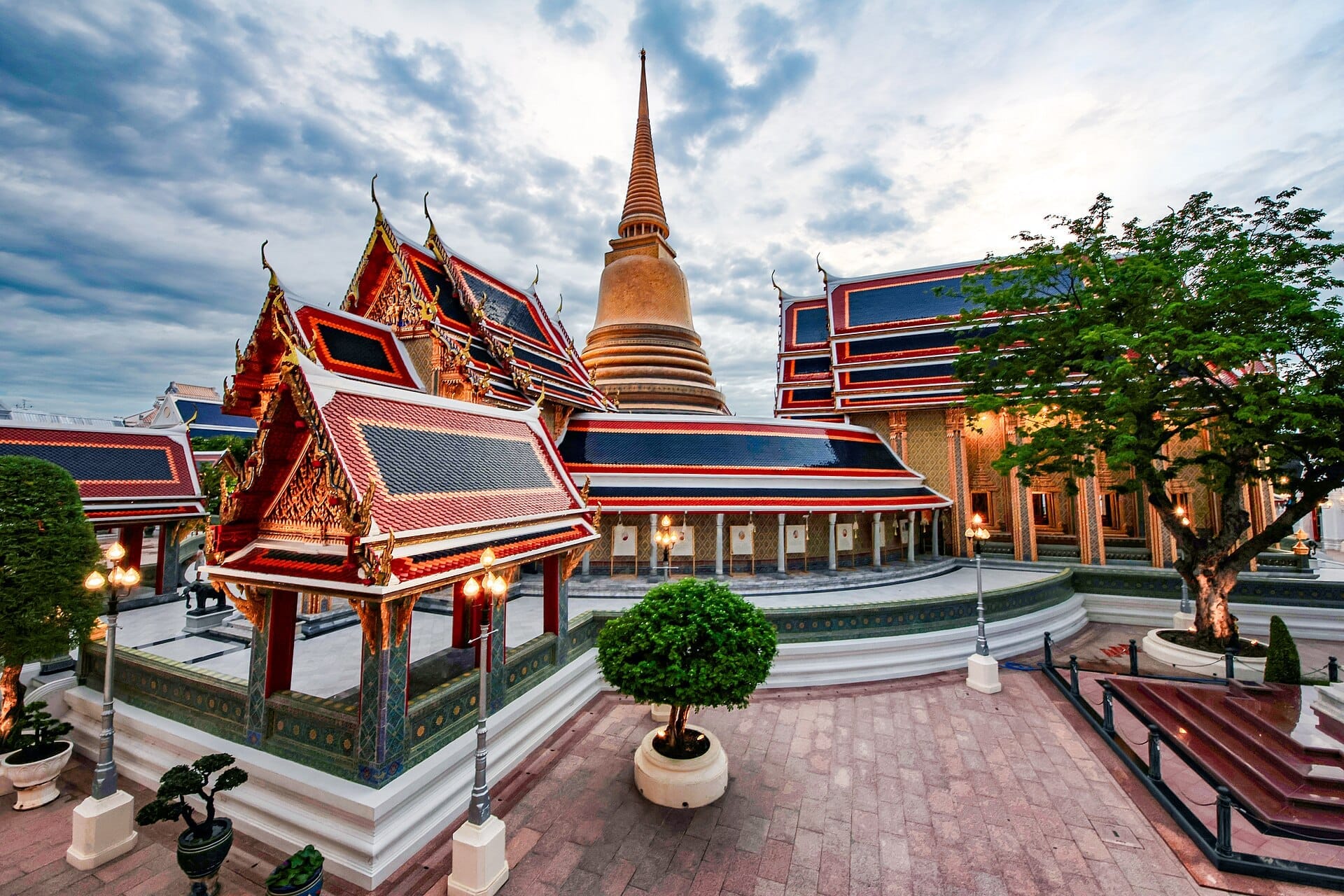
Wat Ratchabophit Sathit Maha Simaram Ratchaworawihan — to use its full ceremonial name — was commissioned by King Rama V (Chulalongkorn) in 1869 and completed over several decades. The king was deeply influenced by his exposure to European architecture during diplomatic engagements, and that influence is unmistakable the moment you step inside the ordination hall. While the exterior presents the gilded spires and colorful mosaic tiles typical of Thai royal temple construction, the interior pivots dramatically: carved wooden pews, stained-glass windows bearing royal insignia, Gothic arches, and a pastel color palette that would not look out of place in a Victorian-era European chapel.
This collision of aesthetics is not accidental or awkward. It reflects a deliberate 19th-century royal project to absorb Western influence into Thai cultural identity without abandoning it. The result is a space that rewards careful looking. Most visitors to Bangkok's Rattanakosin district walk past this temple entirely on their way to the Grand Palace or Wat Pho, which means you can often have the courtyard and even the ordination hall almost entirely to yourself.
💡 Local tip
Dress modestly before arriving: shoulders and knees must be covered to enter the ordination hall. Unlike the Grand Palace, there is no clothing rental here, so plan your outfit in advance.
The Architecture: Two Worlds in One Compound
The temple complex is organized around a circular cloister — an extremely unusual layout in Thai Buddhist architecture, which typically follows a more rectilinear plan. This ring-shaped gallery features a unique circular layout, each housed in its own alcove. Walking the full circuit takes only a few minutes, but the repetition and quiet of the space create a meditative quality that is genuinely distinct from the sensory intensity of Bangkok's more famous temple complexes.
At the center of the compound rises the principal prang, a Khmer-influenced tower covered in glazed ceramic tiles in muted greens and browns rather than the bright primary colors common on newer Thai temples. The craftsmanship is intricate at close range: small floral medallions, Portuguese-style azulejo-influenced tile work, and gilded finials that catch light in the late afternoon particularly well. Bring a camera with a wide-angle lens if you want to capture the full height of the prang from within the cloister.
The ordination hall's interior is the single most striking space in the complex. The wooden ceiling is coffered and painted in deep burgundy and gold. Light filters through stained-glass windows depicting Thai royal symbols — the Chakri dynasty's emblem appears repeatedly — and casts colored shadows across the marble floor in the morning hours. The atmosphere is closer to a Gothic European cathedral than to any other Buddhist space in the city.
Tickets & tours
Hand-picked options from our booking partner. Prices are indicative; availability and final rates are confirmed when you complete your booking.
Temples of Bangkok and Grand Palace half-day guided tour
From 18 €Instant confirmationFree cancellationDamnoen Saduak floating market and Maeklong railway guided tour
From 36 €Instant confirmationFree cancellationBangkok tuk-tuk night tour with Chinatown street food meal
From 28 €Instant confirmationFree cancellationAfternoon Tea at Hyatt Regency Hotel Bangkok
From 900 €Instant confirmationFree cancellation
Royal Tombs and Cultural Significance
Wat Ratchabophit serves as the burial site for several members of the Thai royal family from the early Rattanakosin period. The tombs are housed in small structures within the compound, and while access may be restricted, their presence gives the temple a gravity and intimacy that purely ceremonial temples lack. This is an active royal temple, not a museum piece, and it is used for official ceremonies related to the royal calendar.
The temple sits within walking distance of several other significant Rattanakosin landmarks. Wat Suthat is a short walk to the northeast, and the Giant Swing stands just beyond it. To the west, the grounds approach the administrative heart of old Bangkok, giving the surrounding streets a quieter, more local character than the tourist-heavy blocks near the Grand Palace.
When to Visit and How the Experience Changes
Mornings between 8am and 10am offer the best light inside the ordination hall, when the stained glass casts its most vivid patterns across the interior. The compound is also at its quietest then. By late morning, school groups occasionally visit, and the surrounding streets grow busier with government workers heading to nearby offices.
Midday visits during Bangkok's hot season (March through May) can be genuinely uncomfortable given the lack of shade in the central courtyard. The cloister gallery provides some relief, but plan your visit for the cooler hours or visit in the November to February dry season when temperatures are more forgiving. Overcast days, while less photogenic, make the interior of the ordination hall easier to photograph without harsh exposure contrast from the windows.
The temple closes at 5:00 PM, so arriving by afternoon ensures you will have sufficient time to explore without rushing. The temple does not have a fixed admission booth, and entry has historically been free, though donations are welcomed. Confirm current access conditions before visiting, as royal ceremonies can temporarily restrict entry to parts of the compound.
⚠️ What to skip
During royal ceremonies or national memorial days, portions of the compound may be closed to casual visitors. Check Thai public holiday calendars before planning a visit around these periods.
Getting There and Navigating the Neighborhood
Wat Ratchabophit is located on Atsadang Road in the Rattanakosin area, roughly equidistant between City Hall (Bangkok Metropolitan Administration) and Sanam Luang. There is no BTS Skytrain or MRT station within easy walking distance. The most practical approach is a taxi or tuk-tuk from the MRT Sam Yot station (on the Blue Line), which is approximately 10 to 15 minutes away on foot through Chinatown's western edge, or a short ride. Alternatively, if you are already visiting the Grand Palace or Wat Pho, Wat Ratchabophit is walkable in under 20 minutes through the older administrative streets of Rattanakosin.
Combining this temple with a broader Rattanakosin walking day makes strong geographic sense. The Grand Palace and Wat Pho are the obvious anchors, and Wat Ratchabophit fills the late-morning slot well before those larger sites become crowded with tour groups. If you have a full day in the area, consult a guide to Bangkok's best temples to map an efficient route.
The streets immediately around the temple are narrow and primarily used by locals: small food carts selling congee and rice dishes operate in the early morning, and the smell of incense drifts from spirit houses at regular intervals along the lane. It is a genuinely local pocket within an otherwise tourist-dense district, and that contrast is part of what makes the walk rewarding.
Honest Assessment: Is It Worth Your Time?
For travelers whose Bangkok itinerary is already full, Wat Ratchabophit will not displace the Grand Palace or Wat Arun as priorities. But for anyone spending more than three days in the city, especially those with an interest in architectural history or Southeast Asian royal culture, it offers something genuinely different from any other temple in Bangkok. The European-influenced interior is not a curiosity bolted onto a standard Thai structure; it is a coherent design that reflects a specific historical moment in Thai history.
Those looking for a sensory spectacle or a major Buddhist pilgrimage site may find it underwhelming compared to the scale and visual drama of Wat Arun or the grandeur of Wat Phra Kaew. But for the visitor who wants a quiet, layered, historically rich experience with almost no queue and no ticket booth, it is an excellent use of an hour.
The surrounding Rattanakosin district rewards slow exploration generally, and Wat Ratchabophit is best understood as part of that longer narrative rather than a standalone destination.
Insider Tips
- The ordination hall's stained-glass windows face east, so morning light (before 10am) produces the most dramatic interior color effects. Afternoon visits miss this almost entirely.
- The circular cloister with its Buddha images is rarely photographed well because visitors rush through it. Slow down and frame individual alcoves against the prang in the background for more interesting compositions.
- There is a small door on the south side of the compound that opens onto a quieter lane, useful for exiting toward Atsadang Road without retracing your steps through the main gate.
- The tile work on the central prang is best examined from close range at the base, where the Portuguese-influenced ceramic detailing is visible without binoculars or zoom lenses.
- If you visit on a weekday, you are likely to see monks going about daily routines in the compound. Keep a respectful distance and avoid pointing cameras directly at individuals without a nod of acknowledgment.
Who Is Wat Ratchabophit For?
- Architecture and design travelers interested in colonial-era cultural exchange
- Temple enthusiasts who have already visited the main Rattanakosin sites and want depth over spectacle
- Photographers looking for interior light, unusual angles, and crowd-free conditions
- History-focused visitors interested in the reign of Rama V and Thai modernization
- Travelers who prefer quiet, contemplative spaces over high-footfall tourist attractions
Nearby Attractions
Other things to see while in Rattanakosin:
- Bangkok National Museum
The Bangkok National Museum is the largest museum in Southeast Asia and the definitive starting point for understanding Thai history. Spread across a former palace compound near the Grand Palace, it houses royal regalia, pre-Siamese sculpture, intricate funeral chariots, and centuries of Buddhist art under one roof.
- Democracy Monument
Standing at the heart of Ratchadamnoen Avenue in the Rattanakosin district, the Democracy Monument is Bangkok's most charged political symbol. Built in 1939 to commemorate Thailand's transition from absolute monarchy to constitutional rule, it remains a living stage for the city's public life and a striking piece of art deco civic architecture.
- The Giant Swing
The Giant Swing (Sao Ching Cha) stands 27 metres tall in the heart of Bangkok's historic Rattanakosin district, just steps from Wat Suthat. Once the centrepiece of a daring Brahmin ceremony, this centuries-old teak structure is one of Bangkok's most recognisable landmarks — and one of its least-understood.
- Grand Palace Bangkok
The Grand Palace is Bangkok's most recognizable landmark and the ceremonial heart of Thailand. This guide covers what to see, when to go, how to dress, and how to make the most of a visit without the frustration.