Wat Pho: Bangkok's Oldest Temple and the Giant That Will Stop You in Your Tracks
Wat Pho is one of Bangkok's most significant royal temples, home to a 46-metre Reclining Buddha covered in gold leaf and the birthplace of traditional Thai massage. It sits just south of the Grand Palace in the historic Rattanakosin district, and rewards visitors who take time to explore beyond the main hall.
Quick Facts
- Location
- 2 Sanam Chai Rd, Rattanakosin, Bangkok
- Getting There
- Chao Phraya Express Boat to Tha Tien Pier (N8); a short walk east
- Time Needed
- 1.5 to 2.5 hours for a thorough visit
- Cost
- 300 THB for foreign visitors
- Best for
- Temple architecture, Thai cultural history, traditional massage, photography
- Official website
- www.watpho.com
What Wat Pho Actually Is
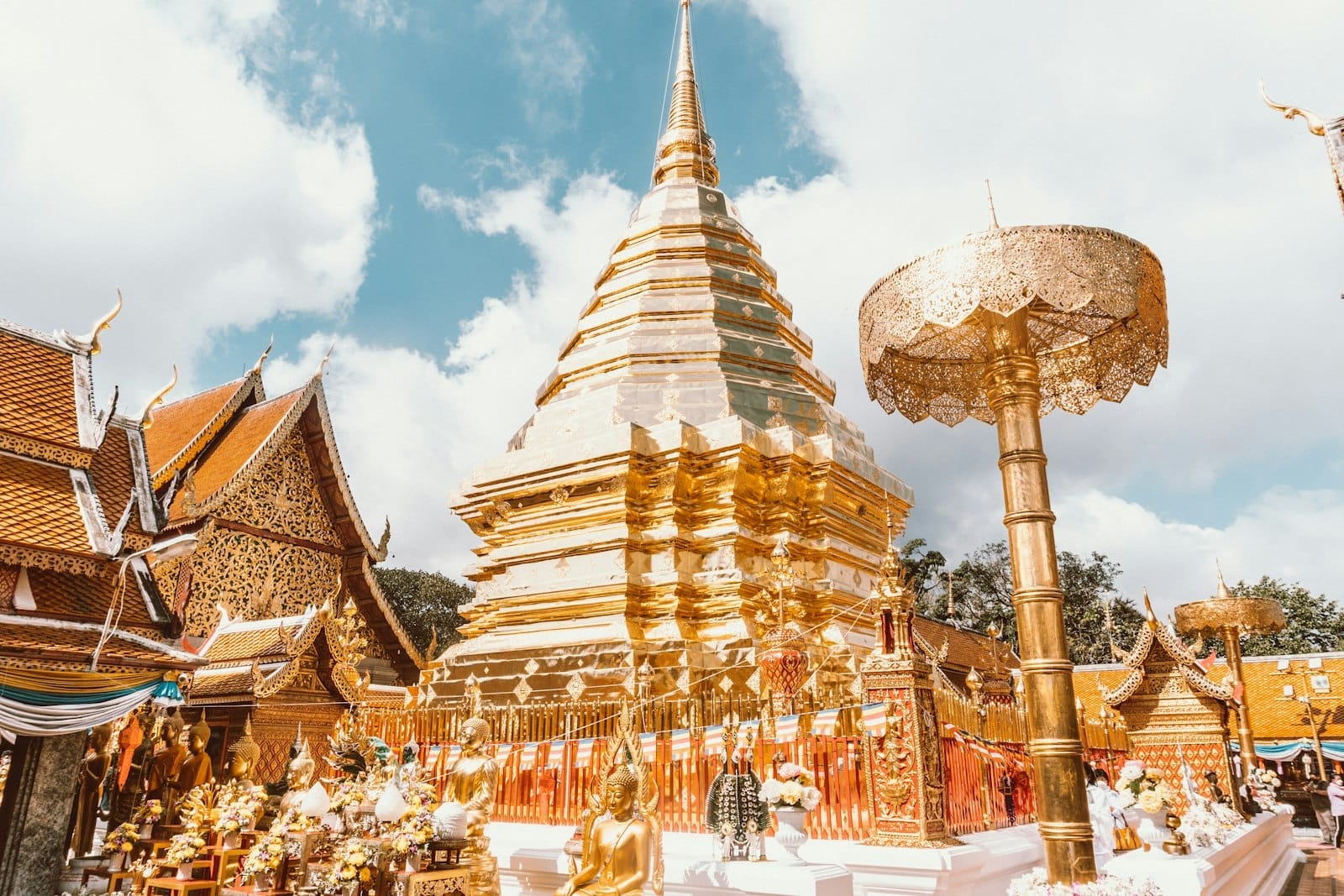
Wat Pho, formally known as Wat Phra Chetuphon Wimonmangkhalaram Rajwaramahawihan, is the largest temple complex in Bangkok and almost certainly its oldest, with origins dating to the 16th century, before Bangkok was even the capital. King Rama I restored and expanded it extensively after 1782 as part of the effort to establish Bangkok as a successor to the fallen Ayutthaya kingdom. His successors, particularly Rama III, continued the work, and what stands today is the result of two generations of royal ambition compressed into a single compound.
The temple sits on roughly 80,000 square metres, making it large enough that many visitors only see the Reclining Buddha hall and leave without realizing they have seen perhaps 20 percent of the site. Beyond that hall: four towering chedis representing the first four Chakri kings, a library of traditional medicine and astrology inscribed on stone tablets set into the cloister walls, and 91 smaller chedis arranged in rows throughout the outer courtyards. The complex functions as a working monastery, so monks in saffron robes move through the grounds with unhurried purpose throughout the day.
ℹ️ Good to know
Wat Pho is often called Thailand's first university. Rama III ordered knowledge in fields including medicine, pharmacy, archaeology, and literature to be inscribed on stone tablets and murals around the complex, making it a public reference library in an era before public libraries existed.
The Reclining Buddha: Scale Changes Everything
Nothing quite prepares you for how large the Reclining Buddha is once you step inside the viharn. The statue is 46 metres long and 15 metres high, covered entirely in gold leaf, with the feet alone measuring 5 metres long and 3 metres wide and decorated with 108 auspicious symbols inlaid in mother-of-pearl. The number 108 is significant in Buddhist cosmology, representing the 108 characteristics of the Buddha.
The hall itself is almost comically narrow for the scale of what it contains. You enter from one end, walk the full length alongside the statue, pass the feet, and exit from the other side. There is no angle from which you can take in the entire figure at once, which makes photographing it both a challenge and a useful exercise in paying attention. The light inside is dim and warm, filtered through high windows, and the air carries a faint trace of incense from the offering tables at the feet.
Along the back wall runs a row of 108 bronze alms bowls. Visitors purchase a small tray of coins (20 THB) at a table near the entrance and drop a coin into each bowl as they walk. The rhythmic sound of coins striking metal echoes throughout the hall and becomes part of the texture of the visit.
💡 Local tip
Visit the Reclining Buddha hall early, ideally within 30 minutes of opening at 8:00 AM. By 10:00 AM, tour groups arrive in force and the hall becomes very crowded, limiting the time you can spend standing still to absorb the space.
Tickets & tours
Hand-picked options from our booking partner. Prices are indicative; availability and final rates are confirmed when you complete your booking.
Temples of Bangkok and Grand Palace half-day guided tour
From 18 €Instant confirmationFree cancellationDamnoen Saduak floating market and Maeklong railway guided tour
From 36 €Instant confirmationFree cancellationBangkok tuk-tuk night tour with Chinatown street food meal
From 28 €Instant confirmationFree cancellationAfternoon Tea at Hyatt Regency Hotel Bangkok
From 900 €Instant confirmationFree cancellation
The Rest of the Complex: What Most Visitors Skip
After the Reclining Buddha, the majority of visitors exit directly. Those who continue deeper into the compound are rewarded with considerably more space and a very different atmosphere. The four great chedis of the first four Rama kings stand in a row, tiled in green, orange, blue, and yellow ceramic mosaic, their surfaces glinting differently depending on where the sun sits. Up close, the tile work is intricate enough to hold your attention for longer than you might expect.
The outer cloister contains 394 seated Buddha images arranged in long galleries. The light in the galleries shifts across the morning, and in the early hours there is a quality of stillness here that the main halls never quite have. Stone sculptures of Chinese guardian figures, originally brought to Bangkok as ballast in Chinese trading vessels, stand at various gates and corners throughout the compound. Their presence is a reminder that the temple's history is also a record of Bangkok's early trade relationships.
The temple grounds border the Grand Palace compound to the north. If you plan to visit both in a single morning, enter Wat Pho first, as it tends to be less crowded in the first hour, and the physical scale of the Grand Palace can be fatiguing if you save it for last.
Traditional Thai Massage: The School on the Grounds
Wat Pho is credited as the birthplace of traditional Thai massage. The massage knowledge encoded on the temple's stone tablets became the foundation for formal massage instruction, and the Wat Pho Thai Traditional Massage School remains on the grounds. The massage pavilions are located in the northern section of the complex, clearly signposted.
A one-hour traditional Thai massage typically costs around 520 THB. The therapists working here have formal training, and the setting is quieter and more considered than the street-front massage shops near Khao San Road. Walk-ins are generally accepted, though you may wait 15 to 30 minutes during peak hours. Foot massage is also available at a slightly lower price.
💡 Local tip
Wear loose, comfortable clothing if you plan to get a massage. You will be given traditional Thai pants to change into, but the process is smoother if what you are already wearing is easy to manage.
How the Experience Changes Through the Day
The temple opens at 8:00 AM, and the first 90 minutes are noticeably calmer. The light in the outer courtyards is softer, the monks are active, and the stone paving has not yet absorbed the full heat of the Bangkok sun. Temperatures inside the Reclining Buddha hall remain relatively stable regardless of the time, but the grounds become genuinely hot by midday, especially in the dry season between March and May.
From roughly 10:00 AM onward, tour groups move through in steady waves. This is not a reason to avoid the temple, but it does change the quality of the visit. If you arrive mid-morning, simply move away from the main circuits toward the outer chedis and galleries, where the crowds thin considerably. By late afternoon, around 3:30 to 4:00 PM, numbers reduce again and the quality of the light for photography improves.
The temple closes at 6:30 PM. Vendors selling fresh coconut water and Thai snacks operate on the surrounding streets throughout the day, which is useful given that the heat inside the complex can be draining. Bring a bottle of water in addition to the one included with your ticket.
⚠️ What to skip
Dress code is strictly enforced. Shoulders and knees must be covered. Sarongs and shawls are available for loan at the entrance, but they are in limited supply and wearing your own appropriate clothing is easier. Sandals are fine; slip-on shoes are practical given that you remove footwear before entering any hall.
Getting There and the Surrounding Area
The most practical approach is the Chao Phraya Express Boat to Tha Tien Pier (N8). From the pier, Wat Pho is roughly a five-minute walk east along Maharaj Road. This is also the pier from which cross-river boats depart to Wat Arun, making the two temples a natural pairing for a morning on the river.
Wat Pho sits in the Rattanakosin district, Bangkok's historic core. The surrounding streets contain some of the city's oldest architecture and several food vendors worth seeking out, particularly the cluster of shophouses along Tha Tien market near the pier. For a broader look at what the area contains, the Bangkok National Museum is a short walk north through the Grand Palace grounds exit.
If you are visiting multiple temples in Bangkok during your trip, it helps to put Wat Pho in context against others in the city. The best temples in Bangkok guide covers the full range, from intimate neighbourhood wats to major royal complexes, and can help you decide how to allocate your time.
Photography Practical Notes
Photography is permitted throughout the complex, including inside the Reclining Buddha hall. The interior of the hall is challenging: the light is low and warm, the subject is enormous, and the crowds mean you often have limited time in any one position. A wide-angle lens is useful but will still not capture the full statue in a single frame. Embrace the detail shots: the feet, the mother-of-pearl inlay, the line of alms bowls. These often tell the story better than the full-length attempts.
The four great chedis photograph well from the mid-morning onward when the sun is high enough to illuminate the tile mosaic fully. The galleries with the seated Buddhas offer some of the most atmospheric shots in the compound, particularly in the early morning when the angle of light through the colonnades is long and directional. A tripod is not necessary but a steady hand or image stabilization helps in the dim interiors.
Insider Tips
- The small bottle of water included with your entry ticket is easy to miss. Collect it from the ticket counter attendant at the time of purchase, not at a separate point inside.
- The temple has multiple entrances. The main foreign visitor entrance is on Maharaj Road (the east side). Entering from the Maharaj Road side to the north is sometimes possible but less reliable. Use the Chetuphon Road entrance to avoid confusion.
- Stone inscription panels on the cloister walls contain medical diagrams and herbal remedy illustrations from the Rama III era. Most visitors walk past them without stopping, but they are genuinely extraordinary documents of pre-modern Thai medicine and worth pausing for.
- Cross the river to Wat Arun from Tha Tien Pier immediately after your visit. The short ferry ride costs around 5 THB, and seeing Wat Arun from the river while the morning light still works in your favor is one of the better visual transitions in Bangkok.
- If you are sensitive to heat, carry a handheld fan or a small towel. The open courtyards between buildings trap heat effectively, and shade is less available than the density of structures might suggest.
Who Is Wat Pho For?
- First-time visitors to Bangkok who want to understand the depth of Thai Buddhist art and royal history in a single compound
- Architecture and detail photographers who will find enough material to fill several hours of serious shooting
- Travelers interested in traditional medicine history and the origins of Thai massage as a formal discipline
- Those pairing a morning with Wat Arun across the river, making use of the Tha Tien Pier connection
- Visitors who prefer walking self-guided through a complex rather than moving through a single main attraction and leaving
Nearby Attractions
Other things to see while in Rattanakosin:
- Bangkok National Museum
The Bangkok National Museum is the largest museum in Southeast Asia and the definitive starting point for understanding Thai history. Spread across a former palace compound near the Grand Palace, it houses royal regalia, pre-Siamese sculpture, intricate funeral chariots, and centuries of Buddhist art under one roof.
- Democracy Monument
Standing at the heart of Ratchadamnoen Avenue in the Rattanakosin district, the Democracy Monument is Bangkok's most charged political symbol. Built in 1939 to commemorate Thailand's transition from absolute monarchy to constitutional rule, it remains a living stage for the city's public life and a striking piece of art deco civic architecture.
- The Giant Swing
The Giant Swing (Sao Ching Cha) stands 27 metres tall in the heart of Bangkok's historic Rattanakosin district, just steps from Wat Suthat. Once the centrepiece of a daring Brahmin ceremony, this centuries-old teak structure is one of Bangkok's most recognisable landmarks — and one of its least-understood.
- Grand Palace Bangkok
The Grand Palace is Bangkok's most recognizable landmark and the ceremonial heart of Thailand. This guide covers what to see, when to go, how to dress, and how to make the most of a visit without the frustration.