Sanam Luang: Bangkok's Royal Ceremonial Ground Explained
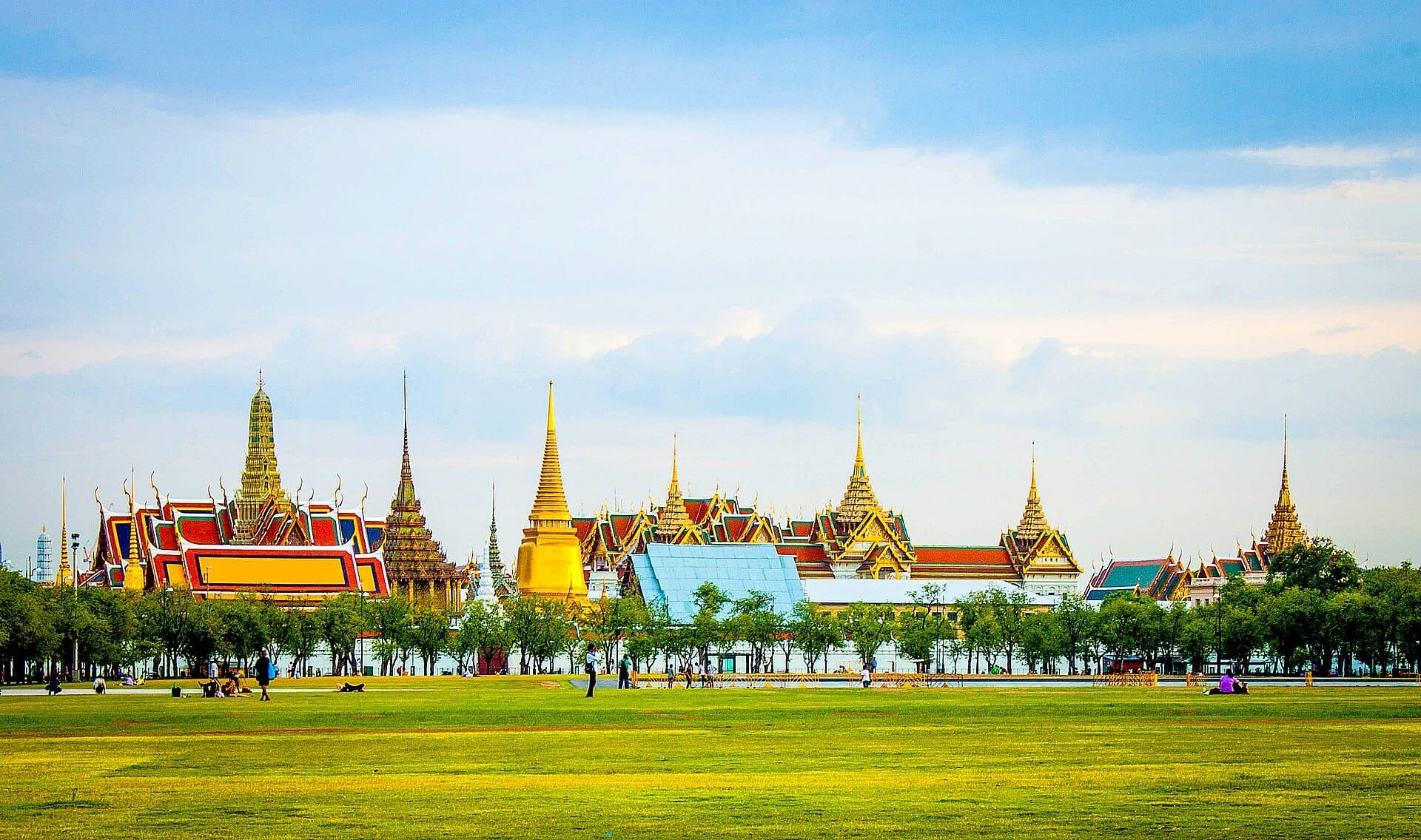
Sanam Luang is a vast open field at the heart of Bangkok's historic Rattanakosin island, bordered by the Grand Palace, Wat Phra Kaew, and the National Museum. It has hosted royal funerals, kite festivals, and mass gatherings for over two centuries, making it one of the most historically loaded public spaces in Southeast Asia.
Quick Facts
- Location
- Rattanakosin, Bangkok (between Na Phra That and Na Phra Lan roads)
- Getting There
- Nearest pier: Tha Chang (Chao Phraya Express, N9). Nearest MRT: Sanam Chai (20mn walk)
- Time Needed
- 30–60 minutes to walk the field; half a day if combining with Grand Palace and Wat Pho
- Cost
- Free to enter and walk. Surrounding temples charge separately
- Best for
- History lovers, early-morning walkers, kite festival visitors, photography
What Sanam Luang Actually Is
Sanam Luang translates directly as 'Royal Field', and that name carries real weight. This large oval ground, roughly 300 by 700 metres, sits directly north of the Grand Palace walls and has functioned as Bangkok's primary ceremonial space since the mid-19th century under King Rama IV. Royal cremations, agricultural ceremonies, national celebrations, and kite competitions have all taken place here across more than two centuries of Chakri dynasty history.
What makes the field worth understanding before you visit is that it looks deceptively simple: a flat, largely treeless expanse of grass and gravel paths, ringed by tamarind trees and low fences. There is no dramatic landmark at its centre. Its significance is entirely contextual, defined by the buildings around it and the events it has absorbed over generations. Visitors who arrive expecting manicured gardens or an immersive attraction often feel underwhelmed. Those who understand the space come away with something more lasting.
ℹ️ Good to know
Sanam Luang is not a ticketed attraction. You walk in from the perimeter paths freely. The field is sometimes closed for royal ceremonies or government events, with little advance notice to tourists. Check local news if visiting during national observances.
The Historical Weight of the Field
King Rama I laid out Sanam Luang as a deliberate echo of the great ceremonial fields of Ayutthaya, the former Siamese capital. The position was intentional: the palace to the south, the principal temple complex (Wat Phra Kaew) adjacent, and the National Museum to the west occupying what were once the Wang Na palace buildings. The field was the connective tissue between royal, religious, and administrative power.
Royal cremation ceremonies held here were among the largest public spectacles in Thai history. The funeral of King Bhumibol Adulyadej (Rama IX) in 2017 drew enormous crowds and required months of construction on the field itself. Temporary royal cremation structures of extraordinary architectural detail, called phrameru, have been erected on this ground multiple times. Photographs and scale models of these structures can be seen in the nearby Bangkok National Museum.
The field also carries agricultural symbolism. The Royal Ploughing Ceremony, an ancient Brahmin rite revived by the Thai royal family to bless the rice-growing season, is performed here each year, typically in late spring. Brahmin priests, royal oxen, and a designated ploughing route are part of a ritual that connects the modern Thai state to pre-Buddhist cosmological traditions. For more on the temples and ceremonies concentrated in this area, the best temples in Bangkok guide offers useful context.
Tickets & tours
Hand-picked options from our booking partner. Prices are indicative; availability and final rates are confirmed when you complete your booking.
Temples of Bangkok and Grand Palace half-day guided tour
From 18 €Instant confirmationFree cancellationDamnoen Saduak floating market and Maeklong railway guided tour
From 36 €Instant confirmationFree cancellationBangkok tuk-tuk night tour with Chinatown street food meal
From 28 €Instant confirmationFree cancellationAfternoon Tea at Hyatt Regency Hotel Bangkok
From 900 €Instant confirmationFree cancellation
What the Field Looks and Feels Like at Different Times
Early morning, before 8am, is when Sanam Luang shows its most liveable side. Older residents from surrounding neighbourhoods walk the perimeter paths. Monks pass through. Street vendors set up near the tamarind trees selling coffee in plastic bags and sticky rice wrapped in banana leaves. The air is thick and warm even at this hour, carrying the faint sweetness of nearby flower garlands sold to temple visitors. The field itself is quiet, and the Grand Palace walls glow in the low eastern light.
By mid-morning, particularly on weekends, kite flyers appear. Sanam Luang has a centuries-old association with kite flying, and this tradition is most visible from February through April when reliable winds cross the central plains. Large traditional kites, some shaped like stars or fish, tug on long lines while vendors sell smaller versions along the paths. It is one of the few places in Bangkok where a genuinely old leisure activity continues in its original setting.
Midday is the hardest time to be here. The field offers almost no shade at its centre, and Bangkok's midday heat between March and May can push apparent temperatures above 40°C. Most serious walkers retreat by 10am. If you arrive at noon, stay on the tamarind-lined perimeter paths and move quickly. Bring water: there are no drinking fountains inside the field.
Late afternoon, around 4–5pm, sees another shift. Tourist numbers drop, and local groups gather for exercise along the paths. The light becomes photographic gold by 5:30pm, with the temple spires of Wat Phra Kaew visible above the palace wall and catching warm colour. Sunset here, framed by the silhouetted rooflines of the Rattanakosin buildings, is one of the better views in the old city.
💡 Local tip
For photography, position yourself on the northern edge of the field looking south toward the Grand Palace wall around 5–6pm. The spires of Wat Phra Kaew are visible above the wall and catch golden light. A wide-angle lens helps with the scale.
The Buildings That Frame the Field
Sanam Luang makes most sense as a composition. Stand at the northern end and the view south takes in the Grand Palace outer wall, the roofline of Wat Phra Kaew, and the spire of Phra Si Rattana Chedi in the distance. To the west, the colonnaded facade of the Bangkok National Museum runs along Na Phra That Road. To the northeast, the open arches of Thammasat University face the field, a deliberate architectural statement: this was a founding site of democratic protest movements in Thai history.
The Bangkok National Museum is the most practical pairing with a visit to Sanam Luang. Its collection covers Thai royal regalia, prehistoric artefacts, and Buddhist sculpture across dozens of rooms in what was once the palace of the Second King (Wang Na). Entry costs 200 THB for foreigners. Allow at least two hours.
South of the field, Wat Phra Kaew and the Grand Palace together form the most visited attraction in Thailand. They share a ticket (500 THB for foreigners as of recent records, subject to change) and require at least two to three hours. Dress code is enforced: shoulders and knees must be covered. Sarongs are available for loan at the entrance if needed.
Getting There and Practical Notes
The most pleasant approach is by river. Take the Chao Phraya Express Boat to Tha Chang Pier (N9), a five-minute walk from the southeastern corner of the field. Boats run frequently from Central Pier (Sathorn) and most major riverside piers, and the river crossing itself offers an unobstructed view of Wat Arun on the Thonburi side.
If arriving by taxi, ask for 'Sanam Luang' or 'Na Phra That Road'. Traffic in this area can be slow on weekends and during government events. There is no nearby BTS or MRT station. The closest MRT is Sam Yot (Blue Line extension), which requires a connecting taxi or tuk-tuk ride. Sanam Luang sits within the broader Rattanakosin island area, which is best explored on foot once you arrive.
Accessibility is limited by the uneven gravel surface across parts of the field. The perimeter paths are more navigable for wheelchairs, but the field is not formally adapted. Toilets are available near the Silpakorn University entrance on the western side.
⚠️ What to skip
Sanam Luang closes entirely, sometimes with short notice, for royal ceremonies and state events. If you see temporary fencing or official vehicle access on arrival, the field may be restricted that day. Plan secondary attractions nearby so the day is not wasted.
Who Should Skip This, and Who Will Value It
Sanam Luang is not a curated visitor attraction. There are no explanatory panels, no audio guides, and no interactive features. Travellers who want structured engagement with historical content will do better starting at the Bangkok National Museum and treating the field as a transitional space rather than a destination in itself.
Families with young children will find limited shade and no play areas. The field is safe but offers little to hold attention for small children beyond the occasional kite flyer. Parents planning a Rattanakosin day with children are better served prioritising Wat Pho, which has more visual and tactile interest at close range.
Those who will genuinely value Sanam Luang are visitors with an interest in urban history, ceremonial landscape, and the way power is encoded in public space. Combined with a walk to the Giant Swing and Wat Suthat a few blocks east, the full Rattanakosin circuit becomes one of Bangkok's most rewarding half-days, even if it demands patience and early timing to beat the heat.
Insider Tips
- Visit on a weekend between February and April if you want to see traditional kite flying. Vendors near the northern perimeter sell handmade kites, and the activity is informal and photogenic without being staged for tourists.
- The tamarind trees lining the perimeter are original plantings, some over a century old. Their shade is the only reliable relief from the sun, so plan your walk to stay on the ring path rather than crossing the open centre during midday.
- The view back toward the Grand Palace wall from the northern end of the field is often more photogenic than shots taken from inside the palace complex, because you capture the scale of the outer wall in full.
- Thammasat University, on the northeastern edge of the field, has a small canteen open to the public on weekday mornings. It is one of the cheapest places to eat in the area and gives a brief look at campus life in central Bangkok.
- If you are visiting in May, check the date of the Royal Ploughing Ceremony. The field is closed to the public, but the fences around the perimeter allow limited viewing, and the crowds and ceremonial dress make for remarkable street-level photography.
Who Is Sanam Luang For?
- History and heritage travellers building a Rattanakosin circuit
- Early-morning walkers and photographers seeking the quiet old city
- Kite festival enthusiasts visiting between February and April
- Architecture and urban-history researchers interested in ceremonial space
- Independent travellers pairing the field with the National Museum and Grand Palace
Nearby Attractions
Other things to see while in Rattanakosin:
- Bangkok National Museum
The Bangkok National Museum is the largest museum in Southeast Asia and the definitive starting point for understanding Thai history. Spread across a former palace compound near the Grand Palace, it houses royal regalia, pre-Siamese sculpture, intricate funeral chariots, and centuries of Buddhist art under one roof.
- Democracy Monument
Standing at the heart of Ratchadamnoen Avenue in the Rattanakosin district, the Democracy Monument is Bangkok's most charged political symbol. Built in 1939 to commemorate Thailand's transition from absolute monarchy to constitutional rule, it remains a living stage for the city's public life and a striking piece of art deco civic architecture.
- The Giant Swing
The Giant Swing (Sao Ching Cha) stands 27 metres tall in the heart of Bangkok's historic Rattanakosin district, just steps from Wat Suthat. Once the centrepiece of a daring Brahmin ceremony, this centuries-old teak structure is one of Bangkok's most recognisable landmarks — and one of its least-understood.
- Grand Palace Bangkok
The Grand Palace is Bangkok's most recognizable landmark and the ceremonial heart of Thailand. This guide covers what to see, when to go, how to dress, and how to make the most of a visit without the frustration.