Wat Phra Kaew: Inside Thailand's Most Sacred Temple
Wat Phra Kaew, the Temple of the Emerald Buddha, sits within the Grand Palace walls in Rattanakosin and is considered the spiritual heart of the Thai kingdom. The complex is visually overwhelming, historically dense, and requires some preparation to appreciate fully.
Quick Facts
- Location
- Na Phra Lan Road, Rattanakosin, Bangkok
- Getting There
- Chao Phraya Express Boat to Tha Chang Pier (N9)
- Time Needed
- 2 to 3 hours
- Cost
- 500 THB (includes Grand Palace grounds)
- Best for
- History, Thai art, royal architecture, cultural context
What Wat Phra Kaew Actually Is
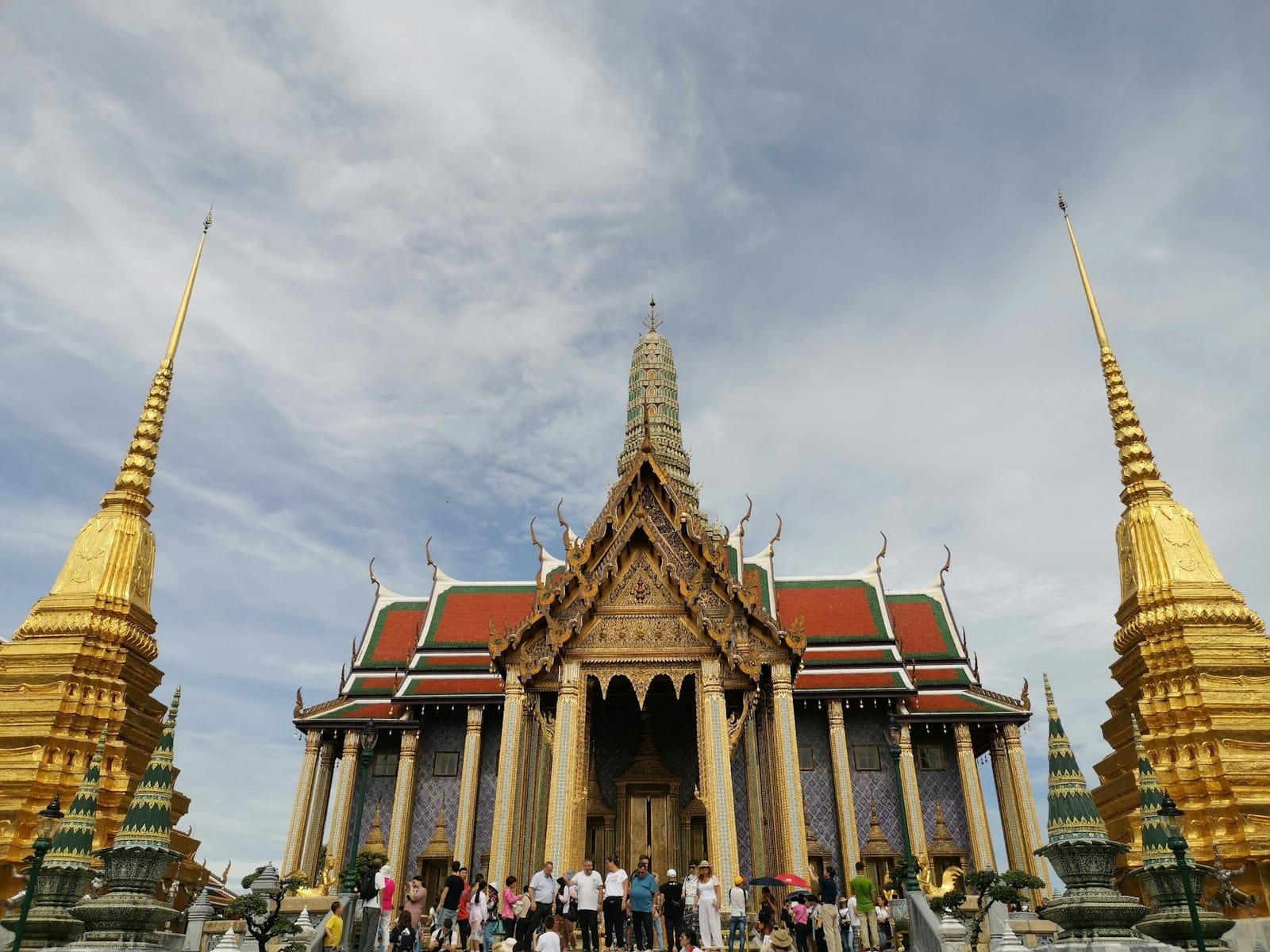
Wat Phra Kaew, formally called Wat Phra Sri Rattana Satsadaram, is the royal chapel of the Thai monarchy and the country's most revered religious site. Unlike most Thai temples, it has no resident monks. It functions instead as a ceremonial space used by the royal family for ritual observances tied to the Buddhist calendar.
The temple houses the Emerald Buddha, a seated figure carved from a single piece of green jadeite standing roughly 66 centimeters tall. Despite its modest size, the image carries extraordinary symbolic weight. The Thai king personally changes the Buddha's golden seasonal costume three times a year, a ritual that marks the transitions between hot, rainy, and cool seasons.
The temple sits inside the Grand Palace compound, which means your 500 THB ticket covers both. The two are inseparable logistically, though Wat Phra Kaew tends to draw more reverent attention. If you want broader context on the surrounding royal district, the Rattanakosin neighborhood contains several other landmarks worth planning around.
💡 Local tip
Dress code is strictly enforced: shoulders and knees must be covered. Sarongs and trousers are available to borrow at the entrance, but the queues for these can be long. Wear appropriate clothes from the start to save 15 to 20 minutes.
The Layout: What You Are Walking Into
The complex is larger and more layered than most first-time visitors expect. After passing through the main ticket gate on Na Phra Lan Road, you cross into the outer palace grounds before reaching the inner temple complex. The transition is marked by a pair of towering yaksha guardian statues, green-faced demon figures in ceremonial armor, standing at each gate.
Inside the inner courtyard, the visual density is immediate. Gold-tipped prangs (Khmer-style towers), mosaic-covered chedis, elaborately tiered rooflines in terracotta and green tile, and galleries painted with the Ramakien mural sequence all compete for attention. The Ramakien is the Thai version of the Hindu epic Ramayana, and its 178-panel mural wraps the entire inner wall of the cloister. Each panel carries inscribed explanations in Thai.
The ubosot, the ordination hall that houses the Emerald Buddha, sits at the north of the complex on a raised platform. Shoes are removed before entering. Inside, the space is dim and heavily gilded, with the small jade figure perched high on an elaborate multi-tiered throne. Photographs inside the ubosot are not permitted. The atmosphere inside is genuinely quiet and still, which is notable given the crowds outside.
⚠️ What to skip
Photography inside the Emerald Buddha chapel is prohibited. This rule is enforced by staff and respected by most visitors. Do not raise your phone or camera inside the hall.
Tickets & tours
Hand-picked options from our booking partner. Prices are indicative; availability and final rates are confirmed when you complete your booking.
Guided half-day visit to Grand Palace and Wat Phra Kaew
From 238 €Instant confirmationFree cancellationHalf-day van charter to Wat Phra Kaew and Wat Arun from Bangkok
From 119 €Instant confirmationFree cancellation1-day hop-on hop-off Chao Phraya river cruise
From 3 €Instant confirmationFree cancellationOpulence buffet dinner cruise with cultural show on Chao Phraya river
From 48 €Instant confirmationFree cancellation
How the Experience Changes by Time of Day
The complex opens at 08:30 and the difference between arriving at opening versus mid-morning is significant. By 09:30 on most days, tour groups have arrived in volume and the courtyard between the Ramakien gallery and the ubosot becomes crowded. By 10:30, queues for the Emerald Buddha hall itself can stretch back across the courtyard.
Arriving at 08:30 gives you roughly 45 minutes of relative calm. The morning light hits the gold mosaic on the large chedi facing east, which is worth seeing before it flattens into midday glare. The air is also measurably cooler, an important practical factor given that the entire site is open to the sky and Bangkok heat builds fast.
Afternoons from 13:30 onward see some crowd reduction as large tour groups cycle out, but the heat by then is at its peak. The last admission is at 15:30 and the site closes at 16:00. Late afternoon visits have an appeal in terms of light quality, but plan to spend time in the shade of the cloister galleries and move through the open courtyards quickly.
Historical and Cultural Context
Wat Phra Kaew was founded in 1782 when King Rama I established Bangkok as the new capital of the Chakri dynasty following the fall of Ayutthaya and a brief period in Thonburi. The temple was constructed alongside the Grand Palace as a deliberate statement of dynastic legitimacy, echoing the design of the royal chapel at the previous capitals.
The Emerald Buddha itself has a longer and more traveled history. According to historical records, the image was discovered in Chiang Rai in 1434, then resided in Lampang, Chiang Mai, Luang Prabang, and Vientiane before being brought to Bangkok. Its presence in the capital is considered inseparable from the legitimacy of the Thai state.
The Ramakien murals were first painted during Rama I's reign and have been restored multiple times since. They are considered a canonical example of Thai classical painting. If the narrative art tradition interests you, the Bangkok National Museum nearby holds an extensive collection of related artifacts and provides excellent context for what you see at Wat Phra Kaew.
Getting There and Navigating the Entrance
The most straightforward route is the Chao Phraya Express Boat to Tha Chang Pier (N9). From the pier it is roughly a 10-minute walk south along Na Phra Lan Road to the main entrance. This is a far more pleasant approach than arriving by road during peak hours, when Rattanakosin traffic can be slow and tuk-tuk drivers near the entrance may suggest detours to shops.
If arriving by taxi or ride-share, ask to be dropped at the main gate on Na Phra Lan Road rather than the side streets. A persistent scam in the area involves well-dressed strangers who approach tourists outside the gate to say the temple is closed for a ceremony and offer to redirect them to a jewelry shop instead. It is almost never closed during operating hours. Walk past these individuals and verify at the gate directly.
⚠️ What to skip
Ignore anyone outside the complex who tells you the temple is closed today. This is a well-documented scam. The entrance is clearly marked and staff at the gate are the only reliable source of information.
For those planning a full day in the area, Wat Pho is a 10-minute walk south and offers a very different, more accessible temple experience. Across the river via a short ferry, Wat Arun makes for a natural extension of the same day.
Who This Attraction Suits and Who Should Reconsider
Wat Phra Kaew rewards visitors who come prepared. Some background reading on the Ramayana or Thai royal history turns the visual complexity into a readable narrative. Without that context, the murals and architecture can feel like an undifferentiated spectacle. Audio guides are available for hire at the entrance and cover the major structures in accessible English.
Visitors with mobility limitations should note that the inner courtyard involves uneven paving, steep steps leading up to the ubosot platform, and no ramp alternatives for the main chapel entrance. The surrounding galleries are navigable by foot on flat ground, but full access to the temple interior is not possible for wheelchair users.
Travelers looking for a quieter or less-visited temple experience might find equal or greater satisfaction at Wat Suthat or Wat Ratchanatdaram, both of which are architecturally significant and far less crowded. That said, Wat Phra Kaew's combination of political history, sacred art, and concentrated ornamentation is genuinely unlike anything else in Bangkok.
Young children tend to find the site visually engaging but the dress code requirements, shoe removal, and length of the visit can make it tiring. A focused 90-minute circuit works better than a leisurely 3-hour exploration when visiting with children.
Insider Tips
- Arrive at exactly 08:30 when the gates open. The first 45 minutes are calmer than anything you will experience later in the day, and the eastern light on the gold mosaic chedi is at its best.
- The Ramakien mural panels are numbered. Starting at panel one and walking the full cloister counterclockwise takes 30 to 40 minutes and gives the sequence a narrative logic that random browsing does not.
- The audio guide available at the entrance desk is worth the rental cost. It covers the major buildings clearly and provides historical framing that on-site signage in English does not always supply.
- Buy your ticket directly at the gate. There are no authorized third-party sellers for discounted tickets. Anything sold outside the entrance is either a scam or an overpriced bundled tour.
- Bring a small bottle of water. There are no drinking fountains inside the complex and the heat in open courtyards between April and June is serious. Vendors outside the gate sell water at standard prices.
Who Is Wat Phra Kaew For?
- First-time visitors to Bangkok wanting to understand the foundations of Thai royal and religious culture
- History and art enthusiasts interested in classical Thai painting and Chakri dynasty architecture
- Photographers working in the early morning, when crowds are thin and the light is directional
- Travelers combining a full Rattanakosin walking day with Wat Pho and Sanam Luang
- Anyone wanting to understand why the Emerald Buddha is central to Thai national identity
Nearby Attractions
Other things to see while in Rattanakosin:
- Bangkok National Museum
The Bangkok National Museum is the largest museum in Southeast Asia and the definitive starting point for understanding Thai history. Spread across a former palace compound near the Grand Palace, it houses royal regalia, pre-Siamese sculpture, intricate funeral chariots, and centuries of Buddhist art under one roof.
- Democracy Monument
Standing at the heart of Ratchadamnoen Avenue in the Rattanakosin district, the Democracy Monument is Bangkok's most charged political symbol. Built in 1939 to commemorate Thailand's transition from absolute monarchy to constitutional rule, it remains a living stage for the city's public life and a striking piece of art deco civic architecture.
- The Giant Swing
The Giant Swing (Sao Ching Cha) stands 27 metres tall in the heart of Bangkok's historic Rattanakosin district, just steps from Wat Suthat. Once the centrepiece of a daring Brahmin ceremony, this centuries-old teak structure is one of Bangkok's most recognisable landmarks — and one of its least-understood.
- Grand Palace Bangkok
The Grand Palace is Bangkok's most recognizable landmark and the ceremonial heart of Thailand. This guide covers what to see, when to go, how to dress, and how to make the most of a visit without the frustration.