Bangkok Street Food Guide: Best Dishes, Markets & Neighborhoods (2026)
Bangkok's street food scene is one of the most rewarding in Southeast Asia, but knowing where to go and what to order separates a great meal from a mediocre one. This guide breaks down the best dishes, neighborhoods, and markets so you can eat confidently and affordably.
Plan and book this trip
Tools from our partner Travelpayouts help you compare flights and hotels. If you book through them, we may earn a commission at no extra cost to you.
Flights
Hotels map
TL;DR
- Bangkok street food is cheapest and freshest in the early morning (6-9am) and evening (6-10pm) when stalls are fully stocked and crowds peak.
- Chinatown (Yaowarat) is the undisputed epicenter for evening street food. Read our guide to Chinatown Yaowarat before you go.
- Expect to pay 40-80 THB (around $1.10-$2.30 USD) for common street dishes outside of seafood in local neighborhoods. In touristy areas, the same plate often costs 100–180 THB.
- Pad Thai from a cart is rarely the best version; seek out boat noodles, khao man gai, and mango sticky rice instead.
- Pair your food crawl with Bangkok's best night markets. See our best markets in Bangkok guide for the full breakdown.
What Makes Bangkok Street Food Different
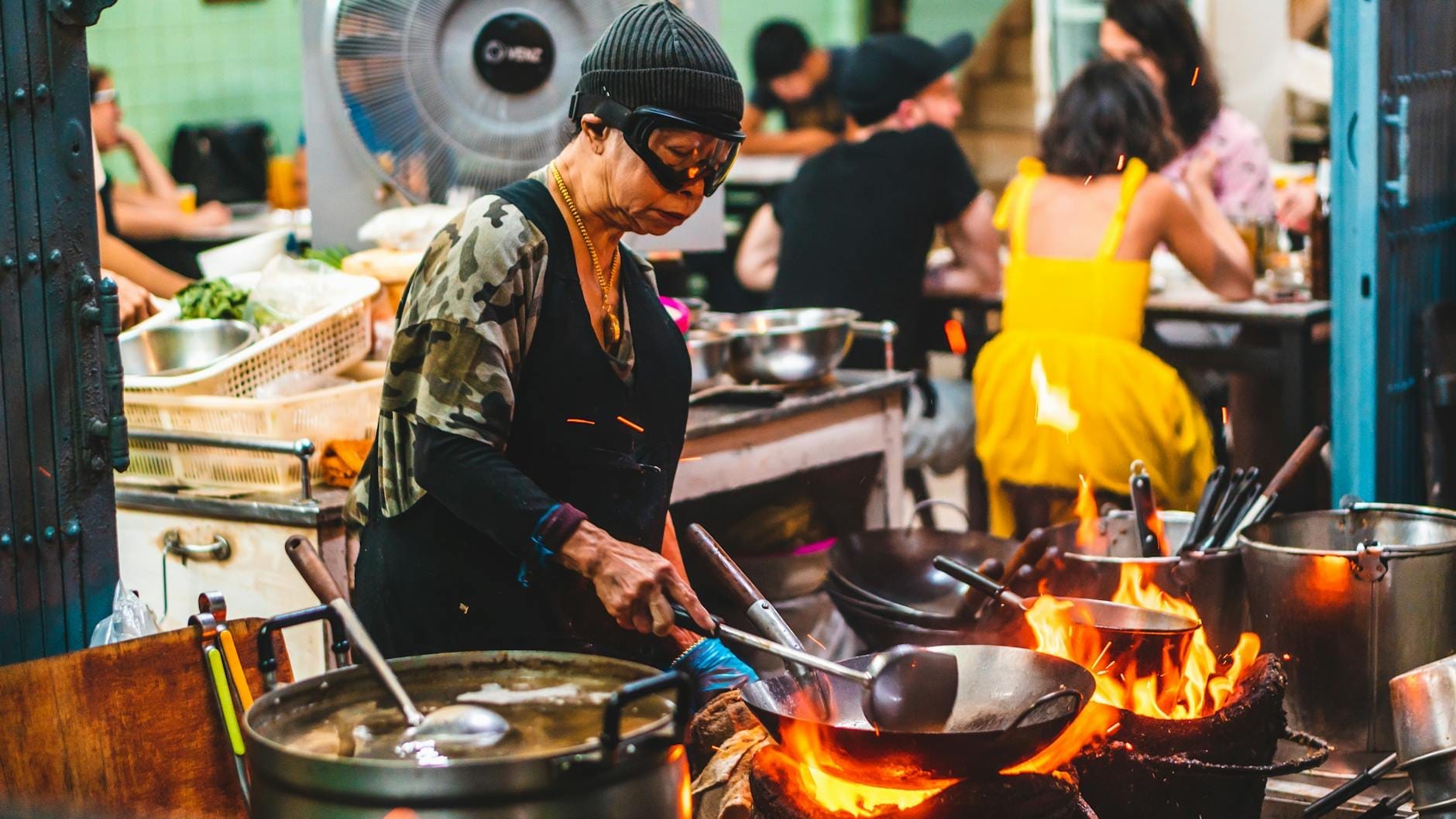
Bangkok street food is not just a budget option; it is often the best food in the city. Thai cooks who have run the same cart for 20 years have refined their single dish to a level that most restaurants cannot match. The city has an estimated 30,000 street food vendors operating on any given day, ranging from dawn rice porridge sellers to late-night grilled pork skewer carts. This specialization is key. When you see a stall selling only one or two items, that is almost always a good sign.
Prices have risen modestly since the post-pandemic recovery, but Bangkok street food remains exceptional value. A bowl of boat noodles runs 50-60 THB. Khao man gai (poached chicken rice) averages 60-80 THB. Grilled skewers (moo ping) cost 15-25 THB each. You can eat three full meals and two snacks in a day for under 400 THB (roughly $11 USD). That math does not hold up if you eat exclusively in the tourist zones around Khao San Road or Silom, where prices at pedestrian-facing stalls are often 50-100% higher.
💡 Local tip
Look for stalls with a queue of Thai office workers or university students. If locals are eating there during their lunch break, the food is almost certainly good and priced fairly.
Essential Dishes to Prioritize
Most Bangkok street food guides lead with pad Thai. While a good pad Thai does exist on the street, it is one of the hardest dishes to execute well at scale, and tourist-facing versions are frequently greasy and bland. These are the dishes that reward you more consistently.
- Khao Man Gai Hainanese-style poached chicken over fragrant rice, served with dark ginger-soy sauce and clear broth. Simple, precise, and deeply satisfying. Most stalls open from around 7am to 3pm before selling out.
- Kuay Teow Reua (Boat Noodles) Small bowls of dark, spiced broth with pork or beef, blood thickener, and fresh herbs. Served in small portions by design; order three or four bowls. The area near Victory Monument has a dense cluster of boat noodle shops.
- Mango Sticky Rice (Khao Niao Mamuang) Best from March to June when Nam Dok Mai mangoes are in season. The mango should be sweet and almost creamy, not sour or fibrous. Off-season versions using imported mangoes are a noticeable step down.
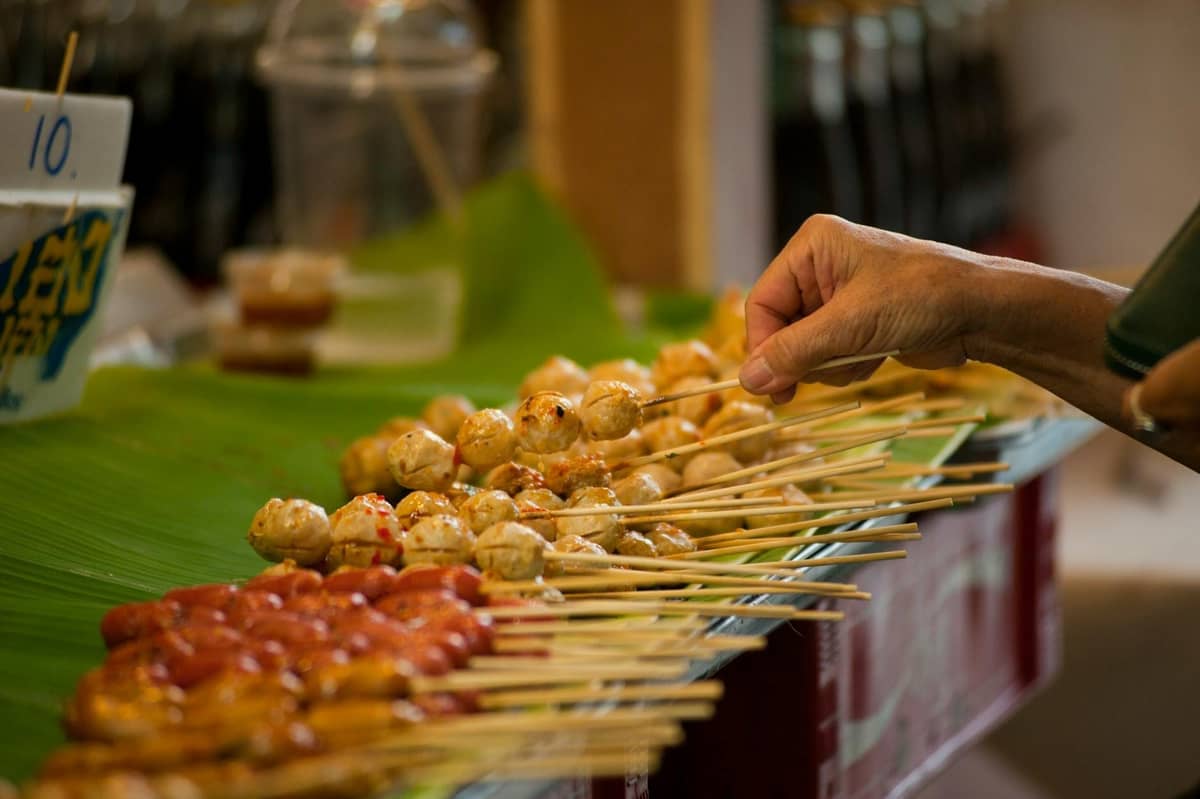
- Moo Ping (Grilled Pork Skewers) Marinated pork on bamboo skewers grilled over charcoal, sold from dawn carts alongside sticky rice. One of Bangkok's best breakfasts and the most underrated meal of the day.
- Pad Kra Pao (Holy Basil Stir-Fry) Minced pork or chicken stir-fried with holy basil, fish sauce, oyster sauce, and chilies, served over rice with a fried egg. The de facto working lunch of Bangkok. Order it pet (spicy) unless you have a low tolerance.
- Khanom Buang (Thai Crispy Crepes) Thin crispy shells filled with sweet coconut cream and shredded coconut. A street snack unique to Thailand, often found near temple markets and weekend street fairs.
⚠️ What to skip
Avoid pre-cooked food sitting in trays under heat lamps for extended periods, especially in hot weather. Fresh-to-order stalls are always preferable. If something smells sour or looks like it has been sitting for hours, skip it regardless of the price.
Best Neighborhoods for Street Food
Bangkok's street food is not evenly distributed. Some neighborhoods deliver extraordinary variety and quality; others are tourist-facing and overpriced. Here is a straightforward breakdown of where to focus your time. If you only have one evening, go to Yaowarat Road in Chinatown. The 500-meter stretch from the Odeon Circle to the arch at the western end comes alive after 6pm with seafood grills, roast duck stalls, and dim sum shops that operate until well past midnight.
- Chinatown (Yaowarat) The most concentrated and theatrical street food experience in Bangkok. Best for seafood, roast meats, oyster omelets, and Chinese-Thai hybrid dishes. Evenings only; go after 6:30pm when the stalls fully set up.
- Sukhumvit (Soi 38 Area and Thong Lo) Sukhumvit's street food scene has thinned over the years as real estate costs rise, but pockets remain strong. The area around Thong Lo and Ekkamai still supports good evening stalls catering to local residents rather than tourists.
- Rattanakosin (Old City) Strong daytime street food scene around Sanam Luang and the surrounding streets. Morning vendors near the Grand Palace area sell khao tom (rice porridge), fried dough, and fresh fruit. Dinner options thin out significantly.
- Silom and Sathorn A lunchtime street food corridor serving Bangkok's office workers. The side streets off Silom Road fill up between 11:30am and 1:30pm with excellent, cheaply priced food targeting local professionals. This is not a tourist crowd, which keeps prices honest.
- Victory Monument An underrated food district popular with students and working Thais. Strong for boat noodles, somtam (papaya salad), and Isaan food from northeastern Thailand. More authentic and less photogenic than Chinatown, which is precisely the point.
If you want a structured introduction to the Chinatown food scene, the Chinatown street food attraction page covers the key stalls, logistics, and how to navigate the area efficiently. For a broader itinerary built around Bangkok's markets, check out the things to do in Bangkok guide, which integrates food stops with sightseeing.
Markets Worth Planning Your Meal Around
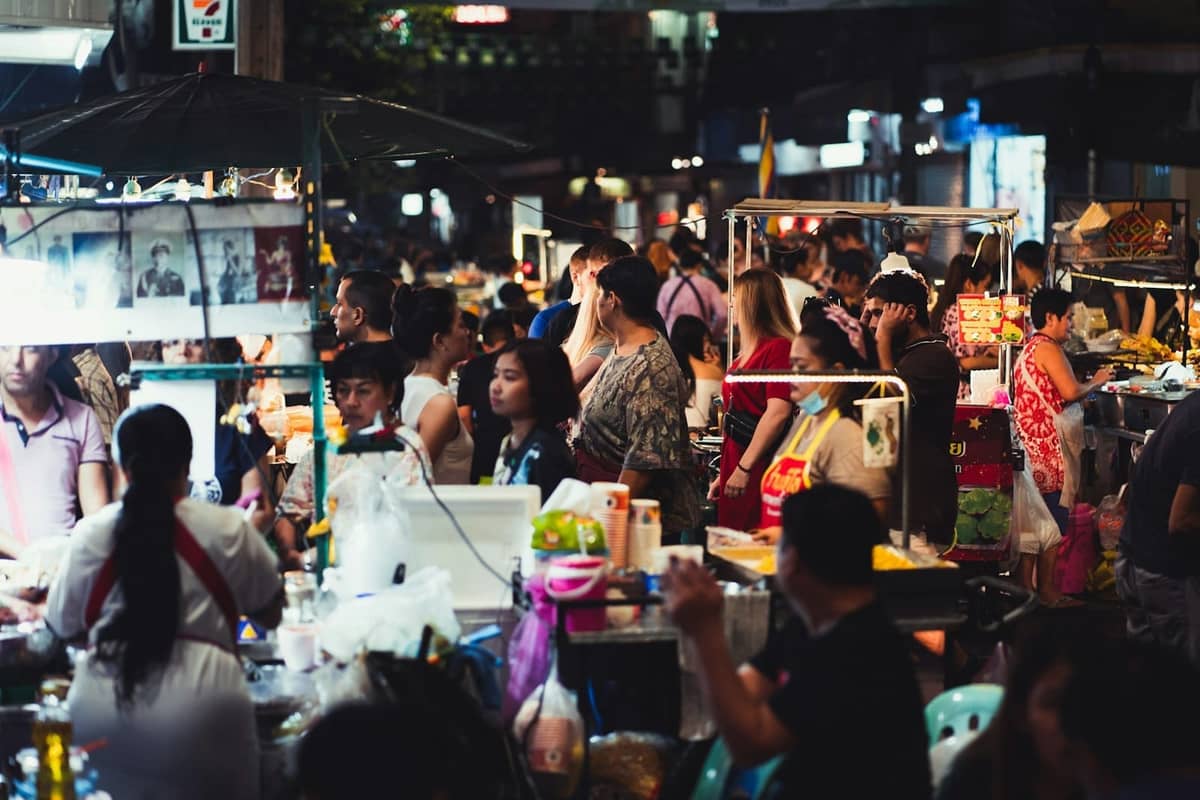
Bangkok's markets are not just places to shop; the best ones are destinations for serious eating. The Or Tor Kor Market near Chatuchak is Bangkok's premium fresh produce market and is particularly strong for prepared foods: fresh curries, grilled meats, and tropical fruits of exceptional quality. It is a step above typical street stalls in price (expect to pay 20-30% more) but also in quality control and hygiene.
The Chatuchak Weekend Market runs on Saturdays and Sundays only and contains a large internal food section with everything from pad see ew to fresh coconut ice cream. Avoid eating here between 11am and 2pm in the hot season (March-May); the covered sections become extremely hot and the freshness of some stalls becomes questionable. Go early, eat around 9-10am, then shop. The Patpong Night Market in Silom is more geared toward tourists and souvenirs, but the surrounding street food vendors on the main road are legitimately good and priced for locals.
Food Safety, Hygiene, and Practical Tips
Bangkok street food has an overstated reputation for making people sick. The reality: fresh-cooked food from high-turnover stalls is generally safe. Problems arise from a few specific patterns: eating undercooked shellfish from stalls with low turnover, consuming cut fruit that has been sitting out for hours in direct sun, or drinking tap water (which is not safe for visitors). Stick to bottled water or sealed drinks, avoid ice at very basic stalls unless you can confirm it is commercially produced cube ice (not the block variety), and prioritize stalls where food is cooked to order.
✨ Pro tip
Learn three Thai food phrases before you go: 'pet nit noi' (a little spicy), 'mai pet' (not spicy), and 'aroy mak' (very delicious). Using them correctly earns visible goodwill from vendors, and you will occasionally get a larger portion or a free extra.
Cash is essential. The vast majority of street food vendors do not accept cards or QR payment apps from foreign accounts. Carry small bills: 20 and 50 THB notes are ideal. ATMs are common in all major neighborhoods, but Bangkok's independent ATMs charge a 250 THB foreign transaction fee per withdrawal, so consolidate your cash runs. Markets and vendors rarely have change for 1,000 THB notes, so break larger bills at convenience stores or 7-Elevens before you arrive at a food market.
- Visit Chinatown in the evening, not for lunch; the evening setup is dramatically better and more complete.
- Pair a temple visit with a food crawl: the streets around Wat Pho and Wat Arun have decent morning stalls, and the walk between them passes several good vendor clusters.
- Avoid Khao San Road food stalls if you are looking for authentic prices and quality; they target backpackers and charge accordingly.
- Download Google Translate with Thai offline pack; menu boards are almost always in Thai script only.
- The best mango sticky rice vendors often sell out by early afternoon; buy it before 1pm if you want the best mango.
Bangkok's street food calendar also shifts around major festivals. During Songkran in April, many regular stalls close while temporary festival vendors set up near water fight zones. The food quality at these temporary setups is inconsistent. For full context on how the festival affects the city's rhythm, the Songkran Bangkok guide is worth reading before you plan your trip around it. Timing also matters for seasonal ingredients; see the best time to visit Bangkok guide for a month-by-month breakdown of what is in season.
FAQ
Is Bangkok street food safe to eat?
Generally yes, with some caveats. Fresh-cooked, high-turnover stalls are safe for most visitors. Avoid shellfish from stalls with slow turnover, pre-cut fruit sitting in the sun, and tap water or suspect ice. Stomach issues from Bangkok street food are usually traceable to one of these three sources rather than to street food as a category.
What is the cheapest area to eat street food in Bangkok?
The Victory Monument area, the side streets off Silom during lunch, and the residential neighborhoods of Lat Phrao and Bang Na offer the lowest prices because they cater primarily to working locals. Expect to pay 40-60 THB per dish. Avoid Khao San Road and the immediate surroundings of Siam Square for budget eating.
Where is the best street food in Bangkok at night?
Yaowarat Road in Chinatown is the most concentrated evening street food destination, active from around 6pm to midnight. For a less theatrical but equally good experience, the evening stalls near Thong Lo (Sukhumvit Soi 55) and around Victory Monument serve local crowds until late.
Do I need to speak Thai to order street food in Bangkok?
No, but it helps. Most popular stalls near tourist areas have some English or use pictures. For stalls that cater to locals only, pointing and holding up fingers for quantity works reliably. Learning to say 'mai pet' (not spicy) and 'pet nit noi' (a little spicy) is more practically important than any other phrase.
What time do Bangkok street food stalls open and close?
It depends on the type. Breakfast stalls (moo ping, khao tom, fried dough) open from around 6am and often sell out by 9-10am. Lunch stalls near offices run 11am-2pm and close when food is gone. Evening and night food markets like Chinatown start around 6pm and run until midnight or later. Some 24-hour stalls exist but are rare outside of tourist zones.