Bangkok's Chinatown, centered on Yaowarat Road, is one of the oldest and most atmospheric neighborhoods in the city. Gold traders, noodle vendors, incense-filled shrines, and late-night seafood stalls occupy the same dense blocks, creating a neighborhood that operates on its own distinct rhythm from dawn to well past midnight.
Yaowarat is Bangkok's Chinatown: a two-kilometer strip of gold shops, seafood stalls, Buddhist-Taoist temples, and wholesale traders that has been the commercial and cultural heart of Bangkok's Chinese community since the late 18th century. The neighborhood is loud, dense, and never fully asleep, and it rewards visitors who slow down and pay attention to what's happening at street level.
Orientation
Chinatown sits on the eastern bank of the Chao Phraya River, roughly 2 kilometers southeast of the Grand Palace and Rattanakosin Island. Its spine is Yaowarat Road, a four-lane artery that runs northwest to southeast between the Odeon Circle roundabout (marked by the ornate Chinatown Gate) and the Hualamphong area near the main railway station.
The northern boundary bleeds into the older Pahurat district, Bangkok's Little India, where fabric merchants and sari shops take over. To the south, the streets drop down toward Talat Noi, a quieter riverside quarter with Portuguese-influenced architecture and some of the city's oldest shophouse lanes. To the east, Chinatown connects to the Hualamphong railway station area, and from there it's a short distance to Silom and the central business district.
The MRT Blue Line's Wat Mangkon station, which opened in 2019, transformed access to the neighborhood. Before it, Chinatown was genuinely inconvenient to reach by public transit. Now it's a single train stop from Sam Yot and two stops from Hua Lamphong. The neighborhood also borders the river, and Rattanakosin Island is easily walkable across the Memorial Bridge or reachable by the Chao Phraya Express Boat from Ratchawong Pier.
Character & Atmosphere
Early mornings on Yaowarat Road belong to the wholesale traders. Between 6am and 9am, the street is still cool enough to walk comfortably, and the sidewalks are stacked with crates of produce, dried goods, and restaurant supplies being delivered to kitchens across the city. The gold shops that line the road are still shuttered, their yellow signboards catching the low light, while monks collect alms from residents who have lived in these shophouses for generations.
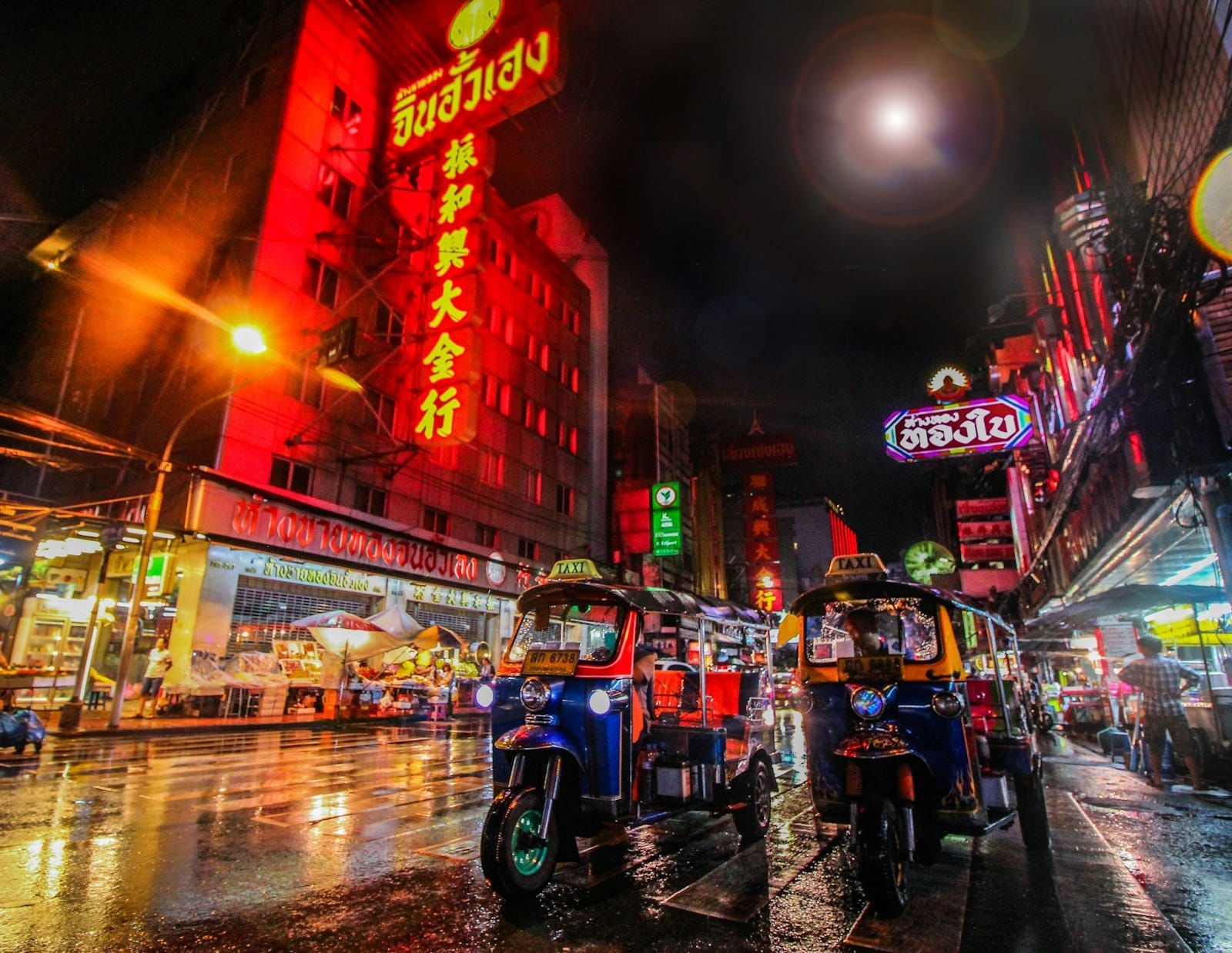
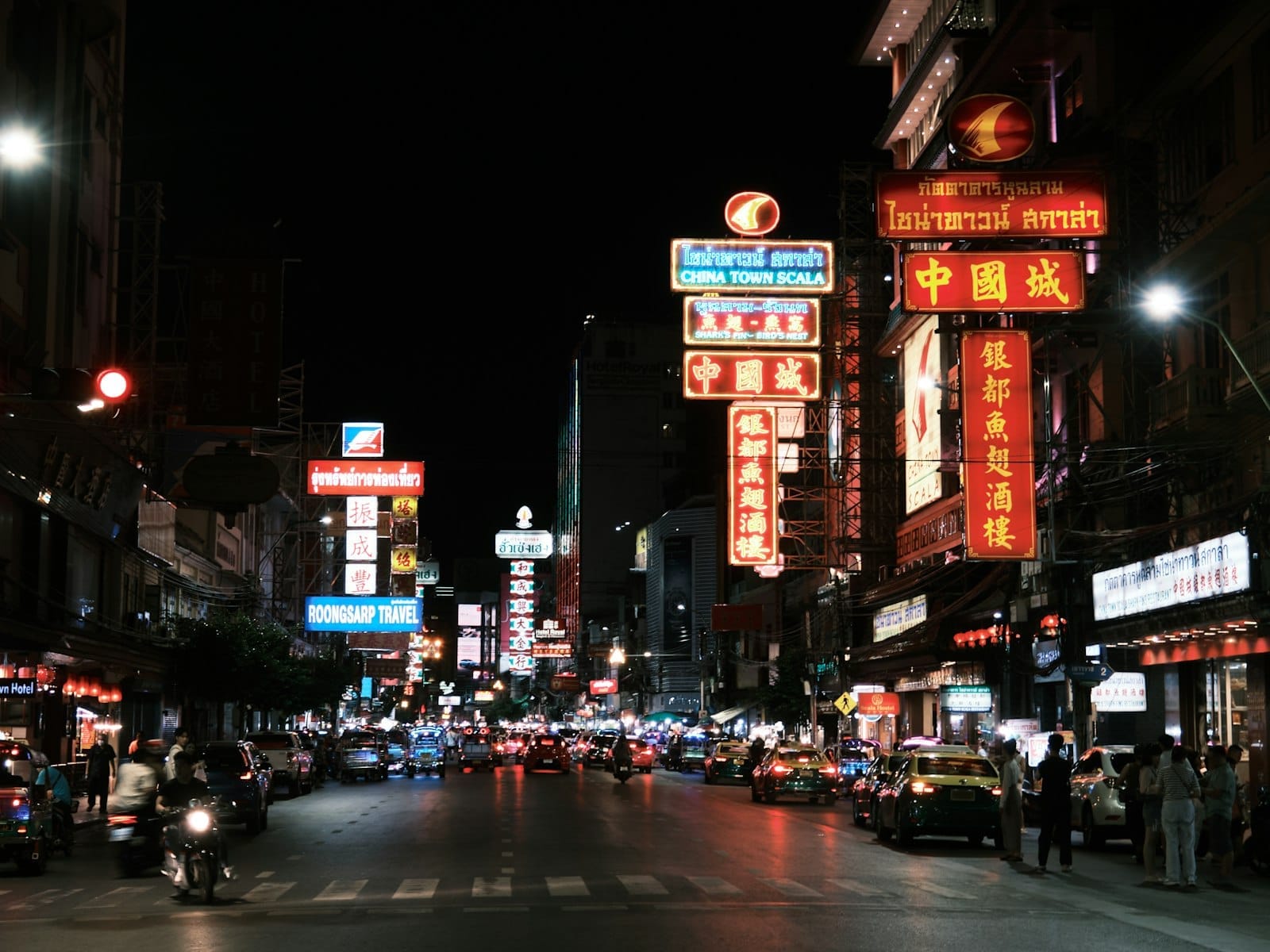
By midday, the heat drives most visitors and casual shoppers indoors or into the air-conditioned gold exchanges. The street food vendors begin setting up their carts around 4pm, and by sunset Yaowarat Road transforms into something closer to its famous nighttime identity. The neon signs switch on, the traffic thickens, and the smell of roasting meats, frying garlic, and charcoal-grilled seafood drifts across the sidewalks.
After 8pm, Chinatown hits its peak. The main road becomes almost impassable to vehicles, the sidewalks fill with plastic stools and shared tables spilling out of restaurant fronts, and the noise level rises to something that requires effort to talk over. This is the neighborhood in full performance. The energy is genuine, not staged for tourists, though tourists are absolutely present in large numbers.
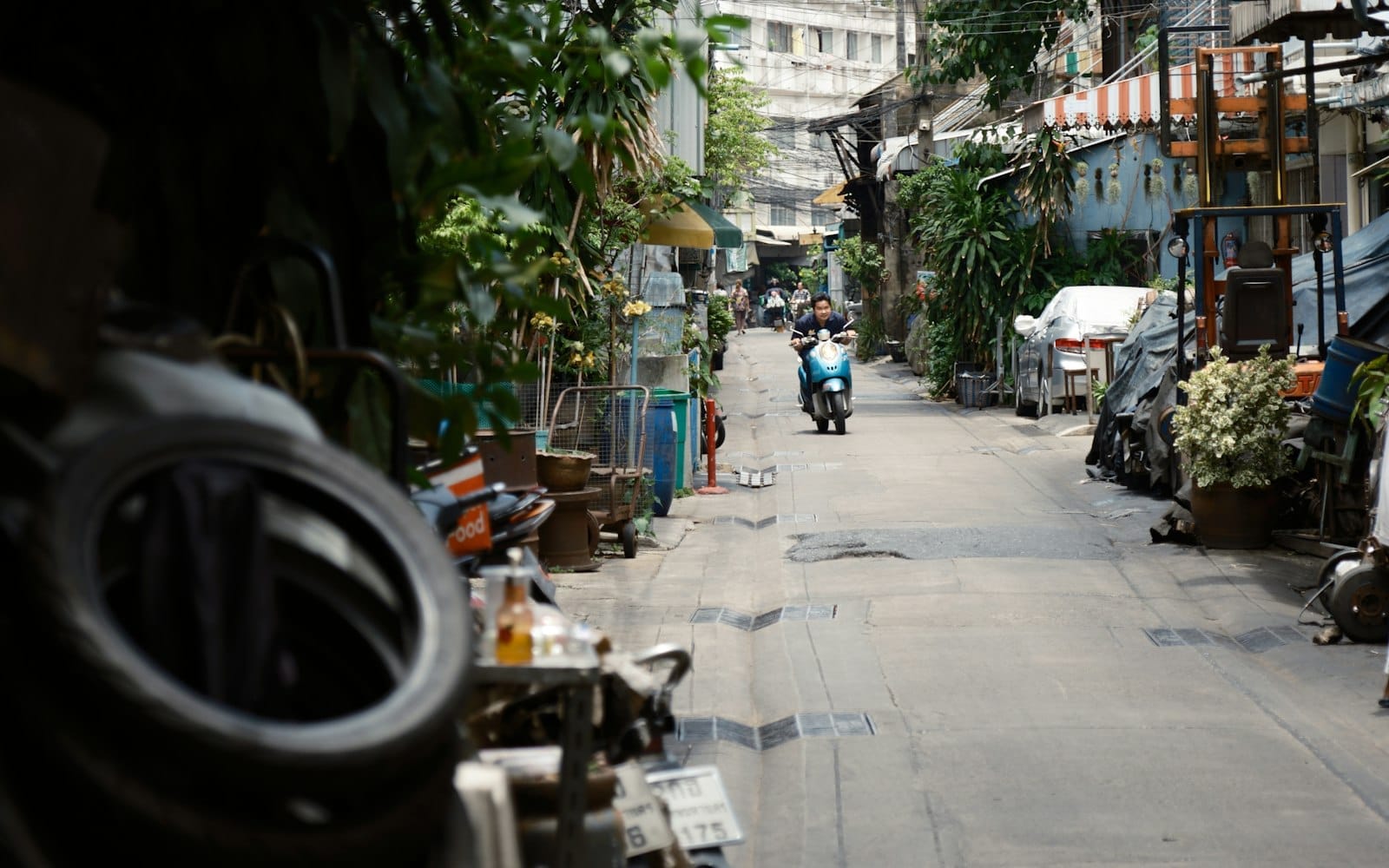
The side streets tell a different story. Duck south off Yaowarat Road into the lanes around Soi Nana (not the Sukhumvit version) and you'll find a neighborhood that barely acknowledges the crowds on the main strip: small shrines with fresh marigolds, old men playing cards under fluorescent lights, and family-run workshops producing goods that have been made in the same way for decades.
ℹ️ Good to know
Chinatown has two distinct personalities: the main Yaowarat Road strip, which is loud, tourist-facing, and worth experiencing at night, and the surrounding lanes, which are quieter and give a more honest picture of how the neighborhood actually functions day to day.
What to See & Do
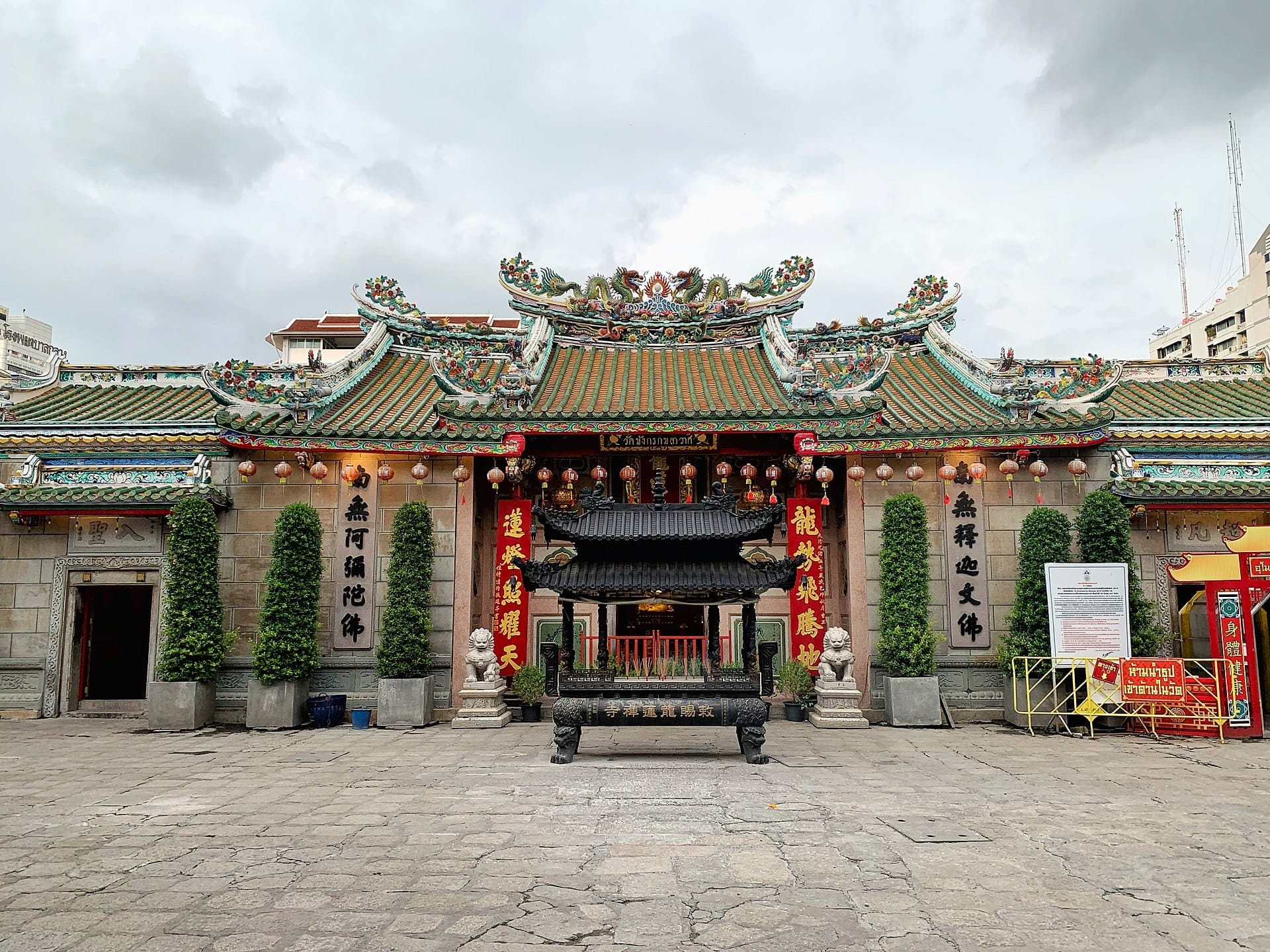
The neighborhood's most celebrated temple is Wat Mangkon Kamalawat, a large Mahayana Buddhist temple on Charoen Krung Road that doubles as a Taoist shrine. The interior is layered with incense smoke, golden statues, and devotees performing rituals at all hours of the day. It is one of the most important Chinese Buddhist temples in Southeast Asia, not simply a tourist sight.
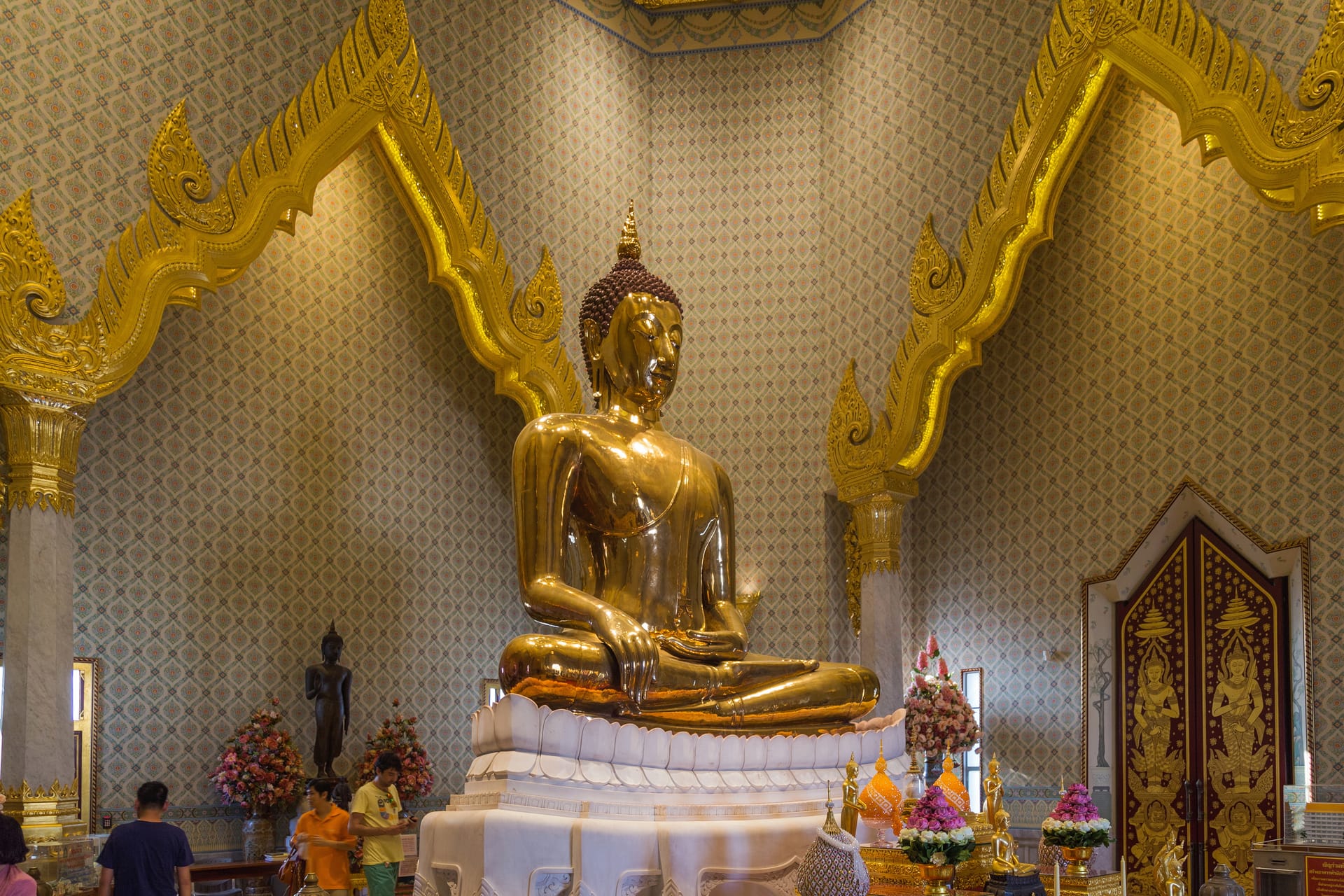
A few blocks east toward Hualamphong, Wat Traimit houses one of Bangkok's most extraordinary objects: a 5.5-tonne solid gold Buddha statue, the largest of its kind in the world. The statue, which was discovered to be solid gold only in 1955 after its plaster casing cracked during a move, now sits in a purpose-built multi-story building that also contains exhibits on the history of Bangkok's Chinese community.
South of Yaowarat Road, the lanes around Talat Noi reward slow exploration. This area is technically its own sub-district but flows naturally from Chinatown and contains some of the oldest street art in Bangkok alongside decaying Portuguese-era buildings and a handful of very old temples. The Talat Noi area has developed a small but genuinely interesting café and creative scene in recent years, occupying buildings that feel like they belong to a different century.
The Yaowarat Road strip itself is worth walking end to end at least once, ideally after dark. The gold shops alone are remarkable: dozens of jewelers selling 23 and 24-karat gold in standardized weights, operating on margins so thin that prices are updated on chalkboards throughout the day. This is where Bangkok's Chinese community has historically stored wealth, and the density of gold trading here has no equivalent elsewhere in the city.
Wat Mangkon Kamalawat: the neighborhood's main Mahayana-Taoist temple, busiest during Chinese New Year
Wat Traimit: home to the world's largest solid gold Buddha statue
Talat Noi: the riverside sub-district to the south, good for street art and old architecture
The gold shops along Yaowarat Road: a concentrated display of traditional Chinese commercial culture
Odeon Circle and the Chinatown Gate: the ornate ceremonial entrance at the western end of Yaowarat Road
Kudi Chin: the historic Portuguese-Catholic community near the river, accessible on foot
💡 Local tip
Chinese New Year (January or February, depending on the lunar calendar) turns Yaowarat Road into one of Bangkok's most spectacular street events. The road is closed to traffic, lion dances move between temple entrances, and the food stalls multiply. Crowds are enormous but the atmosphere is unlike anything else in the city.
Eating & Drinking
Chinatown is arguably the best single neighborhood for street food in Bangkok, a city where that is a serious claim. The cooking is primarily Teochew Chinese, the dialect group that dominated early Chinese immigration to Thailand, and it shows in the style: clear broths, roasted meats, congee, and dishes built around seafood, offal, and tofu. For a broader map of what to eat across the city, the Bangkok street food guide covers Chinatown in detail alongside other key food neighborhoods.
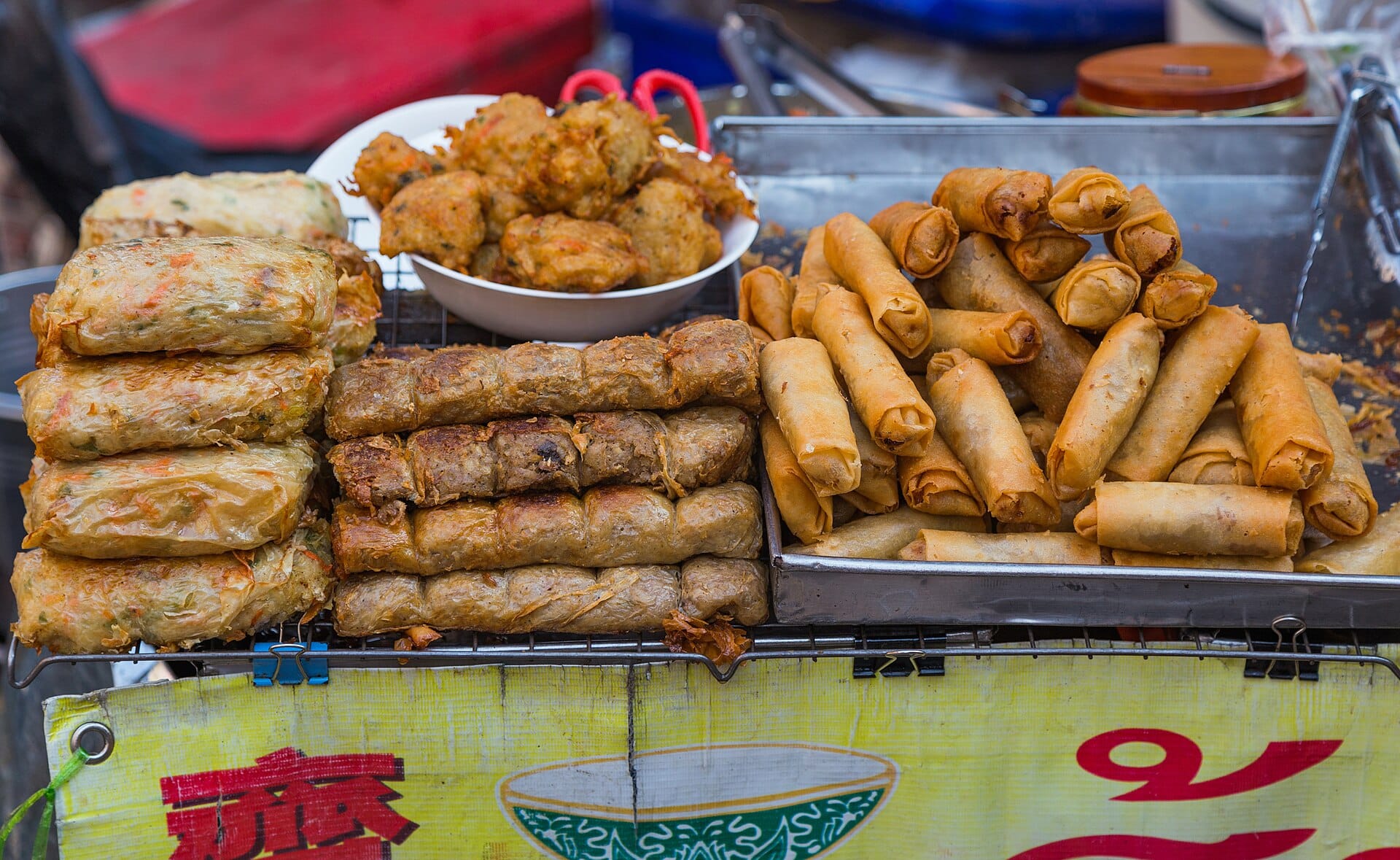
The food stalls that cluster along Yaowarat Road and in the lanes behind it after dark include some of the most famous night food spots in Bangkok. Chinatown street food specialties to look for include pad Thai cooked to order over extremely high heat in a blackened wok, oyster omelettes (hoi thod) that arrive crispy-edged and soft in the middle, whole roasted duck hanging in shophouse windows, and enormous claypot crabs prepared at carts with gas burners turned up to maximum.
Prices are low to moderate by Bangkok standards. A full meal at a street stall runs 80 to 150 baht per dish. The sit-down seafood restaurants on the main road are more expensive, with whole fish and shellfish dishes priced by weight, and a table for two can easily reach 1,000 to 2,000 baht. These restaurants are genuinely excellent and not tourist traps, but they require pointing at items and negotiating weight rather than ordering from a menu.
The area also has a strong dessert and sweet snack culture. Mango sticky rice, egg tarts from bakeries that have operated since the mid-20th century, winter melon tea, and bao (steamed buns) from shopfronts that open before dawn are all part of the daily food routine here. Soi Nana, which has developed a small bar and café scene in recent years, offers an alternative to the main road crowds: coffee shops in heritage shophouses and cocktail bars with menus that reference the neighborhood's history.
⚠️ What to skip
Yaowarat Road after 8pm is extremely crowded on weekends and during holidays. Tuk-tuks and taxis cannot move through the traffic. If you're planning to eat dinner here, either walk from Wat Mangkon MRT station or arrive by river boat at Ratchawong Pier. Don't expect to get anywhere quickly once you're inside the neighborhood.
Getting There & Around
The MRT Blue Line is the most reliable way in. Wat Mangkon station puts you directly on Charoen Krung Road, a short walk from the heart of the neighborhood. Sam Yot station, one stop west, is closer to the Pahurat and Old City end. Hua Lamphong station, two stops east, is better for Wat Traimit and the Hualamphong railway terminal.
The Chao Phraya Express Boat stops at Ratchawong Pier (N5), which is on the southern edge of the neighborhood and provides a scenic approach from the river. This is the best option if you're coming from the Grand Palace area, the Asiatique riverside, or any of the riverside hotels.
Within the neighborhood, the only practical way to move is on foot. The lanes are too narrow and too congested for vehicles during busy periods. Charoen Krung Road, which runs parallel to Yaowarat Road about 200 meters to the south, carries lighter traffic and is useful for orienting yourself when the main strip becomes impassable. The neighborhood is not large: walking the length of Yaowarat Road from the Chinatown Gate to the Hua Lamphong end takes about 20 minutes without stopping.
Chinatown connects naturally to several neighboring areas on foot. The Memorial Bridge leads west across the river to the Thonburi side in about 15 minutes. Walking north along the river road eventually reaches Rattanakosin and the historic district. Walking east along Charoen Krung toward Silom is a longer journey but passes through interesting transitional neighborhoods.
Where to Stay
Chinatown is not a major hotel district, but accommodation options have grown significantly in the past decade. The neighborhood suits travelers who prioritize atmosphere and food access over convenience to shopping malls and BTS Skytrain stations. Hailing a taxi or Grab car out of Chinatown at night can take time due to traffic, which is worth factoring in if you're planning day trips to the outer city.
The most interesting places to stay are boutique hotels and guesthouses in restored shophouses, particularly along or just off Charoen Krung Road and in the Talat Noi area. These tend to be small, individually designed properties that reflect the building's history. Heritage-focused hotels here offer something that the large chain hotels along Sukhumvit or Silom cannot replicate.
Budget travelers will find guesthouses and hostels at reasonable prices compared to Sukhumvit or Silom. Mid-range boutique properties represent the best value in the neighborhood. Luxury options are limited, and travelers who want full hotel amenities are usually better served elsewhere. For a full comparison of Bangkok's accommodation zones, the where to stay in Bangkok guide covers each neighborhood's trade-offs.
Practical Notes
Chinatown is generally safe for visitors at all hours, including late at night when the food stalls are still operating. The crowds are the main logistical challenge rather than any safety concern. Pickpocketing can occur in dense street food crowds, so keep valuables in front pockets or a secure bag.
The neighborhood is observant of Chinese and Thai Buddhist festivals, and many businesses close or alter their hours around Chinese New Year, the Vegetarian Festival (Tesagan Gin Je, held in October), and other ceremonial dates. If your visit coincides with one of these events, expect street closures, increased crowds, and a very different atmosphere: the Vegetarian Festival, during which many residents follow strict dietary rules for nine days, produces some of the most unusual street food in the city.
The heat in Chinatown is more intense than in areas with wider streets and tree cover. The narrow lanes trap heat and the cooking adds to it. The best strategy for a daytime visit is to focus on the covered temples and air-conditioned gold shops during the hottest part of the day, then return to the streets in the late afternoon.
TL;DR
Chinatown (Yaowarat) is Bangkok's oldest continuous commercial district and home to the city's best-known street food scene, centered on Teochew Chinese cooking.
Best visited in the evening when Yaowarat Road comes alive with food stalls and neon, though the surrounding lanes and temples are worth exploring at any time of day.
Key sights include Wat Mangkon Kamalawat, the golden Buddha at Wat Traimit, the gold trading strip along Yaowarat Road, and the riverside lanes of Talat Noi.
Accessible via MRT Blue Line (Wat Mangkon station) or by river boat to Ratchawong Pier. Avoid trying to navigate by car or tuk-tuk during peak evening hours.
Best suited to travelers who want immersive neighborhood atmosphere, serious street food, and a connection to Bangkok's Chinese heritage. Not ideal for those prioritizing shopping malls, nightlife clubs, or easy taxi access to other districts.
From the riverside spectacle of ICONSIAM to the bargain floors of MBK, this guide covers Bangkok's 10 best shopping malls by district with straightforward takes on what each one actually does best.
Bangkok's street food scene is one of the most rewarding in Southeast Asia, but knowing where to go and what to order separates a great meal from a mediocre one. This guide breaks down the best dishes, neighborhoods, and markets so you can eat confidently and affordably.
From the 15,000-stall maze of Chatuchak to the sizzling woks of Yaowarat after dark, this guide covers Bangkok's best markets with candid reviews, practical tips, and the best times to visit each one.
From the dazzling Grand Palace complex to quiet neighborhood temples with barely a tourist in sight, this guide covers Bangkok's 10 most rewarding temples with frank reviews and practical visiting tips.
Bangkok's tropical climate means timing your visit matters more than most cities. This guide breaks down every season, key festivals, crowd levels, and price shifts so you can pick the right window for your trip.
Songkran is Thailand's New Year and the world's largest water fight, and Bangkok does it on a scale unlike anywhere else. This guide covers the best spots to celebrate, practical logistics, cultural context, and practical advice on what to skip.
From glittering temple complexes and chaotic night markets to rooftop observation decks and hidden neighborhoods, this guide covers 20 of the best things to do in Bangkok with candid reviews and practical advice.
Bangkok spreads across a vast urban grid, and where you stay shapes your entire trip. This guide breaks down the city's top neighborhoods by location, vibe, transport access, and price range, so you can book with confidence.