Sukhumvit is Bangkok's longest and most cosmopolitan corridor, stretching east from the city center through a series of distinct sub-neighborhoods connected by the BTS Skytrain. It blends high-end malls, street food alleys, rooftop bars, and residential pockets in a way that no other part of the city quite replicates.
Sukhumvit Road runs like a spine through modern Bangkok, threading together luxury hotels, night markets, expat enclaves, and some of the city's best restaurants across dozens of numbered soi (side streets). It is the neighborhood most visitors end up returning to, whether they planned to or not.
Orientation
Sukhumvit Road begins just east of Asok intersection, where it diverges from Phetchaburi Road and Rama IV Road, and continues eastward for roughly 47 kilometers all the way to the Samut Prakan provincial border, and 488 kilometers all the way to the Trat province border with Cambodia. For practical purposes, visitors and residents treat the first 20 or so kilometers as "Sukhumvit" in the Bangkok sense: from Nana (BTS) in the west to On Nut or Udom Suk in the east, with the most action concentrated between Nana and Thong Lo.
The road is divided by numbered soi that alternate odd on the north side and even on the south. Low numbers (Soi 1 through Soi 15) cluster near Nana and Asok, where hotels and bars dominate. The mid-range soi from Soi 21 to Soi 49 cover the Asok, Phrom Phong, and Thong Lo areas, which have a more residential and upscale character. Further east, Soi 55 (Thong Lo) and Soi 63 (Ekkamai) are their own distinct sub-neighborhoods with loyal followings.
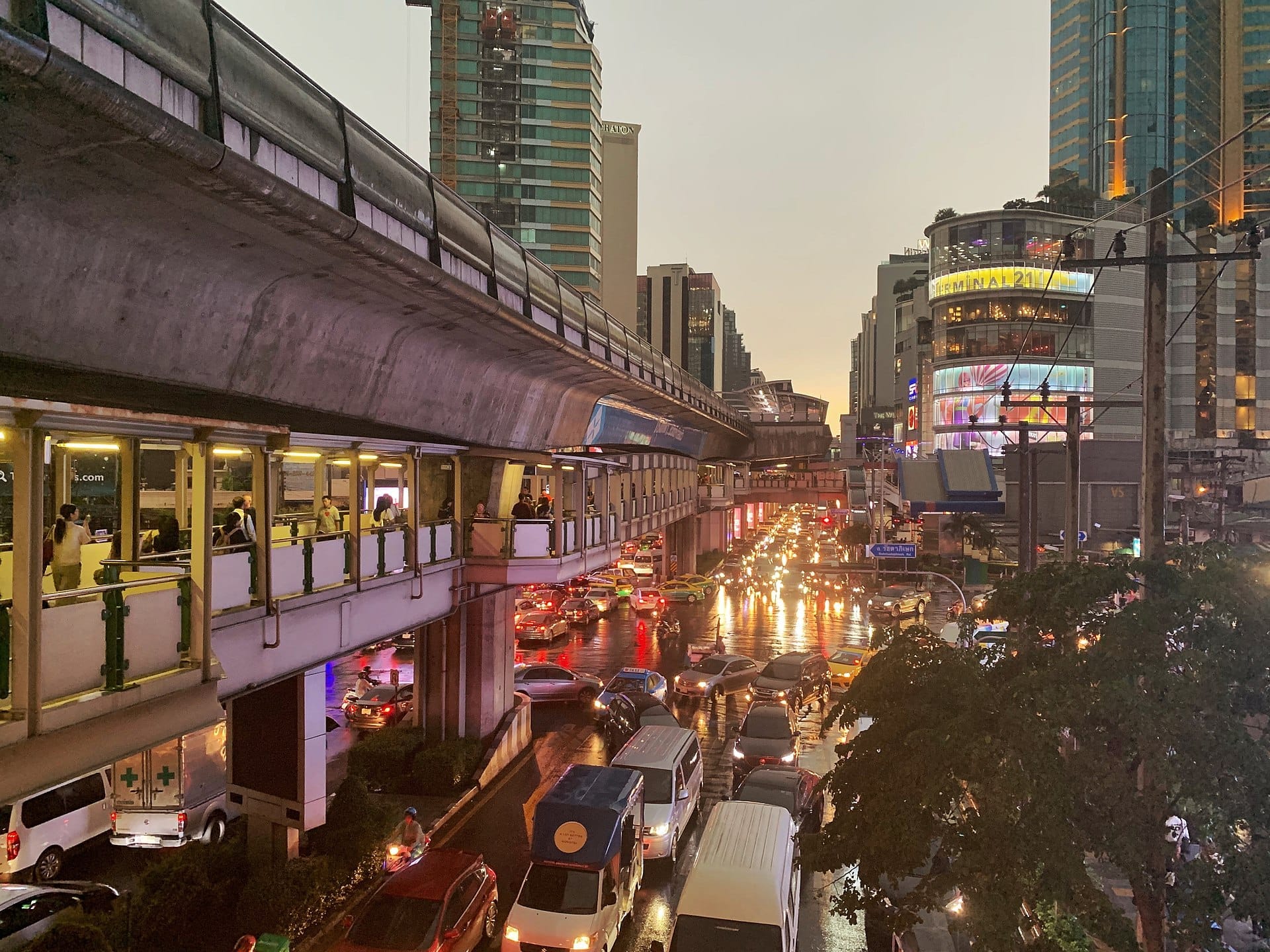
Sukhumvit borders Silom and Sathorn to the southwest (connected via Asok-Si Lom BTS interchange), Ratchathewi and Pratunam to the northwest, and transitions into the quieter eastern suburbs past Bearing and Samrong. The BTS Sukhumvit Line runs the entire length above the road, making this one of the easiest corridors to navigate in a city where traffic can otherwise consume hours.
Character and Atmosphere
Sukhumvit is not a single neighborhood with a single mood. It is a sequence of micro-environments stitched together by one very long road and a Skytrain line. What they share is a certain density and internationalism that sets them apart from older Bangkok neighborhoods like Rattanakosin or Chinatown. The sidewalks are wider (relatively speaking), the signage is frequently bilingual or trilingual, and the crowd on any given block might include Japanese expat families, European tourists, Korean restaurant workers, and Thai office staff in equal measure.
Early mornings along the soi are genuinely calm. Vendors set up rice congee carts and noodle stalls on the corners by around 6am. Construction workers from nearby sites take their breakfast standing up. The air still carries a trace of cool before the heat builds. By 9am the Skytrain stations are filling with office commuters and the sidewalk food vendors are doing serious business. The noon hour turns sections of Sukhumvit into a lunch rush of office workers descending from towers along Asok and the surrounding streets.
After dark, Sukhumvit fragments. Soi 11 fills with an international bar crowd spilling onto the street from venues that have operated for years. Nana Plaza, just off Soi 4, is one of Bangkok's most concentrated adult entertainment zones, with a reputation that precedes it. Thong Lo and Ekkamai shift toward a younger, wealthier Thai crowd occupying rooftop bars and boutique cocktail lounges. These are different versions of nighttime Bangkok, and they coexist within walking distance of each other.
ℹ️ Good to know
Sukhumvit divides naturally into western (Nana to Asok), central (Asok to Phrom Phong), and eastern (Thong Lo to Ekkamai) zones. Each has a different personality. Where you stay determines which version of Sukhumvit you experience most.
What to See and Do
Sukhumvit is not Bangkok's historic core, so if you are here for temples and royal sites, you will need to travel. The neighborhood's appeal is in its contemporary urban texture: the shopping, the food, the parks, and the ease of using it as a base for city-wide exploration.
The most significant cultural attraction that's minutes away with BTS is the Jim Thompson House, which sits just north of the Sukhumvit corridor near National Stadium BTS. The preserved compound of traditional Thai houses filled with silk and antiques gives genuine context to the city's mid-century modernization story and makes a worthwhile half-morning detour.
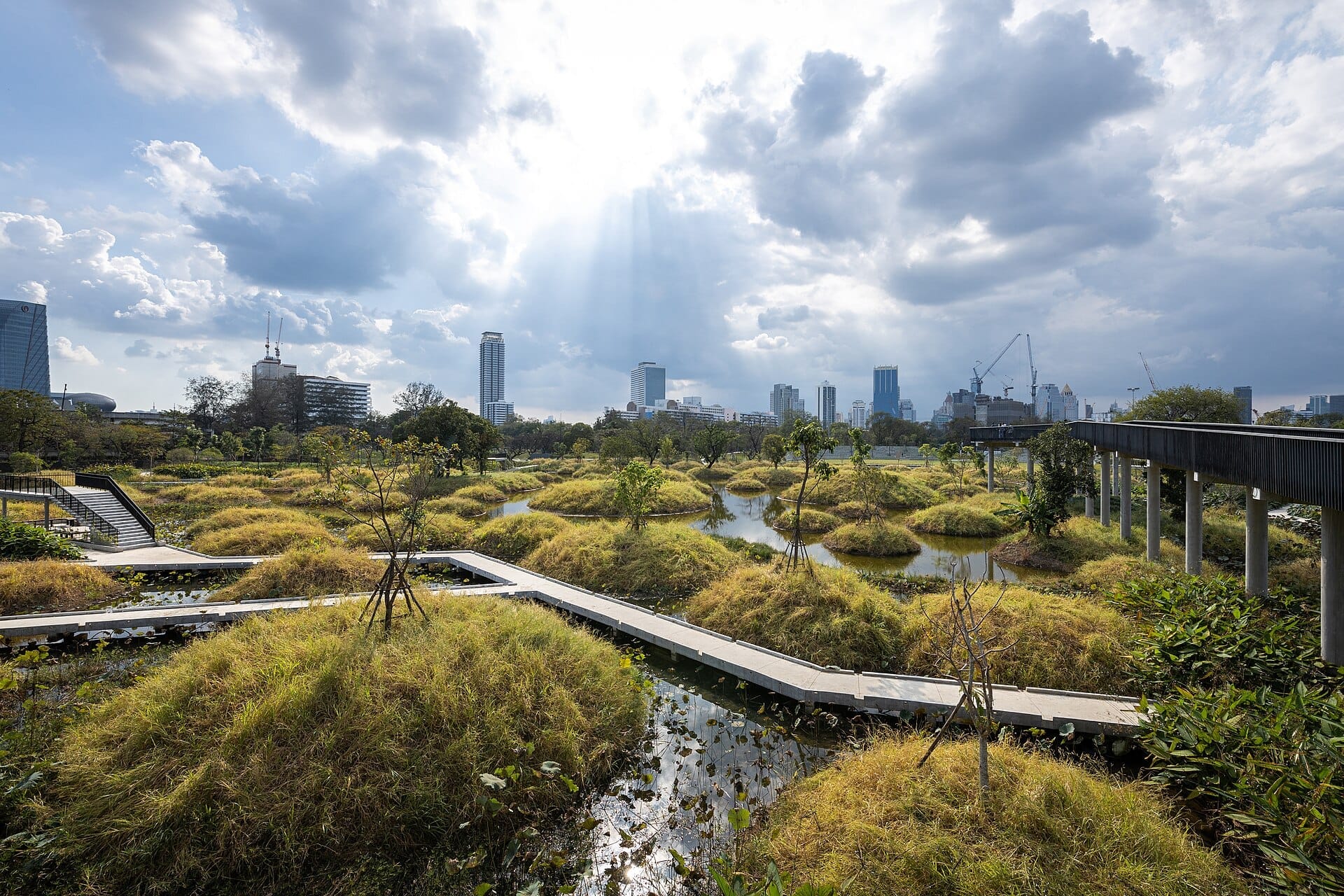
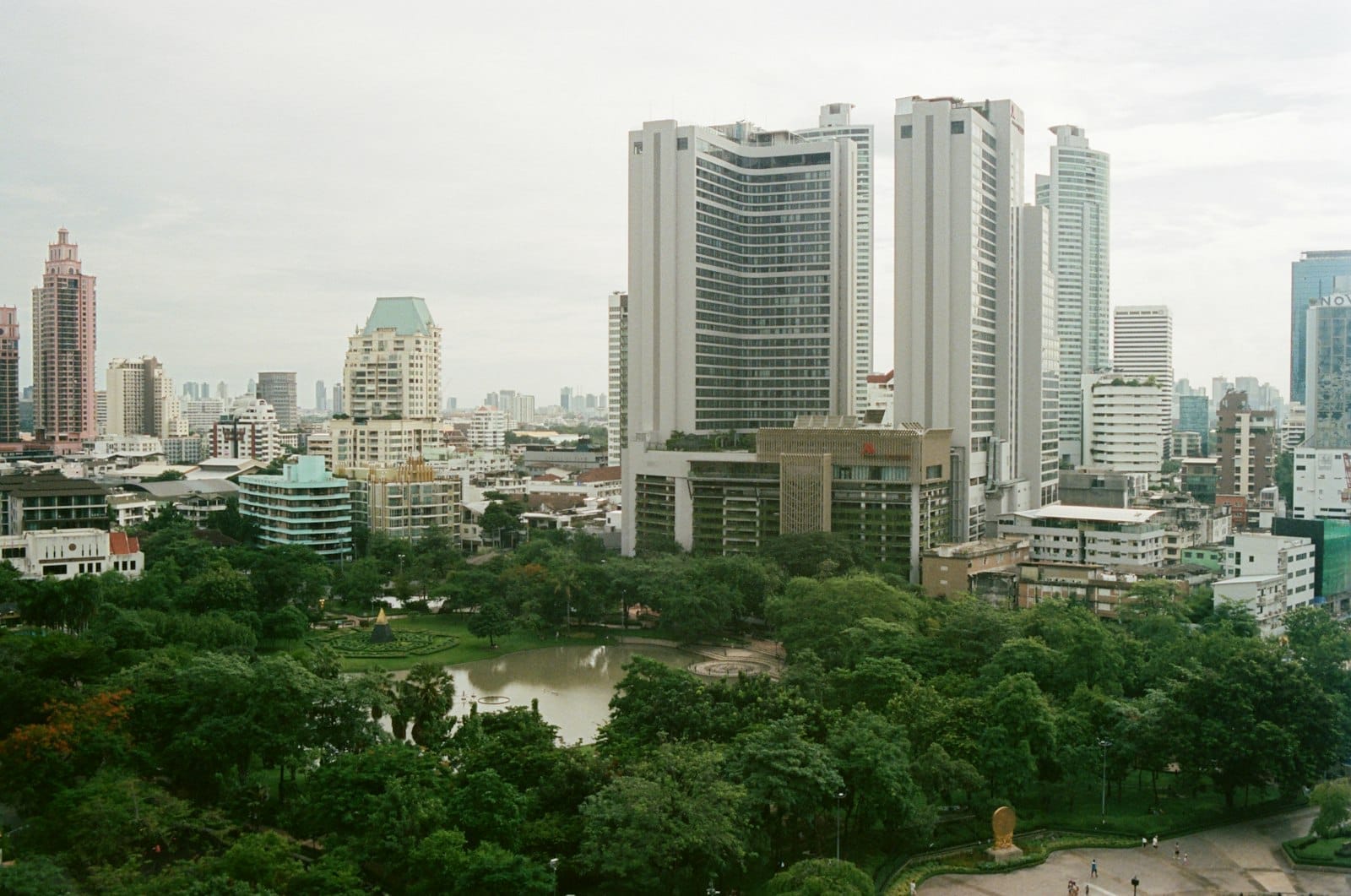
For green space, Benjasiri Park sits directly behind the Emporium shopping complex at Phrom Phong BTS. It is a compact park with sculptures, a small lake, and a jogging path that fills with residents every evening. A few stops further east, Benjakitti Park has undergone significant expansion and now offers a large lake loop, cycling paths, and forested sections that feel genuinely removed from the city noise.
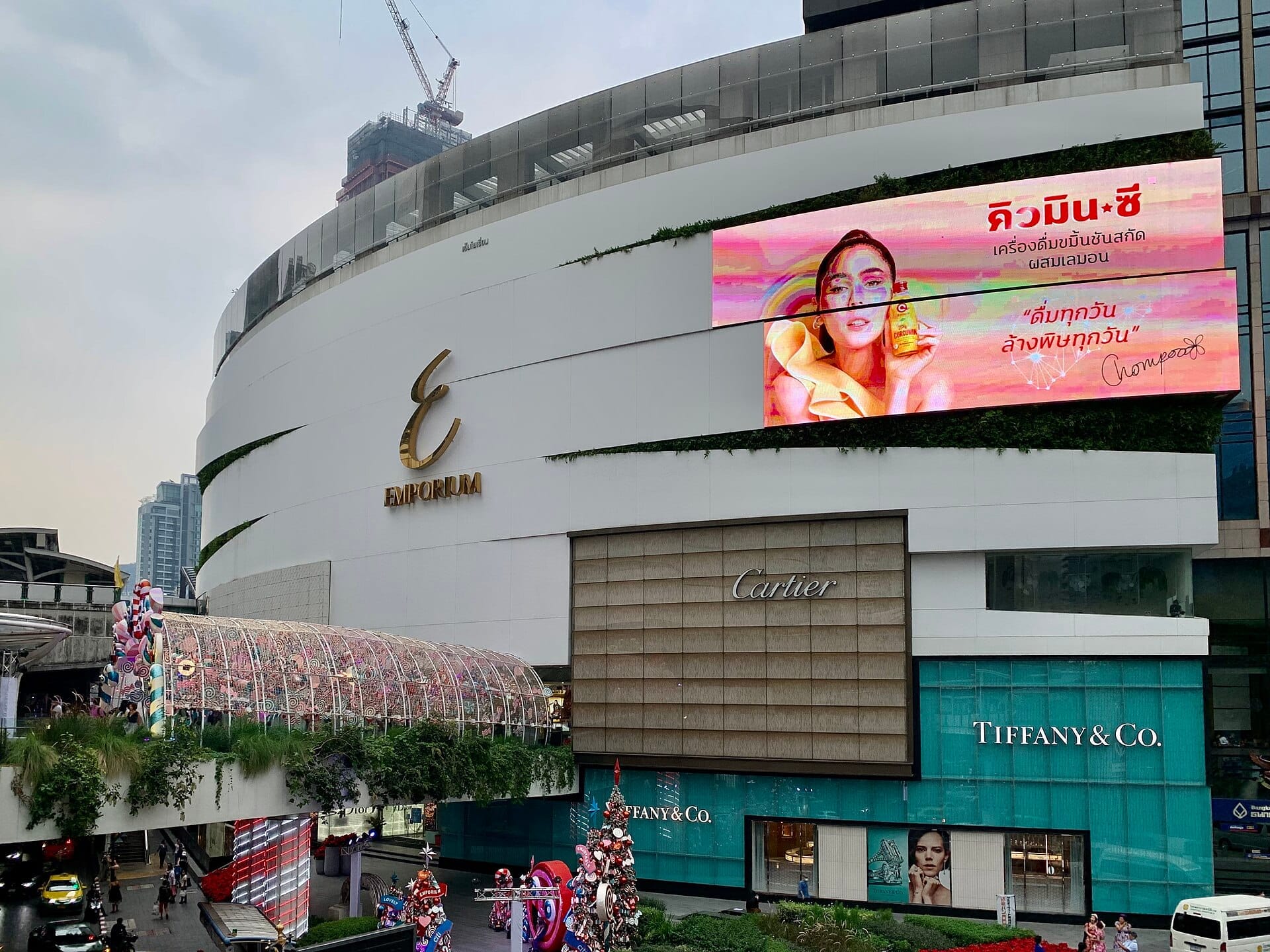
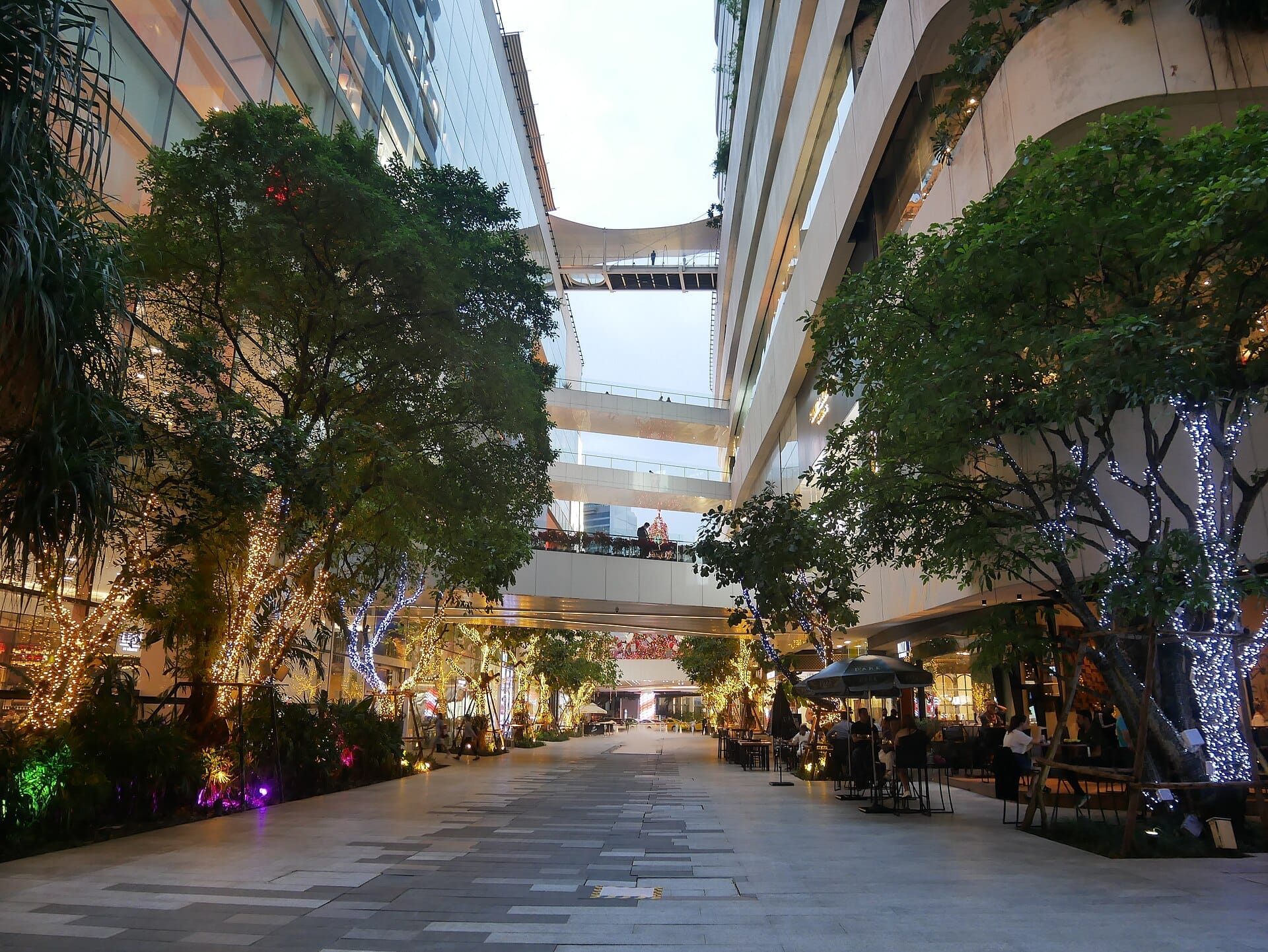
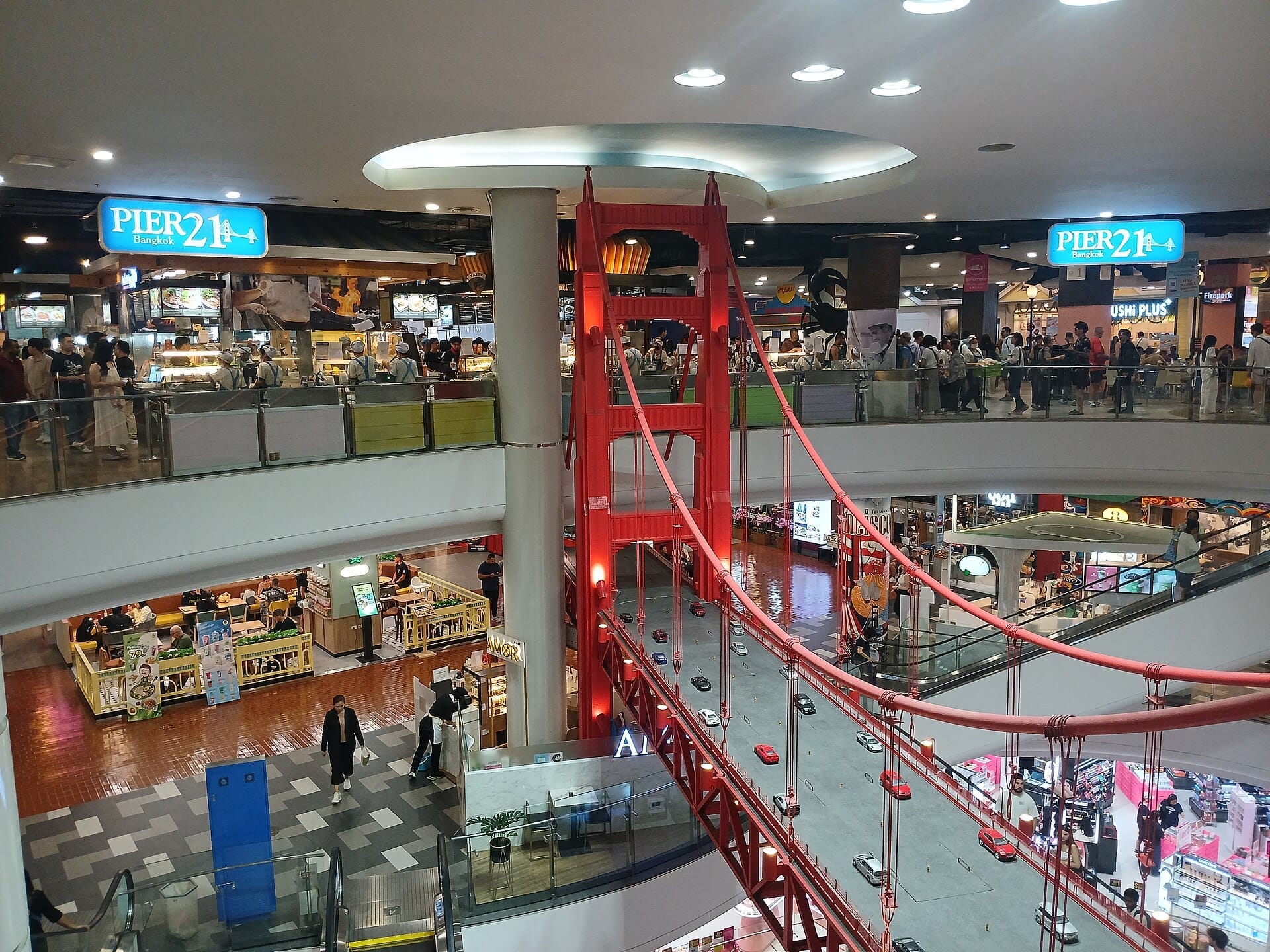
Shopping is a defining Sukhumvit activity. The stretch from Asok to Phrom Phong contains Terminal 21 (themed floors modeled after world cities, strong for mid-range fashion and food court dining), Emporium, and EmQuartier, a pair of upscale malls facing each other across Sukhumvit Road at Phrom Phong that together constitute one of the city's most complete luxury retail environments.
Soi 38 night market (near Thong Lo BTS): one of the more grounded street food strips remaining in this part of the city, strongest for Thai desserts and grilled meats
Asiatique-bound ferry from Saphan Taksin: a quick riverside detour accessible by BTS then shuttle boat
Khlong Toei Market: Bangkok's largest fresh market, just south of Sukhumvit, best visited before 8am
Benjakitti Forest Park lake loop: free entry, best in the early morning or after 4pm when the heat drops
💡 Local tip
If temple-visiting is on your list, take the BTS to Mo Chit for Chatuchak, or ride to Saphan Taksin and cross the river for Wat Arun and Wat Pho. Sukhumvit itself has no major historic temples within the neighborhood.
Eating and Drinking
The food range in Sukhumvit is the widest of any Bangkok neighborhood, from 40-baht pad kra pao plates served from carts on the soi to multi-course tasting menus at restaurants that hold international rankings. This range is one of Sukhumvit's genuine strengths and a reason many longer-term visitors gravitate here.
Street food survives in pockets despite rising rents. The soi corners near Nana, Asok, and Thong Lo BTS stations typically have noodle vendors, som tum stalls, and grilled chicken operations running from around 10am into the evening. Sukhumvit Soi 38 near Thong Lo has historically been one of the neighborhood's most reliable street food strips, though it has contracted over time due to development. The ground floors of Terminal 21 and the food halls at EmQuartier provide a climate-controlled alternative to street-level eating without sacrificing quality.
Japanese food has a particularly strong presence, especially around Phrom Phong, which has the highest concentration of Japanese residents in Bangkok. Soi 24 and the surrounding blocks hold an unusual number of authentic Japanese izakayas, ramen shops, and convenience stores with Japanese-language signage. For wider context on Bangkok's food scene, the Bangkok street food guide covers the city's best eating corridors in depth.
The bar scene is equally layered. Soi 11 is the most international and the loudest, with venues ranging from casual beer bars to more polished cocktail spots. Thong Lo and Ekkamai have developed a rooftop and craft cocktail culture that tilts younger and more design-conscious. Silom's Patpong is only a few BTS stops away for those seeking a different nightlife texture, while Sukhumvit itself keeps the adult entertainment concentrated around Nana Plaza and the Soi 4 corridor.
⚠️ What to skip
The area around Nana Plaza and lower Soi 4 is heavily oriented toward adult entertainment at night. Solo women travelers and families should be aware that this strip has a particular character after 9pm. It is not dangerous, but it may be uncomfortable depending on expectations.
Getting There and Around
The BTS Sukhumvit Line is the primary way to navigate this neighborhood, and it is genuinely excellent. Trains run from around 6am to midnight, with frequent service during peak hours. Stations relevant to visitors include Nana (E3), Asok (E4, interchange with MRT Sukhumvit), Phrom Phong (E5), Thong Lo (E6), Ekkamai (E7), and On Nut (E9). The line continues further east for those staying in quieter, more affordable residential zones.
The MRT Blue Line connects at Asok/Sukhumvit interchange, which is particularly useful for reaching Chinatown (Hua Lamphong or Sam Yan stations), the train station at Hua Lamphong, and Chatuchak Weekend Market (Chatuchak Park or Mo Chit MRT). The two-line interchange at Asok makes it one of the most strategically valuable transit points in the city.
Inside the neighborhood, motorcycle taxis (the riders in orange vests at the mouth of each soi) are the fastest way to travel the length of any given side street. Prices should be agreed before departure and typically range from 10 to 40 baht depending on distance. Metered taxis are plentiful but subject to traffic, which on Sukhumvit Road itself can be severe during peak hours (roughly 7:30 to 9:30am and 5 to 8pm). Grab (the regional equivalent of Uber) works well and removes the negotiation element.
Walking the length of Sukhumvit Road itself is not practical for more than a few blocks at a time due to heat, uneven pavements, and the sheer scale of the road. However, walking within a single soi or between adjacent stations is entirely reasonable and often reveals the neighborhood's more local character: the fresh fruit carts, the 7-Elevens doubling as community hubs, the spirit houses tucked between construction hoardings.
Where to Stay
Sukhumvit is Bangkok's most hotel-dense corridor, offering everything from budget guesthouses in the Nana soi to five-star properties at Asok and Phrom Phong. The Bangkok accommodation guide covers the full range across the city, but within Sukhumvit there are meaningful differences depending on which section you choose.
The western stretch (Nana to Asok) is convenient for nightlife and transit but noisy, especially on weekends. Mid-range travelers who want BTS access and do not mind the surrounding energy will find competitive rates here. The central section around Asok and Phrom Phong suits business travelers and those wanting upscale malls within walking distance: several of Bangkok's most recognized luxury hotels sit within a short walk of Phrom Phong BTS. Thong Lo and Ekkamai skew toward boutique properties and serviced apartments catering to longer-stay residents, with a neighborhood feel that the lower soi lack.
On Nut, at the eastern end of the main visitor corridor, has emerged as a solid budget base: BTS access remains excellent, but room rates drop noticeably compared to Nana or Phrom Phong. Travelers who do not need to be adjacent to the main tourist concentration will find On Nut offers a more relaxed, residential Thai atmosphere.
Honest Assessment
Sukhumvit is where Bangkok works smoothest for international visitors, and that is both its strength and its limitation. The infrastructure is in place: the Skytrain connects reliably, English is widely understood, and the food and accommodation range is unmatched. For first-time visitors who want to use Bangkok as a base without spending energy on logistics, this is the right call.
What Sukhumvit does not offer is depth of historic or cultural character. For that, neighborhoods like Rattanakosin or Chinatown (Yaowarat) are more rewarding to spend time in, even if they are less convenient to sleep in. The best approach for many travelers is to stay in Sukhumvit for practical reasons and commit to half-day trips to the older neighborhoods, which are all reachable by BTS and MRT within 30 to 45 minutes.
The noise level in lower Sukhumvit at night is real. The traffic on the main road at peak hours is real. The commercialization of the street food scene, as rents push smaller vendors off prime corners, is a gradual but ongoing shift. None of these are deal-breakers, but they are worth knowing before you book.
TL;DR
Sukhumvit is Bangkok's most accessible and international neighborhood, ideal for first-time visitors and those prioritizing transit convenience above all else.
The BTS Sukhumvit Line connects the full corridor, with the Asok interchange giving direct MRT access to Chinatown, Chatuchak, and the train station.
Sub-neighborhoods vary significantly: lower Sukhumvit (Nana to Asok) for budget options and nightlife, Phrom Phong for upscale hotels and malls, Thong Lo and Ekkamai for a younger and more local-feeling atmosphere.
The food range is the city's widest, from street-corner noodle stalls to internationally recognized fine dining, with a strong Japanese food concentration around Phrom Phong.
Sukhumvit lacks historic depth: it is a base for Bangkok exploration, not a cultural destination in its own right. Combine it with day trips to Rattanakosin, Chinatown, or Thonburi for a complete picture of the city.
From the riverside spectacle of ICONSIAM to the bargain floors of MBK, this guide covers Bangkok's 10 best shopping malls by district with straightforward takes on what each one actually does best.
Bangkok's street food scene is one of the most rewarding in Southeast Asia, but knowing where to go and what to order separates a great meal from a mediocre one. This guide breaks down the best dishes, neighborhoods, and markets so you can eat confidently and affordably.
From the 15,000-stall maze of Chatuchak to the sizzling woks of Yaowarat after dark, this guide covers Bangkok's best markets with candid reviews, practical tips, and the best times to visit each one.
From the dazzling Grand Palace complex to quiet neighborhood temples with barely a tourist in sight, this guide covers Bangkok's 10 most rewarding temples with frank reviews and practical visiting tips.
Bangkok's tropical climate means timing your visit matters more than most cities. This guide breaks down every season, key festivals, crowd levels, and price shifts so you can pick the right window for your trip.
Songkran is Thailand's New Year and the world's largest water fight, and Bangkok does it on a scale unlike anywhere else. This guide covers the best spots to celebrate, practical logistics, cultural context, and practical advice on what to skip.
From glittering temple complexes and chaotic night markets to rooftop observation decks and hidden neighborhoods, this guide covers 20 of the best things to do in Bangkok with candid reviews and practical advice.
Bangkok spreads across a vast urban grid, and where you stay shapes your entire trip. This guide breaks down the city's top neighborhoods by location, vibe, transport access, and price range, so you can book with confidence.