Songkran in Bangkok: The Complete Guide to Thailand's Water Festival
Songkran is Thailand's New Year and the world's largest water fight, and Bangkok does it on a scale unlike anywhere else. This guide covers the best spots to celebrate, practical logistics, cultural context, and practical advice on what to skip.
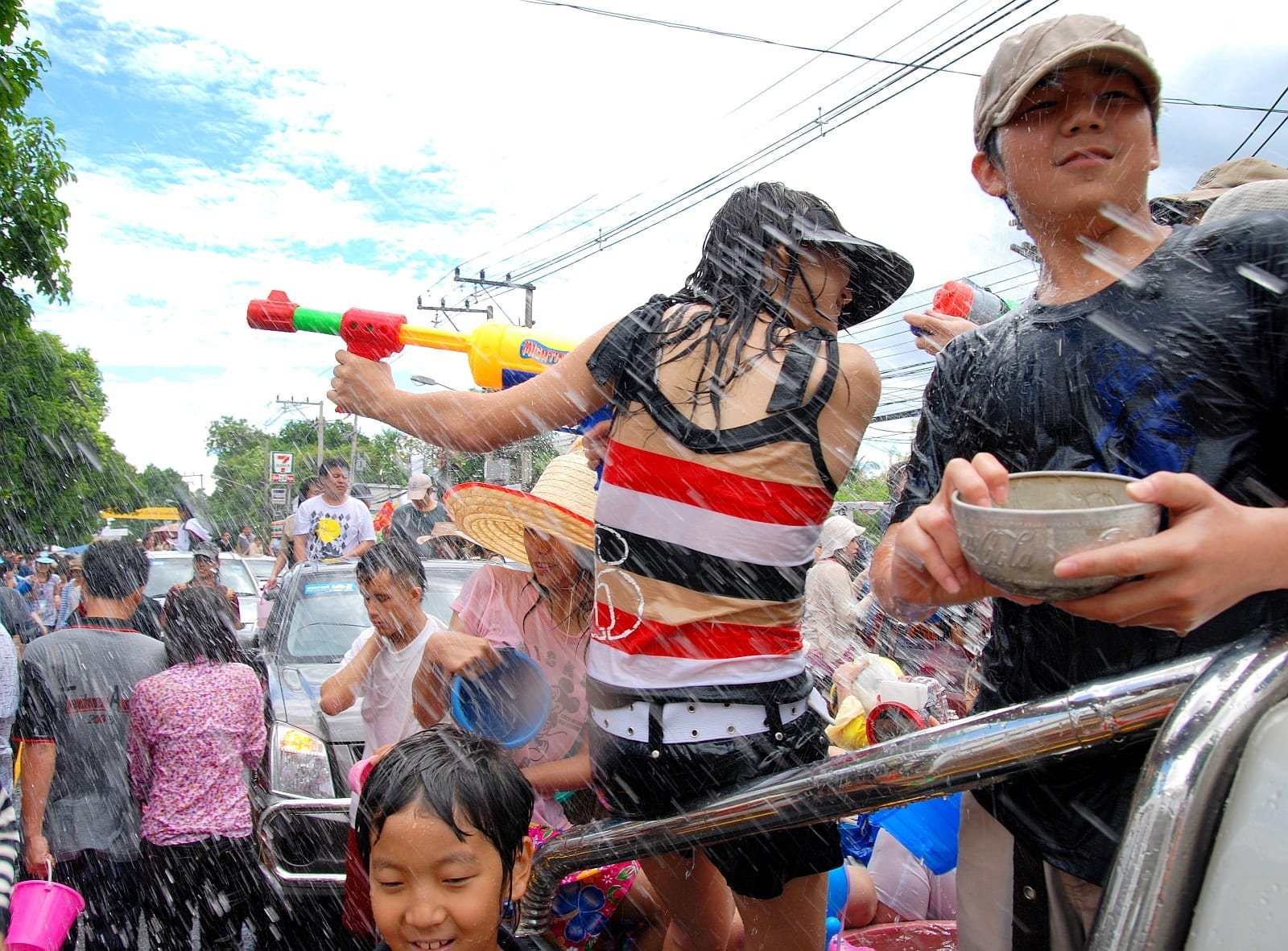
Plan and book this trip
Tools from our partner Travelpayouts help you compare flights and hotels. If you book through them, we may earn a commission at no extra cost to you.
Flights
Hotels map
TL;DR
- Songkran runs April 13-15 officially, but Bangkok celebrations often stretch to April 17-18 in some neighborhoods.
- Silom Road and Khao San Road are the two main tourist-facing party zones, with very different vibes.
- For cultural depth beyond the water fights, the temples in Rattanakosin host traditional merit-making ceremonies worth attending.
- Protect your phone, arrive early at parade routes, and book accommodation at least 2-3 months in advance.
- Songkran is one of the peak periods covered in the best time to visit Bangkok guide — heat and crowds are serious considerations.
What Songkran Actually Is (Beyond the Water Fight)
Songkran is the Thai New Year, calculated using the traditional solar calendar and observed on April 13 each year, with the full festival running through April 15. The word itself derives from Sanskrit and refers to the sun's movement into Aries. For most Thai families, the holiday centers on returning home, visiting temples, pouring water over Buddha statues and elders' hands as a symbol of purification and respect, and releasing fish and birds as acts of merit.
The water throwing evolved from this ceremonial water blessing. What began as gently pouring scented water over the hands of elders has, particularly in Bangkok and Chiang Mai, transformed into a multi-day street festival involving super soakers, rooftop hoses, and trucks mounted with water tanks circling city blocks. Both versions exist simultaneously during Songkran, and understanding that distinction helps you navigate the festival more meaningfully.
ℹ️ Good to know
April 13 is National Elderly Day, April 14 is National Family Day, and April 15 is the official Thai New Year. Bangkok often extends celebrations into April 16-17 in areas like Silom and RCA, effectively making it a 5-day festival for many residents.
The Best Locations in Bangkok for Songkran
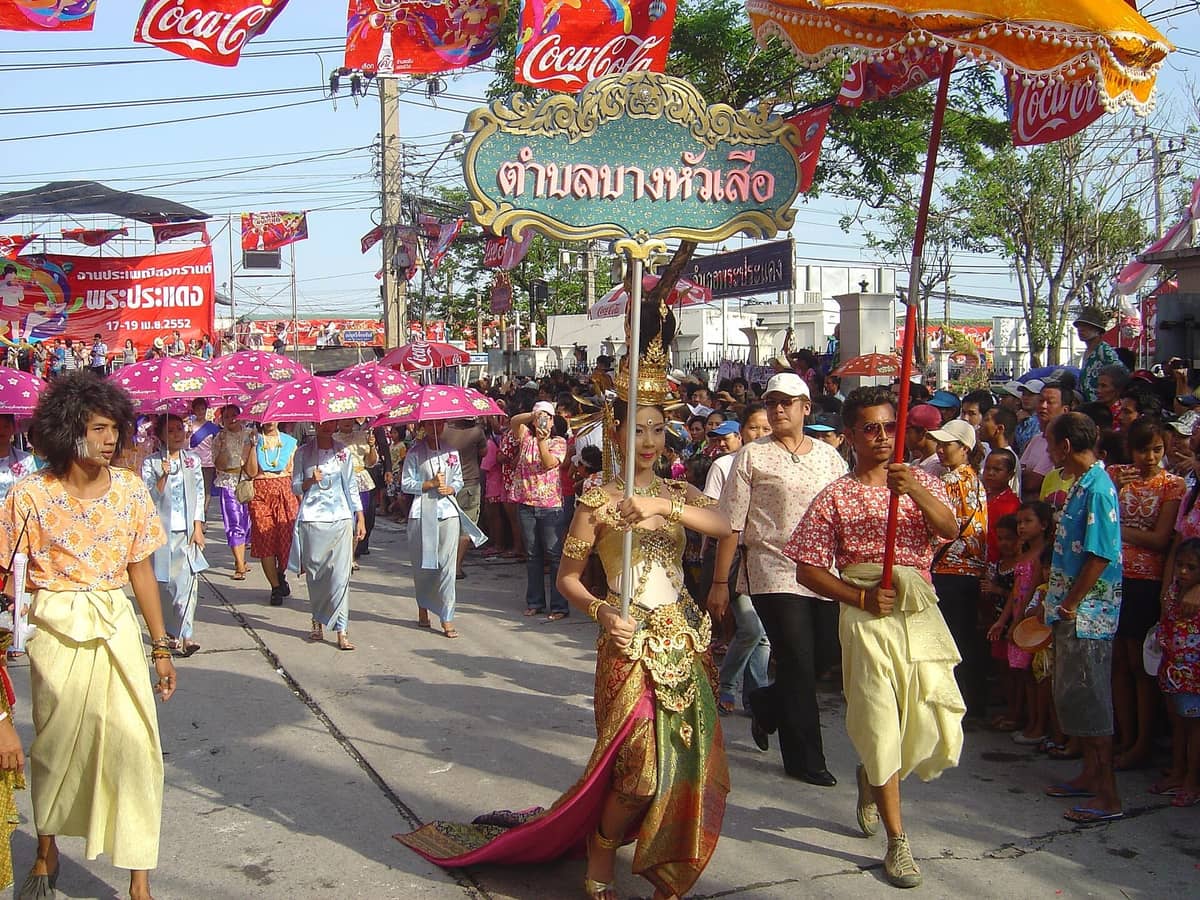
Bangkok does not have a single centralized Songkran venue. The celebrations fragment across neighborhoods, each with a distinct character. Knowing where to go — and when — is the difference between an unforgettable experience and standing in a crowded, expensive street with strangers spraying warm recycled water from a bucket.
- Silom Road (Saladaeng to Surasak BTS stretch) The largest and most organized street party in Bangkok. Silom closes to traffic from around April 13-15, stages are set up near Saladaeng BTS, and the crowd is a mix of Thai locals, expats, and international tourists. Foam cannons and DJ stages make this feel more like a music festival than a cultural ceremony. Arrive before noon if you want space near the main action.
- Khao San Road The backpacker epicenter goes absolutely feral during Songkran. Expect bucket-wielding crowds, loud music, and alcohol from 10am onwards. It is chaotic and entertaining if that is what you want, but the cultural element is essentially absent. Water quality can be questionable later in the day.
- Rattanakosin / Sanam Luang The historic district hosts more traditional ceremonies including the Phra Buddha Sihing procession from the National Museum, sand stupas at temple grounds, and public merit-making events at Wat Pho and Wat Phra Kaew. This is where you experience Songkran as Thais have observed it for generations.
- Yaowarat Road (Chinatown) Chinatown has a lower-key but genuine local celebration. Families set up water stations outside shops, and the atmosphere is more neighborhood-scale. A good choice if Silom feels overwhelming.
- RCA (Royal City Avenue) and Thonglor Bangkok's nightlife corridors extend Songkran into late-night club territory. Several venues host multi-day pool and foam parties. These are ticketed events, often 500-1,500 THB entry, and are popular with Bangkok's younger crowd.
For the traditional Songkran experience, spend the morning of April 13 at Wat Pho or Wat Phra Kaew for merit-making, then make your way to Silom Road by early afternoon for the street celebrations. This gives you both sides of the festival in a single day.
What to Wear and Bring: The Practical Checklist
You will get completely soaked. Accept this fact before you leave your hotel. The question is not whether you will get wet, but how well-prepared you are for it. April in Bangkok averages 34-36°C with humidity above 70%, so the water is initially refreshing, but standing in wet clothes for hours in direct sun leads to chafing, sunburn, and exhaustion.
- Wear light, quick-drying synthetic fabric, not cotton. Cotton stays wet and becomes heavy.
- Buy a waterproof phone pouch before you go, available at MBK Center or Chatuchak for around 50-150 THB. Zip-lock bags work in a pinch but fail under sustained spray.
- Leave valuables, passports, and non-waterproof cameras in the hotel safe.
- Wear sandals or waterproof shoes. Leather sneakers will be destroyed.
- Carry a dry bag or waterproof backpack if you need to bring anything essential.
- Apply and reapply sunscreen. The combination of water reflection and midday sun is brutal.
- Traditional Songkran shirts, which are cotton with floral patterns, are sold everywhere for 150-300 THB and are appropriate to wear throughout the festival.
⚠️ What to skip
Ice-cold water thrown directly onto people with heart conditions or respiratory issues can trigger shock. Vendors often add ice to their water tanks. If you are in a high-risk group, stick to the ceremonial areas or observe from a distance. Also note: spraying water at monks, the elderly, or people who have clearly indicated they do not want to be splashed is considered deeply disrespectful.
Getting Around Bangkok During Songkran
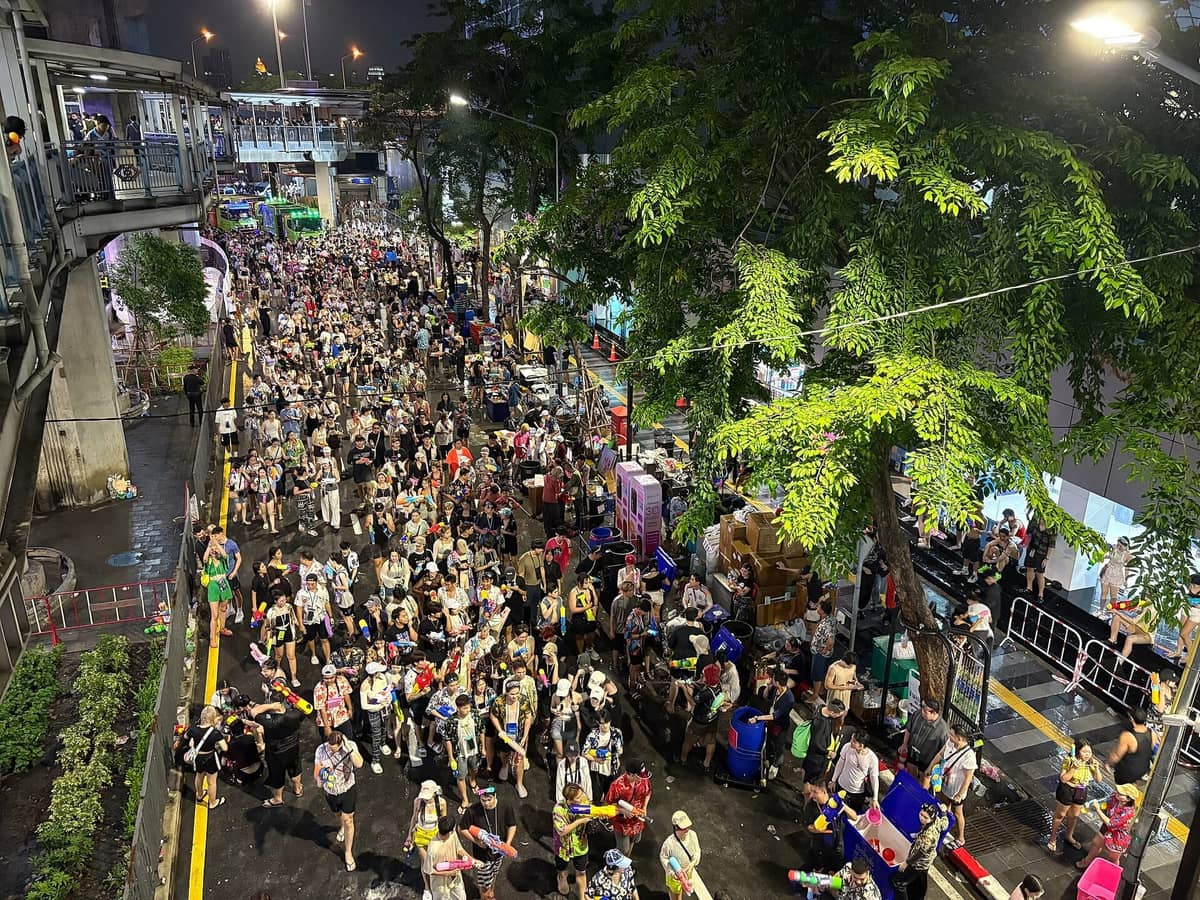
Songkran creates some of the worst traffic congestion Bangkok sees all year. Millions of people travel back to their home provinces in the days before April 13, and the roads into and out of Bangkok are gridlocked. Within the city, road closures around Silom, Khao San, and Rattanakosin mean taxis and ride-hails take significantly longer and surge pricing is constant. Plan for journeys taking two to three times longer than usual.
The BTS Skytrain and MRT Metro remain the most reliable options. The Silom BTS line is especially useful, with direct access to the Saladaeng station for Silom Road celebrations and Saphan Taksin for the Chao Phraya pier. The Chao Phraya Express Boats still run and are a practical option for reaching Rattanakosin without road delays. Avoid tuk-tuks during Songkran, since drivers will often demand inflated flat rates and you are sitting completely exposed in open traffic.
💡 Local tip
Grab (Thailand's ride-hailing app) often shows 30-40 minute wait times during peak Songkran hours. If you need to be somewhere specific at a set time, take the BTS or book a hotel within walking distance of your target area.
Food, Drink, and Where to Eat During Songkran
Street food density drops in some residential areas as vendors go home for the holiday, but the tourist corridors are fully stocked. Khao San Road and Silom both have dense food stalls running throughout the festival. Expect to pay tourist prices: 80-150 THB per dish rather than the 40-60 THB you would find in off-peak neighborhood markets.
For a proper meal away from the crowds, Silom has dozens of restaurants on its side streets that remain open and are often quieter than you would expect. Yaowarat's restaurants also stay operational and offer better value than the festival zone. If you plan ahead, Bangkok's street food scene shifts noticeably during Songkran, so knowing your backup options matters.
Hydration is critical. Between the heat, alcohol, and physical activity of running through water fights, dehydration sets in quickly. Coconut water stalls (around 40-60 THB) are everywhere near the main zones. Electrolyte sachets from any 7-Eleven or Family Mart are cheap and effective.
Booking Accommodation and Planning Timing
Hotels in Bangkok fill up fast for Songkran, particularly properties near Silom, Sukhumvit, and Rattanakosin. Rates typically increase by 30-60% above standard April pricing. Book 2-3 months out for the best selection; availability narrows sharply inside 6 weeks. Our Bangkok accommodation guide breaks down neighborhoods by budget and convenience, which is especially useful for positioning yourself well during the festival.
If your priority is the traditional ceremonies and temple visits, stay near Rattanakosin or on the Thonburi side of the river for easy access to Wat Arun. If you are primarily here for the street parties, a Silom or lower Sukhumvit hotel puts you inside the action without relying on transport.
✨ Pro tip
Some Bangkok hotels — especially boutique properties on quiet sois — offer rooftop or pool access during Songkran as informal water fight zones for guests. This is one of the best ways to celebrate: controlled fun, good views, no crowd crush. Ask when booking.
What to Skip and Honest Caveats
Songkran in Bangkok is genuinely spectacular, but it is not for every traveler. If you are visiting Thailand primarily for temples, art, or food, Songkran week is an awkward time to be in Bangkok. Several temples have restricted access during the busiest days, streets around cultural sites are flooded with water and crowds, and logistics are consistently more difficult. Consider adjusting your Bangkok segment to the days before April 13 or after April 16 to avoid the heaviest disruption while still catching some of the residual energy.
The Khao San Road scene is frequently cited as the best Songkran experience in Bangkok by travel blogs. In reality, it is one of the more chaotic and least authentic options, with water of variable cleanliness, aggressive alcohol promotion, and pickup-artist culture that some travelers find uncomfortable. It is worth a 30-minute walk-through for the spectacle, but it should not be the centerpiece of your Songkran plans unless that specific atmosphere is what you are after.
For context on what Bangkok offers beyond Songkran week itself, the full Bangkok activities guide covers year-round options worth pairing with your trip, and the best temples in Bangkok are worth visiting in the calmer days before or after the main festival.
FAQ
When exactly is Songkran in Bangkok 2026?
The official national holiday runs April 13-15, 2026. Bangkok typically extends street celebrations through April 16-17 in areas like Silom and RCA. The busiest single day is April 13.
Is Songkran in Bangkok or Chiang Mai better?
They are genuinely different experiences. Chiang Mai's moat-side celebrations are more compact and community-focused. Bangkok's version is larger in scale, more internationally attended, and split between the traditional (Rattanakosin) and the party-centric (Silom, Khao San). Bangkok wins on variety; Chiang Mai wins on atmosphere and cultural immersion.
Can I visit temples during Songkran in Bangkok?
Yes. Wat Pho, Wat Phra Kaew, and Wat Arun all remain open during Songkran, though hours and access can be affected on April 13-14. The Wat Phra Kaew complex inside the Grand Palace grounds typically hosts special ceremonies. Check the Fine Arts Department website closer to the date for confirmed schedules.
Is it safe to celebrate Songkran in Bangkok?
For most visitors, yes, with sensible precautions. The main risks are petty theft in crowds, heat exhaustion, road accidents (Thailand's road fatality rate spikes significantly during Songkran week), and water-related illness if you accidentally ingest street water. Stay off motorbikes, stay hydrated, and stick to main pedestrian areas.
What should I do if I don't want to get wet during Songkran?
Avoid the festival zones entirely and stick to malls, museums, and air-conditioned attractions. Siam Paragon, CentralWorld, and ICONSIAM all operate normally and are largely water-fight-free. Restaurants and indoor venues continue as usual outside the designated street party areas.