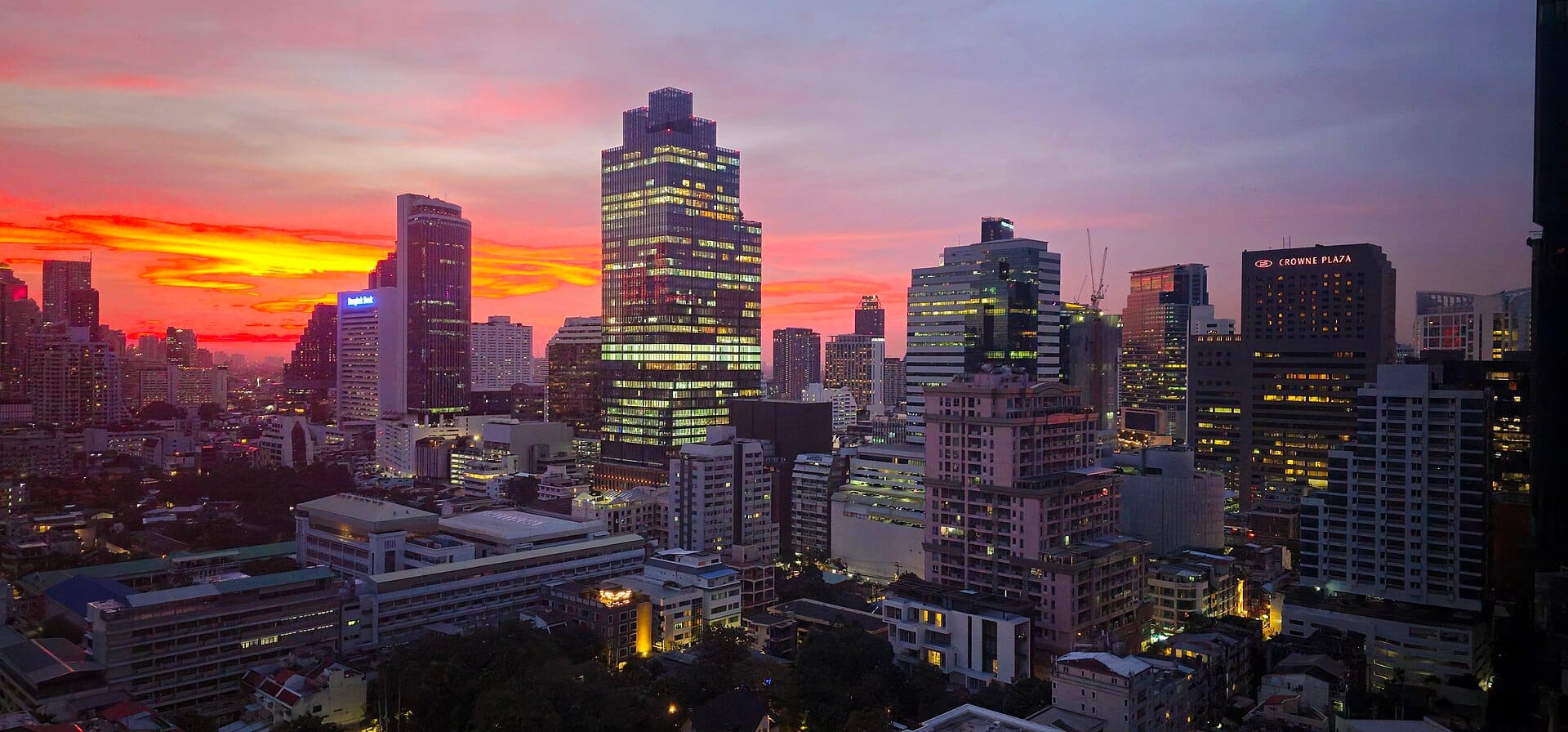
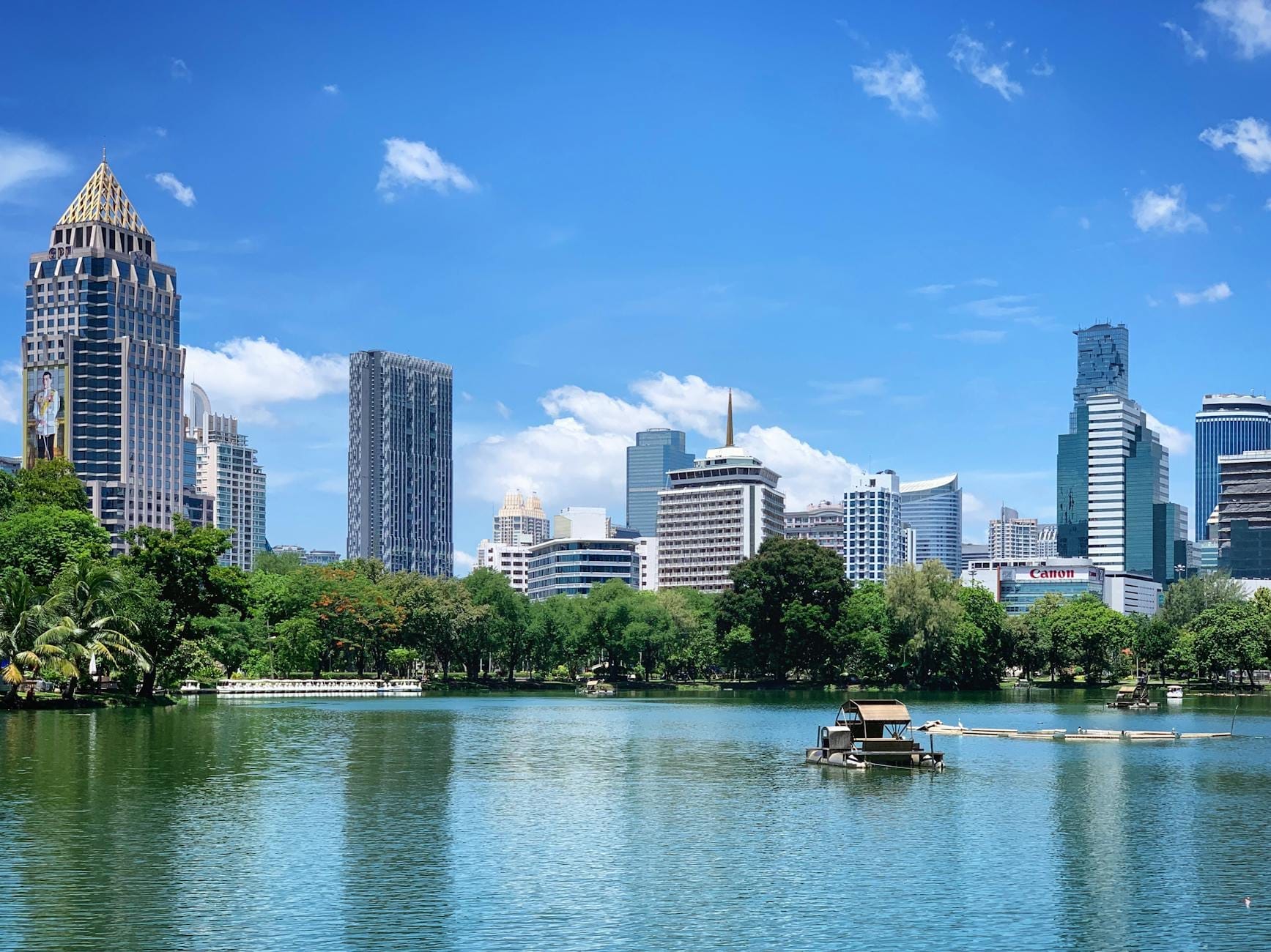
Silom is Bangkok's most contradictory neighborhood: a serious financial district that transforms completely after dark into one of the city's most energetic entertainment zones. Corporate offices share blocks with night markets, rooftop bars, and the infamous Patpong strip, all stitched together by one of Bangkok's most reliable transit corridors.
Silom is where Bangkok's working city and its pleasure-seeking side occupy exactly the same streets. By day it functions as the city's de facto financial district, its long central avenue lined with banks, glass towers, and lunch crowds spilling from office lobbies. By night, those same blocks pivot into something else entirely: smoking grills, neon signs, cold beer, and one of Asia's most famous LGBT entertainment zones.
Orientation
Silom sits in the southwestern core of central Bangkok, running along Silom Road, a broad arterial that stretches roughly 4 kilometers from the Chao Phraya riverfront in the west to the Rama IV Road intersection near Lumphini Park in the east. The neighborhood is bounded to the north by Surawong Road and to the south by Sathorn Road, Bangkok's embassy corridor. These two roads run roughly parallel to Silom, creating a dense urban grid between them.
To the west, Silom meets the river at Saphan Taksin, where the BTS Skytrain terminates at the Chao Phraya Express Boat pier. To the east, it edges into the Lumphini district and blends almost imperceptibly into Rama IV territory. The neighborhood connects directly to Sathon to the south and shares a transit spine with Surawong to the north. Understanding this east-west axis helps enormously: the western end near the river is quieter, more residential in feel, while the eastern stretch toward Sala Daeng is where the restaurants, bars, and nightlife concentrate.
Silom is one of Bangkok's most transit-accessible neighborhoods, served by both the BTS Skytrain (Sala Daeng station and Chong Nonsi station) and the MRT subway (Silom station, adjacent to Sala Daeng). This overlap makes it easy to reach from virtually anywhere in the city, and it positions Silom as a natural base for exploring both the historic riverside temples and the modern shopping districts around Siam.
Character & Atmosphere
Early morning on Silom Road has a particular rhythm that is easy to miss if you arrive mid-morning. From around 6am, food vendors set up along the pavements near Sala Daeng and Convent Road: rice porridge, pork skewers over charcoal, fresh-cut fruit in plastic bags. Office workers in pressed shirts move briskly past tuk-tuks and motorbike taxis clustered at the soi entrances. The air smells of grilled meat and exhaust, the city already fully awake before most tourists have ordered breakfast.
By midday, the financial district character asserts itself. The wide pavements fill with lunch crowds, and the smaller sois connecting Silom to Surawong overflow with workers eating at plastic tables outside shop-house restaurants. The afternoon heat is fierce on the open sections of Silom Road, where the pavement offers little shade. This is the time of day when the BTS walkway becomes genuinely useful for moving between the Sala Daeng and Chong Nonsi ends without baking.
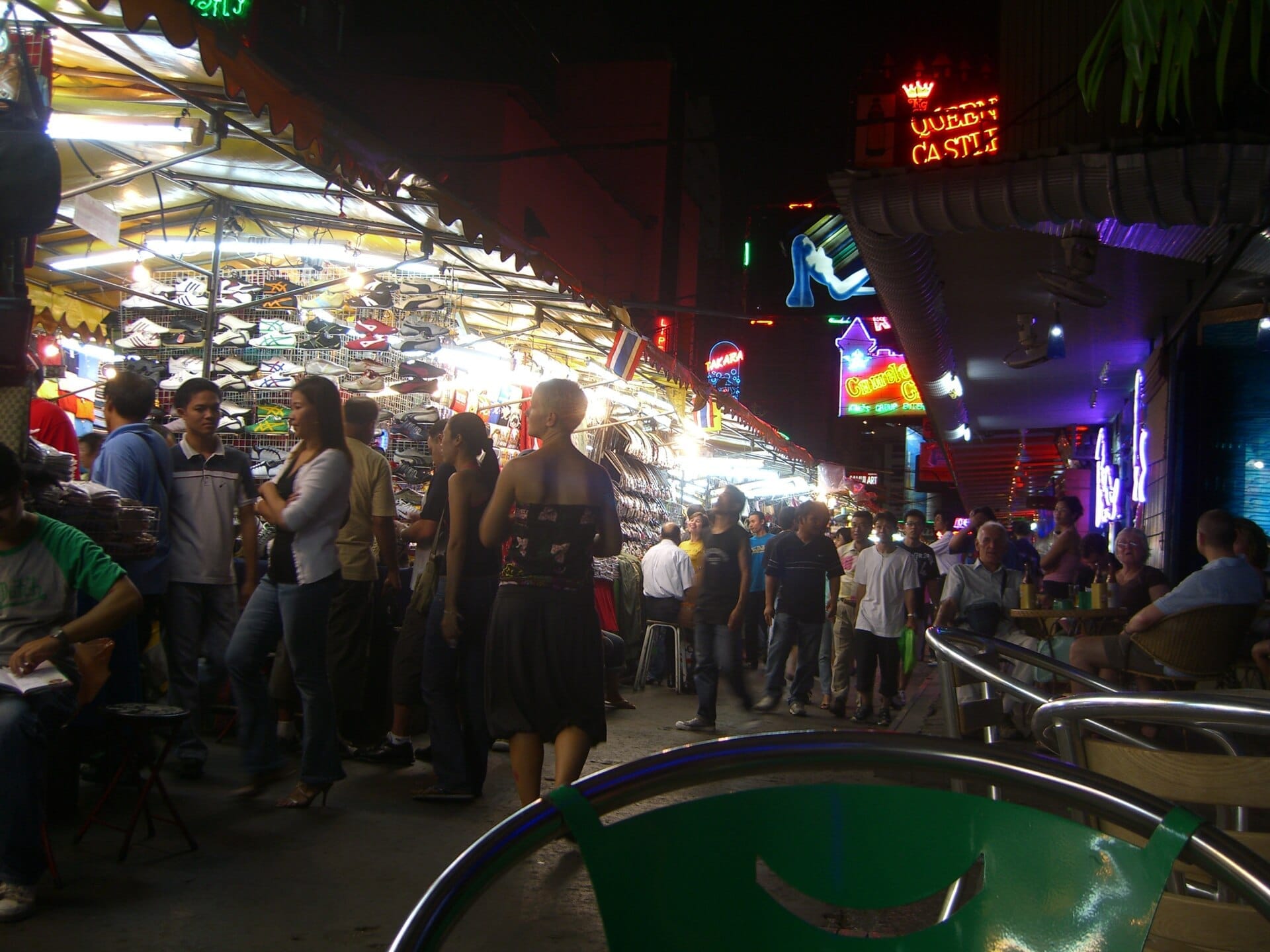
The neighborhood's transformation begins around 6pm. The office workers recede and the street food carts multiply. The sois branching south off Silom Road, particularly the famous Patpong 1 and Patpong 2, switch on their neon and fill with tourists and vendors. Silom Soi 4 becomes the center of Bangkok's LGBT nightlife scene, a stretch of open-air bars and clubs that remains among the most welcoming and openly celebratory gay spaces in Southeast Asia. The contrast is genuine and sometimes jarring: a Michelin-starred restaurant sits a short walk from a thumping open-fronted bar.
ℹ️ Good to know
Silom functions as two neighborhoods in one body. If you visit only during business hours or only after dark, you will get a completely different picture of the place. Both versions are worth experiencing.
What to See & Do
Silom is not primarily a sightseeing neighborhood in the temple-and-palace sense, but it does contain several experiences that reward exploration. The area's most distinctive offering is its layered street life, which changes by hour and by which soi you choose to walk down.
The Patpong Night Market runs through the pedestrianized middle of Patpong Road from around 6pm, with stalls selling clothing, accessories, and tourist goods. It is one of Bangkok's most famous night markets, though it has a decidedly commercial and touristy character. Worth seeing once, but do not expect bargains on anything serious.
A short walk or taxi ride from Silom's eastern edge brings you to Lumphini Park, Bangkok's largest urban green space. Early mornings here are extraordinary: older residents practice tai chi, joggers circle the lake, and monitor lizards wade through the shallows with complete indifference to onlookers. It is the most effective antidote to Silom's dense urban energy.
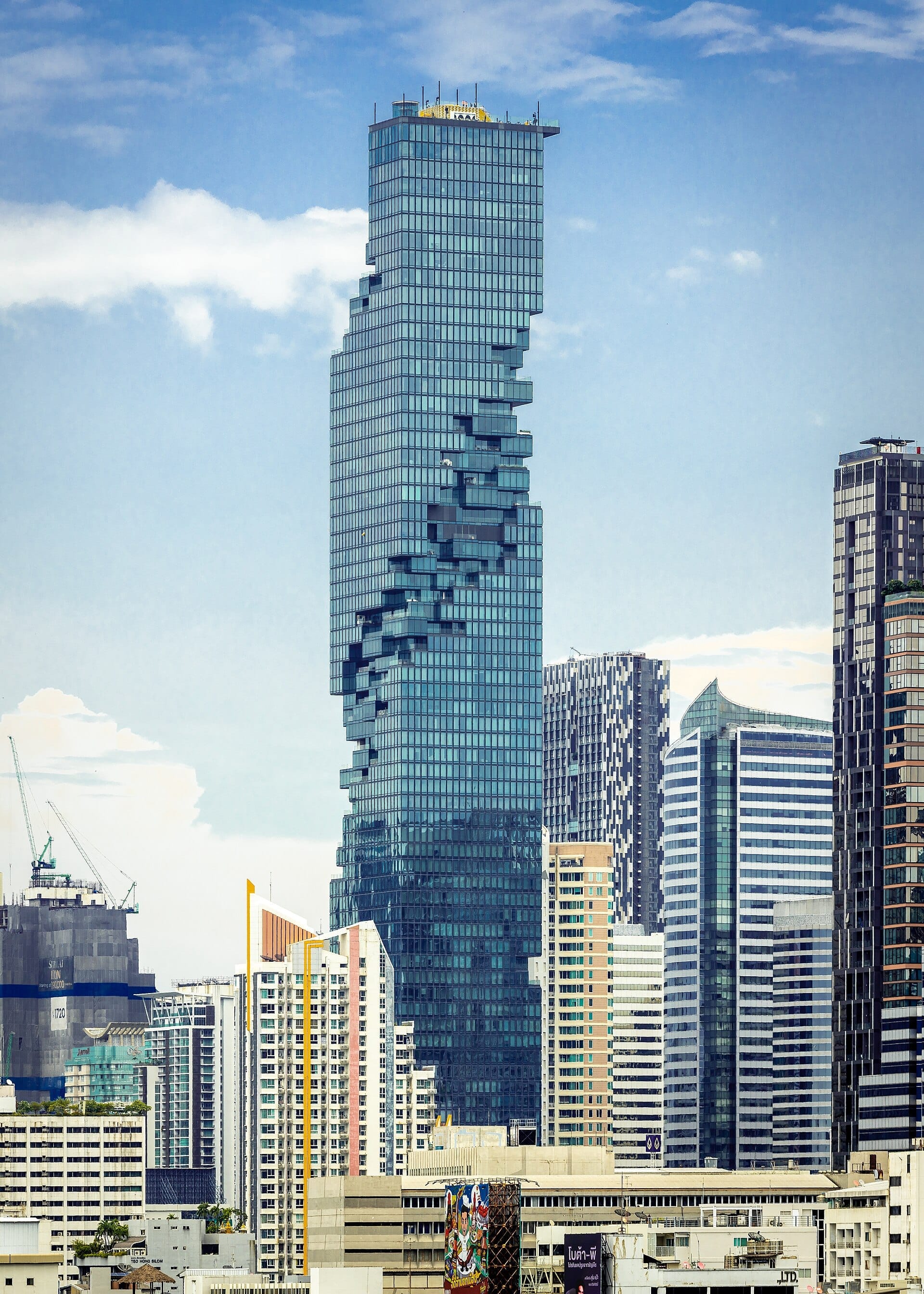
Those interested in Bangkok's skyline should consider the Mahanakhon Skywalk, located at the King Power MahaNakhon tower near Chong Nonsi BTS. The glass-floored observation deck on the 74th floor offers some of the clearest city panoramas available anywhere in Bangkok.
Patpong 1 and 2: the nightlife and market strip, best after 7pm
Silom Soi 4: Bangkok's most established gay entertainment street
Convent Road: a relatively quiet soi with cafes and small restaurants, pleasant for an afternoon walk
Lumphini Park (east edge of the neighborhood): mornings only for best atmosphere
MahaNakhon Tower: rooftop observation deck with glass floor panels
⚠️ What to skip
The touts around Patpong can be persistent, particularly near the go-go bar entrances. Prices inside those venues are rarely what the door tout quotes. If you are not interested, a firm 'no thank you' and continued walking is the correct approach.
Eating & Drinking
Silom has one of the more varied food scenes in central Bangkok, partly because it serves such different crowds: office workers wanting fast and cheap lunches, hotel guests looking for polished sit-down dinners, tourists chasing street food, and nightlife visitors who need something to eat at midnight. All of these are accommodated, often within a single block.
Street food in Silom is genuinely good and largely underappreciated compared to the more famous Chinatown scene. The pavement stalls along Silom Road near Sala Daeng and the smaller sois off Surawong serve solid pad thai, boat noodles, and grilled pork rice. The lunch rush between noon and 1:30pm is the best time to eat street food here, when everything is freshest and the turnover is highest.
For a broader look at what Bangkok's street food scene offers, the Bangkok street food guide covers the best eating neighborhoods and what to order in each.
The Indian restaurant cluster along Silom Road toward the Sri Maha Mariamman Temple is worth noting. This stretch, sometimes called Little India, has produced some of Bangkok's most established Indian restaurants, serving South and North Indian cuisine at consistently reasonable prices. The area developed because of the large Indian trading community that has been in Silom for generations.
Drinking in Silom covers a wide range. The rooftop bar scene here is legitimate: several of Bangkok's higher-profile sky bars are within walking distance of Silom Road, offering cocktails at premium prices with dramatic views. At street level, the open-air bars on Patpong and Soi 4 are cheaper and louder. For something lower-key, Convent Road and the small sois north of Silom Road have a handful of wine bars and gastropubs catering to the expat professional crowd.
Getting There & Around
Silom is the easiest neighborhood in Bangkok to reach by public transit. The BTS Skytrain's Silom Line runs the full length of the area, stopping at Chong Nonsi (toward the MahaNakhon tower end) and Sala Daeng (above the Patpong and nightlife zone). The MRT Blue Line's Silom station is directly connected to Sala Daeng BTS via a short covered walkway, making transfers straightforward. From Suvarnabhumi Airport, the Airport Rail Link connects to the city center in about 30 minutes, with a single interchange required to reach Silom.
At the western end of the neighborhood, the BTS Saphan Taksin station sits directly above the Sathorn Pier (also called Central Pier), the main hub for the Chao Phraya Express Boat. From here, orange-flag boats run north along the river roughly every 10-20 minutes, providing fast access to Chinatown's pier and the historic district piers near Rattanakosin. This river connection is one of Silom's most underused advantages for tourists.
Within the neighborhood, walking along the BTS elevated walkway between Sala Daeng and Chong Nonsi is the most comfortable option in hot weather. At street level, Silom Road itself has wide pavements but the pedestrian experience degrades in the smaller sois, where motorcycles share the space. Motorbike taxis clustered at each soi entrance charge flat rates of 10-20 baht for short internal hops.
💡 Local tip
The Chao Phraya Express Boat from Sathorn Pier is one of the fastest and most pleasant ways to reach the Grand Palace area. A 40-60 minute ride upriver costs around 15 baht on the orange-flag boat and avoids traffic entirely.
Where to Stay
Silom is a strong choice for accommodation if you want transit access across the city without paying Sukhumvit prices. The neighborhood is well-served by hotels at every tier, from guesthouses near Patpong to five-star properties along Sathorn Road. For orientation on where in Bangkok to base yourself, the where to stay in Bangkok guide covers the trade-offs between different neighborhoods.
The best hotel positioning within Silom depends on your priorities. Staying near Sala Daeng BTS puts you in the heart of the nightlife zone, which is convenient but means accepting more noise on weekend nights, particularly near Patpong. The Chong Nonsi end of the neighborhood is noticeably quieter and suits business travelers or those who want Silom's transit connections without the late-night soundtrack.
Sathorn Road, which runs parallel to Silom along the southern boundary, hosts several of Bangkok's most prestigious hotels in a corridor that is quieter than Silom Road itself. Rooms here tend to be larger and the environment is more sedate, but you are a 10-15 minute walk from the main nightlife and market activity. The tradeoff is worth it if a peaceful base matters more to you than proximity to the action.
Silom is not the best neighborhood for budget backpacker accommodation. That market is better served by Khao San Road to the north or the guesthouses around Siam. What Silom does offer mid-range travelers is good value on business-grade hotels that discount sharply on weekends when the corporate occupancy drops.
Honest Assessment
Silom works well as a base because of its transit connections, not because of any single unmissable attraction. It is a functional, well-organized neighborhood with genuine character at street level, but it does not have the historical depth of Rattanakosin, the shopping concentration of Siam, or the extended dining and entertainment strip of Sukhumvit. What it has is a real working city around it, reliable transit in multiple directions, and a nightlife scene that is genuinely distinctive.
Travelers focused entirely on temple-hopping and cultural sightseeing may find Silom slightly peripheral, since the major sites cluster in Rattanakosin to the north. But the Chao Phraya boat from Sathorn Pier closes that distance quickly, and the combination of good hotels, street food, and rail access makes Silom a sensible anchor point for almost any Bangkok itinerary.
The Silom Road strip itself rewards walking at different times of day. The street that looks purely commercial at noon feels completely different at 8pm with the market stalls open, the restaurants lit, and the BTS trains rumbling overhead. That daily cycle, predictable but always slightly different in detail, is the truest way to understand what Silom is.
TL;DR
Silom is Bangkok's financial district by day and one of its most energetic entertainment zones by night, with the same streets serving completely different purposes depending on the hour.
Transit is exceptional: dual BTS stations, an MRT interchange, and direct Chao Phraya boat access from Sathorn Pier make the rest of Bangkok easy to reach.
Best suited to travelers who want a well-connected central base with genuine street-level atmosphere, good mid-range and luxury hotel options, and access to both the historic riverside and the modern city.
Patpong Night Market is worth seeing once but is primarily a tourist zone. The more rewarding local experience is the daytime street food scene and the smaller sois off the main road.
Not recommended as a first-choice base for budget travelers or for those whose priority is proximity to Bangkok's major temples and palaces, though the boat connection makes the historic district accessible.
From the riverside spectacle of ICONSIAM to the bargain floors of MBK, this guide covers Bangkok's 10 best shopping malls by district with straightforward takes on what each one actually does best.
Bangkok's street food scene is one of the most rewarding in Southeast Asia, but knowing where to go and what to order separates a great meal from a mediocre one. This guide breaks down the best dishes, neighborhoods, and markets so you can eat confidently and affordably.
From the 15,000-stall maze of Chatuchak to the sizzling woks of Yaowarat after dark, this guide covers Bangkok's best markets with candid reviews, practical tips, and the best times to visit each one.
From the dazzling Grand Palace complex to quiet neighborhood temples with barely a tourist in sight, this guide covers Bangkok's 10 most rewarding temples with frank reviews and practical visiting tips.
Bangkok's tropical climate means timing your visit matters more than most cities. This guide breaks down every season, key festivals, crowd levels, and price shifts so you can pick the right window for your trip.
Songkran is Thailand's New Year and the world's largest water fight, and Bangkok does it on a scale unlike anywhere else. This guide covers the best spots to celebrate, practical logistics, cultural context, and practical advice on what to skip.
From glittering temple complexes and chaotic night markets to rooftop observation decks and hidden neighborhoods, this guide covers 20 of the best things to do in Bangkok with candid reviews and practical advice.
Bangkok spreads across a vast urban grid, and where you stay shapes your entire trip. This guide breaks down the city's top neighborhoods by location, vibe, transport access, and price range, so you can book with confidence.