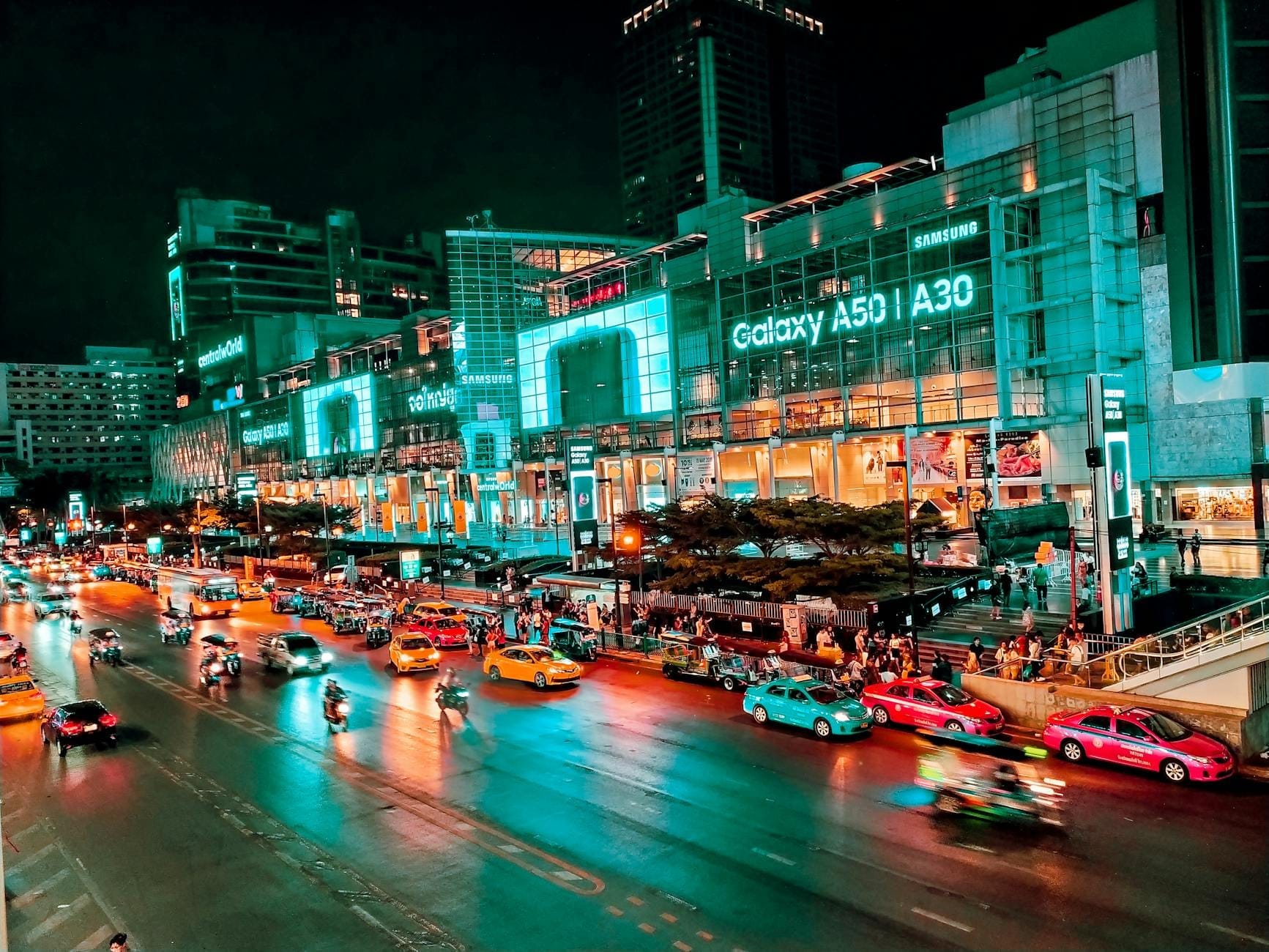
Siam is the geographic and commercial heart of Bangkok, where the BTS Skytrain lines cross, luxury malls tower over street-level food stalls, and the city's energy is at its most concentrated. It pulls in everyone from school students to international shoppers, and its central position makes it the default base for first-time visitors.
Siam is where Bangkok's two main BTS Skytrain lines converge, making it the city's de facto center of gravity. Within a few hundred meters you have some of Southeast Asia's largest shopping complexes, a celebrated contemporary art museum, and street-level food courts that draw office workers and tourists in equal measure. It is not a quiet neighborhood, but it is an extraordinarily connected one.
Orientation
Siam sits roughly at the midpoint of Bangkok's Sukhumvit and Silom BTS lines, which intersect directly above Siam Square. Geographically, it occupies a broad strip of central Bangkok running along Rama I Road, bordered to the west by the National Stadium area and to the east by the Ratchadamri intersection. To the north, Phetchaburi Road and the Pratunam district begin within a ten-minute walk. To the south, Chulalongkorn University's leafy campus forms a clear boundary before the road system opens back into the Silom and Sathorn corridors.
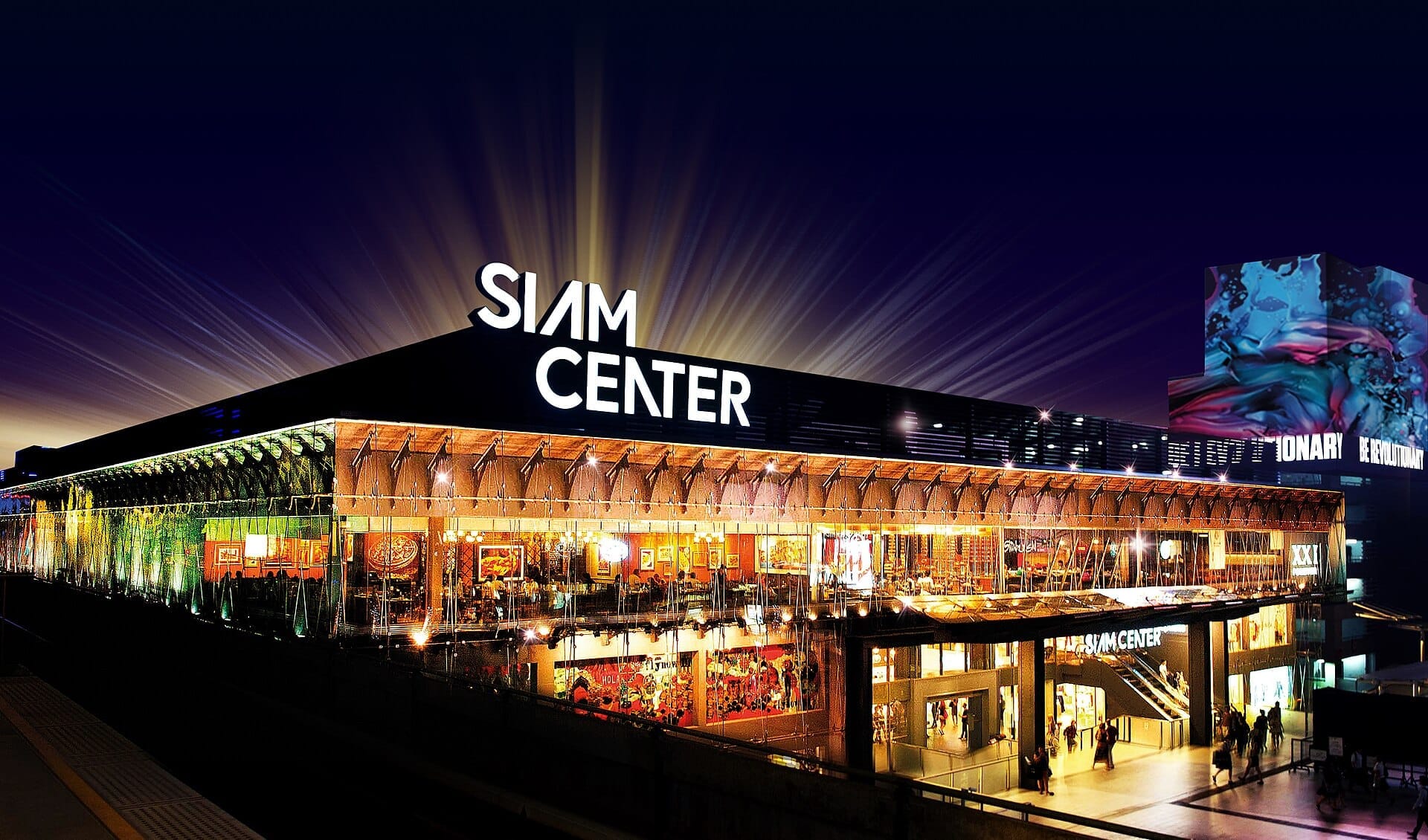
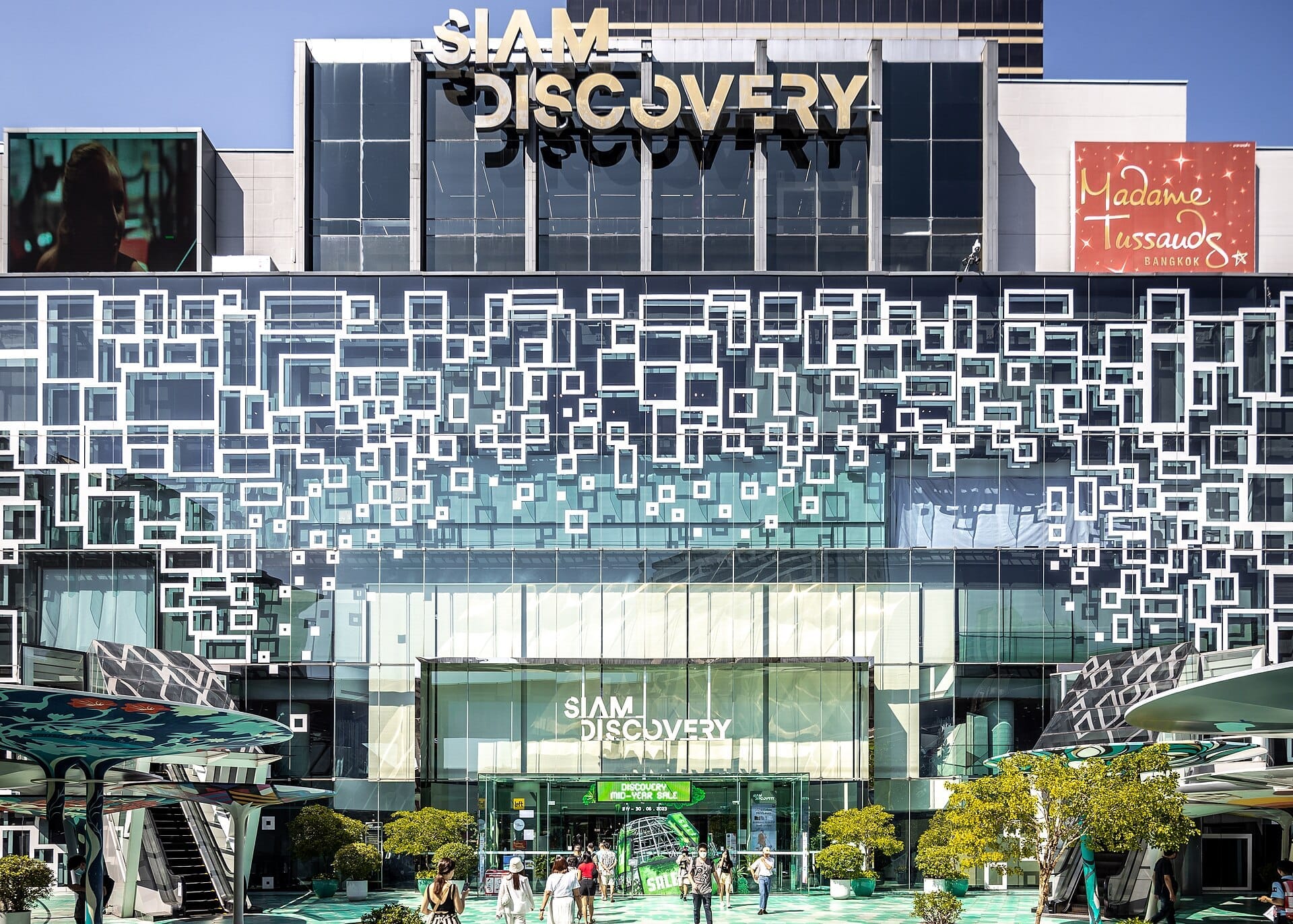
The neighborhood's landmarks are strung along a single east-west axis. Walking from National Stadium BTS eastward along Rama I Road, you pass MBK Center, then the Bangkok Art and Culture Centre, then Siam Square itself, then Siam Paragon and the linked Siam Center and Siam Discovery complexes. Another few hundred meters east brings you to the Ratchadamri junction and the Erawan Shrine. The entire stretch from National Stadium to Ratchadamri is under two kilometers, comfortably walkable in twenty minutes in cool weather, though the midday heat makes the elevated mall walkways a more practical route.
Siam also serves as a transit gateway to surrounding neighborhoods. Head east along the BTS and you reach Sukhumvit, Bangkok's expat and nightlife corridor. Head south on the Silom line toward Silom, and the financial district. Head west toward the older city and you can transfer toward the river, Rattanakosin, and the Grand Palace. This centrality is Siam's defining geographic fact.
Character & Atmosphere
Mornings in Siam belong to students and office workers. Chulalongkorn University, which occupies a substantial plot immediately south of Siam Square, sends a constant tide of young Thais across the area from around 7am onwards. Food cart operators set up on the side streets of Siam Square — the grid of numbered sois that cuts between Rama I Road and Henri Dunant Road — and the smell of grilled pork skewers and sweet toasted bread fills the air before the mall air conditioning units have even spun up to full power.
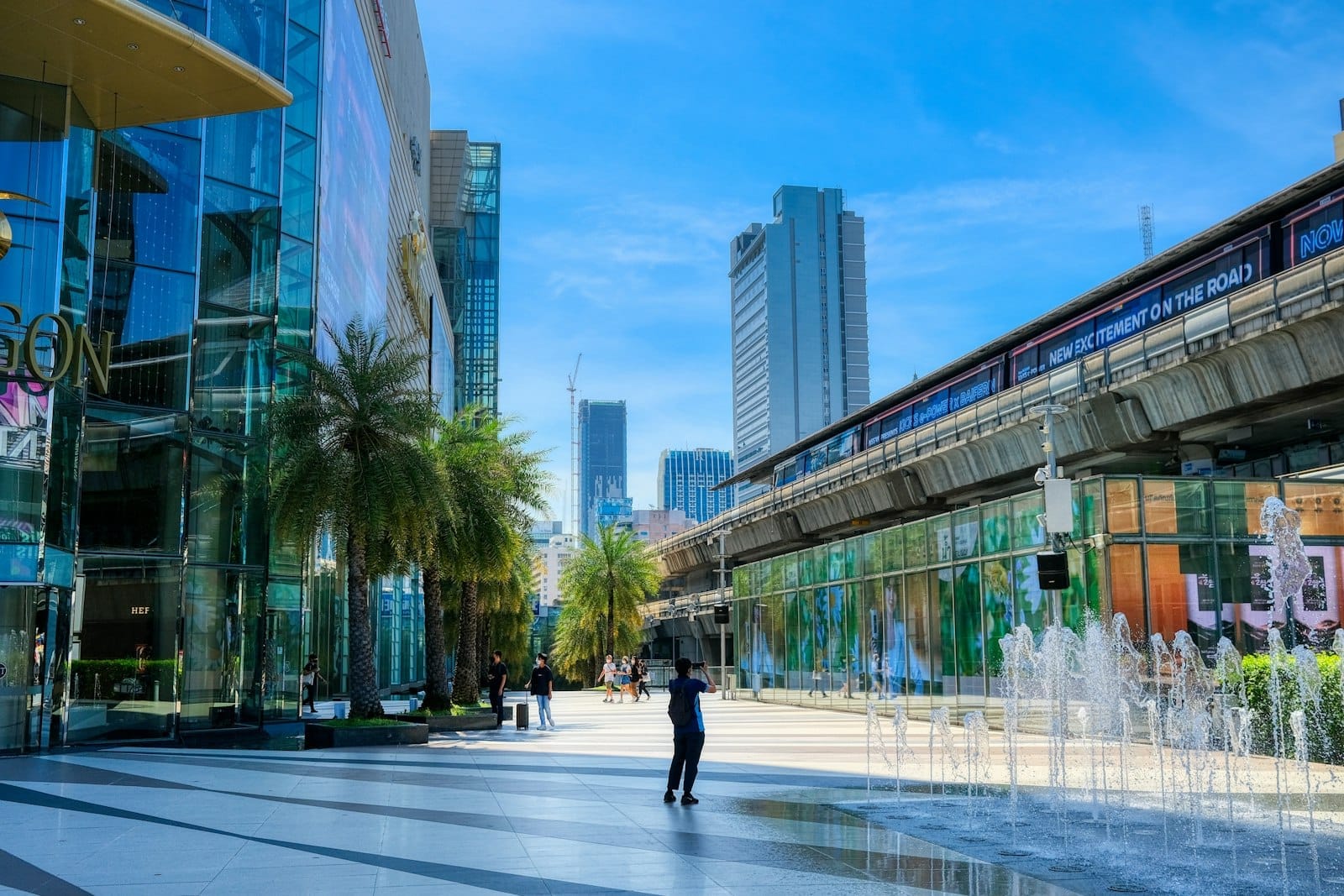
By mid-morning the retail logic takes over. The elevated walkways between BTS Siam and the malls fill with international visitors. Siam Paragon's ground floor shifts from Thai families to tour groups and luxury shoppers. The light is harsh and white above street level, reflected off glass and polished granite, and the crowd by noon is dense enough that moving through it requires patience. Siam Square's numbered sois offer a lower-key alternative: the low-rise shophouses here house indie clothing labels, Japanese-influenced cafés, and small restaurants. The neighborhood's teenage and twenty-something creative scene operates almost entirely within those blocks.
After dark, Siam changes character again. The mall crowds thin from around 9pm, but the food options outside the buildings stay active later. The Siam Square sois develop a quiet evening energy, with students occupying outdoor café tables and the occasional pop-up stall appearing near the main square plaza. It is not a nightlife neighborhood in the way Sukhumvit or Silom are: there are no nightclub strips or go-go bars. The energy is younger and more domestic, which is either appealing or dull depending on what you are looking for.
ℹ️ Good to know
Siam Square Soi 2 to Soi 7 form a self-contained grid of independent shops, cafés, and restaurants that runs on a completely different rhythm from the surrounding malls. If you only pass through on the elevated walkways, you will miss the neighborhood's most interesting street-level life entirely.
What to See & Do
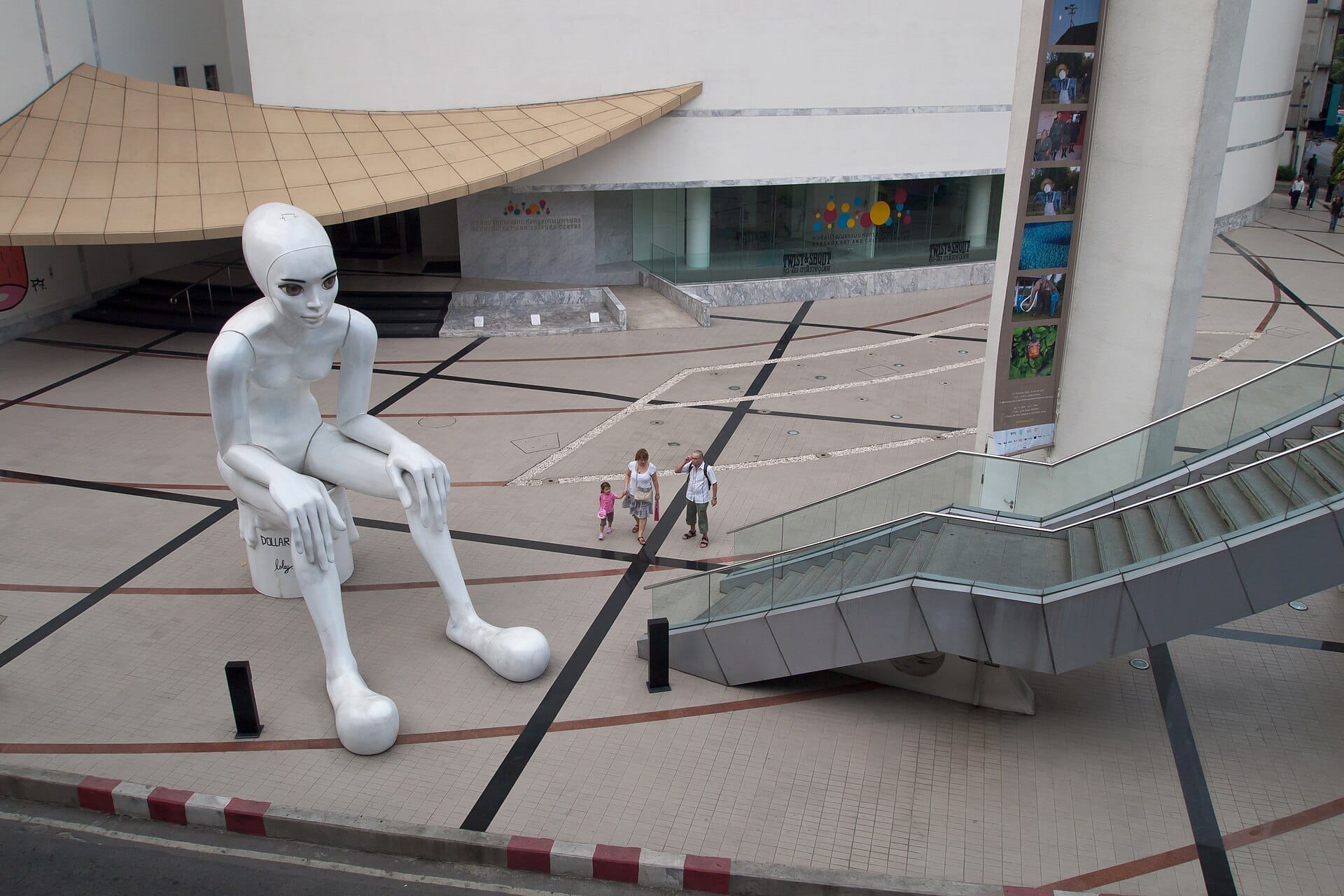
The Bangkok Art and Culture Centre sits at the corner of Rama I Road and Phayathai Road, directly across from MBK Center and connected to National Stadium BTS by a pedestrian bridge. It is one of the city's most serious contemporary art institutions, with eleven floors of gallery spaces, artist studios, and a rotating program of exhibitions that includes both Thai and international work. Entry to the building is free, though some exhibitions charge separately. The spiral walkway running up through the interior is itself worth the visit.
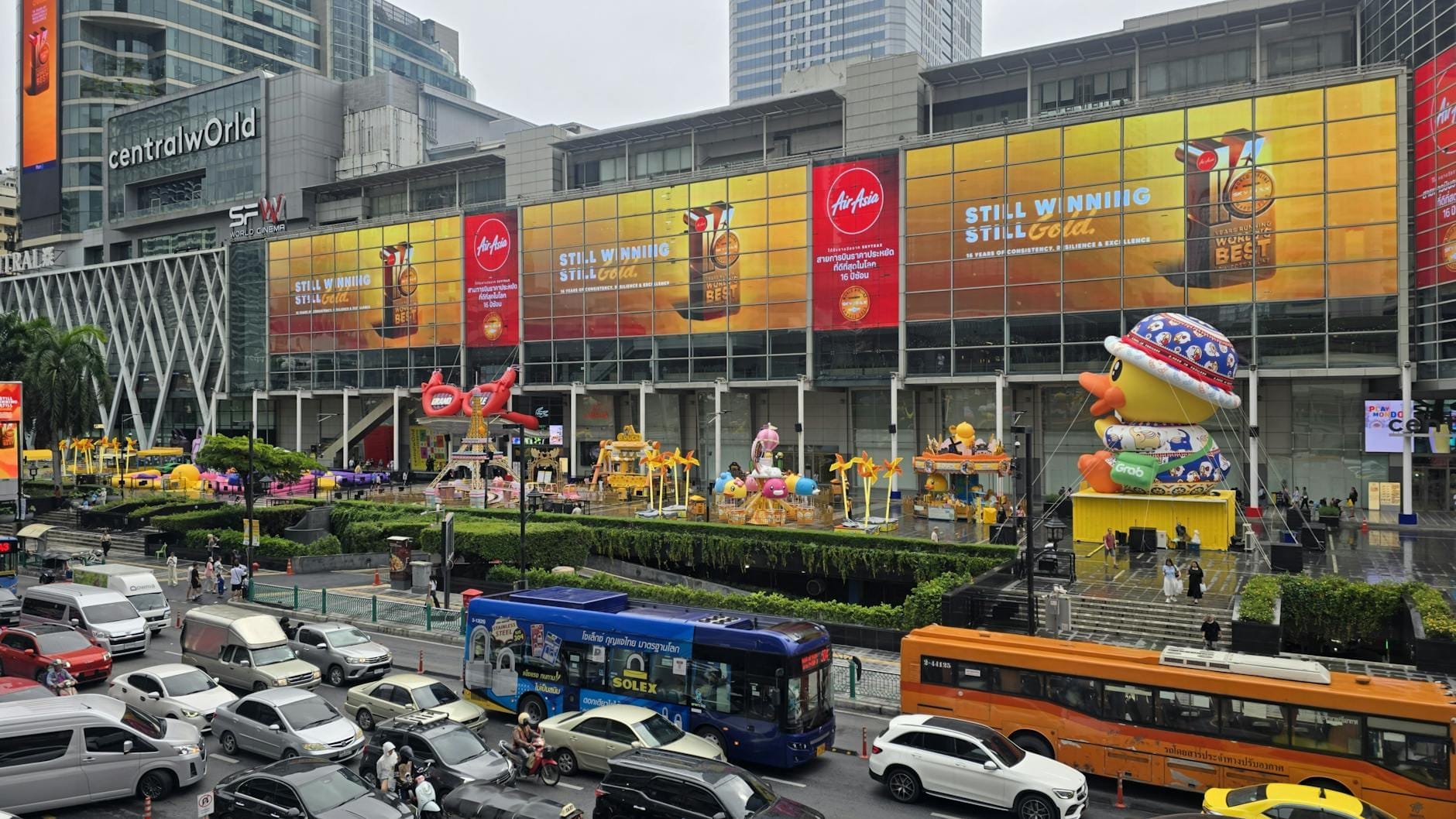
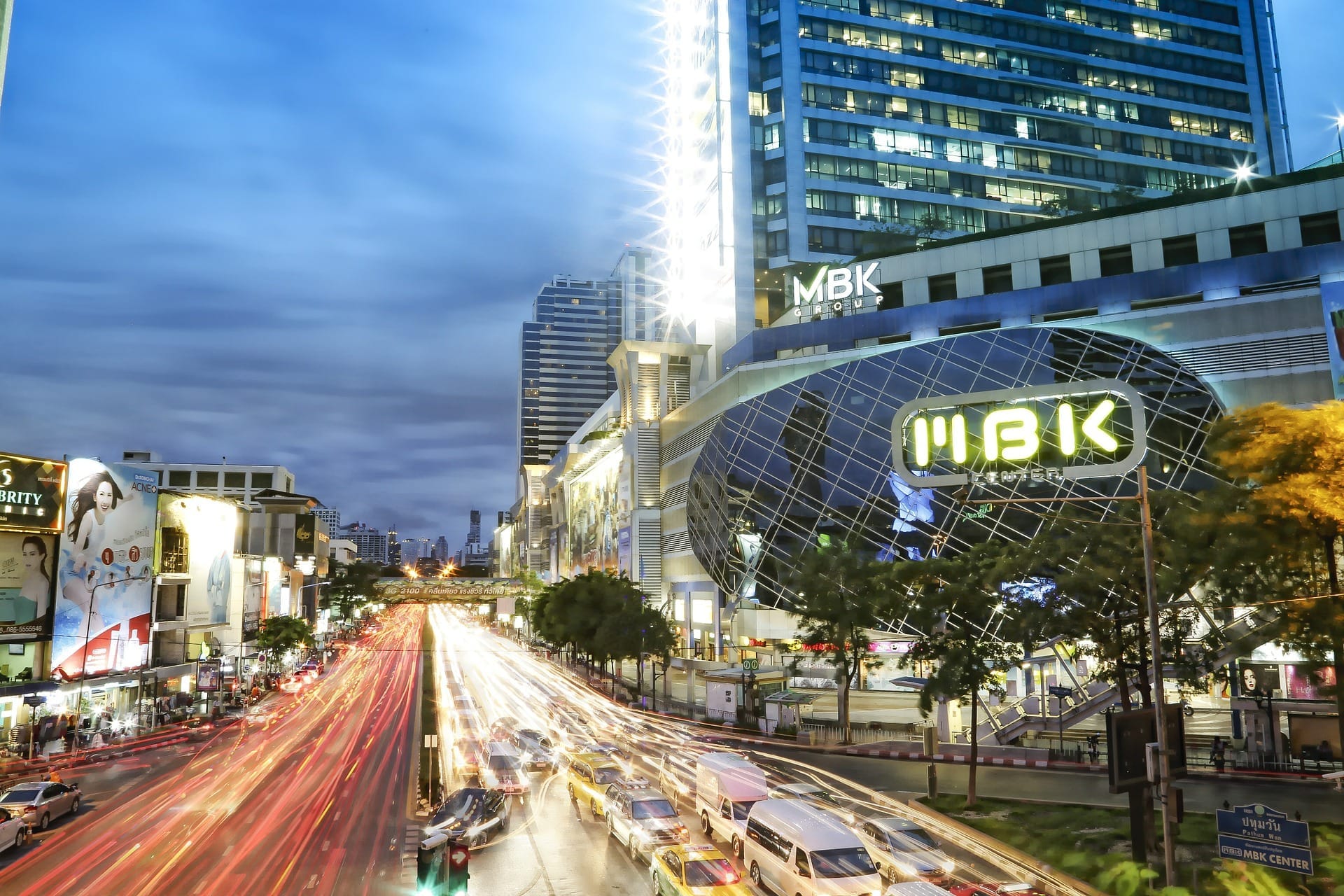
Shopping is, objectively, the primary activity in Siam. The cluster of malls along Rama I Road represents one of the densest concentrations of retail in Southeast Asia. Siam Paragon anchors the luxury end, with a basement-level ocean world aquarium, a multiplex cinema, and a food hall that draws long queues. Siam Center and Siam Discovery are connected directly to it and lean more toward Thai designer labels and concept retail. MBK Center at the western end is the budget counterpoint: eight floors of small stalls selling phone accessories, clothing, street food, and electronics at prices negotiated at the counter.
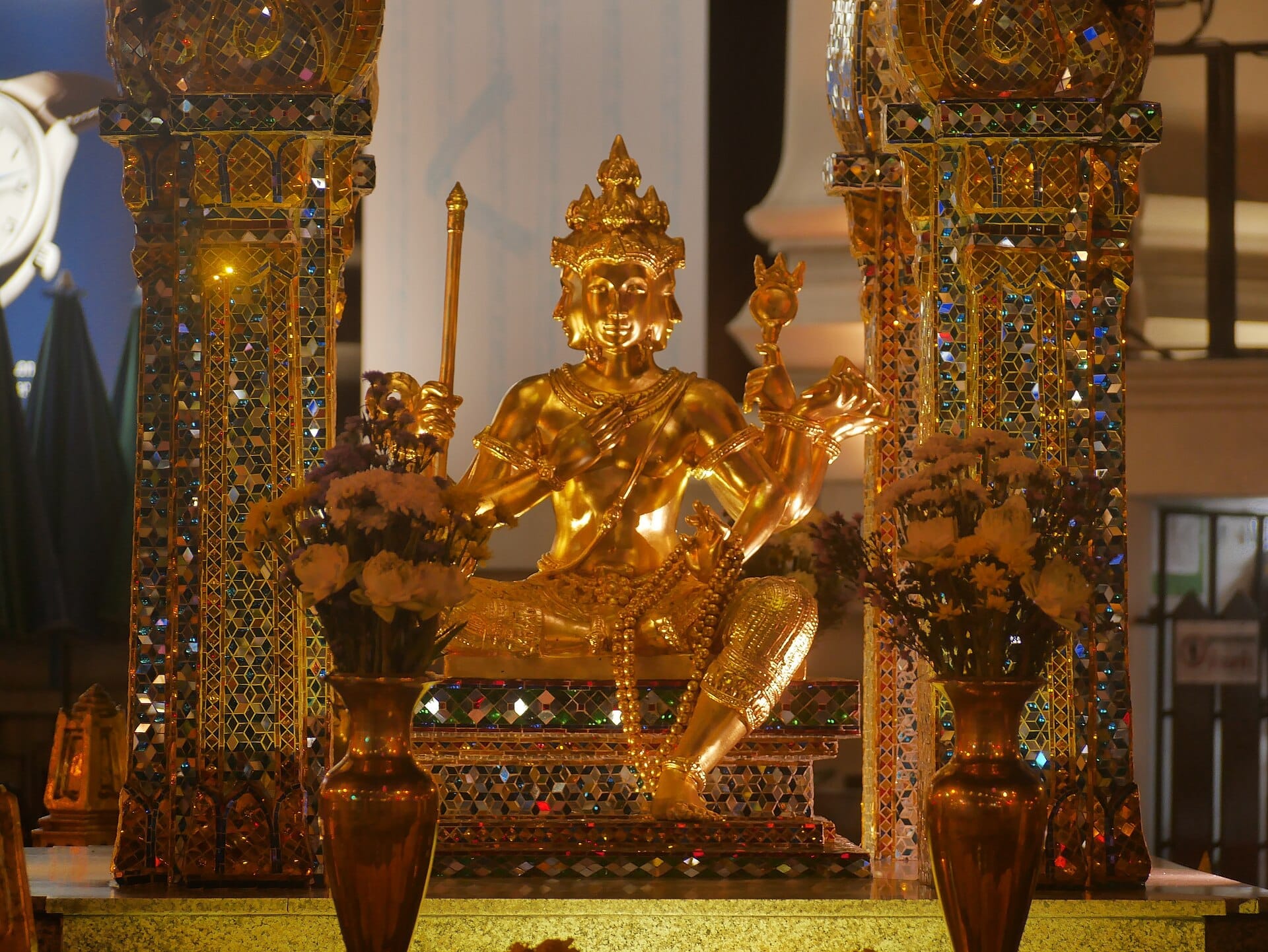
Just outside the immediate Siam core, the Erawan Shrine at the Ratchadamri intersection is one of Bangkok's most visited religious sites, a spirit house of unusual scale that sits at street level beneath the Grand Hyatt Erawan hotel. Traditional Thai dance performances take place here throughout the day when commissioned by devotees, and the steady stream of worshippers with flower garlands and incense sticks continues from early morning until late at night. It is one of those Bangkok experiences that remains genuinely affecting regardless of how many visitors are present at any given time.
Bangkok Art and Culture Centre: contemporary Thai and international art, free general entry
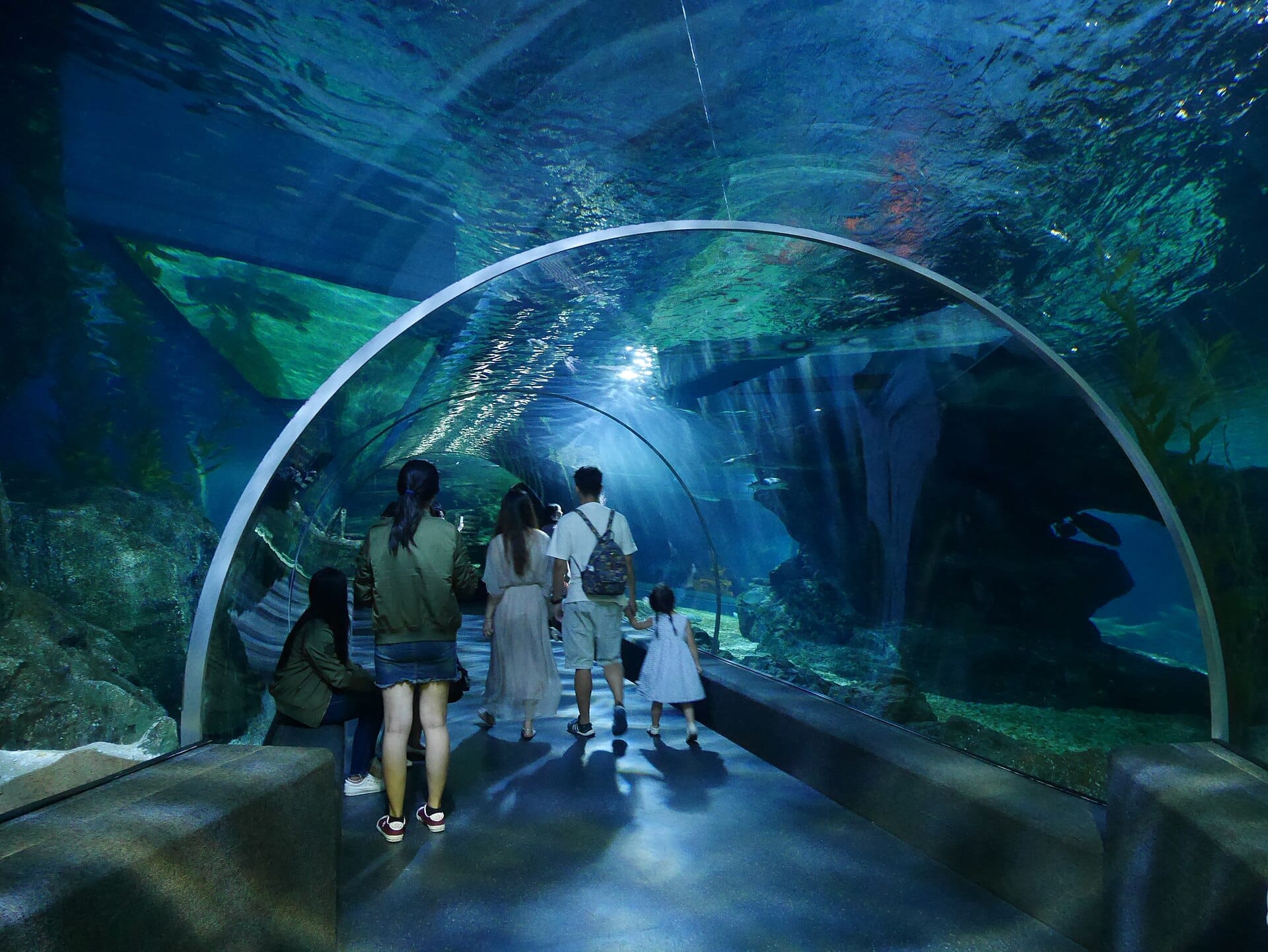
Siam Paragon: luxury retail, SEA LIFE Bangkok Ocean World aquarium in the basement, cinema
The SEA LIFE Bangkok Ocean World inside Siam Paragon is a full-scale aquarium popular with families. Book tickets online in advance — walk-in queues at peak times can be substantial, and online prices are typically lower.
Eating & Drinking
Food in Siam operates across a wider range than the mall-heavy streetscape suggests. The basement food halls at Siam Paragon are genuinely good, running from premium Thai restaurant counters to Japanese imports and Thai dessert specialists. Prices are higher than street level but still reasonable by international standards, and the air conditioning and seating capacity make them a practical option in the middle of the day. The food court at MBK Center occupies the top floor and operates on a coupon system: you buy credits at a central counter and redeem them at individual stalls, most of which serve central Thai standards, pad thai, grilled meats, and noodle soups, at prices well below 100 baht per dish.
Street-level eating is concentrated in the Siam Square sois and in the food stalls that set up along the side roads between the malls. This is reliable ground for Bangkok street food staples: grilled pork rice, boat noodles, mango with sticky rice from carts that park in predictable spots, and the sweet milk tea shops that have proliferated across all of Bangkok's university districts. The sois also host a number of small Japanese and Korean restaurants that cater to Chulalongkorn students, generally offering good value and reliable quality.
For coffee, Siam Square has become one of Bangkok's denser café districts. The independent cafés in the soi grid range from minimalist specialty coffee spaces to elaborately designed Thai tea concept shops. Several Thai bakery chains also have prominent locations here. The café culture in this part of the city runs genuinely late, with many spots staying open until 10 or 11pm to accommodate the student crowd.
Nightlife options within Siam proper are limited. The area has a few rooftop bars attached to hotels near the Ratchadamri end, and some of the restaurant-bars in Siam Square stay open past midnight, but anyone specifically seeking clubs or late-night bar streets should head east toward Sukhumvit's Thonglor and Asok areas, or south toward Silom's Patpong strip. Siam is a place to eat and drink, not to drink heavily and stay up until 3am.
Getting There & Around
Siam BTS station is the most strategically located transit point in Bangkok. The Sukhumvit line runs east toward Asok, Nana and north toward Mo Chit and Chatuchak. The Silom line runs south toward Sala Daeng, Chong Nonsi, and the riverside at Saphan Taksin. Many central BTS journey in the city pass through or connects at Siam, which makes it simultaneously the most convenient and most crowded station in the network.
The station connects directly via covered walkway to Siam Paragon, Siam Center, and Siam Discovery, and via the elevated pedestrian bridge to the Bangkok Art and Culture Centre and MBK Center. In practical terms, you can arrive from any BTS station and walk into the major attractions without descending to street level, which matters in monsoon season and during peak heat. The walk from Siam BTS to Ratchadamri BTS, where the Erawan Shrine is located, takes around eight minutes on the elevated path.
Taxis and ride-hail apps (Grab and Bolt both operate in Bangkok) are reliable options for reaching Siam from areas not served by BTS, such as the old city and Rattanakosin. Traffic on Rama I Road during evening rush hour (roughly 5pm to 8pm) can be severe, so building in extra time for road-based travel is advisable. There is no MRT metro line through Siam, though the MRT Hua Lamphong and Silom interchange at Sam Yan is within reasonable distance to the south for those arriving from the central MRT spine.
⚠️ What to skip
Siam BTS can become genuinely overwhelming at peak hours, particularly on Saturday afternoons and during school holidays. Platform crowding and lift queues are real. If you are arriving or departing with heavy luggage or travelling with young children, avoid the Saturday 1pm to 5pm window if possible.
Where to Stay
Siam is not the cheapest area to stay in Bangkok, but for first-time visitors it is arguably the most logical. The BTS connection means you can reach almost any part of the city without navigating taxis in heavy traffic, and the density of food and retail options means you will never be at a loss for something to do within walking distance. For a broader view of where Siam fits into your accommodation decision, the Bangkok neighborhoods guide for accommodation covers all the main options in detail.
Hotels in Siam proper cluster around two zones. The area immediately around Siam BTS and Siam Square has several mid-range and boutique options that trade on location above all else. The Ratchadamri end, around the Erawan Shrine and the Ratchaprasong intersection, has the city's highest concentration of five-star international chain hotels. Rooms here are expensive by Bangkok standards but often genuinely competitive with equivalent properties in other major Asian cities.
The main trade-off with staying in Siam is noise. Rama I Road is a major arterial with traffic running until late, and the side streets around Siam Square have a young social scene that extends into the evening. Rooms facing the road on lower floors of midrange hotels can be significantly noisier than the rates suggest. Requesting a higher floor or a room facing an interior courtyard makes a meaningful difference. Budget travelers may find better value in the National Stadium end of the neighborhood, where a few older guesthouse-style hotels remain from before the area's full commercial transformation.
Honest Assessment
Siam is central, convenient, and relentlessly commercial. It is the right base if your priority is easy access to the whole city via BTS, if you are a first-time visitor who does not yet know which areas you want to explore, or if shopping and food halls are genuinely part of your itinerary. It is not the right base if you are looking for something historically layered, architecturally interesting, or quiet. The neighborhood's energy is almost entirely present-tense: glass towers, international brands, and crowds. The street life in the Siam Square sois provides texture and local character, but it does not change the fundamental nature of the area.
For travelers who want to be closer to Bangkok's older identity, the narrow lanes of Chinatown (Yaowarat) and the royal monuments of Rattanakosin are reachable from Siam but feel like a different city. Staying in those areas and visiting Siam for a shopping afternoon gives a more rounded picture of Bangkok than the reverse.
TL;DR
Siam is Bangkok's BTS interchange hub and retail center, with Siam Paragon, MBK Center, Siam Center, and Siam Discovery all within a 15-minute walk of each other.
Best for: first-time visitors, shoppers, travelers who want maximum BTS connectivity and don't mind a commercial atmosphere.
Not ideal for: travelers seeking historical character, budget backpackers (accommodation is pricier), or anyone who wants quiet evenings.
The Siam Square sois offer genuinely local street-level life — cafés, indie shops, student food stalls — that contrasts sharply with the surrounding mall architecture.
Avoid peak BTS times (Saturday afternoons, school holidays) if possible, and book accommodation on higher floors to reduce street noise.
From the riverside spectacle of ICONSIAM to the bargain floors of MBK, this guide covers Bangkok's 10 best shopping malls by district with straightforward takes on what each one actually does best.
Bangkok's street food scene is one of the most rewarding in Southeast Asia, but knowing where to go and what to order separates a great meal from a mediocre one. This guide breaks down the best dishes, neighborhoods, and markets so you can eat confidently and affordably.
From the 15,000-stall maze of Chatuchak to the sizzling woks of Yaowarat after dark, this guide covers Bangkok's best markets with candid reviews, practical tips, and the best times to visit each one.
From the dazzling Grand Palace complex to quiet neighborhood temples with barely a tourist in sight, this guide covers Bangkok's 10 most rewarding temples with frank reviews and practical visiting tips.
Bangkok's tropical climate means timing your visit matters more than most cities. This guide breaks down every season, key festivals, crowd levels, and price shifts so you can pick the right window for your trip.
Songkran is Thailand's New Year and the world's largest water fight, and Bangkok does it on a scale unlike anywhere else. This guide covers the best spots to celebrate, practical logistics, cultural context, and practical advice on what to skip.
From glittering temple complexes and chaotic night markets to rooftop observation decks and hidden neighborhoods, this guide covers 20 of the best things to do in Bangkok with candid reviews and practical advice.
Bangkok spreads across a vast urban grid, and where you stay shapes your entire trip. This guide breaks down the city's top neighborhoods by location, vibe, transport access, and price range, so you can book with confidence.