Sea Life Bangkok Ocean World: The Complete Visitor Guide
Located two floors beneath Siam Paragon shopping mall, Sea Life Bangkok Ocean World is Southeast Asia's largest urban aquarium. With over 30,000 sea creatures across themed zones, it draws families, couples, and curious travelers — but knowing how to visit makes all the difference.
Quick Facts
- Location
- Basement floors B1–B2, Siam Paragon, 991 Rama I Rd, Pathum Wan, Bangkok
- Getting There
- BTS Siam (exits 3 or 5), direct mall connection — no outdoor walking required
- Time Needed
- 2 to 3.5 hours for a thorough visit; 90 minutes minimum if you move at pace
- Cost
- Walk-up adult tickets around 1,199 THB; discounted online rates often 20–30% lower; children priced separately
- Best for
- Families with children, couples on rainy-day plans, marine biology enthusiasts
- Official website
- www.visitsealife.com/bangkok/
What Sea Life Bangkok Ocean World Actually Is
Sea Life Bangkok Ocean World sits in an unlikely location: two basement levels beneath one of Bangkok's most upscale shopping malls. Operated by the international Merlin Entertainments group, it opened in 2005 and has since expanded to become the largest indoor aquarium in Southeast Asia, housing more than 30,000 animals across roughly 400 species. The contrast between the luxury retail floors above and the dimly lit, cathedral-quiet aquarium below is genuinely striking.
The attraction occupies around 10,000 square meters of floor space and is organized into themed zones that take visitors on a loose journey from shallow reef environments down through deeper ocean habitats. It sits squarely in the Siam district, making it one of the most accessible major attractions in the city — reachable by BTS without stepping outside, a genuine advantage during Bangkok's hottest months or monsoon season.
💡 Local tip
Book tickets online before arriving. Walk-up prices at the counter are significantly higher than the rates available through the official website or reputable third-party booking platforms. Print or download your confirmation — the entry process is faster with a QR code.
The Zones: What You'll Actually See
The journey begins in the Rocky Shore zone, which simulates the tidal environment with touch pools and smaller tank displays. This is where the crowd dynamic first becomes apparent: young children cluster around the touch pools, often excitedly, and the noise level here is the highest in the building. If you're visiting without children, move through this section at a comfortable pace and spend your energy further in.
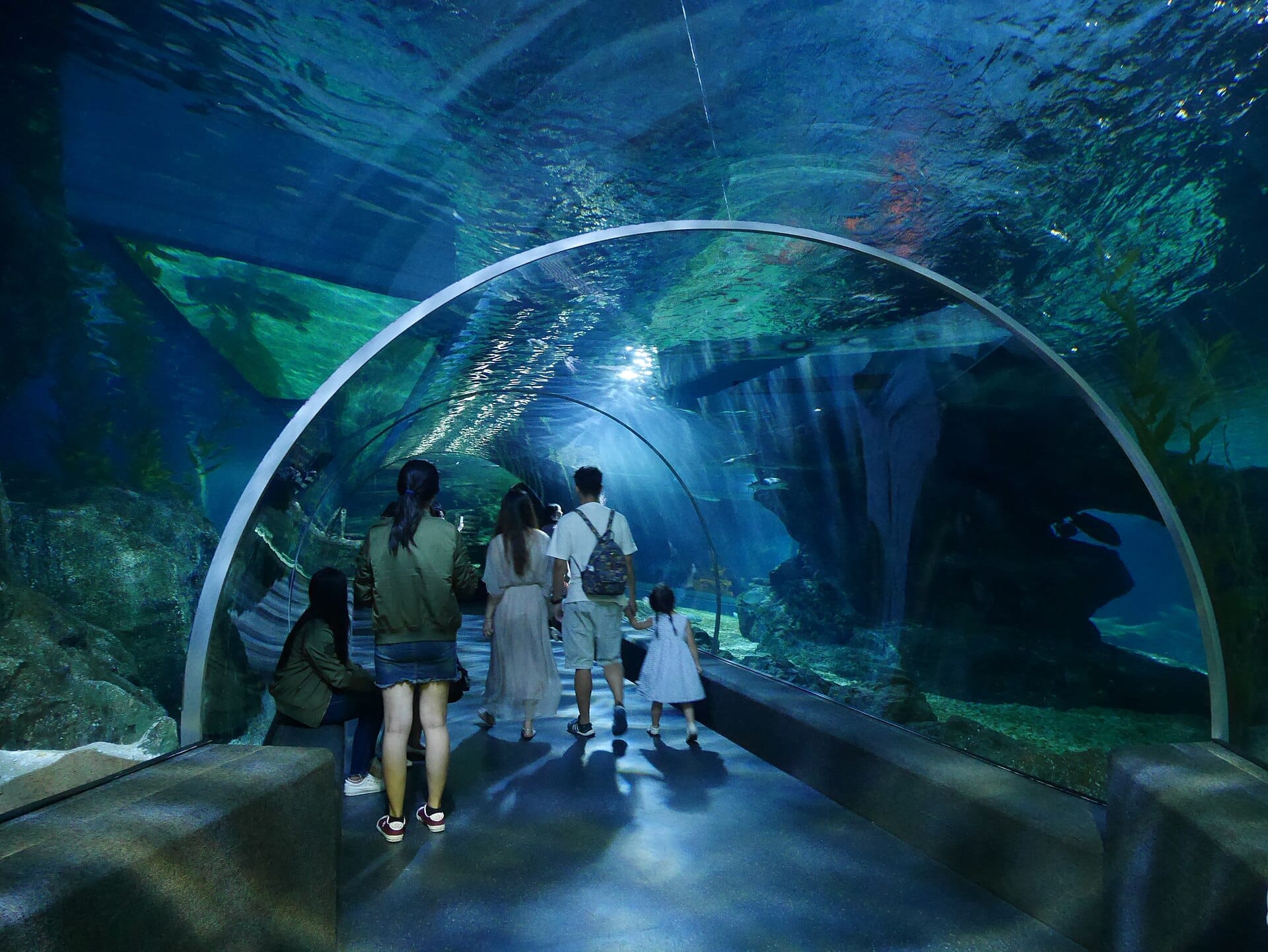
The Living Ocean zone is the visual centerpiece. A wraparound tunnel with a moving walkway allows visitors to stand beneath sharks, rays, and large schools of fish with the water passing overhead and on both sides. The tunnel glass is thick and clear, the lighting is calibrated to emphasize the blue and green of the water, and this is where most people stop longest, phones raised. Early morning visitors often report the tunnel feeling genuinely peaceful; by early afternoon, the walkway moves slowly due to crowd density.
The Rainforest zone introduces freshwater species and bridges the ocean narrative with river and jungle ecosystems. The amphibian and reptile displays here are more detailed than many visitors expect from an aquarium — the giant arapaima tank in particular is memorable for sheer scale. The Penguin Ice Adventure zone houses a colony of gentoo penguins in a climate-controlled environment and is consistently one of the most popular stops, especially with children. The feeding schedule is posted near the entrance and draws the largest crowds of the day.
The Seahorse Kingdom and Jellyfish zones are quieter and darker, the mood shifting to something closer to meditative. The jellyfish tanks are backlit with changing colors that make the displays feel almost cinematic. These sections rarely feel overcrowded even on busy days, partly because they're tucked deeper in the route and don't have the same obvious spectacle as the shark tunnel.
Tickets & tours
Hand-picked options from our booking partner. Prices are indicative; availability and final rates are confirmed when you complete your booking.
Temples of Bangkok and Grand Palace half-day guided tour
From 18 €Instant confirmationFree cancellationBangkok tuk-tuk night tour with Chinatown street food meal
From 28 €Instant confirmationFree cancellationAfternoon Tea at Hyatt Regency Hotel Bangkok
From 900 €Instant confirmationFree cancellationBangkok Wat Arun Temple of Dawn self-guided walking tour
From 13 €Instant confirmationFree cancellation
Time of Day and Crowd Patterns
The aquarium opens at 10:00 AM daily. The first hour of opening is the calmest period of the entire day, and it's worth timing your visit accordingly if crowd sensitivity matters to you. School group visits, which arrive in significant numbers, typically begin after 10:30 AM on weekdays. By 11:30 AM on weekends, the space around the shark tunnel and penguin zone can feel genuinely packed.
Midday and early afternoon — roughly 12:00 PM to 3:00 PM — are the busiest windows. This coincides with families using the aquarium as a heat-escape activity and tourists combining it with lunch at Siam Paragon's food hall. If you can't visit in the first hour, arriving after 3:30 PM gives you a second wave of relative calm, with the trade-off being a slightly rushed exit before the 8:00 PM closing time (last entry is typically at 7:00 PM).
⚠️ What to skip
Public holidays and school vacation periods in Thailand see visitor numbers spike sharply. During Songkran (April) and Chinese New Year, wait times at popular zones can stretch to 20 minutes. If you're visiting Bangkok during these windows, check the official site for peak-period guidance.
Paid Add-On Experiences
Sea Life Bangkok offers several optional experiences at additional cost, and these are worth evaluating before you arrive rather than at the moment a staff member offers them. The Glass-Bottom Boat ride passes over one of the large tanks and provides a view downward into the water rather than upward through glass. It's a brief experience and primarily appeals to younger children. The Behind the Scenes Tour takes small groups into the working areas of the aquarium — filtration systems, feeding preparation areas, staff corridors — and is genuinely interesting for anyone curious about aquarium operations. It requires advance booking.
Shark Dive and Sea Turtle Snorkel experiences are available for certified divers and casual snorkelers respectively and are priced considerably higher than the base admission. These are not experiences you can simply walk up and join; advance reservation is mandatory and availability is limited. For most casual visitors, they're not necessary to have a complete experience, but for diving enthusiasts they represent one of the more unusual opportunities in central Bangkok.
Photography, Accessibility, and Practical Details
The lighting inside is aquarium-standard: predominantly dark with dramatic tank illumination. Smartphone cameras handle this reasonably well, especially the main Living Ocean tunnel where the lighting is brightest. For dedicated camera users, a fast lens or a body capable of high ISO performance without excessive grain will produce noticeably better results. Flash photography is prohibited in all zones and enforced by staff.
The aquarium is fully wheelchair accessible with elevators connecting the two levels. Stroller access is straightforward throughout, though the tunnel's moving walkway requires attention when pushing a pram. Multilingual signage throughout the attraction covers Thai, English, and several other major languages — the factual panels next to tanks are genuinely informative and written at a level that works for adults, not just children.
Getting there requires no outdoor navigation. Take the BTS Skytrain to Siam station, use exit 3 or 5, and follow the direct covered walkway into Siam Paragon. The aquarium entrance is clearly signposted on the basement level. If you're combining the visit with shopping or a meal, the mall's food options range from street-food court to sit-down restaurants, all within the same complex.
Is It Worth the Price? An Honest Assessment
The walk-up ticket price positions Sea Life Bangkok at the upper end of what most travelers expect to pay for a Bangkok attraction. The honest answer is that value depends heavily on your interests and how you compare it to alternatives. For families with children aged 4 to 12, the combination of interactive elements, scale, and air-conditioned comfort makes this one of the stronger full-day options in the city. For adults visiting without children, the experience is enjoyable but passes more quickly, and the price-to-time ratio feels tighter.
Compared to aquariums in Singapore or Hong Kong, the collection is competitive though not as technically advanced in some display areas. Compared to most of what Bangkok offers, it's genuinely impressive in scope. The online discount — booking ahead versus paying at the counter — is significant enough that there's no good reason to pay walk-up rates.
Travelers who prioritize outdoor temples and street-level culture may find this attraction less compelling than Wat Pho or a walk through Chinatown. But on a day when heat or rain makes outdoor sightseeing miserable, Sea Life becomes a legitimately good use of several hours.
Who Should Skip This Attraction
Travelers on tight budgets who are primarily interested in Thai culture, temples, and street food will likely feel the ticket price is better spent elsewhere in Bangkok. Solo travelers without a particular interest in marine life may find the experience a bit short for the cost. Those with strong ethical concerns about large-scale aquarium operations (captive shark and ray environments specifically) should be aware of the nature of the facility before purchasing tickets.
Insider Tips
- Book online at least a day in advance — not just for the price saving, but because some popular time slots and add-on experiences do sell out on weekends and holidays.
- The penguin feeding times are posted on a board near the zone entrance. Arrive 10 minutes early and position yourself on the left side of the viewing window for an unobstructed angle that most visitors miss.
- The jellyfish zone is one of the least crowded areas despite being one of the most photogenic. Spend more time here than the crowd flow would naturally suggest.
- If you're visiting with a mixed group of adults and children, assign one adult to stay with kids at the touch pools while others walk ahead to the tunnel — the tunnel is worth experiencing without rush, and the timing lag evens out naturally.
- The Siam Paragon food court on the upper basement level is a genuinely good post-visit lunch option and far less expensive than the cafeteria inside the aquarium itself.
Who Is Sea Life Bangkok Ocean World For?
- Families with children aged 4 to 12 looking for a full morning or afternoon activity
- Couples or groups wanting an indoor, air-conditioned escape during Bangkok's hottest months (March to May) or the monsoon season (June to October)
- Marine biology enthusiasts and anyone with a serious interest in aquatic ecosystems
- Travelers with a rainy-day gap in their itinerary who are already in the Siam area
- Visitors combining the aquarium with a shopping or dining day at Siam Paragon or nearby malls
Nearby Attractions
Other things to see while in Siam:
- Bangkok Art and Culture Centre (BACC)
Perched at the intersection of Rama I and Phayathai roads, the Bangkok Art and Culture Centre is the city's most accessible contemporary arts venue. With free admission to most exhibitions, a striking spiral interior, and a location steps from BTS National Stadium, it rewards even a short visit.
- CentralWorld Bangkok
CentralWorld is one of the largest shopping complexes in Southeast Asia, anchoring the Ratchaprasong intersection in the heart of Bangkok. Beyond retail, it draws visitors with its food courts, rooftop dining, event spaces, and easy links to the BTS Skytrain.
- Erawan Shrine
The Erawan Shrine is a small but intensely atmospheric Hindu-Buddhist shrine at one of Bangkok's busiest intersections. Gilded offerings, traditional dancers, and a constant stream of worshippers make it one of the city's most compelling stops — even for non-religious visitors.
- Jim Thompson House
A compound of six traditional Thai teakwood houses overlooking a canal in Siam, the Jim Thompson House is where mid-century design, Southeast Asian art collecting, and one of history's great unsolved disappearances all collide. It rewards curious travelers with genuine depth, not just pretty interiors.