Wat Hua Lamphong: Bangkok's Quietly Compelling Silom Temple
Wat Hua Lamphong is a working Thai Buddhist temple in the Silom district, positioned between the commercial chaos of the city center and the calm of the Chao Phraya riverbank. Less visited than the major royal temples, it rewards those who seek genuine neighborhood religious life over polished tourist circuits.
Quick Facts
- Location
- Silom, Bang Rak District, Bangkok
- Getting There
- MRT Sam Yan, less than 2-minute walk
- Time Needed
- 30 to 60 minutes
- Cost
- Free entry
- Best for
- Curious travelers, temple architecture enthusiasts, quiet morning walks
What Wat Hua Lamphong Actually Is
Wat Hua Lamphong is a Theravada Buddhist temple compound that has served the local Bang Rak community for generations. Unlike the grand royal temples along the Rattanakosin island circuit, this is a neighborhood wat: a place where monks complete their daily alms rounds, locals leave offerings before work, and the rhythm of religious life carries on with little concern for tourists. That is precisely what makes it worth visiting.
The temple takes its name from the Hua Lamphong area, historically significant as the terminus zone of Bangkok's first railway line and a convergence point of Chinese immigrant communities. The surrounding streets retain traces of that layered identity, with shophouses, small Chinese shrines, and the occasional aroma of incense mixing with street food smoke.
💡 Local tip
Arrive before 8:00 AM on any morning to see monks returning from alms collection and lay worshippers making offerings at the main ordination hall. The compound feels entirely different from midday onward, when foot traffic drops and the heat rises.
The Temple Compound: What to Look For
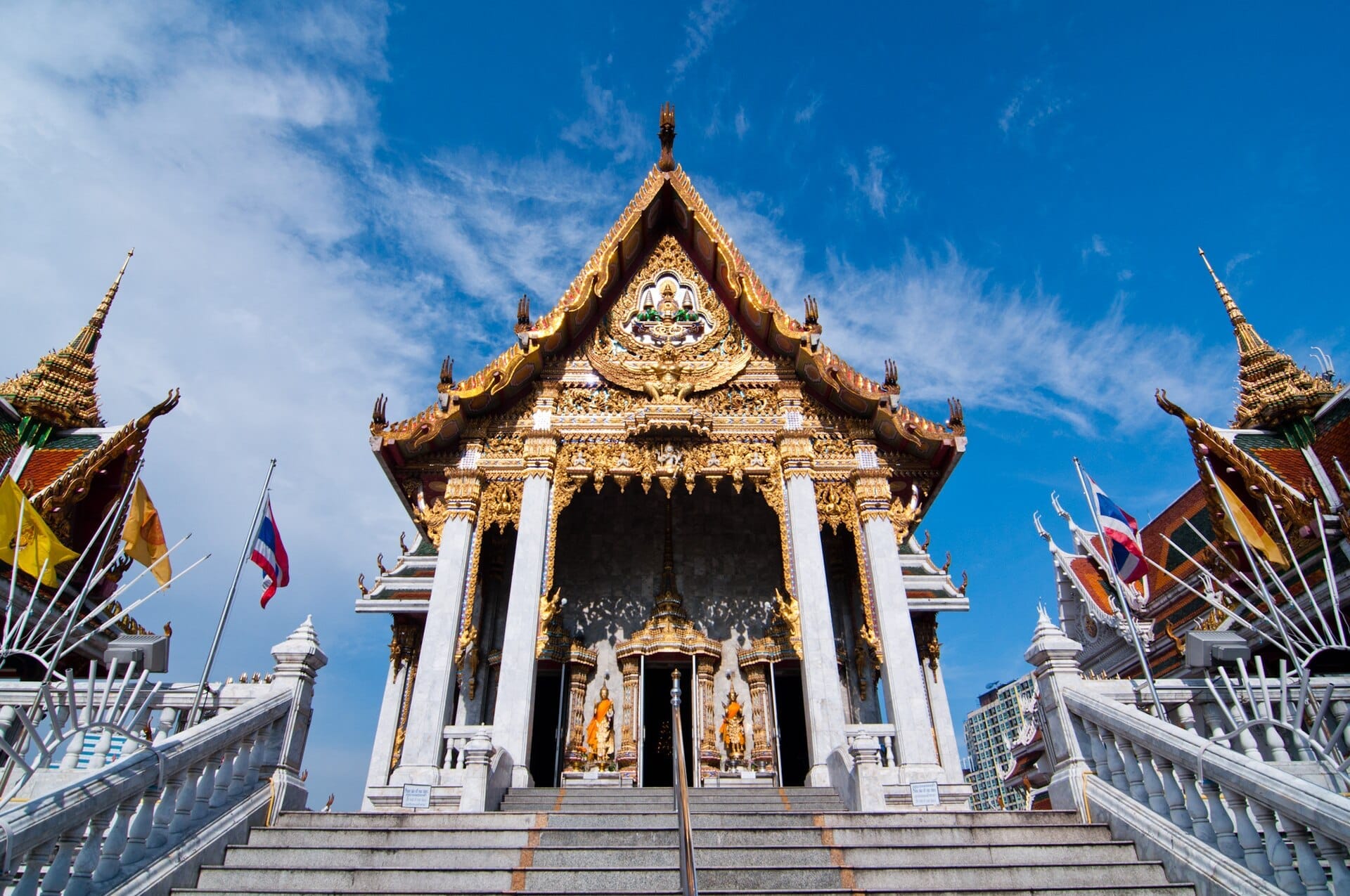
The primary structure is the ubosot, the ordination hall, which features the tiered roofline characteristic of Central Thai Buddhist architecture. The gilded decorative elements on the gables and the naga serpent balustrades flanking the entrance steps are worth examining closely. Unlike heavily restored royal temples, some of these surfaces show their age in a way that feels more authentic than the high-gloss finishes found at major tourist sites.
Within the main hall, a principal Buddha image sits in the bhumisparsa mudra (earth-touching posture), flanked by smaller devotional images. The interior is lit mainly by natural light filtered through ornate window panels, giving the space a warm, amber quality in the morning hours. Candles and incense sticks burn continuously, and the faint smell of jasmine garlands mingles with the incense throughout the day.
The compound also includes monks' quarters, a bell tower, and several subsidiary shrines. One of these smaller shrines incorporates Chinese religious iconography, a reminder of the strong Chinese-Thai community historically rooted in this part of Bangkok. The blending of Buddhist and Chinese folk religious elements is subtle but visible in the offerings left: fruit arrangements, red candles, and gold paper alongside the standard lotus flowers and saffron-robed ceremonial items.
Tickets & tours
Hand-picked options from our booking partner. Prices are indicative; availability and final rates are confirmed when you complete your booking.
Temples of Bangkok and Grand Palace half-day guided tour
From 18 €Instant confirmationFree cancellationDamnoen Saduak floating market and Maeklong railway guided tour
From 36 €Instant confirmationFree cancellationBangkok tuk-tuk night tour with Chinatown street food meal
From 28 €Instant confirmationFree cancellationAfternoon Tea at Hyatt Regency Hotel Bangkok
From 900 €Instant confirmationFree cancellation
How the Experience Changes Through the Day
Early morning, before 8:30 AM, is unambiguously the best time to visit. The light is softer, the heat is manageable, and the compound is inhabited by monks, cleaning staff, and a trickle of devoted lay visitors rather than tourists. The sound at this hour is mostly birdsong from the temple trees, the occasional bell, and the low murmur of chanted sutras if a ceremony is underway.
By midday, the compound empties considerably. The heat radiates off the stone courtyard surfaces, and the main hall may be partially closed for midday monastic schedules. This is still a viable time to visit if you prefer solitude, but bring water and wear sun protection. The photographic quality of light at noon is harsh for exterior shots.
Late afternoon, from around 4:00 PM onward, brings a second quieter wave of local worshippers. The golden hour light on the temple roof is particularly good for photography during this window. On Buddhist holy days (Wan Phra), the crowd grows noticeably and additional offerings are laid out around the main shrine.
⚠️ What to skip
Dress appropriately: covered shoulders and knees are required, as at all Thai Buddhist temples. Lightweight cotton trousers or a sarong are practical given the heat. Some temples loan cover-up garments at the entrance, but this is not guaranteed here.
Neighborhood Context: Silom and the Surrounding Area
Wat Hua Lamphong sits at the edge of the Silom district, Bangkok's financial and commercial corridor. The contrast between the temple's quiet interior and the surrounding office towers, hotels, and restaurant streets is part of what gives the visit its texture. Stepping out of the compound onto the main road, you are immediately back in the urban flow.
The proximity to MRT Sam Yan makes this temple easy to combine with a walk toward Bangkok's Chinatown to the north, or with a southward drift down toward the river and Silom Road. If you are building a walking itinerary around Bangkok's older commercial districts, this temple functions as a natural start or end point.
Travelers interested in Bangkok's broader temple landscape will find that Wat Hua Lamphong occupies a different register from the major royal temples. For context on where it fits, the best temples in Bangkok guide outlines the full spectrum from grand ceremonial sites to modest neighborhood wats like this one.
Getting There and Practical Logistics
The MRT Blue Line stops at Sam Yan station, which is the most convenient transit option. Taxis and ride-share apps (Grab is the most reliable in Bangkok) can drop you directly outside. Parking is limited and the surrounding roads can be congested during morning and evening rush hours, so arriving by rail or app-taxi is consistently faster.
The temple does not have standard published opening hours in the way that tourist attractions do. As a functioning religious site, the compound is generally accessible during daylight hours. Main halls may be closed during specific monastic activities. There is no entrance fee. Small donations placed in the donation boxes inside the main hall are the appropriate gesture.
ℹ️ Good to know
Photography is generally permitted in the temple grounds and exterior, but always check before photographing inside the ordination hall, especially during active prayer or ceremonies. Turn off flash, lower your voice, and step aside rather than standing in front of active worshippers.
Honest Assessment: Who Gets the Most From This Visit
Wat Hua Lamphong is not a spectacle. It has no panoramic views, no world-record statues, and no famous relic to anchor a visit. Travelers who arrive expecting the theatrical scale of Wat Pho or the golden drama of Wat Phra Kaew will find it underwhelming. That is a fair reaction, and worth acknowledging upfront.
What it does offer is an unmediated encounter with everyday Thai Buddhist practice, in a setting that connects to the multicultural commercial history of Bangkok's older districts. For travelers who have already covered the major sites and are curious about how religion functions in the daily life of a Bangkok neighborhood, this is a worthwhile short stop. It pairs especially well with a visit to Wat Traimit, just a short distance to the north in Chinatown, which offers a more dramatic singular attraction to anchor the same half-day itinerary.
Travelers with limited time in Bangkok, who are prioritizing maximum visual impact, should direct that time elsewhere. But for those who find meaning in the quieter textures of a city, Wat Hua Lamphong is a genuine rather than performed experience of Bangkok's religious life.
Insider Tips
- Visit on a Wan Phra (Buddhist holy day, which follows the lunar calendar) to see the compound at its most active. Local worshippers arrive throughout the day with elaborate food offerings and garlands, and the atmosphere is noticeably more ceremonial than on ordinary days.
- The streets immediately south and east of the temple have several traditional Thai breakfast vendors operating from early morning. A bowl of jok (rice porridge) from a nearby cart before entering the temple grounds makes the timing of an early visit work well.
- If you want the cleanest exterior photographs of the main hall, position yourself in the northwest corner of the courtyard in the late afternoon. The light catches the gilded roof elements at a favorable angle, and the surrounding trees frame the structure without obscuring it.
- Combine the visit with a walk toward Hua Lamphong railway station, a short distance away. The station building itself is an early 20th-century Italian Renaissance structure worth a look, and it anchors the historical context of the whole district.
- Bring small-denomination Thai baht coins or notes if you intend to make a donation. The donation receptacles inside the main hall take coins, while larger donation boxes near the entrance accept notes.
Who Is Wat Hua Lamphong For?
- Independent travelers who have covered Bangkok's major temples and want a less curated experience
- Architecture enthusiasts interested in Central Thai temple design at a neighborhood scale
- Early morning walkers building an itinerary through Bang Rak and Chinatown
- Travelers curious about the Chinese-Thai cultural overlap embedded in Bangkok's religious sites
- Anyone using MRT Sam Yan as a transit hub and with 30 to 45 minutes to spare
Nearby Attractions
Other things to see while in Silom:
- Bangkok Snake Farm
The Bangkok Snake Farm, officially the Queen Saovabha Memorial Institute, is one of the oldest snake farms in the world and a functioning antivenom research center run by the Thai Red Cross. It offers up-close encounters with venomous species alongside educational shows and a small natural history museum, making it a genuinely unusual stop in the Silom district.
- Dusit Central Park
Dusit Central Park is a landmark mixed-use development in the heart of Silom that combines a publicly accessible rooftop green space, upscale dining, a redesigned Dusit Thani Hotel, and curated retail. It occupies one of Bangkok's most historically significant corners and offers a different kind of urban experience from the city's older malls and markets.
- King Power Mahanakhon Skywalk
The King Power Mahanakhon Skywalk is Bangkok's tallest observation point, perched atop the city's most recognizable tower. A glass-floor platform, an open-air rooftop, and sweeping 360-degree views make it the benchmark sky experience in the Thai capital — if you're prepared for the price.
- Lumphini Park
Lumphini Park is Bangkok's most significant public green space, a 142-acre urban park where early-morning tai chi sessions, rowing boats, and metre-long monitor lizards coexist within walking distance of Silom's office towers. The experience changes dramatically depending on the hour you arrive.