Wat Traimit and the Golden Buddha: Chinatown's Most Astonishing Temple
Wat Traimit in Bangkok's Chinatown houses the world's largest solid gold Buddha statue, a 5.5-tonne masterpiece of Sukhothai craftsmanship with a remarkable discovery story. The temple complex also holds a museum tracing the history of Bangkok's Chinese community, making it one of the most layered cultural stops in the city.
Quick Facts
- Location
- 661 Charoen Krung Rd, Talat Noi, Samphanthawong, Bangkok (Chinatown)
- Getting There
- MRT Sam Yot (5-min walk) or Chao Phraya Express Boat to Ratchawong Pier
- Time Needed
- 45–90 minutes
- Cost
- Free temple entrance; 40 THB Golden Buddha Pavilion; 100 THB full museum access
- Best for
- History lovers, first-time Bangkok visitors, photography, Chinatown explorers
What Makes Wat Traimit Worth Visiting
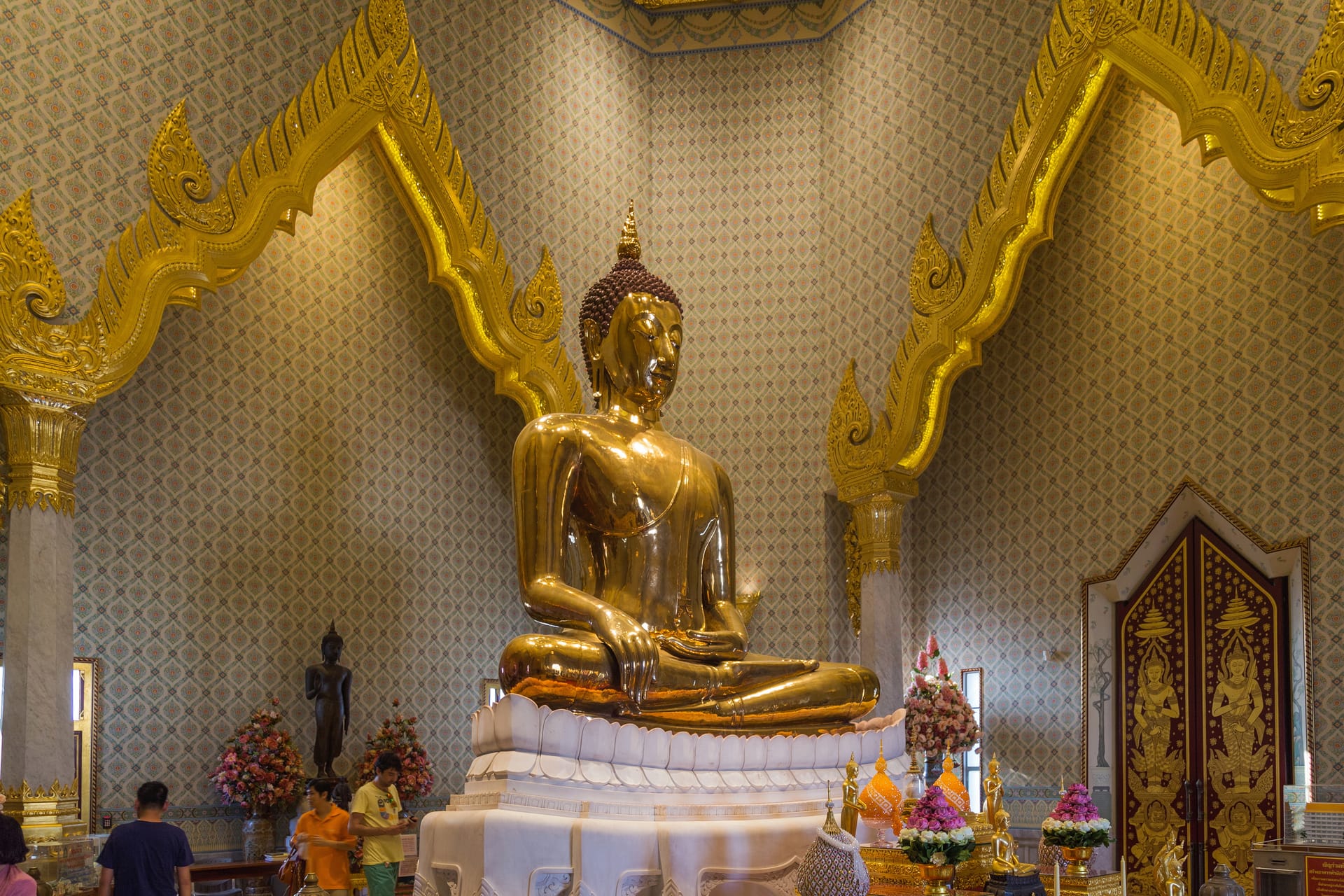
Wat Traimit Withayaram Worawihan is the formal name for what most visitors simply call the Golden Buddha temple. The draw is immediately obvious: a seated Phra Phuttha Maha Suwan Patimakon image standing nearly 3 metres tall and weighing approximately 5.5 tonnes of solid gold. It is certified as the largest solid gold Buddha image in the world, and no photograph prepares you for the experience of standing in front of it.
Unlike many major Bangkok temples that feel stretched thin by tourism, Wat Traimit retains a genuine atmosphere of active worship. On any given morning you will find Thai and Chinese-Thai devotees pressing gold leaf onto smaller shrine figures, lighting incense, and kneeling in quiet prayer. The gold statue at the centre commands the room, and the silence people keep in front of it is noticeably different from the chattier energy outside.
💡 Local tip
Arrive before 9 AM on weekdays for the calmest experience. Tour groups typically arrive from 9:30 AM onward, and the inner shrine can feel crowded by midmorning. The soft early light also creates warmer tones on the gold surface.
The Statue: History Hidden Inside Plain Stucco
The statue's origin story is one of the more extraordinary preservation tales in Southeast Asian art history. Created in the Sukhothai period (13th–15th century), the image was almost certainly coated in plaster to disguise its value during a period of regional conflict, possibly during the Burmese invasions of Ayutthaya. Encased in plaster, it survived centuries of turbulence, eventually being moved to Bangkok and stored, largely overlooked, at a smaller temple.
In 1955, workers moving the statue cracked the plaster casing. Gold gleamed through the gap. Further careful removal revealed the full image beneath. The discovery was not an accident of negligence but the result of a kind of collective amnesia stretching across hundreds of years. Today, a fragment of the original plaster casing is preserved and displayed in the on-site museum, allowing visitors to see the very material that hid the statue from the world.
The image is rendered in classic Sukhothai style: a flame-shaped ushnisha (the cranial protrusion symbolising wisdom), elongated features, and the dhyana mudra pose with both hands resting in the lap. The purity of the gold is reported at 40–99 percent, varying by section of the statue, with the highest-purity gold in the face and topknot.
Tickets & tours
Hand-picked options from our booking partner. Prices are indicative; availability and final rates are confirmed when you complete your booking.
Chinatown and Golden Buddha Temple self-guided walking tour
From 13 €Instant confirmationFree cancellationGolden Mount with Metal Castle and Giant Swing Tour in Bangkok
From 79 €Instant confirmationFree cancellationGrand Palace, Emerald Buddha and Flower Market private tour
From 307 €Instant confirmationFree cancellationBangkok Wat Pho reclining Buddha self-guided audio tour
From 13 €Instant confirmationFree cancellation
The Temple Complex: Two Museums and an Ornate Shrine Hall
The current building housing the golden Buddha was completed in 2010 and is considerably newer and grander than the surrounding structures. The white marble exterior, tiered roofline, and gilded spire are visible from several blocks away and from the elevated MRT approach. The ground floor functions as a secondary shrine area. The main Buddha image occupies the third floor, reached by a broad staircase lined with stone carvings.
The second floor houses the Phra Buddha Maha Suwan Patimakon Museum, dedicated to the golden statue itself: its art history, the circumstances of its discovery, and the metallurgical analysis of its composition. Displays are in Thai and English and are genuinely informative rather than decorative. This is not a space that feels rushed or superficial.
Also on the second floor is the Yaowarat Chinatown Heritage Center, which documents the history of Chinese immigration to Bangkok from the late 18th century onward. Dioramas, photographs, and artefacts cover the establishment of Yaowarat Road, the growth of Chinese merchant culture, and the role of the Teochew community in shaping this part of the city. For context before walking deeper into Chinatown, this museum provides more background than most guidebooks do.
The temple is located at the edge of the Chinatown and Yaowarat district, and the surrounding streets shift rapidly between Chinese shrines, medicinal herb shops, gold merchants, and the beginning of the older port district. The site itself sits near the junction where Chinatown historically met the broader Bangkok waterfront.
How the Experience Shifts Through the Day
The morning hours between 8 and 10 AM are when the temple feels most like itself: incense smoke drifts across the compound, monks move through morning routines, and the light entering the shrine room is indirect and golden. The statue at this hour has a warmth to it that midday overhead light flattens completely.
By 10:30 AM, tour groups arrive in waves, particularly on weekends and during Chinese New Year season (January to February). The third-floor shrine can become genuinely congested, with photography competing with worship. If you are visiting specifically for contemplative time in front of the statue, this is when you will feel the limits of the space.
Late afternoon, roughly 2:30 to 4:30 PM, often sees a second quieter window before closing. The light changes again, and the visitor numbers drop. The museum floors are frequently empty in the afternoon, which makes for an unhurried experience with the displays.
⚠️ What to skip
The temple closes at 5 PM. The museum sections close at the same time. Do not arrive after 4 PM if you want to see both the statue and the heritage center without rushing.
Getting There and Getting Around
The most reliable transit option is the MRT Blue Line to Sam Yot station. From exit 1, walk north along Charoen Krung Road for approximately 5 minutes. The white marble building is unmistakable. Alternatively, the Chao Phraya Express Boat stops at Ratchawong Pier, from which the temple is a 10-minute walk southeast through the heart of Yaowarat Road.
Combining Wat Traimit with a Chinatown street food walk is a natural pairing. Chinatown street food operates most intensively from late afternoon into the evening along Yaowarat Road, making a late-morning temple visit followed by an early dinner a sensible sequence.
If you are interested in visiting other significant temples in the same trip, Bangkok's best temples offers a ranked overview that helps with routing and priority. Wat Traimit pairs well with nearby riverfront sites and does not require half a day.
ℹ️ Good to know
Dress code is enforced. Shoulders and knees must be covered. Sarongs are available to borrow at the entrance for those who arrive underprepared, but the selection is limited and the process takes time.
Photography: What Works and What Doesn't
Photography of the golden Buddha is permitted, and the image is worth photographing carefully. The challenge is the combination of overhead spotlights and the statue's reflective surface, which creates harsh highlights and blown-out areas on standard exposures. Shooting slightly underexposed and recovering in post tends to produce better results than relying on auto settings. A wide-angle lens captures the full height of the statue with the ceiling detail, but a standard focal length at moderate distance gives a truer sense of the image's presence.
The exterior of the building, particularly the staircase and the carved archways, photographs well in morning and late-afternoon light. The grounds also contain older shrine structures and a smaller ubosot (ordination hall) that are far less photographed and worth a few minutes.
Who This Attraction Suits and Who Might Want to Move On
Visitors with a genuine interest in Southeast Asian religious art, the history of gold craftsmanship, or the story of Chinese migration to Bangkok will find Wat Traimit one of the most rewarding stops in the city. The combination of a genuinely extraordinary art object and well-curated museum content makes it more than a single sight.
Those who have already visited extensively in Thailand and find temple fatigue setting in may feel the experience is compact enough to visit quickly without guilt about leaving. The temple itself is not large. If the shrine is crowded when you arrive, there is limited space to wait or linger comfortably. Families with young children may find the museum floors more engaging than the shrine hall, which is quiet and relatively static.
Travelers who want a broader orientation to Chinatown before going deeper into the area might also look at Yaowarat Road as a follow-on, where the sensory and commercial character of the district becomes fully apparent.
Insider Tips
- The plaster fragment from the original casing on the museum floor is easy to walk past. It sits in a low display case to the right of the main exhibit. Look for it specifically — it is the most tangible connection to the statue's discovery story.
- The compound has a secondary entrance on the side street that avoids the main tourist queue path on busy mornings. Approach from the south side of the building along the smaller lane for a slightly faster entry.
- Chinese New Year transforms the entire surrounding area into one of the most visually intense street events in Bangkok, but Wat Traimit itself becomes extremely crowded during this period. Visit in the first two hours after opening if you are in the city during January or February.
- The older ordination hall (ubosot) at the rear of the compound is often overlooked entirely by visitors focused on the main building. It contains traditional murals and is significantly older than the modern shrine structure.
- If you plan to visit both the statue and the full museum, budget at least 90 minutes. The museum content is substantive and rushing through it means missing the historical context that gives the golden Buddha its full significance.
Who Is Wat Traimit (Golden Buddha) For?
- First-time Bangkok visitors looking for a temple with a genuinely unique centrepiece
- History and art enthusiasts interested in Sukhothai-period Buddhist sculpture
- Travelers exploring Chinatown who want cultural context alongside food and markets
- Photographers seeking a high-impact interior subject with historical depth
- Anyone curious about the Chinese-Thai community and Bangkok's Teochew heritage
Nearby Attractions
Other things to see while in Chinatown (Yaowarat):
- Chinatown Street Food
Yaowarat Road and its surrounding lanes form the spine of Bangkok's most intense street food district. From char-grilled seafood to century-old noodle shops, Chinatown rewards curious eaters who arrive hungry and unhurried.
- Talat Noi
Wedged between the Chao Phraya River and Chinatown's gold shops, Talat Noi is one of Bangkok's oldest surviving neighborhoods. Its layered streets hold Portuguese-influenced shrines, century-old mechanic workshops, and some of the city's most photogenic street art, all within a compact area most tourists walk straight past.
- Wat Mangkon Kamalawat
Wat Mangkon Kamalawat, known in Cantonese as Leng Buai Ia, is Bangkok's most important Chinese Mahayana Buddhist temple. Built in 1871 along Charoen Krung Road, it draws thousands of worshippers daily and reaches spiritual intensity during Chinese New Year. For visitors willing to engage with a genuinely active place of worship, it offers an experience unlike anything else in the city.
- Yaowarat Road
Yaowarat Road is the spine of Bangkok's Chinatown, a centuries-old commercial corridor lined with gold traders, roast duck shops, street food carts, and ornate Chinese shrines. It comes alive after dark when the neon signs ignite and the sidewalks fill with smoke from charcoal grills.