Khao San Road: Bangkok's Backpacker Strip, Candidly Reviewed
Khao San Road is one of Bangkok's most recognizable streets, drawing budget travelers, partygoers, and curious visitors from around the world. It delivers cheap cocktails, street food, and a carnival atmosphere after dark, but it polarizes visitors sharply. Here's what you actually need to know before you go.
Quick Facts
- Location
- Khao San Road, Banglamphu, Rattanakosin, Bangkok
- Getting There
- No BTS/MRT direct access. Multiple bus lines (2, 3, 6, 15, 53, 59, or 512) to Banglamphu, or a taxi/tuk-tuk. Khlong Saen Saep canal boat to Phan Fa Pier is another option.
- Time Needed
- 1–2 hours to walk and eat; 4+ hours if you stay for the nightlife
- Cost
- Free to enter. Street food from 40–80 THB. Bar buckets and large beers from 120–200 THB.
- Best for
- First-night arrivals, budget travelers, solo backpackers, nightlife seekers
What Khao San Road Actually Is
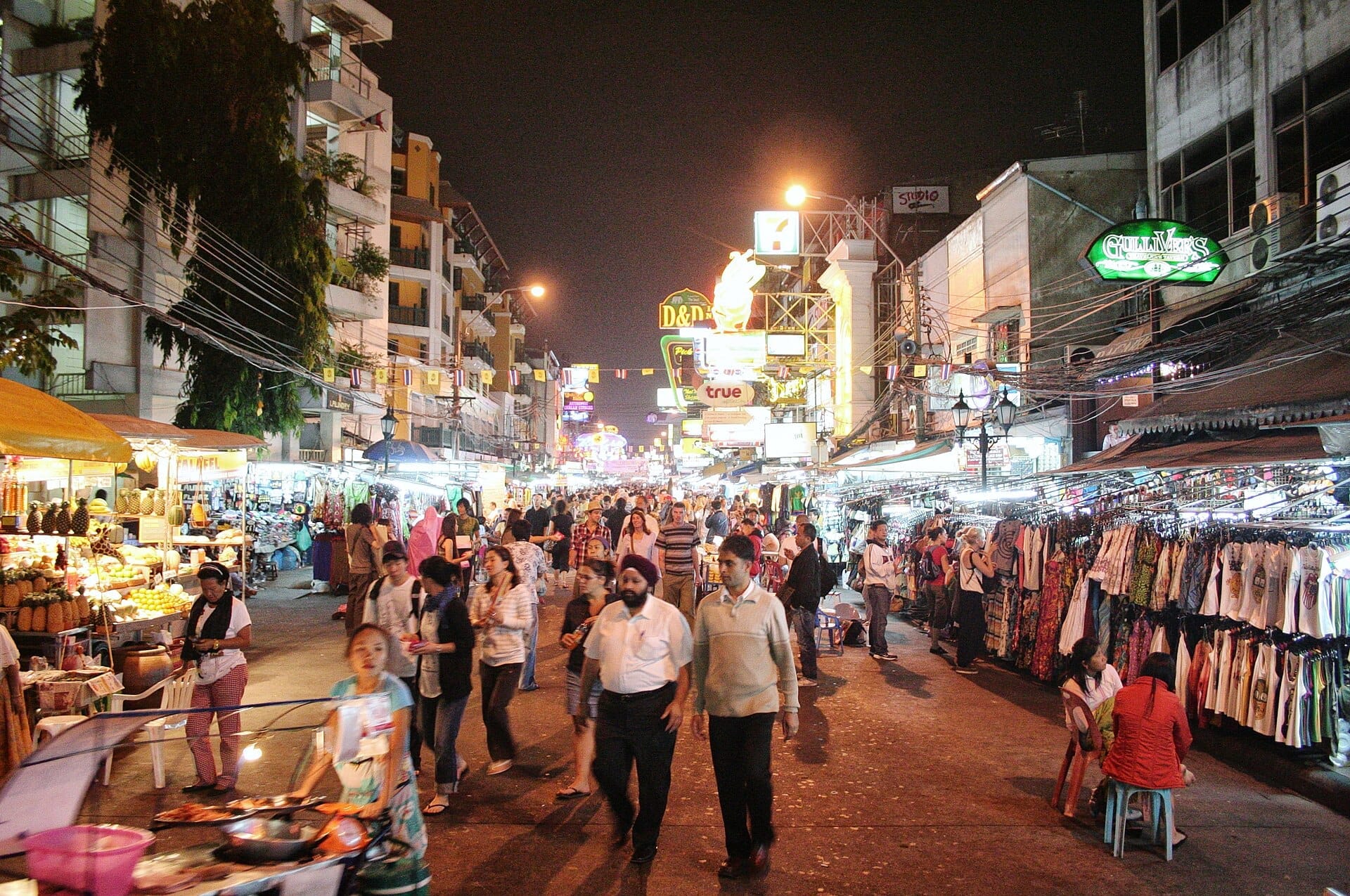
Khao San Road is a 400-meter stretch of pavement in the Banglamphu district that has been the global capital of budget travel since the 1980s. The name translates loosely to 'milled rice road,' a nod to its past as a rice trading hub before travelers discovered cheap guesthouses here in the late 1970s and early 1980s. Today, those guesthouses still exist, though they now share space with open-air bars, tattoo parlors, street food carts selling pad thai and scorpion skewers, and vendors hawking fisherman's pants and fake student ID cards.
The street is not a polished tourist attraction with an entrance fee. It is a neighborhood commercial strip that has been entirely reshaped by decades of traveler culture. The surrounding lanes of Banglamphu, including Soi Rambuttri and Tani Road, have their own quieter identity and are worth exploring alongside the main strip.
ℹ️ Good to know
Khao San Road sits within the broader Rattanakosin area, meaning you are within walking distance of major temples and the Grand Palace. Many visitors combine a morning at the old city's historic sites with an evening on Khao San.
How the Street Changes Through the Day
Arrive before noon and Khao San Road looks unremarkable. Bars are shuttered, guesthouses are quiet, and a few vendors are setting up food carts. There is a certain honesty to the street at this hour that the evening disguises completely. Street sweepers are still making their rounds, and the smell of last night's spilled beer lingers in the heat. If you are here to photograph the street itself, morning light on the shophouse facades is genuinely good.
By mid-afternoon the rhythm shifts. The massage stalls open their bamboo chairs onto the pavement, the clothing vendors lay out their racks, and the bucket cocktail carts position themselves at intervals down the road. The crowd at this hour is a mix of travelers sorting through what they need, locals running errands in the surrounding neighborhood, and the occasional tourist group stopping to photograph the scene from a safe distance.
After 8 PM, Khao San becomes something else entirely. The bars blast competing music from opposing sides of the road, the food carts do their strongest business, and the crowd thickens to the point where forward movement requires patience. The energy is more relentless than atmospheric. If you are expecting a Southeast Asian night market with local character, you will be disappointed. If you want cheap drinks, a crowd of international strangers, and no pressure to sleep early, this is exactly what you came for.
💡 Local tip
For a calmer alternative to the main strip, walk one block north to Soi Rambuttri. The bars are smaller, the music is lower, and the seating is almost entirely al fresco under trees. It attracts a slightly older and more settled crowd.
Tickets & tours
Hand-picked options from our booking partner. Prices are indicative; availability and final rates are confirmed when you complete your booking.
Temples of Bangkok and Grand Palace half-day guided tour
From 18 €Instant confirmationFree cancellationDamnoen Saduak floating market and Maeklong railway guided tour
From 36 €Instant confirmationFree cancellationBangkok tuk-tuk night tour with Chinatown street food meal
From 28 €Instant confirmationFree cancellationAfternoon Tea at Hyatt Regency Hotel Bangkok
From 900 €Instant confirmationFree cancellation
The Street Food Scene: What's Worth Eating
Khao San Road's street food has a mixed reputation, and it's partly deserved. The pad thai served from carts on the main strip is reliably decent, though it caters to foreign palates and tends to be milder and sweeter than what you'd find in a Thai neighborhood market. Mango sticky rice is sold at multiple carts and is consistently good. Spring rolls, grilled satay, and fresh fruit shakes are all safe bets.
The novelty insect cart, featuring scorpions, silkworms, and grasshoppers on skewers, is a fixture near the main intersection. Most people photograph it rather than eat from it. The insects are farm-raised and not dangerous, but they exist primarily as a tourist prop rather than a meaningful local snack. For more serious eating, walk five minutes south toward Khao San Road's quieter end or explore the alleyways where Thai vendors serve bowls of noodles to local residents at a fraction of tourist prices.
If street food exploration is a priority during your trip, Khao San should be treated as a warm-up rather than a destination. The Bangkok street food guide covers neighborhoods that offer far more depth and local authenticity.
The Historical Context Most Visitors Miss
Banglamphu, the neighborhood surrounding Khao San Road, was one of Bangkok's earliest settled districts, established when King Rama I moved the capital across the Chao Phraya River in 1782. The area takes its name from the Lamphu tree, which once lined the canal banks here. Temples, old shophouses, and canal-era architecture still survive in the blocks around the street, largely unnoticed by visitors focused on the strip itself.
The proximity to Rattanakosin's historic core is significant. The Grand Palace and Wat Pho are under two kilometers away by foot or a short tuk-tuk ride. The Democracy Monument, which has stood at the center of Thailand's most significant political protests since 1940, is a ten-minute walk east along Ratchadamnoen Avenue. These landmarks deserve at least a brief detour if you are basing yourself near Khao San.
Practical Walkthrough: Getting There and Getting Around
Khao San Road has no nearby BTS Skytrain or MRT station, which is a genuine inconvenience. From the Siam or Silom areas, expect to pay 100–200 THB for a metered taxi depending on traffic. A tuk-tuk from the old city temples will take five to ten minutes and should cost around 60–100 THB if you negotiate beforehand. Be cautious of tuk-tuk drivers who offer to take you to Khao San for very little money and then route you through gem shops or tailor shops for commissions.
The street itself is pedestrian-friendly and entirely walkable. Motorcycle taxis operate from the ends of the road and from surrounding sois for short hops. At night, official metered taxis become difficult to hail directly from the strip. Walk a block or two away from the main road before flagging one, or use the Grab app to book a car.
⚠️ What to skip
Avoid accepting tuk-tuk rides from drivers who approach you proactively near Khao San Road. The 'attraction is closed today' scam and gem shop detour are still active in this area and cost travelers both time and money.
Clothing requirements are relaxed on Khao San itself, but if you plan to visit nearby temples the same day, bring a light layer to cover shoulders and knees. Wat Pho and the Grand Palace enforce dress codes strictly and will turn away visitors who are not appropriately covered.
Who Should Consider Skipping It
Khao San Road divides visitors cleanly into those who enjoy it and those who find it grating. Travelers who prioritize local culture over traveler culture will likely find the experience thin. The street's commercial identity is built almost entirely around foreign visitors, and apart from a few surrounding temple lanes, there is little that connects to everyday Bangkok life.
Families with children can walk through during the day without issue, but the street after dark is loud, crowded, and alcohol-saturated. Light sleepers staying in guesthouses on the strip should know that noise continues until 2 AM or later. Those who have already done the Southeast Asia backpacker circuit will find Khao San familiar to the point of boredom. It is best approached as one evening's entertainment rather than a reason to base yourself in Banglamphu, though the neighborhood itself is a reasonable and affordable area to stay.
For a broader sense of Bangkok's neighborhoods and where to situate yourself, the where to stay in Bangkok guide covers Banglamphu alongside more central and upscale options.
Photography and Timing Tips
The strip photographs best in two conditions: the blue hour just before full dark, when the bar lights are on but some sky color remains, and in the early morning when it is empty and the shophouse architecture is visible without the crowds. During peak evening hours, the combination of neon signs, food cart flames, and moving bodies makes interesting documentary photography possible but challenging to compose.
Be respectful when photographing the insect cart vendors and street performers. Many have a posted rate for photos, particularly the performers who style themselves in traditional costume for tourist pictures. Payment is expected and fair.
Insider Tips
- Soi Rambuttri, one block north, offers the same relaxed outdoor bar atmosphere as Khao San with noticeably less noise and more elbow room. It is the better choice for a long evening drink.
- Canal boats on Khlong Saen Saep stop at Phan Fa Pier, about a 15-minute walk from Khao San. This is one of the fastest ways to reach the eastern side of the city, including the Pratunam area, without fighting traffic.
- The ATMs on Khao San Road charge international withdrawal fees like any others in Bangkok, but the exchange booths on the strip often offer competitive rates for cash exchange. Compare before committing.
- Avoid the massage stalls directly on the main strip in favor of the quieter ones on the sois behind. Prices are lower and the quality is generally more consistent at the less tourist-facing spots.
Who Is Khao San Road For?
- First-time backpackers arriving in Bangkok who want to connect with other travelers quickly
- Budget travelers looking for cheap food, drinks, and a place to swap information
- Night owls who want music, crowds, and a no-curfew atmosphere
- Travelers using Banglamphu as a base for daytime temple and historic site visits
- Anyone who wants a quick snapshot of how Southeast Asian backpacker culture looks in practice
Nearby Attractions
Other things to see while in Rattanakosin:
- Bangkok National Museum
The Bangkok National Museum is the largest museum in Southeast Asia and the definitive starting point for understanding Thai history. Spread across a former palace compound near the Grand Palace, it houses royal regalia, pre-Siamese sculpture, intricate funeral chariots, and centuries of Buddhist art under one roof.
- Democracy Monument
Standing at the heart of Ratchadamnoen Avenue in the Rattanakosin district, the Democracy Monument is Bangkok's most charged political symbol. Built in 1939 to commemorate Thailand's transition from absolute monarchy to constitutional rule, it remains a living stage for the city's public life and a striking piece of art deco civic architecture.
- The Giant Swing
The Giant Swing (Sao Ching Cha) stands 27 metres tall in the heart of Bangkok's historic Rattanakosin district, just steps from Wat Suthat. Once the centrepiece of a daring Brahmin ceremony, this centuries-old teak structure is one of Bangkok's most recognisable landmarks — and one of its least-understood.
- Grand Palace Bangkok
The Grand Palace is Bangkok's most recognizable landmark and the ceremonial heart of Thailand. This guide covers what to see, when to go, how to dress, and how to make the most of a visit without the frustration.