Chatuchak Weekend Market: Bangkok's Most Overwhelming Shopping Experience (In the Best Way)
Chatuchak Weekend Market is Bangkok's largest outdoor market, drawing over 200,000–400,000 visitors every weekend across roughly 15,000 stalls. From antique ceramics and vintage clothing to live plants and street food, it rewards patience, comfortable shoes, and an early start.
Quick Facts
- Location
- Kamphaeng Phet Road, Chatuchak, Bangkok
- Getting There
- MRT Chatuchak Park or Kamphaeng Phet; BTS Mo Chit (5-min walk)
- Time Needed
- 3–5 hours minimum; full-day for serious shoppers
- Cost
- Free entry; budget 300–1,500 THB for food and shopping
- Best for
- Shoppers, antique hunters, food explorers, people-watchers
What Chatuchak Actually Is
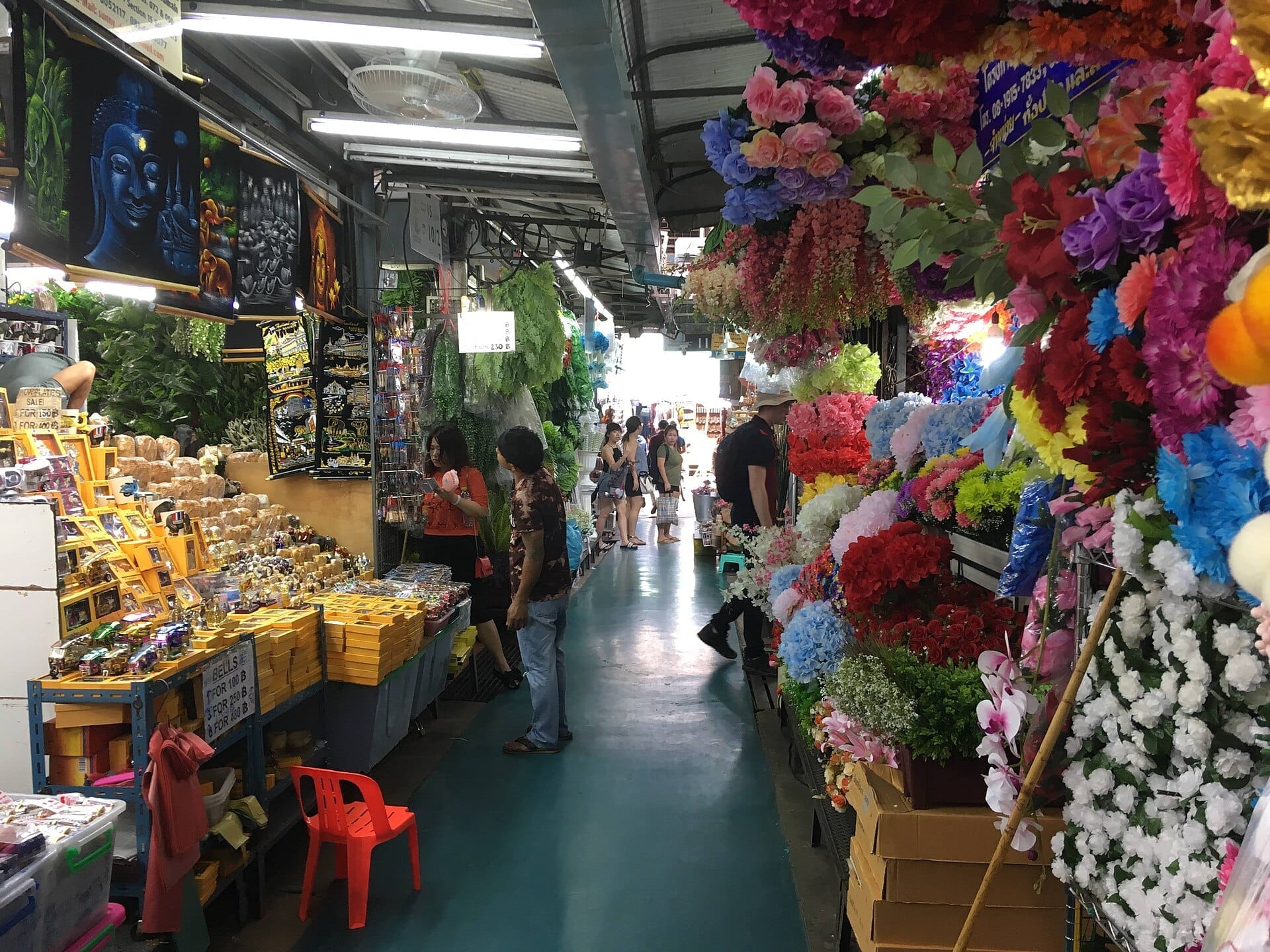
Chatuchak Weekend Market, known locally as JJ Market or Talat Jatujak, is the largest market in Thailand and one of the largest weekend markets in the world. It covers roughly 35 acres and contains somewhere between 8,000 and 15,000 stalls depending on the weekend, organized into 27 numbered sections covering everything from ceramics, handwoven textiles, and vintage jeans to orchids, Buddhist amulets, and second-hand vinyl records.
It operates on Saturdays and Sundays only, from 9:00 AM to 6:00 PM, though some stalls open as early as 8:00 AM and a smaller plants and flowers section runs on Fridays. The scale is genuinely difficult to comprehend before you arrive. First-time visitors almost always underestimate how long it takes to walk through, how easy it is to get turned around, and how hot the interior of a corrugated tin-roofed alley feels at noon in April.
💡 Local tip
Download the Chatuchak Park map from the official site before you go, or pick up a printed one at the information booth near Gate 1. The market's numbered sections make navigation far easier once you understand the grid. Section numbers are painted on the roofline posts.
The Experience Hour by Hour
Arrive before 10:00 AM and the market feels almost manageable. The concrete paths are cool enough, vendors are still arranging their displays, and the air smells of strong coffee and frying garlic from the food stalls that open early near the clock tower. You can move freely, actually inspect items, and have real conversations with sellers who are not yet exhausted from explaining prices to a tenth customer.
By 11:00 AM, the crowd doubles. By 12:30 PM on a hot weekend, the narrow covered lanes trap heat and humidity in a way that makes browsing genuinely uncomfortable. Sweat drips onto the antique postcards you are flipping through. The smells intensify: pad thai smoke, raw tropical flowers, damp fabric, and the occasional whiff of mothballs from the vintage clothing section. This is not a criticism — it is part of the texture of the place — but it is useful information.
Between 1:00 PM and 3:00 PM is when many visitors hit the food zone near Sections 26 and 27 for lunch, and the shopping lanes thin out slightly. If you can tolerate the midday heat, this window is actually decent for unhurried browsing of ceramics and crafts. By 4:00 PM, some stalls begin packing up. Late afternoon light softens the whole place and the atmosphere becomes noticeably more relaxed.
Tickets & tours
Hand-picked options from our booking partner. Prices are indicative; availability and final rates are confirmed when you complete your booking.
Temples of Bangkok and Grand Palace half-day guided tour
From 18 €Instant confirmationFree cancellationDamnoen Saduak floating market and Maeklong railway guided tour
From 36 €Instant confirmationFree cancellationBangkok tuk-tuk night tour with Chinatown street food meal
From 28 €Instant confirmationFree cancellationAfternoon Tea at Hyatt Regency Hotel Bangkok
From 900 €Instant confirmationFree cancellation
What to Buy and Where to Find It
The market's sections are loosely organized by category, though overlap is common. Sections 1 through 4 concentrate antiques, collectibles, and Buddhist art. You will find Celadon ceramics from northern Thailand, old temple bells, Hill Tribe silver jewelry, and reproductions sold alongside genuine pieces. Knowing the difference requires either expertise or a willingness to ask direct questions. Most serious antique dealers in these sections speak enough English to negotiate.
Sections 8 through 15 cover clothing, from fast-fashion basics to genuinely interesting vintage finds. The vintage quality varies enormously by stall, but patient browsers can uncover 1970s batik shirts, military surplus gear, and deadstock sportswear at prices far below what the same items fetch in Tokyo or London. Section 10 and 11 have a higher concentration of independent Thai fashion labels worth checking.
Sections 18 through 24 cover home décor, ceramics, and crafts — typically the most photogenic part of the market. Here you find handmade rattan furniture, indigo-dyed cotton, carved wooden objects, and hand-painted tiles. Sections 6 and 7 are dedicated to books, art, and music, including an underappreciated vinyl section with Thai and international pressings.
For plants, exit toward Kamphaeng Phet Road and explore the outer market on the western edge. It is a different sensory world: orchids in every color, potted ferns, topiary, and the bark-and-earth smell of a greenhouse. This section extends into a related Chatuchak Park area that provides a rare pocket of green shade when you need to escape.
Food Inside the Market
Do not eat before you arrive. The food inside Chatuchak is a legitimate reason to visit in its own right. The main food cluster sits in Sections 26 and 27 near the center of the market, and a second concentration of vendors lines the perimeter near the main gates. The standout items are khao moo daeng (red pork over rice), boat noodles served in small dark-broth portions, grilled corn with butter and salt, and fresh coconut ice cream served inside the shell.
For cold drinks, small iced coffee stalls throughout the market serve Thai-style iced coffee in plastic bags for around 30 to 50 THB. The Or Tor Kor Market, which is directly adjacent to Chatuchak across Kamphaeng Phet Road, offers a higher-end version of Thai market food in a cooler, air-conditioned environment — a useful escape when the heat becomes too much. It is covered in detail in its own page on Or Tor Kor Market.
Getting There and Moving Around
Chatuchak is one of the easiest major attractions in Bangkok to reach by public transit. The MRT Chatuchak Park station exits directly into the market's eastern section. The MRT Kamphaeng Phet station opens onto the plant market and western perimeter. BTS Mo Chit station on the Sukhumvit Line is a five-minute walk from the northern entrance via a covered bridge. Most visitors arriving by BTS enter from the north, while MRT arrivals enter from the east or west. Both approaches work; the MRT is marginally more central.
Taxis and ride-hailing apps like Grab are viable for arrival but chaotic for departure, particularly between 2:00 PM and 4:00 PM on Sundays when thousands of people leave simultaneously. The MRT and BTS are always the faster exit strategy. There is no useful parking near the market on weekends; arriving by car creates more problems than it solves.
⚠️ What to skip
The market is closed Monday through Friday, with the partial exception of the Friday morning plant section. Showing up on a weekday is a common and completely avoidable mistake. Double-check the date before planning your itinerary.
Practical Details and What to Bring
Wear light, breathable clothing and closed-toe shoes with actual grip. The paths inside get slippery when wet, and light rain turns some of the unpaved sections muddy. A small backpack is more useful than a shoulder bag because you will be using both hands to sort through stalls. Bring cash: most vendors do not accept cards, and the ATMs inside the market charge international fees. Withdrawing beforehand from a bank branch saves money.
Photography is generally tolerated in most sections, and vendors who sell art or crafts are often happy to have their work photographed. The exception is some of the antiques and secondhand dealers who dislike photos of their inventory for competitive reasons. A quick nod and a gesture toward your camera before shooting is courteous and almost always appreciated.
If Chatuchak does not fully satisfy your appetite for Bangkok's market culture, the best markets in Bangkok guide covers a broader range of options across the city, including night markets and specialty food markets worth combining into a longer trip.
Who Should Manage Expectations
Chatuchak is not a boutique experience. If you prefer shopping in calm, curated spaces with fixed prices and air conditioning, the market will frustrate more than it delights. The heat is real, the navigation is confusing, and bargaining — while expected — requires energy and patience most people underestimate on a 34-degree Saturday afternoon.
Travelers with limited mobility face genuine challenges. The paths are uneven, crowded, and offer very few places to sit and rest in the interior sections. Accessible routes exist along the perimeter but miss much of the interior stall variety. People who are sensitive to heat, cigarette smoke from adjacent stalls, or very dense crowds may find the experience more taxing than enjoyable.
It is also worth noting that Bangkok has other excellent market options that suit different moods. For evening browsing without the heat, the Patpong Night Market operates nightly in Silom and offers a completely different atmosphere. For high-quality packaged Thai food and produce, Or Tor Kor next door is genuinely world-class and requires a fraction of the energy.
Insider Tips
- The map handed out at information booths shows section numbers but not individual stalls. Use it to navigate to the right section, then browse methodically lane by lane within that section rather than wandering randomly.
- Section 7 has a small cluster of stalls selling vintage Thai movie posters from the 1960s and 1970s. They are printed on thin paper, fragile, and priced between 200 and 800 THB — among the most distinctive and genuinely local souvenirs you can find anywhere in Bangkok.
- If a vendor quotes you a price and you counter with a reasonable offer, a simple smile and a relaxed tone close far more deals than aggressive bargaining. Sellers respond noticeably better to buyers who seem genuinely interested rather than combative.
- Friday morning before the main weekend crowd arrives, the plant and flower market on the western edge is operating. If plants or orchids are your priority, Friday gives you better selection with almost none of the crowds.
- The air-conditioned building in the northeast corner of the market near the MRT entrance houses a more permanent set of home goods and décor vendors. It is easy to miss and provides a cool-down option that most visitors walk past without realizing.
Who Is Chatuchak Weekend Market For?
- Shoppers looking for unique Thai crafts, vintage clothing, and antiques at negotiable prices
- Food explorers wanting a concentrated cross-section of Thai street food in one location
- Plant and garden enthusiasts, particularly for orchids and tropical species
- Travelers who enjoy unscripted wandering with the chance of unexpected finds
- Anyone wanting to understand the scale and variety of Thai commerce and craft culture
Nearby Attractions
Other things to see while in Chatuchak:
- Chatuchak Park
Chatuchak Park is a large public green space in northern Bangkok, sitting directly beside the famous Chatuchak Weekend Market. It offers shaded walking paths, a lake, open lawns, and a surprisingly calm escape from the city noise — all free of charge.
- Or Tor Kor Market
Or Tor Kor Market is widely regarded as the highest-quality fresh produce market in Bangkok. Stocked with flawless tropical fruits, artisan Thai snacks, and restaurant-grade ingredients, it draws chefs, local families, and curious travelers who want to eat and shop like a Bangkok insider.