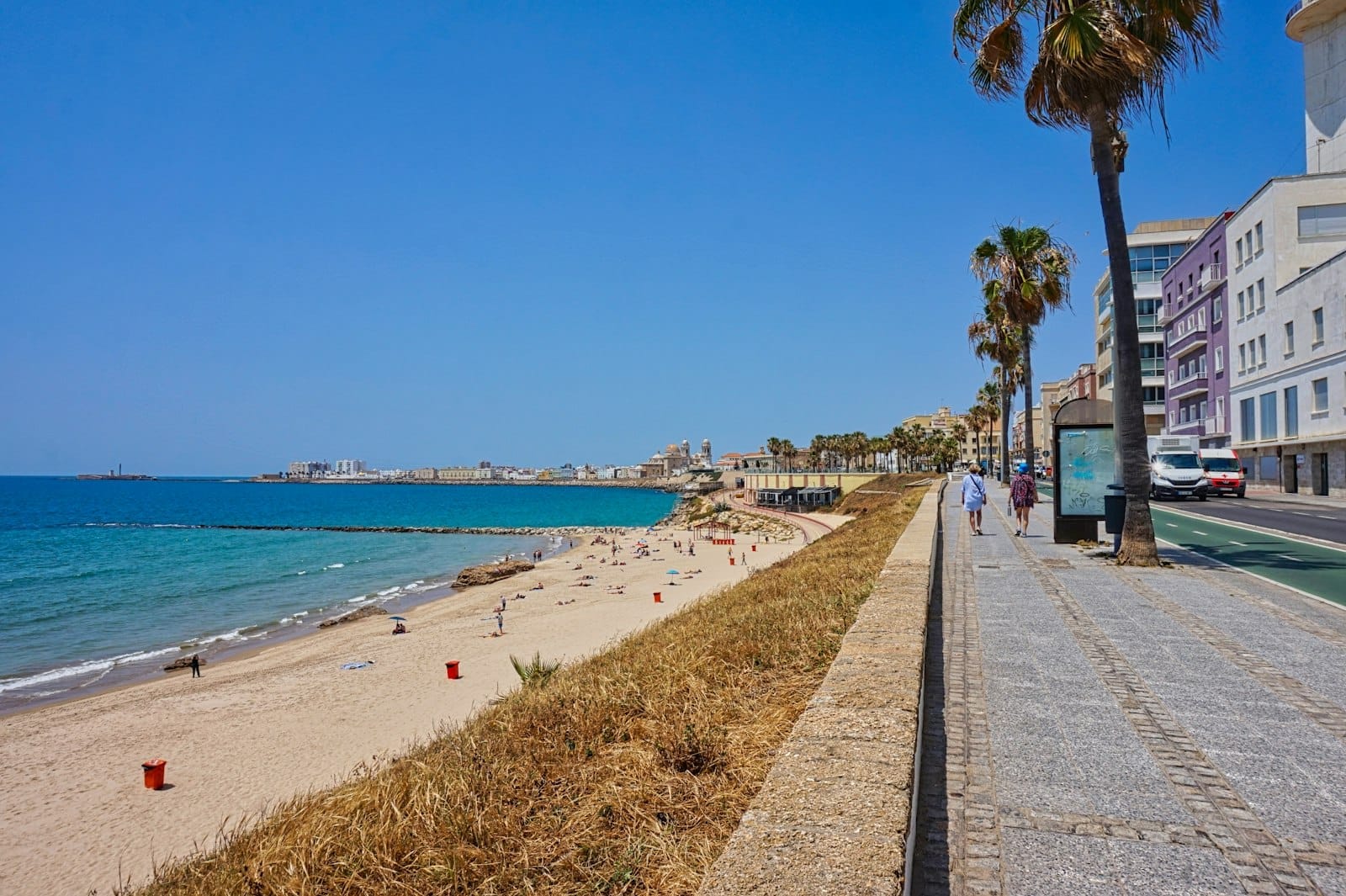
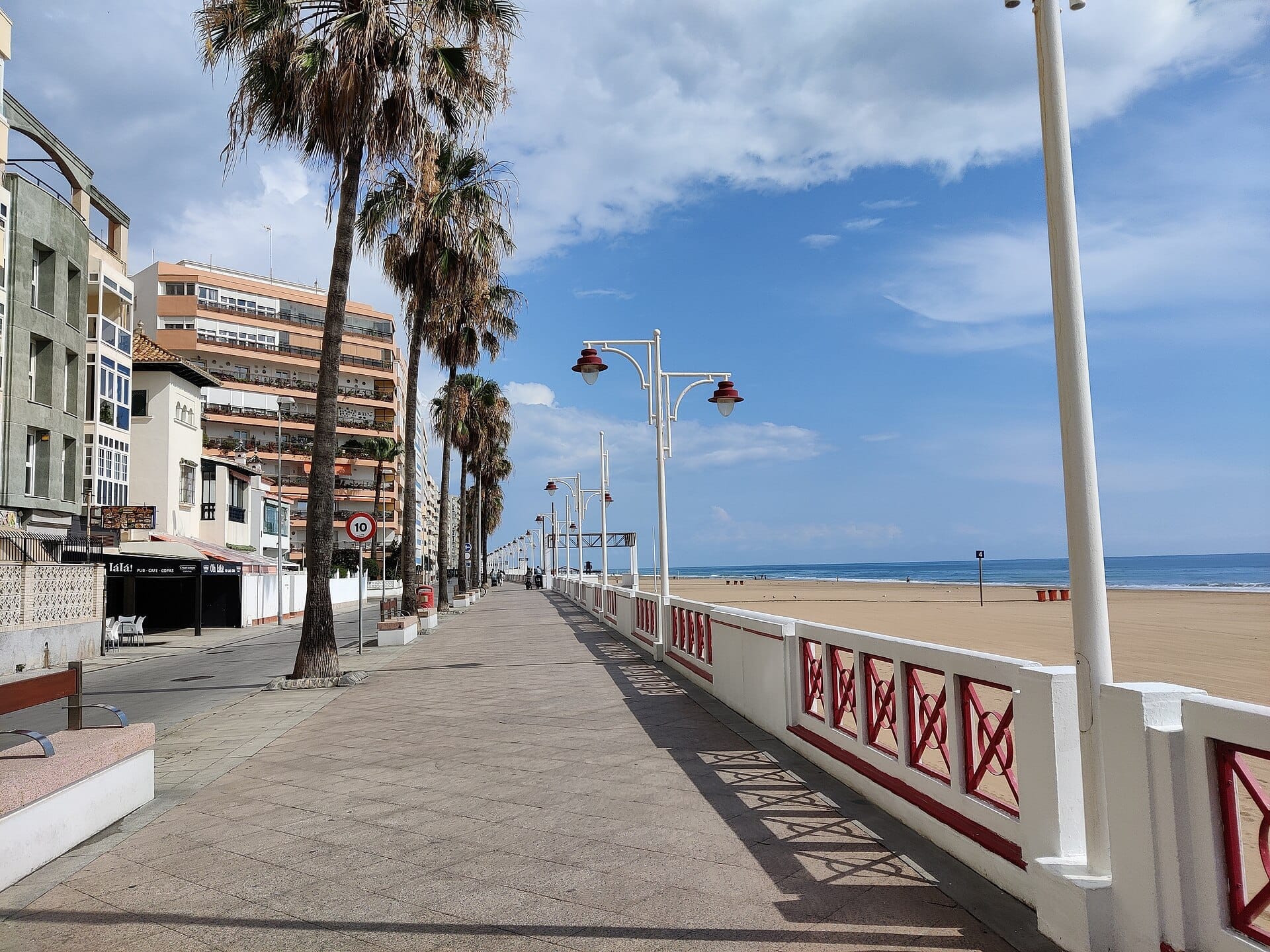
Playa de la Victoria and the New Town stretch along Cádiz's Atlantic coast beyond the old city walls, offering a 3 km beach, a walkable promenade, and a more residential, everyday feel than the historic center. This is where locals swim, jog, and eat seafood on summer evenings, away from the tour groups crowding the cathedral quarter.
Playa de la Victoria is Cádiz's longest and most popular beach, running for roughly 3 km along the Atlantic side of the peninsula. The surrounding New Town district trades the narrow medieval lanes of the old quarter for wide avenues, contemporary apartment blocks, and a seafront promenade that comes alive in the evenings. It is a different kind of Cádiz: less photogenic than the historic center, but more honest about how the city actually lives.
Orientation
Cádiz sits on a narrow peninsula jutting into the Atlantic, and its geography dictates everything about how the city is organized. The Old Town, with its cathedral, medieval quarters, and fortified walls, occupies the tip of the peninsula to the northwest. Everything southeast of the Puertas de Tierra, the landward city gates, belongs to what locals loosely call the New Town or Extramuros, the area built outside the historic walls during the 18th and 19th centuries.
Playa de la Victoria anchors the Atlantic side of this modern strip. The beach begins near the rock jetty at Playa Santa María del Mar, just outside the old walls, and extends roughly 2.5–3 km southeast toward the Cortadura area near the base of the peninsula. The main promenade, Paseo Marítimo, runs the full length of the beach and is the spine around which the New Town's commercial and social life is organized. For a broader picture of how this fits into the city, our guide to staying in Cádiz covers all the main districts and their tradeoffs.
The neighborhood's street grid is noticeably more regular here than in the old city. Avenida Fernando Portillo and the streets running parallel to the coast form a calm residential zone of apartment buildings, family-run shops, and neighborhood bars. The transition between old Cádiz and New Town is abrupt: you walk through the Puertas de Tierra and within two blocks the architecture, scale, and pace of life shift entirely.
ℹ️ Good to know
The New Town is not a separate administrative district in the formal sense. It refers to the modern urban fabric southeast of the old city walls, broadly between the Puertas de Tierra and the Cortadura. Locals often just say 'la playa' when referring to this part of the city.
Character & Atmosphere
The rhythm here is set by the beach, not by heritage tourism. Mornings on the promenade belong to runners, dog walkers, and older residents doing laps before the heat sets in. The light at that hour is remarkable: low Atlantic sun catching the spray off the waves, the beach still largely empty, the chiringuito bars just beginning to set out their chairs. By mid-morning the first swimmers are in the water, and by early afternoon the beach reaches its peak density in summer, with families occupying every meter of sand from the promenade to the waterline.
In the evening, the dynamic shifts again. The heat releases from the pavement, families emerge for paseo, and the restaurant terraces facing the beach fill with locals eating long, unhurried dinners. This is one of the most distinctly local parts of Cádiz to visit in the evening: you will hear more Cádiz accent than English, see more multi-generational family tables than tourist groups, and find prices that reflect a neighborhood feeding its own residents rather than day-trippers.
Outside of July and August, the beach area is quieter but never dead. Spring and autumn evenings on the promenade have a particular quality: the sea wind picks up after sunset, the light turns gold and then grey, and the bars stay open late. In winter, the beach is almost deserted, but the residential streets behind it continue at their usual pace. The New Town does not perform for visitors the way the old quarter does; it simply gets on with being a city.
💡 Local tip
If you visit in July or August, arrive at the beach before 10am to claim a spot and avoid the worst of the midday heat. By noon, the sand is packed and the sun is intense. Many locals time their beach visits for the late afternoon, roughly 5pm onward, when the temperature drops and the light is better.
What to See & Do
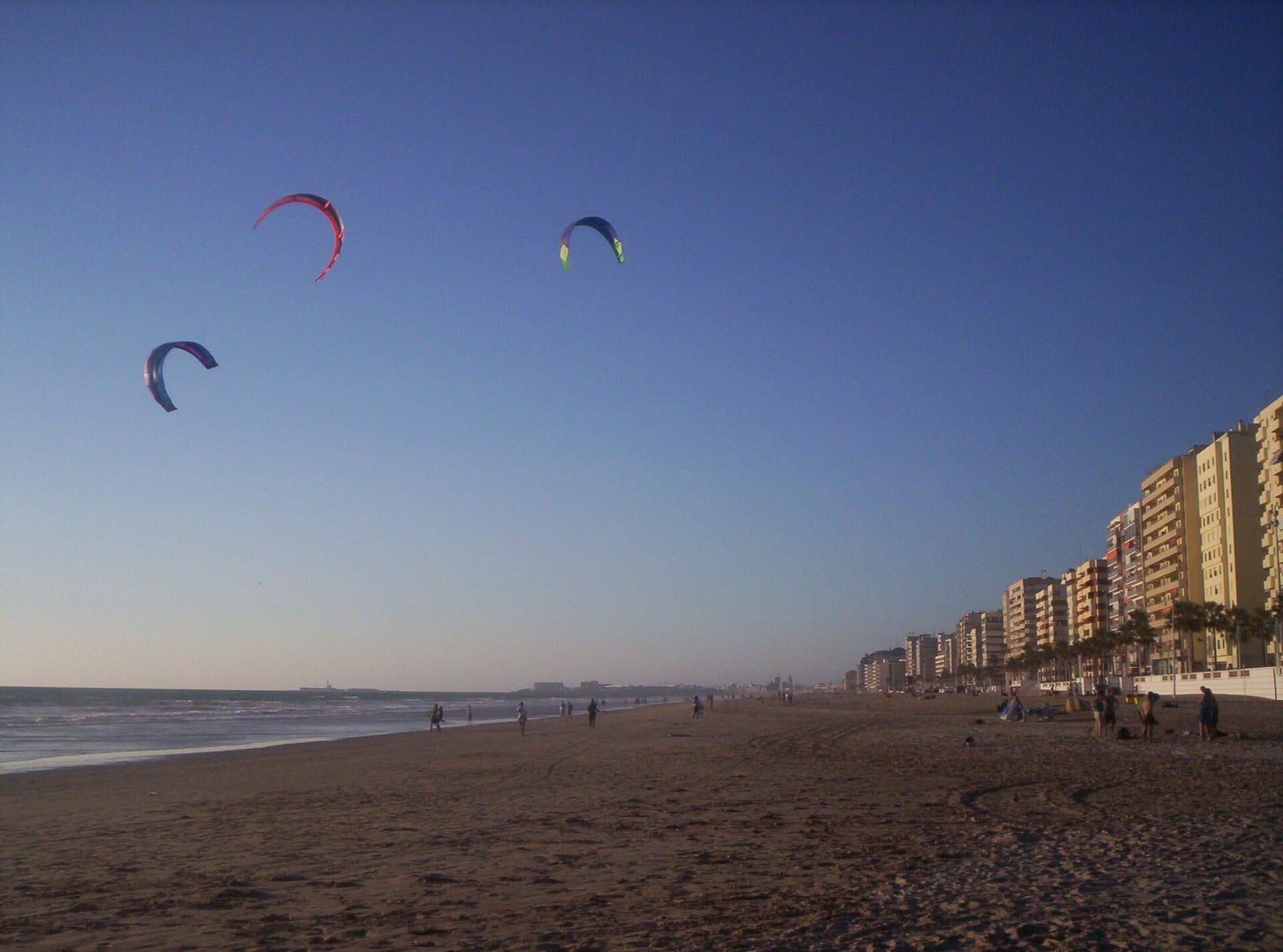
The beach itself is the main event. Playa de la Victoria is a wide, well-maintained Atlantic beach with fine sand, reliable surf, and strong winds that make it popular with kite-surfers and windsurfers in the afternoon when the Levante picks up. Lifeguard stations operate during summer months, and a beach information point is staffed at the central module in high season. That said, swimmers should be aware of rocks beneath the surface in certain sections, particularly toward the northern end near Santa María del Mar.
The full length of the promenade is walkable in under an hour at a comfortable pace and offers continuous Atlantic views. At the northwestern end, the promenade connects back toward the old city walls and the area around Campo del Sur, where you can pick up the coastal path that runs around the tip of the peninsula. The transition from modern promenade to the historic sea walls happens gradually and is one of the more satisfying walks in the city.
A short walk or bus ride inland from the beach brings you to the Puertas de Tierra, the 18th-century landward gates that once separated the city from the mainland. This is the formal architectural threshold between old and new Cádiz, and worth pausing at even briefly. From there, the entire Old Town is accessible on foot. If you want a structured approach to the historic center, the Old Town walking tour guide gives you a logical route from the gates through the main plazas and landmarks.
Walk the full Paseo Marítimo from Santa María del Mar to Cortadura for uninterrupted Atlantic views
Swim or watch kite-surfers at Playa de la Victoria, especially in the afternoon when wind conditions are best
Take the coastal path southwest from the promenade toward the Cortadura dunes and salt marshes
Cross through Puertas de Tierra to explore the Old Town on foot, roughly 15-20 minutes from the beach
Visit the beach in the evening during summer for the paseo culture along the promenade
Eating & Drinking
The food scene along Playa de la Victoria covers a wider range than the tourist-focused spots in the old quarter, and prices are generally lower. The promenade itself is lined with chiringuitos and terrace restaurants serving fried fish, grilled seafood, and cold beer at outdoor tables. The quality varies considerably along this strip: places closer to the central section of the beach tend to be more reliable, while some of the smaller bars at the edges are firmly aimed at quick turnover during peak summer.
Moving one or two blocks inland from the promenade, the character of the eating options changes. The residential streets hold neighborhood bars that serve tapas at the counter, bocadillos, and the kind of set-price daily menus (menú del día) that local workers eat at lunch. These are not designed for tourists, which means no translated menus, smaller portions at the bar, and considerably better value. Cádiz is known across Spain for its fried fish traditions, and ordering a portion of pescaíto frito at a local bar here is a completely different experience from the same dish served on a terrace with an English-language menu.
The New Town also has a number of supermarkets and a daily market rhythm that the tourist-heavy Old Town lacks. For a deeper look at what Cádiz eats and where to find the best of it, the Cádiz food guide covers the city's culinary traditions in detail, including the seafood markets, sherry pairings, and the best tapas bars across all districts.
💡 Local tip
Look for bars offering a menú del día on weekday lunchtimes. These fixed-price lunch menus typically include two courses, bread, and a drink for a set price, and they represent the best value eating in this part of the city. Most are written on a chalkboard and change daily.
Getting There & Around
The most practical rail access to the beach area is the Cádiz-Estadio stop on the Renfe Cercanías commuter line, which puts you a short walk from the northern end of Playa de la Victoria. The main Cádiz train station (Estación de Cádiz) is located on the far side of the Old Town, closer to the historic quarter, so if you are arriving by train and heading directly to the beach, Estadio is the better stop.
Bus connections run along the promenade and connect the beach area with the Old Town and the central transit hub around Plaza Asdrúbal. From there, routes connect to the main train station and to points further afield including Jerez and Seville. The city's urban bus network covers the New Town well, and the flat peninsula geography makes cycling and walking entirely practical for most journeys within Cádiz.
The Old Town is walkable from the beach in roughly 20-25 minutes on foot via the coastal path or the main avenues. From Playa de la Victoria's northern end, crossing through the Puertas de Tierra brings you directly into the historic center. Once there, the major landmarks, including the Cathedral of Cádiz and the Mercado Central de Abastos, are all reachable on foot without needing transport.
Cádiz does not have a metro system. Taxis are available throughout the city, and the flat terrain makes the distances between most points in the city manageable by foot. Renting a bicycle is a practical option for covering the promenade and the connections between the New Town and the old quarter, and the coastal paths are largely flat and well-maintained.
⚠️ What to skip
Parking is limited and congested along the promenade during July and August. If you are arriving by car, park further inland and walk to the beach rather than circling the promenade looking for a spot. Arriving after 9pm avoids the worst of the peak-hour congestion.
Where to Stay
Staying in the Playa de la Victoria district suits a particular kind of traveler: one who prioritizes direct beach access and a quieter residential atmosphere over walkable proximity to the cathedral and the main heritage sites. The trade-off is real. You gain a calmer, more spacious setting and immediate access to the beach; you give up the ability to walk out of your hotel into the medieval street network. For a full breakdown of tradeoffs across all Cádiz neighborhoods, the complete guide to where to stay in Cádiz covers each area in detail.
The accommodation stock in this part of the city runs from large beach-facing hotels on or near the promenade to smaller apartment rentals in the residential blocks behind the beach. The promenade hotels offer Atlantic views and direct beach access but command a premium, particularly in summer. Apartments in the streets one or two blocks back from the water offer better value and a more local experience, with easy walking access to the beach.
This district is well-suited to families with children, beach-focused visitors, and anyone who finds the Old Town's narrow streets and constant tourist density exhausting. It is less suited to first-time visitors whose primary goal is Cádiz's heritage and history, since every visit to the major historic sites will require a transit connection or a 20-minute walk each way.
Honest Assessment: Is This Neighborhood Right for You?
Playa de la Victoria is not a compromise choice. It is a genuine alternative for a specific kind of trip to Cádiz. If your priority is beach access, long evening walks on a seafront promenade, and eating and drinking at prices aimed at local residents rather than tourists, this part of the city delivers all of that. If you are here primarily for the historic monuments, the historic center is a better base, even if the streets are narrower and the pace more pressured.
The New Town is also worth considering as a day destination even if you are staying in the Old Town. The beach is Cádiz's best for swimming and water sports, the promenade walk is one of the city's most pleasant, and the full guide to Cádiz beaches puts Playa de la Victoria in context against the other options including Playa de la Caleta and the beaches along the bay.
One caveat worth noting: in the height of summer, the beach strip becomes one of the most crowded parts of the city. The combination of local residents, Spanish tourists, and foreign visitors all converging on the same stretch of sand and promenade means July and August can feel overwhelming if you were expecting a low-key escape. September and October are considerably more relaxed, the sea is still warm, and the promenade bars are open without the summer crush.
TL;DR
Playa de la Victoria is an approximately 3 km Atlantic beach forming the spine of Cádiz's modern New Town, roughly 20-25 minutes on foot from the historic center.
Best for: beach-focused travelers, families, visitors who want residential Cádiz at local prices rather than a heritage tourism experience.
Avoid in peak season if crowds are a concern: July and August bring heavy beach and promenade congestion. September and October offer the best balance of warm weather and manageable crowds.
Transit is straightforward: the Cádiz-Estadio Cercanías stop provides rail access, and the Old Town is walkable via the Puertas de Tierra or the coastal path.
The trade-off is real: you gain the beach and a quieter urban atmosphere, but lose the convenience of stepping out into the medieval center. Choose based on what you are actually here to do.
Top Attractions in Playa de la Victoria & New Town
Two days is exactly the right amount of time to experience Cádiz's ancient streets, golden beaches, and seafront fortresses. This itinerary organises the city's best sights into a logical, walkable weekend, from the cathedral and Roman theatre on Day 1 to La Caleta and the coastal walk on Day 2.
Cádiz enjoys one of Spain's most agreeable climates, with over 3,000 sunshine hours a year and Atlantic breezes that soften summer heat. But the best time to visit Cádiz depends entirely on what you're after: quiet sightseeing, beach days, Carnival madness, or winter-sun escape. This guide breaks it all down by season, event, and activity type.
Cádiz sits on a narrow peninsula almost entirely surrounded by the Atlantic, giving it one of the most varied coastlines in southern Spain. This guide covers the best beaches in Cádiz city and across the Costa de la Luz province, with honest assessments of crowd levels, water conditions, access logistics, and what each beach is actually good for.
Cádiz Carnival is the biggest event in the city's calendar and the most important mainland carnival in Spain. This guide covers dates, the COAC competition, pre-carnival food events, costume culture, booking logistics, and what to expect on the ground in February.
Cádiz is one of flamenco's true birthplaces, not a footnote to Seville or Granada. This guide covers the best tablaos, local peñas, seasonal festivals, honest price breakdowns, and practical booking advice for seeing genuine flamenco in Cádiz, Spain.
Cádiz, Spain has one of the most distinctive food cultures on the Iberian Peninsula. This guide covers the essential dishes to try, where to eat them, how much to pay, and when to go for the freshest seasonal ingredients straight from the Atlantic.
Cádiz carries more than three millennia of history within a compact peninsula on Spain's Atlantic coast. This guide traces the city's Phoenician roots, Roman grandeur, Age of Exploration wealth, and constitutional legacy — and tells you exactly where to see each layer of that history in person.
July and August bring relentless sun, warm Atlantic waters, and peak crowds to Cádiz, Spain. This guide breaks down the climate realities, the best beaches, how to handle the heat, and whether summer is actually the right time for your trip.
Jerez de la Frontera sits just 22 km from Cádiz by rail, making it one of the most rewarding day trips in Andalusia. This guide covers every transport option, the best things to do once you arrive, and honest advice on making the most of your time in Spain's sherry capital.
Cádiz Old Town packs Roman ruins, baroque cathedrals, medieval quarters, seafront promenades, and one of Andalusia's best markets into a peninsula you can cross on foot in under 20 minutes. This self-guided walking tour maps the essential route, tells you what each stop is actually worth, and gives you the practical details to do it without a guide.
Cádiz sits on a narrow Atlantic peninsula, which means extraordinary views are never far away. This guide covers the city's finest viewpoints, from paid rooftop towers to free coastal walks where the ocean frames everything.
Cádiz is one of Andalusia's most compelling coastal cities, packed with Atlantic beaches, Roman ruins, and a genuinely walkable old town. But is it right for your trip? Here's an honest, detailed look at what the city delivers and where it falls short.
Cádiz is one of Andalusia's most rewarding cities, and most of its best experiences are packed into a compact, walkable old town on a narrow Atlantic peninsula. This guide covers the top sights, beaches, food markets, and cultural stops — with honest advice on what's worth your time and what to skip.
Choosing where to stay in Cádiz Spain shapes your entire trip. This guide breaks down the city's main accommodation zones, names specific hotels with honest price context, and tells you exactly when to book and what to avoid.