Phuket Old Town is the island's historic core, where 19th-century Sino-Portuguese shophouses line five-footway walkways along Thalang and Phang Nga roads. The area reflects the Baba Peranakan culture born from Chinese tin-mining settlers and their Malay and Thai neighbors, producing an architecture, cuisine, and street life unlike anywhere else on the island. It rewards slow exploration on foot, and it is best understood as the city Phuket was before the beach resorts arrived.
Phuket Old Town is the island's most architecturally coherent neighborhood, a compact grid of Sino-Portuguese shophouses built by Chinese tin merchants in the late 19th and early 20th centuries. The streets here have a completely different tempo from Patong or Kata: quieter in the mornings, lively with café culture through midday, and genuinely local after dark. If you want to understand what Phuket looks like beneath the resort layer, this is where you start.
Orientation
Phuket Old Town occupies the southeastern section of Phuket City, which is itself in the southeastern part of Phuket island. It is not a beach neighborhood. The nearest coast is roughly 2 kilometers east, where the Saphan Hin waterfront meets the channel separating Phuket from the mainland. The Old Town sits on level ground between the city's main commercial streets and is compact enough to cover on foot in a single morning.
The core area is defined by five main roads running roughly parallel: Thalang Road, Phang Nga Road, Dibuk Road, Krabi Road, and Rasada Road. Cross streets and sois (lanes) connect them, with Soi Romanee being the most photographed. The heart of the walking zone is the stretch of Thalang Road between Thepkasattri Road to the west and Yaowarat Road to the east. This is where the density of original shophouse architecture is highest and where street art, small cafés, and the Jui Tui Shrine cluster together.
From Phuket Old Town, Patong Beach is roughly 15 kilometers west by road, a 30-minute drive in light traffic. The southern beaches of Rawai and Chalong are about 10 kilometers south. Understanding Old Town as the island's civic and historical center — rather than a beach destination — helps set expectations correctly.
Character & Atmosphere
Early mornings in Phuket Old Town belong to locals. By 7am, the wet market near the western end of Thalang Road is already operating: vendors sorting herbs, plastic bins of fresh chilies lined up under fluorescent light, motorcycle deliveries threading through the narrow sois. The smell of pandan leaf and lemongrass cuts through the warm air before the heat has fully settled in. At this hour, the Chinese temple shrines along Phang Nga Road are lit with incense, and the five-footway covered walkways are mostly empty of tourists.
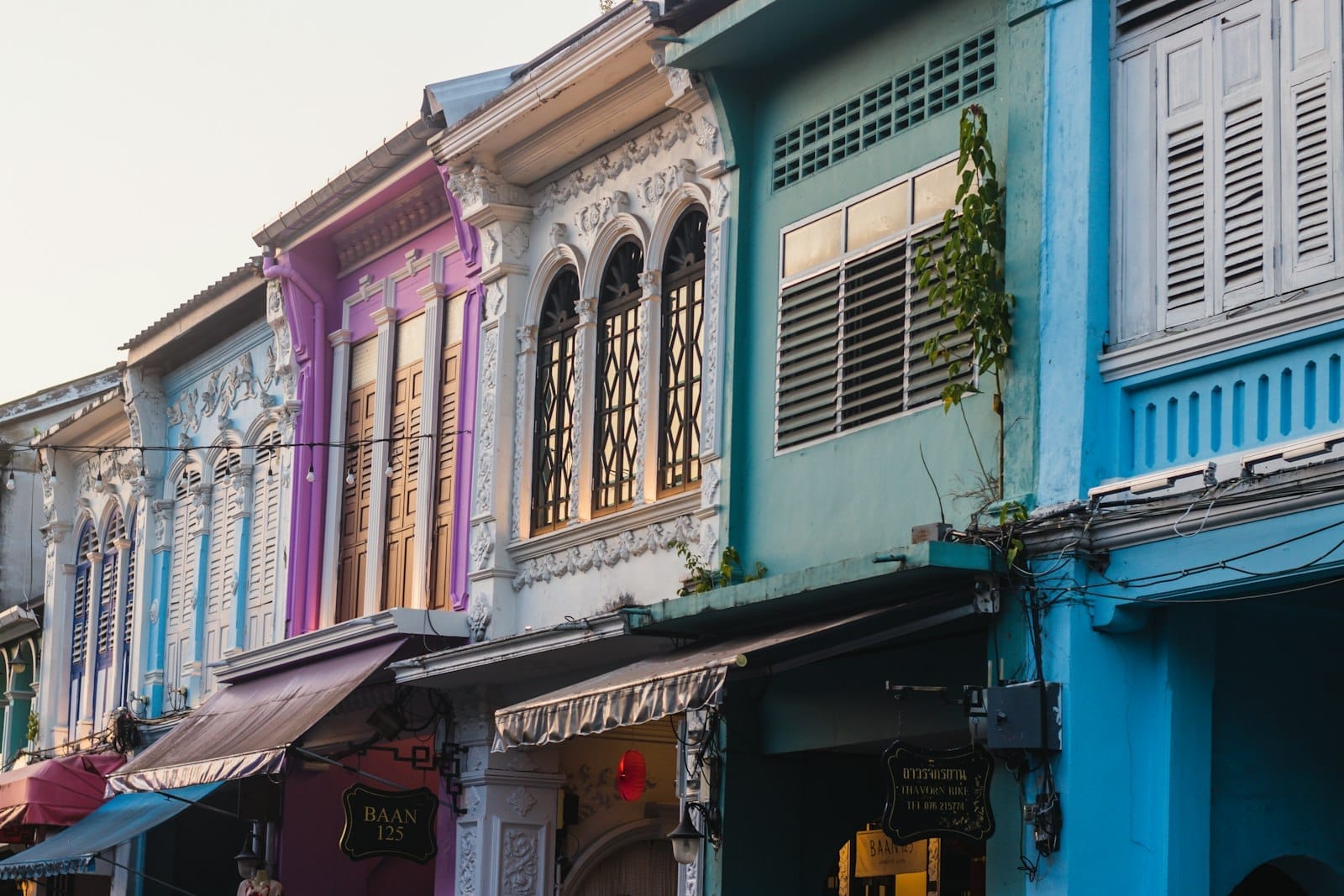
By mid-morning, the cafés fill. Many of the old shophouses have been converted into coffee shops with original tile floors and worn wooden counters, and the aesthetic has attracted a design-conscious crowd that coexists with traditional herb stores and tailor shops that have been on the same plot for generations. The light at this hour is clean and direct, bouncing off the pastel-painted facades in a way that makes Thalang Road genuinely photogenic without any effort.
Afternoons are the hardest time to be here. Between 1pm and 4pm, the heat is serious and shade is only available under the five-footways, the covered arcade sidewalks that are one of Old Town's defining architectural features. Some of these are clutter-free and wide; others are stacked with merchandise from the shops behind them, forcing you into the street. Weekend afternoons, particularly on Thalang Road, can feel genuinely crowded as day-trippers arrive from the beach resorts.
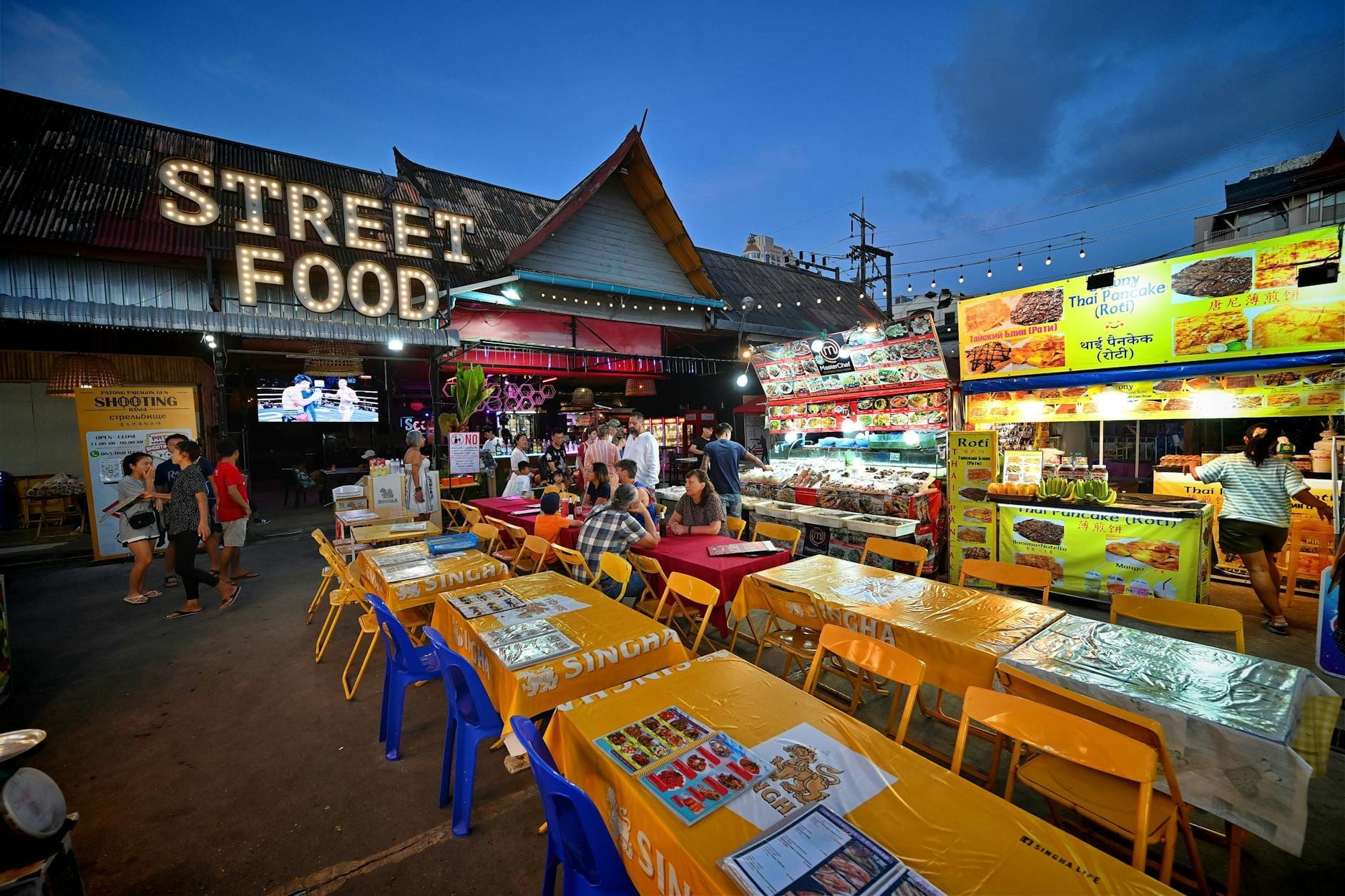
After dark, the neighborhood changes register again. The tourist activity tapers off earlier than it does in Patong, and by 9pm most of the street food stalls are winding down. What remains is a low-key bar scene, a few late-serving restaurants, and the particular quiet of a neighborhood where people actually live. This is not a nightlife destination. It is a place to eat well, walk slowly, and get some sleep.
💡 Local tip
The best time to photograph the shophouses is between 8am and 10am, when the light is angled and soft and foot traffic is light. By 11am the direct sun flattens the facade colors considerably.
What to See & Do
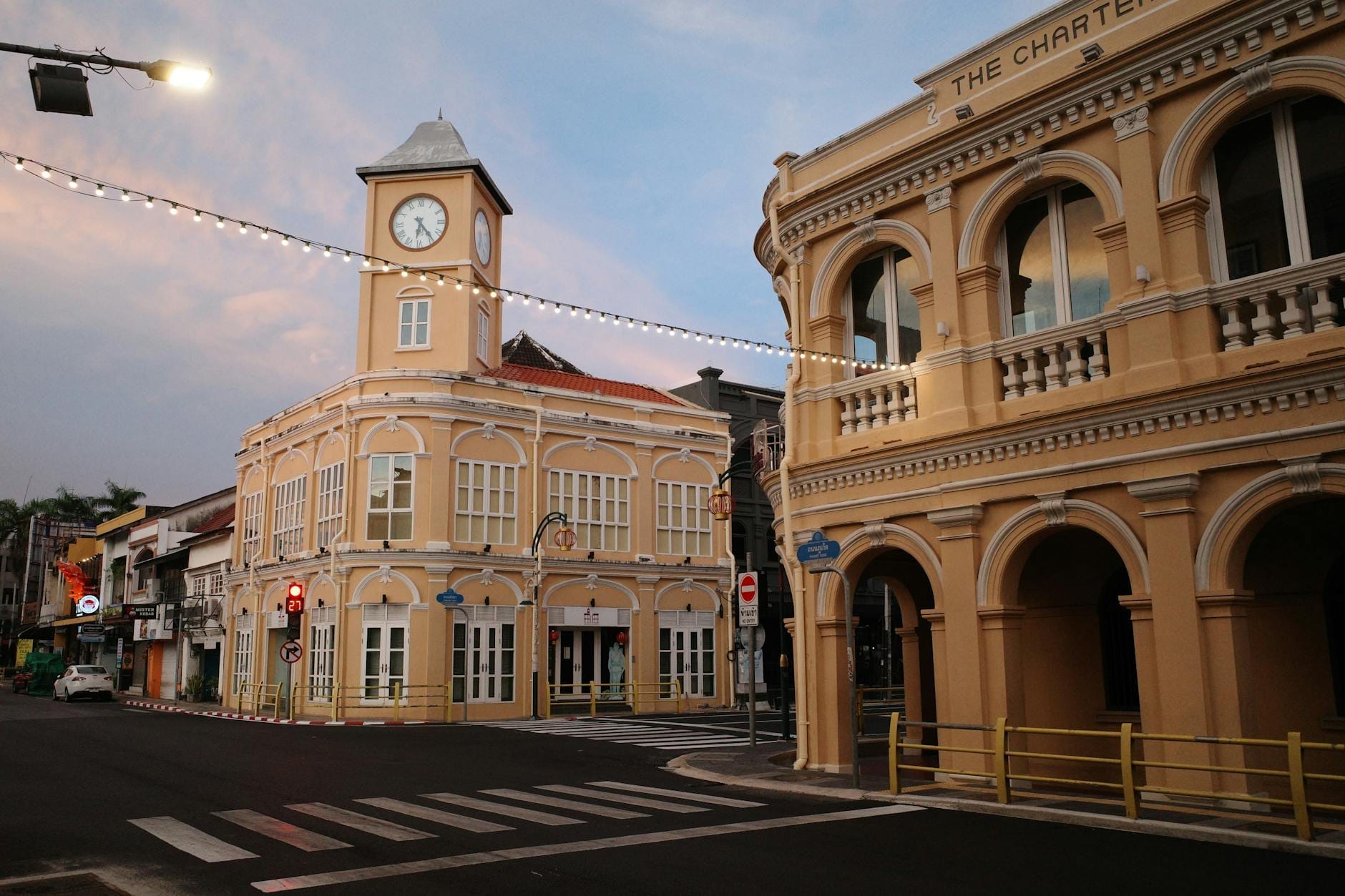
The streets themselves are the primary attraction. The Phuket Old Town walking routes take in rows of Sino-Portuguese shophouses built between the 1860s and 1930s, financed largely by Chinese tin merchants who had settled in Phuket during the island's mining boom. The architecture is a practical hybrid: Chinese spatial organization (long, narrow plots, interior courtyards) married to Portuguese colonial facade elements (arched windows, decorative plasterwork, symmetrical shutters). The result is a streetscape unlike anywhere else in Thailand.
Soi Romanee, a short lane running off Thalang Road, is the most concentrated example of this architecture and has accumulated a layer of street murals that add color without overwhelming the historic fabric. The murals depict scenes from Phuket's Baba Peranakan culture — the community descended from Chinese immigrants who married local Malay and Thai women, developing a distinct hybrid culture in food, dress, and ceremony.
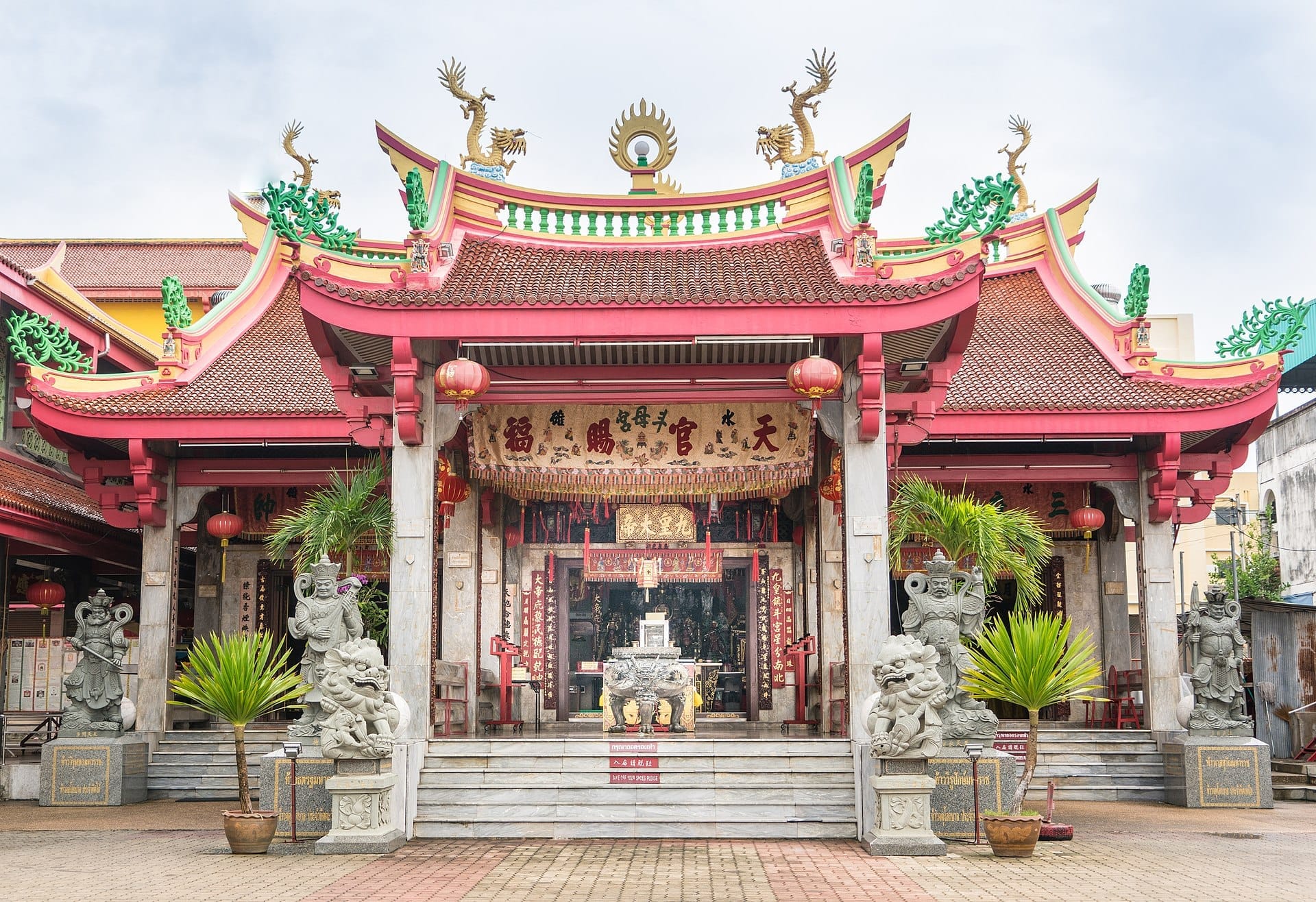
The Jui Tui Shrine on Ranong Road is one of the most significant Chinese Taoist shrines on the island and the main staging point for the Phuket Vegetarian Festival each October, when it becomes the center of a 9-day ceremony involving firewalking and ritual processions. Even outside festival season, it is an active place of worship worth visiting in the morning.
The Thai Hua Museum on Krabi Road occupies a 1934 Chinese school building and documents the history of Phuket's Hokkien Chinese community through artifacts, photographs, and bilingual text panels. The Blue Elephant Mansion on Krabi Road is a restored Sino-Portuguese governor's residence that now houses a cooking school and restaurant. Baan Chinpracha on Krabi Road is a privately owned mansion still occupied by descendants of the original family, with period furniture and family photographs open to visitors.
Thalang Road shophouse strip: the architectural and commercial core of Old Town
Soi Romanee: street murals and well-preserved late-19th-century facades
Jui Tui Shrine: active Taoist worship site, main Vegetarian Festival venue
Thai Hua Museum: Hokkien Chinese history and Peranakan culture
Blue Elephant Mansion: restored governor's residence with cooking school
Baan Chinpracha: family-owned mansion, period interiors open to visitors
Shrine of the Serene Light (Jao Mae Lim Ko Niao): 1889 Chinese shrine accessed through a narrow covered passage off Phang Nga Road
Nguan Choon Tong: claimed to be Phuket's oldest traditional Chinese herb store, still operating on Ranong Road
ℹ️ Good to know
The Phuket Vegetarian Festival, centered on Old Town's Chinese shrines, typically runs for 9 days in October (dates shift with the lunar calendar). If your visit overlaps, book accommodation months in advance — the town fills completely.
Eating & Drinking
The food in Phuket Old Town reflects its cultural layering. Baba Peranakan cooking combines Chinese techniques with southern Thai and Malay ingredients: curries thickened with coconut milk, noodles served with braised pork, appetizers built around shrimp paste. This is distinct from the beach-resort Thai food sold to tourists in Patong, and the price-to-quality gap is significant.
Lock Tien Food Court, a covered market on Dibuk Road, is the most accessible entry point for local food. Vendors here serve mee hokkien (thick yellow noodles stir-fried with pork and greens), o-tao (oyster and taro pancake), and various rice and noodle dishes at prices well under 100 THB per plate. The court fills at lunchtime with office workers and shopkeepers from the surrounding streets.
China Inn on Thalang Road, housed in a former money exchange, operates as a café and antique shop inside one of the best-preserved shophouse interiors in the neighborhood. The menu leans toward light meals and desserts. It is not a bargain, but it is a legitimate historic space. Similar conversion cafés have multiplied along Thalang Road over the past decade, ranging from serious specialty coffee operations to places where the design is more considered than the drink.
For a broader sense of what the island's food scene looks like, the where to eat in Phuket guide covers options across multiple neighborhoods. Old Town punches above its weight for authentic regional cooking, particularly Hokkien Chinese and southern Thai, at prices that remain reasonable by any standard.
Mee hokkien: thick yellow noodles with pork, a Phuket City staple
O-tao: oyster and taro pancake, a Hokkien Chinese street food
Kanom jeen: rice noodles with southern Thai curry, sold at morning market stalls
Dim sum: available at several traditional Chinese coffee shops from early morning
Baba cuisine: Peranakan-influenced dishes at mid-range restaurants and cooking schools
⚠️ What to skip
Some of the most photogenic cafés on Thalang Road prioritize atmosphere over food quality. Check recent reviews for any place charging above 200 THB for a meal — the price does not always reflect the cooking.
Getting There & Around
Phuket Old Town is in Phuket City, not on the beach coast, and it requires a deliberate trip from any of the resort areas. From Patong, a taxi or Grab ride takes around 25 to 35 minutes and costs approximately 300 to 500 THB depending on traffic and negotiation. From the airport in the north, the journey is roughly 45 minutes and costs more. Songthaews (shared pickup trucks used as buses) connect Phuket City to various points on the island, but they require some local knowledge about routes and stops.
Once in the neighborhood, driving is counterproductive. The streets around Thalang Road and Phang Nga Road operate on a one-way system, parking is scarce, and the most interesting sois are too narrow for anything wider than a motorcycle. Walking is the only real option. A full circuit of the core streets — Thalang, Phang Nga, Dibuk, Krabi, and the connecting sois — takes about 90 minutes at a relaxed pace. Add another hour if you stop at the Thai Hua Museum or any of the mansions. For general island navigation, the getting around Phuket guide covers transport options in detail.
Grab works in Phuket City and is generally more straightforward than negotiating with tuk-tuk drivers, who quote tourist prices in this area. From Old Town, the Saphan Hin waterfront park is about a 20-minute walk east along Phuket Road and makes a useful addition to a morning visit before the heat peaks.
Where to Stay
Staying in Phuket Old Town is not the default choice for most visitors, and that is part of its appeal for the ones who do. Accommodation here ranges from boutique hotels in converted shophouses to small guesthouses in sois off the main streets. The neighborhood is better for culture and food than for beach access — you will need transport to reach any beach, with the possible exception of the modest and largely local-use waterfront at Saphan Hin. For a broader overview of where to base yourself across the island, see the where to stay in Phuket guide.
The best location within the neighborhood is within walking distance of Thalang Road — roughly the zone bounded by Dibuk Road to the north and Krabi Road to the south. This puts you close to the food markets in the morning and the main street art and heritage buildings through the day. Properties directly on Thalang Road or Phang Nga Road can have some street noise from motorcycles in the early morning, particularly on weekends.
Old Town suits independent travelers, couples, and anyone more interested in architecture, food culture, and local life than beach time. It is a poor fit for families with young children who need pool access and beach proximity, or for travelers who prioritize nightlife. The neighborhood quiets down substantially after 9pm, which is either a feature or a flaw depending on what you are looking for.
Day Trips from Phuket Old Town
Old Town's central island location makes it a reasonable base for day trips in multiple directions. The major temple Wat Chalong is about 8 kilometers south. The Big Buddha on Nakkerd Hill is visible from parts of Old Town and is roughly 12 kilometers by road. Both are standard half-morning trips.
For longer excursions, the Old Town's proximity to Chalong Bay pier means that island and bay tours depart within 20 minutes of the neighborhood. Phang Nga Bay is the most compelling day trip from this base, with tours departing from piers along the east coast. The Phi Phi Islands are a longer commitment, typically a full day, but accessible via the same southern piers.
The southern viewpoints are also within range. Promthep Cape at the island's southern tip is about 18 kilometers from Old Town and delivers the best sunset view on the island on clear evenings. Combine it with a visit to Nai Harn Beach nearby for a full afternoon in the south.
TL;DR
Phuket Old Town is the island's historic core: Sino-Portuguese shophouses, Baba Peranakan food culture, and active Chinese temples concentrated in a walkable grid of streets in Phuket City.
Best explored on foot between 8am and noon, when the light is good, the markets are running, and the heat is manageable — the area becomes significantly harder to enjoy in the early afternoon.
Food here is notably better value and more authentically local than in the beach resort areas, with Hokkien Chinese and southern Thai cooking at the wet market and Lock Tien Food Court.
Not a beach destination: any beach requires a 20-plus-minute drive, and the neighborhood goes quiet well before midnight — it suits cultural travelers and food-focused visitors, not those prioritizing nightlife or sea access.
Ideal as a base for day trips across the island, particularly to the southern temples, Phang Nga Bay, and the east-coast piers; less efficient as a base for regular beach use on the west coast.
Phuket has three distinct seasons, and each suits a different type of traveler. This guide breaks down the dry season, hot season, and monsoon period with practical advice on crowds, prices, sea conditions, and what you can actually do each month.
Phuket has no metro, no train network, and taxi meters that drivers routinely ignore. This guide cuts through the confusion with honest pricing, route logistics, and the best transport option for every type of trip across the island.
Phuket has over 30 beaches ranging from lively resort strips to near-deserted coves. This guide covers every beach worth knowing, organized by character and location, with honest advice on swimming conditions, crowds, and how to make the most of each one.
Phuket sits at the center of one of Southeast Asia's most spectacular seascapes. These are the best day trips from the island, from the legendary Phi Phi archipelago to the limestone karsts of Phang Nga Bay, plus ethical wildlife encounters and nearby island escapes.
Planning a trip to Phuket but not sure how to structure your time? This guide breaks down realistic day-by-day itineraries for 5, 7, and 10-day trips, covering beaches, island day trips, cultural sites, and practical logistics so you spend less time figuring out and more time actually there.
From Bangla Road's neon-lit clubs to low-key beach bars in Kamala and jazz spots in Phuket Old Town, Phuket's nightlife spans every budget and mood. This guide breaks down real costs, the best venues by area, seasonal crowd patterns, and what to skip.
Phuket is far more than beaches and Patong nightlife. This guide covers the best things to do across the entire island — temples, islands, food markets, viewpoints, water parks, and cultural attractions — with honest advice on what to skip and what to prioritize based on your travel style.
Phuket's food scene runs the full spectrum, from smoky roadside stalls serving Hokkien noodles for 60 THB to PRU at Trisara, the island's only Michelin-starred restaurant with tasting menus above 3,500 THB. This guide breaks down where to eat in Phuket by neighborhood, budget, and cuisine style, with honest picks and traps to avoid.
Picking the right area to stay in Phuket shapes your entire trip. This guide breaks down every major neighborhood, from lively Patong to peaceful Mai Khao, with honest assessments of who each area suits, what to budget, and what to avoid.