Promthep Cape: Phuket's Most Dramatic Sunset Viewpoint
Laem Promthep sits at the absolute southern tip of Phuket Island, where limestone cliffs drop into the Andaman Sea and the horizon stretches unbroken at dusk. Free to enter and open around the clock, it's the island's most iconic spot to watch the sun disappear — if you time it right and manage the crowds.
Quick Facts
- Location
- Southernmost tip of Phuket Island, near Nai Harn and Ya Nui Beach
- Getting There
- 30-40 min drive from Phuket Town; taxi or Grab recommended. Limited car parking on site.
- Time Needed
- 30-60 minutes for the viewpoint; longer if exploring the lighthouse and shrine
- Cost
- Free entry. Lighthouse/maritime museum has limited hours.
- Best for
- Sunset photography, coastal scenery, couples, history buffs
What Is Promthep Cape?
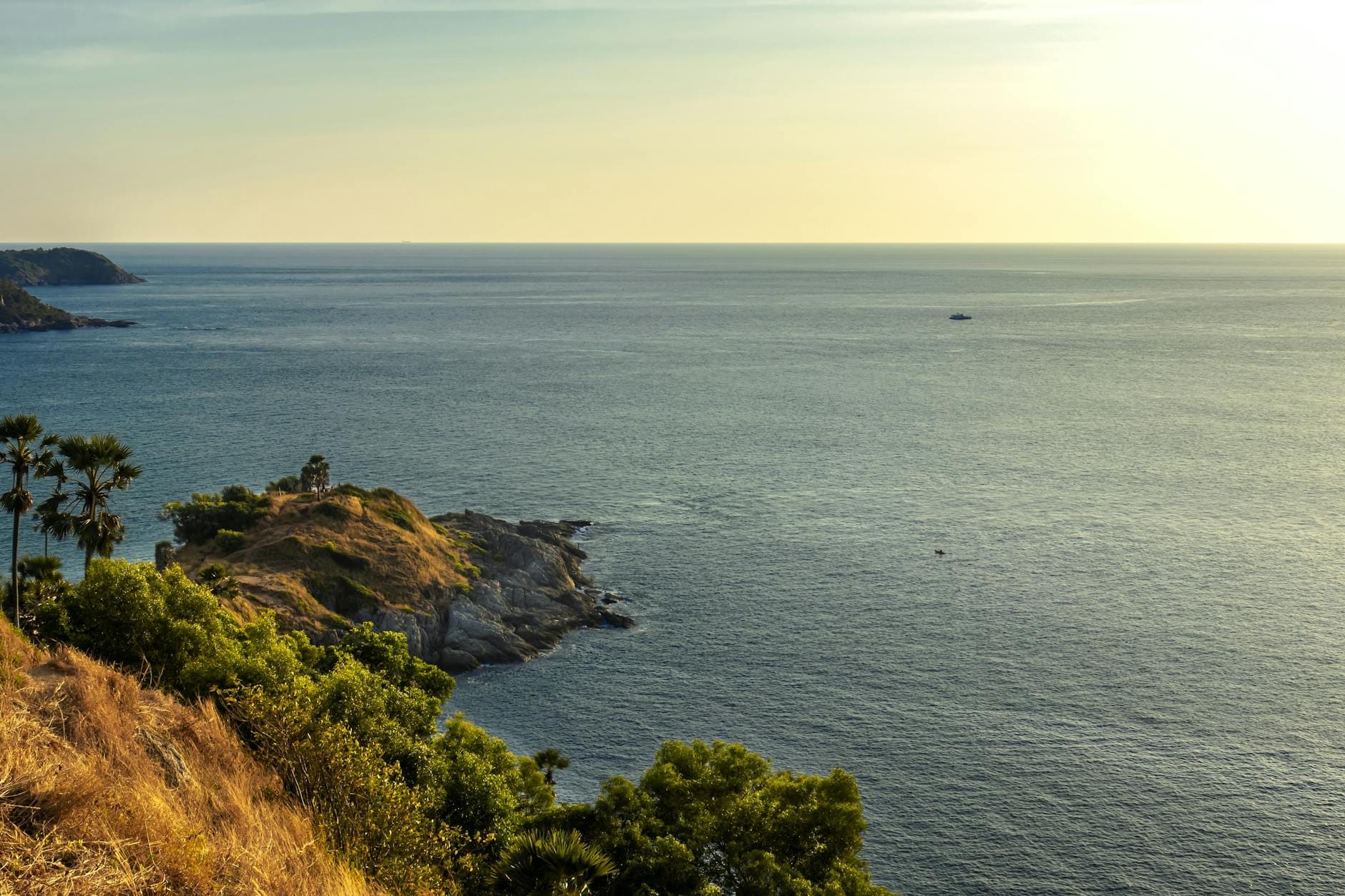
Laem Promthep (Thai: แหลมพรหมเทพ) is a rocky headland at the southernmost point of Phuket Island. The name translates loosely to 'Cape of God' or 'God's Cape,' a reflection of the almost theatrical views it commands over the Andaman Sea. At this point, the island simply ends: a spine of low hills collapses into pale rock and then into blue-green water, with nothing between you and the sea all the way to the horizon.
The cape sits adjacent to Nai Harn in the Rawai-Chalong district, and it anchors the southern stretch of Phuket's west coast. Because of its westward exposure, the sun sets almost directly over the water here from May through September — which is why it draws coachloads of visitors every evening and has appeared on countless postcards of the island. The spectacle is real. So is the crowd.
💡 Local tip
Arrive at least 45 minutes before sunset to secure a front-row position on the upper viewing platform. In peak season (December-February), that means getting there early or accepting a view from behind a wall of cameras and tripods.
The Landscape and What You Actually See
The terrain at Promthep Cape is rawer than the manicured coastal parks you might expect. A main viewpoint platform sits at the edge of the cliff, offering a panorama across the Andaman Sea and back toward Ya Nui Beach and Nai Harn. On clear days you can make out Coral Island (Koh Hae) to the south, and sometimes the faint outline of Racha Noi further out.
The cliffs themselves are granite-edged and steep. Scrubby vegetation clings to the slopes, and the smell of salt and sun-warmed rock is consistent through the afternoon. Paths run from the car park to multiple viewpoints at slightly different elevations, so it's worth walking beyond the first platform — the composition of sea, headland, and lighthouse changes as you move. Below the cape, the water shifts from turquoise in the shallows to deep indigo further out. On the Ya Nui Beach side, longtail boats occasionally anchor in the small bay, adding movement and scale to photographs.
At sunrise, the cape is almost empty. The light hits the water differently — warmer, more golden, without the dramatic silhouette effect of sunset — and you can hear the sea properly without the ambient noise of tour groups. It's a genuinely different experience, and for anyone who finds the evening crowd discouraging, the morning is worth the early alarm.
Tickets & tours
Hand-picked options from our booking partner. Prices are indicative; availability and final rates are confirmed when you complete your booking.
Muay Thai Boxing Tickets at Patong Boxing Stadium
From 56 €Instant confirmationFree cancellationPhuket Island and Big Buddha Private Tour
From 125 €Instant confirmationFree cancellationGuided elephant nature walk tour with transfer
From 50 €Instant confirmationFree cancellationFull-day tour to the highlights of Phuket City and its surroundings
From 71 €Instant confirmationFree cancellation
The Lighthouse and Maritime Museum
The white lighthouse at Promthep Cape, known as Kanchanaphisek Lighthouse, was constructed to commemorate King Bhumibol Adulyadej's Golden Jubilee. It's compact and functional rather than architecturally grand, but it provides an elevated vantage point and houses a small maritime museum inside the base. The museum covers Thai naval history and the role of the cape in regional seafaring — modest in scale, but worth a short detour, especially if you arrive before sunset crowds peak.
Note that the lighthouse and museum operate on limited hours, typically 08:00 to 19:00, and have been reported closed during some visits, particularly outside peak season. Don't plan your visit around guaranteed museum access. The free outdoor viewpoints are the real draw and remain accessible at any hour.
Near the lighthouse there is also a shrine to a sea goddess and a statue dedicated to the Prince of Chumphon, considered the father of the Royal Thai Navy. The shrine sees quiet but genuine devotion from local Thai visitors, particularly fishing families from the south of the island. Incense smoke, small offerings of fruit and flowers, and the occasional garland tied to the statue give this corner of the cape a different atmosphere from the tourist-facing viewpoints a short walk away.
Crowds, Timing, and the Sunset Reality
Let's be direct about this: the Promthep Cape sunset is the most hyped single event on Phuket's calendar for independent travelers, and the experience varies wildly depending on when you arrive, what month you visit, and whether cloud cover cooperates. On a clear evening in November or December, the sun drops into a flat sea horizon and the sky turns a gradient of orange and pink that genuinely justifies the trip. On a cloudy evening, particularly during May through October's wet season, you may see nothing but grey haze. The rainy season produces dramatic skies but unreliable actual sunsets.
Peak season crowds (November through April) mean tour buses, local families, couples with professional photographers, and serious camera operators with tripods all competing for the same limited cliff edge. If this bothers you, consider visiting Karon Viewpoint instead, which offers a comparable three-bay panorama to the north with significantly fewer visitors in the same time window.
⚠️ What to skip
During peak season, the car park fills quickly after 16:30. Arriving by taxi or Grab avoids the parking scramble entirely. If you drive, a second informal parking area exists on the road just before the cape entrance — arrive early for this too.
How to Get There and Getting Around
Promthep Cape has no public songthaew route that terminates there directly. The most practical approach is to book a Grab taxi from Rawai, Nai Harn, or Phuket Town. The ride from Phuket Town takes approximately 30 to 40 minutes depending on traffic. From Rawai Beach or Nai Harn, you're under 10 minutes away by road.
Renting a scooter is common among independent travelers and gives you the flexibility to stop at Nai Harn Beach on the way down. The road to the cape is paved and manageable, though the final approach is narrow. Exercise standard caution: helmet on, international driving permit carried, and be aware that the road from Rawai climbs briefly before descending to the cape parking area.
The cape is entirely walkable once you arrive. Paths connect the car park to the main viewpoint, the lighthouse area, and the shrine in under 10 minutes of flat-to-gently-sloped walking. The cliff edge portions are uneven and unguarded in places. Wear footwear with grip, particularly if visiting in the evening when the light fades quickly after sunset.
Accessibility, Photography, and Practical Notes
Promthep Cape is not wheelchair accessible. The paths from the car park involve uneven surfaces, steps at the main viewpoint platforms, and rough ground near the cliff edges. There are no facilities for visitors with limited mobility. Families with young children should keep close watch near the cliff edges, which lack consistent barriers.
For photography, the classic composition frames the lighthouse against the sunset sky with the sea below. A wide-angle lens works well for the panorama; a longer focal length allows you to isolate the sun touching the horizon. The platform rail is a useful foreground element in low-light shots. If you have a tripod, plan to use it — light drops fast after the sun passes the horizon and handheld shots become difficult within minutes.
If you're building a half-day around this area, pair the cape visit with time at Rawai Beach for seafood at the beachside restaurants, or walk down to Ya Nui Beach, which is within visible distance and offers good snorkeling in calmer conditions. See the broader Rawai and Chalong area for context on what else is nearby.
ℹ️ Good to know
There are a few small souvenir stalls and drink vendors near the car park entrance. They're convenient for a cold water or coconut while you wait for sunset but don't expect anything beyond basic snacks.
Who Should Consider Skipping This
Promthep Cape delivers exactly one primary experience: the sunset view. If you've already visited during a previous trip to Phuket, there's limited reason to return unless conditions were poor or cloudy the first time. Travelers who are highly sensitive to crowds, especially in the confined space of a cliff-edge platform, may find the peak-season experience frustrating rather than relaxing. Those visiting during heavy cloud cover periods, common throughout the monsoon months from May to October, should manage expectations carefully — the view itself (without the sun) is pleasant but not remarkable enough to justify a special trip.
If dramatic Andaman Sea views are your goal but the crowd factor concerns you, Windmill Viewpoint offers an alternative elevated coastal perspective with far fewer visitors.
Insider Tips
- The upper lighthouse platform often gives a cleaner camera angle than the main lower viewpoint — fewer heads in frame and a slightly higher vantage. Make the short climb before the crowd thickens.
- Weekday sunsets are noticeably quieter than weekends, particularly Sunday evenings when both tourists and local Phuket families visit. If you can choose your day, Thursday or Friday evenings in dry season offer a reasonable crowd-to-view ratio.
- The stretch of road between Ya Nui Beach and the cape car park has a small pull-off that locals use for photographs. It gives an angle back toward the cape and lighthouse that most visitors never see because they've already parked and walked the other direction.
- Bring a light layer. Wind off the sea picks up noticeably once the sun goes down, and the temperature on the exposed cliff drops faster than it does on the beach areas nearby.
- If the car park is full, Grab taxis can drop and collect at the entrance lane. Arrange your return pickup before you walk in, not after — mobile signal can be patchy on the cape itself depending on your carrier.
Who Is Promthep Cape For?
- Photographers serious about sunset and seascape composition
- Couples looking for a scenic evening stop on the south coast
- First-time Phuket visitors wanting the island's iconic coastal view
- History-curious travelers interested in Thai maritime heritage and the 1996 lighthouse
- Travelers combining a day at Nai Harn or Ya Nui Beach with an early evening viewpoint visit
Nearby Attractions
Other things to see while in Rawai & Chalong:
- Black Rock Viewpoint
Perched at roughly 290 meters above southern Phuket, Black Rock Viewpoint — known in Thai as Pa Hin Dam, or 'Black Rock Cliff' — delivers a sweeping panorama over Nai Harn Beach, Nui Beach, and the open Andaman Sea. It's free, it's rarely crowded, and getting there requires a genuine effort through jungle trails or steep dirt roads. That effort is precisely what keeps it worth making.
- Chalong Bay
Chalong Bay (Ao Chalong) is Phuket's largest and most active boat anchorage, serving as the main departure point for island day trips, dive boats, and yacht charters. It's not a swimming beach, but understanding what it is makes it genuinely useful for any southern Phuket itinerary.
- Coral Island (Koh Hae)
Koh Hae, known to most visitors as Coral Island, is a small island roughly 3 km southeast of Phuket, reachable by speedboat in under 20 minutes from Chalong Pier or Rawai Beach. It offers two sandy beaches, accessible snorkeling over coral reefs, and a range of watersports — without the full-day commitment of Phi Phi or Racha Island.
- Nai Harn Beach
Tucked into Phuket's southern tip, Nai Harn Beach offers a rare combination of clear water, genuine calm, and striking natural scenery. At roughly 700 meters long, it stays manageable even in peak season, drawing a mix of long-term expats, families, and travelers who've learned that louder doesn't mean better.