Chalong Bay: Phuket's Gateway to the Southern Islands
Chalong Bay (Ao Chalong) is Phuket's largest and most active boat anchorage, serving as the main departure point for island day trips, dive boats, and yacht charters. It's not a swimming beach, but understanding what it is makes it genuinely useful for any southern Phuket itinerary.
Quick Facts
- Location
- Southeast coast of Phuket, ~12 km south of Phuket Town, Rawai-Chalong area
- Getting There
- By car or scooter via Chao Fah West Rd south, then east at Chalong Circle roundabout onto Sunrise Rd; Grab taxis available from Phuket Town
- Time Needed
- 30–60 minutes to explore the pier area; longer if departing on a boat tour
- Cost
- Free public access; boat tours and dive trips priced separately
- Best for
- Travelers catching island day trips, sailing enthusiasts, and those exploring the Rawai-Chalong area
What Chalong Bay Actually Is (And Is Not)
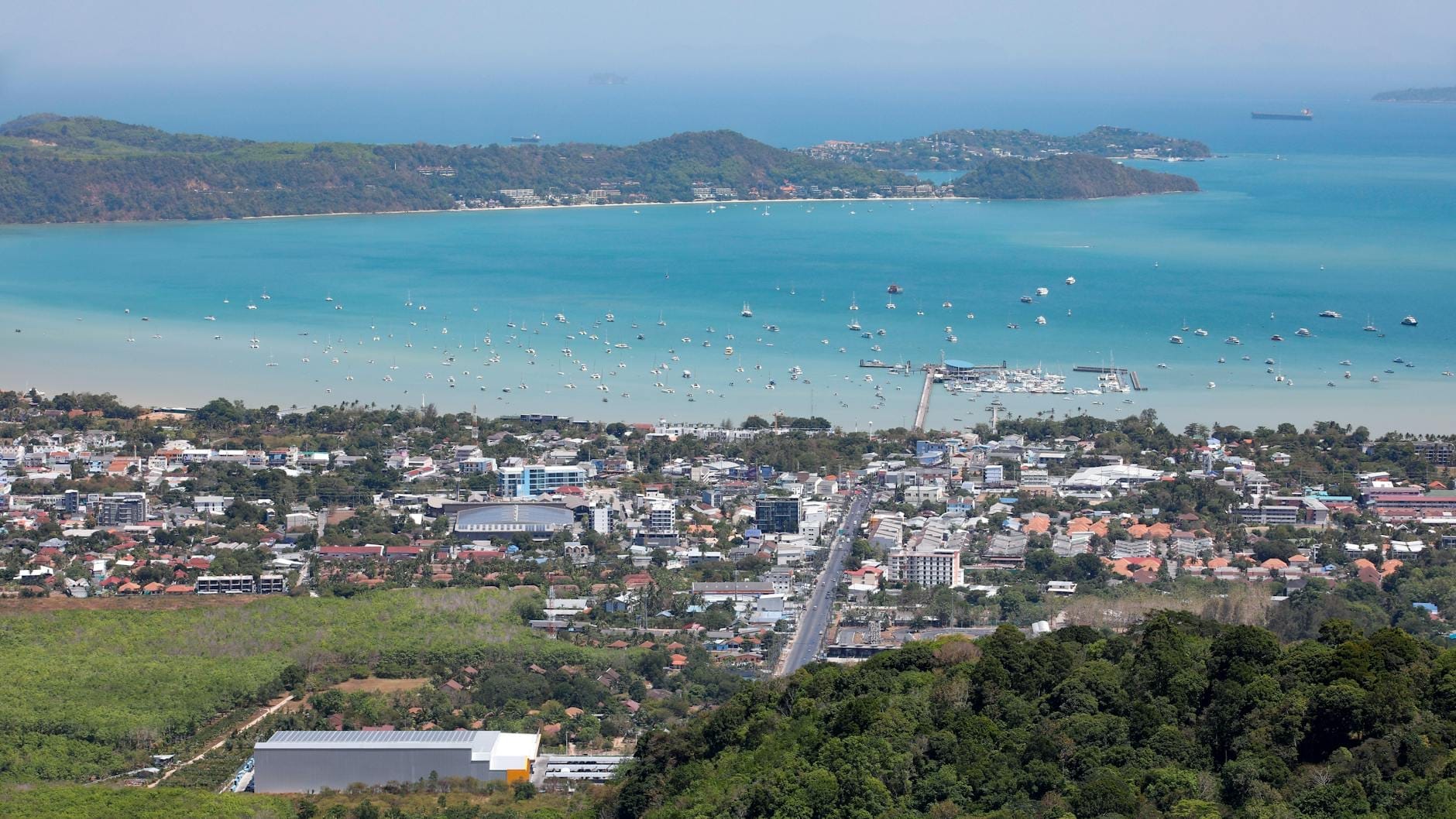
Chalong Bay, known in Thai as Ao Chalong (อ่าวฉลอง), is Phuket's largest bay and its most significant working marine hub. It sits on the island's southeast coast, roughly 12 kilometers south of Phuket Town, and it looks nothing like the postcard beaches further up the coast. The shoreline here is shallow and muddy at low tide, the water is brownish rather than turquoise, and the beach itself is not suitable for swimming. If you arrive expecting a beach day, you will be disappointed.
What you get instead is something far more practically useful: the primary anchorage for hundreds of private yachts, speedboats, and dive vessels that use southern Phuket as their base. Chalong Bay is the place you pass through to reach the good stuff. Coral Island, Racha Yai, Racha Noi, the Phi Phi Islands, and even longer liveaboard routes to the Similan Islands all begin or end here.
ℹ️ Good to know
Chalong Bay is open 24 hours and free to access as a public bay. There are no entry fees or gates. The pier area is busiest between 7 AM and 10 AM as boat tours load passengers and depart.
The Pier Scene: What You Will See and When
Early morning at the Chalong pier area is the most energetic stretch of the day. By 7 AM, longtail boats and speedboats are already loading gear, and the smell of marine fuel mixes with the salt air. Tour operators check off passenger lists, dive masters stack tanks, and caterers bring ice boxes aboard day-trip catamarans. It has the organized chaos of a small working port, and it is genuinely interesting to watch even if you are not joining a trip.
By mid-morning the bay quiets considerably. Many of the tour boats have left, and the anchorage settles into the slower rhythm of vessels at rest. Yachts on long-term moorings bob quietly, and the occasional longtail idles past. This is the time to walk the area without pressure, look out toward Koh Lon (the island that sits just off the bay's mouth and provides year-round shelter from ocean swells), and get a feel for the scale of the anchorage.
Late afternoon brings returning boats. Passengers disembark sunburned and sandy. The restaurants and bars along the access road pick up trade. Sunset from the pier area is decent but not dramatic; the bay faces south and east rather than west, so you are not looking directly into the sun as it drops. For a proper Phuket sunset, the headlands at Promthep Cape, a few kilometers further south, are the better option.
For the full picture of what to do around Phuket's southern tip, the Rawai and Chalong area guide covers the neighborhood's beaches, seafood spots, and how it connects to the rest of the island.
Tickets & tours
Hand-picked options from our booking partner. Prices are indicative; availability and final rates are confirmed when you complete your booking.
Morning guided tour at hidden forest elephant reserve in Chalong
From 72 €Instant confirmationFree cancellationAfternoon guided tour at hidden forest elephant reserve in Chalong
From 72 €Instant confirmationFree cancellationMuay Thai Boxing Tickets at Patong Boxing Stadium
From 56 €Instant confirmationFree cancellationPhuket Island and Big Buddha Private Tour
From 125 €Instant confirmationFree cancellation
The Bay's Role as a Departure Hub
Chalong Bay's geography is what makes it central to Phuket's marine tourism. The bay is shallow and south-facing, formed in a crescent shape that, combined with the natural protection offered by Koh Lon just offshore, creates a sheltered anchorage that holds up even during periods of rough weather elsewhere on the island. For sailors and dive operators, this translates into reliable, year-round access.
The most popular single-day destination leaving from here is Coral Island (Koh Hae), which sits roughly 20 minutes offshore and offers calm snorkeling water and a proper sandy beach. Learn more about what to expect on a Coral Island day trip from Phuket before you book.
Longer routes head to Racha Yai and Racha Noi for serious diving and clearer water, or to the Phi Phi archipelago for a full-day excursion. The Phi Phi Islands route can also depart from Chalong, though some operators use the Rassada or Ao Po piers depending on the vessel type.
Yacht charters, both bareboat and crewed, also operate out of the bay. Several marinas and anchorages service long-stay vessels, and the area has a small but established cruising community that treats Chalong as a home base for explorations across the Andaman Sea. If you are arriving in Phuket by private yacht, Chalong Bay is likely where you will clear customs and provision before heading further afield.
Practical Access and Getting There
From Phuket Town, the most direct route is Chao Fah West Road heading south. At the Chalong Circle roundabout, take Sunrise Road east for less than one kilometer to reach the pier area. By car or scooter the drive takes around 20 to 25 minutes from central Phuket Town.
Grab is the most reliable app-based option for getting here without a vehicle. Songthaews (shared pickup trucks that serve as local buses) do pass through Chalong, but they operate on fixed routes and the timing is unreliable if you have a boat to catch. If you are booked on an early morning tour, arrange a private transfer or Grab the night before rather than relying on passing traffic at 6:30 AM.
💡 Local tip
If you are joining a guided boat tour, your operator will almost certainly specify which pier to meet at. Chalong Bay has more than one access point. Confirm the exact meeting spot, ideally with a Google Maps pin, when you book.
Parking is available near the pier area, which makes this manageable for visitors on rented scooters. Road conditions are standard for Phuket: mostly smooth but with occasional potholes on secondary roads closer to the waterfront. The pier itself has no special wheelchair infrastructure, and the surfaces are uneven in places.
Eating and Spending Time Around the Bay
The road running toward the pier is lined with small restaurants, seafood places, and convenience stops aimed primarily at locals and boating visitors rather than package tourists. Prices are noticeably lower here than in Patong or Kata. A bowl of boat noodles or a plate of pad krapao at one of the roadside spots will cost a fraction of what you would pay at a tourist-facing restaurant on the west coast.
There are also several laid-back bars near the waterfront that cater to the sailing community, the kind of places where conversations happen slowly over cold Singha and nobody is in a rush. They open in the late afternoon and stay open into the evening. It is a side of Phuket that feels considerably less manufactured than the nightlife corridors elsewhere on the island.
The Chalong-Rawai area is also where you will find Wat Chalong, Phuket's most visited Buddhist temple, a few kilometers to the northwest. It makes a logical pairing with a morning at the pier: head to the bay early to watch the boats depart, then visit Wat Chalong once it warms up.
Weather, Seasons, and When to Visit
As a functional bay and anchorage, Chalong operates year-round. However, the number of tour departures and available boats is heavily influenced by season. The dry season, running from approximately November through April, brings calmer seas, clearer water, and far more boat traffic. This is when dive liveaboards fill up weeks in advance and the bay feels most alive as a staging point.
The wet season from May through October brings stronger winds and heavier swells to Phuket's west coast, but Chalong Bay, sheltered and south-facing, remains relatively protected. Many dive operations continue running through the shoulder months, though some routes to outer islands and Phi Phi are reduced or suspended during peak monsoon weeks. If you are planning a specific boat trip, confirm availability with your operator rather than assuming the departure is running.
⚠️ What to skip
Do not assume the bay's shelter means all tours run year-round. Check with your specific operator whether your chosen route operates during the wetter months of June to September.
For a broader understanding of when to time your Phuket trip, the best time to visit Phuket guide breaks down monthly weather patterns and how they affect different parts of the island.
Who Should Skip Chalong Bay
If your goal is a beach day with clear water and soft sand, Chalong Bay will not deliver. The mud flats exposed at low tide, the working-port atmosphere, and the absence of sunbeds or swim zones make it the wrong choice for a relaxing beach afternoon. Travelers who want to sunbathe should head to Rawai Beach for the local atmosphere, or further up the coast to Kata or Karon for the full beach resort experience.
First-time visitors to Phuket who have limited time and no specific boat trip planned may find that an hour at Chalong Bay does not compete well against the island's beaches, temples, or viewpoints. It earns its place on an itinerary primarily as a transit point or as part of a deliberate exploration of the Rawai-Chalong area's working waterfront character.
Insider Tips
- Book dive and snorkeling trips directly with operators based at Chalong rather than through hotel desks. You will often pay 15 to 30 percent less and deal directly with the crew running the boat.
- Morning boat loading (roughly 7 to 9 AM) is worth watching even if you are not departing. The mix of dive boats, catamarans, and traditional longtails gives a clear picture of how much marine traffic moves through southern Phuket.
- The seafood restaurants closest to the pier tend to be fresher and cheaper than those on the main Chalong road. Ask what is caught locally that day rather than ordering from a laminated tourist menu.
- If you are arriving in Phuket by private sailboat, clear customs at the main pier area and provision here before heading anywhere else. Chalong has better marine supply options than most other parts of the island.
- Combine a pier visit with Promthep Cape in the same afternoon. The cape is roughly 8 kilometers further south and offers one of Phuket's best sunset viewpoints, making it a natural end to a Rawai-Chalong afternoon loop.
Who Is Chalong Bay For?
- Travelers using Chalong as a departure point for island day trips to Coral Island, Racha, or Phi Phi
- Sailing and yachting visitors using the bay as a home anchorage
- Divers booking multi-day liveaboard trips into the Andaman Sea
- Independent travelers wanting to see a working, non-touristy side of Phuket's waterfront
- Anyone pairing the area with a visit to Wat Chalong or Promthep Cape on the same day
Nearby Attractions
Other things to see while in Rawai & Chalong:
- Black Rock Viewpoint
Perched at roughly 290 meters above southern Phuket, Black Rock Viewpoint — known in Thai as Pa Hin Dam, or 'Black Rock Cliff' — delivers a sweeping panorama over Nai Harn Beach, Nui Beach, and the open Andaman Sea. It's free, it's rarely crowded, and getting there requires a genuine effort through jungle trails or steep dirt roads. That effort is precisely what keeps it worth making.
- Coral Island (Koh Hae)
Koh Hae, known to most visitors as Coral Island, is a small island roughly 3 km southeast of Phuket, reachable by speedboat in under 20 minutes from Chalong Pier or Rawai Beach. It offers two sandy beaches, accessible snorkeling over coral reefs, and a range of watersports — without the full-day commitment of Phi Phi or Racha Island.
- Nai Harn Beach
Tucked into Phuket's southern tip, Nai Harn Beach offers a rare combination of clear water, genuine calm, and striking natural scenery. At roughly 700 meters long, it stays manageable even in peak season, drawing a mix of long-term expats, families, and travelers who've learned that louder doesn't mean better.
- Promthep Cape
Laem Promthep sits at the absolute southern tip of Phuket Island, where limestone cliffs drop into the Andaman Sea and the horizon stretches unbroken at dusk. Free to enter and open around the clock, it's the island's most iconic spot to watch the sun disappear — if you time it right and manage the crowds.