Nai Harn Beach: Phuket's Most Underrated Southern Shore
Tucked into Phuket's southern tip, Nai Harn Beach offers a rare combination of clear water, genuine calm, and striking natural scenery. At roughly 700 meters long, it stays manageable even in peak season, drawing a mix of long-term expats, families, and travelers who've learned that louder doesn't mean better.
Quick Facts
- Location
- Rawai subdistrict, southern tip of Phuket Island, north of Promthep Cape
- Getting There
- Rent a scooter or take a songthaew from Rawai; no direct public bus route. Grab taxis available from central Phuket.
- Time Needed
- 2–4 hours for the beach; half a day if combining with Promthep Cape
- Cost
- Free entry. Sunbed hire typically 100–200 THB per chair (verify locally).
- Best for
- Families, expats, photography, relaxed swimming, sunset seekers
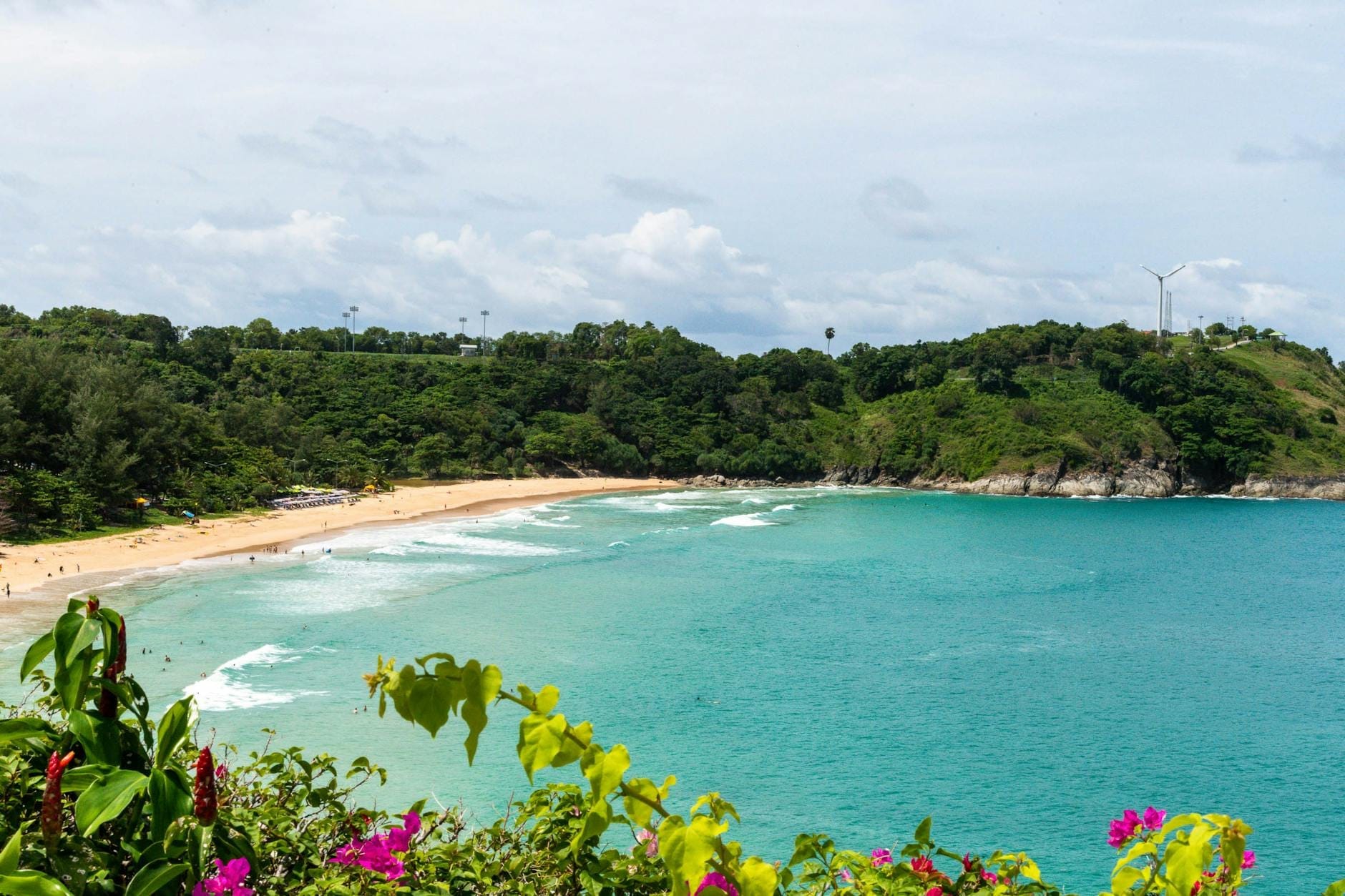
What Nai Harn Beach Actually Is
Nai Harn Beach (หาดในหาน) sits at the far southern end of Phuket Island, about as far from the chaos of Patong as the island allows. The beach runs roughly 700 meters in length and 50 meters wide at high tide — compact enough to feel intimate, large enough to find your own space. It faces west, which means the sunsets here land directly in front of you rather than off to one side.
The beach is flanked by low hills covered in jungle, and a large freshwater lagoon called Nai Harn Lake sits directly behind it, separated from the sea by a narrow strip of land. This geography keeps the setting quieter than most: the hills block easy road access, so only people who make a deliberate trip arrive here. There's no strip of shops running along the sand, no jet ski armada waiting to pounce. The overall atmosphere is closer to what Phuket's west coast looked like 20 years ago.
💡 Local tip
Nai Harn is not easily stumbled upon. You'll need your own transport — a rented scooter or a Grab taxi — since no direct public bus route serves the beach. Budget about 30–40 minutes from central Phuket town.
The Water, the Sand, and the Surroundings
During high season (November through April), the water at Nai Harn is clear, relatively calm, and warm. The entry is gentle with no sharp drop-off close to shore, which makes it one of the more sensible choices for families with children. Fine white-grey sand extends the full length of the beach, and it stays clean by southern Phuket standards — partly because there's no big resort development directly on the shoreline.
Towards the southern end of the beach, large granite boulders break the waterline and provide a natural focal point for photography. The treeline comes close to the sand at both ends, offering genuine shade without needing to hire a sunbed. Central sections of the beach have beach chairs and umbrellas available for rent, along with a small cluster of beach bars serving cold drinks and simple food.
The lagoon behind the beach is worth a slow walk. Locals come here in the early morning to jog or cycle the perimeter path. A Buddhist monastery, Wat Nai Harn, sits on the eastern edge of the lake and contributes to the area's unusually unhurried character. The scent of frangipani drifts across the lake path in the morning hours.
⚠️ What to skip
During the May–October monsoon season, red flags fly and swimming becomes genuinely dangerous due to strong currents and large waves. The beach is still accessible and beautiful to walk, but do not enter the water when flags are raised.
Tickets & tours
Hand-picked options from our booking partner. Prices are indicative; availability and final rates are confirmed when you complete your booking.
Phuket Naithon hidden trails ATV tour
From 48 €Instant confirmationFree cancellationMuay Thai Boxing Tickets at Patong Boxing Stadium
From 56 €Instant confirmationFree cancellationPhuket Island and Big Buddha Private Tour
From 125 €Instant confirmationFree cancellationGuided elephant nature walk tour with transfer
From 50 €Instant confirmationFree cancellation
How the Beach Changes Through the Day
Early mornings before 9am are the most peaceful window. The light is soft, the water reflects the surrounding hills cleanly, and the beach belongs almost entirely to joggers, local families, and the occasional serious swimmer. This is when the beach looks like the photographs — flat water, empty sand, and a stillness that doesn't survive past mid-morning.
By late morning, beach chairs fill in the central section and a modest crowd of tourists settles in. Even at its most populated, around midday in peak season, Nai Harn avoids the wall-to-wall compression seen at Patong or Karon. There's room to spread out, and the vendors are present without being aggressive.
Late afternoon, from around 4pm onwards, is worth staying for. The sun drops toward the headland to the southwest, the light shifts to amber, and the beach takes on a different texture entirely. Photographers set up near the boulders. Families gather at the waterline. It's genuinely pretty, without being theatrical about it.
If sunsets are a priority, consider pairing Nai Harn with a short drive to Promthep Cape, just 2 kilometers to the east. The cape offers an elevated 180-degree view of the southern Andaman coast and is one of Phuket's most iconic sunset vantage points.
Getting There and Getting Around
Nai Harn sits roughly 18 kilometers south of Phuket Town and about 20 kilometers from Patong. There is no direct songthaew or public bus route that runs to the beach — getting here requires either renting a scooter (widely available in Rawai and Kata for around 200–400 THB per day, verify locally), booking a Grab ride, or arranging a private taxi.
The approach road descends through hills from the north, following signs from Kata and Karon. If you're driving from Phuket Town or the north of the island, use Promthep Cape as your navigation landmark and follow the coastal road west from there. Parking exists in a small lot just above the beach, and motorbike parking is easy along the road shoulder.
Nai Harn is a natural pairing with the nearby Ya Nui Beach, a smaller cove about 1 kilometer to the south that offers reliable snorkeling and a more sheltered swim. The two spots work well as a combined half-day route.
For broader context on getting around the southern part of the island, see the guide to getting around Phuket.
Photography and What to Bring
Nai Harn photographs well throughout the day, though the golden hours at the start and end of the day produce the most satisfying results. The granite boulders at the south end of the beach work as compositional anchors, and the hill behind the beach provides a backdrop that most of Phuket's flat beaches don't have. A polarizing filter improves water clarity shots significantly in mid-morning light.
Bring reef-safe sun protection, a rash guard if you plan to swim for extended periods, and cash — a few beach vendors operate here, but card acceptance is limited. Fresh coconuts and cold water are available at the small beachside stalls. There are basic toilet facilities near the central parking area.
ℹ️ Good to know
Nai Harn is popular with the long-term expat community in southern Phuket. This is partly why the beach feels more 'lived-in' and less staged than resort beaches further north. Don't expect beach butler service — do expect genuine local atmosphere.
Who Will Love It, and Who Might Not
Nai Harn suits travelers who want a proper beach experience without paying resort prices or navigating tourist-trap density. Families with children will find the calm high-season water easy to manage. Photographers will find the setting more interesting than Phuket's flatter, more developed beaches. Expats and slow travelers who value atmosphere over amenities consistently rate it among the island's best beaches.
Travelers who want sunbed service, a beach club menu, and easy access to shopping should look at options further north — Surin Beach or Bang Tao Beach offer more in that direction. And if nightlife is the priority after sundown, Nai Harn has almost none — it's a quiet southern community, not an entertainment strip.
During the monsoon season, the beach loses its swimming appeal entirely. The landscape stays dramatic — swells can be genuinely impressive — but anyone visiting primarily to swim should either adjust timing or choose a beach on the island's east coast, which stays sheltered during the southwest monsoon.
Insider Tips
- Arrive before 9am on weekends for a near-empty beach — locals tend to arrive mid-morning, and tour groups rarely show up before 10am.
- Walk the perimeter path around Nai Harn Lake before hitting the beach. It takes about 25 minutes at a comfortable pace and gives you a different, quieter perspective on the area. The monastery side of the lake is particularly calm.
- The small road that curves south past the beach toward Promthep Cape has a low-key viewpoint about 500 meters along it that most visitors drive straight past. It faces back over the beach and the lagoon and is worth a 2-minute stop.
- If you're visiting in high season and want sunbeds, go for the ones at the southern end near the boulders rather than the central cluster — they're the same price but significantly less crowded and in better light for afternoon sessions.
- Combine your visit with a stop at Rawai seafood market, about 5 kilometers away, where you can point at fresh catch and have it cooked immediately. It's one of the more authentic food experiences in southern Phuket and pairs naturally with a morning beach visit.
Who Is Nai Harn Beach For?
- Families with young children seeking calm, manageable swimming conditions in high season
- Photographers looking for a beach with natural scenery, granite boulders, and quality sunset light
- Travelers staying in the Rawai or Kata area who want a short, rewarding day trip without a long drive
- Long-stay visitors and expats who want a local-feeling beach rather than a resort experience
- Sunset seekers who can pair the beach with a short drive to Promthep Cape for the elevated view
Nearby Attractions
Other things to see while in Rawai & Chalong:
- Black Rock Viewpoint
Perched at roughly 290 meters above southern Phuket, Black Rock Viewpoint — known in Thai as Pa Hin Dam, or 'Black Rock Cliff' — delivers a sweeping panorama over Nai Harn Beach, Nui Beach, and the open Andaman Sea. It's free, it's rarely crowded, and getting there requires a genuine effort through jungle trails or steep dirt roads. That effort is precisely what keeps it worth making.
- Chalong Bay
Chalong Bay (Ao Chalong) is Phuket's largest and most active boat anchorage, serving as the main departure point for island day trips, dive boats, and yacht charters. It's not a swimming beach, but understanding what it is makes it genuinely useful for any southern Phuket itinerary.
- Coral Island (Koh Hae)
Koh Hae, known to most visitors as Coral Island, is a small island roughly 3 km southeast of Phuket, reachable by speedboat in under 20 minutes from Chalong Pier or Rawai Beach. It offers two sandy beaches, accessible snorkeling over coral reefs, and a range of watersports — without the full-day commitment of Phi Phi or Racha Island.
- Promthep Cape
Laem Promthep sits at the absolute southern tip of Phuket Island, where limestone cliffs drop into the Andaman Sea and the horizon stretches unbroken at dusk. Free to enter and open around the clock, it's the island's most iconic spot to watch the sun disappear — if you time it right and manage the crowds.