Surin Beach (Hat Surin): Phuket's Laid-Back Upscale Shore
Surin Beach, known in Thai as หาดสุรินทร์ (Hat Surin), is a roughly 800-metre arc of white sand on Phuket's northwestern coast. Quieter than Patong and less crowded than Kata, it draws a mix of long-stay expats, resort guests, and independent travelers looking for a civilised beach day without the carnival atmosphere found further south.
Quick Facts
- Location
- Cherngtalay, Thalang District, Phuket — 15 km north of Patong, 23 km from Phuket Airport
- Getting There
- Grab taxi or private car recommended; shared songthaew from Patong possible but infrequent
- Time Needed
- 2–5 hours for a beach session; full day if combining with Kamala or Bang Tao
- Cost
- Free entry; sun lounger rental from approx. THB 200–300 per set (verify on arrival)
- Best for
- Couples, long-stay travelers, anyone wanting a quieter alternative to Patong
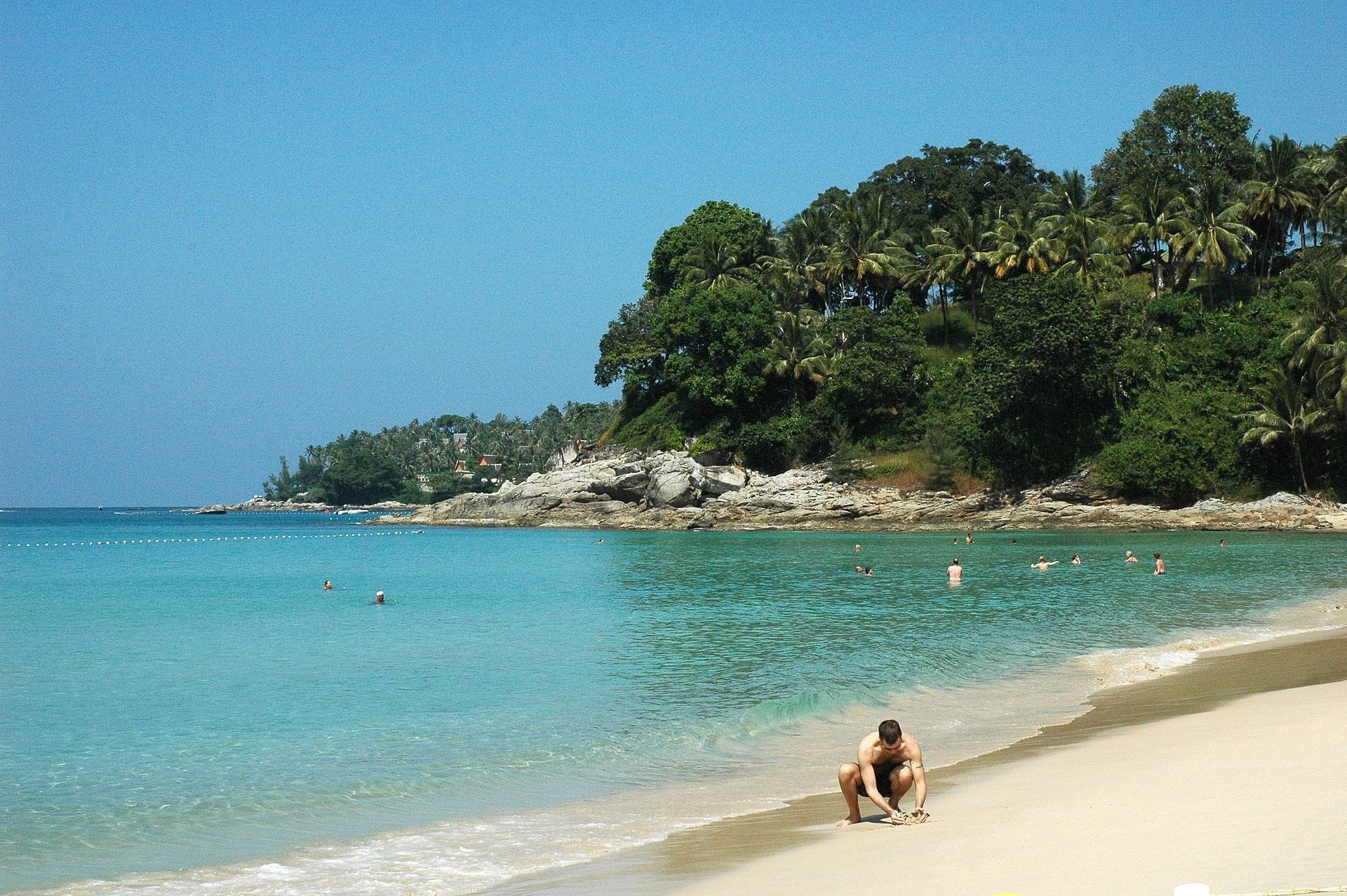
First Impressions: What Surin Beach Actually Looks Like
The approach to Surin Beach sets the tone before you even see the water. The main road narrows, casuarina pines line the final stretch, and there is no beachfront road cutting through the view — something surprisingly rare on Phuket's developed west coast. You arrive at a modest car park, step through a short tree line, and the beach opens up as a clean, relatively wide crescent of pale sand backed by those same casuarinas providing natural shade.
The beach itself runs roughly 800 metres to 1 kilometre, bookended at each end by rocky granite capes. The sea here is the characteristic Andaman blue-green during the dry season, and the water stays reasonably clear close to shore. At the southern end, boulders extend into the shallows — a low-key snorkeling spot worth investigating if you bring your own mask and fins.
ℹ️ Good to know
Surin Beach is a public beach with free entry. Facility hours for sun loungers and vendors are roughly 9:30 AM to 9:00 PM, but the beach itself is accessible at any hour.
The Atmosphere: Why Surin Feels Different From Other Phuket Beaches
Surin has long carried a reputation as Phuket's most upscale beach, largely because of the high-end resorts on the adjacent Pansea Bay, including The Surin Phuket, which has operated since 1982. That clientele shaped the beach's character over the decades. There are no rows of competing jet-ski touts aggressively pitching from the waterline, no banana boat operators running circuits in front of swimmers, and the general noise level is lower than what you encounter at Patong or even Karon.
That said, Surin is not a deserted or isolated beach. During the dry season high months (roughly December through February), it fills steadily through the morning and reaches comfortable capacity by midday. The crowd skews toward couples, families with older children, and resort guests on half-day escapes. What you will not find is the dense pack of party tourists that defines other parts of the island.
The beach's northern neighbor is Bang Tao Beach, a much longer and more varied stretch that attracts a broader mix of travelers. To the south, Kamala Beach offers a more local, family-friendly pace. Surin sits neatly between those two in terms of both geography and character.
Tickets & tours
Hand-picked options from our booking partner. Prices are indicative; availability and final rates are confirmed when you complete your booking.
Surin Islands reef snorkel from Phuket
From 101 €Instant confirmationFree cancellationSurin Islands catamaran tour with snorkelling and lunch from Phuket
From 119 €Instant confirmationFree cancellationMuay Thai Boxing Tickets at Patong Boxing Stadium
From 56 €Instant confirmationFree cancellationPhuket Island and Big Buddha Private Tour
From 125 €Instant confirmationFree cancellation
Time of Day: How the Beach Changes Through the Hours
Early mornings before 8 AM belong almost entirely to joggers, resident expats walking dogs along the sand, and the occasional hotel guest claiming a sun lounger before the heat arrives. The light at this hour is soft and low, hitting the casuarinas at an angle and casting long shadows across pale sand. This is the best photographic window, and the sea tends to be its calmest.
By 10 AM the vendors have set up and the beach fills quickly. Midday brings the full heat of the Andaman sun, which at Surin is largely unmediated — if the casuarina shade runs out, there is limited shelter until you reach a beach club umbrella. Between noon and 2 PM the sand gets crowded and hot underfoot, and the sea gets the most foot traffic.
Late afternoon, from about 4 PM onwards, is arguably the most pleasant window. The heat softens, the light turns gold-amber, and the crowd thins as day-trippers head back to their hotels. Sunset is visible from the beach but not dramatic in the way it is at Promthep Cape further south — the sun drops behind the hillside to the northwest rather than cleanly into the open sea. Still, the low light on the water is worth staying for.
💡 Local tip
Arrive before 9 AM if you want a wide choice of shaded spots under the casuarina trees. Good shade positions disappear quickly once the day heats up.
Swimming, Snorkeling, and Knowing the Risks
During the dry season (November to April), the sea at Surin is generally calm enough for comfortable swimming. The bottom slopes gradually from the shore, making the entry easy for most adults. Visibility is decent without being exceptional — this is not a dedicated snorkeling beach, but the rocky outcrops at the southern end do attract small reef fish and are worth a look.
The situation changes significantly during the southwest monsoon season (May through October). Surin faces west-northwest, which means it takes the full energy of the seasonal swell. Waves can be steep and the undertow is real. Red flags are posted when swimming is unsafe, and they should be taken seriously — the bottom can shift and currents run unpredictably along the cape. During this period, Surin is better visited for the scenery than the swimming.
⚠️ What to skip
Red flags mean no swimming, not 'swim with caution'. During May–October, strong rip currents have caught out even experienced swimmers at this beach. Check the flag status before entering the water.
If you are looking for a full snorkeling or diving experience, Surin Beach is not the place to base that ambition. Dedicated day trips run from other launch points to sites with far better underwater visibility. Consider a boat excursion instead.
Historical Context: Royal Connections and a Cleaned-Up Shoreline
The area around Surin has a mild historical footnote: a golf course constructed in the vicinity dates to the reign of King Prajathipok (Rama VII), who ruled from 1925 to 1935, making the broader Surin-Pansea area one of the earlier developed zones on this part of Phuket's coast. The beach itself was known among expats long before it became a recognizable stop on the tourist circuit.
More recently, Surin became notable in Phuket's ongoing beach-clean-up story. Beach clubs and restaurants that had occupied the sand for years were removed in 2016 under a national enforcement drive to reclaim public beach space across Thailand. A second round of removals followed in 2025. The result is that Surin now has significantly less commercial infrastructure directly on the beach than it did a decade ago — which most visitors experience as an improvement, though it also means fewer dining options right at the waterline.
Getting There and Getting Around Once You Arrive
Surin Beach sits about 15 kilometres north of Patong and roughly 23 kilometres from Phuket Airport, making it a manageable drive from either direction. The road from Patong runs north over the hill through Kamala, then continues up the coast. From Phuket Town, the standard route passes the Heroines Monument, turns left, continues straight to the hill, and then right before Kamala.
Public transport to Surin is limited. Shared songthaew routes exist but run infrequently and may require a connection at Patong. The practical approach for most visitors is a Grab ride or a rented motorbike if you are comfortable with Phuket's roads. For broader island context, the guide to getting around Phuket covers all transport options in detail.
Parking is available near the beach entrance. On busy weekends in peak season, the small car park fills early. There is no direct ATM at the beach, so bring enough cash for sun loungers, food stalls, and any drinks you might want.
Surin pairs well with a half-day loop that takes in the nearby Kamala Beach to the south or continues north to the quieter stretches of the Bang Tao and Kamala corridor. The area also serves as a useful base for those wanting easy access to several beaches without committing to Patong's infrastructure.
Photography Tips and What to Expect from the Scenery
Surin photographs best in the early morning and late afternoon. The casuarina trees create layered textures that work well in soft light, and the rocky cape at the southern end provides a natural foreground element for wide compositions. Midday light is harsh and washes out the colour contrast between sand and sea.
The beach does not offer a dramatic headland panorama or Instagram-famous rock formation. Its photogenic quality is quieter — the combination of pale sand, dark pines, and clear water feels composed without being theatrical. During the monsoon season, the sky and sea take on a moody, silver-grey quality that has its own appeal for photographers comfortable working in overcast conditions.
Who Should Skip Surin Beach
If you are visiting Phuket specifically for high-energy beach nightlife, water sports, and a constant supply of beachside bars, Surin is likely to feel too quiet. The removal of beach clubs has reduced the on-sand dining and drinking options considerably. Travelers who want a full day of activities organised from the sand will find the infrastructure limited compared to Patong or even Kata.
Families with very young children should also consider whether the moderate waves and sloping bottom suit toddlers, particularly outside the calmest months. For a broader look at which beaches match different traveler needs, the Phuket beaches guide compares the main options across the island.
Insider Tips
- The small food stalls near the car park serve better and cheaper food than anything remaining near the beach itself post-2025 cleanup. Stock up on drinks and snacks before you walk down to the sand.
- The rocky outcrops at the southern end of the beach are best explored around low tide. Bring water shoes if you plan to pick your way across the boulders — the surface is uneven and slippery when wet.
- Weekdays in late November and early March see noticeably smaller crowds than the peak holiday weeks around Christmas and Chinese New Year. The beach at those times feels genuinely calm.
- There is no significant shade beyond the casuarina tree line. A beach umbrella rented from a vendor is worth the cost unless you plan to spend your time in the water. Bring or rent one early.
- If you want sunset views over open water, continue south after your beach session to Promthep Cape for one of Phuket's better sunset vantage points — Surin's sunset is partially blocked by the hillside to the northwest.
Who Is Surin Beach For?
- Couples looking for a calm, attractive beach without Patong's commercial intensity
- Long-stay travelers and expats who value a reliable, well-kept public beach
- Photographers wanting soft morning or golden-hour beach light with minimal crowds
- Swimmers and snorkelers visiting during the November to April dry season
- Travelers combining a multi-beach day along Phuket's northwest coast
Nearby Attractions
Other things to see while in Kamala, Surin & Bang Tao:
- Banana Beach Phuket
Tucked between two of Phuket's more developed northern beaches, Banana Beach is a semi-circular cove about 180 meters wide with free entry and no resort infrastructure crowding the shoreline. The catch: you have to find it first, and the trail down is not for everyone.
- Bang Tao Beach
Bang Tao Beach is one of Phuket's longest stretches of sand at 6-8 km, curving around a wide half-moon bay on the northwest coast. Free to enter and significantly quieter than the island's more famous beaches, it rewards visitors with soft white sand, clear water from November to April, and a split personality: pristine and undeveloped in the north, resort-lined and polished in the south near the Laguna complex.
- Kamala Beach
Kamala Beach is a 2-kilometer stretch of golden sand on Phuket's west coast, sitting between the crowds of Patong and the luxury of Surin. It has the rare quality of feeling like a real place — a fishing village with a significant Thai Muslim community that also happens to have a beautiful beach.
- Phuket FantaSea
Phuket FantaSea is a large-scale Thai cultural entertainment complex in Kamala, open from 5:30 PM on Tuesdays, Fridays, and Sundays. Built on 30 acres, it combines carnival games, a buffet dinner, and a 70-minute theatrical show featuring elephants, pyrotechnics, and traditional dance inside a 3,000-seat arena. It is one of the most ambitious commercial attractions on the island.