Rawai Beach: Phuket's Seafood Coast and Sea Gypsy Shoreline
Rawai Beach sits at Phuket's southern tip where the fishing boats outnumber the sunbathers. Skip the swimming and come instead for the open-air seafood market, the working pier, and a rare glimpse of the Chao Ley community that has called this coastline home for generations.
Quick Facts
- Location
- Southern tip of Phuket Island, Rawai-Chalong area, ~15 km south of Phuket Town
- Getting There
- Drive or take a songthaew south via Route 402 through Chalong; ~55 km from Phuket Airport. Grab taxis available from central Phuket.
- Time Needed
- 1.5 to 2.5 hours for a relaxed visit; longer if you eat at the seafood market
- Cost
- Free public access. Budget THB 200–600 per person for seafood from market stalls.
- Best for
- Seafood lovers, cultural explorers, photographers, day-trip departures to nearby islands
What Rawai Beach Actually Is (And Is Not)
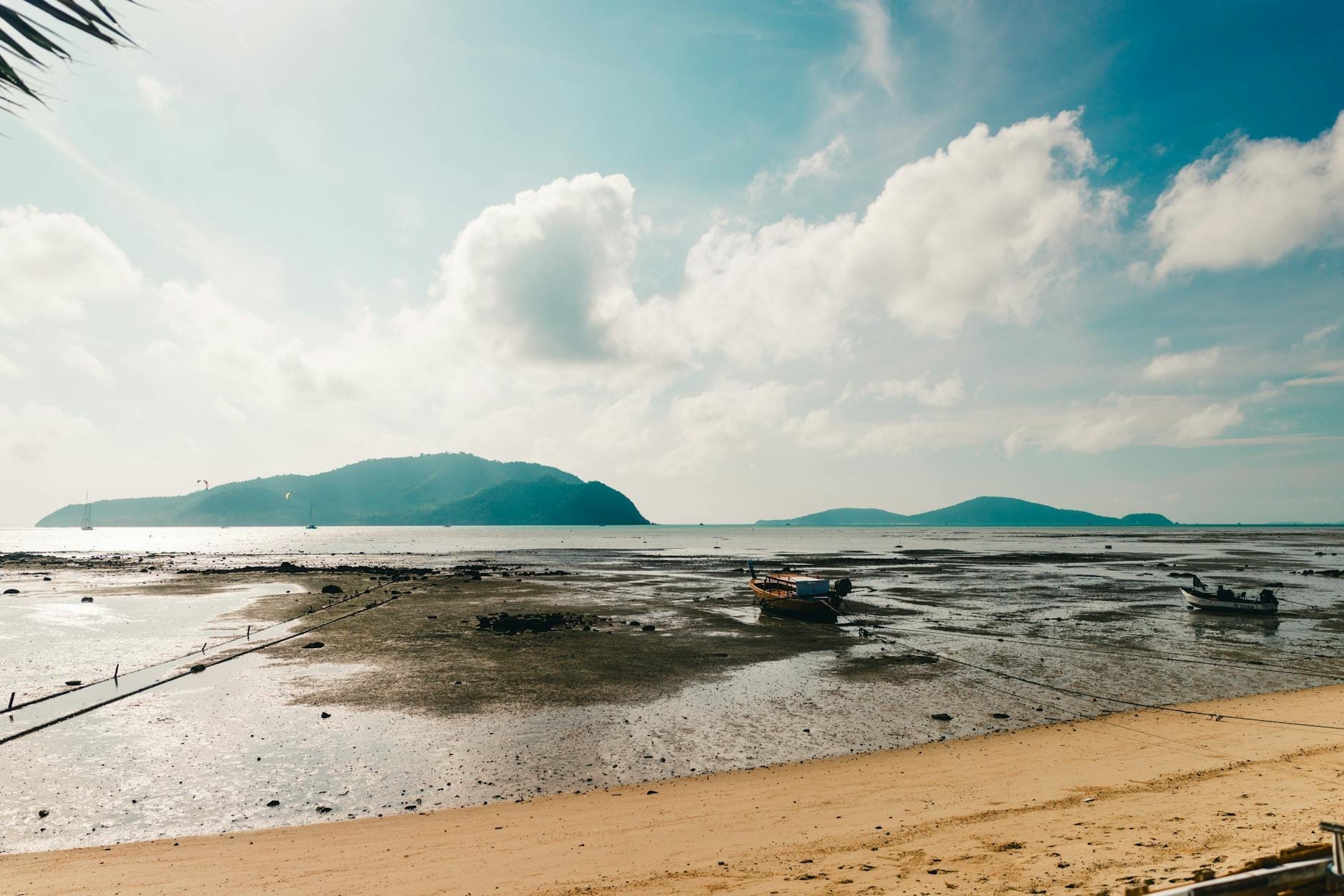
Rawai Beach is one of the most misunderstood spots in Phuket. Travelers who arrive expecting a postcard shoreline leave disappointed. Those who arrive knowing what it is leave very satisfied. This is not a swimming beach. The water is shallow, dotted with moored fishing boats, and at low tide the mudflats and exposed rocks make any attempt at a dip unappealing. There are no sun-lounger rentals, no beach bars playing house music, and no vendors selling buckets of cocktails.
What Rawai offers instead is texture and authenticity. It is a working seafront: a long promenade lined with seafood restaurants, a pier used daily by long-tail boats departing for nearby islands, and a Chao Ley (Sea Gypsy) village that has anchored this shoreline for generations. The atmosphere is local Thai first, tourist second. That balance is increasingly hard to find in Phuket, and it is the main reason the beach still deserves your attention.
⚠️ What to skip
Do not come to Rawai Beach expecting to swim. Moored boats, shallow water, and rocky mudflats at low tide make it unsuitable. Head to Nai Harn Beach, about 4 km west, if you want a proper swim.
The Seafood Market: The Real Reason Most People Come
The seafood market and restaurant strip along the Rawai seafront is the attraction within the attraction. Stalls and open-air restaurants sell fresh catches that arrived that morning: whole snapper, tiger prawns, scallops on ice, blue crab, and squid laid out on beds of crushed ice. The format is simple: you point at what you want, agree on the weight and price, and the kitchen cooks it. Prices are significantly lower than tourist-facing restaurants in Patong or Surin.
Mornings see the freshest supply and the least crowded tables. By midday the strip fills with local Thai families and expats who live in Rawai and Nai Harn. The smell of charcoal grills and garlic butter drifts across the promenade from late morning onward. At sunset, the tables closest to the pier fill up quickly because the angle of the light over the moored boats and offshore islands is genuinely photogenic. Come early for freshest stock, or come at golden hour for atmosphere. Avoid the lunch rush between noon and 2pm if you want a table without waiting.
💡 Local tip
Bring a cooler bag. Several stalls will sell you fresh shellfish to take away. This is a practical move if you have kitchen access at your accommodation.
Tickets & tours
Hand-picked options from our booking partner. Prices are indicative; availability and final rates are confirmed when you complete your booking.
Muay Thai Boxing Tickets at Patong Boxing Stadium
From 56 €Instant confirmationFree cancellationPhuket Island and Big Buddha Private Tour
From 125 €Instant confirmationFree cancellationGuided elephant nature walk tour with transfer
From 50 €Instant confirmationFree cancellationFull-day tour to the highlights of Phuket City and its surroundings
From 71 €Instant confirmationFree cancellation
The Chao Ley Village: Phuket's Oldest Residents
Adjacent to the main seafront strip, near Rawai Pier, sits one of Phuket's Chao Ley communities, also known as the Moken or Sea Gypsies. This indigenous group has inhabited the coastal areas of the Andaman Sea for centuries, living by fishing and an intimate knowledge of tidal patterns and marine life. The Rawai settlement is one of the most accessible Chao Ley communities on the island, though it is a living neighborhood, not a cultural exhibit.
Traditional wooden long-tail boats in various stages of use and repair sit along the shore near the village. Fishing nets are laid out to dry in the sun. The Chao Ley are known for their exceptional free-diving ability, a skill passed down through generations and tied to their fishing practices. If you walk along the pier early in the morning, you will often see fishermen sorting their catch before it reaches the market stalls just a short walk away.
Visitors are welcome to walk through the area, but the community deserves respectful behavior. Keep camera use discreet and never enter a private dwelling uninvited. This is not a photo opportunity; it is a neighborhood where people live and work.
The Pier and Island Day Trips
Rawai Pier serves as a departure point for several nearby islands. Long-tail boats can be chartered from here to Coral Island (Ko Hae), which sits directly offshore and offers the clear water and sandy shoreline that Rawai itself lacks. Racha Island, about an hour south by speedboat, is popular for diving and snorkeling. Boat prices are negotiable and best compared between operators before you commit.
If you are planning a full island day trip from southern Phuket, the pier at Rawai is a practical alternative to the more crowded departure points farther north. Check the Coral Island guide and Racha Island for specific boat options and what to expect at each destination.
Even without taking a boat trip, the pier itself is worth walking. It extends far enough into the water to offer a clear view back toward the promenade and the forested hills inland. Early morning, the light is flat and silvery, with mist sometimes sitting over the water. By late afternoon the scene shifts to warm ochre tones as the sun drops toward the offshore islands.
How the Beach Changes Through the Day
Rawai at 7am is quiet enough to hear the water lapping against the moored boats. A few fishermen are moving gear. The seafood stalls are just opening, and the smell of salt and seaweed is strongest at this hour. It is the most photogenic time if you want long-tail boats and clear skies without other tourists in frame.
By 10am, the seafood market is in full swing. Vendors call out, ice is restocked, and the first lunch-bound tourists arrive from Nai Harn and Kata. Midday brings noise, heat, and a crowded promenade. The overhead sun flattens the light and makes the already murky water look less appealing. Between 2pm and 4pm, the pace slows and locals take their rest. This is when the Chao Ley neighborhood is quietest and easiest to walk without feeling like you are intruding.
Sunset at Rawai is indirect rather than dramatic. The beach faces roughly southeast, so the sun sets behind you rather than over the water. The golden light catches the boats and the distant islands, and the seafood restaurants fill up for dinner. The atmosphere at 6pm to 7pm is genuinely pleasant: cool enough to sit outside, lively without being chaotic, and the food quality at this hour is often better because the grills are fully hot.
Getting There, Getting Around, and Practical Details
Rawai Beach is about 15 km south of Phuket Town via Route 402, continuing through Chalong. The drive takes roughly 25 to 35 minutes from Phuket Town depending on traffic. From Patong, count on 40 to 50 minutes. Grab taxis operate throughout this part of the island and are a reliable option if you are not renting a scooter or car.
Songthaews (covered pickup trucks used as shared transport) run between Phuket Town and Rawai, but the frequency drops off in the afternoon and service can be unreliable for return trips. If you are staying in the Kata or Karon area, Kata Yai Beach and Rawai are well-positioned as a combined half-day. The two beaches are less than 10 km apart and the road between them is straightforward.
Parking along the Rawai seafront promenade is free and generally available, though spots closest to the market fill up by late morning. Drive parallel to the shore and you will find space within a two-minute walk. There are no major accessibility ramps along the promenade, and the surface is uneven in places, which makes wheelchair navigation difficult in some sections.
Rawai sits in the same southern pocket of the island as Nai Harn and Promthep Cape. Combining all three makes for a logical half-day loop. Visit the Nai Harn Beach for swimming first, then move to Rawai for lunch at the seafood market, and end the afternoon at Promthep Cape for the sunset view over the Andaman Sea.
Photography Tips
The most compelling images at Rawai come from the waterline rather than the promenade. Get down low near the boats in the early morning and you can frame long-tails against soft sky without the midday haze. The Chao Ley area near the pier offers documentary-style shots if approached carefully, but ask before pointing a camera at individuals directly. The seafood market offers strong colour contrast: orange prawns on white ice, silver fish scales, the red of fresh chili laid out beside lime. A 50mm equivalent lens handles both the market intimacy and the wider shore compositions without switching.
Who Should Skip Rawai Beach
If your priority is swimming, snorkeling, or lying on white sand, Rawai will frustrate you. The water is not suitable for swimming and the sand is not especially fine. Families with young children who want beach play should head to Nai Harn instead. Travelers on a tight itinerary who have only one or two beach days in Phuket should prioritize beaches with better water. Rawai rewards a slower pace and genuine curiosity about local life more than it rewards the classic beach holiday.
Insider Tips
- Arrive at the seafood market before 9am to see the freshest catch laid out before the prime cuts are picked over. Prices at this hour are also slightly lower before the tourist traffic starts.
- Negotiate boat prices at the pier before sitting down in any operator's office. Walk the length of the pier, get three quotes, then decide. Rates for the same trip can vary by 30 to 50 percent between operators.
- The small restaurants at the eastern end of the seafood strip, away from the main cluster, tend to have shorter waits and equally good food. The crowd thins noticeably past the first dozen stalls.
- Low tide exposes a significant stretch of mudflat and rocks. Check a tide chart for your visit day: at high tide the waterfront looks considerably more appealing for photos and the area near the pier is more navigable.
- The road that runs inland from Rawai toward Chalong passes Wat Chalong, Phuket's most significant Buddhist temple. It is about 7 km north and a natural stop on any circuit of the southern end of the island.
Who Is Rawai Beach For?
- Seafood enthusiasts who want local market prices over resort restaurant markups
- Cultural travelers interested in the Chao Ley Sea Gypsy community and traditional fishing culture
- Day-trippers using Rawai Pier as a departure point for Coral Island or Racha Island
- Photographers looking for working-harbor subjects rather than tourist beach scenes
- Expats and repeat Phuket visitors who have already done the main beaches and want something different
Nearby Attractions
Other things to see while in Rawai & Chalong:
- Black Rock Viewpoint
Perched at roughly 290 meters above southern Phuket, Black Rock Viewpoint — known in Thai as Pa Hin Dam, or 'Black Rock Cliff' — delivers a sweeping panorama over Nai Harn Beach, Nui Beach, and the open Andaman Sea. It's free, it's rarely crowded, and getting there requires a genuine effort through jungle trails or steep dirt roads. That effort is precisely what keeps it worth making.
- Chalong Bay
Chalong Bay (Ao Chalong) is Phuket's largest and most active boat anchorage, serving as the main departure point for island day trips, dive boats, and yacht charters. It's not a swimming beach, but understanding what it is makes it genuinely useful for any southern Phuket itinerary.
- Coral Island (Koh Hae)
Koh Hae, known to most visitors as Coral Island, is a small island roughly 3 km southeast of Phuket, reachable by speedboat in under 20 minutes from Chalong Pier or Rawai Beach. It offers two sandy beaches, accessible snorkeling over coral reefs, and a range of watersports — without the full-day commitment of Phi Phi or Racha Island.
- Nai Harn Beach
Tucked into Phuket's southern tip, Nai Harn Beach offers a rare combination of clear water, genuine calm, and striking natural scenery. At roughly 700 meters long, it stays manageable even in peak season, drawing a mix of long-term expats, families, and travelers who've learned that louder doesn't mean better.