Racha Island (Koh Racha): Phuket's Best Day-Trip Beach Escape
Koh Racha Yai sits roughly 12 kilometers off Phuket's southern coast, close enough for a fast speedboat run yet far enough to feel genuinely removed from the island's tourist infrastructure. White sand, clear turquoise water, and healthy coral make it one of the most rewarding day trips available from Chalong or Rawai.
Quick Facts
- Location
- ~12 km south of Phuket; depart from Chalong Pier or Rawai Beach
- Getting There
- Speedboat from Chalong Pier: 30–40 min. Longtail or dive boat: 45 min–1.5 hrs. Day tours available from most Phuket areas.
- Time Needed
- 4–6 hours for a day trip; overnight possible at The Racha resort on Koh Racha Yai
- Cost
- No island entry fee. Boat/tour cost varies by operator — verify current pricing before booking.
- Best for
- Snorkelers, beginner divers, couples, families with older children wanting clear-water swimming away from crowded beaches
What Racha Island Actually Is
Racha Island refers to a small group of two islands in the Andaman Sea: Koh Racha Yai (the big island, ~3.5 km long and 1.5 km wide) and Koh Racha Noi (the small island). In Thai, 'racha' means king, with 'yai' meaning big and 'noi' meaning small. You'll also see them written as Ko Raya Yai and Ko Raya Noi, particularly in diving literature. The two islands are administered under Phuket province but feel like a different world.
Koh Racha Yai is the one most visitors mean when they say 'Racha Island.' It has several beaches, a small permanent population, bungalow-style guesthouses, a handful of dive shops, and one upscale resort. Koh Racha Noi, by contrast, is largely uninhabited, has no beaches suitable for comfortable swimming, and is almost exclusively visited by dive boats chasing deeper, more challenging reef systems. Unless you're specifically diving, Racha Noi is not your destination.
ℹ️ Good to know
Most day-trip tours from Phuket go to Koh Racha Yai only. If your tour advertises 'Racha Island,' confirm which island is included before booking.
The Beaches: What You'll Find and Where
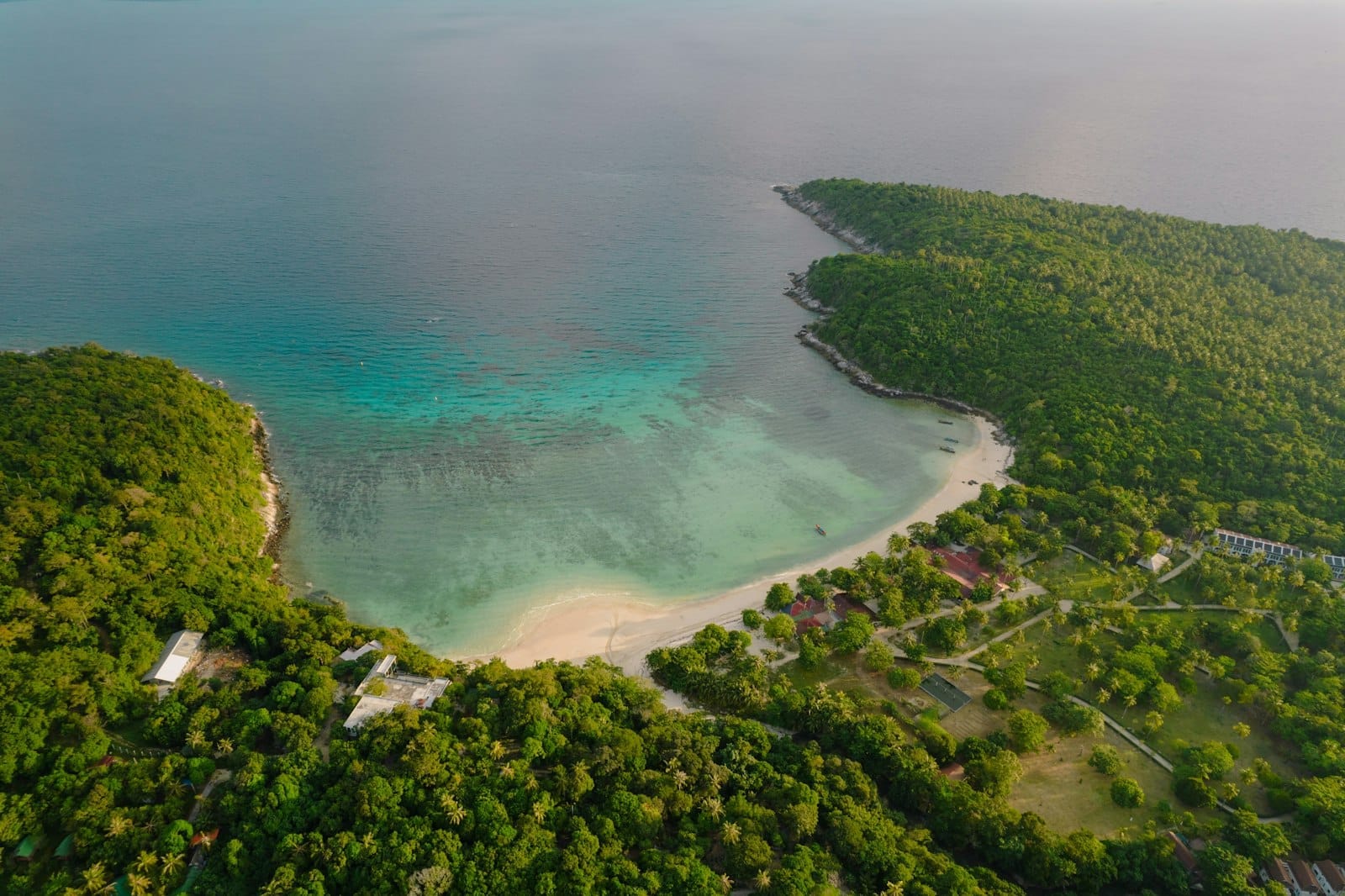
The main bay on Koh Racha Yai, Ao Tawan Tok (also called Ao Bungalow), is the first thing most visitors see when their speedboat cuts its engine. The sand here is genuinely white, fine, and firm underfoot — not the coarser, darker sand you find at some of Phuket's west coast beaches. The water is shallow and startlingly clear in the dry season, running from pale green near the shore through turquoise to deep blue at the reef edges. Visibility can exceed 15 meters on calm days.
The bay is protected enough that even moderate swells rarely produce serious waves, which makes it workable for families with young children. However, the coral formations near the headlands at either end of the main bay are worth the short swim. You don't need to go far from shore to find fish, and the coral here is in noticeably better condition than what you'd see snorkeling directly off Phuket's main beaches.
The island has additional smaller bays accessible by longtail or on foot along trails. These see significantly fewer visitors than the main bay and are worth seeking out if you arrive early or are willing to walk. Bring water — shade on the walking paths is inconsistent and the humidity is high.
Tickets & tours
Hand-picked options from our booking partner. Prices are indicative; availability and final rates are confirmed when you complete your booking.
Muay Thai Boxing Tickets at Patong Boxing Stadium
From 56 €Instant confirmationFree cancellationPhuket Island and Big Buddha Private Tour
From 125 €Instant confirmationFree cancellationGuided elephant nature walk tour with transfer
From 50 €Instant confirmationFree cancellationFull-day tour to the highlights of Phuket City and its surroundings
From 71 €Instant confirmationFree cancellation
How the Island Changes by Time of Day
The pattern of a day trip to Racha is fairly predictable, and understanding it helps you use your time well. The first speedboats from Chalong depart in the early morning, arriving by around 9–9:30 AM. At this point, the main bay is calm, the light is soft and ideal for photography, and the water is at its clearest before boat traffic stirs up any sediment. This is the best window for snorkeling.
By late morning, the bay fills with day-trip boats. Longtails anchor, snorkel groups spread out, and the beach gets crowded with groups from larger tour operators. The noise level rises noticeably — boat engines, vendor calls, the general churn of organized tourism. If you're looking for a quiet, contemplative morning by the sea, this is not it once the tours arrive.
Most day-trip boats depart by 3–4 PM. If you're staying overnight at The Racha resort or in one of the simpler bungalows, the late afternoon and evening are genuinely peaceful. The light turns golden on the water around 5 PM, and the beach empties to a fraction of its midday population. Sunsets from the western-facing sections of the island can be striking, though clouds on the horizon are common during the shoulder and wet seasons.
💡 Local tip
Book the earliest possible speedboat departure if snorkeling is your priority. Clear water and no boat traffic makes the first two hours on the island substantially better than the midday rush.
Diving and Snorkeling: Racha's Real Draw
Racha's reputation in the diving community significantly outstrips its name recognition as a beach destination, and for good reason. Koh Racha Yai offers accessible dive sites suitable for Open Water certification courses and newly qualified divers, with relatively gentle currents and depths ranging from around 5 to 30 meters depending on the site. Hard and soft corals are abundant, and the fish life includes leopard sharks, moray eels, sea turtles, and dense schooling fish. Several Phuket-based dive operators run full-day trips that combine Racha Yai and Racha Noi dives.
Koh Racha Noi is a more serious dive site. Currents here are stronger and less predictable, visibility is excellent, and the underwater topography includes submerged pinnacles and rock formations that attract larger pelagic species. Whale sharks have been spotted seasonally. Racha Noi is genuinely not recommended for inexperienced divers, and the surface conditions can make it uncomfortable even for those simply on a dive boat.
For snorkelers staying on the surface, Koh Racha Yai's main bay and the rocky points flanking it offer the most accessible experience. Visibility is best November through April during Phuket's dry season. For broader context on timing your visit, see the best time to visit Phuket guide, which covers how weather patterns affect the southern islands.
Getting There: Departure Points and Logistics
The two main departure points for Racha Island are Chalong Pier and the Rawai area. Chalong is more commonly used by organized tour operators, while longtail boats from Rawai Beach offer a more informal — and sometimes cheaper — option for groups willing to negotiate directly. Speedboats cover the roughly 12 kilometers in 30 to 40 minutes. Longtail boats take considerably longer, typically 45 minutes to an hour or more depending on sea conditions.
There is no public ferry service with a fixed schedule to Racha Island. Your options are joining an organized day trip, chartering a speedboat privately, or arranging with one of the longtail operators at Rawai Beach. Day trips typically include boat transfer, snorkeling equipment, and lunch. Private charters cost significantly more but give you control over timing.
If you're staying in the south of Phuket, getting to Chalong Pier is straightforward by taxi or Grab. From Patong or the north of the island, factor in 30 to 45 minutes of travel time before your boat departure. Most tours require you to be at the pier by 8–8:30 AM.
⚠️ What to skip
During the wet season (roughly May to October), swells in the Andaman Sea can be significant. Some operators cancel trips on rough days. If you're visiting in this window, build flexibility into your plans and confirm departure conditions the evening before.
Staying Overnight: Is It Worth It?
Koh Racha Yai has accommodation options ranging from basic bungalows to The Racha, an upscale boutique resort that represents the most polished place to stay on the island. Staying overnight fundamentally changes the experience: you get the beach to yourself in the early morning, quieter evenings, and the chance to see the island without the day-trip crowds. The walking paths to smaller bays are more enjoyable when you're not racing the clock.
The tradeoff is that Racha Yai has limited dining and nightlife beyond resort restaurants. It's a genuinely quiet island after 6 PM. For travelers who want that isolation, it's ideal. For those expecting the variety of food, social atmosphere, or evening activity available on Phuket itself, staying overnight may feel limiting after the first evening.
Travelers who enjoy island-hopping day trips might also consider combining a Racha visit with other southern destinations. Phuket island day trips covers how to structure multiple islands into a broader trip from the south of Phuket.
Practical Details for the Day
There is no entry fee to Koh Racha Yai or its beaches. Costs are limited to boat transport, any snorkeling or diving gear rental not included in your tour, food and drinks on the island, and any activities like quad bike rentals that are available from operators on the island. Prices for food and drinks are higher than on the mainland — this is standard for any island with boat-dependent supply chains.
Bring reef-safe sunscreen. Regular sunscreen chemicals are harmful to the coral systems that make Racha worth visiting in the first place, and some operators now specifically request or require it. Bring more water than you think you'll need, particularly if you plan to walk to less-visited bays. There is no ATM on the island, so carry cash in Thai baht before you depart from Phuket.
Photography works best in the morning hours before the boats arrive and the bay fills with activity. The water color photographs well against white sand at wide angle, and the coral-dotted shallows near the headlands reward underwater camera users. A cheap waterproof phone case handles snorkeling depths just fine for casual shots.
Racha Island is part of a broader cluster of rewarding southern Phuket destinations. The Rawai and Chalong area is worth exploring before or after your island trip — it has a less tourist-heavy character than Patong and a genuine local seafood scene.
Who Should Reconsider This Trip
Racha Island is not the right destination for every traveler. If you're prone to motion sickness, the open-water speedboat crossing can be rough during choppier months — particularly May through October. If you're looking for dramatic scenery, towering limestone karsts, or the dramatic scale of destinations like Phang Nga Bay, Racha won't deliver that. Its appeal is focused: excellent water quality, accessible snorkeling, and a quieter environment than Phuket's main beaches.
Travelers primarily interested in landscape photography or dramatic geological formations may find more to work with on a Phang Nga Bay tour or a trip to the Phi Phi Islands. Those focused purely on water clarity and reef quality, on the other hand, will find Racha consistently delivers.
Insider Tips
- The longtail boat operators at Rawai Beach sometimes offer cheaper private transfers to Racha Yai than organized tours, particularly for groups of four or more. Negotiate directly at the beach rather than through a hotel desk.
- Carry cash in Thai baht before boarding — there is no ATM on Koh Racha Yai, and some smaller vendors and longtail operators do not accept cards.
- The walking paths connecting the main bay to smaller, quieter bays on the island are genuinely worthwhile but poorly marked. Ask at your resort or the pier for directions before setting out, and bring more water than seems necessary.
- Reef-safe sunscreen is both ecologically important and increasingly expected by operators here. Bring your own from Phuket rather than hoping to find it on the island.
- If you're booking a two-island trip combining Racha Yai and Racha Noi, confirm the diving or snorkeling experience level required for Racha Noi. Surface conditions there are significantly more demanding and the site is unsuitable for non-divers or very young children.
Who Is Racha Island (Koh Racha) For?
- Snorkelers wanting clear water and accessible coral within easy reach of Phuket
- Beginner divers doing Open Water courses or first post-certification dives
- Couples looking for a quieter, more scenic day away from Phuket's crowded beaches
- Families with older children comfortable in open water and moderate sun exposure
- Experienced divers targeting Koh Racha Noi's more challenging pelagic dive sites
Nearby Attractions
Other things to see while in Rawai & Chalong:
- Black Rock Viewpoint
Perched at roughly 290 meters above southern Phuket, Black Rock Viewpoint — known in Thai as Pa Hin Dam, or 'Black Rock Cliff' — delivers a sweeping panorama over Nai Harn Beach, Nui Beach, and the open Andaman Sea. It's free, it's rarely crowded, and getting there requires a genuine effort through jungle trails or steep dirt roads. That effort is precisely what keeps it worth making.
- Chalong Bay
Chalong Bay (Ao Chalong) is Phuket's largest and most active boat anchorage, serving as the main departure point for island day trips, dive boats, and yacht charters. It's not a swimming beach, but understanding what it is makes it genuinely useful for any southern Phuket itinerary.
- Coral Island (Koh Hae)
Koh Hae, known to most visitors as Coral Island, is a small island roughly 3 km southeast of Phuket, reachable by speedboat in under 20 minutes from Chalong Pier or Rawai Beach. It offers two sandy beaches, accessible snorkeling over coral reefs, and a range of watersports — without the full-day commitment of Phi Phi or Racha Island.
- Nai Harn Beach
Tucked into Phuket's southern tip, Nai Harn Beach offers a rare combination of clear water, genuine calm, and striking natural scenery. At roughly 700 meters long, it stays manageable even in peak season, drawing a mix of long-term expats, families, and travelers who've learned that louder doesn't mean better.