Kata Yai Beach, Phuket: What to Expect Before You Go
Kata Yai Beach (Hat Kata Yai) is the larger northern half of Kata Beach on Phuket's southwest coast. With raked white sand, reliable surf in wet season and calm water in dry season, it strikes a balance between activity and relaxation that Patong simply does not offer.
Quick Facts
- Location
- Kata area, Muang district, southwest Phuket (approx. 17-20 km from Phuket Town)
- Getting There
- Blue songthaew from Phuket Town (~50 THB); tuk-tuk from ~300 THB; 40-50 min from Phuket Airport by road
- Time Needed
- 2-4 hours for a beach session; half-day if combining with Kata Noi or Karon
- Cost
- Free public access; sunbed rental and watersports at extra cost
- Best for
- Families, beginner surfers (wet season), couples wanting Patong's amenities without the noise
What Is Kata Yai Beach?
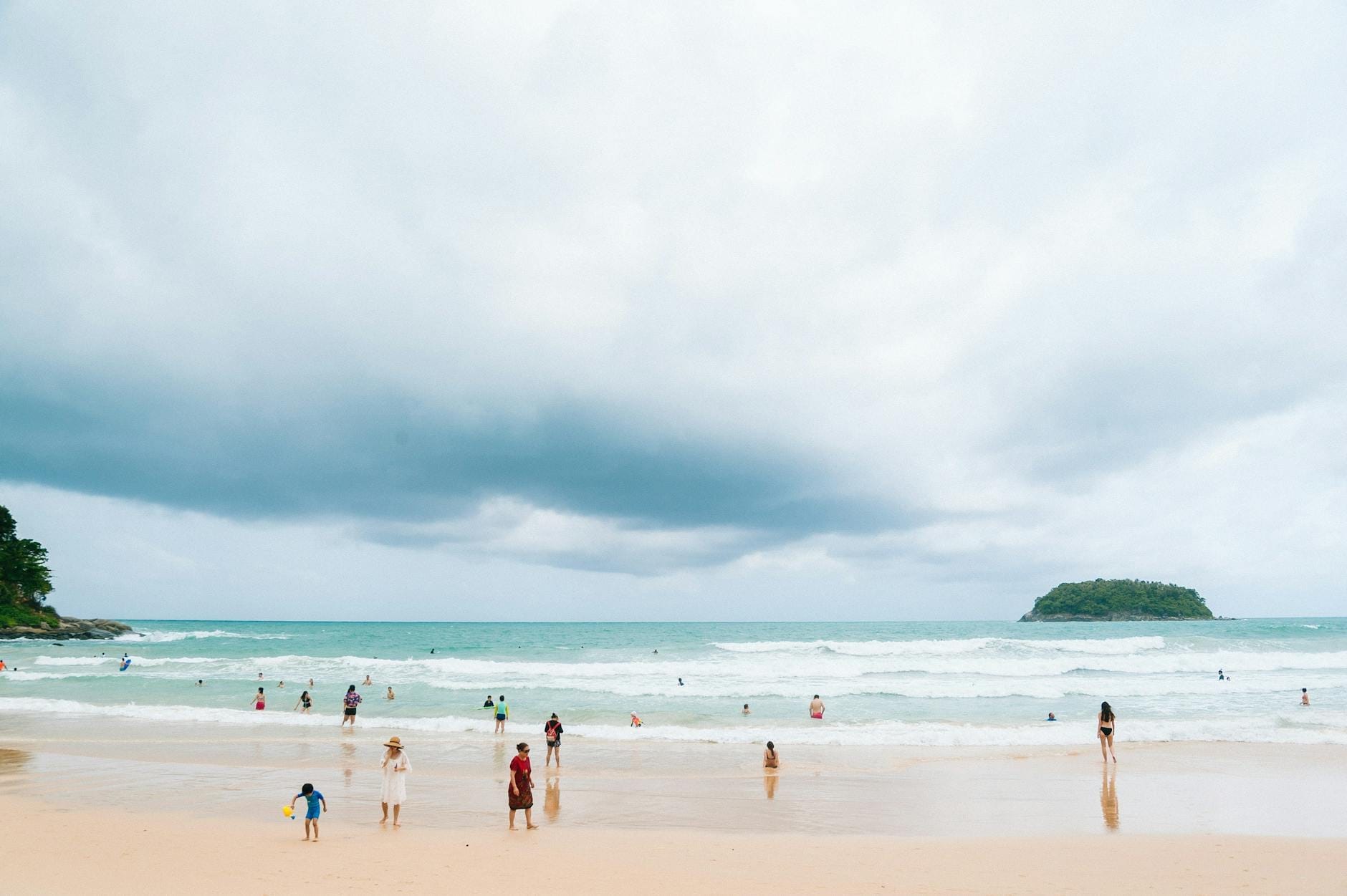
Hat Kata Yai stretches along the northern section of the broader Hat Kata bay on Phuket's Andaman coast. The full bay runs roughly 1.5 kilometers from end to end, with Kata Yai occupying the busier, wider northern portion and the quieter Kata Noi sitting just around the headland to the south. The beach faces due west, which gives it spectacular late-afternoon light and keeps it sheltered from the strongest southerly swells.
The sand here is noticeably fine and pale, raked by beach staff each morning so that early arrivals find clean, unmarked stretches to settle on. Behind the beach, a row of restaurants, surf schools, and shops runs the length of Kata Road, close enough to be useful, far enough back not to intrude on the water view. It is a well-serviced beach without feeling overdeveloped.
ℹ️ Good to know
Kata Yai Beach is a public beach with no admission fee. The beach is accessible 24 hours, though lifeguards are only present during daylight hours, typically from around 8:00 to 18:00.
The Beach by Time of Day
Early morning, before 8:00, is when Kata Yai shows its best side. The sand is freshly raked, the light is soft and flat rather than harsh, and the only other people you will find are joggers, a few yoga practitioners at the water's edge, and the occasional local fisherman checking traps just offshore. The water at this hour is often glassy calm, particularly from November through April, and the shallow gradient makes it perfectly safe to wade out chest-deep without any sense of danger.
By mid-morning, from around 10:00 onward, sunbeds fill from the centre outward. Families with children claim the flatter, calmer sections closer to the north end. Surf schools set up near the southern rocks, where the break is more consistent. Vendors begin circulating with fresh coconuts, fruit platters, and the ubiquitous ice cream carts. The atmosphere is cheerful and sociable rather than rowdy.
Afternoon light from 16:00 onward transforms the bay into something worth photographing seriously. The sun drops toward the horizon directly in front of the beach, painting the water in layers of copper and gold. This is the peak time for photos but also for crowds: many day-trippers from Patong and Phuket Town arrive specifically for sunset. If you want a sunbed near the water at this hour, you need to have claimed it earlier in the day or be prepared to sit on the sand itself, which is not a hardship.
💡 Local tip
Arrive by 9:00 if you want a sunbed in the central section during peak season (December to February). By 11:00 on busy days, the best spots are taken.
Tickets & tours
Hand-picked options from our booking partner. Prices are indicative; availability and final rates are confirmed when you complete your booking.
Private longtail boat island hopping tour from Koh Yao Yai-Noi
From 220 €Instant confirmationFree cancellationPrivate tour to James Bond Island and Ko Panyi from Koh Yao Yai-Noi
From 304 €Instant confirmationFree cancellationMuay Thai Boxing Tickets at Patong Boxing Stadium
From 56 €Instant confirmationFree cancellationPhuket Island and Big Buddha Private Tour
From 125 €Instant confirmationFree cancellation
Swimming and Surf Conditions: What to Know Before You Wade In
Kata Yai Beach has a dual personality that depends entirely on the season. From November through April, the Andaman Sea along this coastline is at its calmest. The water is clear, warm, and gentle, with minimal swell. This is when swimming is suitable for children and non-swimmers, and the beach earns its family-friendly reputation.
From May through October, the southwest monsoon arrives and the sea changes character. Swells increase, the water becomes choppier, and rip currents can develop, particularly at the southern end of the bay near the rocks. Red flags on the beach mean the water is closed to swimming, and these should be treated seriously. However, this is also when Kata Yai becomes one of Phuket's more popular surf spots. The waves are rarely world-class, but they are consistent enough for beginners, and several surf schools on Kata Road offer board rental and lessons at reasonable rates.
⚠️ What to skip
Never swim past red flags at Kata Yai. Rip currents near the southern end of the bay form quickly during monsoon season and have caught out experienced swimmers. If you are caught in a rip, swim parallel to shore, not against the current.
For a quieter and more sheltered swimming option year-round, the Kata Noi Beach just to the south is worth the short walk over the headland. It is smaller but often calmer and less crowded.
The Surrounding Area: Kata's Character Beyond the Sand
Kata as a neighborhood has a noticeably different tempo from its neighbors to the north. Patong, about 12 kilometers up the coast, is louder, more commercial, and has the infrastructure to match. Karon, directly adjacent to the north, is quieter still and slightly more local-feeling in its back streets. Kata sits between them in both geography and character: enough restaurants, shops, and nightlife to keep most travelers satisfied for several days, but none of the sensory overload that some visitors find exhausting in Patong.
The streets behind Kata Yai Beach have a good concentration of independent restaurants serving everything from Thai curries and fresh seafood to wood-fired pizza. For broader dining context across Phuket, see the Phuket dining guide. In the evenings, Kata Road gets lively without getting unruly, and it is one of the more comfortable places on the island for families or couples who want some atmosphere without committing to a full night out.
Getting to Kata Yai Beach
The most economical way to reach Kata Yai from Phuket Town is the blue songthaew (shared pickup truck taxi) that runs along the western coastal road. The fare is approximately 50 THB per person, and songthaews depart from the market area near Ranong Road in Phuket Town. The journey takes roughly 40 minutes depending on traffic and stops. This is the option that requires the most patience but gives you a genuine sense of how local transport works on the island.
From Phuket International Airport, the most practical option for most travelers is a pre-arranged private transfer or a metered taxi, which takes 40 to 50 minutes depending on traffic. Grab, the ride-hailing app widely used in Thailand, functions in Phuket and can provide a reliable fare estimate before you confirm the ride. Tuk-tuks from central Kata area to the beach itself are available but negotiate the price before you get in.
If you are staying in the Kata or Karon area, Kata Yai Beach is within walking distance of most accommodation. The beach at Karon Beach is about 20 minutes on foot to the north, so it is entirely feasible to walk between the two in a single day.
💡 Local tip
Parking near Kata Yai Beach is limited and gets congested during peak season. If you are renting a scooter, arrive before 9:00 or after 17:00 to find roadside space without difficulty.
Photography at Kata Yai Beach
The beach faces west, which makes it one of Phuket's more reliable sunset locations. The best compositions look south toward the rocky headland, where Koh Pu island sits just offshore and provides a natural anchor point in wide-angle shots. During the dry season, the water clarity allows for pleasing underwater photographs in the shallows, even without dedicated dive equipment.
Drone photography is subject to Thai Civil Aviation Authority regulations. Flying drones at Thai beaches without proper authorization is prohibited, and enforcement has increased in recent years. Check current CAA requirements before bringing drone equipment.
Who Should Consider Skipping Kata Yai Beach
If you are visiting Phuket specifically for diving or snorkeling, Kata Yai is not the place to base yourself. The bay has no significant reef structure, and visibility is moderate at best. For serious underwater activity, day trips to nearby islands are a better use of your time.
Travelers looking for a beach with almost no commercial development and a sense of genuine seclusion will find Kata Yai too well-serviced. In that case, Freedom Beach or Ya Nui Beach better match that expectation. Similarly, if you are primarily interested in Phuket's nightlife scene, the beach itself will feel peripheral to what Patong offers just up the road.
Kata Yai is also not an ideal choice during monsoon season for non-surfers. The waves can be impressive to watch from the shore, but if swimming is your main goal, you will find yourself sidelined by red flags for days at a time. In that case, the best time to visit Phuket guide is worth reading before you book.
Insider Tips
- The rocks at the southern end of Kata Yai Beach collect natural pools at low tide that are excellent for children to explore. Check tide times on a local app before your visit to plan around low tide.
- Several restaurants on Kata Road have upper-floor terraces with direct sea views. These fill quickly at sunset, so aim to arrive for a table by 17:30 if you want to eat with the view rather than after it.
- The northern end of the beach, near the road junction, is less manicured and slightly rockier but consistently less crowded even on busy days. It is a better option if you want space without walking to a different beach entirely.
- Blue songthaews back to Phuket Town stop running in the early evening. If you plan to stay for sunset and dinner, arrange a return by Grab or negotiate a tuk-tuk fare in advance rather than assuming you can flag one down easily after dark.
- Koh Pu, the small island visible just offshore, can be reached by kayak from the beach. Several operators rent kayaks by the hour. The paddle takes about 20 minutes each way in calm conditions and the island has a small sheltered cove on its far side.
Who Is Kata Yai Beach For?
- Families with young children looking for safe, calm swimming between November and April
- Beginner and intermediate surfers visiting during the May to October wet season
- Couples who want a lively neighborhood atmosphere without Patong's intensity
- Photographers targeting west-coast sunset compositions with an island in the frame
- Travelers combining multiple beaches in a single day given the easy walks to Kata Noi and Karon
Nearby Attractions
Other things to see while in Kata & Karon:
- Big Buddha Phuket
Standing 45 meters tall on Nakkerd Hill above Chalong, the Big Buddha Phuket is the island's most recognizable landmark. Entry is free, the panoramic views stretch from Kata to Chalong Bay, and the site carries genuine religious significance for Thai Buddhists. Here is everything you need to visit well.
- Karon Beach
Stretching around 3-4 kilometres along Phuket's southwest coast, Karon Beach offers wide white sand, clear Andaman water, and noticeably fewer crowds than nearby Patong. It's a strong choice for beach walks, swimming in high season, and a quieter pace overall — but red flags and rip tides demand respect in the wet months.
- Karon Temple Market
Held twice weekly on the grounds of Wat Karon, the Karon Temple Market is one of the most approachable local markets in Phuket's Kata-Karon area. Free to enter, cash-friendly, and far less crowded than the big tourist night markets, it rewards visitors who show up hungry and unhurried.
- Karon Viewpoint
Karon Viewpoint, also called Three Bays Viewpoint, sits on a hilltop south of Kata Beach and delivers one of the most complete coastal panoramas in Phuket. Entry is free, the road is straightforward by scooter or car, and the payoff is a sweeping view of Kata Noi, Kata, and Karon bays curving into the Andaman Sea below.