Karon Temple Market: The Neighbourhood Night Market Worth Your Evening
Held twice weekly on the grounds of Wat Karon, the Karon Temple Market is one of the most approachable local markets in Phuket's Kata-Karon area. Free to enter, cash-friendly, and far less crowded than the big tourist night markets, it rewards visitors who show up hungry and unhurried.
Quick Facts
- Location
- Wat Karon (Wat Suwan Khiri Khet), near Patak Road, Tambon Karon, Phuket
- Getting There
- Walk from Karon Beach hotels, taxi, Grab, or resort shuttle; near Karon Circle on the central Karon road
- Time Needed
- 1 to 1.5 hours
- Cost
- Free entry; budget THB 100–300 for food and small purchases
- Best for
- Street food lovers, families, travellers seeking a low-key local atmosphere
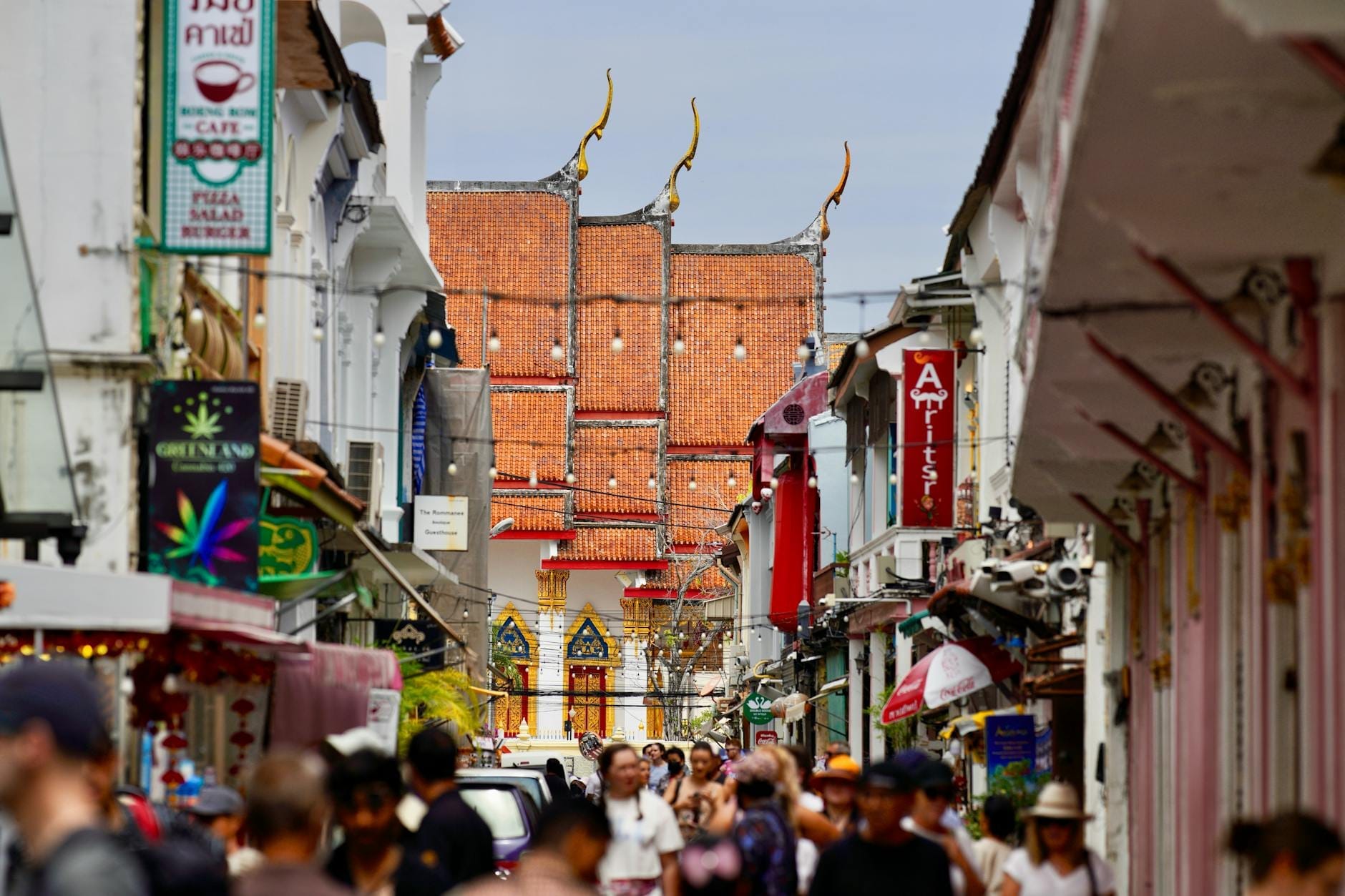
What Karon Temple Market Actually Is
Karon Temple Market is a twice-weekly open-air evening market set within the 12,000 square-metre grounds of Wat Karon, also known as Wat Suwan Khiri Khet, a working Buddhist temple located just inland from Karon Beach on Patak Road. Unlike the large commercial night markets that have grown up around Phuket's tourist zones, this one is rooted in a genuinely local setting. The temple remains active, and the market coexists with it rather than replacing it.
Stalls sell grilled meats on skewers, pad thai cooked to order, fresh fruit, sticky rice desserts wrapped in banana leaf, and a rotating cast of Thai snacks you won't find on laminated tourist menus. Alongside the food, vendors offer clothing, household goods, handmade accessories, and temple-related items. The mix is practical rather than curated, which is exactly what makes it feel real.
ℹ️ Good to know
Opening days are reported as Tuesdays and Fridays, typically from around 4–5 PM until 9–11 PM. No sources list Wednesday and Saturday. Hours and days can shift seasonally or around Thai public holidays, so confirm locally or with your hotel before making a special trip.
The Temple Setting: More Than a Backdrop
Wat Karon is not a minor shrine. The temple compound is substantial, and on non-market evenings it functions as a quiet place of worship for the local Thai community. When the market runs, its perimeter fills with vendor stalls and fairy lights, but the temple structures remain present and visible throughout. The effect is unusual: you eat grilled corn a few metres from a bot (ordination hall) while monks may be conducting evening prayers inside.
This dual character is worth understanding before you visit. The market is held on temple grounds as a community fundraising and social event, a common tradition at Thai wats. Dress accordingly. Cover your shoulders and knees, not because anyone will turn you away if you don't, but because you are a guest in a religious compound. The temple's atmosphere is part of what separates this market from the commercial alternatives nearby.
Travellers who have already visited Wat Chalong will recognise the broad layout and the decorative spires visible from the market grounds. Karon's temple is smaller but the sense of community use is arguably stronger — you're watching a neighbourhood gather, not observing a heritage site.
Tickets & tours
Hand-picked options from our booking partner. Prices are indicative; availability and final rates are confirmed when you complete your booking.
Muay Thai Boxing Tickets at Patong Boxing Stadium
From 56 €Instant confirmationFree cancellationPhuket Island and Big Buddha Private Tour
From 125 €Instant confirmationFree cancellationGuided elephant nature walk tour with transfer
From 50 €Instant confirmationFree cancellationFull-day tour to the highlights of Phuket City and its surroundings
From 71 €Instant confirmationFree cancellation
Arriving and Orienting Yourself
The market is within easy walking distance for anyone staying along the central Karon Beach road or near Karon Circle. From the beachfront, follow the main road inland past the circle; the temple compound sits a short distance further, clearly visible once you're close. The smell of grilling meat and the glow of string lights typically signal your arrival before any signage does.
If you're coming from Kata or further south, a Grab ride takes under ten minutes and costs well under THB 100 in most cases. Taxis and tuk-tuks are available from Kata Beach, though negotiate the fare before getting in. Resort shuttles occasionally include the market as an evening option, worth asking your hotel concierge about.
💡 Local tip
Bring cash in small denominations. THB 20 and 50 notes are ideal. Most stalls do not accept cards, and while ATMs are available in the surrounding Karon area, there may not be one immediately adjacent to the temple entrance.
The Karon area is compact and well-suited to an evening that combines the market with a beach walk beforehand. Karon Beach is at its most pleasant in the hour before sunset, when the midday crowds have thinned and the light drops low over the Andaman Sea — a natural preamble to the market opening.
What to Eat and Buy
The food stalls are the main draw. Expect moo ping (grilled pork skewers with a slightly sweet marinade), kanom krok (coconut rice pancakes cooked in a cast-iron pan), som tam papaya salad, and various noodle dishes. Fresh coconuts are usually available for drinking. Dessert vendors often carry tong yip and foi thong, egg-based Thai sweets made with gold thread techniques, alongside mango sticky rice if you're lucky with timing.
Prices are genuinely local. A plate of pad thai typically runs THB 50–80. Skewers are often THB 10–20 each. This is significantly cheaper than equivalent food at tourist-facing night markets in Patong or at the larger commercial markets on the island. The gap is noticeable if you've been eating along Bangla Road.
On the non-food side, stalls sell practical clothing, flip-flops, phone accessories, and modest temple offerings. The souvenir selection is limited and mostly incidental. If you're specifically seeking handicrafts or curated goods, the market will disappoint. What it offers instead is honest commerce: things Thai people actually buy.
Atmosphere by Time of Evening
Arrive between 5 and 6 PM and the market is still setting up. Some stalls will be open, others won't be ready. The light is still daylight-warm and the temple compound is quiet. This is the best time to walk the full perimeter, get a feel for the layout, and order food before queues build.
By 7 PM the market is in full motion. Local families dominate: grandparents on plastic chairs, children running between stalls, teenagers photographing their food. The energy is social and unhurried. There's no amplified stage music and no touts pulling you toward stalls. Conversations happen in Thai. The ambient sounds are fryers, cleavers on chopping boards, and the chant of a vendor calling prices.
After 9 PM, stalls begin packing down. The crowd thins quickly. If you want the widest selection of food and the most active atmosphere, 6:30 to 8:30 PM is the sweet spot.
⚠️ What to skip
The market operates outdoors with no shelter. During Phuket's rainy season (May to October), sudden heavy downpours can shorten the evening dramatically. Check the weather before heading out and carry a light rain jacket or pocket umbrella if skies look uncertain.
Who This Market Suits — and Who Should Look Elsewhere
Karon Temple Market works best for travellers who want to spend an evening doing something other than sitting in a restaurant. Families find it easy: children can wander safely, food arrives fast and cheaply, and there's enough visual interest to hold attention without structured entertainment.
Solo travellers and couples who find large tourist markets overwhelming — Bangla Road being the extreme end of that spectrum — will appreciate the lower noise level and smaller scale here.
Travellers specifically looking for a wide range of souvenirs, branded goods, or artisan products will find the selection thin. The Phuket Weekend Market in Phuket Town and the larger markets near Patong offer much more in those categories. This market is about food and neighbourhood atmosphere, not retail variety.
If your priority is shopping variety, the Phuket Weekend Market is a more logical destination. But if you want to spend THB 200 on a genuinely good dinner and watch a Thai neighbourhood go about its evening, Karon Temple Market earns its place in a Karon itinerary.
Photography and Practical Notes
The market is photogenic in a documentary rather than a postcard sense. The best shots come from the food stall action: charcoal grills kicking up smoke under string lights, vendors in motion, the graphic geometry of market stalls receding down a temple path. A phone camera handles the light well enough after 6 PM when the stalls are fully lit. The temple structures in the background give context to photographs that distinguishes them from generic market shots.
Ask before photographing vendors or monks. A smile and a gesture toward your camera is usually enough to get a nod of agreement. Avoid photographing the interior of temple buildings without permission, and turn off flash near any active religious spaces.
Wear closed-toe shoes or sandals with back straps rather than flip-flops. The temple grounds are uneven in places, and crowds mean you'll want more foot security than a loose thong sandal provides. If you're combining the market visit with an earlier stop at Karon Viewpoint, comfortable walking shoes serve both stops well.
Insider Tips
- Go on a Friday rather than Tuesday if you have the choice. Fridays tend to draw slightly larger local crowds, which means more stall variety and fresher turnaround on cooked food.
- The coconut dessert stalls near the back of the market typically sell out of kanom krok by 8 PM. Go early if that's your target.
- Temple markets in Thailand often raise funds for the wat's upkeep. Buying from stalls is a form of indirect community support, something worth keeping in mind when bargaining. Light negotiation is fine; aggressive haggling is not.
- If you're staying in Kata, a combined evening works well: sunset at Kata Noi, a short ride to the market for dinner, then back along the coast road. The whole sequence takes under four hours.
- The adjacent streets around Wat Karon have a few local Thai restaurants that are open on non-market nights, worth bookmarking for when the market isn't running.
Who Is Karon Temple Market For?
- Families with children who need fast, affordable, low-fuss meals
- Travellers who want a break from tourist-facing food and want to eat alongside local Thai residents
- Photographers interested in candid documentary-style market scenes
- Budget-conscious visitors: a full dinner here costs a fraction of beachfront restaurant prices
- Anyone staying in Karon or Kata looking for an easy, low-effort evening out
Nearby Attractions
Other things to see while in Kata & Karon:
- Big Buddha Phuket
Standing 45 meters tall on Nakkerd Hill above Chalong, the Big Buddha Phuket is the island's most recognizable landmark. Entry is free, the panoramic views stretch from Kata to Chalong Bay, and the site carries genuine religious significance for Thai Buddhists. Here is everything you need to visit well.
- Karon Beach
Stretching around 3-4 kilometres along Phuket's southwest coast, Karon Beach offers wide white sand, clear Andaman water, and noticeably fewer crowds than nearby Patong. It's a strong choice for beach walks, swimming in high season, and a quieter pace overall — but red flags and rip tides demand respect in the wet months.
- Karon Viewpoint
Karon Viewpoint, also called Three Bays Viewpoint, sits on a hilltop south of Kata Beach and delivers one of the most complete coastal panoramas in Phuket. Entry is free, the road is straightforward by scooter or car, and the payoff is a sweeping view of Kata Noi, Kata, and Karon bays curving into the Andaman Sea below.
- Kata Noi Beach
Hat Kata Noi sits tucked below a rocky headland on Phuket's southwest coast, separated from the larger Kata Beach by a ridge that most visitors never bother crossing. At roughly 700 to 850 meters long, it is compact, clean, and noticeably quieter than anything in Patong or Karon. The trade-off is limited facilities and a steep approach, but for travelers who prioritize sand quality over convenience, that is exactly the point.