Phuket Weekend Market (Naka Market): The Island's Best Night Market
The Phuket Weekend Market, locally known as Naka Market or Talad Tai Rot, is Phuket's largest and most local Saturday–Sunday night market. Running from 4pm to 10pm along Wirat Hong Yok Road, it draws hundreds of stalls selling street food, clothing, handicrafts, and secondhand goods. Free to enter and far less touristy than the Old Town's walking streets, it offers a genuine look at how Phuket residents spend their weekends.
Quick Facts
- Location
- Wirat Hong Yok Road (Chao Fa West Road), southwest of Central Festival, Phuket Town
- Getting There
- Grab or taxi from Phuket Old Town (~10 min); tell driver 'Talad Naka' or 'Phuket Weekend Market'
- Time Needed
- 1.5 to 3 hours
- Cost
- Free entry; budget THB 200–500 for food and shopping
- Best for
- Local food lovers, bargain shoppers, families, and anyone wanting an authentic Phuket evening
What Is the Phuket Weekend Market?
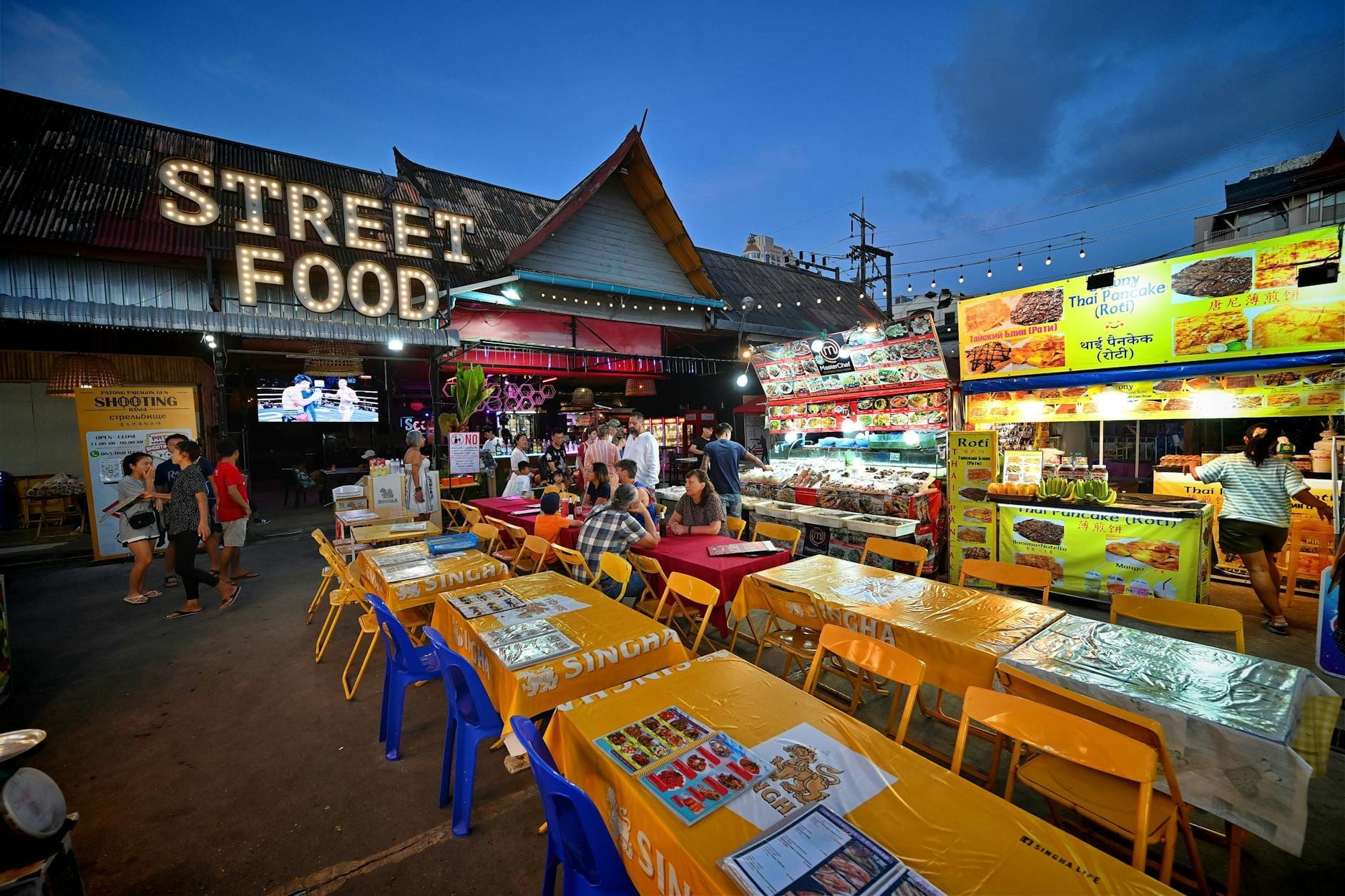
The Phuket Weekend Market, officially known as Talad Tai Rot and commonly called Naka Market, operates every Saturday and Sunday evening along Wirat Hong Yok Road, near Central Festival on the outskirts of Phuket Town. It started more than a decade ago as a simple car boot sale where locals offloaded secondhand goods from the backs of their vehicles. Over time it grew into the island's largest weekend night market, now stretching across multiple blocks with hundreds of stalls selling everything from grilled seafood to vintage clothing to phone accessories.
Unlike the more curated Sunday Walking Street in Phuket Old Town, this market is fundamentally a local institution. The crowd is predominantly Thai, the prices reflect that, and the atmosphere is more chaotic food fair than tourist experience. That is precisely what makes it worth visiting.
ℹ️ Good to know
Opening hours: Saturdays and Sundays, 4pm to 10pm (some stalls wrap up closer to 10pm). The Naka Food Center on the same grounds operates daily from 7am to 9pm. Entry is free.
Arriving and First Impressions
The market comes to life gradually. Arrive at 4pm and you will find vendors still arranging their tables, the smoke from charcoal grills just starting to rise, and the heat of the day still hanging in the air. By 5:30pm the pace accelerates noticeably: cooking smells thicken, the sound of sizzling pork skewers and Thai pop music layered over one another, and the wide lanes begin to fill. Peak crowd arrives between 6pm and 8:30pm, which is when the energy is highest but navigation becomes a slow shuffle.
The parking situation at this hour reflects the market's local character: motorbikes wedged into every available gap, families arriving on scooters with children balanced between adults. If you are coming by car, parking is limited and the surrounding streets get congested quickly. Grab or a taxi is the practical choice; tell the driver 'Talad Naka' and they will know exactly where to drop you.
💡 Local tip
Arrive between 5pm and 5:30pm for the best balance: stalls are fully set up, the temperature has dropped slightly, and you can move freely before the peak crowd arrives.
Tickets & tours
Hand-picked options from our booking partner. Prices are indicative; availability and final rates are confirmed when you complete your booking.
Phuket Island and Big Buddha Private Tour
From 125 €Instant confirmationFree cancellationFull-day tour to the highlights of Phuket City and its surroundings
From 71 €Instant confirmationFree cancellationFull-day luxury catamaran tour to Phi Phi Islands & Maithon from Phuket
From 146 €Instant confirmationFree cancellationPhuket to Khao Lak Private Airport Transfer
From 65 €Instant confirmationFree cancellation
The Food: What to Eat and Where to Look
Food is the strongest reason to come here. The cooking at Naka Market is straightforward Thai street food at prices that match what locals actually pay: grilled corn rubbed with butter and chili, pad thai cooked to order in smoking woks, skewers of pork neck, mango sticky rice wrapped in banana leaf, fresh-squeezed fruit juices, and coconut ice cream served in the shell. The seafood section is worth finding: whole fish, squid, and prawns laid over charcoal, priced by weight or per piece.
The Naka Food Center, a covered eating area within the complex, has permanent stalls operating daily and offers a slightly calmer space to sit down with plastic tables and stools. On weekend evenings it fills quickly; arriving before 6pm secures a seat without difficulty. The food court format here means you can order from multiple vendors and eat at one table, which works well for groups.
Expect to pay THB 40–80 for most cooked dishes, THB 20–40 for skewers, and THB 30–60 for drinks. Cash is essential; card payment is not available at most stalls. Small bills (THB 20, 50, and 100 notes) make transactions faster and smoother.
⚠️ What to skip
Carry cash in small denominations. Almost no vendors at Naka Market accept card payments or QR code banking apps unfamiliar to tourists. ATMs at Central Festival mall (a short drive away) are a reliable option.
Shopping: What the Market Actually Sells
The non-food stalls cover a wide and sometimes unexpected range. Clothing dominates a large section: tank tops, linen shirts, printed tees, and dresses aimed at Thai customers rather than souvenir seekers, which means sizing and styles reflect local taste. Prices are low, typically THB 100–300 per piece, with room to negotiate if you are buying multiple items.
Beyond clothing you will find phone cases, low-cost electronics accessories, plants and seedlings, pet supplies, children's toys, costume jewelry, and stalls selling tools and household goods that make clear this market serves a community rather than a tourist demographic. The secondhand goods section, a nod to the market's car boot origins, still appears on one edge of the grounds: used books, old electronics, vintage watches, and miscellaneous items spread across tables.
Handmade and craft goods exist here, but they are not the focus. Travelers specifically looking for quality Thai handicrafts or Sino-Portuguese souvenirs will find better options in Phuket Old Town. What Naka does better than anywhere else on the island is give you access to the kind of shopping Phuket residents actually do on their days off.
If you plan to combine a Naka Market visit with Old Town exploration, the two areas are roughly 10 minutes apart by Grab. The streets of Phuket Old Town offer a different atmosphere entirely: heritage architecture, art galleries, and curated craft shops that complement the raw market energy of Naka well.
Atmosphere by Time of Night
The market's character shifts distinctly across the evening. Early arrivals (4pm to 5:30pm) get a quieter, more deliberate shopping experience with vendors willing to chat. The 6pm to 8:30pm window is the social peak: children running between stalls, groups of friends sharing food on low plastic stools, motorbikes threading slowly through the crowd, the smell of grilled meat and sweetened condensed milk mixing in the warm air. After 9pm the food vendors begin running out of their better items, and the crowd thins as families with young children head home.
Lighting is a mix of bare bulbs strung between canopies and the glow of phone screens. The effect is functional rather than photogenic. This is not a market designed with Instagram in mind, and that is refreshing. Bring a small flashlight or use your phone torch if you want to inspect items in darker corners of the secondhand section.
Practical Notes: Getting There, Weather, and Accessibility
The market sits along Chao Fa West Road. GPS coordinates 7.881345, 98.367740 will get you there accurately. From Central Festival mall, head toward Chalong and turn left at the first traffic light. The market is immediately visible. By Grab, it is typically a 10-minute ride from Phuket Old Town and a 20-minute ride from Patong.
Phuket's rainy season runs from May through October. On wet evenings, many of the outdoor stalls continue operating under canopies, but the unpaved sections of the market become muddy and difficult to navigate. The covered Food Center remains functional regardless of rain. If visiting during the wet season, check the best time to visit Phuket to understand how weather patterns might affect your evening.
Accessibility is a genuine limitation here. The layout is sprawling and informal, with uneven ground, narrow lanes between stalls, and no dedicated pathways. Wheelchairs and strollers face significant challenges, particularly during peak hours when lanes are densely packed. Closed-toe shoes or sturdy sandals are recommended; flip-flops are fine on dry nights but impractical if the ground is wet.
Getting around Phuket efficiently while based anywhere other than Phuket Town requires planning. The getting around Phuket guide covers songthaew routes, Grab availability, and motorbike rental options relevant to an evening market visit.
Who Will Love This Market, and Who Should Skip It
Naka Market suits travelers who want to observe Phuket outside the resort bubble. If your interest is eating what locals eat, spending an evening in a crowd that is not curated for tourism, or simply picking up inexpensive clothing and household items, this market delivers. Families with older children tend to enjoy it; the energy is entertaining and the food is approachable.
Travelers who prioritize atmosphere, aesthetics, or artisan quality may find the market underwhelming. The Jui Tui Shrine area and the broader Phuket Old Town offer more visually distinctive evening experiences for those priorities. Similarly, visitors with mobility issues will find the layout genuinely difficult during busy hours.
If you have been touring the island's beaches and viewpoints during the day, the Phuket Weekend Market makes for a useful change of pace in the evening: inexpensive, sociable, and unhurried in the way that only a market serving its own community can be.
Insider Tips
- Bring a reusable bag. Plastic bags are provided at most stalls but they are small and flimsy; a tote bag makes carrying food and purchases significantly easier.
- The grilled seafood section tends to be toward the back of the market, away from the main road entrance. Walk past the clothing stalls before concluding the food options are limited.
- If you want the full spread of food vendors, come hungry before 7pm. Popular stalls like fresh coconut ice cream and mango sticky rice often sell out before 9pm.
- The secondhand goods section is typically along the outer edge of the market. Arrive early (4pm to 5pm) if you want unhurried time to dig through items before the crowd makes it impractical.
- Negotiate politely on clothing and non-food items, especially if buying two or more pieces. Vendors selling to locals expect it; asking 'lot noi dai mai?' (can you reduce a little?) is both appropriate and often effective.
Who Is Phuket Weekend Market (Naka Market) For?
- Budget travelers who want to eat well without paying tourist-area prices
- Food-focused visitors looking for authentic Thai street food variety in one place
- Families with children aged 5 and older looking for a low-cost evening activity
- Travelers who want to observe local Phuket life rather than a staged cultural experience
- Bargain shoppers interested in clothing, accessories, and secondhand finds
Nearby Attractions
Other things to see while in Phuket Old Town:
- Jui Tui Shrine
Jui Tui Shrine is one of the oldest and most revered Chinese Taoist shrine in Phuket Old Town, drawing worshippers and curious visitors alike throughout the year. Free to enter and open daily, it reaches its peak intensity during the annual Vegetarian Festival, when it becomes the epicenter of one of Southeast Asia's most dramatic religious observances.
- Phuket Old Town Walking Streets
Phuket Old Town's network of pedestrian-friendly streets is the island's most historically layered district. Sino-Portuguese shophouses, century-old shrines, covered five-footway walkways, and a Sunday night market make this a rare contrast to Phuket's beach-resort identity. Entry is free, the streets are compact, and the rewards are considerable for anyone willing to slow down.