Phuket Old Town Walking Streets: Shophouses, Shrines, and Sunday Markets
Phuket Old Town's network of pedestrian-friendly streets is the island's most historically layered district. Sino-Portuguese shophouses, century-old shrines, covered five-footway walkways, and a Sunday night market make this a rare contrast to Phuket's beach-resort identity. Entry is free, the streets are compact, and the rewards are considerable for anyone willing to slow down.
Quick Facts
- Location
- Thalang Road, Phang Nga Road, Soi Romanee and surrounding streets, Phuket Town
- Getting There
- Grab or songthaew from anywhere on the island; walk from Ranong Road area. No metro or rail in Phuket.
- Time Needed
- 1.5–3 hours for a leisurely walk; longer on Sunday market evenings
- Cost
- Free entry to all streets and the Sunday Walking Street Market
- Best for
- History, architecture, street food, photography, and market browsing
What the Phuket Old Town Walking Streets Actually Are
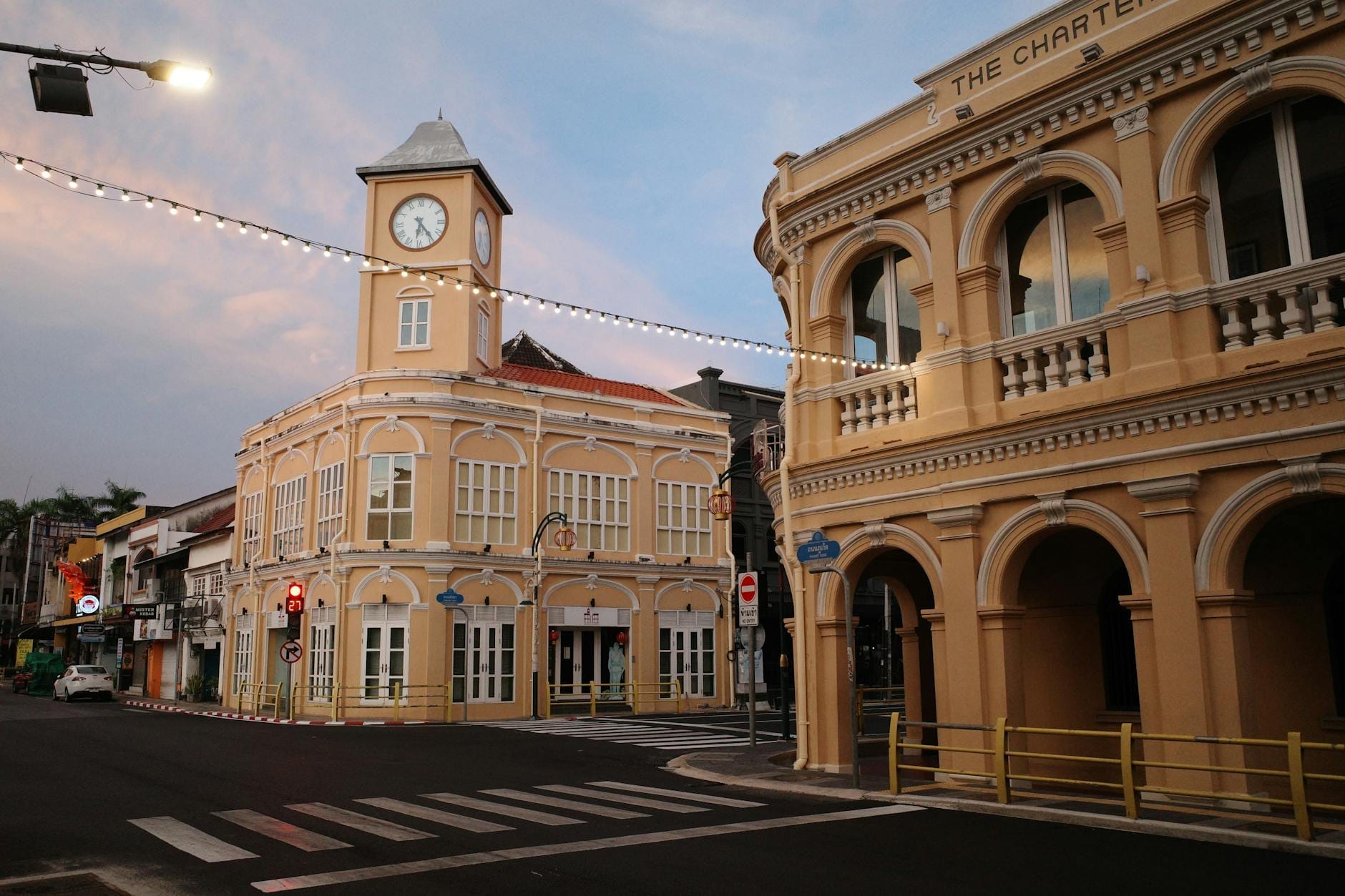
The Phuket Old Town Walking Streets are not a single road but a compact grid of interconnected lanes in the historic heart of Phuket Town, the provincial capital. The core area runs across Thalang Road, Phang Nga Road, Dibuk Road, Soi Romanee, Krabi Road, and Ranong Road, covering a district that was once the commercial and cultural center of a tin-mining boomtown. Today it holds one of Southeast Asia's better-preserved concentrations of Sino-Portuguese shophouse architecture.
The term 'walking streets' refers both to the generally pedestrian-friendly character of these lanes and to the weekly Sunday Walking Street Market held on Thalang Road, when the road is formally closed to traffic and filled with food stalls, craft vendors, and live performances. Outside of Sundays, most streets remain open to motorbikes and the occasional car, so this is not a true pedestrian zone every day, just a walkable and slow-paced one.
ℹ️ Good to know
The Sunday Walking Street Market on Thalang Road typically runs from 4 PM to 9 PM. Exact hours can shift seasonally, so check locally before visiting specifically for the market.
The Architecture: Why These Streets Look Different
The buildings along Thalang Road and Phang Nga Road are Sino-Portuguese shophouses, a style that emerged across the Malay Peninsula and southern Thailand during the 18th and 19th centuries when Chinese immigrant traders settled in British and Portuguese colonial trading towns. The ground floor served as a commercial space; the family lived above. Each facade is narrow but deep, and the upper stories often feature ornate plaster moldings, louvered shutters in faded pastels, and decorative tilework imported from Portugal and Southern China.
What makes Phuket's version distinctive is the five-footway: a covered colonnade at ground level that runs continuously along the building frontage, creating a shaded pedestrian corridor even in heavy rain. Walking under the five-footways on Thalang Road, you pass through stretches of these colonnades where the original blue-green or ochre plaster has been carefully restored alongside sections that are still peeling and sun-bleached, an unfinished patchwork that gives the street honest character rather than theme-park polish.
Phuket Town has been pursuing UNESCO World Heritage listing for this district for some years, though as of the time of writing that status remains a proposal rather than a designation. The architectural fabric is real, historically significant, and worth protecting regardless of official status.
Tickets & tours
Hand-picked options from our booking partner. Prices are indicative; availability and final rates are confirmed when you complete your booking.
Phuket Island and Big Buddha Private Tour
From 125 €Instant confirmationFree cancellationFull-day tour to the highlights of Phuket City and its surroundings
From 71 €Instant confirmationFree cancellationFull-day luxury catamaran tour to Phi Phi Islands & Maithon from Phuket
From 146 €Instant confirmationFree cancellationPhuket to Khao Lak Private Airport Transfer
From 65 €Instant confirmationFree cancellation
Street by Street: What to Expect
Thalang Road: The Main Artery
Thalang Road is the most photographed street in the Old Town and the logical starting point for any walking route. The shophouses here have seen the most restoration investment, and many now house specialty coffee shops, boutique guesthouses, and artisan food producers. On any given morning you will find locals buying fresh pastries and Thai iced coffee alongside tourists pointing cameras at the facades. It is neither authentically quiet nor overwhelmingly crowded, which puts it in a comfortable middle ground.
On Sunday evenings, Thalang Road transforms. Vendors set up from roughly late afternoon, and by early evening the street fills with food stalls selling grilled satay, kanom jeen noodles, curry puffs, and fresh coconut ice cream. Local craftspeople sell handmade jewelry, batik fabric, and painted goods. A small stage at one end usually hosts traditional Thai music or local school performances. The atmosphere is relaxed and family-oriented, with none of the pressure-selling or noise that characterizes Patong's night markets.
Soi Romanee: 125 Meters of History
Soi Romanee is a 125-meter side lane off Thalang Road that carries a complicated history. It was once Phuket Town's red-light district during the tin-mining era, and the buildings here are some of the oldest and most characterful in the Old Town. The lane has since been gentrified into a collection of coffee shops, small bars, and art spaces, but the narrow proportions, the scale of the buildings, and the slightly secretive feel of a back-alley all remain.
Photographers find this lane particularly rewarding in the morning when low-angle sunlight enters from the Thalang Road end and lights up the pastel facades. The walls here are covered in murals depicting old Phuket life, giving the alley a visual density that holds attention longer than its short length suggests.
Oasis Thalang: The Covered Passage
Connecting Thalang Road to Dibuk Road is Oasis Thalang, a 150-meter air-conditioned covered passage that is open daily from 10 AM to 8 PM. Inside, it functions as a small boutique mall with local fashion brands, souvenir shops, and a few cafes. It is useful as a midday refuge when the heat becomes oppressive, and it represents one of the few modern insertions into the Old Town that does not look jarringly out of place, partly because it is concealed within a shophouse row rather than built as a freestanding structure.
The Shrines: Religious Layers on Every Street
Chinese Taoist and Buddhist shrines are embedded throughout the Old Town, often tucked between shophouses or set back in small courtyards you might walk past without noticing. Two deserve specific attention. The Shrine of the Serene Light, dating to 1889, sits at the end of a narrow courtyard accessed through an archway off Phang Nga Road. Inside, incense smoke rises continuously from urns in front of gilded deity figures, and the contrast between the dark interior and the bright outdoor light makes it feel genuinely removed from the street outside.
The Sam San Shrine, established in 1853, is one of the oldest in the area and draws local worshippers rather than tourists, which affects the atmosphere considerably. You will find it quieter, less sign-posted, and more evidently in daily use. Jui Tui Shrine nearby on Ranong Road is larger and better known, particularly during the Vegetarian Festival, but the smaller shrines embedded in the Old Town streets offer a more intimate view of how Chinese religious practice functions in everyday Phuket life.
💡 Local tip
When entering any shrine: remove shoes if requested, dress modestly (shoulders and knees covered), and do not photograph worshippers without permission. These are active places of worship, not museum installations.
Timing Your Visit: How the Streets Change by Hour
Early morning, roughly 7 to 9 AM, is the calmest and most atmospheric time in the Old Town. Local bakeries open, traditional coffee shops serve kopi (strong southern Thai coffee with condensed milk), and the light is soft and manageable for photography. The streets smell of fresh bread, frangipani from potted plants on doorsteps, and the occasional waft of incense from a shrine being lit for the day. Foot traffic is minimal, and you can stand in the middle of Thalang Road for a photograph without inconveniencing anyone.
Between 11 AM and 2 PM the heat intensifies and foot traffic peaks as day-trippers arrive from the beaches. This is the least rewarding window unless you stay primarily under the five-footways or duck into Oasis Thalang. Most serious walkers take a long lunch break during this period.
Late afternoon, from around 4 PM, the light shifts and the heat eases. Street cafes fill up, and on Sundays the market begins setting up. The golden hour before sunset is arguably the best time to photograph the facades, particularly on Phang Nga Road where the buildings face west. By 7 PM on a Sunday evening, the walking street market is at full energy and the whole district feels genuinely alive.
If your visit falls outside Sunday, the Old Town still warrants two to three hours. Pair it with a visit to Wat Chalong in the morning and the Old Town in the late afternoon, or combine it with a browse of the Phuket Weekend Market if your timing allows.
Eating and Drinking in the Old Town Streets
The Old Town has developed a genuine food culture that goes beyond tourist-facing menus. Alongside traditional Thai and Chinese-Thai dishes, you will find cafes serving proper single-origin filter coffee, bakeries producing Phuket-style roti and curry puffs, and small restaurants serving mee Hokkien (thick yellow noodles) and o-tao (oyster and taro pancakes), both dishes with clear Chinese immigrant heritage.
The Old Town also functions as one of the better areas in Phuket for an evening meal away from the tourist strip crowds. For a broader picture of where to eat across Phuket, the Phuket dining guide covers options across the island.
⚠️ What to skip
Many small shophouse cafes in the Old Town are closed on Mondays or Tuesdays. If you are visiting mid-week, some of the most photogenic storefronts may have their shutters down. Weekend visits guarantee the most options.
Practical Notes for Visiting
The entire core district is walkable in under 30 minutes at a brisk pace, but that is not the right approach. Budget at least 90 minutes for a casual walk and photography on a weekday, and a full evening if you are visiting on a Sunday for the market. Wear shoes you can remove easily for shrine visits, and bring a small bag for market purchases.
Parking in the Old Town is limited and the one-way street system makes car navigation frustrating. Grab (the ride-hailing app widely used in Phuket) is the most practical way to arrive and depart. Drop-off on Ranong Road or Phang Nga Road puts you within a minute's walk of the core streets.
The five-footways provide good shade but are uneven in places, with raised thresholds between properties. Anyone using a wheelchair or pushing a stroller will find navigation possible but imperfect on some sections. Oasis Thalang is the most accessible stretch of the route.
The Old Town sits in the eastern part of the island, away from the beach areas. If you are getting around Phuket from the west-coast beaches, factor in 30 to 60 minutes of travel time depending on your starting point.
Who This Does Not Suit
Travelers who come to Phuket purely for beach time and water activities may find a half-day in the Old Town hard to justify, especially if their accommodation is on the west coast. The Old Town does not offer swimming, boat trips, or nightlife in the conventional sense, and if you have only two or three days on the island and want to maximize beach time, this area competes directly with that. It is also not a dramatic or scenically grand attraction: there is no single view or central monument. The rewards are cumulative, built from texture and detail rather than spectacle.
Similarly, anyone expecting the energy of Bangla Road or a large organized night market will find the Old Town understated. That is, for many visitors, precisely the point.
Insider Tips
- The Shrine of the Serene Light on Phang Nga Road is easy to miss: look for a narrow archway between shophouses marked with red lanterns. The courtyard inside is one of the most photogenic spots in the Old Town and sees far fewer visitors than the main street facades.
- On Sunday market evenings, arrive before 5 PM to browse the stalls before the crowds thicken significantly. By 7 PM the best food items at popular stalls have often sold out.
- Many shophouse cafes display their original floor tiling from the early 20th century. Look down as well as up: Portuguese cement tiles in geometric patterns are a design detail that most visitors walk over without noticing.
- Phang Nga Road's west-facing shophouse facades catch warm evening light beautifully from about 5 PM, making it the better photography target late in the day compared to Thalang Road, which is better in the morning.
- Several traditional Chinese medicine shops and dried goods sellers on Ranong Road still operate as they have for decades, selling preserved ingredients, herbal remedies, and goods that predate the tourism economy entirely. These are genuine working businesses, not heritage reconstructions.
Who Is Phuket Old Town Walking Streets For?
- Architecture and history enthusiasts who want context beyond beaches
- Photographers looking for textural, layered street scenes with good morning light
- Food-oriented travelers interested in Chinese-Thai culinary heritage
- Travelers on a Sunday who want an atmospheric evening market without the Patong crowd
- Anyone wanting a half-day of walking culture to balance a beach-heavy itinerary
Nearby Attractions
Other things to see while in Phuket Old Town:
- Jui Tui Shrine
Jui Tui Shrine is one of the oldest and most revered Chinese Taoist shrine in Phuket Old Town, drawing worshippers and curious visitors alike throughout the year. Free to enter and open daily, it reaches its peak intensity during the annual Vegetarian Festival, when it becomes the epicenter of one of Southeast Asia's most dramatic religious observances.
- Phuket Weekend Market (Naka Market)
The Phuket Weekend Market, locally known as Naka Market or Talad Tai Rot, is Phuket's largest and most local Saturday–Sunday night market. Running from 4pm to 10pm along Wirat Hong Yok Road, it draws hundreds of stalls selling street food, clothing, handicrafts, and secondhand goods. Free to enter and far less touristy than the Old Town's walking streets, it offers a genuine look at how Phuket residents spend their weekends.