Karon Beach: Phuket's Long, Unhurried Shoreline
Stretching around 3-4 kilometres along Phuket's southwest coast, Karon Beach offers wide white sand, clear Andaman water, and noticeably fewer crowds than nearby Patong. It's a strong choice for beach walks, swimming in high season, and a quieter pace overall — but red flags and rip tides demand respect in the wet months.
Quick Facts
- Location
- Karon, Muang District, southwest Phuket — between Patong (~20 min north) and Kata (~10 min south)
- Getting There
- Songthaew from Patong or Kata; taxi or Grab from Phuket Town (~30 min); ~45-60 min from Phuket International Airport (HKT)
- Time Needed
- 2–4 hours for a beach visit; full day if walking the whole stretch and exploring Karon town
- Cost
- Free public access; sun lounger and umbrella rental prices vary by vendor
- Best for
- Long beach walks, families seeking space, couples wanting quiet, low-key sunbathing away from the main tourist drag
The Beach at a Glance
Karon Beach (Thai: หาดกะรน, Hat Karon) is one of the longest continuous beaches on Phuket island, running around 3-4 kilometres of fine white sand backed by a strip of greenery, a canal, and a quiet beachfront road. Unlike Patong, there is no wall-to-wall development right on the sand. Most hotels sit across the road, which gives the beach an open, uncrowded feel even at peak season. The sand itself is notably pale and powdery — fine enough to squeak underfoot when dry, which is genuinely unusual for Phuket beaches.
In the broader context of Phuket's southwest coast, Karon sits in the Kata-Karon area, a stretch that has long attracted visitors who want beach life without the noise levels of Patong. It's a sensible base for anyone who wants to use multiple beaches, since Kata Yai Beach is just a short drive south and Patong Beach is fifteen minutes north.
⚠️ What to skip
Red flags at Karon Beach are serious. Rip tides are strong during the low season (roughly May to October). Swim only between the red-and-yellow lifeguard flags when they are posted, and if in doubt, stay out of the water and enjoy the walk instead.
How the Beach Changes Through the Day
Early morning at Karon is one of its strongest selling points. Between roughly 6 and 8 AM, the beach is nearly empty. A handful of hotel guests walk the waterline, local vendors set up their equipment, and the light hits the sand at an angle that makes the whole stretch look longer than it is. The water at this hour tends to be calmer, the air cooler, and the colours — pale sand, turquoise water, green hills behind the southern end — are at their most photogenic.
By mid-morning, the sun loungers fill up from the centre of the beach outward. The northern and southern ends remain quieter throughout the day. If you want shade and space, walk ten minutes in either direction from the central cluster of beach vendors and you'll find a noticeably less occupied stretch. Umbrellas and sun loungers are available for rent from vendors along the main section of beach, though prices are set by individual vendors and worth confirming before you commit.
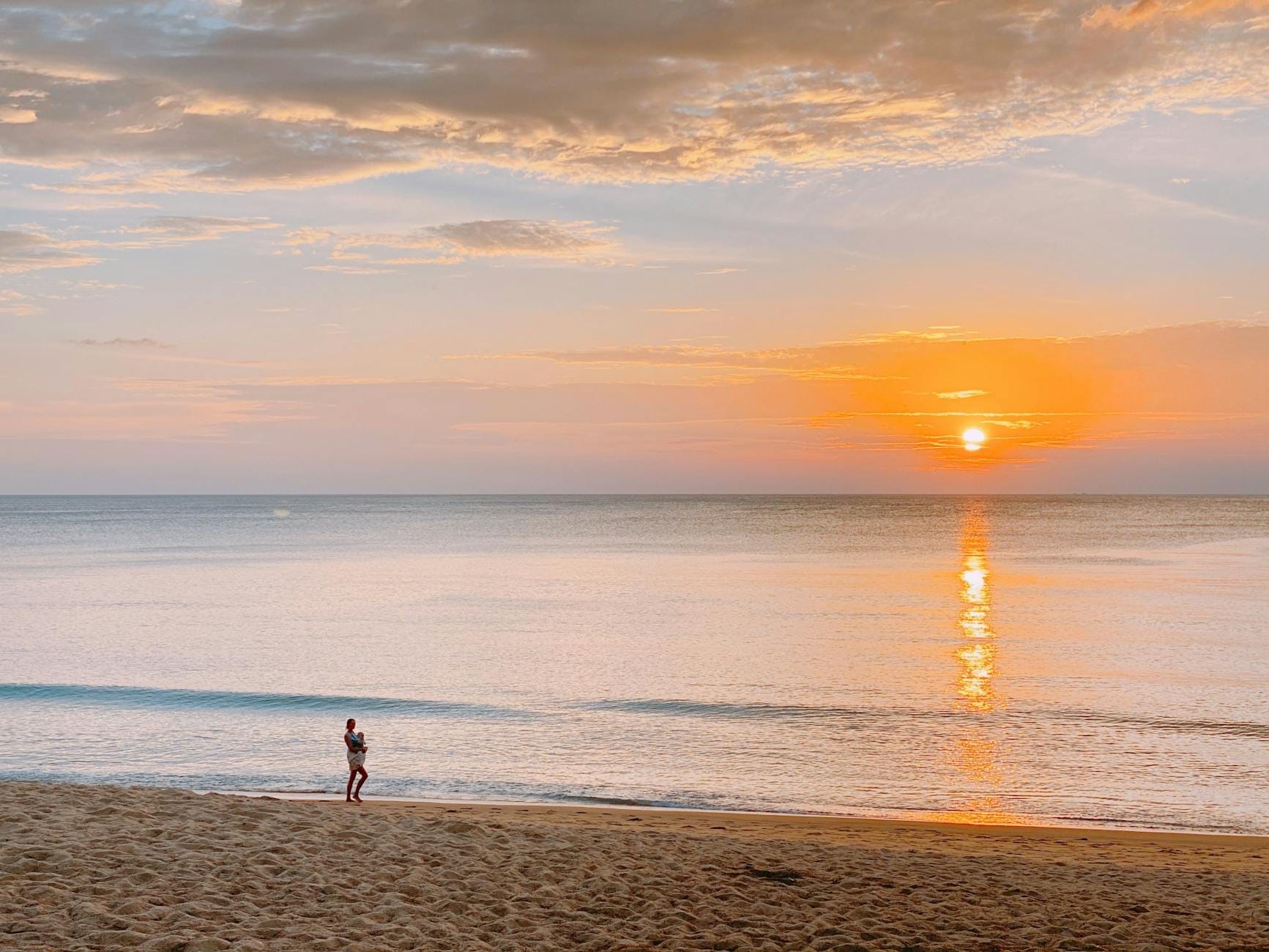
Sunset at Karon faces directly west over the Andaman Sea, which means unobstructed colour. The beach does draw a modest sunset crowd, but nothing like the scene at Promthep Cape. For most of the year it's relaxed enough to find your own quiet patch of sand as the light drops.
For a more dramatic elevated view of the coastline at sunset, Karon Viewpoint sits just south of the beach area and gives a panoramic perspective across Karon, Kata, and Kata Noi beaches in a single frame.
Tickets & tours
Hand-picked options from our booking partner. Prices are indicative; availability and final rates are confirmed when you complete your booking.
Muay Thai Boxing Tickets at Patong Boxing Stadium
From 56 €Instant confirmationFree cancellationPhuket Island and Big Buddha Private Tour
From 125 €Instant confirmationFree cancellationGuided elephant nature walk tour with transfer
From 50 €Instant confirmationFree cancellationFull-day tour to the highlights of Phuket City and its surroundings
From 71 €Instant confirmationFree cancellation
Swimming, Waves, and Water Conditions
Karon is an open-ocean beach facing the Andaman Sea, which means wave conditions change significantly between seasons. From around December through April, the sea is generally calm, with gentle waves and clear water — the kind of conditions that make swimming genuinely enjoyable. This is the period when Karon works best as a swimming beach.
From May onward, the southwest monsoon kicks in. Waves grow, the water turns choppier and less clear, and rip currents become a real hazard. Lifeguards are stationed on the beach during high season and post flags indicating safe swimming zones. In low season, those flags frequently go red. The beach itself is still worth visiting during the wet months for the drama of the surf and the emptiness of the sand, but swimming is often unsafe.
ℹ️ Good to know
Karon's sand squeaks when you walk on it. This is caused by the high silica content and rounded grain shape — it's a useful quick indicator that you're on genuinely clean, fine-grade sand rather than the coarser material found on some other Phuket beaches.
The Surrounding Area: What's Beyond the Sand
The town of Karon sits just behind the beach, separated from it by the beachfront road. It's smaller and quieter than Patong town, with a concentration of mid-range hotels, family restaurants, massage shops, and a few grocery stores. Karon Circle, a roundabout at the town's centre, is a practical landmark for navigation and is surrounded by food options ranging from Thai street food to Western-style cafes.
The Karon Temple Market runs on weekends and is a decent local market worth checking if your visit lines up with it. It draws a mix of locals and visitors and tends to have more Thai food stalls than souvenir-heavy alternatives elsewhere.
Karon's location makes day trips easy. Kata Noi Beach is one of Phuket's most visually striking small beaches and is reachable in under 10 minutes by road. For a longer excursion, the Phi Phi Islands are accessible by speedboat from the west coast, though most organised tours depart from Rassada Pier in Phuket Town.
Getting to Karon Beach
There is no rail network on Phuket. The practical options are songthaew (shared red trucks that run fixed routes), taxi, tuk-tuk, or Grab. Songthaews connect Karon with Kata and Patong and are the cheapest option, though they run on their own schedule and can involve some waiting. From Phuket Town, the ride takes around 30-45 minutes by road depending on traffic. From Phuket International Airport, expect roughly 90 minutes by car or private transfer.
If you're staying in Kata, Karon is walkable — the two beaches connect at their shared southern end, and it's a pleasant 15-minute walk along the road. Renting a scooter is another option for getting around the area independently, though the road between Karon and the viewpoint has some steep sections.
💡 Local tip
If you're arriving by songthaew from Patong, ask to be dropped at 'Karon Circle' rather than just 'Karon Beach' — this puts you in the practical centre of the town with easy walking access to the mid-beach section, restaurants, and ATMs.
Photography and Practical Notes
The northern end of Karon Beach, where the road curves toward Patong, has cleaner sight lines and fewer beach vendors in the frame. Early morning is by far the best time to photograph the beach itself: empty sand, soft light, and the green hills behind Kata visible to the south. Wide-angle shots from this end in December or January, when the air is clearest, produce the kind of image that actually reflects what the beach looks like at its best.
There are public restrooms and shower facilities at the central beach access point, though cleanliness varies. Bring reef-safe sunscreen — standard sunscreen is harmful to marine ecosystems and increasingly frowned upon at Thai beaches. Drinking water is available from vendors, but tap water in Thailand is not safe to drink, so carrying your own bottle or buying sealed water is the right approach.
Karon is a public beach with open access year-round. There is no fee to enter or use the beach. The sun lounger areas are the one zone where vendors expect you to rent from them if you're using that section of the sand, which is standard practice on most Phuket beaches and usually avoidable by simply setting up your own towel further along the beach.
Is Karon Beach Worth Your Time?
Karon is not the most dramatic beach on Phuket, and it doesn't try to be. It doesn't have the concentrated energy of Patong or the boutique hotel scene of Surin. What it offers is space, a long clean stretch of sand, and enough infrastructure around it to make a multi-day stay comfortable without overwhelming. Families, solo travellers who want a low-key base, and anyone doing a longer Phuket trip who wants contrast to the busier spots will find it consistently delivers on those terms.
Anyone specifically seeking nightlife should look elsewhere. The Karon area goes quiet well before midnight, and the action most visitors associate with Phuket's evenings is concentrated in Patong, particularly around Bangla Road. Karon is genuinely well-suited to those who want beach days and early nights, not the other way around.
Travellers who need a picture-perfect, protected cove with turquoise water and no development in sight will likely find Karon too exposed and plain. For that experience, the smaller beaches on the west and south sides of the island, or a boat trip out to the islands, will be more satisfying.
Insider Tips
- The far northern end of the beach, near where the road starts climbing toward Patong, sees almost no sun lounger vendors and is noticeably quieter throughout the day. Walk past the last vendor cluster and you'll often find the best stretch of sand to yourself.
- Karon's squeak-when-dry sand is most pronounced in the morning before foot traffic compacts it. It's one of those small sensory details that distinguishes it from the more generic sand at other beaches.
- If you're visiting during the shoulder months of May or November, conditions can shift day by day. Check the flag status at the central lifeguard station each morning before deciding whether to swim.
- Karon Viewpoint, a short drive south up the hill toward Kata Noi, gives a bird's-eye view of three beaches at once and is worth the detour, especially in the late afternoon when the haze is lower.
- The restaurant strip behind Karon Circle has noticeably lower prices than beachfront venues. A ten-minute walk from the sand gets you Thai meals at a fraction of the beachfront markup.
Who Is Karon Beach For?
- Families who want a long, flat beach with room to spread out away from the crowds
- Couples on longer Phuket trips who want a quieter alternative to Patong
- Beach walkers and early-morning swimmers who want space and calm water in high season
- Travellers using Karon as a base to day-trip to Kata, Phi Phi, and southern Phuket
- Anyone who wants to combine beach time with easy access to a practical, low-key town
Nearby Attractions
Other things to see while in Kata & Karon:
- Big Buddha Phuket
Standing 45 meters tall on Nakkerd Hill above Chalong, the Big Buddha Phuket is the island's most recognizable landmark. Entry is free, the panoramic views stretch from Kata to Chalong Bay, and the site carries genuine religious significance for Thai Buddhists. Here is everything you need to visit well.
- Karon Temple Market
Held twice weekly on the grounds of Wat Karon, the Karon Temple Market is one of the most approachable local markets in Phuket's Kata-Karon area. Free to enter, cash-friendly, and far less crowded than the big tourist night markets, it rewards visitors who show up hungry and unhurried.
- Karon Viewpoint
Karon Viewpoint, also called Three Bays Viewpoint, sits on a hilltop south of Kata Beach and delivers one of the most complete coastal panoramas in Phuket. Entry is free, the road is straightforward by scooter or car, and the payoff is a sweeping view of Kata Noi, Kata, and Karon bays curving into the Andaman Sea below.
- Kata Noi Beach
Hat Kata Noi sits tucked below a rocky headland on Phuket's southwest coast, separated from the larger Kata Beach by a ridge that most visitors never bother crossing. At roughly 700 to 850 meters long, it is compact, clean, and noticeably quieter than anything in Patong or Karon. The trade-off is limited facilities and a steep approach, but for travelers who prioritize sand quality over convenience, that is exactly the point.