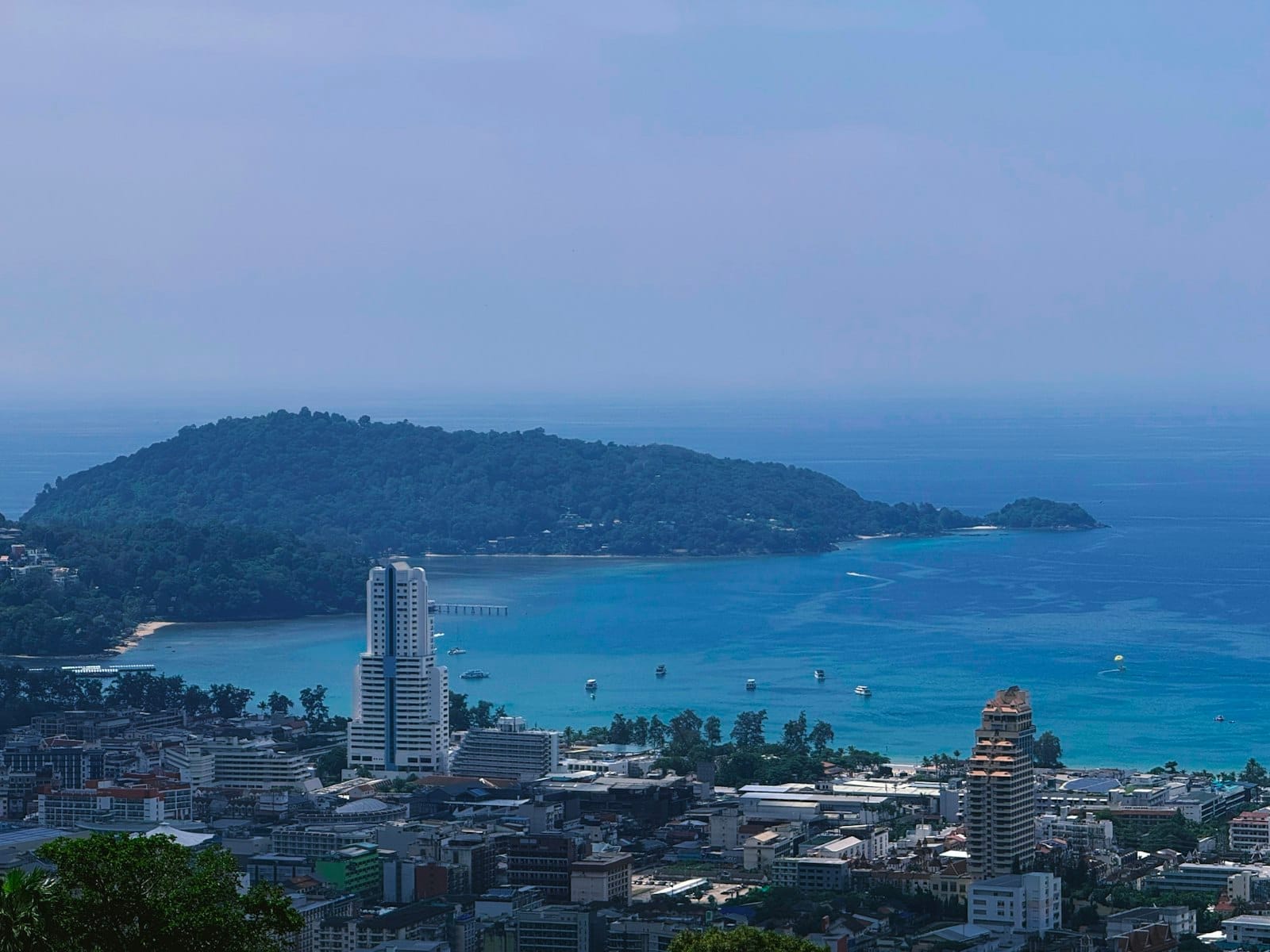
Patong is Phuket's most-visited neighborhood, built around a wide crescent bay on the island's west coast. It runs the full spectrum from sunbathing families to late-night bar crawls, with Beach Road and Bangla Road serving as the twin axes of daily life. Loud, commercial, and relentless in peak season, it delivers convenience and energy that no other part of Phuket can match.
Patong is Phuket's undisputed tourist center: a nearly 3-kilometer beach flanked by a dense grid of hotels, seafood restaurants, souvenir shops, and one of Southeast Asia's most notorious nightlife strips. It is not subtle, and it doesn't try to be. What it offers instead is pure, uncomplicated accessibility: the beach is right there, the bars stay open until dawn, and transport to the rest of the island leaves from the main road every hour.
Orientation
Patong sits on Phuket's central-west coast, roughly 15 kilometers northwest of Phuket Town, tucked inside a horseshoe bay formed by two headlands. The Kathu district lies directly inland to the east, reached by the steep Patong Hill road that cuts through jungle before dropping into the resort grid. To the north, the headland separates Patong from Kamala Beach; to the south, a shorter hill road leads toward Karon.
The neighborhood's street logic is straightforward once you understand its two parallel spines. Thanon Thawiwong, universally called Beach Road, runs the full length of the bay and is where you walk, cycle, and watch the sun set. One block inland, Rat-U-Thit 200 Pi Road (almost always shortened to Rat-U-Thit Road) carries the bulk of vehicle traffic, lined with hotels, pharmacies, 7-Elevens, and equipment-rental shops. The two roads are connected by a series of east-west sois, the most famous of which is Soi Bangla, known as Bangla Road.
North of Bangla Road, Patong becomes slightly quieter and more residential in character, though still unmistakably touristy. South of Bangla Road, toward the southern headland, the beach is marginally less crowded and the accommodation skews toward mid-range and budget guesthouses. For a sense of how Patong fits into the broader island, the where to stay in Phuket guide maps out how each coastal neighborhood compares.
Character & Atmosphere
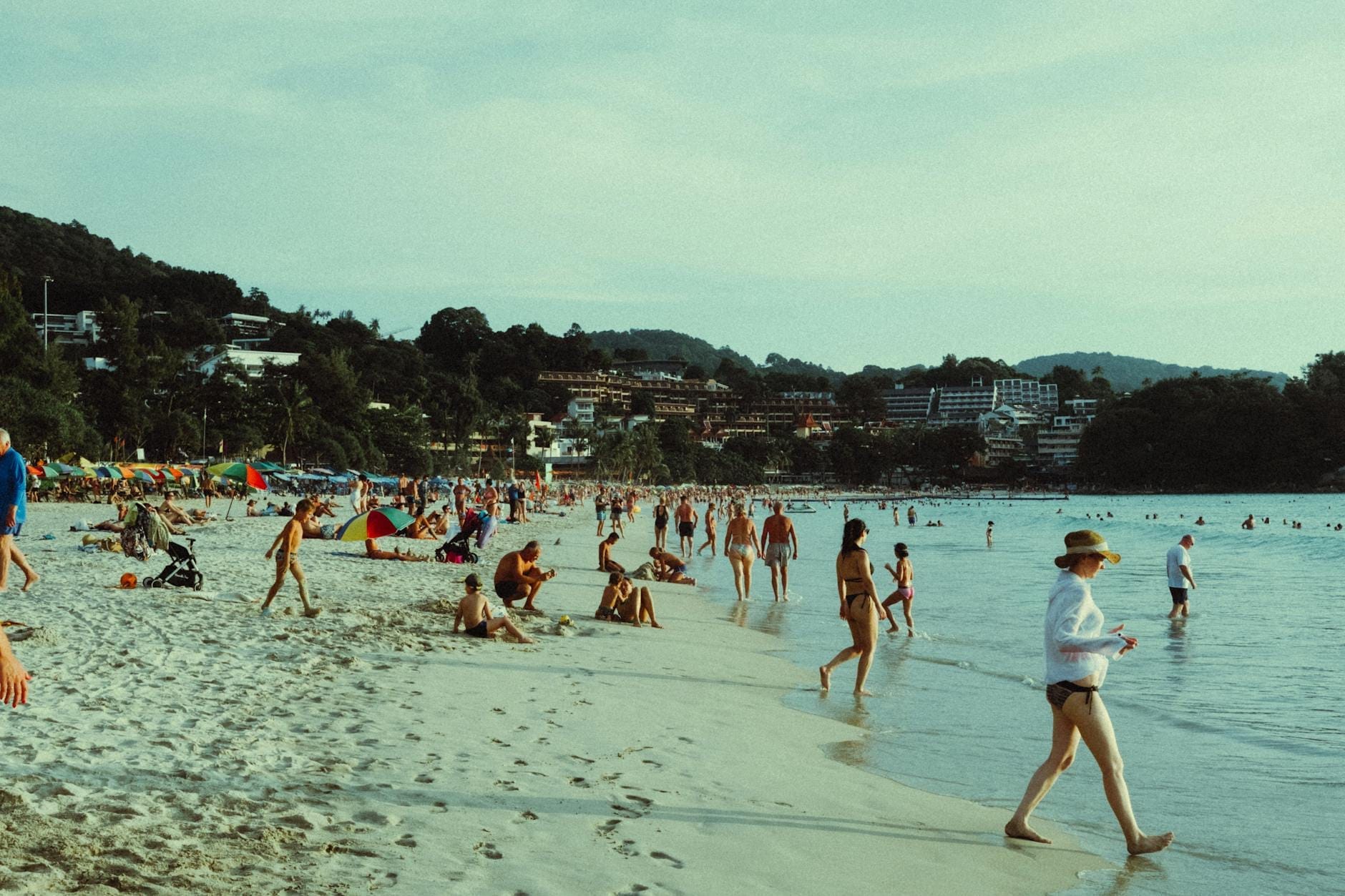
Patong runs on a schedule that most of the island ignores. At 7am, the beach is actually pleasant: vendors set up sun loungers in long rows, the water is calm enough to swim, and a handful of joggers use Beach Road before the heat arrives. A line of food carts along the northern end of the beachfront sells rice porridge and iced coffee to early risers. The light at this hour, bouncing off the Andaman Sea, is genuinely beautiful. This is the version of Patong that brochures use.
By 10am, the beach fills quickly. Sun loungers go at around 200 baht for the day, and the touts for parasailing, jet skis, and banana boats become increasingly persistent as the morning wears on. Beach Road turns into a slow-moving procession of motorbike taxis, tuk-tuks, and rental scooters. The pavements are narrow and frequently blocked by parked vehicles, so most people simply walk on the road. In the midday heat, the smarter move is to retreat to a shaded café on Rat-U-Thit Road or head back to a hotel pool.
The late afternoon brings a brief lull before the evening economy kicks in. Restaurants start filling from around 6pm, and by 8pm Bangla Road is in full operation: neon signs, sound systems competing for attention, and a crowd that is overwhelmingly international. The strip stays active until 2am or later. Outside Bangla Road, Beach Road takes on a different character after dark, with seafood restaurants and cocktail bars strung with fairy lights. The southern end near the Patong Merlin area is noticeably calmer.
⚠️ What to skip
Jet ski scams are a long-running problem on Patong Beach. Operators sometimes claim pre-existing damage and demand large cash payments. Use only operators with visible price lists, take photos before and after, and consider whether the activity is worth the risk.
Patong is not a neighborhood where you discover local Thai life by wandering. The vast majority of shops, restaurants, and services are oriented entirely toward tourists. That isn't a criticism, just an accurate description. The energy is real, the convenience is genuine, and for many travelers it delivers exactly what they came to Phuket for. But anyone expecting the kind of neighborhood character found further south in Karon or in Phuket Town will be disappointed.
What to See & Do
Patong Beach itself is the main event. At nearly 3 kilometers, it is the longest developed beach on Phuket's west coast, with clear water that is generally safe for swimming between November and April. The northern end tends to be slightly less crowded; the central section opposite Bangla Road is the busiest. Water sports are available all along the beach, including parasailing, kayaking, stand-up paddleboarding, and speedboat transfers to nearby islands.
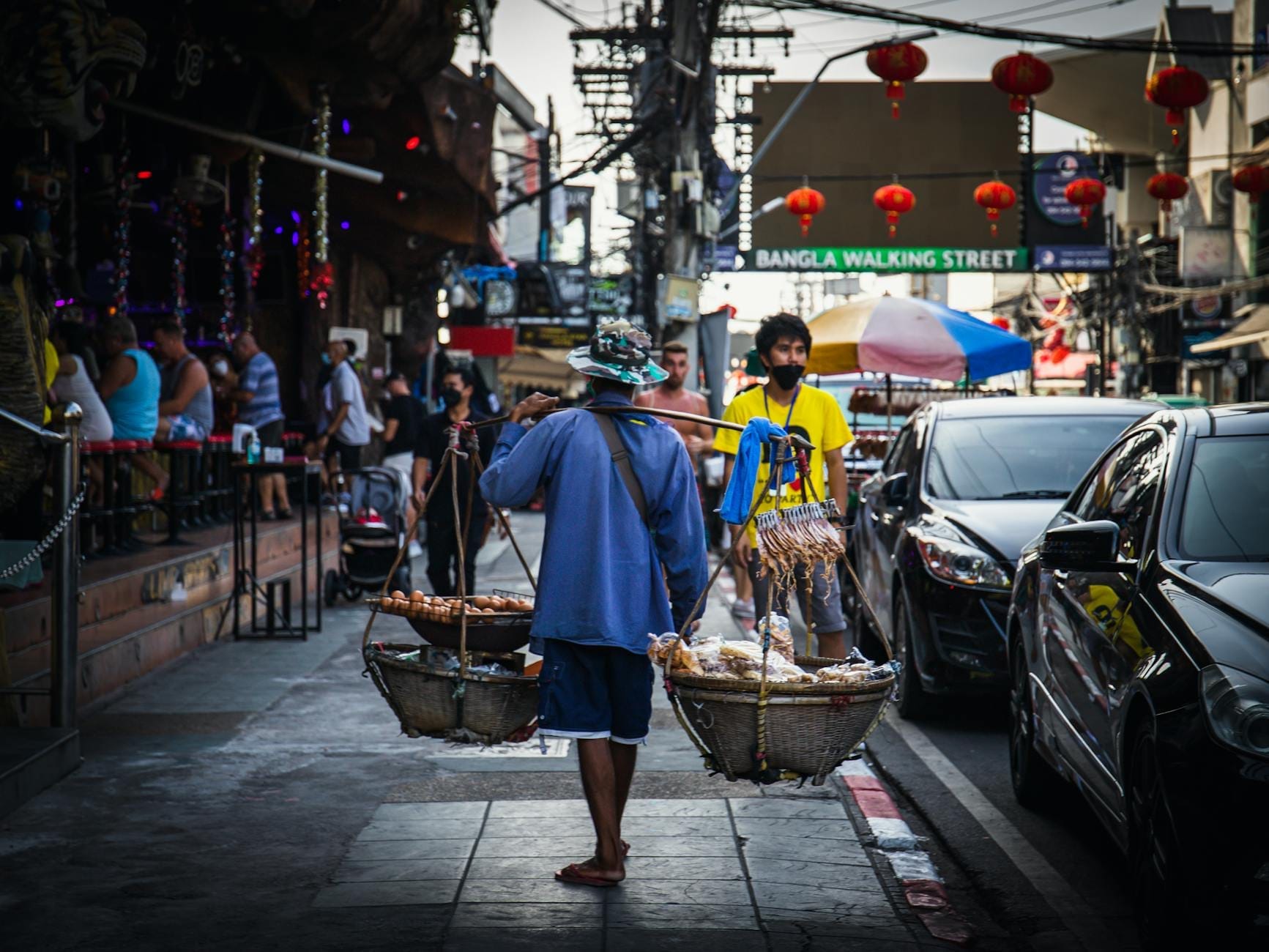
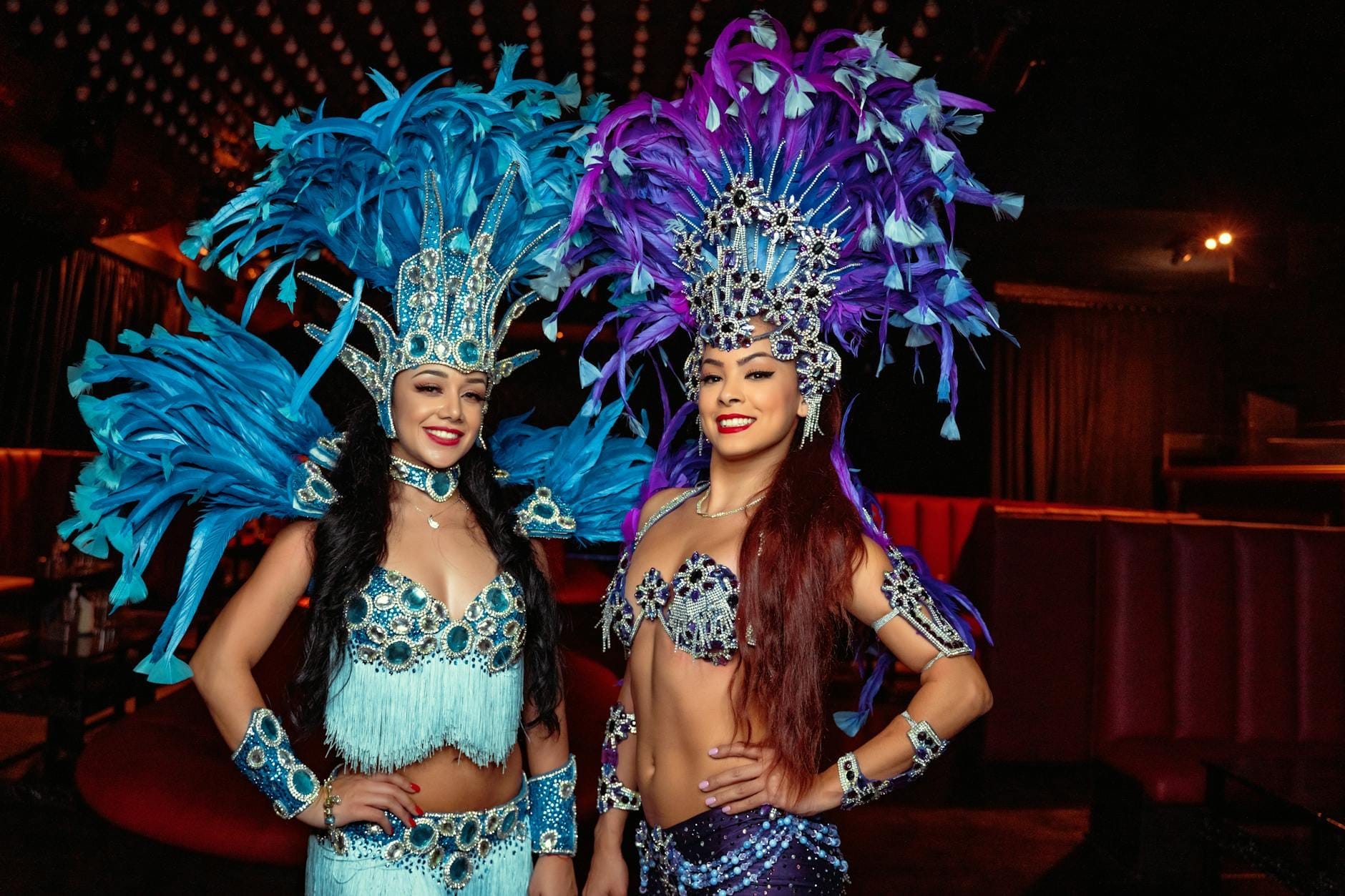
Bangla Road, officially Soi Bangla, is Patong's most defining feature and worth at least one evening visit regardless of your feelings about nightlife. The strip runs about 400 meters from Beach Road inland to Rat-U-Thit Road. During the day it looks faintly absurd in the sunlight, but after 9pm it transforms into something genuinely theatrical. Bars, live music venues, cabaret shows, and go-go bars operate side by side in a dense corridor. Bangla Road attracts every demographic from backpackers to package tourists to curious retirees.
Simon Cabaret: Long-running ladyboy cabaret show south of the main beach area, polished and family-friendly
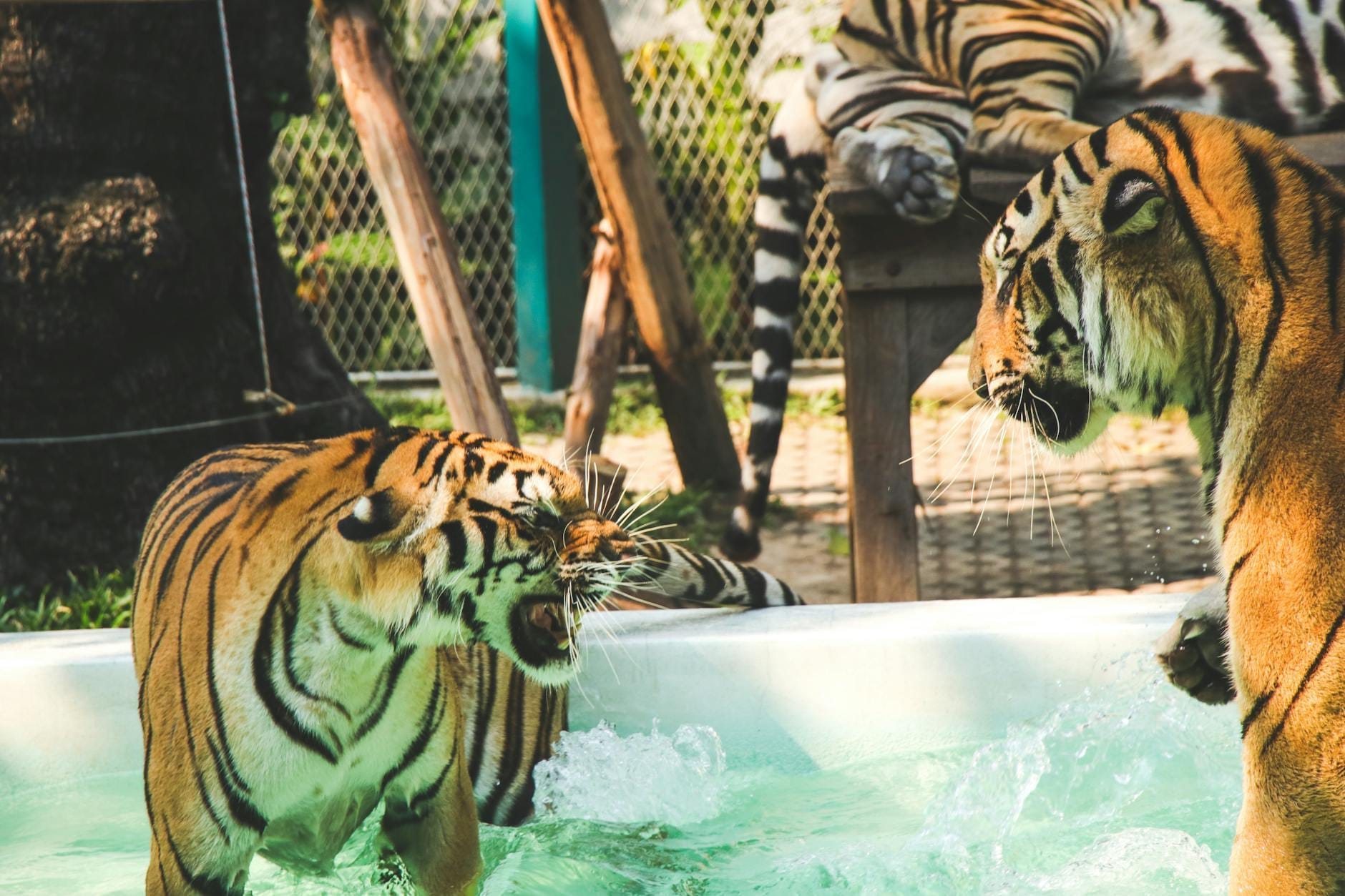
Tiger Kingdom: Big cat experience operated near the Kathu border, accessible from central Patong
Phuket FantaSea: Large-scale cultural theme park located just north of Patong in Kamala, about 20 minutes by tuk-tuk
Day trips to Phi Phi Islands and James Bond Island depart from Patong Beach pier or nearby Ao Po Marina with transfer
Parasailing, jet skis, banana boats, and paddleboard rental along the full length of the beach
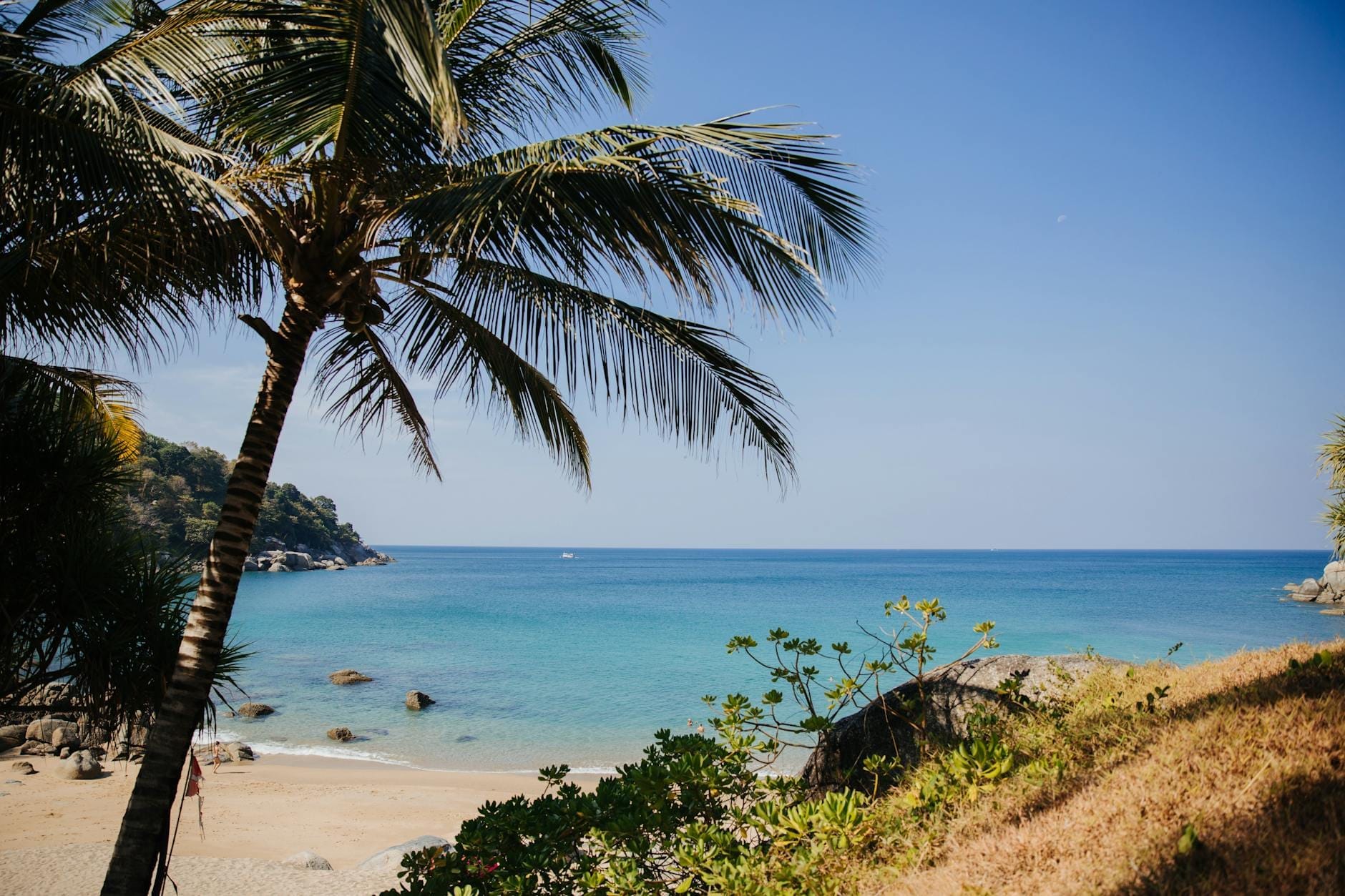
If you want to escape Patong for a day without going too far, Freedom Beach is accessible by longtail boat from the southern end of Patong Beach. It is smaller, rockier, and considerably quieter. The boat ride takes about 15 minutes. Alternatively, the coastal road south leads quickly to Karon, which has a longer, less developed beach and a calmer daily rhythm.
💡 Local tip
For island day trips, booking through a hotel or reputable agency on Rat-U-Thit Road is generally safer than accepting offers from touts on the beach. Prices are similar and you get a clearer cancellation policy.
Eating & Drinking
The food situation in Patong is more varied than the neighborhood's reputation suggests. Yes, there are overpriced tourist restaurants with laminated menus and touts standing in the doorway. But within a few minutes of the main beach strip, the quality and price improve significantly.
Street food concentrates in a few predictable spots. The night market that sets up along the southern stretch of Beach Road in the evenings offers grilled seafood, pad thai, mango sticky rice, and the standard roster of Thai dishes at local prices. Rat-U-Thit Road has a line of small Thai restaurants aimed at local workers and longer-stay tourists, where a plate of khao man gai (poached chicken rice) or a bowl of boat noodles will cost 60 to 100 baht. These are the spots to prioritize for lunch.
The seafood restaurants along the northern section of Beach Road are a mixed bag. The setting is appealing, especially at dusk with the sea breeze, and whole grilled fish or tiger prawn dishes done well justify the premium. Check prices before sitting down, since some menus are quoted per 100 grams, which can produce unexpected bills.
For the wider picture of where and what to eat across Phuket, the where to eat in Phuket guide covers everything from Patong's beach restaurants to the much richer food scene in Phuket Town's Old Town district. If you're spending more than two nights in Patong, at least one dinner trip to Phuket Town is worth the effort.
Beach Road seafood restaurants: Best for atmosphere, check prices first, budget 400-800 baht per person with drinks
Rat-U-Thit Road local spots: Thai rice and noodle dishes, 60-150 baht, no English menus in many, but pointing at dishes is standard
Bangla Road bars: Drinks run at tourist prices (150-250 baht per beer), the food is secondary
7-Eleven and convenience stores: Cheap snacks, cold drinks, and surprisingly decent sandwiches for heat-of-the-day fuel
Night market stalls near southern Beach Road: Grilled corn, pad thai, skewers, and fresh fruit, 40-80 baht per dish
Getting There & Around
Patong has no rail connection and no metro. The practical options are taxis, ride-hailing apps, songthaews (shared pickup trucks running fixed routes), tuk-tuks, and rented motorbikes or scooters.
From Phuket International Airport, the most straightforward option is a metered taxi or a private transfer booked in advance. The distance is roughly 40 kilometers and takes 45 to 60 minutes depending on traffic, with costs typically in the range of 600 to 900 baht. Grab operates in Phuket and generally offers lower prices than tuk-tuks for longer journeys. From Phuket Town, a songthaew to Patong runs along the main highway through Kathu and takes about 30 to 40 minutes; look for departures near the market area in town.
Within Patong, most things are walkable. The distance from the northern end of the beach to the southern end is about 3 kilometers. Beach Road is pleasant on foot in the early morning and evening, but during midday heat and heavy traffic it is uncomfortable. Tuk-tuks are everywhere but drivers rarely use meters; agree on a price before getting in. The standard rate for short hops within Patong is 100 to 200 baht. Motorbike taxis wearing orange vests cluster at the main intersections and are faster for single riders.
Renting a scooter (around 200–400 THB per day) opens up easy access to Kamala and Surin beaches to the north and Karon and Kata to the south. The road over the southern headland to Karon takes about 10 minutes. The road over Patong Hill toward Kathu is steeper and has fast-moving traffic. For a full overview of getting between neighborhoods, the guide to getting around Phuket covers all transport modes across the island.
ℹ️ Good to know
Grab is generally the most transparent pricing option for trips outside Patong. It works well on the main routes to Phuket Town, Kamala, and the airport. In Patong itself, tuk-tuks are faster to flag down but require price negotiation every time.
Where to Stay
Patong has the densest concentration of accommodation on the island, ranging from budget guesthouses at 600 baht per night to large resort hotels with private beach access. The location you choose within Patong matters significantly. For the full island-wide breakdown, see the where to stay in Phuket guide.
Staying directly on Beach Road puts you closest to the sand but in the middle of the noise corridor. Rooms facing the sea are louder at night than rooms facing inland, and the beachfront strip never fully goes quiet before 1am even outside peak season. This works well for travelers who are arriving late and leaving early, or who genuinely enjoy proximity to the nightlife.
Rat-U-Thit Road and the sois branching off it offer better value. Hotels here are a 2 to 5 minute walk from the beach, noticeably quieter at night, and often have their own pools. The southern end of Rat-U-Thit Road, away from the Bangla Road intersection, is the calmest part of the core tourist zone. Families and couples who want Patong's convenience without the 3am sound system will prefer this pocket.
Budget travelers cluster near the southern end of Patong and in the small sois off the northern stretch of Beach Road, where guesthouses and small hotels cater to longer-stay visitors. These areas are less polished but walkable to the beach and significantly cheaper than the beachfront properties. Boutique and luxury options have expanded in recent years, particularly on the hillside above the southern headland, where views and quiet compensate for the extra distance from the beach strip.
Honest Assessment: Is Patong Right for You?
Patong polarizes travelers more than almost any other neighborhood in Phuket. People who love it cite the energy, the convenience, the beach, and the nonstop availability of food, transport, and entertainment. People who hate it cite the noise, the touts, the scams, the overcrowding, and the sense that authentic Thai life is completely inaccessible from within it.
Both reactions are valid. Patong is genuinely not for everyone. Travelers looking for a relaxed, low-key beach holiday will be better served by Kata or Karon to the south, or by the quieter beaches further north such as Surin Beach and Bang Tao Beach. Patong's real audience is travelers who want maximum options with minimum planning: people who want a beach in the morning, activities in the afternoon, and nightlife in the evening, all within walking distance.
It is also worth understanding that Patong has been Phuket's main tourist engine since the late 1970s, and everything about it reflects that history. The commercial infrastructure is mature and efficient. The nightlife on Bangla Road has been operating long enough that it has its own established culture, complete with regular visitors who return year after year. For a broader picture of how Patong fits into the island's leisure geography, the Phuket nightlife guide puts the full range of options in context.
TL;DR
Patong is Phuket's largest and most commercial beach resort, built around a 3km beach on the island's west coast with two parallel main roads: beachfront Thanon Thawiwong (Beach Road) and inland Rat-U-Thit 200 Pi Road.
Best suited to travelers who want a beach, water sports, restaurants, and nightlife all within easy walking distance, without needing to plan in advance.
Bangla Road is the nightlife center of the island and worth visiting at least once; the beach itself is wide, swimmable November to April, and well-served by water sports operators.
Drawbacks include persistent touts, jet ski scams, high noise levels near the Bangla Road corridor at night, and a near-total absence of local Thai neighborhood character.
Quieter alternatives nearby include Kamala and Surin to the north, and Karon and Kata to the south, all reachable in under 20 minutes by scooter or tuk-tuk.
Phuket has three distinct seasons, and each suits a different type of traveler. This guide breaks down the dry season, hot season, and monsoon period with practical advice on crowds, prices, sea conditions, and what you can actually do each month.
Phuket has no metro, no train network, and taxi meters that drivers routinely ignore. This guide cuts through the confusion with honest pricing, route logistics, and the best transport option for every type of trip across the island.
Phuket has over 30 beaches ranging from lively resort strips to near-deserted coves. This guide covers every beach worth knowing, organized by character and location, with honest advice on swimming conditions, crowds, and how to make the most of each one.
Phuket sits at the center of one of Southeast Asia's most spectacular seascapes. These are the best day trips from the island, from the legendary Phi Phi archipelago to the limestone karsts of Phang Nga Bay, plus ethical wildlife encounters and nearby island escapes.
Planning a trip to Phuket but not sure how to structure your time? This guide breaks down realistic day-by-day itineraries for 5, 7, and 10-day trips, covering beaches, island day trips, cultural sites, and practical logistics so you spend less time figuring out and more time actually there.
From Bangla Road's neon-lit clubs to low-key beach bars in Kamala and jazz spots in Phuket Old Town, Phuket's nightlife spans every budget and mood. This guide breaks down real costs, the best venues by area, seasonal crowd patterns, and what to skip.
Phuket is far more than beaches and Patong nightlife. This guide covers the best things to do across the entire island — temples, islands, food markets, viewpoints, water parks, and cultural attractions — with honest advice on what to skip and what to prioritize based on your travel style.
Phuket's food scene runs the full spectrum, from smoky roadside stalls serving Hokkien noodles for 60 THB to PRU at Trisara, the island's only Michelin-starred restaurant with tasting menus above 3,500 THB. This guide breaks down where to eat in Phuket by neighborhood, budget, and cuisine style, with honest picks and traps to avoid.
Picking the right area to stay in Phuket shapes your entire trip. This guide breaks down every major neighborhood, from lively Patong to peaceful Mai Khao, with honest assessments of who each area suits, what to budget, and what to avoid.