Phang Nga Bay is a protected national park and Ramsar wetland sitting between Phuket Island and the Phang Nga mainland, filled with limestone karsts, sea caves, mangrove channels, and the famous James Bond Island. It is the single most dramatic day trip available from Phuket, drawing visitors with emerald waters, prehistoric cave paintings, and a stilted Muslim village that floats above the tidal flats.
Phang Nga Bay stretches across 400 square kilometers of the Andaman Sea north of Phuket, its shallow green waters interrupted by 42 limestone islands that rise from the surface like broken teeth. Declared Ao Phang Nga National Park in 1981 and recognized as a Ramsar wetland in 2002, the bay protects one of Southeast Asia's most intact coastal ecosystems. For travelers based in Phuket, it represents the most visually extraordinary day trip on the island's doorstep.
Orientation: Where Phang Nga Bay Sits
Phang Nga Bay occupies the Andaman Sea between Phuket Island to the southwest and the Kra Isthmus on the Phang Nga Province mainland to the northeast. Its rough boundaries run from the Sarasin Bridge at the northern tip of Phuket across to Phang Nga Town, and down toward the waters shared with Krabi Province to the southeast. The bay is centered around 8°17'N, 98°36'E and reaches a maximum depth of only about 10 meters in most areas, which is why its water holds that distinctive shallow-sea green color rather than the deep blue of the open ocean.
The 42 limestone islands cluster mostly in the northwestern portion of the bay, within the declared national park boundary. The most visited concentration, including James Bond Island and Koh Panyee, sits roughly 30 to 40 kilometers northeast of Phuket Town by road and water combined. From Phuket, most tours depart from Ao Po pier on the island's northeastern coast, cutting travel time on the water considerably compared to launching from the west-coast beaches.
Understanding the bay's geography helps when choosing a tour. The western access point, Ao Po, serves the majority of speed-boat tours and puts you on the water quickly. Sam Chong Pier on the Phang Nga mainland side is used by some longtail and traditional boat operators, while Ao Nang in Krabi approaches the southeastern end of the same system. For more context on how this fits into broader Phuket travel planning, the Phuket island day trips guide covers the full range of excursions available from the island.
Character and Atmosphere
Phang Nga Bay does not behave like a single place with a single mood. Early morning, before tour boats fill the channels, the bay is genuinely quiet. Mist clings to the upper limestone faces, herons work the mangrove edges, and the water surface reflects the karst formations with photographic precision. The light at this hour is soft and diffuse, the kind that makes everything look slightly unreal. Local longtail boats carrying fishing gear and supplies move purposefully through the channels before the day-trip traffic begins.
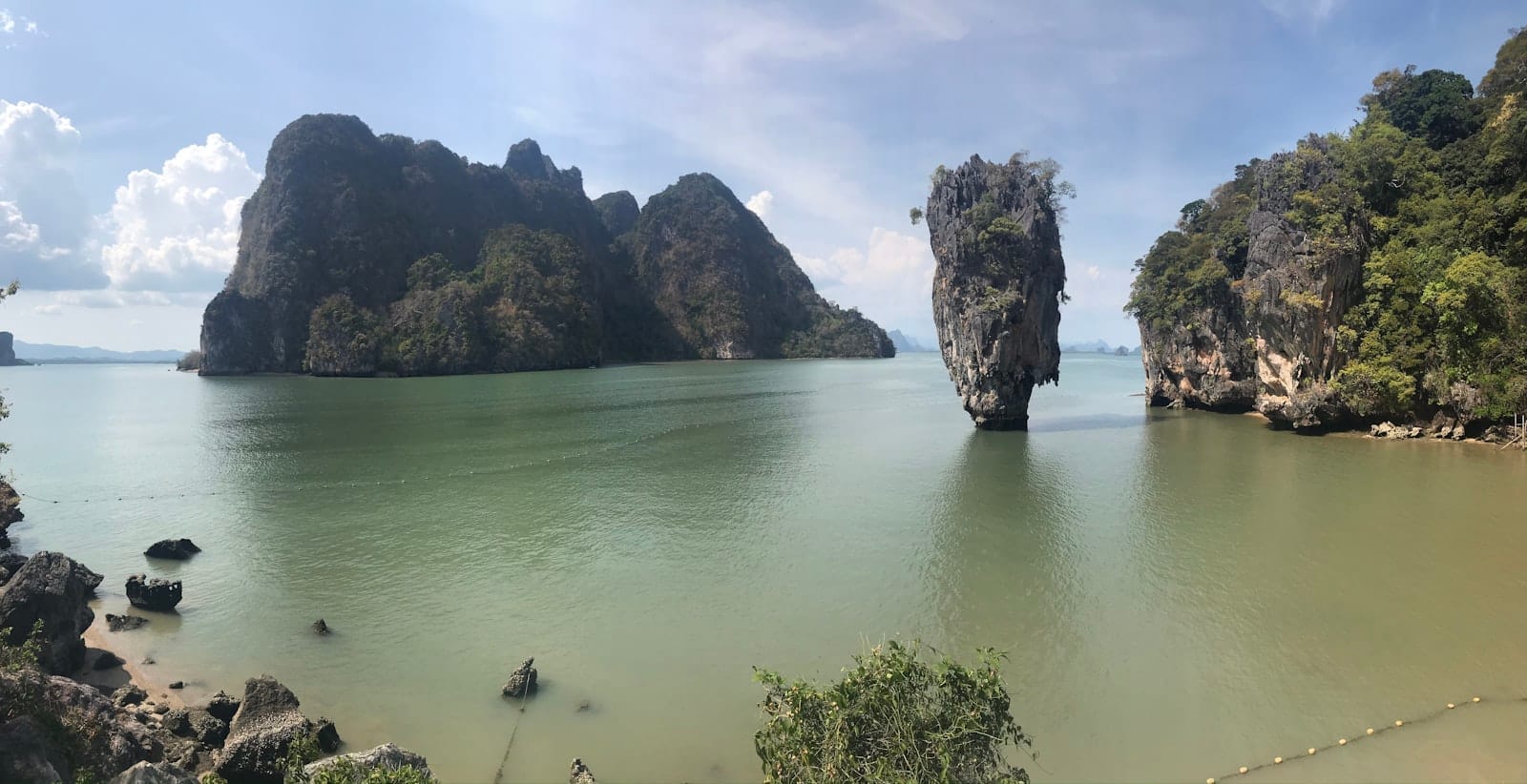
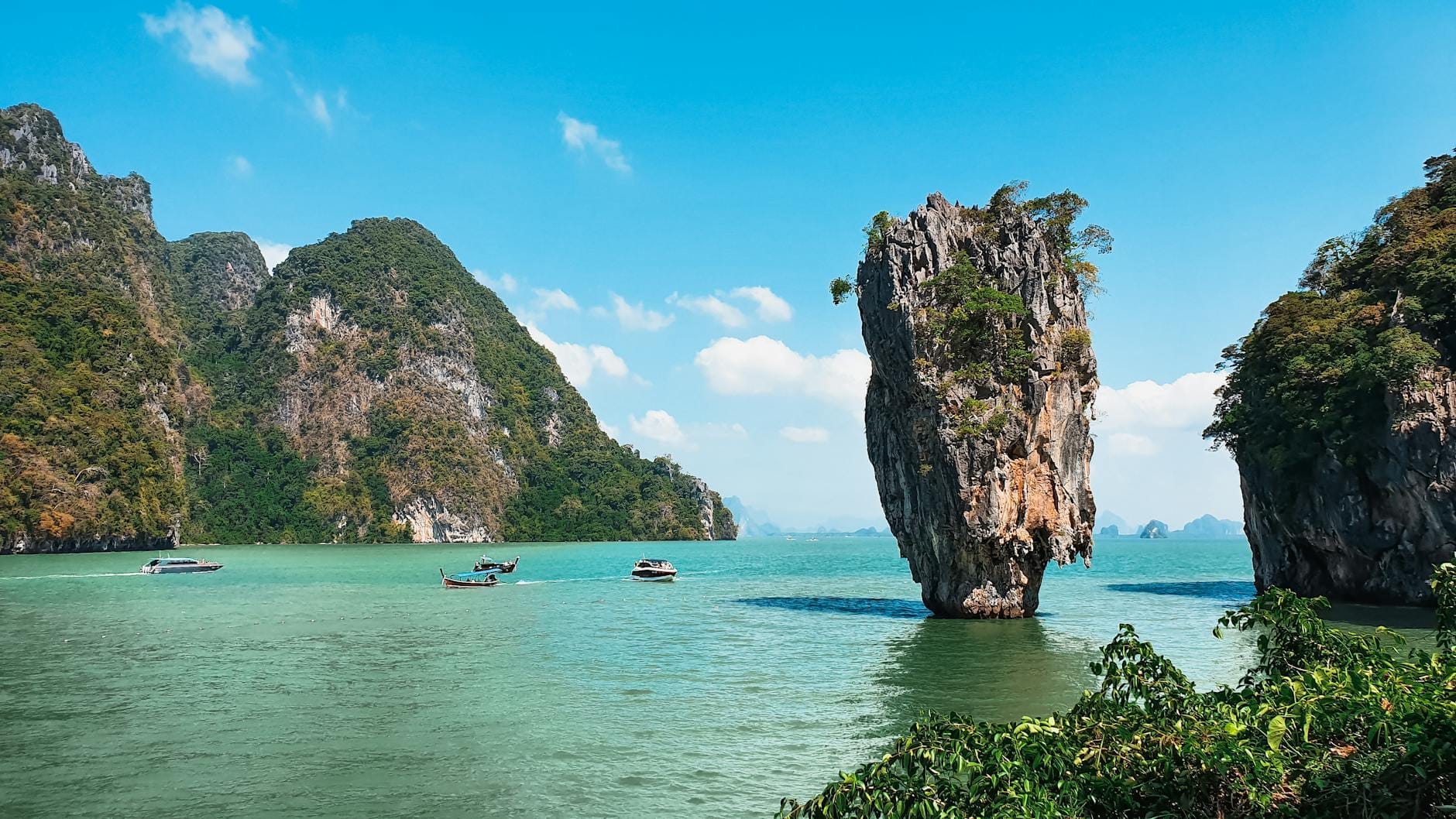
By mid-morning, the atmosphere shifts. Speed boats arrive in succession at James Bond Island, and the narrow beach fills with visitors photographing Koh Tapu, the 20-meter limestone pillar that leans at its precarious angle offshore. Souvenir stalls line the path from the pier to the viewpoint. The crowds are real and unavoidable at peak hours, roughly 10am to 2pm during high season. If you arrive during this window, expect to share every frame of your photograph with strangers.
The mangrove channels and sea caves offer genuine relief from the crowds. Kayaking through narrow cave passages at low tide, where the ceiling of limestone drops to within arm's reach and the only sound is water dripping from stalactites, is a completely different experience from the open-bay boat ride. The cave interiors are dark, cool, and faintly saline. Some open into enclosed hongs, collapsed cave chambers that are now lagoons open to the sky, ringed by sheer rock walls and dense vegetation. These spaces feel genuinely remote even on busy days.
💡 Local tip
Book a tour that departs Ao Po pier by 7am or 7:30am. Arriving at James Bond Island before 10am gives you a noticeably different experience from the midday rush, and the morning light on the karst formations is significantly better for photography.
What to See and Do
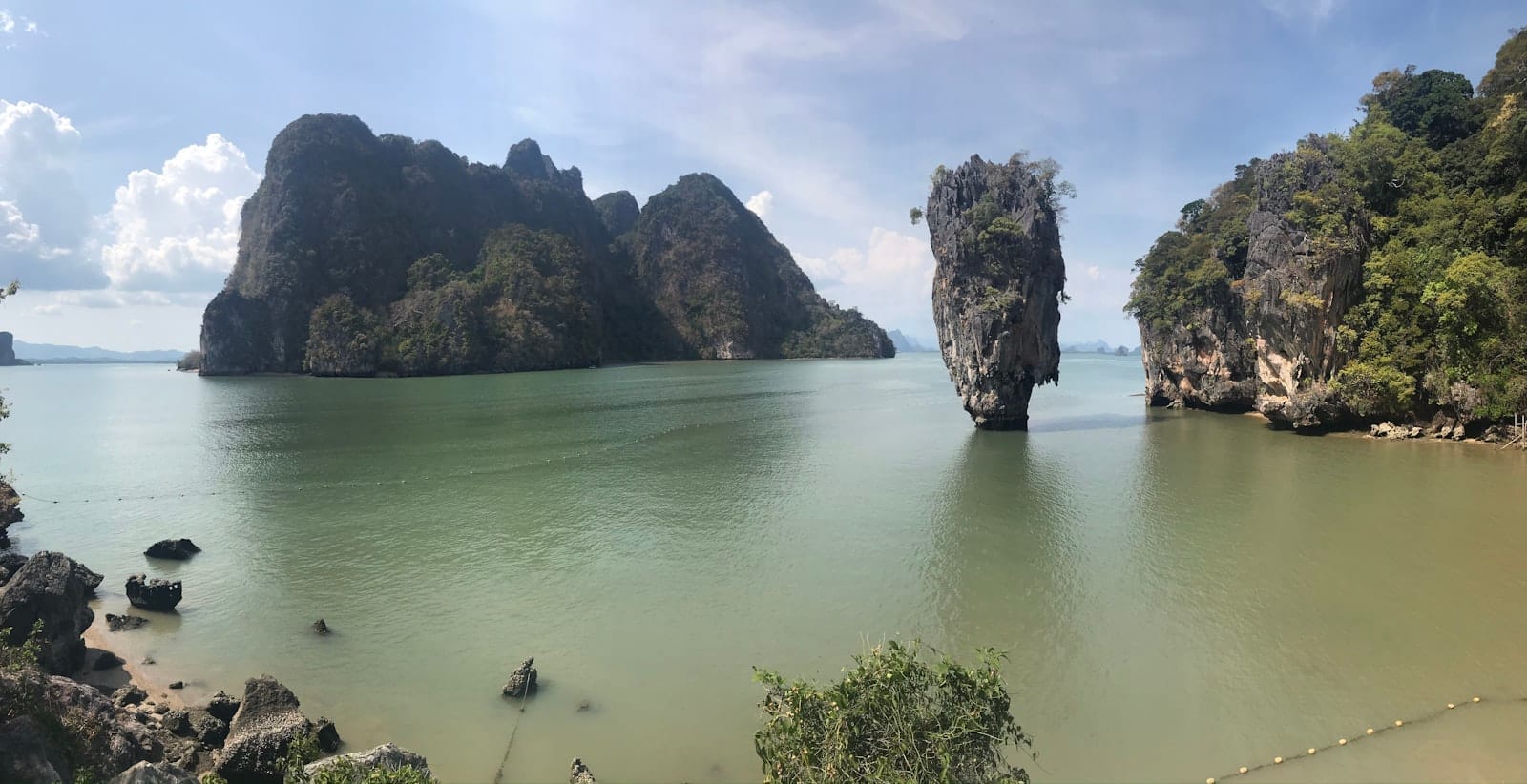
The bay's most iconic feature is James Bond Island, technically named Khao Phing Kan, along with the offshore pillar Koh Tapu that made it famous. The 1974 film The Man with the Golden Gun used these formations as a backdrop, and the association stuck permanently. The site now sits within Ao Phang Nga National Park and charges a ฿300 entry fee for adults and ฿100 for children, which is typically included in organized tour prices. The beach itself is small and gets congested, but the viewpoints accessed by short walking paths above the shore offer better angles and slightly more breathing room.
Koh Panyee is a stilted Muslim fishing village built over the water on the bay's eastern edge, home to several hundred families who have lived there for generations. The village has a floating football pitch that sits over the tidal flats, a detail that has attracted considerable international attention over the years. The lanes between the wooden houses are narrow and feel genuinely inhabited rather than staged for tourism, though the restaurant strip catering to day-trippers is prominent near the pier. Eating a seafood lunch here, with the karst formations visible across the water, is one of the more memorable meals you can have in this part of Thailand.
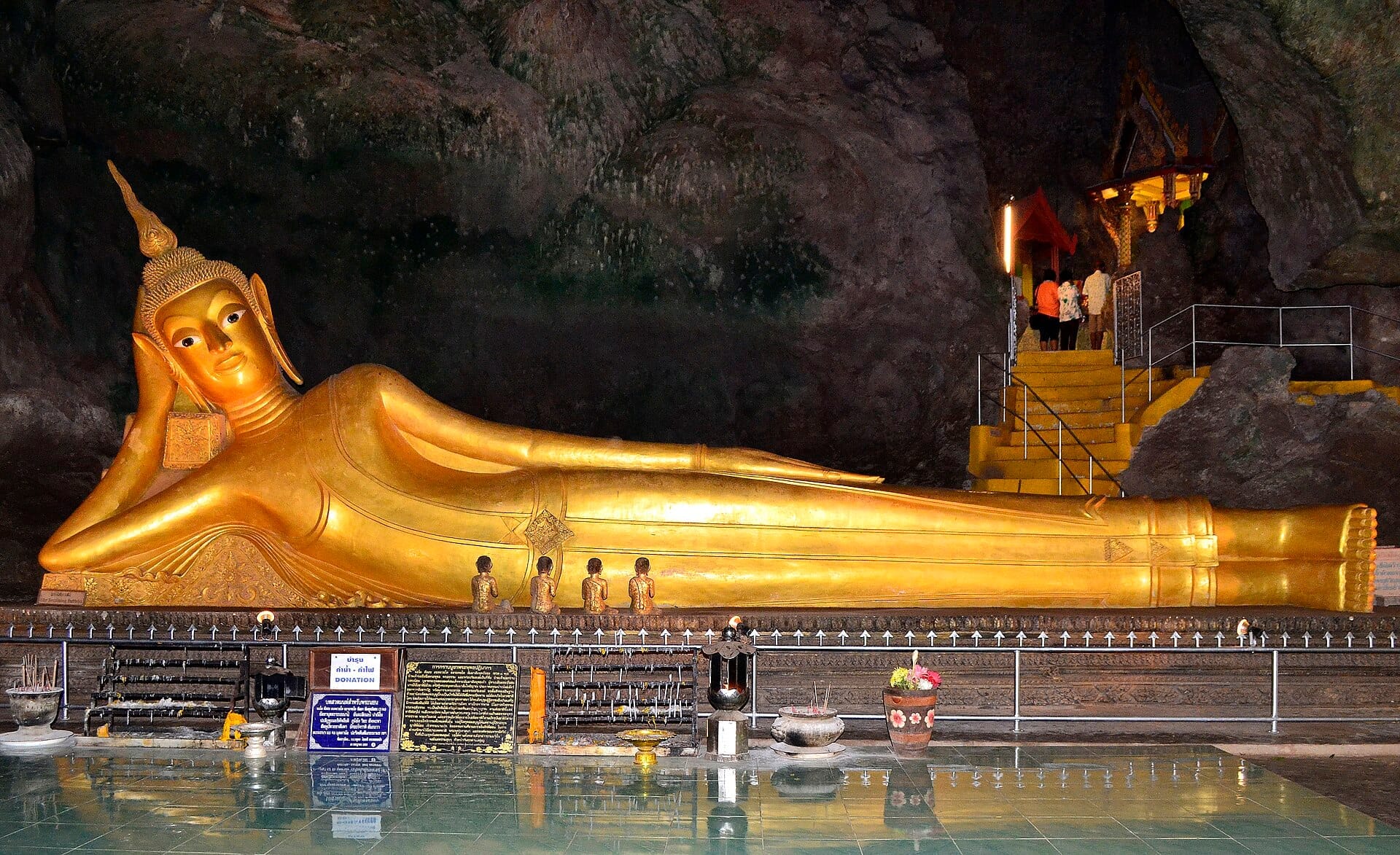
Sea kayaking into the hong caves is arguably the most rewarding activity the bay offers. A number of operators run guided kayak excursions through passages that only become accessible at certain tidal windows, paddling into darkness and emerging into collapsed cave chambers open to the sky. The prehistoric rock paintings at Khao Khian, estimated to be over 3,000 years old and depicting fish, crabs, and human figures in reddish pigment on cave walls, are visible from boats and offer a genuinely different reason to be on the water beyond the scenery.
The Samet Nangshe Viewpoint, also marketed as the Beyond Skywalk, sits on a hill above the bay on the Phang Nga mainland and delivers a sweeping 360-degree panorama over the karst islands, mangrove flats, and open water. It sits approximately 30 minutes by road from the Sarasin Bridge. Sunrise visits are popular and the elevated perspective shows the full scale of the bay in a way that boat-level views cannot. This is accessible independently by car or motorbike from Phuket, which distinguishes it from the water-based activities that require a tour.
James Bond Island and Koh Tapu viewpoints (national park, ฿300 entry)
Koh Panyee stilted fishing village and floating football pitch
Sea kayaking into hong caves and tidal passages
Khao Khian prehistoric cave paintings
Samet Nangshe Viewpoint (Beyond Skywalk) for aerial bay panorama
Mangrove channel exploration by longtail or kayak
Open-bay swimming stops at sandbars and smaller islands
ℹ️ Good to know
Ao Phang Nga National Park was declared in 1981 and recognized as a Ramsar wetland site in 2002. The bay supports 28 species of mangrove, extensive seagrass beds, and coral reef systems. Conservation rules apply within the park boundary, including restrictions on touching coral and feeding marine life.
Eating and Drinking
Eating in Phang Nga Bay is almost entirely tied to the village of Koh Panyee. The floating village's restaurant strip serves Thai seafood dishes aimed squarely at the lunch stop crowd, with grilled fish, stir-fried squid, and crab curry being the standards. Prices are higher than you would pay in Phuket Town for equivalent dishes, reflecting the logistics of getting ingredients to a floating village, but the setting compensates considerably. Most full-day tours factor in a lunch stop here.
If you are visiting the bay independently from the Phang Nga mainland side, Phang Nga Town itself has a small but worthwhile food scene with local noodle shops and morning markets that function as an honest contrast to the tourist-facing food on the water. Some tour operators stop at riverside restaurants in Phang Nga Town before or after the boat portion, and these meals tend to be better value and less hurried than the village lunch stop.
For the full range of dining options accessible from Phuket before or after a bay trip, the Phuket dining guide covers everything from night market street food to seafood restaurants near the northern piers. Most travelers eat a solid breakfast in Phuket before departure, take lunch at Koh Panyee, and return to the island for dinner.
Getting There and Around
Phang Nga Bay has no public transport connection from Phuket. The practical options are a guided tour, a private vehicle, or a combination of songthaew to the Sarasin Bridge area followed by a taxi or hired vehicle across to the mainland piers. Most visitors take an organized tour, which handles pier transfers, national park fees, and the boat or kayak logistics in one package.
Ao Po Pier on Phuket's northeastern coast is the main departure point for tours operating from the island. By road from Phuket Town, Ao Po is approximately 30 kilometers north, taking around 45 minutes by taxi or private vehicle depending on traffic. From Patong or the west-coast beaches, add another 20 to 30 minutes. Speed boat tours from Ao Po reach James Bond Island in roughly 45 minutes on the water. Traditional longtail and rubber-dinghy tours take considerably longer but cover more of the mangrove channels.
The Sarasin Bridge connects Phuket Island to the Phang Nga mainland at the island's northern tip. Crossing it by road puts you in Phang Nga Province, from where the Samet Nangshe Viewpoint is accessible by a further 20-minute drive. Renting a motorbike or car in Phuket and crossing the bridge independently is a viable option for the viewpoint specifically. For a broader overview of transport options across the island, getting around Phuket explains the songthaew routes, Grab availability, and rental options in practical detail.
Tour prices vary significantly by boat type and inclusions. Speed boat tours covering James Bond Island, Koh Panyee, and a kayaking stop typically run in the ฿1,500 to ฿2,500 per person range from Phuket-based operators. Traditional longtail tours through mangrove channels and smaller operators from Phang Nga Town are often cheaper but take longer and cover different terrain. Verify current prices before booking, as they shift seasonally and between operators.
⚠️ What to skip
Wave action and weather in the Andaman Sea can affect bay conditions, particularly from May through October during the southwest monsoon. Some speed boat operators suspend or modify routes during rough weather windows. If visiting in the wet season, confirm with your tour operator the day before departure.
How Phang Nga Bay Connects to the Rest of Phuket
Phang Nga Bay sits at the logical northern end of any Phuket itinerary, most naturally paired with the beaches and accommodation clusters of northern Phuket. Travelers staying in Bang Tao and Surin are well positioned for an early departure to Ao Po Pier without crossing the whole island. From Patong, the transit is manageable but adds time, making an early wake-up essential to beat the midday crowds at James Bond Island.
Many travelers combine Phang Nga Bay with a visit to the Phi Phi Islands on separate days, treating the bay as the quieter, scenery-focused excursion and Phi Phi as the beach and snorkeling day. The two are genuinely different environments: the bay is sheltered, mangrove-fringed, and archaeological, while Phi Phi is open ocean, coral reef, and active beach. Both fit within a standard week-long Phuket itinerary without overlap. For help structuring your time, the Phuket itinerary guide maps out how to sequence major excursions across different trip lengths.
Travelers who want to deepen their time around the bay can base themselves in Phang Nga Town overnight and take an early morning boat before the tour groups arrive, then return to Phuket the following day crossing back over the Sarasin Bridge. This approach is particularly appealing if the Phang Nga Bay tour is a centerpiece of the trip rather than a side excursion. Phang Nga Town itself has basic guesthouses and a relaxed small-town atmosphere that contrasts sharply with Phuket's resort infrastructure.
Who This Area Is For
Phang Nga Bay rewards travelers who are genuinely drawn to natural landscapes and geological spectacle over beach-and-bar tourism. The limestone formations are extraordinary by any standard, and the kayaking through tidal caves is among the most memorable physical experiences available anywhere in southern Thailand. That said, the James Bond Island circuit is among the most commercially organized day trips in the region, with the main sites receiving high visitor numbers during peak season. Travelers expecting solitude at the key landmarks will be disappointed.
The bay is not a place to stay. There are no hotels or resort clusters within the bay itself that are practical for most travelers. It functions as a day trip or at most an overnight extension, and the accommodation question always routes back to Phuket or Phang Nga Town. For families, the combination of a boat ride, a floating village, and sea kayaking makes for an unusually engaging day that works across age groups. Solo travelers or couples who want to get away from the standard package tour circuit should look at private kayak operators or early-morning longtail charters that access the mangrove channels independently.
For a full picture of what the wider region offers beyond the bay, the things to do in Phuket guide covers attractions across the island in detail, helping you decide how Phang Nga Bay fits relative to beaches, temples, and other excursions in your schedule.
TL;DR
Phang Nga Bay is a 400 km² national park and Ramsar wetland featuring 42 limestone karst islands, mangrove channels, sea caves, and prehistoric cave paintings, accessed by boat from Ao Po Pier on Phuket's northeastern coast.
James Bond Island and Koh Panyee fishing village are the headline attractions, but sea kayaking through tidal hong caves offers the most immersive experience the bay provides.
Midday crowds at James Bond Island are significant during high season; early morning departures (before 10am arrival on site) make a measurable difference.
Best suited to travelers interested in natural landscapes, geology, and cultural curiosity, not those looking for beach relaxation or nightlife.
No accommodation within the bay itself; functions as a full-day or overnight excursion from Phuket, most conveniently accessed from the island's northern accommodation clusters.
Phuket has three distinct seasons, and each suits a different type of traveler. This guide breaks down the dry season, hot season, and monsoon period with practical advice on crowds, prices, sea conditions, and what you can actually do each month.
Phuket has no metro, no train network, and taxi meters that drivers routinely ignore. This guide cuts through the confusion with honest pricing, route logistics, and the best transport option for every type of trip across the island.
Phuket has over 30 beaches ranging from lively resort strips to near-deserted coves. This guide covers every beach worth knowing, organized by character and location, with honest advice on swimming conditions, crowds, and how to make the most of each one.
Phuket sits at the center of one of Southeast Asia's most spectacular seascapes. These are the best day trips from the island, from the legendary Phi Phi archipelago to the limestone karsts of Phang Nga Bay, plus ethical wildlife encounters and nearby island escapes.
Planning a trip to Phuket but not sure how to structure your time? This guide breaks down realistic day-by-day itineraries for 5, 7, and 10-day trips, covering beaches, island day trips, cultural sites, and practical logistics so you spend less time figuring out and more time actually there.
From Bangla Road's neon-lit clubs to low-key beach bars in Kamala and jazz spots in Phuket Old Town, Phuket's nightlife spans every budget and mood. This guide breaks down real costs, the best venues by area, seasonal crowd patterns, and what to skip.
Phuket is far more than beaches and Patong nightlife. This guide covers the best things to do across the entire island — temples, islands, food markets, viewpoints, water parks, and cultural attractions — with honest advice on what to skip and what to prioritize based on your travel style.
Phuket's food scene runs the full spectrum, from smoky roadside stalls serving Hokkien noodles for 60 THB to PRU at Trisara, the island's only Michelin-starred restaurant with tasting menus above 3,500 THB. This guide breaks down where to eat in Phuket by neighborhood, budget, and cuisine style, with honest picks and traps to avoid.
Picking the right area to stay in Phuket shapes your entire trip. This guide breaks down every major neighborhood, from lively Patong to peaceful Mai Khao, with honest assessments of who each area suits, what to budget, and what to avoid.