James Bond Island (Khao Phing Kan): What to Expect Before You Go
James Bond Island, officially Khao Phing Kan, is one of Thailand's most photographed natural landmarks. Rising from Phang Nga Bay inside Ao Phang Nga National Park, this limestone island earned global fame as a filming location for the 1974 Bond film 'The Man with the Golden Gun.' Here is what the reality of a visit actually looks like.
Quick Facts
- Location
- Phang Nga Bay, Ao Phang Nga National Park, northeast of Phuket, Thailand
- Getting There
- By boat only; most visitors join organized tours departing from Phuket or Phang Nga town
- Time Needed
- 30–45 min on the island; allow a full day including transit when joining a bay tour
- Cost
- National park entry fee applies; typical guided day tours from Phuket range THB 1,500–3,000 per person (verify before booking)
- Best for
- First-time visitors to Thailand, photography, combining with a Phang Nga Bay kayaking tour
- Official website
- www.dnp.go.th
What Is James Bond Island, Really?
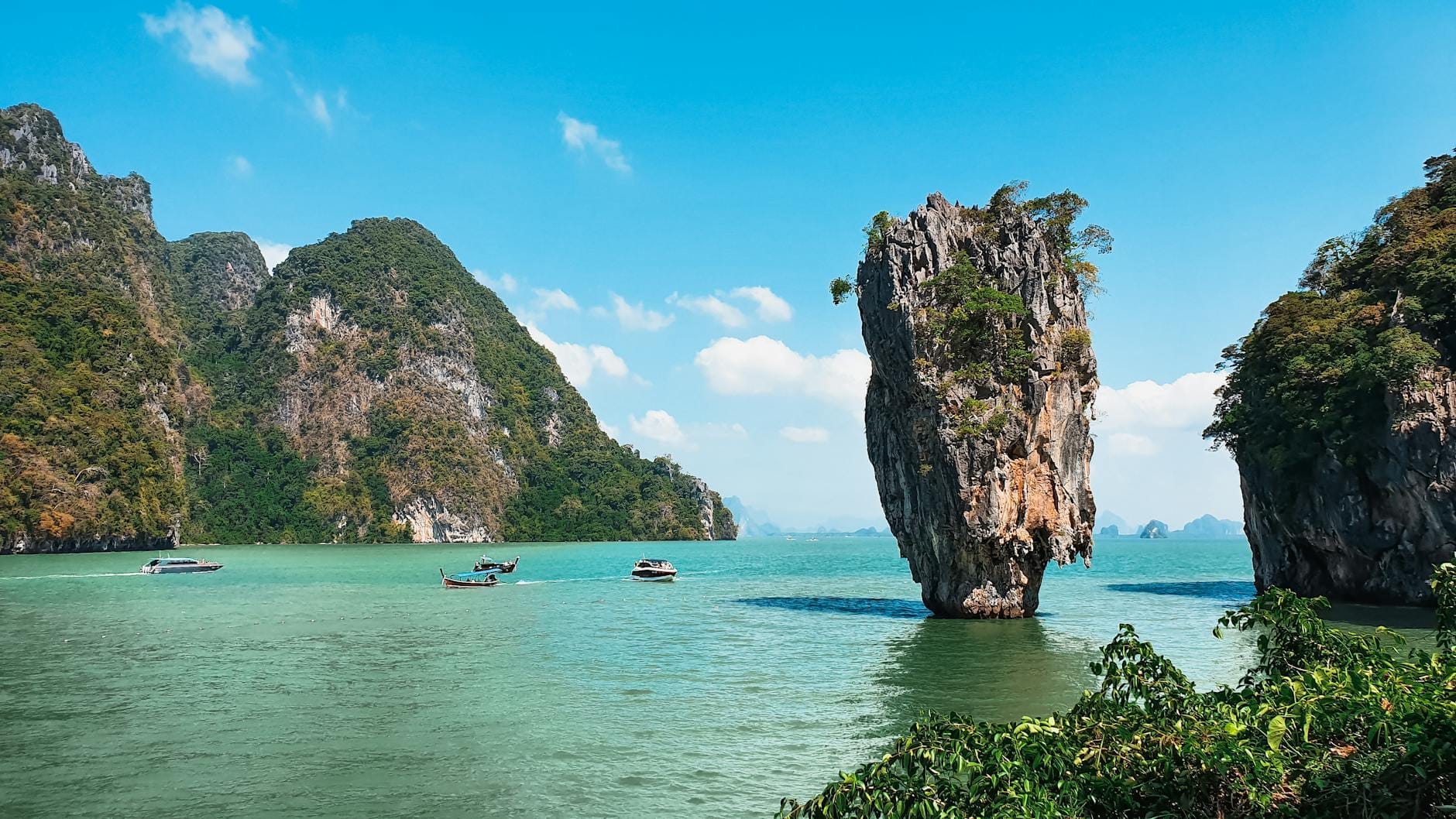
Khao Phing Kan — the island the world calls James Bond Island — is a limestone formation in Phang Nga Bay, sitting inside Ao Phang Nga National Park roughly 90 minutes by boat from Phuket. The name translates loosely to 'hills leaning against each other,' which describes the two main rock faces that slope into one another. The island itself is unremarkable by Phang Nga Bay standards, where dozens of similar karst outcrops punctuate the water. What draws the crowds is Koh Tapu, a separate 20-meter (66-foot) spike of limestone rising from the sea about 40 meters from the shore of Khao Phing Kan.
Koh Tapu became internationally known when director Guy Hamilton chose it as the backdrop for Scaramanga's island lair in the 1974 film 'The Man with the Golden Gun.' The production shot on location here, and the image of that improbable vertical rock against green water was broadcast to millions. Within a decade, Phang Nga Bay had become one of southern Thailand's primary tourist destinations, and Khao Phing Kan had a new English name that has since outlasted any other.
ℹ️ Good to know
The limestone karsts of Phang Nga Bay began forming approximately 250 million years ago during the Permian period. Koh Tapu exists because it eroded more slowly than the rock surrounding it — its structural integrity, not its size, is what makes it rare.
How the Experience Actually Unfolds
Boats from Phuket typically arrive at the island between 10:00 and 13:00, which coincides with peak congestion on the small beach. The landing area is a narrow strip of sand fringed by souvenir stalls selling magnets, keychains, and the obligatory T-shirts. The atmosphere in mid-morning can feel more like a floating market than a natural park: long-tail boats jostle at the pier, guides wave flags, and queues form at the most photographed angle facing Koh Tapu.
If you arrive with a tour that departs Phuket by 07:00 or 07:30, you may reach the island before the main fleet. The light at that hour falls more softly on the rock face, the water holds a deeper green, and there are perhaps a tenth of the people you would encounter by noon. Conversely, afternoon arrivals after 14:00 can also be quieter as day trips head back toward port, though the light by then is harsher and the sky often hazier in dry season.
Once ashore, the walkable area covers the main beach, a short trail through the interior (stone steps, low light, uneven rock underfoot), and a second small beach on the far side. The walk takes around 20 minutes at a relaxed pace. There is little to do beyond looking at Koh Tapu from various angles, browsing the stalls, and reboarding your boat. Most Phang Nga Bay tours combine the island with sea cave kayaking and a visit to Panyee, the Muslim fishing village built entirely on stilts, which many visitors find more genuinely interesting.
Tickets & tours
Hand-picked options from our booking partner. Prices are indicative; availability and final rates are confirmed when you complete your booking.
James Bond Island and Koh Panyi Private Longtail Boat Tour
From 78 €Instant confirmationFree cancellationPrivate tour to James Bond Island and Ko Panyi from Koh Yao Yai-Noi
From 304 €Instant confirmationFree cancellationIconic James Bond experience from Phuket
From 98 €Instant confirmationFree cancellationJames Bond Island boat trip with lunch
From 48 €Instant confirmationFree cancellation
The Landscape: Karst Geology in Context
Phang Nga Bay contains around 40 islands, all formed from the same ancient limestone seabed that buckled and eroded over geological time. The bay is shallow — typically 5 to 10 meters deep — and its calm, protected waters make it navigable year-round in most conditions. The karst towers take on different colors depending on the hour: pale gray at midday, warm amber in early morning or late afternoon, and almost black under cloud cover. Mangrove forests line many of the inlets between islands, visible at low tide when their root systems emerge from the water.
Koh Tapu's particular drama comes from its proportions: it is wider at the top than at its base, giving it the visual tension of something that should not be standing. It has not moved in recorded history, but the narrowing at the waterline has led to periodic warnings about its long-term stability. For now, it remains solid, though visitors should note that access near the base may be restricted to protect the limestone from erosion.
Getting There: Tour Options and Transit
There is no independent way to reach Khao Phing Kan. Access requires a boat, and the practical options are either a group day tour or a chartered private longtail or speedboat. Group tours from Phuket pick up from most hotels and run daily throughout the year, though departures thin out slightly during the May to October monsoon months when seas can be choppier and visibility lower.
Speedboat tours cover the distance in around 30–45 minutes and typically combine James Bond Island with other stops across Phang Nga Bay. Longtail and traditional boat tours take longer (up to 2 hours each way from some departure points near Phang Nga town) but offer a calmer, lower perspective on the water and rock formations. If your priority is comfort and minimizing time at sea, opt for a speedboat. If you want the bay to feel less rushed, a longtail tour rewards the patience.
💡 Local tip
Book tours that depart before 08:00 if you want to photograph Koh Tapu without crowds in the frame. Ask specifically when the boat arrives at James Bond Island, not just when it departs the pier.
Some tours originate from Khao Lak or Phang Nga town rather than Phuket, and these can place you at the island earlier with fewer fellow passengers. If you are staying on Phuket's northern coast — around Surin or Bang Tao — these northern departure options save time and often cost less.
Photography: Making the Shot Worth the Effort
The standard photograph of Koh Tapu frames the spire from the beach, shot from knee height with the shallow turquoise water in the foreground. It works, and it will look exactly like every other photograph taken here since roughly 1980. To get something different, walk to the far end of the second beach where the rock appears against the jungle backdrop rather than open water, or look for the perspective from the stairs inside the island where Koh Tapu frames between two overhanging limestone walls.
Wide-angle lenses work well given Koh Tapu's vertical scale. Polarizing filters improve color saturation in the water. In direct midday sun, the rock blows out easily — expose for the highlights and recover the shadows in post-processing if shooting RAW. Weather matters more here than at most terrestrial sites: overcast skies flatten the color out of the water, which is the single most compelling visual element of the bay.
Practical Considerations and Honest Limitations
The island is not wheelchair accessible. The pier involves a step from the boat to a dock, followed by sand, then uneven stone steps. Visitors with limited mobility can usually view Koh Tapu from the boat itself, and many do. The water around the base of Koh Tapu is shallow enough for confident swimmers to reach on calm days, but open-water swimming is not formally organized here.
Wear light, quick-dry clothing and shoes with grip — the limestone steps inside the island can be slippery when humid. Bring drinking water; the stalls sell it but at a markup. Sunscreen and a hat are essential given the lack of shade on the main beach. If you tend to get seasick, take medication before boarding: some longtail routes can be rough during monsoon swells. For context on the best months for the bay overall, the best time to visit Phuket guide covers the dry and wet season trade-offs in detail.
To state this plainly: the island itself is small, the visit is short, and the site is heavily commercialized. Travelers who expect a tranquil natural experience are routinely disappointed. What it is, accurately, is one of the most striking individual rock formations in Southeast Asia, set in a bay of exceptional scenery, with an appealing pop-culture story attached. Within those expectations, it fully delivers.
⚠️ What to skip
During peak dry season (December to February), James Bond Island receives thousands of visitors per day. The beach is small. If crowd tolerance is low, consider pairing this with sea cave kayaking in a less-visited part of the bay rather than making it the headline of your itinerary.
Combining the Island With the Rest of Phang Nga Bay
Khao Phing Kan works best as one stop in a broader bay itinerary rather than the sole reason for a trip. The sea caves of Hong Island, the mangrove tunnels accessible only by kayak at certain tide windows, and the stilt village of Koh Panyee all rank alongside or above the island for many visitors once they arrive. Some operators offer half-day tours that skip James Bond Island entirely and focus on the less-visited northern section of the bay — worth considering if you have already seen the island or are more interested in kayaking than sightseeing. You can also explore Hong Island on a separate day trip, which offers a quieter experience of similar karst scenery.
For those building a wider Phuket itinerary, the bay trip pairs logically with a day on the island's southern beaches or a morning at Wat Chalong and the Big Buddha before heading north to the pier the following day. Most Phuket itineraries of five days or more include Phang Nga Bay as a single full-day excursion.
Insider Tips
- Request departure times explicitly when booking: ask what time the boat arrives at Khao Phing Kan, not just when it leaves the pier. A 07:00 departure from Phuket can place you at the island by 08:30, well before the main fleet.
- The second beach on the far side of the island (reached via the internal path) is almost always less crowded than the main landing beach and gives a different, often more dramatic angle on Koh Tapu.
- Tours departing from Phang Nga town rather than Phuket tend to be cheaper, arrive at the island earlier, and carry fewer passengers. Worth researching if you have transport flexibility.
- Tides affect the mangrove and sea cave sections of the bay more than the island itself, but check tide tables if kayaking is part of your tour — some caves are impassable at high water.
- The souvenir stalls accept cash only. Bring small Thai Baht notes if you plan to buy anything; vendors rarely have change for large bills.
Who Is James Bond Island (Khao Phing Kan) For?
- First-time visitors to Thailand ticking off an iconic landscape
- Film and pop culture enthusiasts with an interest in on-location scouting
- Photographers who plan around lighting and can depart before 08:00
- Families with older children who can manage boat travel and stone stairs
- Travelers combining the bay with sea cave kayaking or a multi-stop island tour
Nearby Attractions
Other things to see while in Phang Nga Bay:
- Wat Suwan Kuha (Cave Temple)
Carved into a limestone karst hill 13 km south of Phang Nga town, Wat Suwan Kuha shelters a 15-meter golden reclining Buddha inside a cathedral-sized cave chamber. Built roughly 150 years ago and once visited by King Rama V, this working temple offers an experience that combines genuine spiritual atmosphere with remarkable geology. Entry is free, the crowds are manageable, and it pairs naturally with a Phang Nga Bay day trip.
- Phang Nga Bay
Phang Nga Bay is a 400 km² national park of vertical limestone karsts, mangrove tunnels, and tidal caves set in jade-green water between Phuket and the Thai mainland. It rewards early risers and kayak enthusiasts far more than the midday tour-boat crowd.