Koh Hong (Hong Island): Limestone Lagoons and Panoramic Views Near Phuket
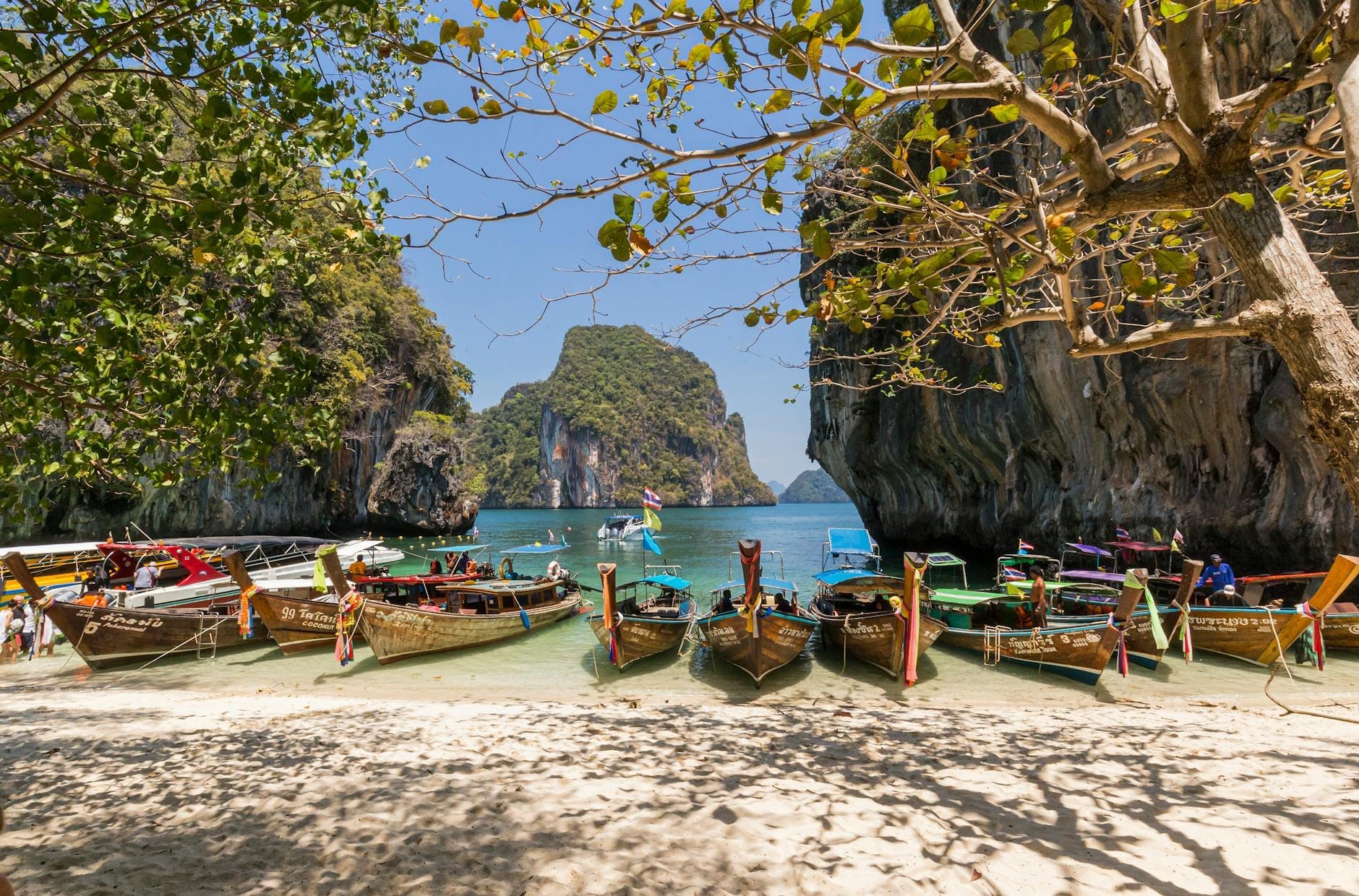
Koh Hong is a limestone island within Than Bok Khorani National Park, about 30 minutes by boat from Ao Nang. It offers a sheltered beach, a tidal lagoon accessible only by dinghy, and a steep 420-step viewpoint with sweeping Andaman Sea views. Day trips from Phuket make it a feasible, if long, excursion.
Quick Facts
- Location
- Mu Koh Hong archipelago, Than Bok Khorani National Park, Krabi Province — roughly 6km from the mainland
- Getting There
- Day-trip boats depart from Nopparat Thara Pier (Ao Nang); pick-up available from Railay, Klong Mueang, Tubkaek, and Krabi Town. From Phuket, a full-day organized tour is the most practical option.
- Time Needed
- 4–6 hours on-island; full day when departing from Phuket
- Cost
- National Park entrance fee required (verify current rate before visiting); day-trip boat prices vary by operator — expect higher costs than mainland beaches due to park status
- Best for
- Snorkeling, lagoon exploration, scenic hiking, photography, and travelers who want a quieter alternative to Phi Phi or James Bond Island
What Koh Hong Actually Is
Koh Hong — spelled เกาะห้อง in Thai, meaning 'island of rooms' — takes its name from the hollowed limestone chambers and enclosed lagoon hidden within its interior. It is the largest island in the Mu Koh Hong archipelago, an archipelago composed of at least 12 islands, most uninhabited, sitting roughly 6 km off the Krabi coastline in the Andaman Sea. The entire group falls under the protection of Than Bok Khorani National Park, which keeps development minimal and preserves the water clarity that makes the area worth the trip.
One important point worth clarifying before you book: there are two islands commonly called 'Koh Hong' in southern Thailand. This guide covers the Krabi Province version, which is the more visited of the two and the one most frequently included on day-trip itineraries departing from both Krabi and Phuket. A separate Hong Island exists in Phang Nga Bay, closer to Phuket. Check with your tour operator which island is on the itinerary.
ℹ️ Good to know
The four main islands visitors typically see on a Koh Hong day trip are Koh Hong, Koh Lao Lading, Koh Pak Bia, and Koh Rai. Most tours combine two or three of these with snorkeling stops in between.
The Lagoon: Why People Come Here
The defining feature of Koh Hong is its internal lagoon, a seawater pool surrounded entirely by sheer limestone walls that rise 20 to 30 meters above the waterline. The entrance to the lagoon is a narrow gap between two rock faces, barely wide enough for a small dinghy, and crucially, it is only passable at higher tides — water levels above approximately 2 meters. This tidal restriction means access is not guaranteed on every visit, and tour operators should advise on whether conditions are suitable on your departure day.
Inside, the lagoon opens into a calm, enclosed space where the water shifts between green and pale blue depending on the light. The rock walls are draped in ferns and small trees that have taken root in crevices, and the acoustics make even quiet sounds carry strangely. It is a genuinely unusual environment, and unlike the more theatrical versions of similar formations elsewhere in the Andaman, this one feels proportionate and unhurried. That said, if the tide is wrong, you will not get in, so manage expectations accordingly.
⚠️ What to skip
Lagoon access depends entirely on tidal conditions. Tides above 2 meters are required for dinghy entry. Visit during May to October (wet season) for statistically higher tides, but sea conditions may also be rougher. Confirm tide windows with your operator before booking.
Tickets & tours
Hand-picked options from our booking partner. Prices are indicative; availability and final rates are confirmed when you complete your booking.
Muay Thai Boxing Tickets at Patong Boxing Stadium
From 56 €Instant confirmationFree cancellationPhuket Island and Big Buddha Private Tour
From 125 €Instant confirmationFree cancellationGuided elephant nature walk tour with transfer
From 50 €Instant confirmationFree cancellationFull-day tour to the highlights of Phuket City and its surroundings
From 71 €Instant confirmationFree cancellation
The Beach and the Water
Koh Hong's main beach is a crescent of white sand facing the open sea, backed by limestone cliffs that block the wind from most directions and keep the water unusually calm. The color of the water here, a shallow turquoise that deepens to cobalt further out, is the kind of thing that looks improbable in photographs and then turns out to be accurate when you arrive. The sand is fine and mostly free of coral debris close to shore, making it comfortable for sitting in shallow water.
The reef sections around the island, accessible by snorkel, hold reasonable coral cover and fish populations, though the quality varies depending on season and recent boat traffic. Morning arrivals, before the bulk of the day-trip fleet gets in, offer noticeably better underwater visibility. The water is warmest and clearest between November and April; during the wetter months from May to October, visibility can drop and some tours suspend operations depending on sea state.
The beach has basic facilities: a Thai food restaurant, a beach bar, a juice stand, and toilet blocks. Prices for food and drinks are higher than the mainland, as is standard for national park island locations. If you are coming from Phuket, compare this with other Andaman day-trip options — the Phi Phi Islands are more dramatic in scale but considerably more crowded, while James Bond Island in Phang Nga Bay is faster to reach but offers less swimming and beach time.
The 420-Step Viewpoint: Worth the Climb
A marked trail from the beach leads up to a viewpoint at the island's summit, reached via approximately 420 steps cut into the limestone and reinforced with wooden railings on the steeper sections. The ascent takes 15 to 20 minutes at a normal pace and is genuinely steep in places, with exposed rock sections that can be slippery after rain or in flip-flops. Proper footwear is strongly recommended: lightweight trail shoes or solid sandals with grip, not the beach sandals most visitors arrive wearing.
At the top, the view is a 360-degree panorama over the archipelago: the scattered limestone karsts of the Andaman Sea stretching to the horizon, the island's own beach directly below, and on clear days the faint outlines of Phi Phi Leh to the south. The best light for photography is in the morning, when the sun is behind you as you look out to sea. By midday, the light becomes harsh and the haze thickens. Bring water — there is no shade on the upper section of the trail, and even at moderate temperatures the exertion adds up quickly.
💡 Local tip
Start the viewpoint hike immediately after arriving, before swimming or eating. By early afternoon, the combination of heat and post-lunch fatigue makes the climb noticeably harder, and the light for photography is better in the morning anyway.
Getting There from Phuket
Koh Hong lies in Krabi Province, not Phuket, which means reaching it from Phuket involves a longer journey than most island day trips. The standard route is an organized tour that includes transfer from your hotel or a central meeting point, road transport to a pier, and a speedboat or longtail boat crossing to the island. Total travel time from Phuket is several hours round-trip, making for an early start and a full-day commitment. Budget operators may route via Ao Nang pier; others use closer launch points depending on conditions.
If you are based closer to Krabi, or willing to spend a night in the area, trips from Nopparat Thara Pier in Ao Nang are the most direct option. Pickup is available from Ao Nang Beach, Railay Beach, Klong Mueang Beach, and Tubkaek Beach. For context on planning your time between destinations, the Phuket island day trips guide covers logistics and helps you decide which excursions are realistically worth the travel time from your base.
When to Go and What to Expect by Season
The dry season, running from November through April, is the best window for Koh Hong. Sea conditions are calm, visibility underwater is at its best, and the boat crossing is comfortable. December to February sees the heaviest concentration of visitors, so the beach fills up by late morning on peak-season days. If you are visiting during this window, an early departure time — before 8 am from your pier — helps you reach the island before the bulk of other boats.
Between May and October, the southwest monsoon brings rougher seas and stronger winds. Some tour operators suspend services to Koh Hong during this period, or limit trips to days with favorable forecasts. The beach itself remains beautiful, the lagoon tides are often higher (which can aid access), and fewer tourists mean a calmer experience on the days tours do run. Check operator conditions carefully and be prepared for cancellations with same-day notice.
For a broader view of seasonal timing across Phuket and the surrounding Andaman region, the best time to visit Phuket guide explains how the monsoon affects different parts of the coast at different times of year.
Honest Assessment: Is It Worth It from Phuket?
Koh Hong is a genuinely beautiful island with three distinct draws: the lagoon, the viewpoint, and the beach. None of these requires you specifically to be at Koh Hong rather than any other well-preserved Andaman island, but the combination in one place is unusual. The lagoon in particular is uncommon — most islands of this type do not have interior access — and the viewpoint offers a quality of panorama that most beach-only stops cannot match.
The honest limitation is the travel time from Phuket. Four to five hours of round-trip transit for four to six hours on the island is a significant ratio, and it compares unfavorably with closer options. Travelers who are particularly interested in kayaking, lagoon exploration, or a quieter atmosphere than Phi Phi will likely find it worth the effort. Those who simply want a nice beach and clear water have adequate options much closer to Phuket's southern coast, including quieter spots that require far less commitment.
Families with young children should consider whether the 420-step viewpoint hike and the tidal restrictions on the lagoon reduce the visit to beach time alone — which is enjoyable but not unique enough to justify the full-day effort. For families, closer options like Coral Island offer similarly clear water with far less transit.
Photography and Practical Notes
The main beach photographs best in morning light, when the sun comes over the eastern cliffs and the water is at its most saturated color. Lagoon photography requires a waterproof camera or housing — the dinghy ride through the entrance gap is low and narrow, and spray is likely. For the viewpoint, a wide-angle lens or phone camera captures the full panoramic arc; a polarizing filter dramatically improves the color contrast between the water and limestone on sunny mornings.
Accessibility: the beach and basic facilities are reachable for most mobility levels, but the viewpoint trail is not suitable for wheelchairs or for visitors with significant mobility limitations. The lagoon dinghy requires crouching low to pass through the entrance gap. The boat crossing itself, especially on speedboats, can be rough on choppy days and is not recommended for travelers prone to seasickness without medication.
Insider Tips
- Book a tour that departs before 8 am from the pier. The first boats to arrive on the island have the beach largely to themselves for 30 to 45 minutes — a meaningful difference in atmosphere and photograph quality.
- Ask your operator specifically about the tide forecast for the lagoon on your chosen day. If tides will not reach 2 meters, adjust your expectations before arrival rather than being disappointed on the water.
- Do the viewpoint hike first, while you are fresh and the light is still angled correctly. Most visitors go straight to the beach, which means the trail is quieter in the first hour after arrival.
- Bring your own snacks and a refillable water bottle. Food on the island is available but limited in variety and priced accordingly for a national park location. The hike burns more energy than it looks.
- If your tour includes multiple islands, pay attention to the order of stops. Koh Pak Bia and Koh Lao Lading typically offer the best snorkeling conditions in the group; ask which stop has the clearest reef on your day.
Who Is Hong Island (Koh Hong) For?
- Travelers who want a full-day island experience with multiple distinct activities: beach, lagoon, and hike in one place
- Photographers looking for Andaman limestone karst scenery without the crowds of Phi Phi or Maya Bay
- Snorkelers and kayakers who prefer calmer, less-frequented waters over high-traffic reef sites
- Couples or small groups willing to commit to a longer travel day for a noticeably quieter island atmosphere
- Visitors based in Krabi or Ao Nang for whom the transit time is significantly shorter and the value equation is more favorable
Nearby Attractions
Combine your visit with:
- Carnival Magic Phuket
Carnival Magic is Phuket's largest purpose-built entertainment park, a US$150 million Thai carnival experience set on 40 acres in Kamala. Featuring 40 million lights, a 2,200-seat River Carnival show, and 9 Guinness World Records, it is designed for families and first-time visitors who want spectacle on a grand scale. Here is everything you need to decide if it earns a spot in your itinerary.
- Elephant Jungle Sanctuary Phuket
Elephant Jungle Sanctuary Phuket offers guided, no-riding encounters with rescued elephants in a forested setting near Patong. Here is what the experience actually involves, how it compares to other sanctuaries on the island, and whether it is worth your time.
- Maya Bay
Maya Bay on Koh Phi Phi Leh is one of Thailand's most photographed spots, sheltered by sheer limestone cliffs and reached by a short walk through jungle from Loh Samah Bay. Visitor numbers are now capped, swimming is restricted to knee-deep water, and a seasonal closure runs August through September each year. Here's what the experience actually involves, and how to make the most of it.
- Phi Phi Islands
The Phi Phi Islands are six limestone islands in the Andaman Sea, part of a national park that includes the famous Maya Bay. Reachable by speedboat or ferry from Phuket, they range from a lively backpacker hub on Koh Phi Phi Don to an uninhabited cliff-ringed island that hosted one of cinema's most recognizable beach scenes. Here is what you actually need to know.