Wat Suwan Kuha: Inside Phang Nga's Sacred Cave Temple
Carved into a limestone karst hill 13 km south of Phang Nga town, Wat Suwan Kuha shelters a 15-meter golden reclining Buddha inside a cathedral-sized cave chamber. Built roughly 150 years ago and once visited by King Rama V, this working temple offers an experience that combines genuine spiritual atmosphere with remarkable geology. Entry is free, the crowds are manageable, and it pairs naturally with a Phang Nga Bay day trip.
Quick Facts
- Location
- Tham Suwan Kuha, Tambon Krasom, Amphoe Takua Thung, Phang Nga (approx. 13 km south of Phang Nga town on Route 4)
- Getting There
- Private car or scooter from Phuket via Sarasin Bridge, then Route 4 north toward Phang Nga; no direct public transport to the gate
- Time Needed
- 45–90 minutes, or up to half a day if combined with Phang Nga Bay
- Cost
- Free entry (donations welcome at the temple shrine)
- Best for
- Temple seekers, photography, cultural day trips, travelers combining with a Phang Nga Bay tour
What Wat Suwan Kuha Actually Is
Wat Suwan Kuha, written in Thai as วัดสุวรรณคูหา and also known as Wat Tham Suwan Kuha or simply the Cave Temple, is a fully active Buddhist temple built inside and around a natural limestone cave in Phang Nga province. This is not a show cave retrofitted with religious statues for tourists. Monks live here, incense burns daily, and local families arrive on weekends to make merit. The distinction matters, because it changes how you experience the place.
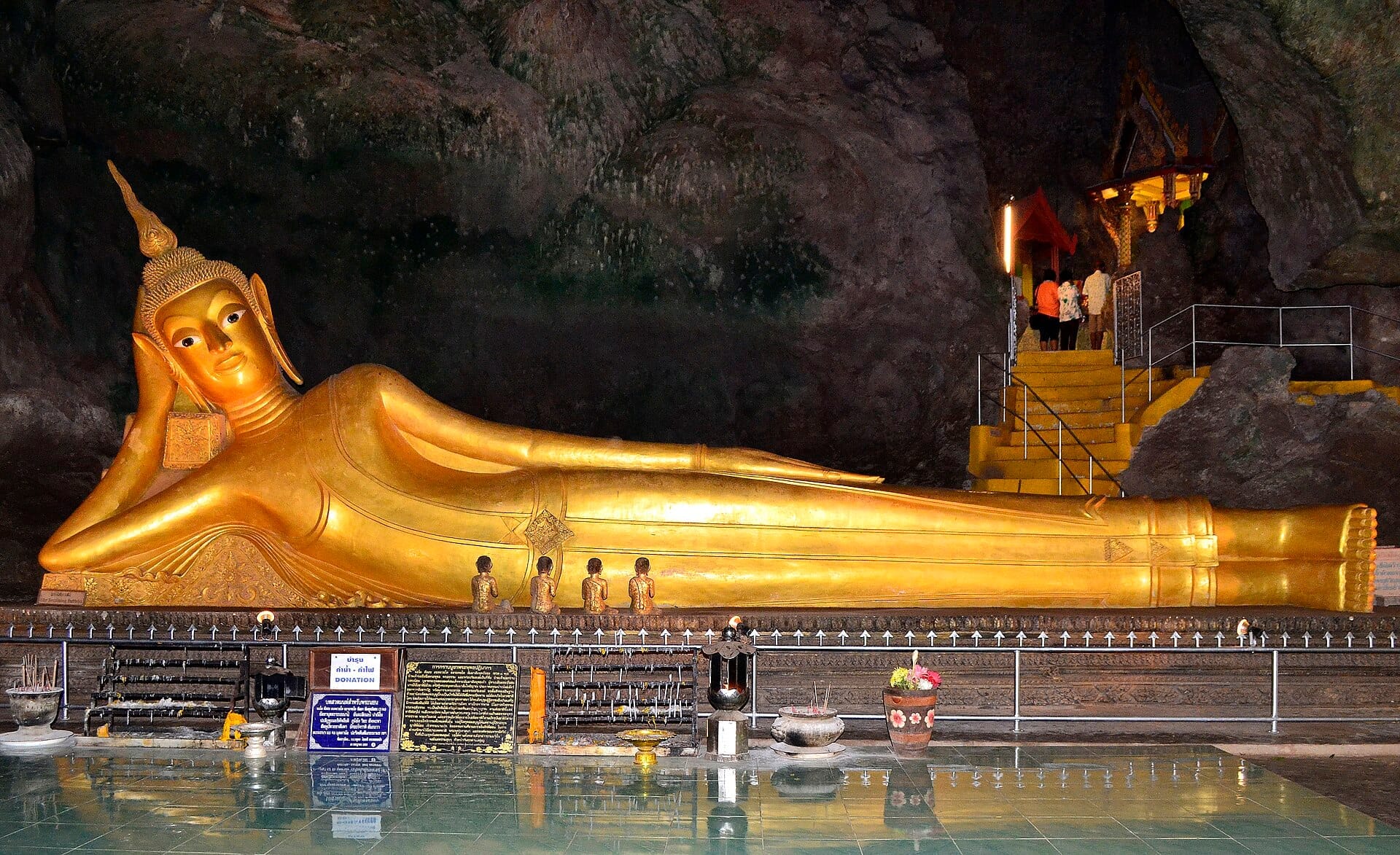
The cave itself, known as Tham Yai, measures roughly 40 meters long and 20 meters high at its peak. That makes it genuinely cathedral-scale: the ceiling vaults upward into shadow, stalactites hang in clusters, and daylight enters through a wide natural mouth at the front. The dominant sight inside is a 15-meter golden reclining Buddha, positioned along the cave floor with an expression of composed serenity. Dozens of smaller Buddha images, gilded figurines, and shrine offerings fill the surrounding ledges and alcoves.
💡 Local tip
Wear shoes with grip. The cave floor is polished smooth by decades of foot traffic and can be slippery, especially near areas where water seeps from the rock. Flip-flops are fine outside but awkward inside.
History and Royal Significance
The temple was established approximately 150 years ago, attributed to the Na Takuathung family, a prominent lineage in the Phang Nga region. What elevated Wat Suwan Kuha from local shrine to historically significant site was the visit of King Rama V, the modernizing monarch who ruled Siam from 1868 to 1910. Stone inscriptions inside the cave record the royal visit, and the tradition of royal patronage continued with subsequent generations of the Thai royal family. Those inscriptions, partially faded now, add a layer of documentary weight to what could otherwise be read purely as religious decoration.
The cave's natural qualities made it an obvious site for sacred use long before the formal temple was built. Limestone karst formations like this one have been used as shelters, meditation spaces, and places of worship across Southeast Asia for centuries. The resonant acoustics inside, the dramatic shift from bright tropical light to cool dimness, and the sense of enclosure all contribute to an atmosphere that feels instinctively significant regardless of your own beliefs.
Tickets & tours
Hand-picked options from our booking partner. Prices are indicative; availability and final rates are confirmed when you complete your booking.
Muay Thai Boxing Tickets at Patong Boxing Stadium
From 56 €Instant confirmationFree cancellationPhuket Island and Big Buddha Private Tour
From 125 €Instant confirmationFree cancellationGuided elephant nature walk tour with transfer
From 50 €Instant confirmationFree cancellationFull-day tour to the highlights of Phuket City and its surroundings
From 71 €Instant confirmationFree cancellation
What the Visit Feels Like: Time of Day and Crowd Patterns
Arriving early, between 8:00 and 10:00, gives you the best chance of experiencing the temple in near-silence. The air inside the cave holds a damp coolness even when the Phang Nga morning is already warm outside. The smell is a specific combination: incense smoke, wet limestone, and the faint sweetness of fresh offerings, jasmine garlands or small lotus buds placed in front of the Buddha images. Monks may be chanting, and the reverb inside the cave turns the sound into something almost physical.
By mid-morning, tour groups begin arriving, often as part of organized day trips that also include the Phang Nga Bay area. The cave is large enough that it never feels dangerously crowded, but the contemplative quality of an early visit does shift. Photography becomes more complicated, and conversation noise competes with any ambient sound. If you are combining this stop with a broader Phang Nga Bay tour, try to schedule the cave temple first while it is quiet.
Afternoons are quieter again, and the low-angle light that enters through the cave mouth creates more dramatic shadows across the Buddha's face and robes. The temple closes at 17:00. For full context on structuring your day around this area, see the Phang Nga Bay tour guide.
ℹ️ Good to know
Opening hours: daily 8:00–17:00, year-round. Entry is free. A donation box is positioned near the main shrine inside the cave.
The Monkeys: Practical Reality
Macaque monkeys inhabit the hillside outside the cave entrance and are, to put it plainly, a significant part of the experience whether you want them to be or not. They are habituated to humans and comfortable approaching vehicles and visitors. Vendors sometimes sell bananas and other food to encourage interaction, but this should be treated with caution. A macaque that has learned to expect food is an unpredictable macaque. They can scratch, bite, and snatch items from hands or bags with speed that surprises first-time visitors.
Keep food sealed and inside your bag before you exit the car. If you are carrying a camera bag with external pouches, close them. Do not make eye contact with individual monkeys and hold that position while feeding them. Observe from a respectful distance and the experience is genuinely entertaining. The young ones are particularly acrobatic on the railings near the cave steps. Just do not expect them to behave like an attraction in a controlled setting.
Getting There from Phuket
Wat Suwan Kuha sits in Amphoe Takua Thung, Phang Nga province, on the mainland north of Phuket island. From Phuket, cross the Sarasin Bridge and continue north on Route 4. The temple is approximately 13 km south of Phang Nga town; follow signs for the cave temple (signs exist in both Thai and English). Total driving time from central Phuket is roughly 75 to 90 minutes depending on traffic around the bridge.
There is no reliable public transport connection to the temple gate. Most independent travelers arrive by hired scooter, rental car, or private taxi. The site works well as a standalone stop on the way to or from Phang Nga town, or as an add-on when visiting Phang Nga Bay. Organized tours occasionally include it, but it is not as commonly packaged as James Bond Island.
⚠️ What to skip
There is no dedicated public bus or songthaew route to Wat Suwan Kuha. Attempting to reach it without a vehicle or tour arrangement will likely mean a long roadside wait. Confirm with your accommodation before attempting this independently.
Dress Code, Photography, and Practical Notes
As a working Buddhist temple, standard Thai temple etiquette applies. Shoulders and knees must be covered before entering the inner cave shrines. Modest wrap skirts and shawls are sometimes available at the entrance for those who need them, but it is more reliable to arrive already dressed appropriately. Remove shoes before stepping onto any designated shrine area inside the cave, marked by mats or threshold stones.
Photography inside the cave is generally permitted for personal use. The challenge is purely technical: the cave interior is dim, and the reclining Buddha reflects light unevenly from its gilded surface. A phone camera with a capable night mode or a mirrorless camera with a wide aperture lens will produce far better results than a typical compact. Avoid using flash directly on the Buddha images as it is disrespectful and produces flat, unflattering results anyway. The natural light near the cave mouth in the morning is the most photogenic window.
There is a smaller secondary cave (Tham Lek) accessible from the main area, darker and less visited. Not all areas inside are lit, so bringing a small torch or using your phone's flashlight is worthwhile if you want to explore beyond the main chamber. The terrain is uneven throughout, and parts of the path involve low-headroom passages. Anyone with limited mobility should assess the entrance steps before committing to the full interior route.
Is Wat Suwan Kuha Worth Your Time?
For travelers staying in Phuket who are considering a Phang Nga day trip, this temple adds real cultural weight to an itinerary that might otherwise be dominated by boat tours and karst views. The cave is genuinely impressive in scale, the reclining Buddha is an arresting sight, and the combination of sacred atmosphere and raw geology is unusual enough to feel distinct from the typical temple circuit.
That said, if you are traveling with very young children who cannot navigate uneven terrain safely, or if you have limited time and need to choose between this and a James Bond Island trip, the bay itself is arguably the higher-priority experience. The cave temple rewards visitors who slow down and spend time with it rather than rushing through for a photograph.
Travelers who have already explored temples such as Wat Chalong in Phuket will find Wat Suwan Kuha offers something meaningfully different: the karst cave setting is unlike any flat-ground temple, and the royal history adds a specific layer of significance that many tourist-facing temples lack.
Insider Tips
- Arrive before 9:30 to have the cave largely to yourself. Tour groups from Phang Nga Bay itineraries typically arrive between 10:30 and 12:00.
- The secondary cave (Tham Lek) to the side of the main chamber is rarely mentioned in guides. It is darker and requires a torch, but the stalactite formations inside are more intact and less disturbed by foot traffic.
- If you are driving from Phuket, the roadside fruit stalls between the Sarasin Bridge and Phang Nga town sell fresh-cut pineapple and young coconut at prices considerably lower than Phuket tourist areas. Stop on the way back.
- Do not leave bags, food, or loose clothing visible on your car seat while parked. The monkeys have been known to investigate open windows and hatches.
- Mornings after light rain produce the best atmosphere inside the cave: the limestone smell intensifies, condensation on the formations catches available light, and the air is cooler than usual.
Who Is Wat Suwan Kuha (Cave Temple) For?
- Travelers combining a Phang Nga Bay boat tour with a mainland cultural stop
- Photographers interested in cave architecture and Buddhist iconography
- Anyone wanting a Thai temple experience that goes beyond the standard open-air compound
- History-focused visitors interested in the Rama V royal connection
- Independent travelers with a rental car who prefer off-the-package-tour routes
Nearby Attractions
Other things to see while in Phang Nga Bay:
- James Bond Island (Khao Phing Kan)
James Bond Island, officially Khao Phing Kan, is one of Thailand's most photographed natural landmarks. Rising from Phang Nga Bay inside Ao Phang Nga National Park, this limestone island earned global fame as a filming location for the 1974 Bond film 'The Man with the Golden Gun.' Here is what the reality of a visit actually looks like.
- Phang Nga Bay
Phang Nga Bay is a 400 km² national park of vertical limestone karsts, mangrove tunnels, and tidal caves set in jade-green water between Phuket and the Thai mainland. It rewards early risers and kayak enthusiasts far more than the midday tour-boat crowd.