North Ibiza, covering the municipality of Sant Joan de Labritja and the Es Amunts hills, is the island's most rural and least developed corner. Pine forests, ancient coves, and a long bohemian tradition define this area, which feels worlds apart from the clubs and beach bars of the south.
North Ibiza is a different island entirely. Where the south pulses with all-night clubs and the west glows with sunset crowds, the municipality of Sant Joan de Labritja offers pine-covered ridges, Phoenician caves, and a village square where the Sunday market draws more locals than tourists. This is the Ibiza that existed before the party arrived, and for a growing number of visitors, it's the Ibiza worth seeking out.
Orientation: Where North Ibiza Begins
The municipality of Sant Joan de Labritja, one of the island's five municipalities, covers the entire northern third of Ibiza and much of the quieter northern coastline. Its southern boundary runs roughly through the interior hills before giving way to the municipalities of Santa Eulalia to the east and Sant Antoni to the west. From there, the land rises into the Es Amunts range, a protected zone of pine forests, dry-stone terraces, and rural farmhouses, before dropping down to one of the most rugged and rewarding coastlines on the island.
The village of Sant Joan de Labritja, known in Spanish as San Juan, sits near the center of this territory, roughly 23 km north of Ibiza Town by road. From Sant Joan, a web of narrow rural roads branches out to the main coastal destinations: Port de Sant Miquel to the southwest, Cala de Sant Vicent to the southeast, and Portinatx at the island's northernmost tip. Each of these feels like its own small world, connected by winding roads through pine forest rather than by any urban grid.
Travellers coming from Ibiza Town will follow the main road north through the interior, climbing steadily as the coast drops away and the landscape opens into hills. The transition is gradual but unmistakable. By the time you reach Sant Joan, the last petrol station is behind you and the roads narrow to single-lane tracks. If you are planning a broader island trip, it helps to read the getting around Ibiza guide before committing to a schedule.
Character & Atmosphere
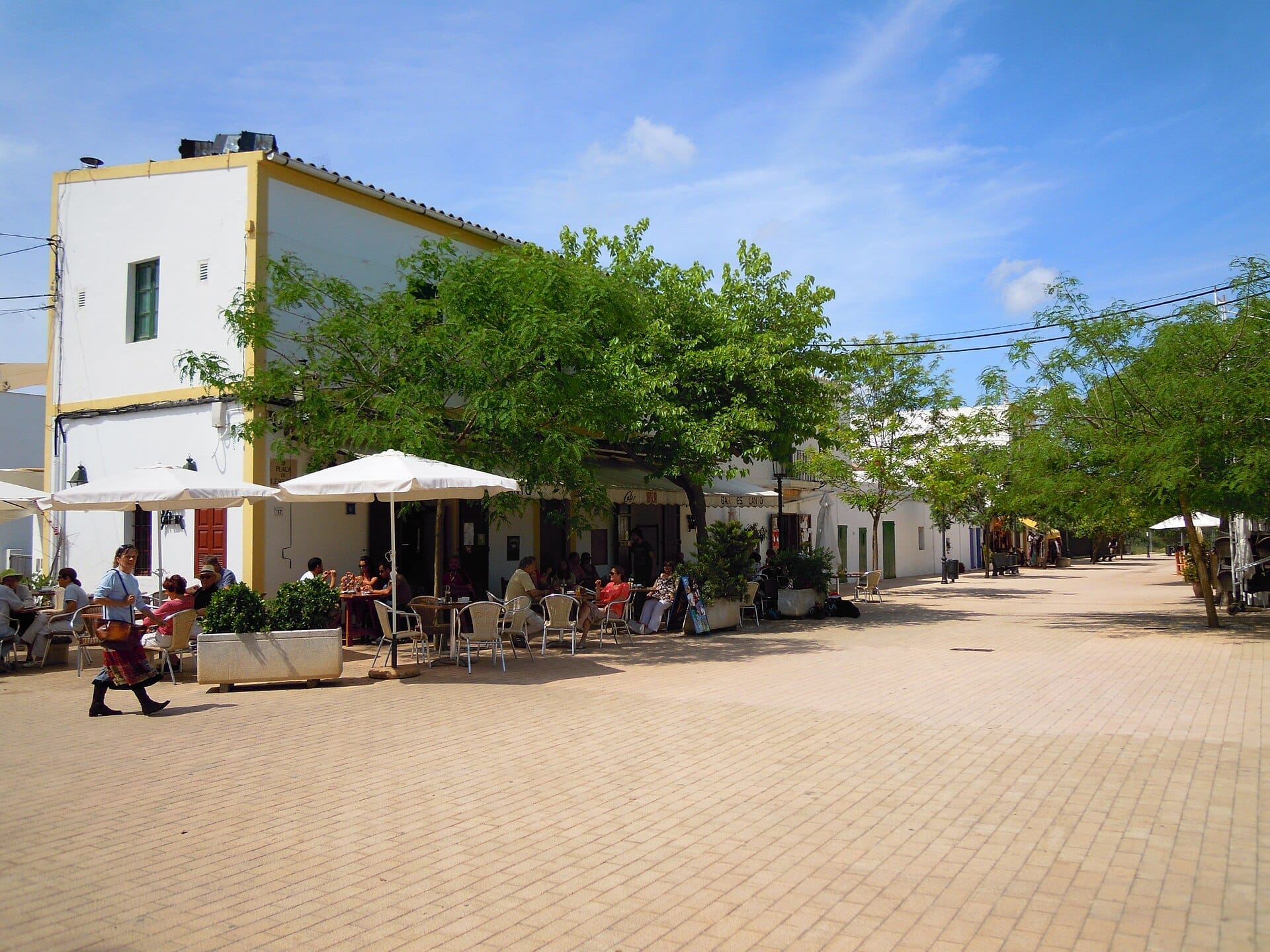
Sant Joan village feels genuinely quiet in a way that is increasingly rare on Ibiza. The main square is anchored by an 18th-century fortified church with a distinctive pointed bell tower, whitewashed to a brightness that makes it almost painful to look at in the midday sun. A handful of cafes ring the square, their chairs facing the church, and the pace is slow. Nobody is hurrying anywhere.
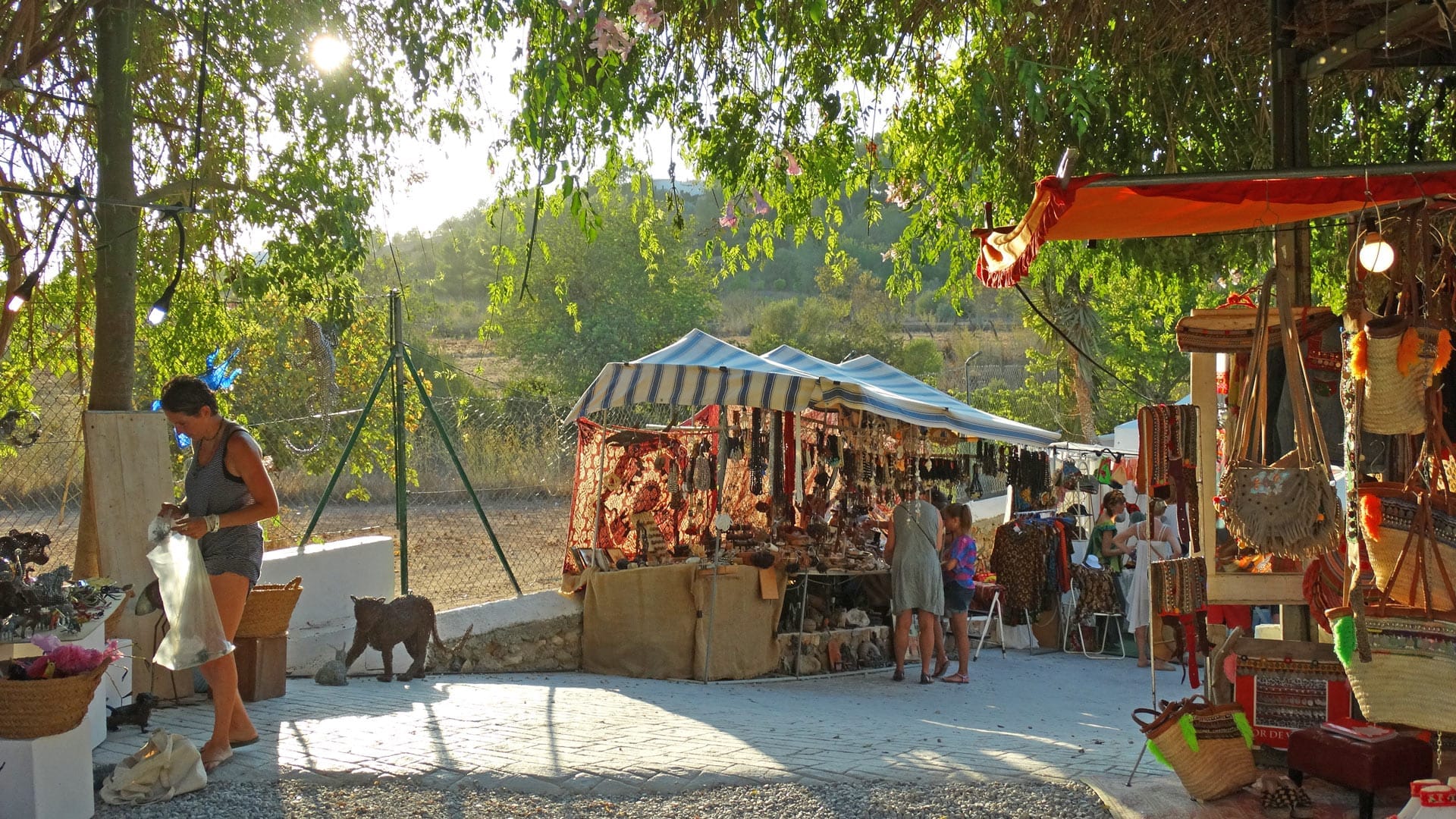
The bohemian character of the north is not a marketing invention. The Es Amunts hills attracted artists, writers, and counterculture figures from the 1960s onward, drawn by cheap land, isolation, and a tolerant local culture. That legacy is still visible, not just in the Sunday market around the church square but in the mix of people who have made the north their year-round home: potters, organic farmers, yoga teachers, and old-timers who remember when the hippies first arrived and found it all quite reasonable.
The atmosphere shifts by time of day in ways worth anticipating. Early mornings in the Es Amunts are cool and quiet, the air carrying pine resin and the sound of birds. By noon the sun is fierce and the rural roads are empty, most sensible people having retreated to shade or water. Late afternoon is when the north comes alive: cars head for the coves, the village square fills with the pre-dinner crowd, and the quality of light on the pine-covered hills turns golden in a way that explains why so many artists ended up here. After dark, Sant Joan village is almost silent. The north does not have a nightlife to speak of, which is precisely the point for many people who choose to stay here.
ℹ️ Good to know
The Sunday market in Sant Joan's church square runs year-round and attracts both local residents and visitors. It is small, relaxed, and entirely unlike the large commercial markets of the east coast.
What to See & Do
The north rewards exploration more than any other part of the island. Its appeal is less about individual attractions and more about the cumulative effect of empty tracks, ancient stones, and water that changes colour every hundred metres of coastline. That said, there are specific places that justify the drive on their own terms.
Beaches & Coves
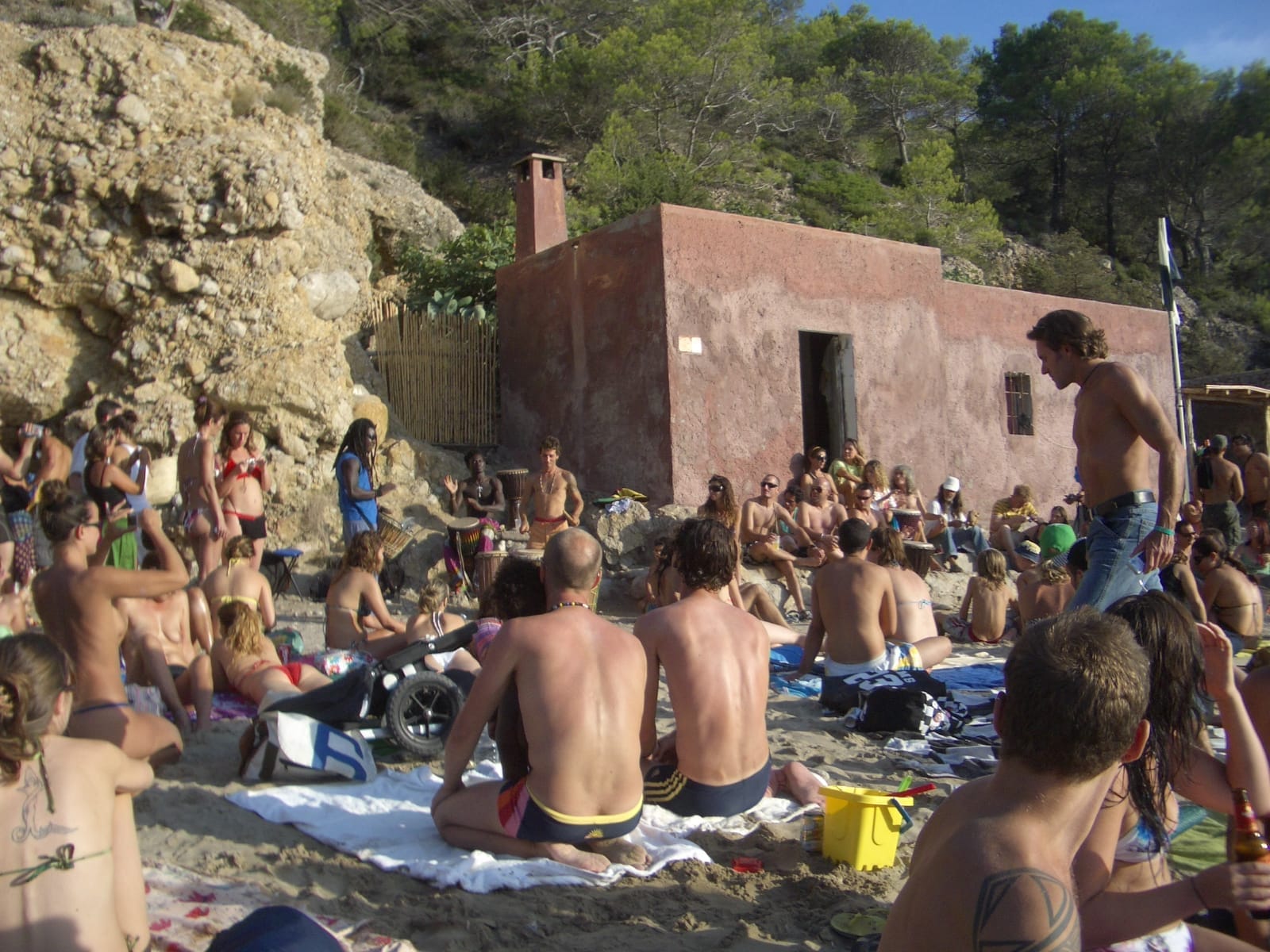
Cala Benirrás is the north's most celebrated beach, a wide crescent of reddish sand sheltered by dramatic cliffs. It was long known across the island for Sunday drum sessions at sunset; the official ritual has been banned/discontinued, and any informal sessions are occasional and not guaranteed. The beach itself is accessible by road from the direction of Port de Sant Miquel, and parking fills up early on summer weekends. For more on what to expect at sunset, the Cala Benirrás page has full details.
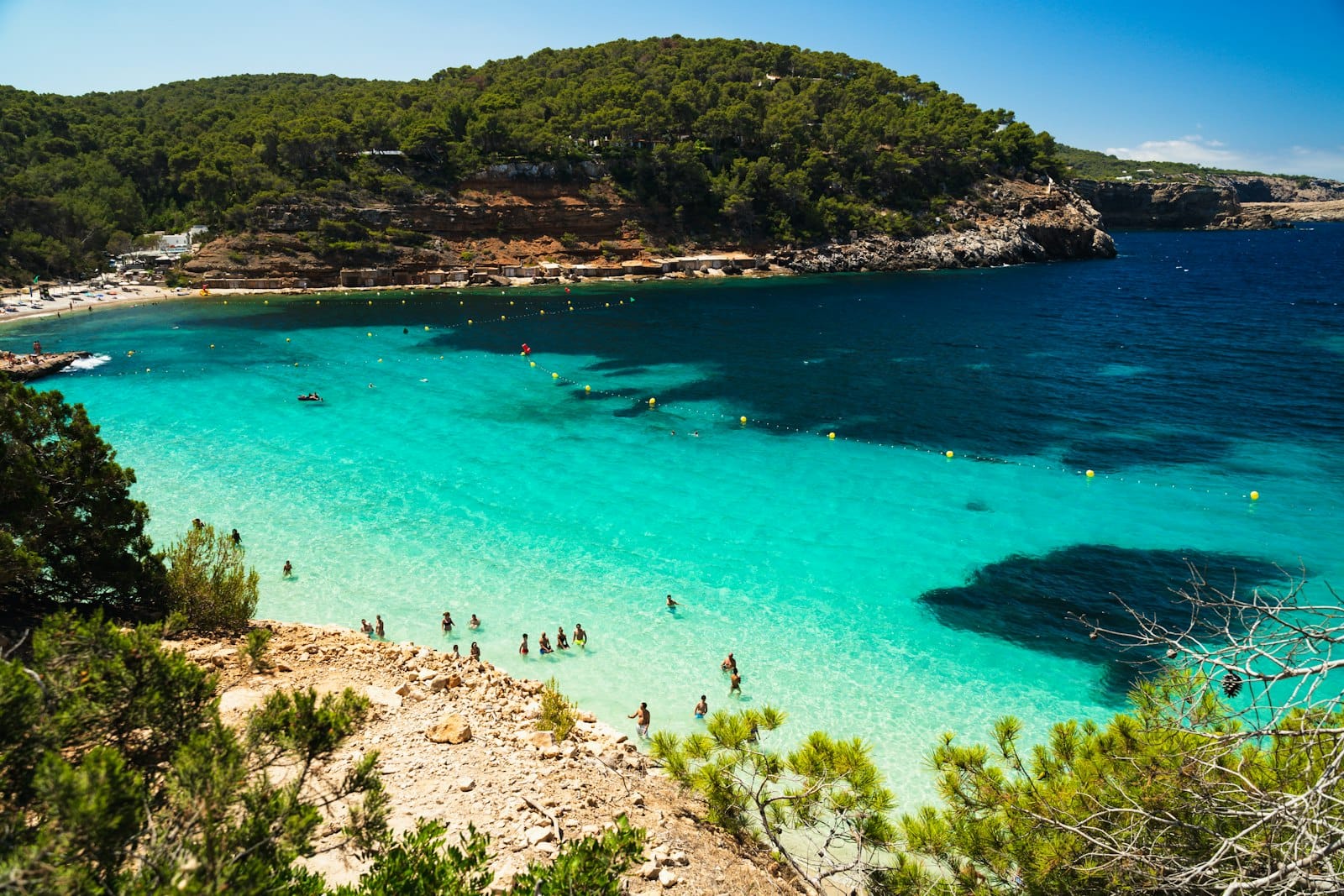
Portinatx, at the island's northernmost point, is one of the north's most developed coastal destinations, with a cluster of hotels and a sheltered bay that is genuinely good for swimming. It is popular with families. Portinatx beaches covers the different coves within the bay, each with a slightly different character. Cala de Sant Vicent, on the eastern flank, is a long sandy beach reached by a steep and twisting road through pine-clad hills. The descent requires care but the beach at the bottom, flanked by low cliffs, is worth the effort.
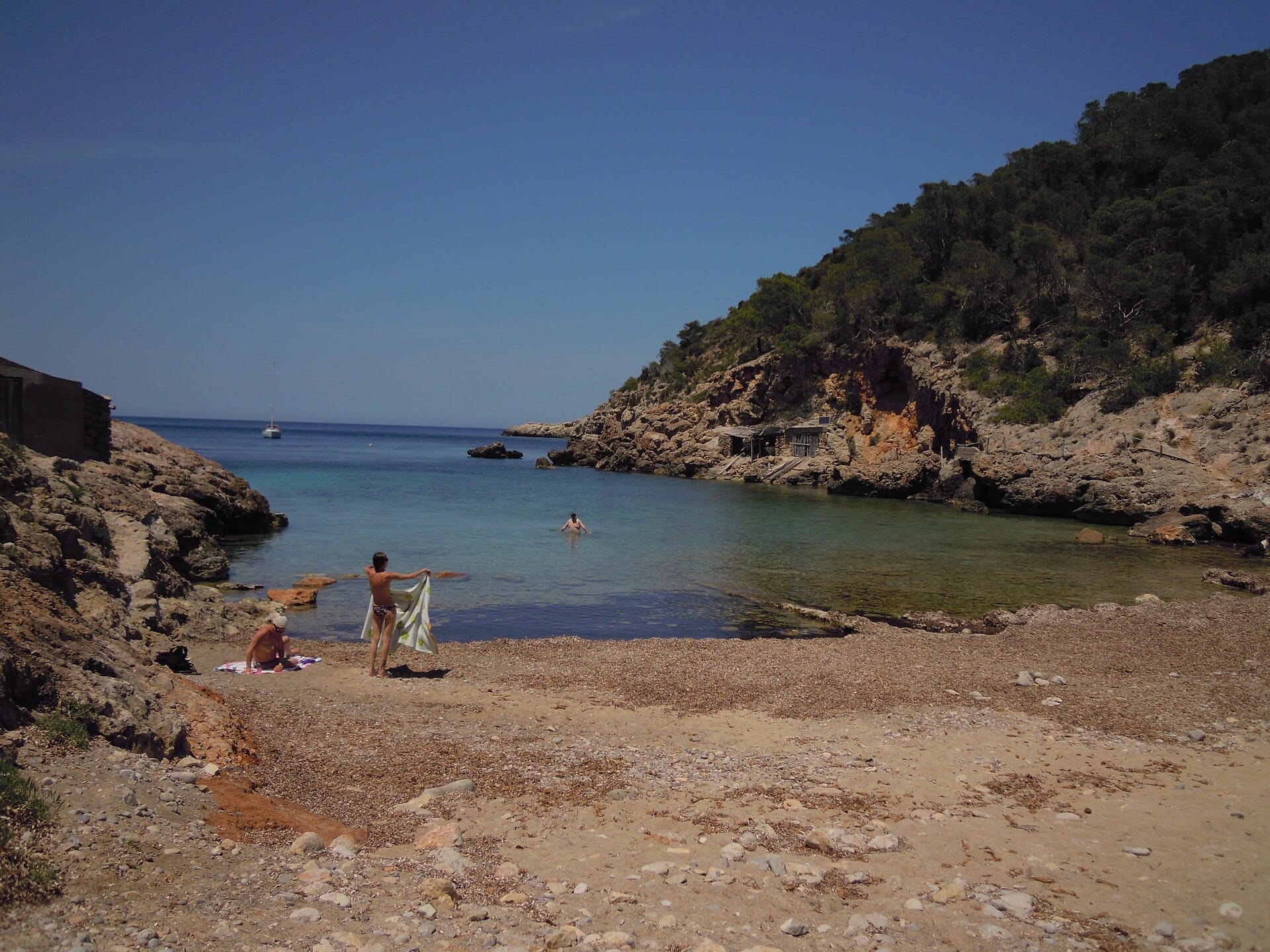
Cala Xarraca, Cala d'en Serra, and S'Illot are smaller and harder to reach, which means they hold their quiet even in August. These are rocky-entry coves rather than sand beaches, better suited to snorkellers and people willing to bring their own shade. The water clarity in these northern coves, protected from development and boat traffic, is consistently exceptional.
History & Culture
The Es Culleram cave, set into the hillside of Puig des Clapers above Cala de Sant Vicent, was used as a Phoenician sanctuary dedicated to the goddess Tanit. Terracotta votive figures were found here, and many are now displayed in Ibiza Town's archaeological museum. The cave itself is not always accessible, but the walk up through the pines and the views over the bay make the attempt worthwhile regardless.
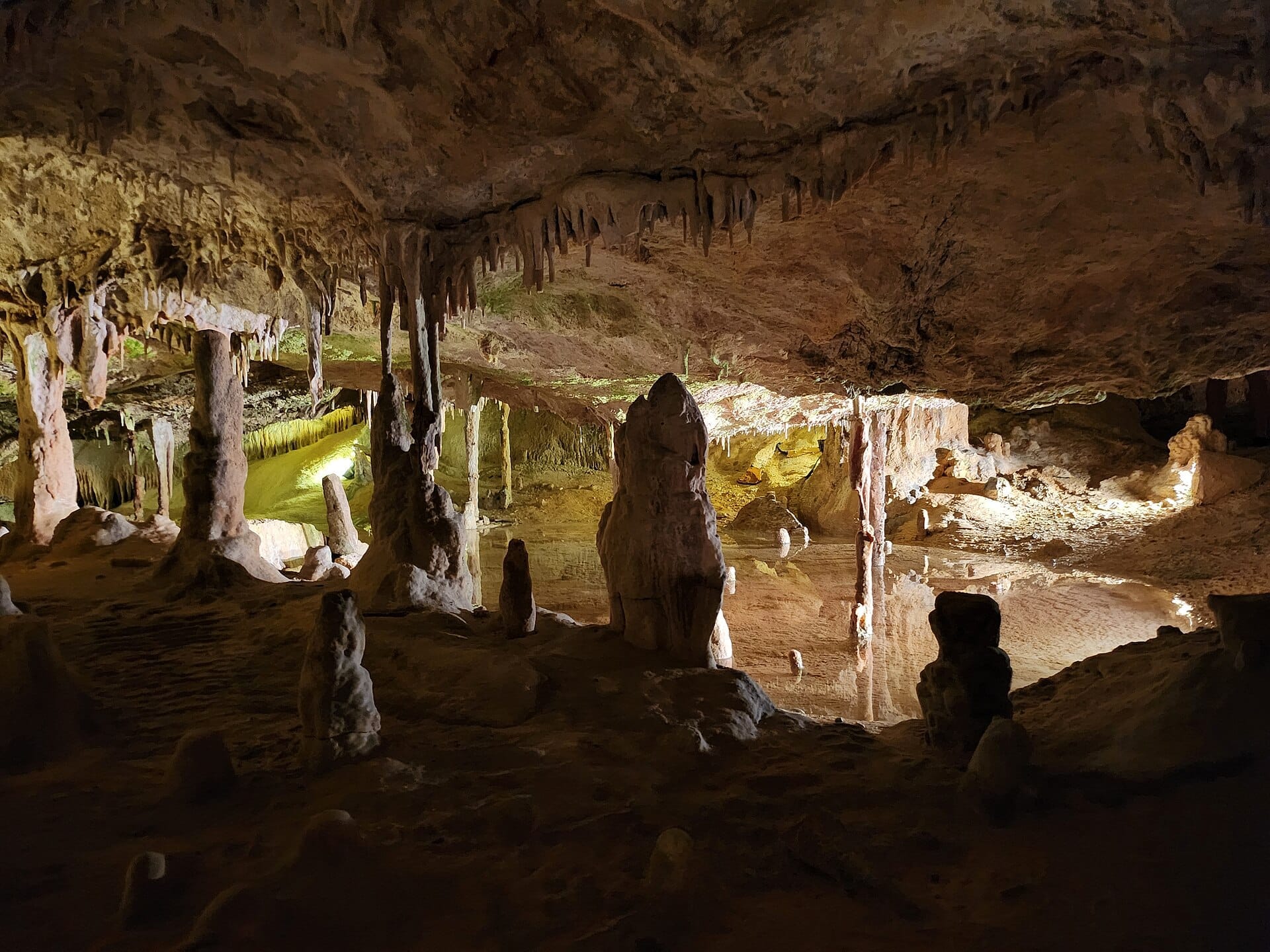
The Cova de Can Marca at Port de Sant Miquel is a cave with stalactites and stalagmites that can be visited on a guided tour. It sits just above the beach and offers a manageable visit for those who have exhausted the available sunlight. See the Cova de Can Marca page for visiting information.
Walking in the Es Amunts hills reveals an Ibiza that most visitors never see: dry-stone walls, ancient cisterns, the ruins of old farmhouses, and forest tracks that connect coastal watchtowers with inland villages. The terrain is not technically demanding but the heat in summer requires an early start and sufficient water. Several marked routes exist through the protected area.
💡 Local tip
If you plan to hike in Es Amunts, start before 9am from June through September. The midday heat on exposed tracks is genuinely dangerous. Carry at least two litres of water per person and wear sun protection. The Ibiza hiking guide covers the best routes across the island.
Eating & Drinking
The food scene in North Ibiza reflects the area's character: organic, unfussy, and unhurried. Sant Joan village has a small number of cafes and restaurants clustered around the church square, most of which serve straightforward Spanish and Mediterranean food at prices that feel reasonable by Ibiza standards. A plate of sobrasada on toast, a glass of local wine, and a table facing the church on a warm afternoon is not a complicated experience, but it is a genuinely good one.
Port de Sant Miquel and Portinatx both have beach restaurants and chiringuitos, the casual beach bars that serve grilled fish, salads, and cold drinks directly from the sand. Quality varies considerably. The places nearest to the car parks tend to be more tourist-facing; walking a little further along the coast usually improves both the food and the atmosphere. Fish grilled with local herbs is the standard order and rarely disappoints.
The organic and artisan market in Sant Joan on Sunday mornings is worth factoring into a meal plan. Stalls sell local cheeses, honey, cured meats, fresh bread, and seasonal produce. It is small enough to cover in twenty minutes but the quality is high.
Sant Joan village square: cafes serving coffee, tapas, and local wine in a relaxed setting around the church
Port de Sant Miquel: beach restaurants and chiringuitos with grilled fish and seafood
Portinatx bay: several hotel and beach restaurants, better suited to families than food enthusiasts
Sunday market, Sant Joan: local cheese, honey, bread, and organic produce
There are no high-end restaurants of note in the north at the time of writing. Visitors looking for tasting menus and cocktail lists will need to drive south. What the north offers instead is the kind of unpretentious, ingredient-led cooking that the rest of the island has largely priced and renovated out of existence.
Getting There & Around
The honest answer is that North Ibiza is easier to explore with a hire car. Sant Joan village is roughly 23 km north of Ibiza Town, a drive of around 30 to 40 minutes on roads that become progressively narrower and windier as you head north. The coastal destinations around the municipality add further distances, and without your own transport the logistics of moving between Cala Benirrás, Port de Sant Miquel, and Cala de Sant Vicent in a single day become complicated.
Public bus services do connect Ibiza Town with Sant Joan village, Portinatx, and Cala de Sant Vicent, but schedules are seasonal and frequencies are limited. Bus travellers should check the current timetables from the Ibiza transport authority before planning a day in the north. Taxis from Ibiza Town to Sant Joan are available but represent a significant cost, especially for multiple destinations.
Roads in the north require attention. The descent to Cala de Sant Vicent involves a series of tight hairpin bends through pine forest. The track down to Cala d'en Serra is unpaved. Several of the smaller coves are only reachable on foot from parking areas a short walk away. This is not difficult driving by any standard, but it is not the kind of road network where you can rely on GPS to warn you about what is coming.
⚠️ What to skip
Parking at popular beaches like Cala Benirrás fills completely on summer Sundays. If you arrive late, you may need to park on the roadside and walk down.
For a broader picture of how the north fits into a week-long itinerary, the one-week Ibiza itinerary is worth reading before you finalise your plans. And if the north's hiking trails appeal, the Ibiza hiking guide covers the Es Amunts routes in detail.
Where to Stay
Accommodation in North Ibiza skews heavily toward villa and finca rentals rather than hotels. The Es Amunts countryside is dotted with restored farmhouses, most of which can be rented by the week, and these represent the most authentic way to experience the north. Staying in a rural finca with a pool and a view of pine-covered hills is the version of Ibiza that the area's long-term residents most closely associate with the place.
Hotel options exist primarily in Portinatx and Port de Sant Miquel, where a cluster of resort-style hotels cater mainly to package holidaymakers and families. These are functional and well-located for beach access but do not particularly reflect the character of the surrounding area. If the north's rural atmosphere is what draws you, staying in one of these hotels and driving out from there slightly misses the point.
Travellers who want a central base with easier access to the rest of the island sometimes choose to stay in Ibiza Town or Santa Eulalia and make day trips north. This is a practical compromise. If you are still deciding where to base yourself, the where to stay in Ibiza guide lays out the trade-offs across all the main areas of the island.
The north is best suited to travellers who want quiet evenings, early mornings, and the freedom to explore without a schedule. It is a poor fit for anyone whose primary goal is proximity to Ibiza's main clubs or beach clubs. The nearest major nightlife venues are a long drive south, and the north's roads after dark require sobriety and attention.
What to Expect: Who North Ibiza Is For
The north is the part of Ibiza that rewards patience and penalises people who arrive without a car and a vague plan. It does not have the concentrated beaches of the southwest, the energy of San Antonio, or the architectural weight of Dalt Vila. What it has is a version of the island that feels genuinely its own: rural, particular, and unhurried in a way that becomes increasingly valuable the longer you spend on Ibiza.
For first-time visitors whose primary interest is beaches and nightlife, the north is probably a day-trip destination rather than a base. For people returning to Ibiza who want to find something they have not seen before, or for travellers who prioritise landscape and quiet over convenience, it is worth more of your time than most guides give it. The Ibiza hidden gems guide covers several spots in this part of the island that rarely appear on standard itineraries.
TL;DR
North Ibiza covers the municipality of Sant Joan de Labritja, including the Es Amunts hills, Sant Joan village, Portinatx, Port de Sant Miquel, Cala Benirrás, and Cala de Sant Vicent.
The area is the most rural and least developed part of the island, with a genuine bohemian tradition and a Sunday market in Sant Joan that runs year-round.
A hire car is effectively necessary for exploring the north properly: bus services exist but are infrequent and do not connect the coastal destinations to each other.
Accommodation runs primarily to villa and finca rentals; hotel options in Portinatx and Port de Sant Miquel are functional but do not reflect the area's character.
Best suited to travellers seeking landscape, quiet, hiking, and authentic rural Ibiza. Not the right base for those prioritising clubs, large beach bars, or convenience to Ibiza Town.
Top Attractions in North Ibiza (Es Amunts & San Juan)
Ibiza's 210 kilometres of coastline hide many beaches, from party-ready stretches to remote pine-fringed coves. This guide covers the island's finest, organised by character so you can find exactly the beach you're looking for.
Ibiza rewards visitors differently depending on when you arrive. This guide breaks down every season on the island: weather, crowd levels, pricing, nightlife timing, and the months most travelers overlook. Whether you're chasing peak-season energy or a quieter Mediterranean escape, the timing matters more than most guides admit.
Formentera is just a short ferry ride (around 20 km) from Ibiza, but it feels like a different world. This guide covers everything for a day trip: how to get the ferry, what it costs, where to go on the island, and what most visitors get wrong.
Ibiza is small enough to cross in under an hour, but getting around efficiently depends entirely on when you visit and where you're headed. This guide covers every transport option on the island, from the airport bus to the Disco Bus, with real price ranges and practical guidance on what's worth it.
Dalt Vila is the fortified hilltop heart of Ibiza Town, inscribed as a UNESCO World Heritage Site in 1999 for its Renaissance walls, layered history, and cultural depth. This guide covers every major sight, the best walking route, seasonal advice, and the practical details you need to make the most of your visit.
Ibiza is more than its nightlife reputation. This guide covers the essentials for first-time visitors: the best time to arrive, how to get around the island, where to base yourself, what things actually cost, and how to see the side of Ibiza that most tourists miss entirely.
Ibiza is far more than its superclubs and famous shorelines. This guide uncovers the island's quieter, deeper side: fortified hilltop towns, dramatic coastal hikes, authentic village markets, and unspoiled nature that most visitors fly straight past.
Ibiza has over 140 marked trails threading through pine forests, clifftop coastlines, and protected natural parks. This guide covers the best hikes on the island, from the summit of Sa Talaia to the dramatic Es Vedrà coastal trail, with practical tips for every level.
Ibiza's hippy markets are a living legacy of the island's counterculture roots, offering handmade jewellery, bohemian clothing, artisan crafts, and a social atmosphere unlike anything else on the island. This guide covers every major market, from the iconic Las Dalias to the vast Punta Arabí, plus smaller village markets, flea markets, and the best complementary experiences to build your market day around.
September and October mark one of the most interesting transitions on the Balearic island of Ibiza. The club season reaches its emotional finale, crowds thin out, prices drop, and the island starts to breathe again. This guide covers everything from closing party logistics to the best beaches and day trips once the last DJ plays out.
Seven days is the ideal amount of time to experience Ibiza beyond the clubs. This itinerary covers the UNESCO-listed old town, the island's best beaches across multiple coasts, hippy markets, San Antonio sunsets, and a day trip to Formentera, with practical guidance on what to skip and when to go.
Ibiza nightlife runs on its own logic: doors open at midnight, headliners play at 4am, and a single night out can cost €200 before you know it. This guide breaks down every layer of the scene, from superclub pricing and weekly residencies to boat parties, budget bars, and how to get around safely after dark.
Ibiza has a reputation for luxury excess, but the island is genuinely doable on a tight budget. This guide breaks down real costs, the best free activities, transport options, and the timing tricks that can cut your bill by a third.
Ibiza's west-facing coastline turns extraordinary at dusk. Whether you want a front-row bar stool at San Antonio's legendary Sunset Strip or a quiet clifftop above Es Vedrà with no one else around, this guide covers the island's finest sunset experiences across beach coves, hilltop viewpoints, and atmospheric gathering spots.
Ibiza is one of Europe's most misunderstood destinations. Yes, it has world-famous nightlife. But this 572 km² Spanish island in the Balearic archipelago also holds a UNESCO World Heritage Site, dozens of pristine coves, ancient Phoenician ruins, and a thriving market culture. This guide covers all of it — with clear guidance on what's worth your time and what isn't.
Ibiza accommodation spans budget dorm beds at €25 per night to clifftop villas at €5,000 per night. This guide breaks down every major area, what it actually costs, and who each zone suits best — so you book the right place the first time.