Dalt Vila: The Complete Guide to Ibiza's UNESCO Old Town
Dalt Vila is the fortified hilltop heart of Ibiza Town, inscribed as a UNESCO World Heritage Site in 1999 for its Renaissance walls, layered history, and cultural depth. This guide covers every major sight, the best walking route, seasonal advice, and the practical details you need to make the most of your visit.
Plan and book this trip
Tools from our partner Travelpayouts help you compare flights and hotels. If you book through them, we may earn a commission at no extra cost to you.
Flights
Hotels map
TL;DR
- Dalt Vila means 'High Town' in Catalan and sits on the hill of Puig de Vila above Ibiza Town's harbour. Entry to the streets and ramparts is free.
- The Renaissance fortifications, designed in the 16th century, stretch roughly 2 km and are among the best-preserved of their kind in the Mediterranean.
- Key sights inside the walls include the Cathedral of Santa María, the Castle of Ibiza, the Museum of Contemporary Art, and the Archaeological Museum. See our full things to do in Ibiza guide for context on how Dalt Vila fits into a wider itinerary.
- Go early morning or late afternoon to avoid the worst of summer heat on those steep cobbled streets. Wear proper shoes, not sandals.
- The UNESCO designation covers more than just Dalt Vila: it also encompasses the Puig des Molins necropolis, the Sa Caleta Phoenician settlement, and the Posidonia seagrass meadows.
What Is Dalt Vila and Why Does It Matter?
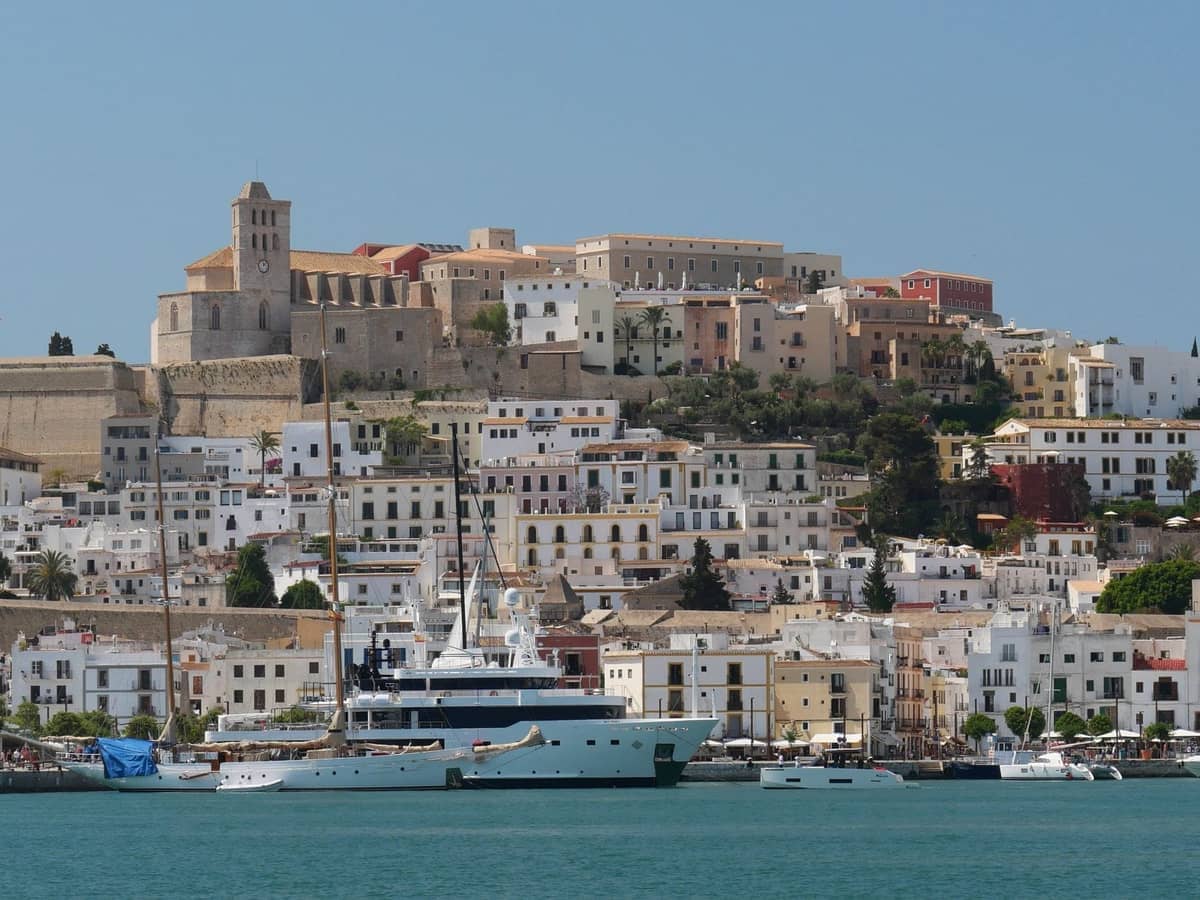
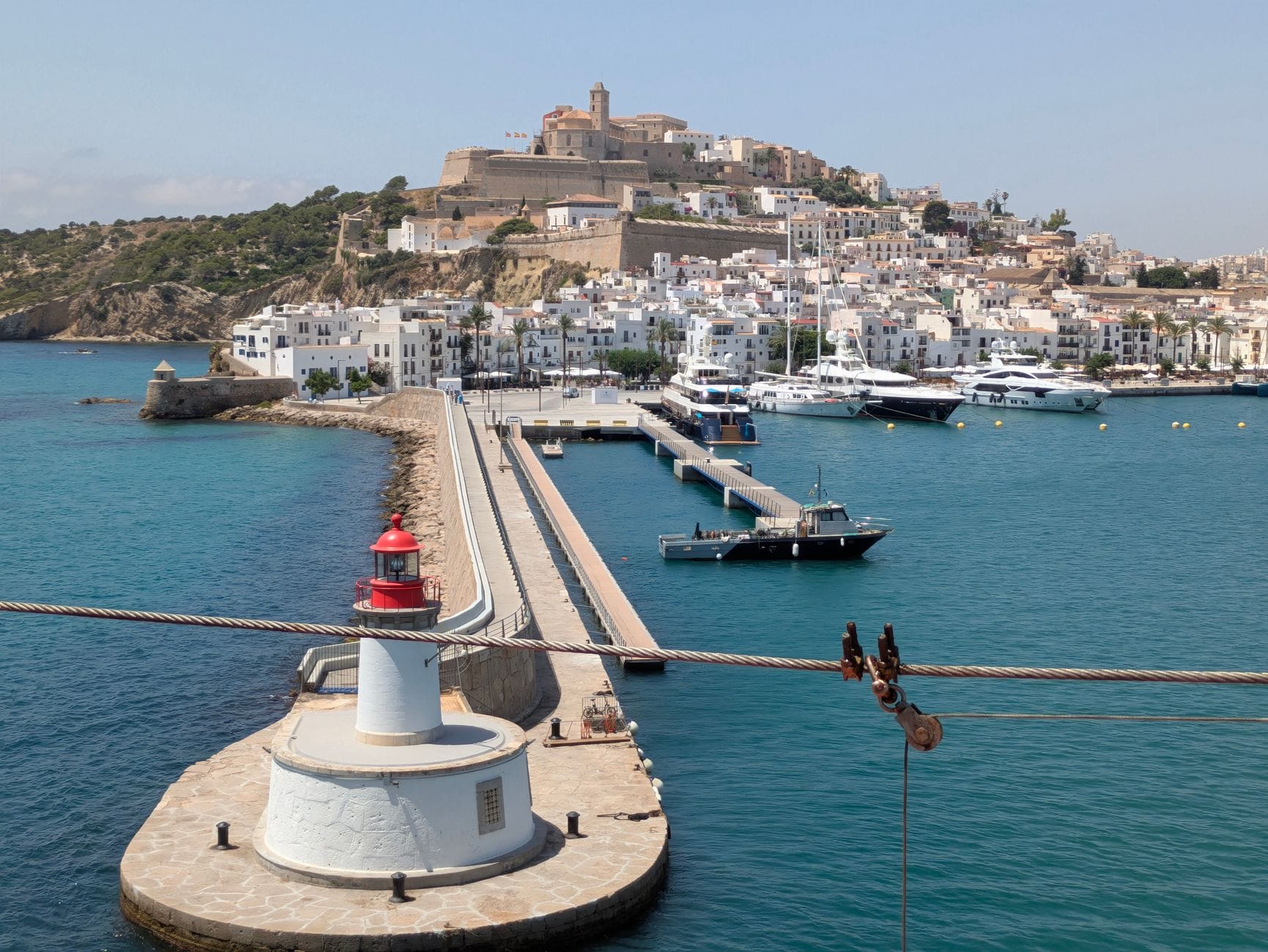
Dalt Vila is the fortified upper quarter of Ibiza Town (known in Catalan as Eivissa). The name translates simply as 'Upper Town,' a geographic description that doubles as an honest one: the entire district sits on a steep hill, Puig de Vila, rising above the working port and the modern city below. From the harbour, the silhouette of the cathedral and castle battlements against the sky is the defining image of Ibiza that has appeared on postcards and travel features for decades.
In 1999, UNESCO inscribed the property 'Ibiza, biodiversity and culture' on its World Heritage List. Dalt Vila forms the centrepiece of that designation, recognised for its exceptional Renaissance military architecture and for the layers of civilisation compressed into its narrow streets: Phoenician traders founded a settlement here in 654 BC, followed by the Romans, the Moors, and eventually the Aragonese Crown, each leaving physical traces that archaeologists are still interpreting today. This is not a reconstructed heritage attraction. The walls are original 16th-century masonry. People live and work inside them.
ℹ️ Good to know
A common misconception: the current walls are Renaissance, not medieval. They were constructed in the 16th century under the Spanish Crown, largely designed by Italian military engineer Giovanni Battista Calvi, to defend against Ottoman naval expansion in the western Mediterranean. The heptagonal circuit of about 2 km (roughly 1.8–2 km) is considered one of the finest examples of Renaissance defensive architecture in the Mediterranean basin.
Getting In: The Gate, the Approach, and the Climb
The main entrance to Dalt Vila is the Portal de ses Taules, a monumental 16th-century gateway flanked by Roman statues and reached via a steep stone drawbridge. Walking through it from the lower town feels like a genuine threshold moment, which is part of why it photographs so well and why tour groups cluster there in high season. If you want a clear shot or a quieter approach, aim for before 9am or after 6pm in July and August.
From Ibiza Town's harbour area, the walk up to the Portal de ses Taules takes around 10 minutes at a comfortable pace. The streets inside the walls are steep and almost entirely cobbled. This matters more than most guides acknowledge: narrow-soled sandals or flip-flops become genuinely uncomfortable and slippery, especially on the descent. Trainers or low-profile walking shoes are the right call. A full loop of the main sights inside Dalt Vila takes 2 to 3 hours at a relaxed pace, longer if you stop at museums.
⚠️ What to skip
Dalt Vila is not pushchair or wheelchair-friendly in most areas. The cobbled gradient is challenging, and many of the internal lanes have steps. There are some flatter sections along the lower ramparts, but reaching the cathedral and castle at the summit requires a sustained uphill walk.
What to See Inside the Walls
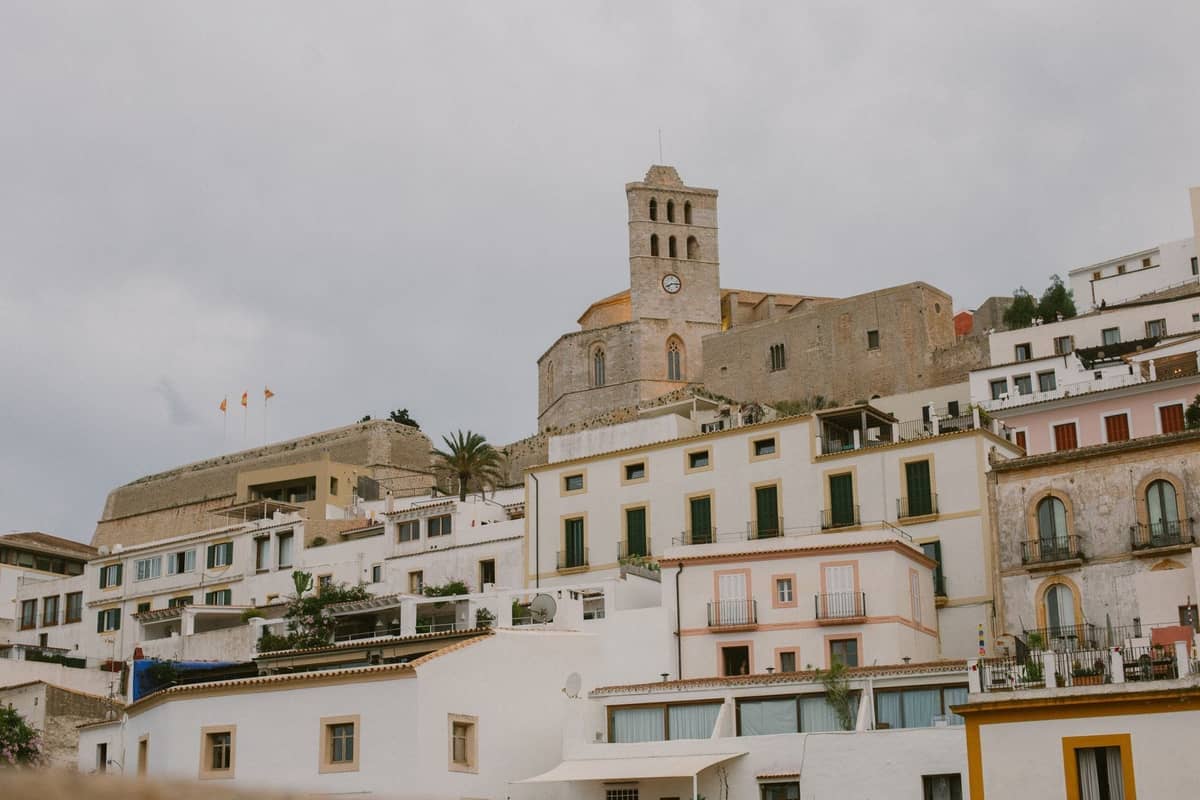
The Cathedral of Santa María sits at the highest point of Dalt Vila and is the logical endpoint of any walk through the old town. Construction began in the 14th century on the site of an earlier mosque, and the building has been modified many times since, producing a mix of Gothic and Baroque elements that architectural purists debate and everyone else finds atmospheric. The views from the area around the cathedral across the harbour and out toward Formentera are among the best on the island.
Just below the cathedral, the Castle of Ibiza (Castell d'Eivissa) occupies the summit of the hill. The castle has served as a military garrison for most of its history and is not always fully open to visitors, but the exterior and the adjacent rampart walkways reward the effort of getting there. Walk the walls here and you are looking out over the same sea that Phoenician merchant ships navigated more than 2,600 years ago.
- Portal de ses Taules The main Renaissance gateway into Dalt Vila. Free to pass through. Roman statues flank the entrance. Crowded in peak season but quieter at the edges of the day.
- Cathedral of Santa María (Virgin of the Snows) Gothic-Baroque church at the summit, consecrated in 1785. Open to visitors; modest dress required. The terrace beside it offers panoramic harbour views.
- Castle of Ibiza (Castell d'Eivissa) Historic military fortress at the hill's peak. Exterior and ramparts accessible; check locally for current interior access.
- Museu d'Art Contemporani d'Eivissa (MACE) Contemporary art museum housed within a historic building near the Portal de ses Taules. Permanent and rotating collections. Admission fees apply; verify current hours with the museum directly.
- Archaeological Museum of Ibiza and Formentera Displays Phoenician, Roman, and Islamic artefacts excavated from the island. Essential context for understanding what you are walking through.
- Dalt Vila Walls and Bastions The 2 km rampart circuit can be walked in sections and is largely free to access. The views from the bastions toward Ibiza Town, the port, and the open sea make this the most underused part of the experience.
One attraction that many visitors skip because it sits just outside the Dalt Vila walls is the Puig des Molins necropolis. This Phoenician-Punic burial site contains thousands of hypogea (rock-cut tombs) and is part of the same UNESCO World Heritage designation as Dalt Vila itself. The associated museum explains the extent of Ibiza's pre-Roman history in considerable depth. It is quieter than the old town and genuinely fascinating if ancient history interests you at all.
The Best Walking Route Through Dalt Vila
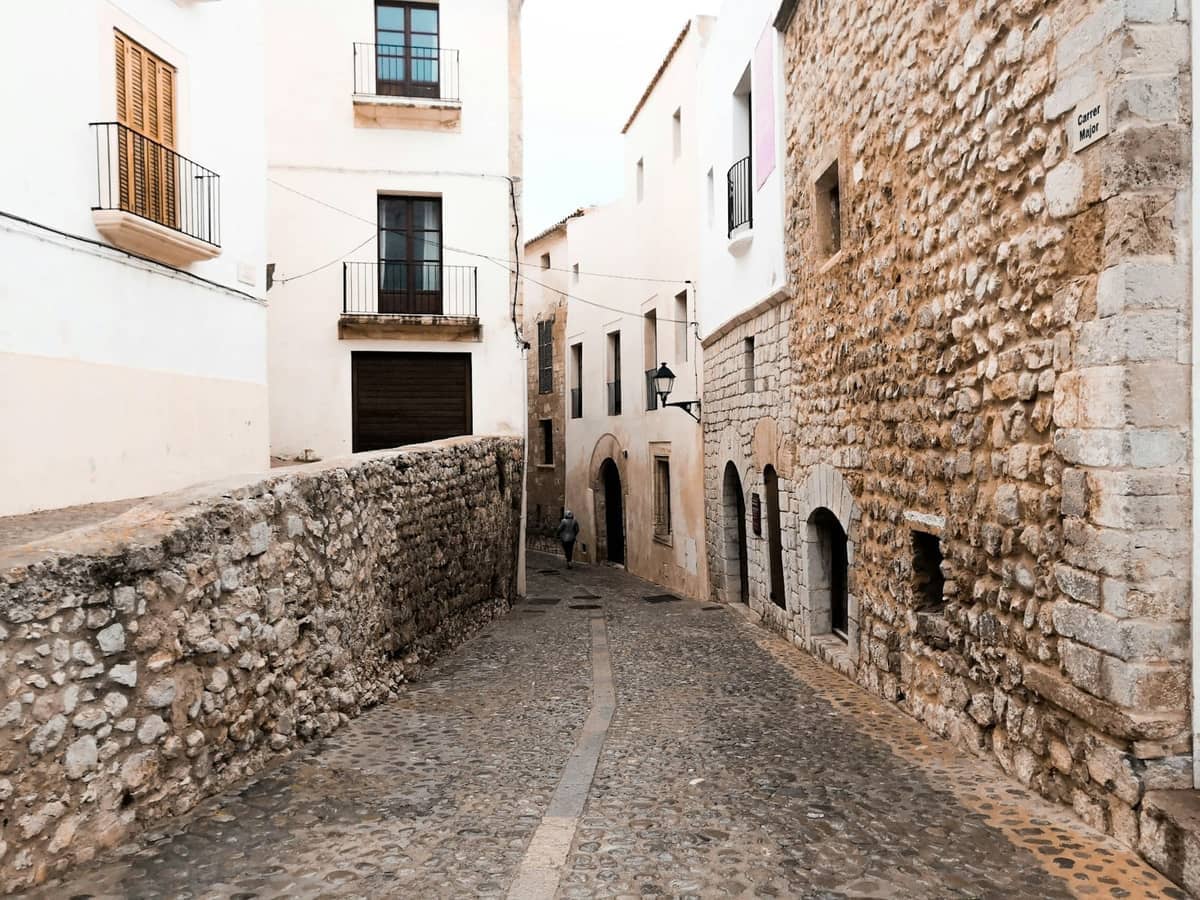
The most logical approach is to enter through the Portal de ses Taules and climb steadily toward the cathedral, pausing at the small squares and lookout points along the way. The streets narrow and steepen as you ascend, and the crowds thin out. At the top, take time at the cathedral terrace before following the rampart walk back down around the southern and western bastions. This circuit brings you back toward the lower gate area with different views at every turn and avoids retracing your steps.
If you want to include the Museum of Contemporary Art and the Archaeological Museum, both sit in the lower section of Dalt Vila near the main gate, so you can visit them at the start or end of your walk without adding significant extra distance. Allocate 30 to 45 minutes for each if you plan to spend proper time inside. Doing everything in a single morning, including the necropolis museum nearby, is realistic if you start before 10am.
✨ Pro tip
For the best light and the thinnest crowds, enter Dalt Vila at 8am. The gates and streets are open early, and the cobblestones are still cool. By 10:30am in summer, tour groups have arrived and the main lanes become congested. The late afternoon from around 5pm is the next best window, and it has the added advantage of golden-hour light on the cathedral facade.
Seasonal Variations and When to Visit
Dalt Vila is worth visiting at any point in the year, but the experience changes significantly by season. For a broader view of timing across the whole island, the best time to visit Ibiza guide covers the trade-offs in detail. For Dalt Vila specifically: July and August bring maximum visitor numbers and maximum heat. The climb to the cathedral in 35-degree heat is genuinely unpleasant, and the lanes near the Portal de ses Taules feel crowded for most of the day.
May and September are the sweet spots. Temperatures are warm but manageable, the tourist volume is lower, and the quality of light in the morning and evening hours is excellent for photography. May also brings the annual Eivissa Medieval fair, held on the second weekend of the month, when the old town's streets fill with period costumes, artisan markets, and theatrical performances. It is one of the most atmospheric events in the quieter shoulder season calendar and worth timing a visit around if the dates align.
Winter visits, from November through March, mean near-empty streets and a completely different atmosphere. The restaurants and cafes inside the walls operate on reduced schedules or close entirely, and some museum opening hours are cut back. But if you are on the island outside the summer season and want to understand what Ibiza looks like when it belongs to residents rather than tourists, Dalt Vila in January is a genuinely quiet and contemplative place.
Eating, Drinking, and What to Avoid Inside Dalt Vila
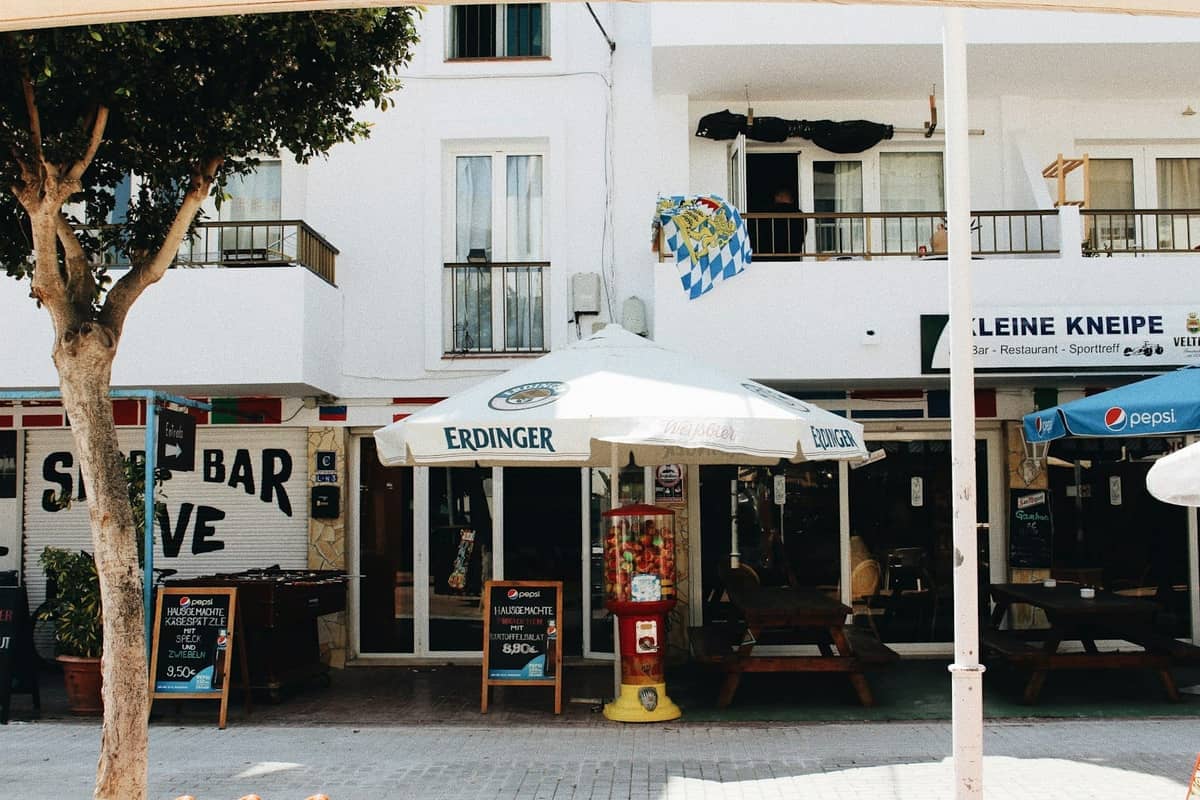
There are restaurants and cafes inside the walls, but the honest assessment is that the food-to-price ratio at many of them is driven by location premium rather than culinary quality. A coffee on a terrace with harbour views will cost noticeably more than the same coffee in the lower town. That is a reasonable trade if the setting matters to you, but if you are eating for value, have lunch below the walls and come up for a drink in the early evening when the light is best.
The streets around the Portal de ses Taules at the base of Dalt Vila contain some decent independent bars and small restaurants that cater more to locals and return visitors than to first-time tourists. These are a better bet for lunch. For the full dining and nightlife landscape of Ibiza Town, the area extends well beyond Dalt Vila into the port district and the streets below.
- Skip the obvious tourist restaurants directly beside the main gate: prices are high, quality is inconsistent, and the menus have not changed in years.
- The small plaza areas midway up the hill have cafes that are less exposed and more reasonably priced than those at the summit.
- If you want a sundowner with a view, the rampart bastions on the western side of the walls offer free views that rival any paid terrace.
- Water: bring your own, especially in summer. Bottled water inside Dalt Vila is sold at a tourist premium and tap water in Ibiza, while treated and safe, has a mineral taste many visitors find unpleasant.
Guided Tours vs. Exploring Independently
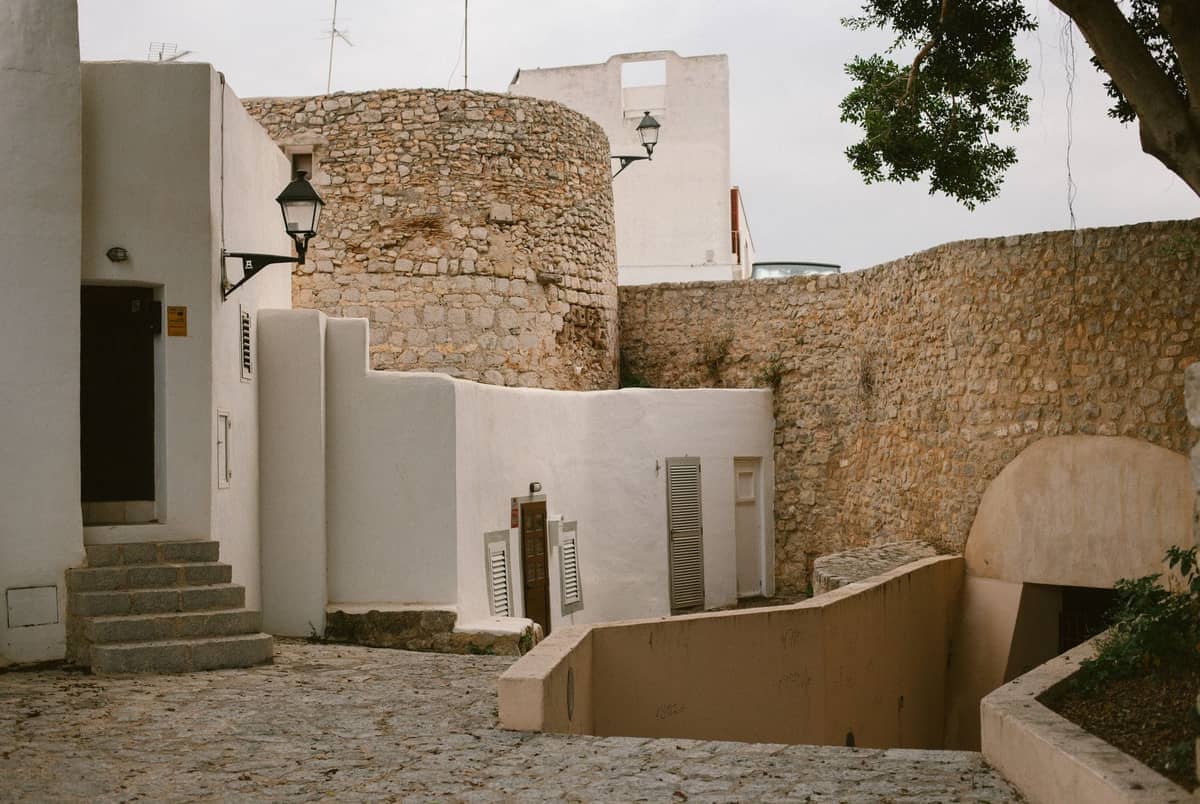
Walking Dalt Vila independently is entirely feasible and free. The streets are well-signed, the main sights are easy to find, and the area is compact enough that getting briefly lost is more pleasant than disorienting. Most people who spend 2 to 3 hours exploring on their own come away having seen everything significant.
That said, a guided tour adds real value if archaeology and history are central to your interest in the visit. The Phoenician and Punic layers of Ibiza's past are not immediately visible to the untrained eye, and a knowledgeable guide significantly enriches what you are looking at. Private and small-group walking tours of the UNESCO site are available and typically run 2 to 3 hours. These can be booked through major tour platforms. For context on how this fits into a broader Ibiza visit, the one-week Ibiza itinerary shows how to structure Dalt Vila alongside beach days and other sights.
💡 Local tip
If you book a walking tour, confirm whether the Archaeological Museum and Puig des Molins necropolis are included, or whether the tour covers only the streets and ramparts. The two museums require separate entry fees and meaningfully deepen the experience. A tour that includes both is worth paying more for.
FAQ
Is Dalt Vila free to enter?
Yes, walking the streets, lanes, and most sections of the ramparts of Dalt Vila is free. The Portal de ses Taules gateway is open and costs nothing to pass through. Individual museums inside the walls, including the Museum of Contemporary Art (MACE) and the Archaeological Museum, charge separate admission fees. Check current prices directly with each museum before visiting, as they change periodically.
How long does it take to walk around Dalt Vila?
A self-guided walk covering the Portal de ses Taules, the main lanes, the cathedral terrace, the castle area, and a section of the ramparts takes around 2 to 3 hours at a relaxed pace. Adding time inside the museums extends this to a half-day. If you also visit the Puig des Molins necropolis nearby, which is part of the same UNESCO designation, budget a full morning or afternoon.
What is the best time of day to visit Dalt Vila?
Early morning, before 10am, is best in summer for cool temperatures and minimal crowds. Late afternoon from around 5pm is the second-best option and offers good light. Midday in July and August is genuinely uncomfortable on the steep cobbled streets, and the main gate area becomes congested with tour groups.
Is Dalt Vila the same as Ibiza's UNESCO World Heritage Site?
No, though Dalt Vila is the centrepiece. The full UNESCO World Heritage property, designated in 1999 under the name 'Ibiza, biodiversity and culture,' also encompasses the Puig des Molins Phoenician-Punic necropolis, the Sa Caleta Phoenician settlement on the southwest coast, and the Posidonia oceanica seagrass meadows in the surrounding sea. Each element represents a different aspect of the island's cultural and natural heritage.
Can you drive into Dalt Vila?
Access by private vehicle inside Dalt Vila's walls is restricted, and the narrow lanes make driving impractical in most areas even where permitted. The most straightforward approach is on foot from Ibiza Town's harbour area or port district, a walk of around 10 minutes to the Portal de ses Taules. Parking in Ibiza Town can be difficult in summer; arriving on foot from accommodation or using public transport is advisable.