Santa Gertrudis de Fruitera: The Soul of Inland Ibiza
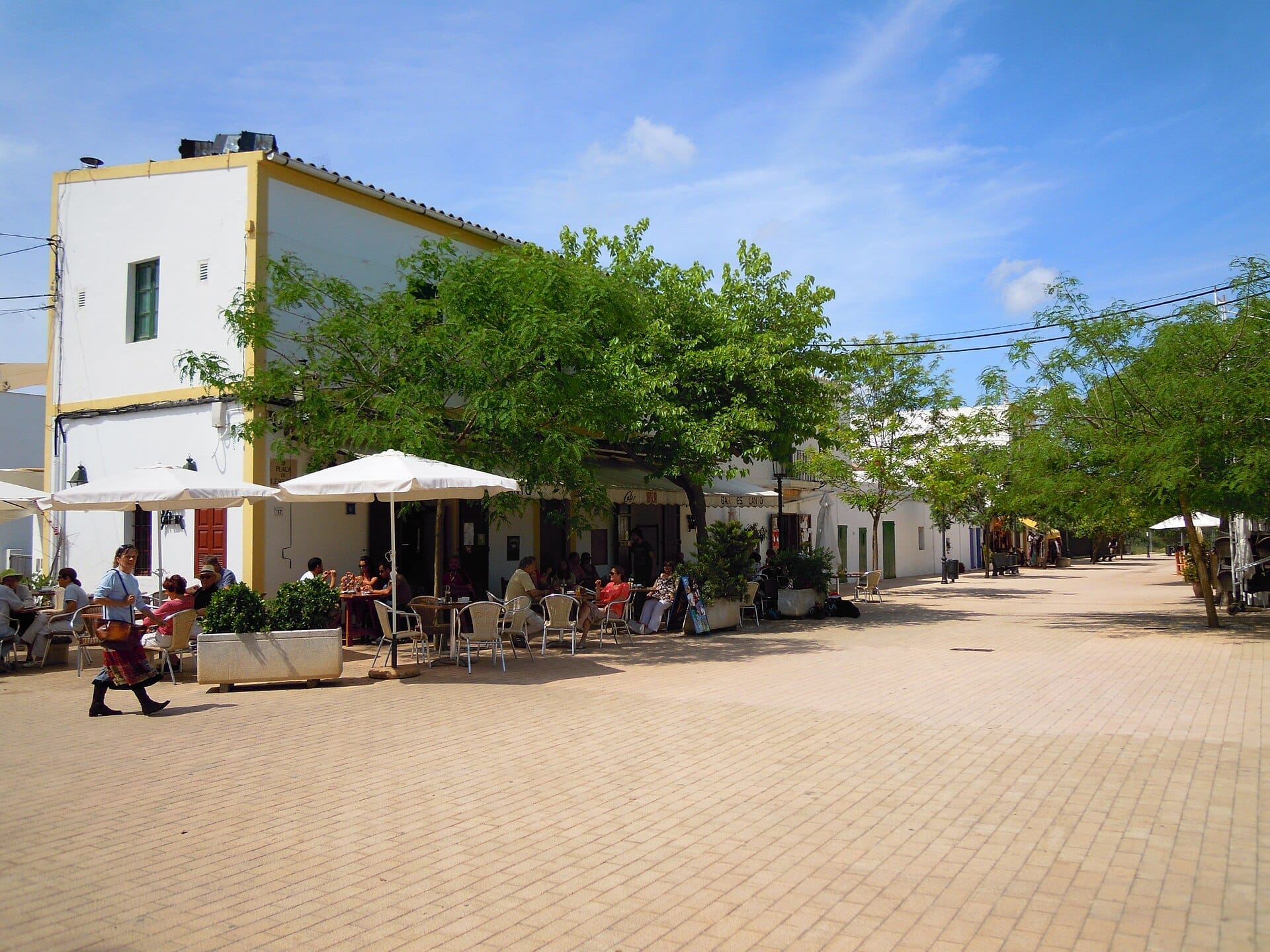
Sitting at the geographical centre of Ibiza, Santa Gertrudis de Fruitera is a whitewashed village built around a sun-bleached square and a late 18th-century church. It trades beach clubs for art galleries, local wine bars, and one of the island's best stretches of tapas. Entry is free, the pace is slow, and the contrast with coastal Ibiza is complete.
Quick Facts
- Location
- Santa Eulària des Riu municipality, geographical centre of Ibiza, Balearic Islands, Spain
- Getting There
- Car or taxi recommended; public buses connect to Ibiza Town and Santa Eulalia — check current timetables with local operators
- Time Needed
- 1.5 to 3 hours, or longer with lunch
- Cost
- Free to enter the village and square; costs limited to food, drinks, and any purchases
- Best for
- Culture lovers, food seekers, families, travellers wanting a break from the coast
- Official website
- visitsantaeulalia.com/en/towns-heritage/towns/santa-gertrudis
What Santa Gertrudis Actually Is
Santa Gertrudis de Fruitera is a small agricultural village at the crossroads of Ibiza's interior road network. It sits equidistant from the island's main towns, which is partly why it became a meeting point for the artists, writers, and international residents who began settling in Ibiza's countryside from the 1960s onwards. That creative lineage is still visible today in the cluster of independent galleries and design boutiques that line the square.
The village is not a theme park or a curated attraction. It is a real, functioning community with a parish church completed in 1797, a post office, a handful of bars, and residents who go about their day without much regard for passing tourists. That ordinariness is precisely the point. After a week of beach queues and nightclub lineups, the chance to sit at a pavement table, order a plate of jamón, and watch almost nothing happen can feel genuinely restorative.
💡 Local tip
The village is free to explore at any time. If you plan to eat at one of the popular tapas bars on or near the square, arrive before 1:30 pm for lunch or before 8:30 pm for dinner to avoid a wait, particularly in July and August.
The Square and the Church
The central square is the engine of village life. It is modest in size, shaded by mature trees, and framed on one side by the whitewashed façade of the Church of Santa Gertrudis. The church was completed in 1797 in the plain Ibicenco architectural style: thick walls, almost no ornamentation, and a broad albero-coloured bell tower that is reportedly the largest among Ibiza's rural churches. The interior follows the same austere logic, with a single nave and whitewashed plaster walls that amplify the silence.
Morning is the most rewarding time to visit the square. Between around 9 and 11 am, locals stop for coffee at the bar tables that spill across the stone paving. The light at that hour hits the church façade at a low angle, throwing the bell tower into sharp relief. By midday in summer the square can feel quite exposed to the sun, and the lunch crowd brings a shift in energy that is pleasant but louder.
A short walk from the square, you will find the Pou de Gatzara, a historic well with origins estimated in the 17th century. It requires no detour of significance and is easy to miss, but it provides a small piece of physical context for how long this inland plateau has been inhabited. For a broader look at Ibiza's pre-tourist history, the Necropolis of Puig des Molins near Ibiza Town holds the island's most significant archaeological remains.
Tickets & tours
Hand-picked options from our booking partner. Prices are indicative; availability and final rates are confirmed when you complete your booking.
Sunset boat tour with tapas, open bar and water sports in Ibiza
From 70 €Instant confirmationFree cancellationEscape Tour self-guided, interactive city challenge in Ibiza
From 30 €Instant confirmationPrivate Sunset Cruise on a Maritime Classic in Ibiza
From 750 €Instant confirmationFree cancellationIbiza to Formentera boat trip with open bar and water sports
From 69 €Instant confirmationFree cancellation
Food and Drink: The Real Draw
Most visitors come to Santa Gertrudis for the food, even if they do not plan to. The bars and restaurants clustered around the square have built a collective reputation for tapas that is unusually strong for a village this size. Cold cuts, local cheeses, croquetas, grilled vegetables with alioli, and fresh bread are the standard order. The quality-to-price ratio tends to be considerably better here than at beachside restaurants catering to a transient crowd.
Wine and vermouth feature more prominently than cocktails, which signals something about the clientele: a mix of long-term expat residents, Ibicenco families, and the kind of traveller who read about this place in a food magazine. The bars are genuinely convivial in the early evening, particularly in the shoulder season months of May and October when the pace slows and the light turns amber over the church tower around 7 pm.
ℹ️ Good to know
Santa Gertrudis has earned a reputation across the island for bocadillos (filled rolls) and tapas. If you are driving across Ibiza, this is one of the most logical and rewarding places to stop for a midday meal.
Galleries, Boutiques, and the Art Scene
The village has an art scene that is small but coherent. Several independent galleries occupy converted village buildings near the square, showing a mix of contemporary painting, sculpture, and photography. The work tends toward the international rather than the specifically Ibicenco, reflecting the cosmopolitan background of the artists who settled in the area over recent decades. Quality varies, but browsing costs nothing and some galleries are genuinely worth the attention.
Beyond the galleries, a few design boutiques and artisan shops carry clothing, ceramics, and jewellery that skew independent rather than mass-produced. The aesthetic overlaps with what you might find at the Las Dalias hippy market in nearby Sant Carles, but the shopping here is permanent rather than weekend-only, and the prices reflect a gallery context. If markets are your thing, Las Dalias is roughly 15 minutes north by car.
How the Village Changes Through the Day and Year
Early morning brings the most local version of Santa Gertrudis. The square belongs to people picking up bread, walking dogs, and reading newspapers. By 11 am, day-trippers begin arriving, the bar tables fill up, and the village shifts into its midday mode. The lunch period from around 1 pm to 3:30 pm is the most animated stretch of the day, and also the warmest in summer. After lunch, a quieter few hours settle over the village before the late afternoon and early evening bring another wave.
Seasonally, the village is worth visiting year-round, which distinguishes it from most of Ibiza's attractions. In winter, many coastal resorts and beach bars close entirely, but Santa Gertrudis continues at a slower pace, with the square empty enough to feel genuinely quiet and the church accessible without competition. The patron saint feast day, celebrated on 16 November each year, brings local festivities, music, and a level of communal energy that is rare for visitors to encounter in an authentic context.
If you are planning your trip around Ibiza's seasons, the best time to visit Ibiza guide breaks down what to expect month by month across the whole island, including how the interior villages differ from the coasts.
Getting There and Getting Around
The village sits at the intersection of several of Ibiza's main interior roads, which makes it genuinely easy to reach by car. From Ibiza Town, the drive takes around 15 minutes on clear roads. From San Antonio, allow roughly 20 minutes. Because of this central position, Santa Gertrudis works well as a lunch stop when moving between the north of the island and Ibiza Town, rather than requiring a dedicated trip.
Public bus routes serve the village with connections to Ibiza Town and other towns in the Santa Eulària des Riu municipality, though frequencies are limited and schedules change seasonally. Verify current timetables before travel. If you are planning a wider exploration of the island's interior and northern coast, the Ibiza transport and getting around guide covers your options in detail.
Parking is available in the village, though the spaces close to the square fill up quickly on summer weekends. Arriving before 11 am or after 3 pm avoids the worst of it. The village centre itself is flat and walkable. Some side streets have uneven stone paving, so footwear with grip is practical. Visitors with mobility requirements should check with individual venues in advance, as older buildings in the square can have steps at entrances.
Photography and Practical Visits
The church is the obvious photographic subject, and the best light falls on its façade in the morning. The albero tone of the bell tower, somewhere between pale yellow and sandstone, responds well to the warm early light and to the hour before sunset. Midday in summer produces flat, bleached light that strips detail from the whitewashed walls. A polarising filter helps if you are shooting in the middle of the day.
The square's bar tables and the street life around them offer good candid photography, but be considerate of the fact that this is a working village where people are going about their day. The overall atmosphere is relaxed, and nobody is there to perform for a camera.
⚠️ What to skip
Santa Gertrudis is a real village, not a tourist attraction in the formal sense. There is no visitor centre, no audio guide, and no organised programming. If you arrive expecting structured entertainment, you will be disappointed. The appeal is ambient and slow.
Who Should Skip It
Travellers on a tight coastal itinerary focused on beaches may find the inland detour hard to justify. Santa Gertrudis is not visually spectacular in the way that, say, Es Vedrà or the fortified walls of Dalt Vila are. It rewards slow visitors rather than those passing through with a checklist. Families with young children will find it easy and welcoming, but there are no specific child-focused facilities or activities.
If you have already seen several of Ibiza's interior villages and are pressed for time, the return may not justify the drive. But for first-time visitors who want to understand that Ibiza exists beyond its coastline and nightlife, this is one of the clearest demonstrations the island offers.
Insider Tips
- The feast day of Santa Gertrudis on 16 November is one of the most authentic local celebrations on the island. If your trip falls in mid-November, plan to be here in the evening when the square fills with residents.
- The village square is at its most photogenic between 8:30 and 10:30 am, when light angles are low, the morning crowd is local, and the bar chairs have only just been set out.
- Santa Gertrudis makes an ideal midpoint stop when driving between Ibiza Town and the northern beaches around Portinatx or Sant Joan. The roads converge here naturally, so breaking the drive for lunch adds almost no extra time.
- Several gallery owners in the village are long-term residents with deep knowledge of the island's art scene. If you show genuine interest rather than treating the space as a walk-through, conversations tend to be illuminating.
- The 17th-century Pou de Gatzara well is a two-minute walk from the square and almost always empty of other visitors. It is a rare moment of quiet historical texture in a village that can get crowded at peak lunch hours.
Who Is Santa Gertrudis de Fruitera For?
- Food travellers looking for quality tapas away from the beach premium
- Art and design enthusiasts interested in Ibiza's independent gallery scene
- Couples and solo travellers wanting an unhurried, scenic lunch stop
- Families who want a calm, flat, walkable village experience
- Anyone looking to understand the non-coastal side of Ibiza
Nearby Attractions
Other things to see while in North Ibiza (Es Amunts & San Juan):
- Benirràs Beach
Cala Benirrás is a compact, pine-backed cove in the municipality of Sant Joan de Labritja, roughly a 10-minute drive from San Miguel. Free to enter, it combines clear turquoise water with an offshore rock formation and a long-running sunset drumming reputation — though the official Sunday ritual has been banned/discontinued, and any informal sessions are occasional and not guaranteed.
- Cova de Can Marçà
Carved into the sea cliffs above Port de Sant Miquel, Cova de Can Marçà is a 100,000-year-old cave system with a history as a smugglers' hideout. Guided tours wind through 350 metres of stalactites, underground lakes, and theatrical lighting over 35 to 40 minutes. It is one of the few cave attractions on Ibiza's northern coast that genuinely rewards the detour.
- Hippy Market Las Dalias
Running since 1985, the Mercadillo Hippy Las Dalias in Sant Carles de Peralta is one of the most iconic hippy markets in Ibiza, with over 250 stalls selling handmade jewellery, textiles, ceramics, and street food. The summer night market adds a completely different dimension after dark.
- Portinatx Beaches
Portinatx, at the far northern tip of Ibiza, offers three distinct beaches in a single resort: the large and well-equipped S'Arenal Gros, the quieter S'Arenal Petit, and the tiny harbour cove of Playa Porto. Together they make the most complete beach destination in north Ibiza, with genuinely calm water, good facilities, and far fewer crowds than the island's famous southern shores.