San Antonio (Sant Antoni de Portmany) sits on Ibiza's northwest coast, wrapped around one of the Mediterranean's largest natural bays. It's the island's most energetic resort town: famous for its Sunset Strip bars, proximity to major superclubs, and a long central beach backed by a palm-lined promenade. The crowds are real, the noise is real, and so is the payoff for anyone who embraces what it does well.
San Antonio is the town Ibiza's reputation was built on: a working-class Spanish fishing port that became a British package-holiday staple in the 1970s and later the launchpad for a global clubbing culture. It's louder, cheaper, and more unapologetically hedonistic than Ibiza Town, and it suits a very specific kind of traveler perfectly.
Orientation
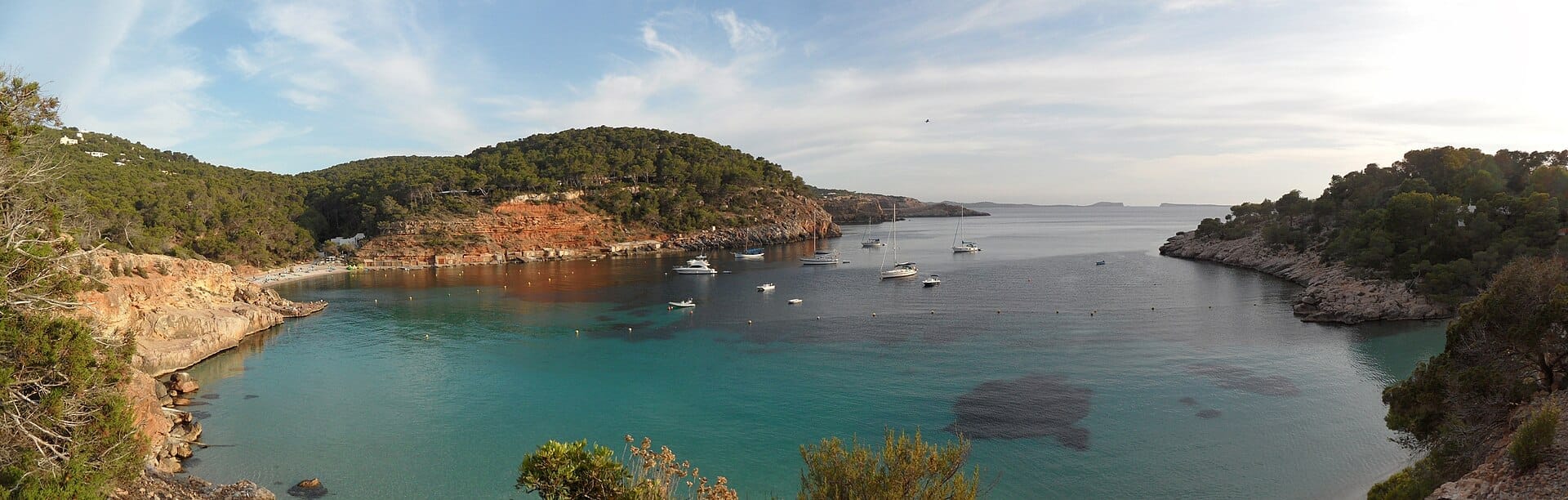
Sant Antoni de Portmany sits on the west coast of Ibiza, roughly 14 kilometers from Ibiza Town by road. The town is built around Sant Antoni Bay, a wide, sheltered inlet that local tourism sources describe as one of the largest bays on this side of the Mediterranean and the largest natural harbour on Ibiza. The bay curves in a broad arc, with the town centre concentrated at its southern edge, the promenade running northeast toward the quieter residential stretches, and the Sunset Strip occupying the western headland.
The municipality of Sant Antoni de Portmany is one of five municipalities on the island and shares borders with Sant Josep de Sa Talaia to the south and Sant Joan de Labritja to the north, with the municipalities of Eivissa (Ibiza Town) and Santa Eulària des Riu lying further east on the island. For visitors, the relevant area is much smaller: the resort town itself, the bay promenade, the main S'Arenal beach, and the cluster of streets radiating inland from the waterfront.
San Antonio functions as the western hub of the island. It's the departure point for boat trips to Cala Bassa, Cala Comte, and day trips toward Formentera, and it sits within easy reach of several of Ibiza's best beaches along the southwest coast. If you're staying here, you're well-positioned for the western and southern beaches, but Ibiza Town's old city and the north of the island are a longer commitment by bus.
Character & Atmosphere
San Antonio operates on a schedule unlike anywhere else on the island. The mornings are quiet, almost deceptively so. The promenade along S'Arenal beach is walked by families and older couples eating breakfast at seafront cafés, and the bay catches the early light in a way that makes it easy to forget what happens here after dark. The palm trees along the waterfront are genuinely beautiful, and the sweep of the bay, when the water is calm and the morning haze hasn't fully lifted, looks like a Mediterranean postcard.
By early afternoon the beach fills up, the bar terraces come to life, and the atmosphere shifts toward something more recognizably resort-like. The central streets behind the main square — with its fountain, palm trees, and ring of restaurants — are busy with shops selling beach gear, supermarkets, pharmacies, and the kind of international fast food that tells you exactly what demographic the town is designed around. That's not a criticism, just a factual description. San Antonio built its reputation on accessibility, and it delivers on that.
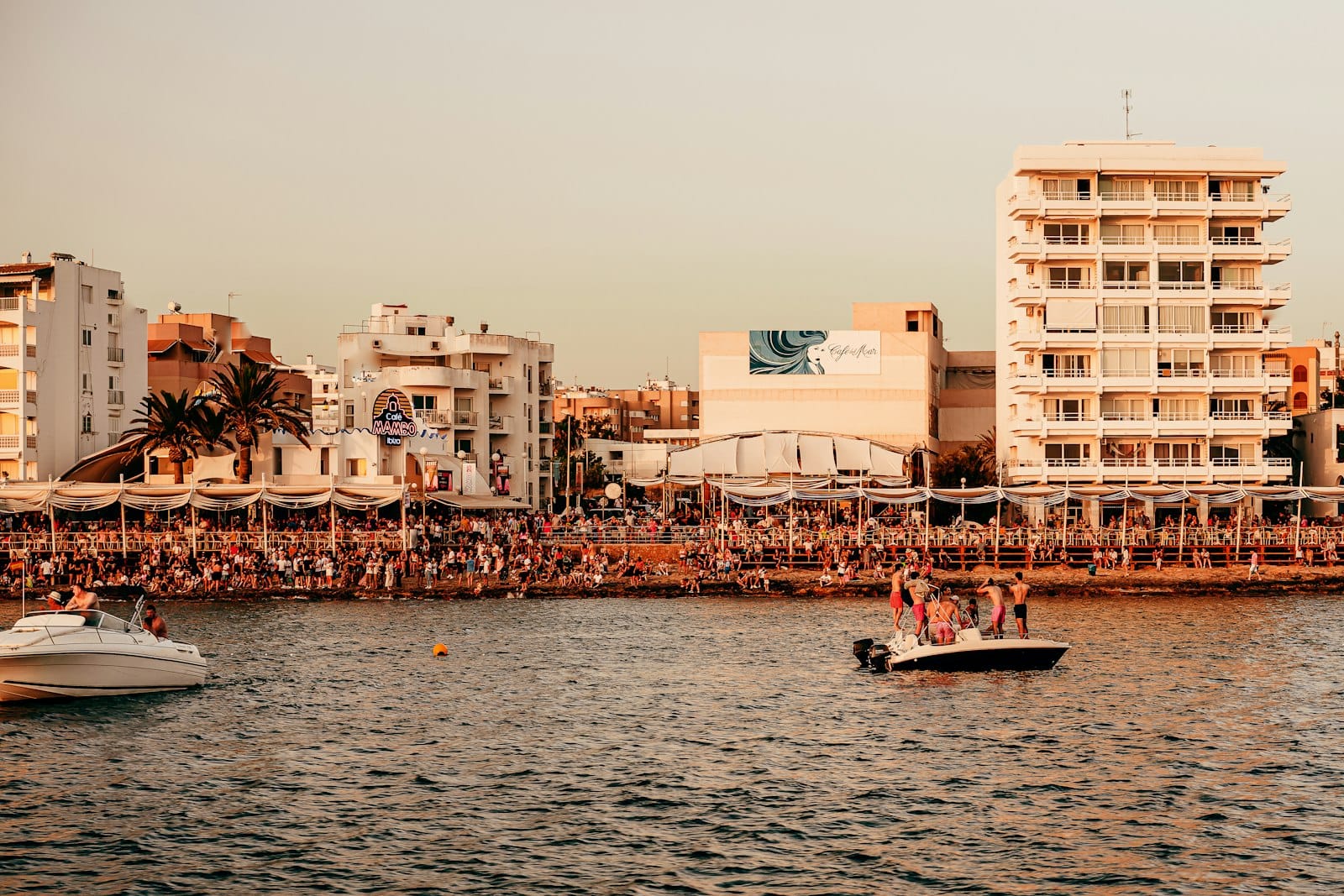
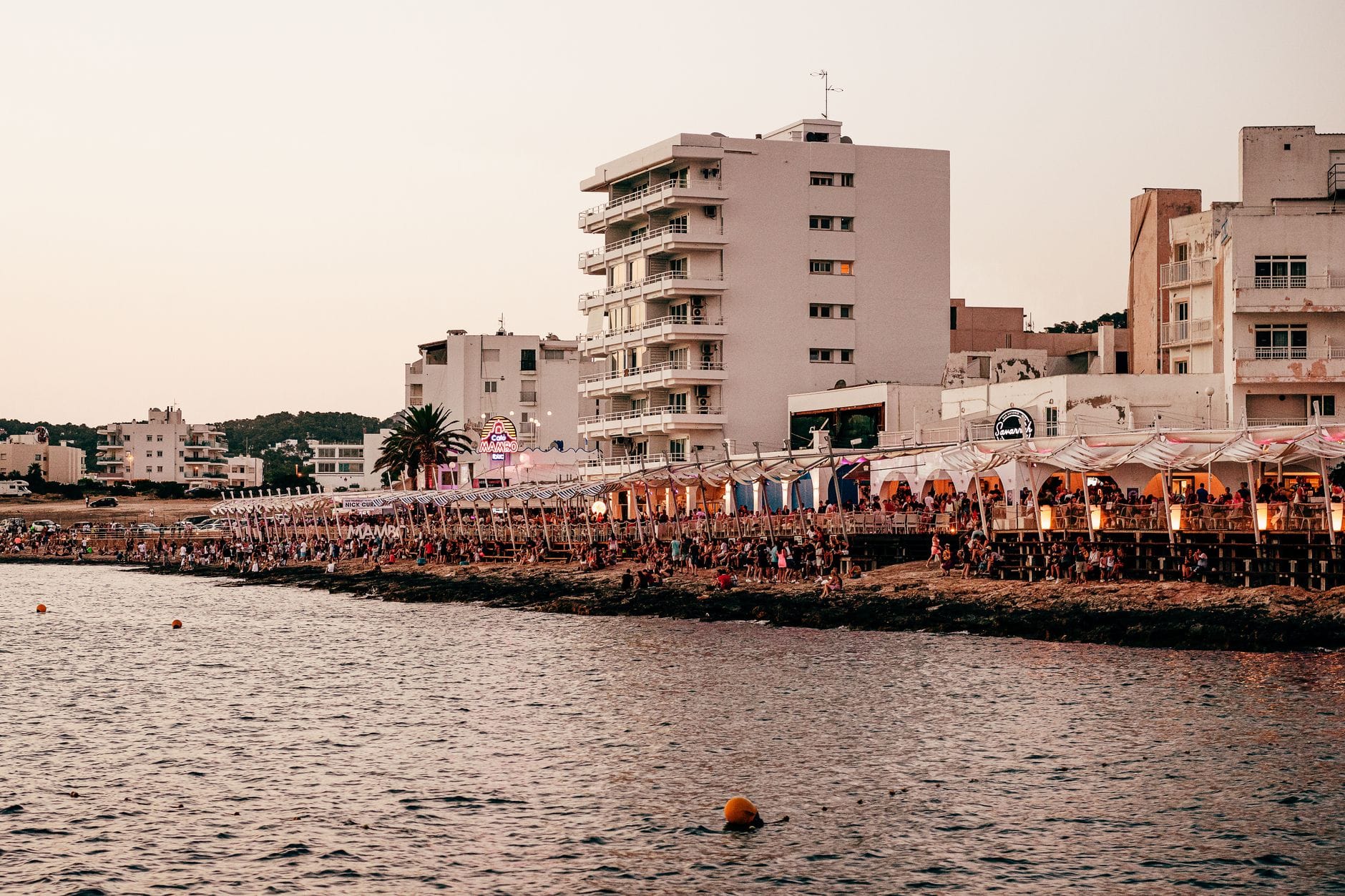
The western headland, where the Sunset Strip runs along the waterfront, is where San Antonio earns its most defensible reputation. Each evening, as the sun drops toward the sea, the bars along this stretch fill with people facing west. The light at this hour is spectacular, throwing orange and pink across the bay, and the combination of outdoor terraces, ambient music, and reliable good weather has made this ritual one of the most popular experiences on the island. It feels genuine even when it's crowded.
After dark, the resort operates at a different frequency entirely. The streets around the main bar district — locally known as the West End — become loud, dense, and relentlessly commercial after 10pm. Bar promoters work the street corners, drinks deals are advertised in multiple languages, and the noise levels from competing venues create a wall of sound that carries several streets in every direction. This is not a scene for light sleepers or anyone expecting a quiet dinner. It's a scene that suits people who came to Ibiza specifically for this, and on those terms it functions exactly as advertised.
⚠️ What to skip
The West End bar district is specifically oriented toward young, budget-conscious partygoers. If you're staying near this area, expect significant noise until at least 3am most nights during summer. Travelers seeking a quieter base should look at accommodations on the northern side of the bay or consider Ibiza Town instead.
What to See & Do
S'Arenal, the main town beach, runs for several hundred meters along the bay and is the social center of San Antonio's daytime life. It's a well-maintained, sandy beach with calm, shallow water that makes it genuinely good for swimming, particularly compared to some of the rockier coves elsewhere on the island. The promenade behind it is flat and walkable, lined with bars and restaurants facing the water.
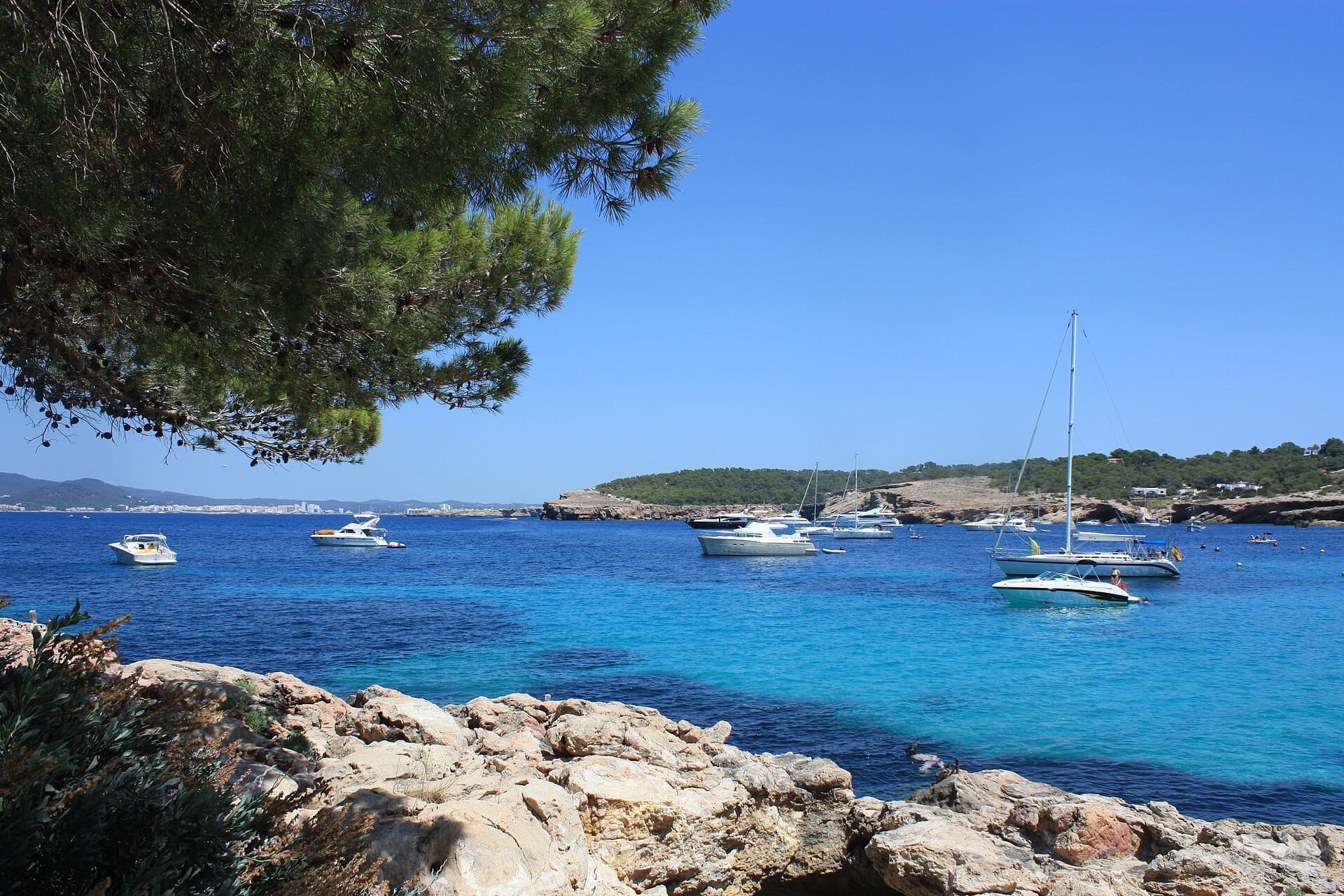
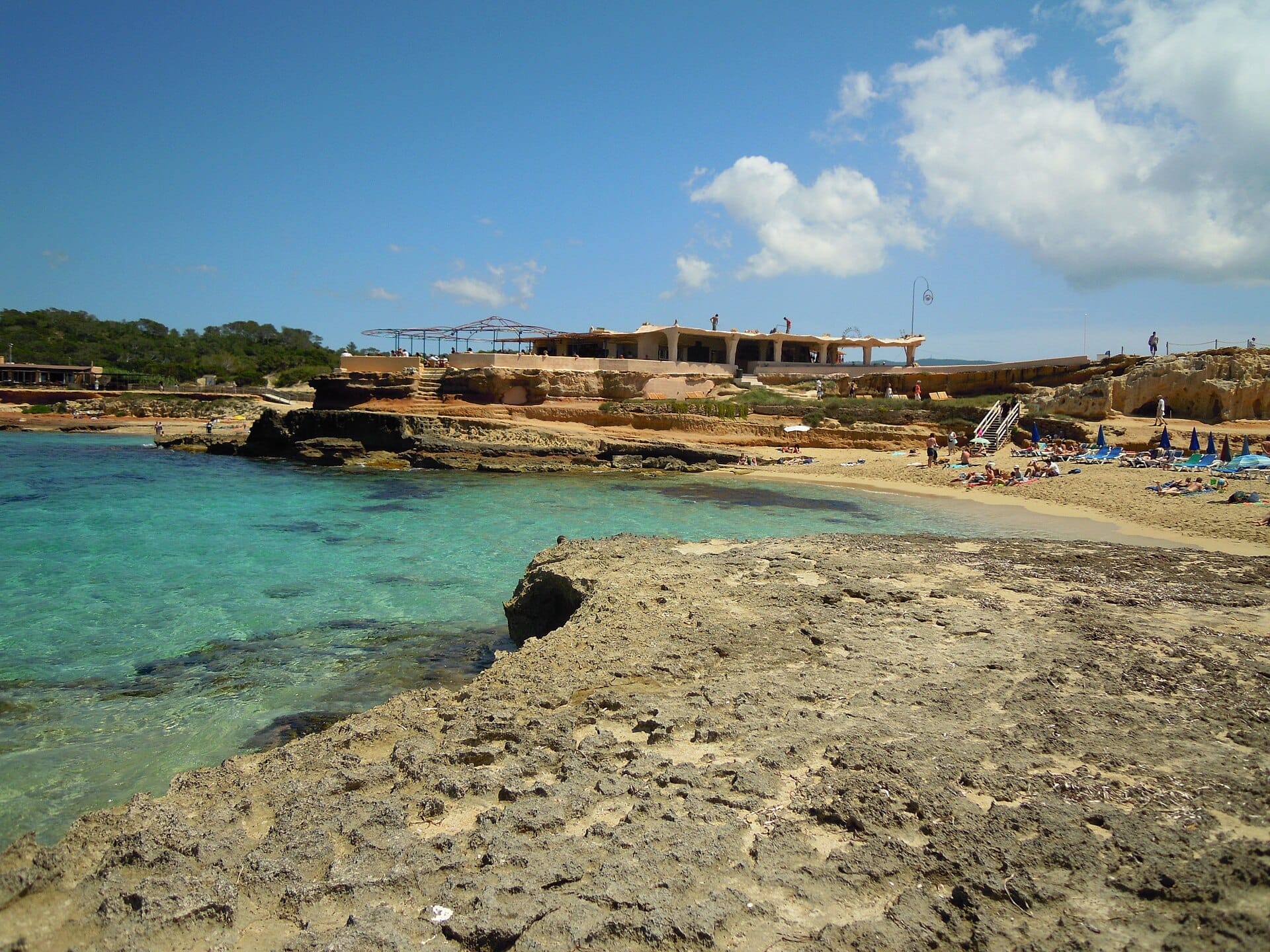
The bay is one of the best departure points on the island for boat trips. Ferries and excursion boats run regularly from the harbour to beaches including Cala Bassa and Cala Comte along the coast, and longer trips run to Formentera. Taking the boat rather than the road to these beaches is, in many cases, the sensible choice: the coastal road has limited parking, and the sea approach gives a different perspective on the cliffs.
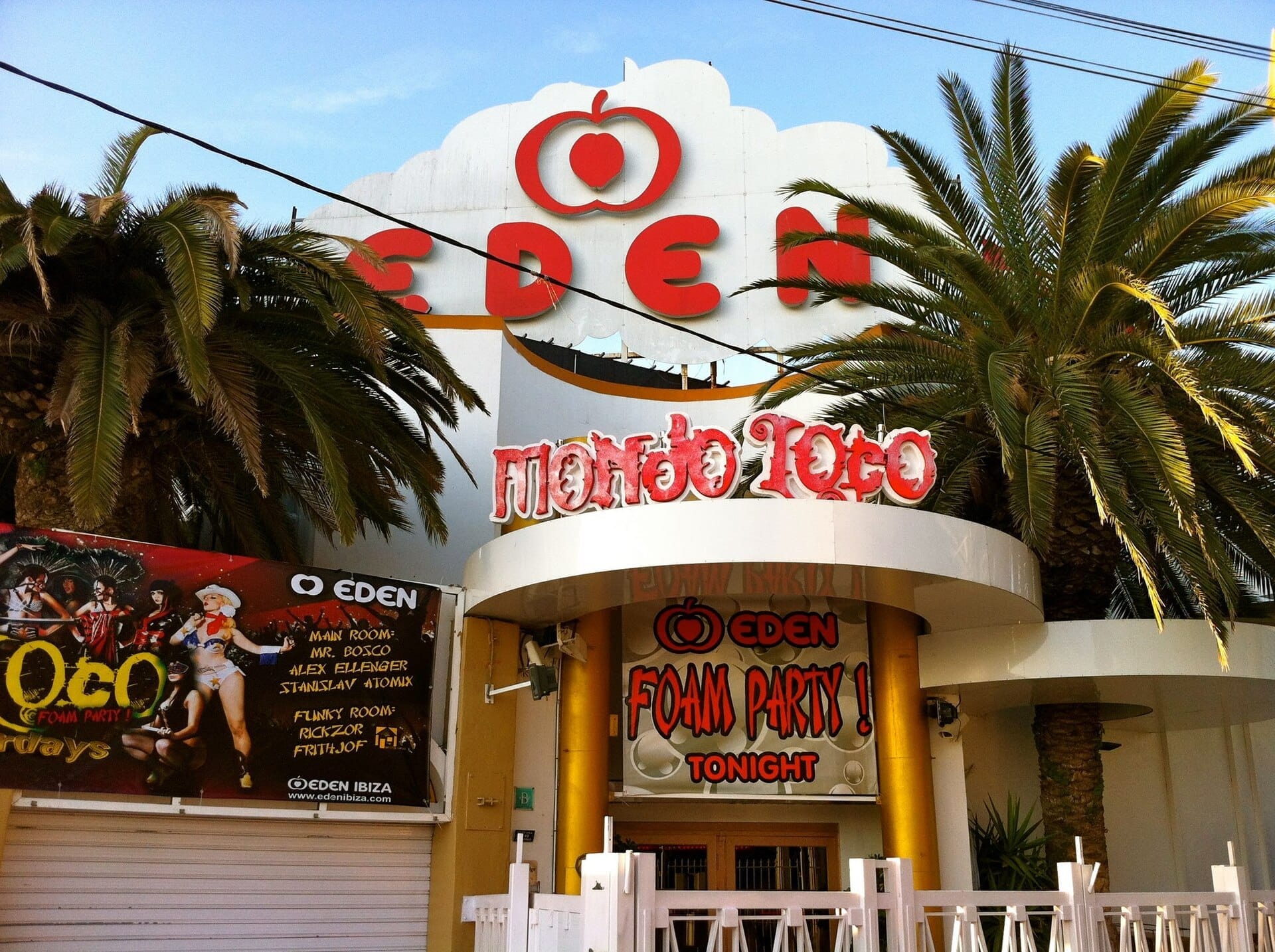
San Antonio's clubbing infrastructure is what put it on the global map. Es Paradis sits right in the town centre and has been operating since the late 1970s, an architectural curiosity with an open-air pyramid roof. Eden Ibiza is nearby and draws significant crowds through the season. Larger venues — including Amnesia and Privilege (the historic superclub site, now operating as UNVRS) — sit on the road between San Antonio and Ibiza Town, accessible by the club buses that run through the night. DC10 is separate: near the airport and Las Salinas, not on this San Antonio–Ibiza Town club road.
Walk the Sunset Strip in the early evening for the best light and the least crowded terraces
Take a morning boat trip from the harbour to Cala Bassa or Cala Comte before the beaches fill
Explore the town's natural harbour on foot — the working port end, away from the resort bars, gives a sense of what the town was before tourism
Use San Antonio as a base for day trips south to Cala Jondal or the Ses Salines natural park
Catch a sunset session at one of the Sunset Strip bars — the experience holds up even accounting for the crowds
ℹ️ Good to know
The Sunset Strip bars tend to fill quickly from around 7pm. If you want a good seat facing west, arrive by 6:30pm, especially in July and August. The views and atmosphere are worth the early arrival.
Eating & Drinking
San Antonio's food scene is broad in quantity and uneven in quality. The promenade and streets surrounding the main square have dozens of restaurants serving everything from full English breakfasts to pizza, paella, and generic international menus. These are convenient, reliably open through the day, and mostly priced for volume rather than experience. If you're eating here simply to fuel a beach day or a night out, they do the job.
The better eating tends to happen slightly away from the main tourist drag. San Antonio has a small but genuine local dining culture, particularly around the side streets off the harbour area, where Spanish and Ibizan restaurants serve fresh fish, rice dishes, and tapas without the inflated sunset-view pricing. Prices in these spots are noticeably lower than equivalent restaurants in Ibiza Town.
For drinking, the town divides cleanly into two scenes. The Sunset Strip, running west of the main beach along the bay headland, is where the atmosphere is good and the prices reflect it: cocktails and long drinks at these terrace bars are expensive, but you're paying for the setting and the show as much as the drink itself. The West End is the opposite: cheap drinks, aggressive promotions, and volume designed to get people through the door before midnight.
Seafront restaurants along the promenade: convenient, tourist-priced, international menus
Side-street tapas and local fish restaurants: better quality, lower prices, less English-language signage
Sunset Strip cocktail bars: expensive but genuinely atmospheric for the evening ritual
West End bars: budget drinks, high energy, very loud from around 10pm onward
Supermarkets in the town centre: good for self-catering and beach supplies at reasonable prices
Getting There & Around
San Antonio is connected to Ibiza Town and Ibiza Airport (IBZ) by regular bus services. The airport sits approximately 7 kilometers southwest of Ibiza Town, and buses connect the airport to the town with onward connections to San Antonio. The journey from Ibiza Town to San Antonio by bus takes roughly 30 minutes depending on the route and time of day. Bus schedules and specific line numbers change seasonally, so confirm current timetables with the official Ibiza transport authority before traveling.
Taxis are available throughout San Antonio and are the fastest option for airport transfers or late-night trips back from clubs. During peak summer season, particularly after major club nights in the early hours, demand for taxis is high and wait times can be significant. Club buses — specific nightlife shuttle services that run between the major venues and resort towns — are a practical alternative for getting to and from Amnesia, UNVRS (the former Privilege site), and other clubs on the road to Ibiza Town. For DC10 near the airport, confirm the current shuttle or taxi options separately. These typically run from around midnight through to early morning.
Boat taxis and ferries run from the harbour to beaches along the west coast, including Cala Bassa and Cala Comte. These are seasonal services; check locally for the current schedule and last return times before committing to a beach day by boat.
Renting a scooter or car from San Antonio is a practical way to explore the western and southern coasts independently. The roads toward Cala Jondal and the Ses Salines natural park are straightforward from here, and having your own transport opens up beaches and coves that aren't reachable by bus. For guidance on getting around the island more broadly, the getting around Ibiza guide covers all the main options in detail.
💡 Local tip
If you're planning to visit the big clubs between San Antonio and Ibiza Town — Amnesia and UNVRS (formerly Privilege) — use the official club bus services rather than taxis. They're cheaper, they run all night, and they drop you close to your hotel. DC10 is near the airport/south, not on this road — confirm separate transport. Routes and stops change year to year.
Where to Stay
San Antonio's accommodation ranges from budget hostels and apartment blocks in the town centre to mid-range hotels along the bay promenade and a handful of higher-end options on the quieter northern edge of the bay. The town centre is convenient for the beach and bars but noisy at night. The northern bay area trades some walking distance for considerably more sleep.
San Antonio suits travelers who are primarily here for nightlife and daytime beach access, and who want low-to-mid-range pricing relative to the rest of the island. It's not the right base if you want easy access to Ibiza Town's old city for evenings: the bus journey is manageable but not quick, and late-night transport options require planning. It also doesn't suit travelers seeking a quieter, more local-feeling base.
For travelers who want to be near the clubbing scene without staying in San Antonio itself, properties on the road between San Antonio and Ibiza Town put you within reach of Amnesia and similar venues and offer slightly more flexibility. The where to stay in Ibiza guide covers all the main areas and can help you match your base to your priorities.
Is San Antonio Right for You?
San Antonio is one of those places that inspires strong reactions. People who love it tend to return year after year, drawn by the combination of affordable prices, good beaches within easy reach, reliable nightlife, and that evening ritual along the Sunset Strip. People who don't tend to find it too loud, too commercialized, and too disconnected from the Spain they came looking for.
Both reactions are legitimate. San Antonio is genuinely not for everyone, and it doesn't pretend to be. If you want the historic, architectural, and cultural side of Ibiza, the Dalt Vila and Ibiza Town offer a completely different experience. If you want quieter beaches and a more relaxed pace, the north of the island or Santa Eulalia are better fits. But if you want a functional, affordable, energetic base with good beach access, easy nightlife, and some genuinely beautiful evenings watching the sun go down over the Mediterranean, San Antonio delivers.
ℹ️ Good to know
San Antonio's party season typically runs from early May through late September, with peak crowds and the full club lineup operating in July and August. Visiting in late September or early October means lower prices, smaller crowds, and most of the same sunsets — the Sunset Strip still operates, the beaches are still warm, and the bay is noticeably calmer.
TL;DR
San Antonio (Sant Antoni de Portmany) is Ibiza's main western resort town, built around a large natural bay on the northwest coast, roughly 14km from Ibiza Town.
Best suited for: nightlife-focused travelers, first-timers on a budget, anyone who wants beach access and a classic Ibiza club holiday without the higher prices of Ibiza Town.
The Sunset Strip, along the western headland of the bay, offers one of Ibiza's most reliable and genuinely atmospheric evening experiences — worth visiting even if you're staying elsewhere.
The West End bar district is loud, commercial, and specifically oriented toward young budget travelers; light sleepers and those seeking a quieter base should choose accommodation on the northern bay or consider a different neighborhood entirely.
San Antonio has good bus connections across the island, regular boat services to some of Ibiza's best west-coast beaches, and sits within easy reach of major clubs along the road to Ibiza Town.
Top Attractions in San Antonio (Sant Antoni de Portmany)
Ibiza's 210 kilometres of coastline hide many beaches, from party-ready stretches to remote pine-fringed coves. This guide covers the island's finest, organised by character so you can find exactly the beach you're looking for.
Ibiza rewards visitors differently depending on when you arrive. This guide breaks down every season on the island: weather, crowd levels, pricing, nightlife timing, and the months most travelers overlook. Whether you're chasing peak-season energy or a quieter Mediterranean escape, the timing matters more than most guides admit.
Formentera is just a short ferry ride (around 20 km) from Ibiza, but it feels like a different world. This guide covers everything for a day trip: how to get the ferry, what it costs, where to go on the island, and what most visitors get wrong.
Ibiza is small enough to cross in under an hour, but getting around efficiently depends entirely on when you visit and where you're headed. This guide covers every transport option on the island, from the airport bus to the Disco Bus, with real price ranges and practical guidance on what's worth it.
Dalt Vila is the fortified hilltop heart of Ibiza Town, inscribed as a UNESCO World Heritage Site in 1999 for its Renaissance walls, layered history, and cultural depth. This guide covers every major sight, the best walking route, seasonal advice, and the practical details you need to make the most of your visit.
Ibiza is more than its nightlife reputation. This guide covers the essentials for first-time visitors: the best time to arrive, how to get around the island, where to base yourself, what things actually cost, and how to see the side of Ibiza that most tourists miss entirely.
Ibiza is far more than its superclubs and famous shorelines. This guide uncovers the island's quieter, deeper side: fortified hilltop towns, dramatic coastal hikes, authentic village markets, and unspoiled nature that most visitors fly straight past.
Ibiza has over 140 marked trails threading through pine forests, clifftop coastlines, and protected natural parks. This guide covers the best hikes on the island, from the summit of Sa Talaia to the dramatic Es Vedrà coastal trail, with practical tips for every level.
Ibiza's hippy markets are a living legacy of the island's counterculture roots, offering handmade jewellery, bohemian clothing, artisan crafts, and a social atmosphere unlike anything else on the island. This guide covers every major market, from the iconic Las Dalias to the vast Punta Arabí, plus smaller village markets, flea markets, and the best complementary experiences to build your market day around.
September and October mark one of the most interesting transitions on the Balearic island of Ibiza. The club season reaches its emotional finale, crowds thin out, prices drop, and the island starts to breathe again. This guide covers everything from closing party logistics to the best beaches and day trips once the last DJ plays out.
Seven days is the ideal amount of time to experience Ibiza beyond the clubs. This itinerary covers the UNESCO-listed old town, the island's best beaches across multiple coasts, hippy markets, San Antonio sunsets, and a day trip to Formentera, with practical guidance on what to skip and when to go.
Ibiza nightlife runs on its own logic: doors open at midnight, headliners play at 4am, and a single night out can cost €200 before you know it. This guide breaks down every layer of the scene, from superclub pricing and weekly residencies to boat parties, budget bars, and how to get around safely after dark.
Ibiza has a reputation for luxury excess, but the island is genuinely doable on a tight budget. This guide breaks down real costs, the best free activities, transport options, and the timing tricks that can cut your bill by a third.
Ibiza's west-facing coastline turns extraordinary at dusk. Whether you want a front-row bar stool at San Antonio's legendary Sunset Strip or a quiet clifftop above Es Vedrà with no one else around, this guide covers the island's finest sunset experiences across beach coves, hilltop viewpoints, and atmospheric gathering spots.
Ibiza is one of Europe's most misunderstood destinations. Yes, it has world-famous nightlife. But this 572 km² Spanish island in the Balearic archipelago also holds a UNESCO World Heritage Site, dozens of pristine coves, ancient Phoenician ruins, and a thriving market culture. This guide covers all of it — with clear guidance on what's worth your time and what isn't.
Ibiza accommodation spans budget dorm beds at €25 per night to clifftop villas at €5,000 per night. This guide breaks down every major area, what it actually costs, and who each zone suits best — so you book the right place the first time.