Cala Bassa Beach, Ibiza: What to Expect Before You Arrive
Cala Bassa is a 250-metre arc of fine sand on Ibiza's western coast, sheltered by pine-covered cliffs and known for exceptionally clear, calm water. Accessible by car, bus, or seasonal ferry from San Antonio, it draws a mixed crowd from families to beach-club regulars, and offers one of the more complete beach experiences on the island.
Quick Facts
- Location
- Camí de la Bassa, Sant Josep de sa Talaia, Ibiza, Spain (western coast, approx. 15 min from San Antonio)
- Getting There
- Car, local bus, or seasonal ferry from San Antonio harbour
- Time Needed
- 2–5 hours depending on whether you use the beach club
- Cost
- Beach access is free; CBbC Cala Bassa Beach Club operates during the season with food and service charges
- Best for
- Families, couples, beach-club visitors, snorkellers, sunset seekers
- Official website
- cbbcgroup.com/cbbc-cala-bassa-beach-club
What Cala Bassa Actually Is
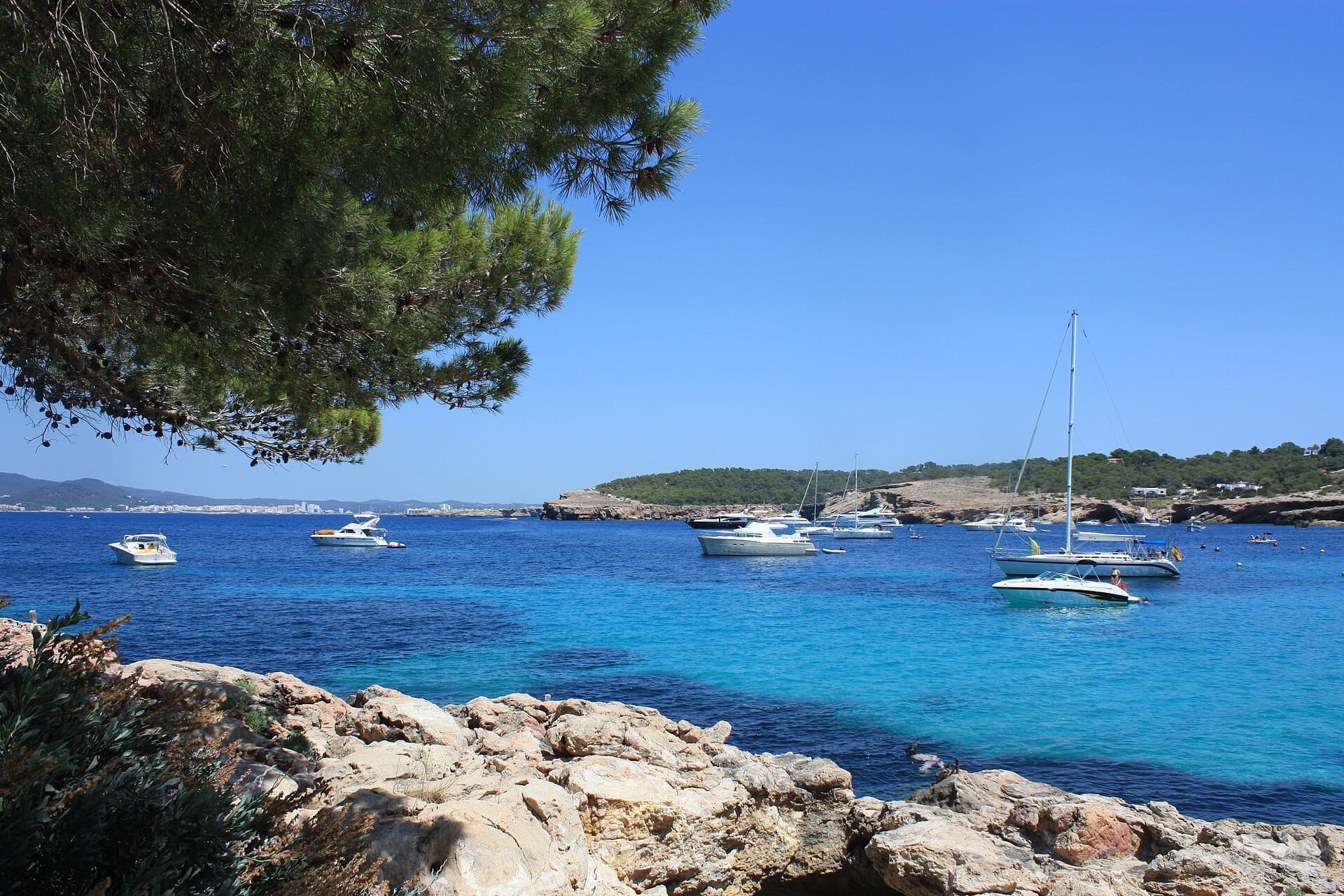
Cala Bassa is a west-facing sandy cove on Ibiza's coastline, located within the municipality of Sant Josep de sa Talaia. The beach measures approximately 250 metres long and around 30 metres wide at its broadest, framed on both sides by low pine-clad cliffs that drop gradually to the waterline. The combination of that topography and a relatively sheltered position produces water conditions that are noticeably calmer and clearer than many of the island's exposed southern beaches.
It is not a secret. Cala Bassa draws significant crowds in July and August, and anyone expecting solitude on a peak summer afternoon will be disappointed. What makes it worth the visit, even when busy, is the quality of the water itself: shallow for a long way out, ranging in colour from pale jade near the shore to deep blue further out, with good underwater visibility for snorkelling. The sand is fine and reasonably soft underfoot.
ℹ️ Good to know
The beach itself is free to access. The CBbC Cala Bassa Beach Club operates on the beach with sunbeds, food, and drinks service — you pay for what you use there. You can bring your own towel and set up on the public sand without spending anything.
How the Beach Changes Through the Day
In the early morning, before 9am, Cala Bassa is a different place altogether. The pine trees hold onto overnight coolness, the water is glassy, and the beach club infrastructure is still being set up. A handful of early arrivals are sometimes on the sand by this point. The light at this hour is soft and raking, ideal for photography.
By midday in summer, particularly from late June through August, the beach is at capacity. Sunbed rows fill out, the beach club terrace gets loud, and finding a free patch of public sand requires some patience. The water stays calm through most of the day because the cove is sheltered and faces west, which helps reduce the impact of swells.
Late afternoon, from around 5pm onward, is genuinely special at Cala Bassa. As a west-facing beach, it catches full afternoon sun and offers a clear view of the horizon at golden hour. The energy shifts: daytime swimmers give way to people lingering with drinks, the light turns amber across the water, and the coastline glow becomes especially striking. This is one of the better natural sunset vantage points accessible from the San Antonio area without going specifically to the Sunset Strip.
For context on other west-facing viewpoints, the Ibiza sunsets guide covers the full range of spots across the island and helps you compare what each offers in terms of access, crowds, and atmosphere.
Tickets & tours
Hand-picked options from our booking partner. Prices are indicative; availability and final rates are confirmed when you complete your booking.
Sunset boat tour with tapas, open bar and water sports in Ibiza
From 70 €Instant confirmationFree cancellationEscape Tour self-guided, interactive city challenge in Ibiza
From 30 €Instant confirmationPrivate Sunset Cruise on a Maritime Classic in Ibiza
From 750 €Instant confirmationFree cancellationIbiza to Formentera boat trip with open bar and water sports
From 69 €Instant confirmationFree cancellation
The Water and Why It Stands Out
The water quality at Cala Bassa is consistently cited as among the clearest on this side of the island. The bay's sheltered orientation limits wave action, which means sediment stays settled and visibility stays high. On calm days you can see the sandy bottom clearly at depths of several metres. The seabed is a mix of sand and scattered Posidonia oceanica seagrass meadows further from shore — these meadows are a key part of Ibiza's UNESCO World Heritage designation and help keep the surrounding waters exceptionally clear.
Snorkelling is productive around the rocky edges of the cove, particularly on the southern headland. You are likely to see sea bream, wrasse, and various small reef fish moving through the Posidonia. Bring your own mask and fins — there is no confirmed equipment rental at the beach itself, and conditions can change; check locally on arrival.
⚠️ What to skip
Do not anchor boats or disturb the Posidonia seagrass beds around the bay. These are protected under Spanish and EU environmental law, and the health of the meadows directly affects water clarity island-wide.
Getting There: Your Realistic Options
Cala Bassa sits roughly 15 minutes by car from San Antonio. The road in is narrow toward the end, and parking fills up fast in peak season. Arriving before 10am is the most reliable way to secure a spot. After 11am in July and August, be prepared to wait or park some distance away and walk.
Public buses connect San Antonio with the beach during summer months, though schedules are seasonal and should be verified before travel via the Ibiza transport authority. The bus is a practical alternative if you are staying in the San Antonio area and want to avoid the parking scramble entirely.
The most enjoyable option is the seasonal ferry from San Antonio harbour. Boats run regularly during summer and the crossing takes around 20 minutes, giving you views back toward the coast and, on clear days, toward Es Vedrà in the south. The ferry also means you arrive directly at the beach without worrying about parking. Check current schedules and fares at the harbour before building your day around it, as times vary.
If you are staying in or around San Antonio, Cala Bassa is one of the most logistically straightforward beaches to reach. It is also a good anchor point for exploring the western coast, as Cala Salada and Cala Comte are both within a short drive.
CBbC Cala Bassa Beach Club: What It Adds
The CBbC Cala Bassa Beach Club operates directly on the beach and is open during the season. It offers sunbed hire, a full food and drinks menu, and occasional DJ sets in the afternoon. The kitchen runs a Mediterranean-leaning menu with fresh seafood, salads, and grilled dishes. Prices reflect the beach club positioning, so budget accordingly.
Reserving a sunbed through CBbC in advance is strongly recommended for peak weeks in July and August. Walk-ins can find sunbeds taken by 11am on busy days. That said, the public beach area remains separate from the club section, so the absence of a reservation does not prevent you from spending the day.
The beach club adds a social dimension that some visitors love and others find unnecessary. If you want a quiet beach experience focused on swimming, you will not need it. If you want a comfortable base with food, service, and afternoon music, it delivers. Both uses of the beach coexist without friction.
Accessibility and Family Considerations
Cala Bassa has above-average accessibility for Ibiza. Wooden walkways provide beach access for visitors with mobility limitations, and an amphibious wheelchair is reported to be available for water access under lifeguard supervision. This is genuinely uncommon on the island and makes Cala Bassa one of the few beaches where visitors with disabilities can enter the water with assistance.
For families with young children, the shallow, calm water is a significant draw. The gradual slope into the sea allows children to wade and swim in suitable conditions. Lifeguards are present during the main season. Shade is limited on the sand itself, so bringing a parasol or planning to use the beach club's covered areas is worth considering if you are visiting with small children or anyone sensitive to direct sun.
💡 Local tip
The north side of the cove, near the rocks, tends to be slightly less crowded than the central stretch in front of the beach club. It also offers better snorkelling. If you arrive early enough to claim a spot there, it rewards the effort.
Limitations: When Cala Bassa Falls Short
Cala Bassa is a high-quality beach by any reasonable measure, but it is not an escape. In high season it is genuinely crowded, the access road becomes congested, and the beach club volume can disrupt the peace. Visitors looking for a remote, undeveloped cove will find better options elsewhere on the island.
If quieter water and fewer people are the priority, beaches like Cala Salada to the north or some of the coves detailed in the Ibiza hidden gems guide may be more rewarding, especially outside peak weeks.
In shoulder season, particularly May, early June, and September, Cala Bassa is a noticeably better experience. The water is still warm from August heat, the beach is far less crowded, and the afternoon light over the water is outstanding. September especially offers conditions that rival high summer at a fraction of the intensity.
Insider Tips
- Arrive by 9:30am to secure parking without a wait, or take the ferry from San Antonio harbour and skip the road entirely — the ferry view of the coastline is also worth the trip in itself.
- The rocky southern headland of the cove is the best snorkelling spot. Swim along the base of the cliff where the Posidonia meets the rock and you will find more marine life than in the open sandy centre.
- If you plan to eat at the beach club, the kitchen is less rushed before 1pm and after 3pm. Midday service can be slow on peak days.
- September is arguably the best month to visit Cala Bassa: the sea temperature peaks after the summer and crowd levels drop sharply after the first week of the month.
- West-facing beaches lose direct sun as it gets later in the evening. The final 30 minutes of golden light hit the water surface, not the sand — position yourself near the waterline for the best sunset view rather than sitting back on the beach.
Who Is Cala Bassa For?
- Families with young children looking for calm, shallow water in a well-equipped setting
- Couples wanting a beach day with good food and a natural sunset view included
- Visitors arriving via San Antonio who want the closest high-quality beach without a long drive
- Beach club regulars who want the CBbC experience in a genuinely attractive natural setting
- Snorkellers and water sports enthusiasts drawn by the clear water and rocky edges of the cove
Nearby Attractions
Other things to see while in San Antonio (Sant Antoni de Portmany):
- Cala Comte (Cala Conta)
Cala Comte, officially known as Platges de Comte, is a cluster of three small sandy coves on Ibiza's west coast, facing a chain of rocky islets with some of the clearest water on the island. Free to enter and accessible by car, bus, or seasonal ferry from San Antonio, it draws both families and sunset-chasers, though it gets seriously crowded in peak summer.
- Cala Salada & Cala Saladeta
Cala Salada and Cala Saladeta sit side by side on Ibiza's northwest coast, about 6 km from San Antonio. Together they offer some of the island's clearest turquoise water in a protected natural setting. One has facilities; the other demands a short walk and rewards you with almost complete seclusion.
- Eden Ibiza
Eden Ibiza has anchored the San Antonio nightlife scene since 1999. With a vast main floor, two DJ booths, multiple bars, and a completely redesigned interior, it draws serious clubbers chasing big-name bookings across the summer season.
- Es Paradis
Open since 1975, Es Paradis is one of Ibiza's most architecturally distinctive nightclubs. Located in central San Antonio, it draws crowds with its 120-ton glass pyramid roof, three dance floors, and the legendary weekly Water Party that floods the dancefloor.