Cala Comte (Cala Conta): Ibiza's Most Spectacular Sunset Beach
Cala Comte, officially known as Platges de Comte, is a cluster of three small sandy coves on Ibiza's west coast, facing a chain of rocky islets with some of the clearest water on the island. Free to enter and accessible by car, bus, or seasonal ferry from San Antonio, it draws both families and sunset-chasers, though it gets seriously crowded in peak summer.
Quick Facts
- Location
- West coast of Ibiza, municipality of Sant Josep de sa Talaia – approx. 15 min by car from San Antonio
- Getting There
- Bus line L4 from San Antonio; seasonal ferry from San Antonio harbour; large designated free parking area just before the access barrier
- Time Needed
- Half day minimum; most visitors stay 3–5 hours. Arrive early or plan around sunset
- Cost
- Beach access free. Ferry from San Antonio approx. €14 return (price current at time of writing; verify before travel). Sun loungers extra
- Best for
- Crystal-clear swimming, snorkelling, and watching the sunset over offshore islets
What Makes Cala Comte Different
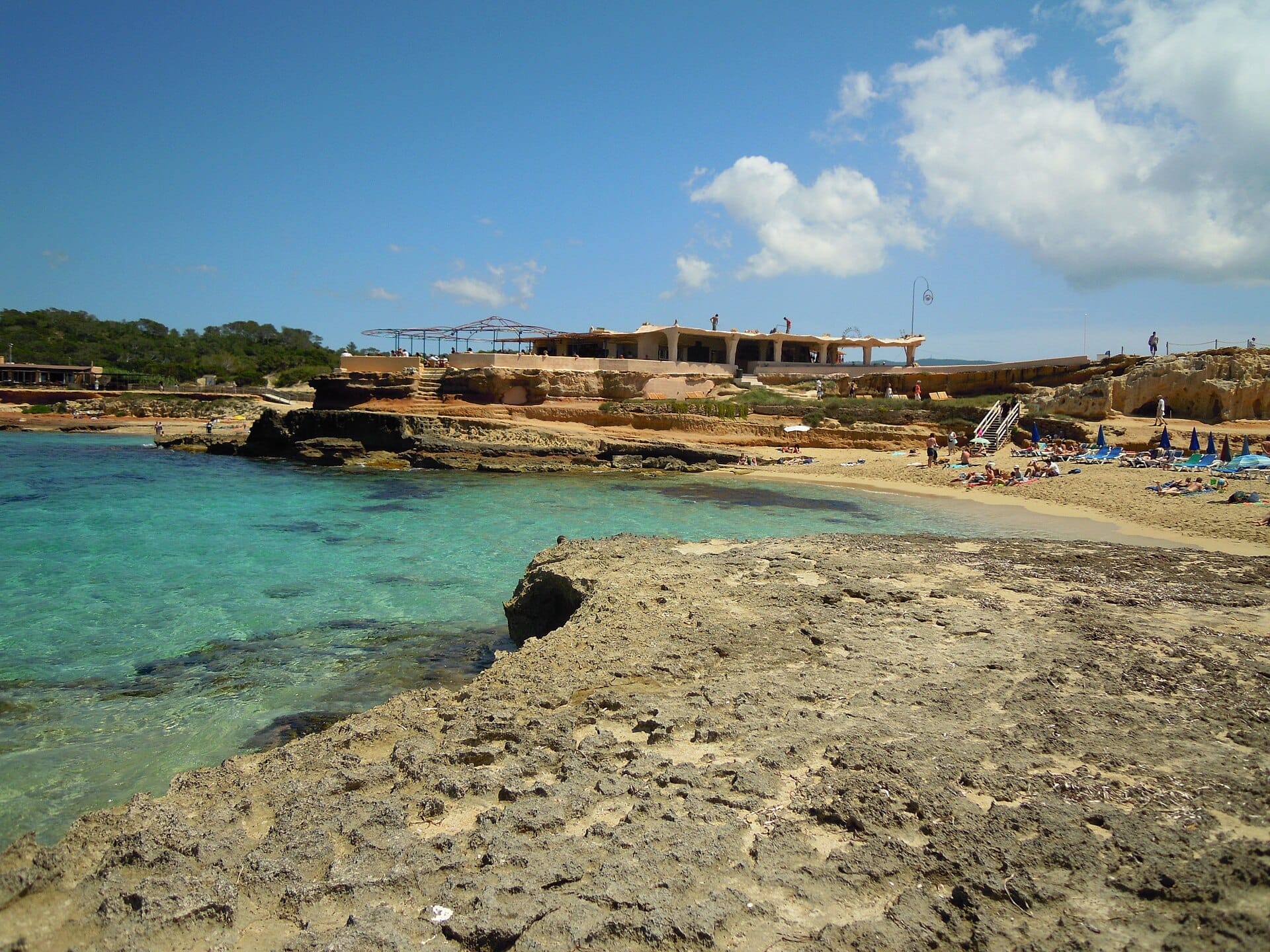
Cala Comte, also spelled Cala Conta and officially named Platges de Comte in Catalan, is not a single beach but a collection of three linked coves on Ibiza's western coastline: Es Comte de Tramontana, Es Comte de Ponent, and Es Racó d'en Xic. Together they face a tight cluster of small rocky islets that form part of the Illots de Ponent Nature Reserve. This geography is what separates Cala Comte from the island's other popular beaches: the islets compress and filter the Mediterranean swell, producing water that shifts from pale turquoise near the shore to a vivid cobalt blue further out, all of it remarkably transparent.
The seabed is mostly sand and flat rock, shallow enough for confident non-swimmers to wade, clear enough for snorkellers to spot sea urchins and small fish without equipment more sophisticated than a mask.
ℹ️ Good to know
The beach faces almost due west, which means afternoon light turns the water into something close to stained glass. Sunset here is not accidental scenery — it is the main event for a large portion of the crowd that arrives after 5 PM.
How the Beach Changes Through the Day
Mornings before 10 AM are the quietest window, particularly in July and August. The parking lot is half-empty, the beach restaurants are setting up rather than serving, and the water has an almost mirrorlike quality in the low early light. Families with young children tend to arrive by mid-morning and claim the central coves, which have the calmest entry points and the most amenities within walking distance.
By noon in peak season the beach is genuinely packed. Sun loungers in the central areas fill up fast, the bar queues grow, and parking becomes a real problem. The atmosphere is energetic rather than peaceful: music from the beach bars, the smell of sunscreen and grilled fish, boats anchoring offshore, jet skis beyond the swim zone. It is exactly what many visitors want. Those after quiet contemplation should either arrive at dawn or head to the smaller, rockier third cove, Es Racó d'en Xic, which draws fewer people due to its less straightforward access.
Late afternoon brings a shift in character. Day-trippers on the ferry start heading back, some families pack up, and a new crowd arrives specifically for the sunset. From roughly 7 PM onward in summer, people line the rocky headlands with drinks from the beach bars, cameras raised toward the islets. The light at this hour, filtering orange and pink through the offshore rock formations, is the reason Cala Comte appears in so many Ibiza photographs. Compared to the more famous Sunset Strip in San Antonio, the atmosphere here is calmer and more spread out, though no less popular.
Tickets & tours
Hand-picked options from our booking partner. Prices are indicative; availability and final rates are confirmed when you complete your booking.
Sunset boat tour with tapas, open bar and water sports in Ibiza
From 70 €Instant confirmationFree cancellationEscape Tour self-guided, interactive city challenge in Ibiza
From 30 €Instant confirmationPrivate Sunset Cruise on a Maritime Classic in Ibiza
From 750 €Instant confirmationFree cancellationIbiza to Formentera boat trip with open bar and water sports
From 69 €Instant confirmationFree cancellation
The Coves Up Close: What to Expect at Each
Es Comte de Tramontana is the northernmost and largest cove, with the broadest sandy area and the most facilities: toilets, rental sunbeds and umbrellas, and the main beach restaurant. The entry into the water is gradual, and the sheltered angle means it rarely gets choppy. This is where most first-time visitors end up, and for good reason.
Es Comte de Ponent sits just south, separated by a low rocky ridge that is easy to cross on foot. It is slightly smaller and catches a different angle of afternoon light. Some visitors prefer it for swimming as the water feels deeper sooner. Both central coves have views directly toward the islets of the nature reserve.
Es Racó d'en Xic is the southernmost section and requires a short scramble over rocks to reach. The path is uneven and not suitable for anyone with mobility limitations, but the reward is noticeably fewer people and a section of the beach that is clothing-optional. If you are travelling with someone who needs accessible terrain, the central coves are the practical choice.
⚠️ What to skip
The rocky outcrops between the coves involve uneven footing, particularly when wet. Flip-flops are minimal protection — water shoes or sandals with grip are worth packing if you plan to explore beyond the main sandy areas.
Getting There Without a Headache
The most relaxed option in summer is the seasonal ferry from San Antonio harbour. Boats typically run to Cala Conta (often stopping at Cala Bassa en route), with a return fare of approximately €14 per person as of current listings — though ferry schedules and pricing are seasonal and should be confirmed directly before travel. The boat ride takes around 30 minutes and deposits you directly at the beach, bypassing the parking situation entirely.
Bus line L4 from San Antonio also serves Cala Conta, making it accessible without a car. This is a practical budget option and worth checking against the current timetable from the local operator. For those driving or arriving by scooter, there is a large free parking lot immediately adjacent to the beach, though it fills completely by late morning on any sunny day between late June and early September. If you are staying in or near San Antonio, the ferry or bus removes the parking stress entirely.
Cala Comte sits within the municipality of Sant Josep de sa Talaia, roughly 15 minutes by car from both San Antonio and Sant Josep. The road is well-signposted as Platges de Comte (the Catalan name used on road signs). If you are building an itinerary around the west coast, it pairs naturally with Cala Bassa, which the ferry also serves, or with the short drive south toward Cala Tarida.
Swimming, Snorkelling, and Water Conditions
The water clarity at Cala Comte is consistently among the best on Ibiza's west coast, largely because the area sits within a protected nature reserve zone that limits certain types of boat traffic near the shore. The sandy seabed is clean, the colour gradient from the shoreline to open water is striking, and visibility underwater is good enough that even a basic snorkel mask reveals considerable life among the rocky sections.
Sea conditions are generally calm, partly because the islets break incoming swell. Light winds from the northwest (Tramontana) can occasionally make the surface choppy, but this is rarely an issue in July and August. Lifeguards are on duty during busy summer months — the flag system operates normally, so check the flag before swimming if you are unsure of conditions.
The offshore islets are a draw for swimmers and paddleboarders who want to venture out from the main beach. Note that this is a nature reserve, so respect for the protected ecosystem matters. If you are interested in Ibiza's coastal ecology more broadly, the nearby Ses Salines Natural Park covers some of the island's most significant marine and land habitats.
Food, Drinks, and What to Bring
The beach restaurants at Cala Comte serve food and drinks through the day, with the emphasis on fish and seafood. Prices are in line with Ibiza's beach restaurant market — meaning noticeably higher than town, but not outrageous given the location. The restaurants are busiest between 2 PM and 4 PM; arriving just before or after that window typically means shorter waits.
Sunbeds and umbrellas are available for hire in the central coves, and the turnover tends to be reasonable outside the absolute peak hours of 12–3 PM. Toilets are available near the main beach areas. If you are planning a full day, bringing your own snacks and water saves both money and time. There are no supermarkets within easy walking distance, so stock up in San Antonio before you leave.
💡 Local tip
Photography tip: the best light for shooting the islets is in the two hours before sunset, when the sun drops low enough to cast warm tones across the water without harsh glare. A polarising filter (or the equivalent phone setting) cuts the surface reflection and reveals the water colour underneath.
Limitations: Who Might Be Disappointed
Cala Comte is beautiful, but the beauty comes with company. In high summer it is one of the most visited beaches on the island, and the volume of people can undercut the experience significantly between 11 AM and 6 PM. If you are expecting a quiet, secluded bay, manage expectations: you will be sharing it with hundreds of other people on most summer days.
The beach is also not particularly large relative to its reputation. The sandy areas fill up quickly, and the rocky sections between coves require sure footing. Visitors with significant mobility limitations will find the central coves manageable but the outlying areas inaccessible. Those after Ibiza's more secluded coastal experiences should look at the lesser-known spots across the island rather than expecting Cala Comte to deliver that kind of solitude.
Finally, the famous sunset view, while genuine and worth seeing, is shared with a large crowd. If you want a more contemplative sunset experience, the Mirador des Vedrà inland offers a different perspective over the sea and the dramatic rock of Es Vedrà without the beach-bar energy.
Insider Tips
- Arrive by 9 AM in July or August if you want a free choice of spot on the sand. By 10:30 AM the central coves are already filling and the car park queue begins forming on the approach road.
- The ferry from San Antonio is genuinely the best way to visit in peak season: no parking stress, a scenic approach by water, and you can have a drink on the way back. Confirm the last return departure before you board — missing it means arranging alternative transport.
- Es Racó d'en Xic, the southernmost cove reached by scrambling over the rocks, consistently holds fewer people than the main coves. The walk takes 5–10 minutes and requires decent footwear, but the payoff is meaningful in July and August.
- The beach bars get loud and busy at peak dining hours. If you want to eat at one of the restaurants with a view, a booking in advance (or arriving before noon) is worth considering during the summer months.
- In September the crowds thin noticeably while the water stays warm from months of summer heat. The light is also lower and more golden earlier in the evening, which makes for better photography and a less hectic sunset experience.
Who Is Cala Comte (Cala Conta) For?
- Swimmers and snorkellers looking for exceptional water clarity on Ibiza's west coast
- Couples and groups who want a genuinely scenic sunset without going to a nightclub
- Families with children, particularly for the calm, shallow water entry at the central coves
- Day-trippers from San Antonio combining a boat trip with an afternoon at the beach
- Photographers working in the late afternoon and golden hour
Nearby Attractions
Other things to see while in San Antonio (Sant Antoni de Portmany):
- Cala Bassa
Cala Bassa is a 250-metre arc of fine sand on Ibiza's western coast, sheltered by pine-covered cliffs and known for exceptionally clear, calm water. Accessible by car, bus, or seasonal ferry from San Antonio, it draws a mixed crowd from families to beach-club regulars, and offers one of the more complete beach experiences on the island.
- Cala Salada & Cala Saladeta
Cala Salada and Cala Saladeta sit side by side on Ibiza's northwest coast, about 6 km from San Antonio. Together they offer some of the island's clearest turquoise water in a protected natural setting. One has facilities; the other demands a short walk and rewards you with almost complete seclusion.
- Eden Ibiza
Eden Ibiza has anchored the San Antonio nightlife scene since 1999. With a vast main floor, two DJ booths, multiple bars, and a completely redesigned interior, it draws serious clubbers chasing big-name bookings across the summer season.
- Es Paradis
Open since 1975, Es Paradis is one of Ibiza's most architecturally distinctive nightclubs. Located in central San Antonio, it draws crowds with its 120-ton glass pyramid roof, three dance floors, and the legendary weekly Water Party that floods the dancefloor.