Cala Tarida: Ibiza's Finest West-Coast Beach
Cala Tarida is a large cove on Ibiza's western coast, stretching roughly 900 metres of fine white sand in the municipality of Sant Josep de sa Talaia. Calm, clear water and reliable afternoon light make it one of the most rewarding beaches on the island for a full day out.
Quick Facts
- Location
- Sant Josep de sa Talaia, western Ibiza. ~19 km from Ibiza Town, ~6 km from Sant Josep village
- Getting There
- Summer bus service from Ibiza Town & Sant Antoni; seasonal ferry from San Antonio harbour; car via PM-803 near km 13
- Time Needed
- 2–5 hours for a beach day; add 1 hour for a sunset visit
- Cost
- Beach access is free. Sunbed and parasol hire from local beach bars (verify current prices on-site)
- Best for
- Families, swimmers, snorkellers, sunset-seekers, and anyone wanting a big beach without the Playa d'en Bossa crowds
- Official website
- www.santjosep.net/en/what-to-see/beaches/cala-tarida-beach
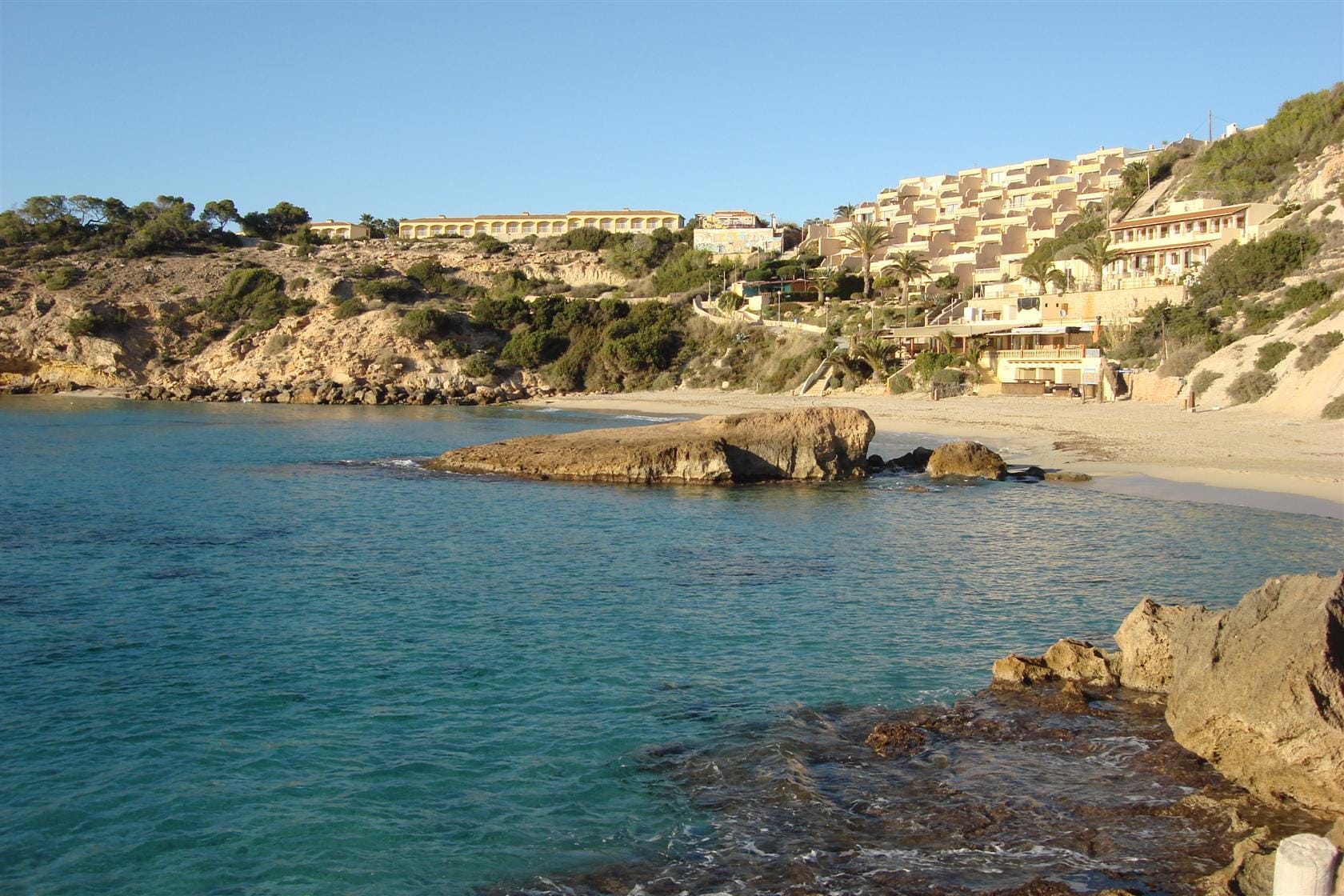
What Cala Tarida Actually Is
Cala Tarida is a wide, gently curving bay on Ibiza's west coast, officially within the municipality of Sant Josep de sa Talaia. At roughly 900 metres long and around 25 metres wide, it holds the title of the largest cove on this side of the island. The sand is fine and pale, closer in texture to flour than to the coarser gravel you find at some eastern-coast beaches. The water is shallow for a good stretch from shore, turning progressively deeper shades of blue and turquoise as you wade out.
The bay is partly sheltered by low pine-covered headlands on both sides, which cuts the wind on most days and keeps the water calmer than more exposed beaches. A small resort cluster of apartments, beach bars, and restaurants lines the northern end of the cove. The southern end is quieter, backed by dunes and low scrub, and fills last during peak season.
ℹ️ Good to know
Beach access is free year-round under normal conditions. Facilities including sunbeds, toilets, catering, a lifeguard post, and a mobility ramp operate during the summer high season. Off-season, you will have the beach largely to yourself, but services will be closed.
How the Beach Changes Through the Day
Mornings at Cala Tarida are the clearest. The light comes from the east, which means the west-facing bay sits in relatively soft, diffuse illumination before noon. The water is glassy, the pine trees smell sharp and resinous in the heat building from the hills behind, and the beach fills slowly. Families with children tend to claim the northern section near the beach bars, where the sand is most groomed and the water is most sheltered. If you arrive before 10:00, you can choose your spot freely.
By early afternoon in July and August, Cala Tarida is full. The beach bars are loud, sunbeds cover most of the front rows, and the narrow road leading down to the car park backs up. This is not the moment to arrive by car without a plan. The ferry from San Antonio offers a cleaner approach at this hour: it drops you directly at the jetty on the northern end of the bay.
The afternoon transformation is the real reason Cala Tarida has a loyal following. From around 17:00, the sun drops toward the horizon directly ahead of the beach. The light turns amber, then deep orange, and the water colour shifts with it. Tables at the beach restaurants fill with people who have timed their day specifically for this. The atmosphere shifts from active beach day to something more contemplative. On clear evenings, the silhouette of Es Vedrà is visible to the south, adding a distinct focal point to the horizon.
For dedicated sunset watching on this coast, Cala Tarida competes with Cala Comte and Cala Vadella. Cala Comte is more dramatic and draws larger crowds; Cala Vadella is more intimate. Cala Tarida sits between them in scale and atmosphere.
Tickets & tours
Hand-picked options from our booking partner. Prices are indicative; availability and final rates are confirmed when you complete your booking.
Sunset boat tour with tapas, open bar and water sports in Ibiza
From 70 €Instant confirmationFree cancellationEscape Tour self-guided, interactive city challenge in Ibiza
From 30 €Instant confirmationPrivate Sunset Cruise on a Maritime Classic in Ibiza
From 750 €Instant confirmationFree cancellationIbiza to Formentera boat trip with open bar and water sports
From 69 €Instant confirmationFree cancellation
The Water and What to Do In It
The main draw is straightforward: the water is clean, calm, and warm from June through September. The shallow gradient makes Cala Tarida one of the more forgiving beaches on the island for children and less confident swimmers. You can walk 30 to 40 metres from shore before the depth reaches your chest in the calmer central section of the bay.
Snorkelling is worthwhile around the rocky outcrops at both ends of the cove, where the seagrass meadows of Posidonia oceanica begin. These meadows are legally protected throughout the Balearics as a priority marine habitat. They support small fish, sea urchins, and occasional octopus. Bring your own mask; rental equipment from beach bars is available but quality varies.
Paddle boarding and kayak hire are typically available at the beach during peak season. Neither requires prior experience in these calm conditions. If you want to explore further along the coast by sea, a guided kayak excursion is a more structured option, departing from the jetty area.
💡 Local tip
To reach the quieter, less-serviced southern end of the beach, walk along the sand from the main beach bar area rather than driving. There is no separate road access. The further south you go, the fewer sunbeds and the more space you will find.
Getting to Cala Tarida
By car, follow the main road toward Sant Josep de sa Talaia from Ibiza Town, then take the left turn near kilometre marker 13. From Sant Antoni de Portmany, the route runs via Puerto des Torrente. Both approaches are on paved roads and are clearly signposted. Parking at the beach is limited and fills completely by mid-morning in July and August. Arriving before 09:30 or after 17:00 gives you the best chance of finding a space without circling.
The ferry from San Antonio harbour is the most relaxed option during high season. Seasonal ferry boats run a circuit connecting San Antonio with several western beaches including Cala Tarida. Journey time is short and the approach from the water gives you a full view of the bay before you arrive. Check current departure times with the ferry operators at San Antonio harbour, as schedules are seasonal and subject to change.
A summer bus service connects Cala Tarida with Ibiza Town and Sant Antoni. Check current routes and times via the official Ibiza public transport operator before your visit. For more on moving around the island without a car, see the guide to getting around Ibiza.
Practical Details and What to Bring
Cala Tarida has full beach facilities in season: toilets, outdoor showers, sunbed and parasol hire, and several catering options ranging from a casual chiringuito to a sit-down restaurant. There is also a ramp providing beach access for visitors with reduced mobility. A lifeguard service operates during the summer high season.
Shade is limited on the beach itself outside of paying for a parasol. The pine trees on the southern end provide some natural cover, but the central and northern stretches are fully exposed. High-factor sunscreen, a hat, and drinking water are not optional in July and August. The beach bar prices reflect a captive audience, so bringing your own snacks and water is worth considering if you are on a tighter budget.
If you are planning a broader tour of Ibiza's western beaches in a single day, Cala Tarida pairs naturally with nearby Cala Bassa to the north or Cala d'Hort to the south, the latter offering a closer view of Es Vedrà. Both are within a short drive.
⚠️ What to skip
Road access to Cala Tarida is on a paved stretch near the beach. In peak season, vehicles waiting to park can create a long queue on this road. If you are arriving by car in August, plan to be at the car park by 09:00 or use the ferry alternative.
Photography and Light Conditions
The beach faces almost directly west, which means it is poorly lit for photography in the morning (the sun is behind you and the water colour is flat) but increasingly rewarding from mid-afternoon. The golden hour before sunset produces strong contrast between the orange light, the white sand, and the deep blue water. The wide bay also allows wide-angle compositions that tighter coves do not.
For cleaner shots without crowded foregrounds, position yourself at the southern end of the beach looking north. The pine trees on the headland behind frame the bay, and the northern restaurant terrace creates a focal point without dominating the scene. Drone use over Balearic beaches is subject to Spanish aviation authority regulations; check current rules before bringing one.
What to Expect: Who Will Love It and Who Might Not
Cala Tarida works well for families because of its calm water and full facilities. It works well for anyone who wants a long, comfortable beach day with good food and drink accessible on-site. It also works for sunset visitors who want a west-facing view without the concentrated crowds of San Antonio's Sunset Strip.
It does not work well if you are looking for seclusion. At peak season, Cala Tarida is a popular, busy, fully commercial beach. The resort development at the northern end is functional rather than picturesque. If your priority is a quiet cove where you can hear the sea without jet-ski noise or background music from a beach bar, this is not the right choice in July or August.
Visitors who prioritise dramatic scenery over beach infrastructure should consider Cala d'Hort, which is smaller and less serviced but sits directly in view of Es Vedrà. For a broader comparison of the island's beaches, the guide to the best beaches in Ibiza covers the full range of options by type and location.
Insider Tips
- The ferry from San Antonio is not just a practical option; it is the best way to arrive. You see the full arc of the bay from the water, the approach is relaxing, and you skip the car park queue entirely. Check current ferry schedules at the San Antonio harbour on the morning of your visit.
- The southern end of the beach, beyond the last set of beach bar sunbeds, is public and free to use. Walk past the point where organised sunbeds end and you will find sand that is just as good with significantly more space.
- On busy days in August, the restaurant at the northern end fills by 13:00. If you want a table with a sea view for lunch rather than a takeaway from the chiringuito, arrive before noon or book ahead if reservations are available.
- The Posidonia seagrass beds at the rocky edges of the cove make the best snorkelling spots but also mean the sand near the headlands can feel slightly rough underfoot compared to the central beach. Water shoes are useful if you are walking in from the sides.
- Cala Tarida faces west and has almost no afternoon shade on the main beach. Even visitors who do not usually burn will need to reapply sunscreen from around 14:00 onward when the sun is at its most direct angle on this coast.
Who Is Cala Tarida For?
- Families with young children: shallow water gradient, lifeguard cover, and full facilities make it one of the most practical beaches on the island for small kids
- Sunset enthusiasts who want a beach experience alongside the light show, rather than a clifftop viewpoint
- Swimmers and snorkellers looking for clean, calm water and accessible rocky headlands
- Visitors staying in Sant Antoni who want a beach with more natural character than the resort beaches nearby
- Anyone doing a western coast beach tour by ferry, combining multiple coves in a single day without needing a car
Nearby Attractions
Other things to see while in San José (Sant Josep de sa Talaia):
- Cala d'Hort
Cala d'Hort is a compact beach on Ibiza's southwest coast, in a formerly protected natural area and facing the sheer, mythologised rock of Es Vedrà. The scenery is unlike anywhere else on the island, but getting here takes effort, and the limited parking fills fast in summer.
- Cala Jondal
Cala Jondal is a sheltered south-coast bay in Sant Josep de sa Talaia, known for its remarkably clear turquoise water, white pebble shore, and high-end beach clubs. Access is free, but the scene here leans decidedly upscale. It rewards visitors who arrive early and leave before the midday sun turns the stones underfoot into a barefoot obstacle course.
- Cala Vadella
Cala Vadella is a 200-metre arc of fine white sand on Ibiza's southwest coast, tucked inside a deep natural inlet that keeps the water calm and the atmosphere unhurried. It currently holds a Blue Flag rating and is one of the few beaches on the island genuinely suited to families, swimmers, and anyone who prefers scenery over scene.
- Es Cavallet Beach
Es Cavallet Beach sits on Ibiza's southern coast inside the protected Ses Salines Natural Park, about 9 km from Ibiza Town. Around 1.1 km of soft white sand, a long history as one of Spain's first official nudist beaches, and a setting framed by dunes and salt flats make it a genuinely different experience from the island's more crowded resort shores.