Cala d'Hort: Ibiza's Most Dramatically Framed Beach
Cala d'Hort is a compact beach on Ibiza's southwest coast, in a formerly protected natural area and facing the sheer, mythologised rock of Es Vedrà. The scenery is unlike anywhere else on the island, but getting here takes effort, and the limited parking fills fast in summer.
Quick Facts
- Location
- Sant Josep de sa Talaia, southwest Ibiza, roughly 20–25 km from Ibiza Town
- Getting There
- Car recommended; narrow access road from Sant Josep village. No direct bus to the beach.
- Time Needed
- 2 to 4 hours for beach time; allow extra for the drive and parking
- Cost
- Free beach access. Parking fees may apply in peak season (verify locally). Sunbed hire available from chiringuitos.
- Best for
- Dramatic coastal scenery, sunset watching, snorkelling, couples, photographers
What Makes Cala d'Hort Different
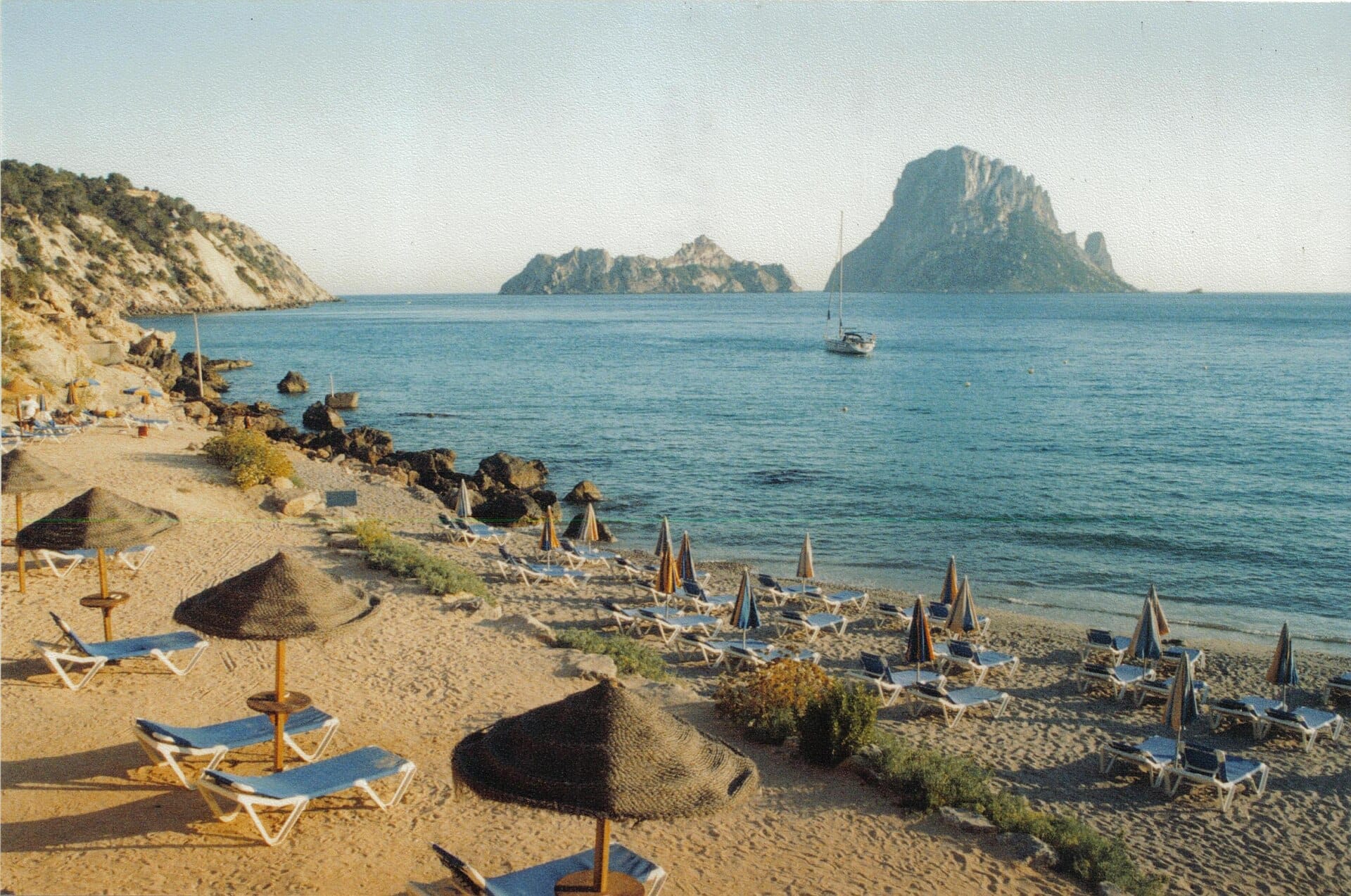
Most beaches compete on water colour or sand quality. Cala d'Hort competes on spectacle. Sitting inside the Parc Natural de Cala d'Hort, created in February 2002, this roughly 200-metre strip of mixed sand and pebble faces directly onto Es Vedrà, a 382-metre uninhabited limestone rock that rises from the water like a misplaced mountain. The visual impact of that rock, and its companion islet Es Vedranell, is immediate and oddly powerful, dominating the entire bay regardless of where you stand on the beach.
Es Vedrà has attracted myth and folklore for centuries, including claims of magnetic anomalies and connections to various origin legends. Whether you subscribe to any of that or not, the geology is genuinely striking. For context on how it fits into Ibiza's wider landscape, the Es Vedrà attraction page covers the rock itself in detail, and the Es Vedrà coastal trail offers a walking route around the headland for those who want more than a beach afternoon.
💡 Local tip
Arrive before 10:00 in July and August. The small parking area fills completely by mid-morning on peak summer days, and there is no realistic alternative on foot. Arriving early also means calmer water for snorkelling before the afternoon breeze picks up.
The Beach Itself: Size, Texture, and Water
Cala d'Hort measures roughly 200 metres long and around 30 metres wide at its broadest points, which makes it genuinely small by any standard. In high summer, that space fills with sunbeds, families, and day-trippers, and the crowding is real. Outside July and August, the dynamic shifts significantly: the beach in late September or early October is a different proposition entirely, with space to spread out, water that is still warm, and that rock sitting in the middle distance without a queue of people photographing it.
The sand is coarser than at some of Ibiza's more polished beaches, with areas of white-golden sand and flat stones mixed in toward the waterline. The water is clear and progressively deep, which suits snorkelling along the rocky edges of the bay. There is no dramatic drop-off from the shoreline, making entry comfortable for most swimmers. The protected natural park status means the seabed is in reasonable ecological condition, with Posidonia oceanica seagrass meadows visible underwater in places. These meadows are important to the Mediterranean ecosystem and are legally protected throughout the Balearic Islands.
If Cala d'Hort feels too busy when you arrive, the nearby coastline of Sant Josep has alternative coves worth exploring. Cala Vadella to the south is more sheltered and family-oriented, while Cala Carbó is smaller still and often quieter.
Tickets & tours
Hand-picked options from our booking partner. Prices are indicative; availability and final rates are confirmed when you complete your booking.
Sunset boat tour with tapas, open bar and water sports in Ibiza
From 70 €Instant confirmationFree cancellationEscape Tour self-guided, interactive city challenge in Ibiza
From 30 €Instant confirmationPrivate Sunset Cruise on a Maritime Classic in Ibiza
From 750 €Instant confirmationFree cancellationIbiza to Formentera boat trip with open bar and water sports
From 69 €Instant confirmationFree cancellation
How the Experience Changes Through the Day
Morning light falls across the water at Cala d'Hort from an angle that makes the sea look almost turquoise against the grey limestone of Es Vedrà. Before 11:00, the chiringuito restaurants are setting up rather than serving, and the beach has a quiet, unhurried quality. The water is typically glassier in the morning, and the light is practical for photography without the harsh midday bleaching that flattens everything.
By midday the beach is at its most crowded. The rocks around the bay offer shade by early afternoon as the sun angle shifts, and families with children tend to cluster near the southern end where the entry into the water is gentlest. The chiringuitos do steady business through the afternoon, with fresh fish and paella available at both restaurants. Prices here reflect the location: you are paying partly for the view.
The real turning point comes in the late afternoon. As the sun drops toward the horizon behind and to the right of Es Vedrà, the rock takes on a reddish tone that deepens the longer you watch. This is not a conventional west-facing sunset beach in the San Antonio sense, but the light show it produces around Es Vedrà in the hour before dark is considered by many visitors to be the most atmospheric on the island. Photographers should be set up by 18:30 in summer and earlier in autumn.
ℹ️ Good to know
For a higher vantage point to watch the sunset over Es Vedrà, the Mirador des Vedrà lookout is a short drive from the beach and gives an elevated perspective without the beach crowds. The two work well together as an afternoon-into-evening combination.
Getting There: Access, Parking, and Practical Reality
Cala d'Hort sits roughly 21 kilometres west of Ibiza Town, reached via the village of Sant Josep de sa Talaia. The final approach is on a narrow, winding road that descends steeply to the coast. The road is manageable in a standard car if driven at an appropriate pace, but it demands attention. Larger vehicles will find it uncomfortable. There is no regular bus service that connects directly to the beach, which makes a hire car or taxi the practical options for most visitors.
Parking is the single biggest practical constraint at Cala d'Hort. The small car park near the beach has limited capacity, and during July and August it operates at saturation from around 10:30 onward. Some visitors park further up the access road and walk down, which adds a few minutes but is not a difficult walk. Parking regulations and any associated fees should be verified locally before your visit, as enforcement has varied in recent seasons.
Those staying in the southwest of the island, including the Sant Josep area, are better positioned to make early arrivals work. For a broader overview of how to structure your time in this part of Ibiza, the one-week Ibiza itinerary includes Cala d'Hort in the context of the island's other main draws.
⚠️ What to skip
Accessibility at Cala d'Hort is limited. The access road is steep and the beach surface includes pebbles and uneven ground. No dedicated wheelchair-accessible infrastructure has been confirmed at this location. Visitors with mobility requirements should assess conditions locally before making the journey.
The Natural Park Context
The Parc Natural de Cala d'Hort was established in February 2002, but the natural park designation was later reduced in scope in 2007; the protected area now covers the surrounding cliffs, the island of Es Vedrà, Es Vedranell, and the Illots de Ponent (the small islets visible from the bay). Access to Es Vedrà itself is not permitted, as it functions as a wildlife reserve, notably for Eleonora's falcon, a species that nests on Mediterranean sea cliffs and has one of its significant Balearic populations here.
The protected status has helped maintain the ecological quality of the water and the visual character of the bay. There is no large-scale development immediately around the beach, which is what gives it the relatively raw, natural feel compared to some of Ibiza's more infrastructure-heavy beach destinations. The trade-off is limited facilities: two small beachfront restaurants, sunbed hire, and little else.
Cala d'Hort fits naturally into a broader exploration of Ibiza's southwest coastline and protected landscapes. The Ses Salines Natural Park to the southeast offers a complementary natural experience, and the Ibiza hiking guide covers walking routes in and around the park zones.
Eating, Facilities, and What to Bring
There are two chiringuito-style restaurants at Cala d'Hort, both serving fresh fish and seafood. The food quality is generally solid, with grilled fish and rice dishes being the most reliable orders. Meals here lean toward the expensive side relative to the food itself, but the setting compensates. Service slows considerably during peak hours around 14:00 to 15:30. If you are planning lunch at the beach, arrive by 13:00 or wait until after 15:30.
Beyond the restaurants, facilities are basic. Sunbed and parasol hire is available, and toilets and showers are provided. Bring water and snacks if you want to avoid relying entirely on the restaurants. Snorkelling gear is worth packing, as the rocky outcrops on both sides of the bay offer good underwater interest.
In terms of what to wear beyond swimwear, the road and cliff edges around the bay involve some walking on uneven ground. Flat sandals or water shoes work well. The afternoon sun can be intense from June through to September: sun cream, a hat, and shade access are practical necessities rather than optional extras.
Who Should Think Twice
Cala d'Hort is not for everyone, and being honest about that saves a frustrating trip. Visitors who prioritise fine sand and a long stretch of beach with full services will find this beach underwhelming. The combination of pebbles, limited space, and basic facilities is a poor match for anyone who wants the full resort-beach experience. For that, Playa d'en Bossa or Cala Bassa are better-suited options.
Travellers without a hire car will find getting here genuinely inconvenient. If you are relying on public transport or prefer not to drive on narrow roads, other beaches on the island are more accessible. The guide to Ibiza's best beaches compares options across different access levels and beach types, which can help narrow down the right choice for your situation.
Insider Tips
- The southern end of the beach near the rocks is consistently less crowded than the central stretch, even on busy summer days. The snorkelling is also better there, with more underwater structure and fish activity.
- If the car park is full when you arrive, drive back up the access road to the first flat section and park there. The walk down takes around five minutes and most people don't bother, keeping that stretch free.
- The best photography window for Es Vedrà is not at sunset itself but in the 20 to 30 minutes before: the rock takes on a warm amber tone while the sky is still deep blue, giving a cleaner contrast than the fully saturated post-sunset palette.
- Book a table at one of the chiringuitos in advance if you plan to eat lunch there on a weekend in July or August. Walk-in availability disappears fast, and waiting times can exceed an hour at peak service.
- Combining Cala d'Hort with the Mirador des Vedrà on the same afternoon works well: drive to the mirador first for the elevated view, then descend to the beach for the water and the closer-range perspective on the rock.
Who Is Cala d'Hort For?
- Photographers and creatives drawn to dramatic coastal scenery and unusual natural subjects
- Couples looking for a scenic, atmospheric afternoon that extends into a memorable sunset
- Snorkellers who want clear water and rocky underwater terrain rather than crowded organised dive sites
- Visitors with a hire car who want to explore the southwest coast beyond the main resort beaches
- Nature-focused travellers interested in Ibiza's protected landscapes beyond the party-focused reputation
Nearby Attractions
Other things to see while in San José (Sant Josep de sa Talaia):
- Cala Jondal
Cala Jondal is a sheltered south-coast bay in Sant Josep de sa Talaia, known for its remarkably clear turquoise water, white pebble shore, and high-end beach clubs. Access is free, but the scene here leans decidedly upscale. It rewards visitors who arrive early and leave before the midday sun turns the stones underfoot into a barefoot obstacle course.
- Cala Tarida
Cala Tarida is a large cove on Ibiza's western coast, stretching roughly 900 metres of fine white sand in the municipality of Sant Josep de sa Talaia. Calm, clear water and reliable afternoon light make it one of the most rewarding beaches on the island for a full day out.
- Cala Vadella
Cala Vadella is a 200-metre arc of fine white sand on Ibiza's southwest coast, tucked inside a deep natural inlet that keeps the water calm and the atmosphere unhurried. It currently holds a Blue Flag rating and is one of the few beaches on the island genuinely suited to families, swimmers, and anyone who prefers scenery over scene.
- Es Cavallet Beach
Es Cavallet Beach sits on Ibiza's southern coast inside the protected Ses Salines Natural Park, about 9 km from Ibiza Town. Around 1.1 km of soft white sand, a long history as one of Spain's first official nudist beaches, and a setting framed by dunes and salt flats make it a genuinely different experience from the island's more crowded resort shores.