Es Vedrà Coastal Trail: Ibiza's Most Dramatic Hike
The Es Vedrà Coastal Trail puts you face-to-face with one of the Mediterranean's most striking geological landmarks: a roughly 400-metre limestone monolith rising from the sea off southwest Ibiza. Free to access, raw underfoot, and genuinely rewarding, this is the kind of walk that makes you understand why people keep coming back to this island for reasons beyond the clubs.
Quick Facts
- Location
- Sant Josep de sa Talaia (San José), southwest Ibiza, near Cala d'Hort
- Getting There
- Car strongly recommended; buses run to Sant Josep, from where a car or taxi is needed to reach Cala d'Hort and Cap Llentrisca
- Time Needed
- 1.5–3 hours depending on route; allow half a day to explore properly
- Cost
- Free to access; no trail entrance fee
- Best for
- Hikers, sunset seekers, photographers, nature lovers, anyone wanting Ibiza beyond the beach
What Is the Es Vedrà Coastal Trail?
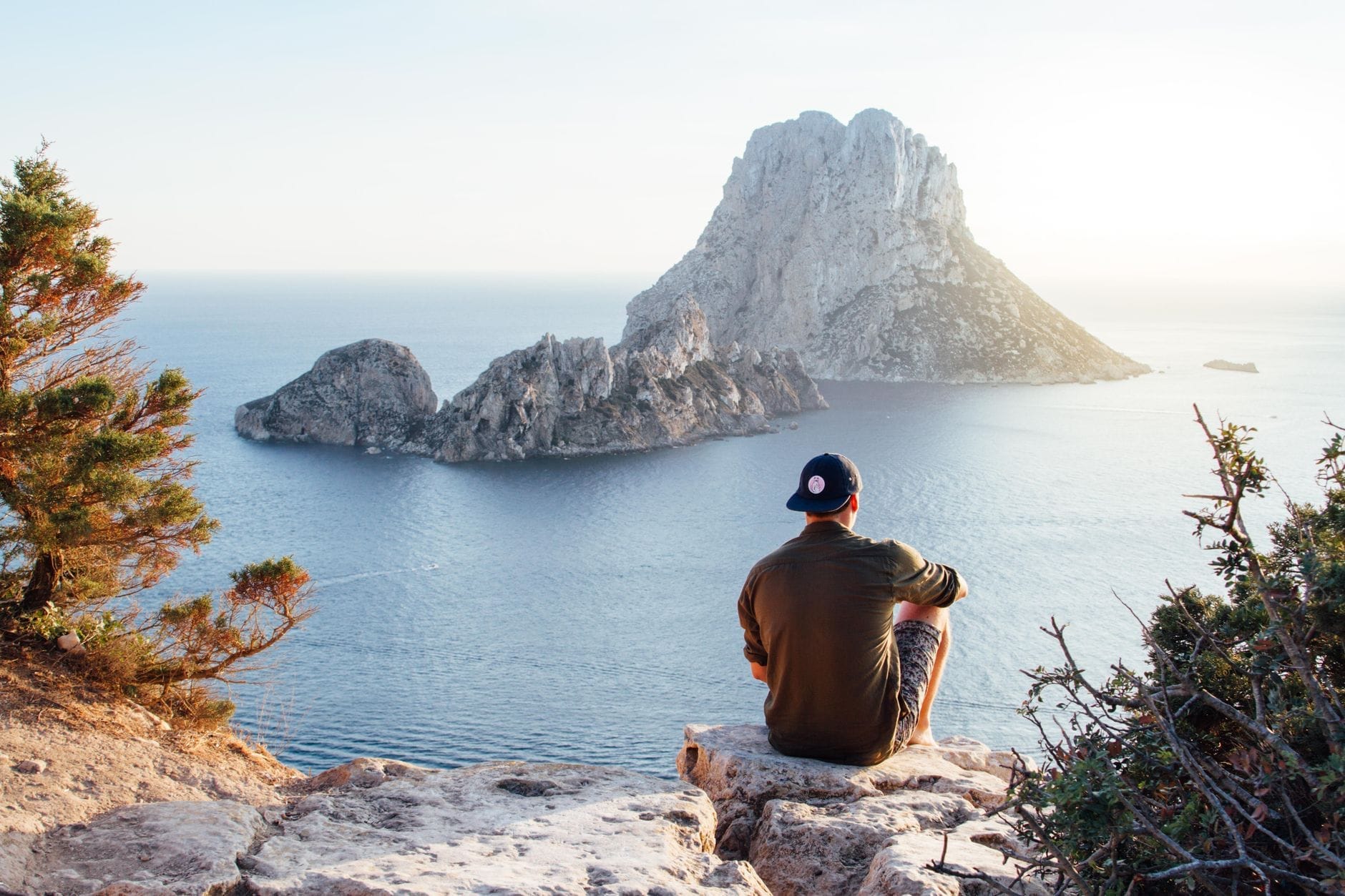
The Es Vedrà Coastal Trail is not a single signposted route but a cluster of footpaths along the southwest coast of Ibiza, within the Cala d'Hort Nature Reserve, that converge on viewpoints overlooking Es Vedrà — a sheer-sided limestone island rising roughly 400 metres from the sea, roughly 2.5 kilometres offshore. The island is uninhabited, protected, and closed to visitors. What draws people out here is the view of it from the mainland cliffs, and on this island, few views come close.
The most talked-about route is the El Ojo de Es Vedrà (Eye of Es Vedrà) trail, which starts from a dirt-road parking area near Cap Llentrisca and climbs through scrubland and rocky terrain to a clifftop vantage point. The name refers to a natural rock formation that, from the right angle, frames Es Vedrà like an eye. It is a moderate hike with uneven ground, narrow sections, and genuine exposure near the cliff edge — this is not a stroll.
💡 Local tip
Wear proper footwear with ankle support. The Cap Llentrisca dirt road and the trail surface are rocky and loose in sections. Sandals or flip-flops are a safety risk.
The trails sit inside the Cala d'Hort Nature Reserve, which protects one of the most ecologically significant stretches of Ibiza's coastline. The reserve borders the Ses Salines Natural Park, which extends south and includes UNESCO-recognised Posidonia seagrass meadows offshore. This is not incidental backdrop — the conservation status of the area is part of what keeps it relatively undeveloped compared to other parts of the island.
The Experience on the Ground
Approaching from the Cap Llentrisca side, you park on a rough dirt road and immediately feel the shift in atmosphere. The air smells of rosemary and sun-baked limestone. There is no café, no ticket booth, no infrastructure. Just the path, the scrub, and the sound of wind off the sea.
The ascent to the Eye viewpoint typically takes between 10 and 30 minutes for most walkers, depending on pace. The path narrows as you climb, with sections of exposed root and loose rock. As you gain height, Es Vedrà comes into view in stages — first as a distant silhouette, then as something much more imposing. The sheer scale of the rock, and the fact that it sits alone in open water, creates an effect that is hard to describe without sounding excessive. It is genuinely arresting.
At the top, the views extend north toward Cala d'Hort and south toward the open Mediterranean. On clear days, Formentera is visible on the horizon. The sound at the viewpoint is mostly wind and waves far below. If you arrive early in the morning, you may have the clifftop entirely to yourself — later in the afternoon, especially in summer, small groups begin to accumulate ahead of sunset.
ℹ️ Good to know
The trail does not loop easily. Most walkers return the same way they came. Factor in the descent when planning your timing.
Tickets & tours
Hand-picked options from our booking partner. Prices are indicative; availability and final rates are confirmed when you complete your booking.
Guided boat tour from Ibiza to Es Vedra
From 83 €Instant confirmationFree cancellationSunset boat tour with tapas, open bar and water sports in Ibiza
From 70 €Instant confirmationFree cancellationEscape Tour self-guided, interactive city challenge in Ibiza
From 30 €Instant confirmationPrivate Sunset Cruise on a Maritime Classic in Ibiza
From 750 €Instant confirmationFree cancellation
How the Experience Changes by Time of Day
Morning visits, particularly between 8am and 10am in summer, offer the best combination of cool temperatures and solitude. The light hits Es Vedrà from the east, so the rock is well lit and the sea takes on a deep blue-green tone. This is the time for photography if you want clean backgrounds and manageable shadows.
Midday in July and August is genuinely uncomfortable. The trail has almost no shade, the limestone radiates heat, and the sun sits directly overhead, flattening the rock's texture in photographs. Unless you are specifically visiting for the heat or have no other option, avoid the middle of the day in peak summer.
Late afternoon is when the trail becomes a destination in itself. The sun moves toward the west, and Es Vedrà begins to glow in amber and orange light. Sunset from this vantage point rivals the famous Mirador des Vedrà — and for walkers willing to put in the effort, this clifftop position can feel far more earned and personal than a roadside pullout. That said, you must account for walking back in failing light, so bring a torch or plan to move before dark.
The Legend and the Geology
Es Vedrà has accumulated myths at a rate unusual even for a Mediterranean island. Phoenician sailors are said to have associated it with the goddess Tanit. Later traditions connected it to the Odyssey's island of the Sirens and to various accounts of unusual magnetic activity. There are stories of compass malfunctions and UFO sightings in the area, which continue to circulate in local mythology and on certain corners of the internet.
What is factually verifiable is that Es Vedrà is composed predominantly of Mesozoic limestone, the same material that makes up much of the Balearic Islands' bedrock, and rises to just under 400 metres above sea level. Its dramatic vertical profile is the result of geological uplift and centuries of erosion. The island supports a colony of Eleonora's falcons and is also home to the Ibiza wall lizard, a subspecies found only on Es Vedrà and its companion islet, Es Vedranell. These ecological facts are, if anything, more remarkable than the myths.
Landing on Es Vedrà is prohibited as part of its protected status. This means that the view from the coastal trail is, for the vast majority of visitors, the closest encounter they will ever have with the island. This restriction is worth understanding before you go — there is no boat trip that lands on Es Vedrà itself, though boat excursions that circle it at sea are operated by private companies.
Practical Walkthrough: Getting There and Getting Around
The El Ojo de Es Vedrà trail has historically started from a parking area on a dirt road near Cap Llentrisca, southwest of Cala d'Hort, but access in this area has been subject to changes and restrictions in recent years, so check current local advice before planning your route. This area is not well served by public transport. Buses from Ibiza Town and San Antonio reach Sant Josep de sa Talaia, but from there you need a car, taxi, or bicycle to continue to the trailhead. For most visitors, renting a car is the most practical option — the roads to Cap Llentrisca are narrow, so smaller vehicles are easier to manoeuvre.
If you are basing yourself in or around San José, you are well positioned. The drive to Cala d'Hort takes around 10 to 15 minutes from the village centre. Cala d'Hort itself has a small beach and a couple of restaurants where you can eat before or after the hike — this is a worthwhile combination if you have a full afternoon to spend in the area.
⚠️ What to skip
Parking near Cap Llentrisca is limited and on an unpaved surface. Arriving after 10am in July and August means you may need to park some distance back and walk an additional stretch of dirt road before reaching the trailhead.
There are no facilities at the trailhead or along the route: no water, no toilets, no signage beyond basic trail markers in places. Bring at least one litre of water per person, sunscreen, and a hat. The trail is not accessible for wheelchairs or pushchairs, and the cliff-edge sections require care regardless of fitness level.
Photography and Conditions
The El Ojo de Es Vedrà viewpoint is one of the more photogenic spots on the island, but it requires some patience to shoot well. The 'eye' framing works best when you find the exact rock formation from which Es Vedrà aligns within it — this takes a few minutes of positioning once you arrive at the top. Shooting with a standard wide lens shows the full landscape; a medium telephoto (70–200mm equivalent) compresses the distance and makes Es Vedrà dominate the frame.
Sunset light hits Es Vedrà from the side, emphasising its texture and scale. If you shoot directly into the sun, you will get silhouettes of the rock against orange sky, which can be striking. If you position slightly north and shoot across, you get the gold-lit rock face. Both work. What does not work is midday overhead light, which turns the limestone flat and grey.
For context on the broader sunset culture around this part of the island, the Ibiza sunsets guide covers the main viewpoints and beaches in the southwest with specific timing and positioning advice.
Who Should Think Twice
This trail is not for everyone, and there is no shame in that. If you have limited mobility, significant balance issues, or are visiting with very young children, the cliff-edge sections of the El Ojo route create real risk. The alternative, a drive to Cala d'Hort and a view of Es Vedrà from the beach or a restaurant terrace, is entirely worthwhile and much more accessible.
Visitors who find Ibiza's natural areas overhyped relative to the effort should also set expectations carefully. Es Vedrà is a large rock in the sea. Its power is visual and atmospheric rather than experiential in the conventional tourist sense. If dramatic geological scenery and honest physical effort do not appeal to you, the beach and restaurant at Cala d'Hort offer the same iconic view from a sun lounger.
Insider Tips
- The Cap Llentrisca dirt road has a fork near the trailhead — take the upper fork to reach the El Ojo viewpoint. The lower fork leads toward the coast but not to the main vantage point.
- Combine the hike with lunch at one of the Cala d'Hort beach restaurants, which have direct views of Es Vedrà from their terraces. Book ahead in July and August — tables fill early.
- If you want the clifftop to yourself at sunset, arrive at the trailhead no later than 45 minutes before sunset and start walking immediately. Groups arrive closer to the hour and crowd the best positions.
- September and early October offer some of the best conditions for this hike: the heat has dropped, the paths are less crowded, and the late-afternoon light on Es Vedrà is exceptional.
- Boat trips that circle Es Vedrà at sea are available from Cala d'Hort and Cala Jondal. These give a completely different perspective on the rock's scale and are worth considering if you have already done the hike.
Who Is Es Vedrà Coastal Trail For?
- Hikers looking for a short but rewarding trail with a genuine payoff
- Photographers chasing the best sunset light in southwest Ibiza
- Travellers who want to experience Ibiza's natural landscape beyond the beach
- Couples wanting a quieter, more atmospheric alternative to the crowded sunset bars
- Anyone interested in the island's ecology, geology, or mythology
Nearby Attractions
Other things to see while in San José (Sant Josep de sa Talaia):
- Cala d'Hort
Cala d'Hort is a compact beach on Ibiza's southwest coast, in a formerly protected natural area and facing the sheer, mythologised rock of Es Vedrà. The scenery is unlike anywhere else on the island, but getting here takes effort, and the limited parking fills fast in summer.
- Cala Jondal
Cala Jondal is a sheltered south-coast bay in Sant Josep de sa Talaia, known for its remarkably clear turquoise water, white pebble shore, and high-end beach clubs. Access is free, but the scene here leans decidedly upscale. It rewards visitors who arrive early and leave before the midday sun turns the stones underfoot into a barefoot obstacle course.
- Cala Tarida
Cala Tarida is a large cove on Ibiza's western coast, stretching roughly 900 metres of fine white sand in the municipality of Sant Josep de sa Talaia. Calm, clear water and reliable afternoon light make it one of the most rewarding beaches on the island for a full day out.
- Cala Vadella
Cala Vadella is a 200-metre arc of fine white sand on Ibiza's southwest coast, tucked inside a deep natural inlet that keeps the water calm and the atmosphere unhurried. It currently holds a Blue Flag rating and is one of the few beaches on the island genuinely suited to families, swimmers, and anyone who prefers scenery over scene.