Mirador des Vedrà: Everything You Need to Know Before You Go
The Mirador des Vedrà, perched on the cliffs above Cala d'Hort in southwest Ibiza, was once the island's most photographed sunset viewpoint. Since winter 2024/2025, the site has been fenced off due to overtourism, and independent access is no longer legally permitted. This guide explains what you can still see, how to reach alternatives, and whether a guided tour is worth booking.
Quick Facts
- Location
- Cliffs south of Cala d'Hort, Sant Josep de sa Talaia, southwest Ibiza
- Getting There
- No direct bus to the viewpoint; nearest public bus stops at Cala d'Hort. Car hire recommended for the area.
- Time Needed
- 30 min from Cala d'Hort beach; 2–3 hours for a licensed guided hike to the cliff
- Cost
- Free from Cala d'Hort beach; guided hikes charged by operator (prices vary)
- Best for
- Sunset watching, coastal hiking, landscape photography, Es Vedrà mythology
What Happened to the Mirador des Vedrà
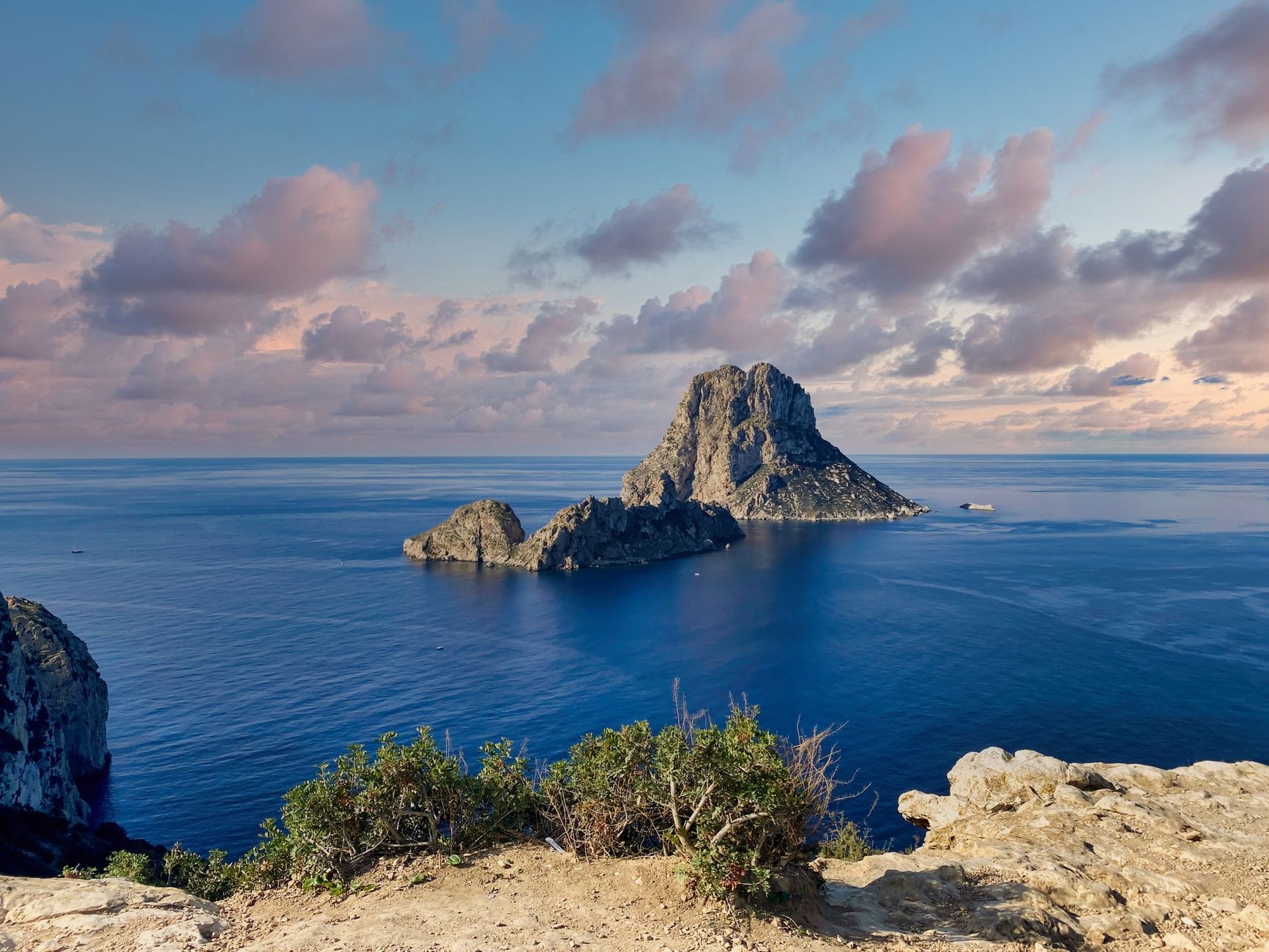
For years, the Mirador des Vedrà was the go-to spot for watching the sun drop behind the silhouette of Es Vedrà, the dramatic rocky islet that rises 382 metres out of the sea about two kilometres off the southwest coast of Ibiza. At peak season, the small cliff-top clearing above Cala d'Hort would fill with dozens of visitors, cars parked haphazardly on the lane above, and a steady stream of people picking their way down an uneven path to reach the edge.
In winter 2024/2025, the landowner fenced the area off entirely. The reasons are straightforward: years of overcrowding, litter, erosion, and the pressures of unmanaged tourism on private land finally reached a tipping point. The viewpoint is now closed to independent visitors. There is no ticket booth, no official entry, and walking around or through the fencing is trespassing on private property.
⚠️ What to skip
The original cliff-top Mirador des Vedrà is currently fenced off and on private land (as of winter 2024/2025). Independent access is not legally permitted. Do not attempt to bypass the fencing.
This is a genuinely significant change for Ibiza's tourism landscape. Many older blog posts and even some travel apps still describe walking up to the viewpoint as though it's a simple, open-access excursion. It is not. If you arrive expecting to park on the lane and stroll to the cliff edge, you will find a fence and a sign. The rest of this guide covers what you can realistically do instead.
Es Vedrà: Why the Islet Draws People Here at All
Es Vedrà is part of the Parc Natural de Cala d'Hort, Cap Llentrisca i Sa Talaia, a protected natural and marine reserve in the municipality of Sant Josep de sa Talaia. The islet is uninhabited and inaccessible to the public, which has allowed its ecology to remain largely undisturbed. The sheer rock face, streaked with grey and ochre, supports colonies of seabirds, including Eleonora's falcon, which nests on its vertical walls.
The island has accumulated considerable mythology over the decades. Local legend links it to Atlantis, to the Sirens of the Odyssey, and to UFO sightings reported since the 1970s. Whether or not you find any of that compelling, the geology alone is striking: Es Vedrà is a karst limestone formation that appears to erupt from flat water, with almost no transitional slope between sea level and its highest peak. On calm evenings, it casts a sharp reflection across the bay.
The setting sun aligns almost perfectly behind Es Vedrà on certain evenings between late spring and early autumn, which is what made the old mirador so popular for photography. That alignment is visible from multiple points along the coast, not just the original cliff viewpoint. The Es Vedrà coastal trail and the beach itself both offer unobstructed views of the islet, and the quality of light is identical regardless of where you stand on the bay.
Tickets & tours
Hand-picked options from our booking partner. Prices are indicative; availability and final rates are confirmed when you complete your booking.
Guided boat tour from Ibiza to Es Vedra
From 83 €Instant confirmationFree cancellationSunset boat tour with tapas, open bar and water sports in Ibiza
From 70 €Instant confirmationFree cancellationEscape Tour self-guided, interactive city challenge in Ibiza
From 30 €Instant confirmationPrivate Sunset Cruise on a Maritime Classic in Ibiza
From 750 €Instant confirmationFree cancellation
Where to See Es Vedrà Now: Your Real Options
From Cala d'Hort Beach
Cala d'Hort is the most accessible alternative, and for most visitors it is genuinely the better option. The beach is a small arc of sand and gravel with the islet sitting directly in front of you across the water. In the late afternoon, the light turns the limestone facade of Es Vedrà a deep amber, and the views are unobstructed at water level in a way the cliff-top never was. There are a couple of beach restaurants where you can order a drink, sit at a table facing the water, and watch the light change without being shoulder-to-shoulder with a crowd.
Cala d'Hort has a road-accessible car park near the beach. During high summer it fills quickly, particularly from midday onward. Arrive before noon or after 17:00 to find space more easily. The beach itself sits within the Parc Natural de Cala d'Hort, Cap Llentrisca i Sa Talaia — not Ses Salines — so the surrounding landscape retains its scrubland character: low rosemary and cistus, dry stone walls, and a general absence of large-scale development.
From a Boat Excursion
Boat trips departing mainly from Sant Antoni de Portmany pass directly in front of Es Vedrà and give you close-up views of the islet's sea-level caves, rock formations, and nesting birds that no land-based viewpoint can match. Several operators run half-day and full-day excursions around the southwest coast, combining Es Vedrà with stops at nearby coves. This is a particularly worthwhile option if you want photographs without other tourists in the frame, as the angles from the water are completely different from anything available on shore.
Via a Licensed Guided Hike
Authorized tour operators, including companies such as Balearic Outdoor Adventures, offer guided hikes that include access to the cliff viewpoint area under a permitted arrangement with the landowner, while Walking Ibiza leads hikes to a different coastal viewpoint. These typically run for two to three hours, cover uneven terrain with some elevation gain, and are conducted in small groups. Pricing varies by operator and season; check directly with the companies for current availability and rates, as schedules are not fixed year-round.
💡 Local tip
If the cliff-top perspective matters to you specifically, book a licensed guided hike in advance. Operators have limited places per group, and summer slots fill quickly. Independent access remains closed.
What the Experience Is Actually Like at Cala d'Hort
Arrive at Cala d'Hort around 18:00 in July and the scene is already well established: families packing up towels, a handful of kayaks being dragged above the waterline, the smell of wood smoke and grilled fish drifting from the restaurant terraces. The sound is mostly wind and water. Es Vedrà sits there in a haze, close enough to feel present, far enough to retain some scale.
As the sun drops, the shift in colour happens faster than you expect. The islet moves from washed-out grey to deep rust to silhouette in under twenty minutes. If you want to photograph that sequence, position yourself on the northern end of the beach where the water is slightly calmer and the foreground reflection is cleaner. A wide-angle lens captures the full width of the bay; a longer focal length compresses the depth and makes Es Vedrà appear larger relative to the horizon.
By 21:00 in midsummer, almost everyone has left. The beach empties out in a way that few of Ibiza's more accessible coves do. If you stay, the silence is notable: just the water, the odd boat light in the distance, and the darkening outline of the rock.
Getting There and Practical Logistics
The Cala d'Hort area is in the southwest of Ibiza, within the municipality of Sant Josep de sa Talaia. Public bus services do not offer a reliable direct route to the beach from Ibiza Town; the most practical approach for most visitors is a hire car or taxi. The drive from Ibiza Town takes roughly 35 to 45 minutes, and from Sant Antoni de Portmany around 30 to 35 minutes. The final stretch of road down to the beach is narrow, with passing places, and requires careful driving.
If you are planning a longer day in the southwest, it is worth combining Cala d'Hort with nearby coves such as Cala d'Hort or exploring the broader southwest coastline. The area around San José is one of the quieter and more scenically rewarding parts of the island, with less resort infrastructure than the north or east coasts.
Footwear matters here. The path from the car park to the beach is short and manageable, but the terrain around the cove is rocky coastal scrub. If you plan to walk beyond the beach along the shoreline or join a guided hike up toward the former viewpoint area, wear closed shoes with grip rather than sandals.
ℹ️ Good to know
There is no formal street address for Cala d'Hort or the former mirador. Search 'Cala d'Hort, Sant Josep de sa Talaia' in your navigation app. The parking area near the beach is signposted from the local road above.
Who This Suits and Who Should Look Elsewhere
The Cala d'Hort approach to Es Vedrà works well for travellers who want a calm, scenic sunset without the infrastructure of a purpose-built viewpoint. It pairs naturally with an afternoon at the beach, and the quality of light in the hour before sunset rivals anything you would have seen from the old mirador. It also fits comfortably into a broader Ibiza sunsets itinerary, especially if you are dividing time between the southwest coast and Sant Antoni's famous Sunset Strip.
People with significant mobility limitations should note that Cala d'Hort beach has a coarse sand and gravel surface with some rocky sections. The beach is reachable from the car park without major obstacles, but it is not a smooth, paved promenade. Wheelchair access to the water's edge is limited. The guided hike to the cliff area is entirely unsuitable for anyone with mobility impairments, involving uneven, rocky footpaths and elevation changes.
If you are primarily drawn to the mythology of Es Vedrà and want the atmospheric, elevated perspective of the rock, the beach-level view will feel somewhat ordinary by comparison. In that case, a licensed guided hike is the honest recommendation, though it requires advance booking and a reasonable level of fitness. If you are arriving in high season without a booking and expecting to walk straight up to a cliff edge, you will be disappointed.
Travellers who want a more active engagement with the southwest landscape might consider the Ibiza hiking guide for context on what the terrain is like and which routes are currently open and well-marked.
Insider Tips
- The best light at Cala d'Hort for Es Vedrà photography is typically in the 30 minutes before sunset, when the low angle gives the rock face maximum texture and colour. Check the precise sunset time for your visit date and plan to be in position at least 45 minutes before.
- The beach restaurants at Cala d'Hort fill up quickly on summer evenings. If you want a table with a view for sunset, either book in advance or arrive early and hold a table from around 17:30.
- Boat excursions that circle Es Vedrà from Sant Antoni de Portmany offer the closest permitted approach to the islet. You can clearly see the sea caves at the base of the rock, which are invisible from any land viewpoint.
- If you are hiring a car to reach Cala d'Hort, fuel up in Sant Josep de sa Talaia before heading down to the coast. There are no petrol stations on the narrow roads near the beach.
- Licensed guided hike operators have limited group sizes specifically to reduce environmental impact. Booking two to three weeks in advance in summer is not excessive, particularly for weekend slots.
Who Is Mirador des Vedrà (Es Vedrà Viewpoint) For?
- Sunset and landscape photographers wanting the Es Vedrà silhouette shot
- Visitors who want a quieter, less commercial beach afternoon in the southwest
- Hikers and active travellers interested in a licensed guided experience on the cliff terrain
- Anyone curious about the mythology and geology of Es Vedrà up close, ideally via a boat trip
- Travellers combining a scenic beach stop with the broader southwest coastline
Nearby Attractions
Other things to see while in San José (Sant Josep de sa Talaia):
- Cala d'Hort
Cala d'Hort is a compact beach on Ibiza's southwest coast, in a formerly protected natural area and facing the sheer, mythologised rock of Es Vedrà. The scenery is unlike anywhere else on the island, but getting here takes effort, and the limited parking fills fast in summer.
- Cala Jondal
Cala Jondal is a sheltered south-coast bay in Sant Josep de sa Talaia, known for its remarkably clear turquoise water, white pebble shore, and high-end beach clubs. Access is free, but the scene here leans decidedly upscale. It rewards visitors who arrive early and leave before the midday sun turns the stones underfoot into a barefoot obstacle course.
- Cala Tarida
Cala Tarida is a large cove on Ibiza's western coast, stretching roughly 900 metres of fine white sand in the municipality of Sant Josep de sa Talaia. Calm, clear water and reliable afternoon light make it one of the most rewarding beaches on the island for a full day out.
- Cala Vadella
Cala Vadella is a 200-metre arc of fine white sand on Ibiza's southwest coast, tucked inside a deep natural inlet that keeps the water calm and the atmosphere unhurried. It currently holds a Blue Flag rating and is one of the few beaches on the island genuinely suited to families, swimmers, and anyone who prefers scenery over scene.