First Time in Ibiza: Everything You Need to Know
Ibiza is more than its nightlife reputation. This guide covers the essentials for first-time visitors: the best time to arrive, how to get around the island, where to base yourself, what things actually cost, and how to see the side of Ibiza that most tourists miss entirely.
Plan and book this trip
Tools from our partner Travelpayouts help you compare flights and hotels. If you book through them, we may earn a commission at no extra cost to you.
Flights
Hotels map
TL;DR
- Ibiza is a Spanish island in the Balearic Islands, about 90 km off the Denia coast, with a Mediterranean climate and over 300 sunny days per year.
- The best time to visit for your first trip is May to June or September to October — good weather, lower prices, and far fewer crowds. See our best time to visit Ibiza guide for a full seasonal breakdown.
- Getting around requires planning: rent a car or scooter for flexibility, since buses are limited outside main towns.
- The island is split between the south (beaches, clubs, Ibiza Town) and the quieter, rural north — both are worth your time.
- Ibiza is expensive in July and August. Shoulder season prices can be 20–30% lower for the same accommodation.
The Basics: What Kind of Island Is Ibiza?
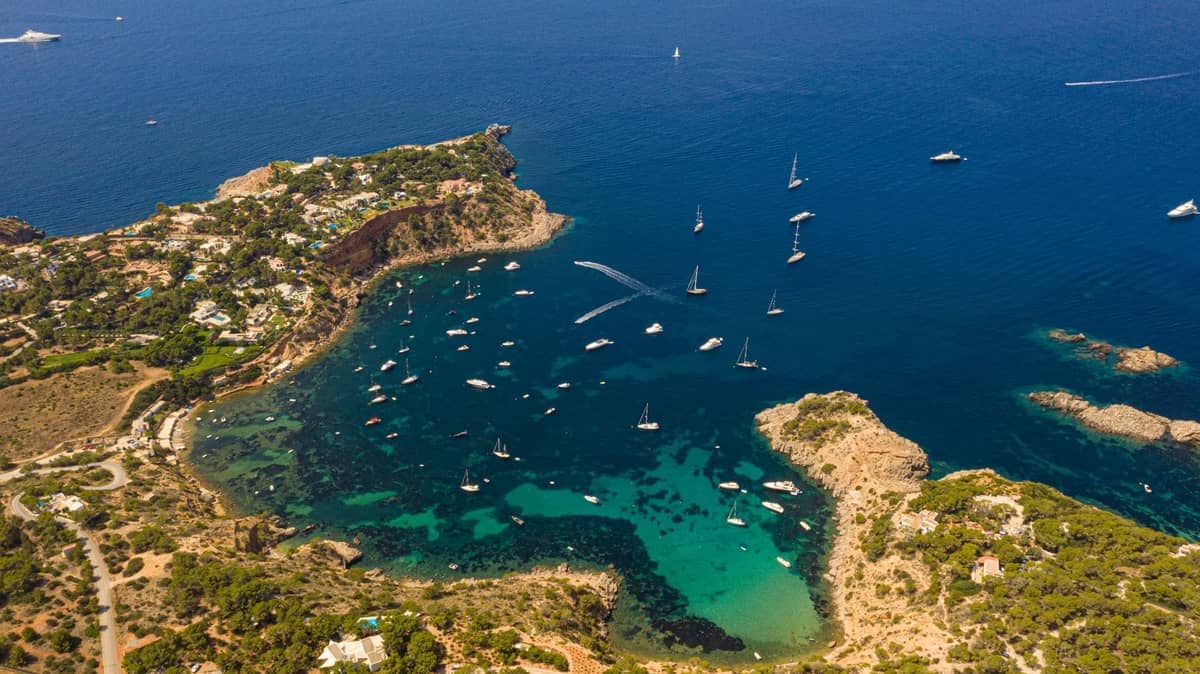
Ibiza (Catalan: Eivissa) is a Spanish island in the western Mediterranean, part of the Balearic Islands autonomous community alongside Mallorca, Menorca, and Formentera. At around 572 km², it takes roughly 40 minutes to drive from one end to the other. The capital, Ibiza Town, is the main urban centre and where most first-timers base themselves, at least for part of their trip.
The island has two official languages: Spanish (Castilian) and Catalan. Locals speak a regional variety of Catalan called Eivissenc. In tourist areas, English and German are widely understood. The currency is the Euro. Electricity runs on 230V with Type C and F plugs (standard European), so visitors from the UK or US will need an adapter.
The reputation is nightlife, but that tells only part of the story. Ibiza holds a UNESCO World Heritage designation — awarded in 1999 — covering both its cultural heritage (including the fortified old town Dalt Vila and the Puig des Molins Phoenician-Punic necropolis) and its natural environment (the Ses Salines protected area and its Posidonia seagrass meadows). The north of the island is largely rural, with pine forests, whitewashed villages, and beaches that see a fraction of the summer crowds.
ℹ️ Good to know
Spain is part of the Schengen Area. EU and EEA citizens can enter with a national ID card. Visitors from the UK, US, Canada, Australia, and New Zealand can stay visa-free for up to 90 days within any 180-day period. Always verify current visa rules via official government sources before travel, as regulations can change.
When to Visit Ibiza for the First Time
Ibiza's climate is classically Mediterranean: hot, dry summers and mild winters, with most rainfall concentrated between October and February. Average summer temperatures sit around 25–26°C, while winter rarely drops below 10°C. The island gets well over 300 sunny days per year.
For first-time visitors, the optimal windows are late May to June and the month of September. You get warm, reliable beach weather, the sea is warm enough to swim comfortably, clubs and beach bars are open, and accommodation prices are typically 20–30% lower than the July–August peak. The island is busy but not overwhelmed.
- July–August (Peak Season) Hottest weather, all venues open, maximum crowds and prices. Expect long taxi queues after club nights — sometimes 30 minutes or more. Book everything months in advance.
- May–June (Early Season) Warm and increasingly sunny. The nightlife season kicks off from late April or early May. Beaches are far quieter. Prices are considerably lower, and you can walk into restaurants without a reservation.
- September–October (Late Season) Often the sweet spot. Sea temperatures peak in September. Crowds thin out, prices drop, and the island retains its full energy until closing parties in late September or early October.
- November–April (Off Season) Most clubs are closed. Many beach bars and restaurants shut for winter. The north of the island stays alive year-round and can be genuinely beautiful in spring, but this is not the Ibiza most people are looking for.
✨ Pro tip
Club opening and closing parties in May and October are some of the best events of the year — high-energy, often cheaper than midsummer, and attended by genuine enthusiasts rather than package tourists. If you want the nightlife experience without the July madness, target these windows.
Getting to Ibiza and Around the Island

Ibiza Airport (IATA: IBZ) sits about 7 km southwest of Ibiza Town, a 10–15 minute drive. Direct flights operate from most major European cities, with easyJet, Ryanair, British Airways, and Vueling among the main carriers. If you prefer to arrive by sea, regular ferries run from Barcelona, Valencia, Denia, and Mallorca, docking just north of Ibiza Town's port.
From the airport, taxis are the most direct option and take around 15 minutes to Ibiza Town. The L10 bus covers the same route in about 20 minutes and costs a fraction of the taxi fare — buy your ticket onboard. Car rental desks operate at the airport terminal and are worth considering from day one if you plan to explore beyond the main towns.
On the island itself, the bus network connects Ibiza Town with Sant Antoni de Portmany (San Antonio), Santa Eulàlia des Riu, and a few other main settlements. But buses are infrequent outside peak hours and don't reach most beaches or rural areas. For any real flexibility, rent a car or a scooter. The island is small enough — roughly 40 km north to south — that you can reach almost any corner within 45 minutes. Our guide to getting around Ibiza covers all transport options in detail.
⚠️ What to skip
In July and August, demand for taxis spikes dramatically after 4am when clubs close. Queues of 30 minutes or more are common outside major venues. Pre-arrange a transfer, use a licensed taxi app if available, or factor this into your plans. Walking is sometimes the fastest option if your accommodation is nearby.
Where to Stay: Choosing Your Base
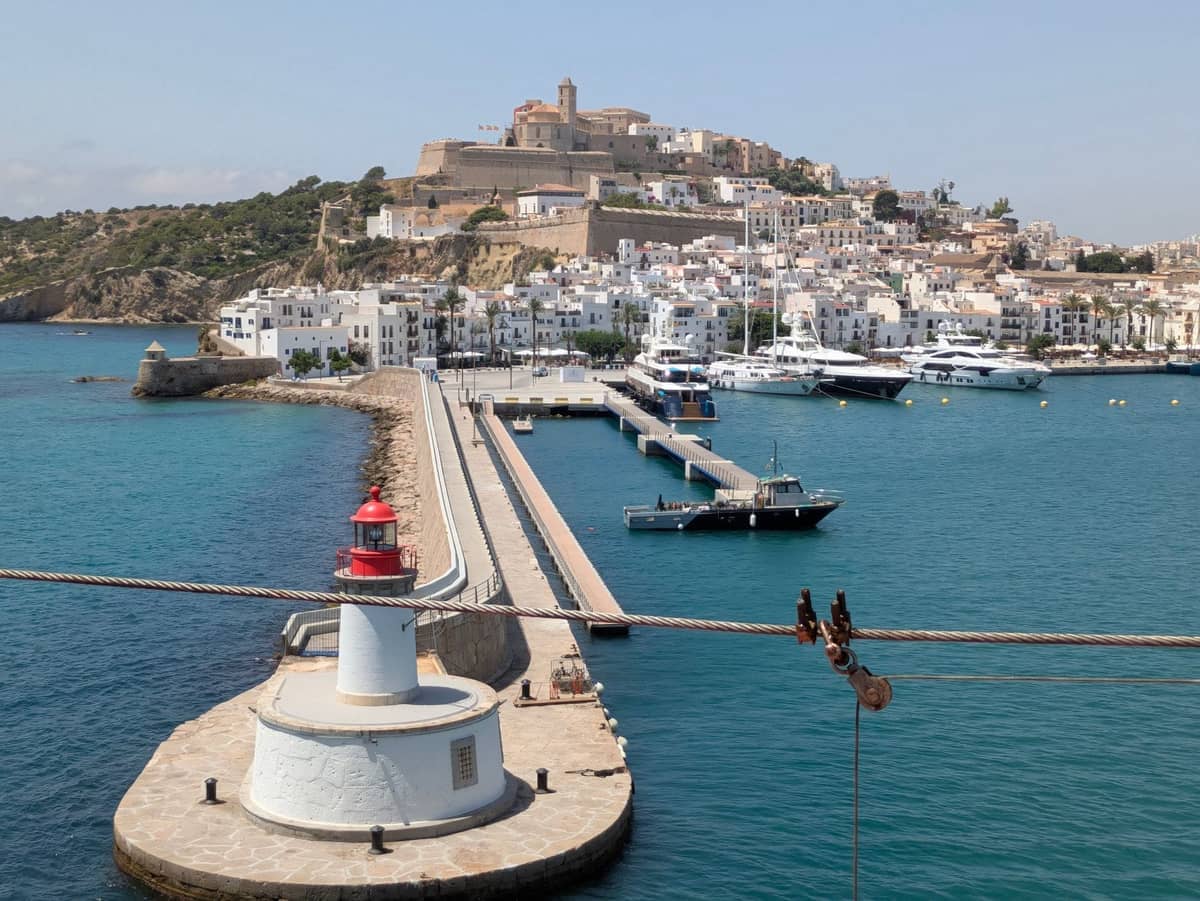
Where you stay shapes your entire experience. Ibiza Town is the most versatile base: you're within walking distance of the old town, the port, good restaurants, and the main taxi rank. It suits first-timers who want a mix of culture and nightlife without committing to one extreme.
San Antonio on the west coast is cheaper and more package-holiday in character, centred on the famous Sunset Strip and the bars along the waterfront. It's fine for budget travellers focused on nightlife, but the main strip can be rowdy and the overall atmosphere is less sophisticated than Ibiza Town.
The north of the island — particularly the north Ibiza municipalities around Sant Joan de Labritja — is where you'll find rural fincas, hippy markets, and quiet coves. If you're after relaxation over revelry, this is the right call. Just accept that you'll be driving everywhere. For a full breakdown by budget and travel style, see our guide to where to stay in Ibiza.
What to Do in Ibiza Beyond the Clubs
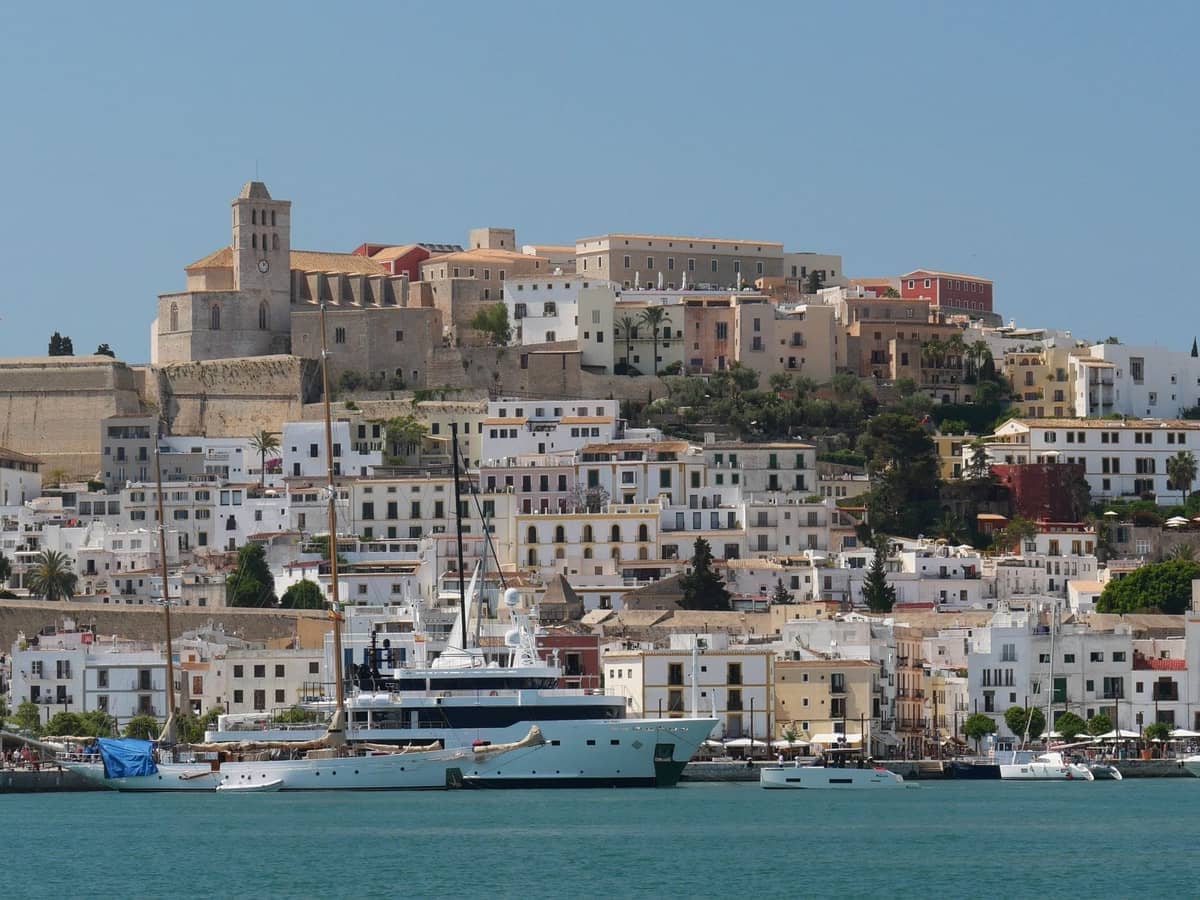
The island's most underrated asset for first-timers is its cultural depth. Dalt Vila, the walled old town rising above Ibiza Town's harbour, is a genuine UNESCO World Heritage site. The Renaissance-era walls and bastions are remarkably intact, the cathedral at the summit has panoramic views across the sea, and the streets inside are lined with independent restaurants and bars rather than chains. Spend at least a half-day here.
For beaches, the southwest coast offers the most concentrated stretch of quality options. Cala Comte is consistently rated among the best in the Balearics for its layered turquoise water and rocky coves. Cala Bassa is broader and better for families. Las Salinas near the protected salt flats attracts a fashion-forward crowd and is one of the few beaches that feels lively even in the afternoon.
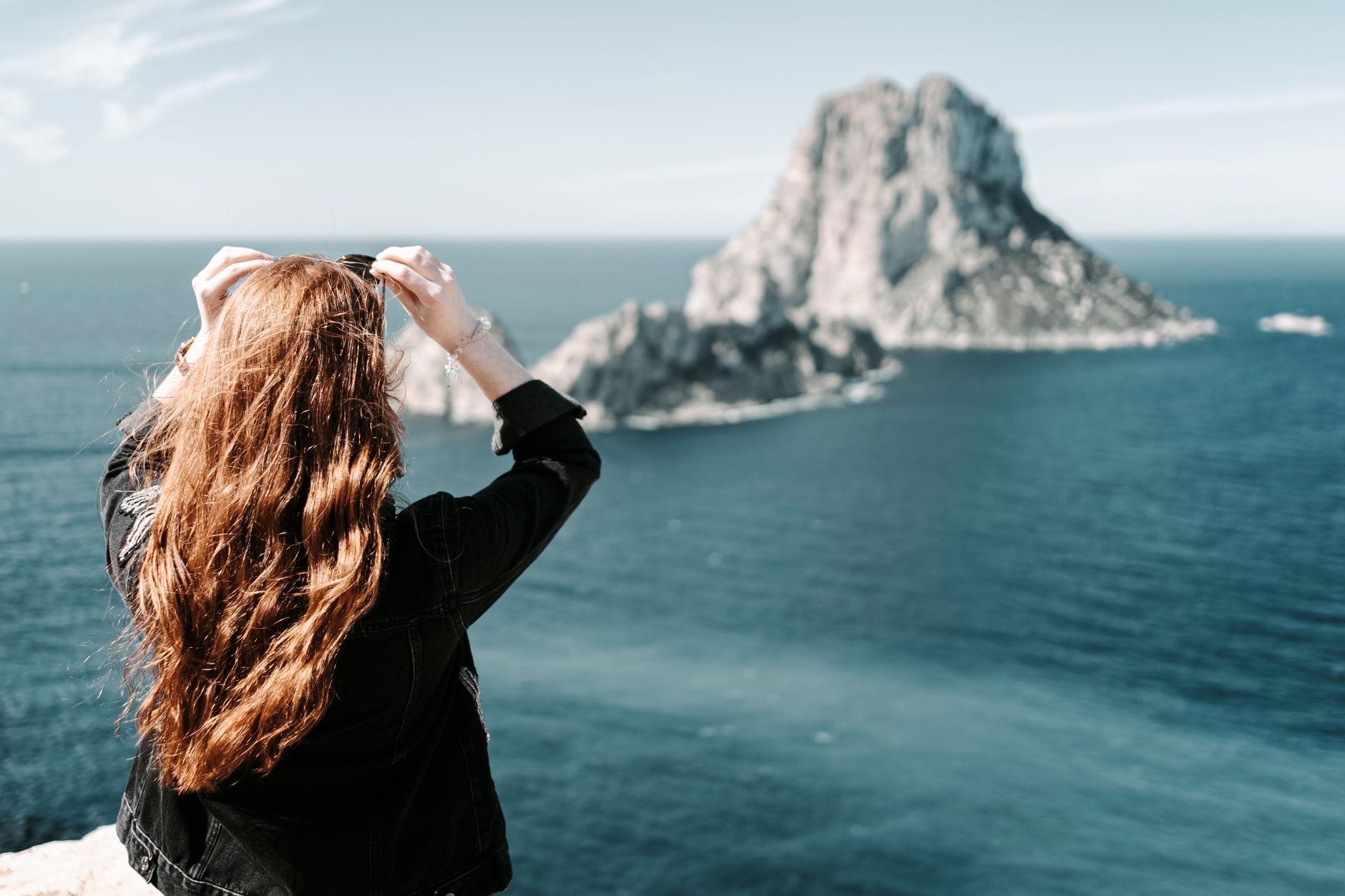
The rock formation of Es Vedrà off the southwest coast is one of Ibiza's most striking landmarks — a 382-metre limestone islet that rises sharply from the sea. You can view it from the shoreline at Cala d'Hort or hike to the Mirador des Vedrà for an elevated perspective, especially at sunset. Speaking of which, sunsets in Ibiza are taken seriously. The west-facing coast around San Antonio, Cala Comte, and Cala d'Hort draws crowds every evening from about an hour before dusk.
If you have a full week on the island, a day trip to Formentera is worth including. The smaller island sits about 30 minutes by fast ferry from Ibiza Town's port and has some of the clearest water in the Mediterranean. Go on a weekday to avoid the worst of the summer crowds.
- Dalt Vila old town: free to walk around, small entry fee for the archaeology museum
- Ses Salines Natural Park: protected area covering salt flats, beaches, and Posidonia seagrass meadows
- Hippy markets: Las Dalias in Sant Carles (Saturdays year-round, also some evenings in summer) and Punta Arabi in Es Canar (Wednesdays in season)
- Sa Talaiassa (Sa Talaia): the island's highest point at 475m, reachable on foot with views to Formentera on clear days
- Cova de Can Marcà: a natural cave system near Port de Sant Miquel with guided tours and stalactite formations
- Puig des Molins: a Phoenician-Punic necropolis near Ibiza Town, part of the UNESCO World Heritage listing
What Ibiza Actually Costs
Ibiza has a reputation for being expensive, and in July and August that reputation is deserved. But the season significantly affects what you pay. Shoulder months (May, June, September) can be 20–30% cheaper across accommodation, restaurants, and boat trips. If your dates are flexible, this matters.
Eating out spans a wide range. A proper sit-down meal at a mid-range restaurant in Ibiza Town runs roughly €20–40 per person with drinks. Beach club lunches at Cala Jondal or Las Salinas are a different category entirely: €60–100+ per person is not unusual at the premium spots if you're ordering food and drinks from a sunbed. Supermarket food and local bars in residential areas are far more reasonable. A coffee costs €1.50–2.50; a beer at a neighbourhood bar €2–4.
Club entry is the big variable. Major venues charge anywhere from €20 to €80+ depending on the night, the DJ, and how close to peak season you are. Pre-booking online almost always works out cheaper than paying on the door. Our Ibiza nightlife guide covers the main venues and what to expect from each. If budget is a genuine concern, visiting Ibiza on a budget is possible with some planning — the island has free beaches, free cultural sites, and markets that cost nothing to browse.
Practical Details Every First-Timer Should Know
The emergency number across Spain is 112, covering police, ambulance, and fire. Spain's country dialling code is +34; the Ibiza area code for landlines is 971. Tap water meets safety standards but many visitors opt for bottled water due to the mineral content and taste. Tipping is not obligatory in Spain — rounding up or leaving small change is the norm in restaurants and for taxi drivers.
Dress codes exist but are often informal: beach and casual wear are fine for daytime, but some clubs and higher-end restaurants expect smarter attire in the evening. Check specific venue requirements before you go. Most beach clubs operate a no-shoes or flip-flops-only policy, which is worth knowing if you're coming directly from a beach.
One practical note on itinerary planning: Ibiza rewards a slower pace than people expect. Trying to squeeze in major clubs, cultural sightseeing, and multiple beach days every day leads to exhaustion. A sensible one-week Ibiza itinerary alternates active nights with quieter mornings and afternoon beach time, which is how the island actually works at its best.
💡 Local tip
Spanish mealtimes are later than most visitors expect. Lunch typically runs 2pm–4pm and dinner rarely starts before 9pm. Turning up at a restaurant at 7pm in summer will often mean you're eating alone, and some kitchens won't even be open. Adjust your schedule and the island immediately makes more sense.
FAQ
Is Ibiza worth visiting if I'm not into clubbing?
Yes, genuinely. The island has a UNESCO World Heritage old town, protected natural parks, some of the best beaches in the Mediterranean, hiking trails, and a well-established food scene. The north of the island in particular feels a world away from the nightlife strip. That said, the party atmosphere does permeate July and August island-wide, so if clubs aren't your thing, May, June, or September are better months.
How many days do you need in Ibiza for a first visit?
Five to seven days is the right range. Three days is enough to see Ibiza Town, a couple of beaches, and one or two nights out, but you'll miss the quieter north, the best southwest coves, and any day trips. A week lets you explore at a pace that actually suits the island.
Do you need a car in Ibiza?
Not strictly, but it helps significantly. If you're staying in Ibiza Town and only going to main beaches like Playa d'en Bossa or taking organised boat trips, you can manage without. But the best beaches — Cala Comte, Cala d'Hort, Cala Saladeta — are difficult to reach by public transport. A rental car or scooter opens up the island considerably.
What is the cheapest time of year to visit Ibiza?
November through March is cheapest, but most of what makes Ibiza appealing is closed. The best value for an actual holiday is May or September: the weather is good, the sea is swimmable, clubs and restaurants are open, and accommodation prices are meaningfully lower than July or August.
Is Ibiza safe for solo travellers?
Generally yes. Ibiza Town, San Antonio, and the main resort areas are well-policed and busy throughout the season. The usual precautions apply: watch your belongings at crowded beach bars and clubs, pre-arrange transport after late nights, and be aware that very cheap unofficial drinks at clubs carry obvious risks. Solo travellers who exercise common sense have a straightforward experience.