Las Salinas Beach (Platja de Ses Salines): Ibiza's Most Polished Shoreline
Platja de Ses Salines sits in the protected southern tip of Ibiza, framed by salt lakes and pine forest within a UNESCO World Heritage zone. Around 1.5 km of fine, pale sand draws a fashion-forward crowd alongside birdwatchers, families, and anyone who wants a genuinely beautiful beach with reliable facilities. Free to enter, easy to reach, and consistently one of the island's most photographed stretches of coast.
Quick Facts
- Location
- Ses Salines, Sant Josep de sa Talaia, south Ibiza — about 10 minutes by car from Ibiza Town
- Getting There
- Bus L11 from Ibiza Town to Ses Salines in summer; taxi or hire car year-round
- Time Needed
- Half a day minimum; a full day is typical
- Cost
- Beach access is free; paid car park available near the roundabout; sunbed hire and bar prices apply on the sand
- Best for
- Sun-seekers, beach bar culture, nature lovers, photography, couples
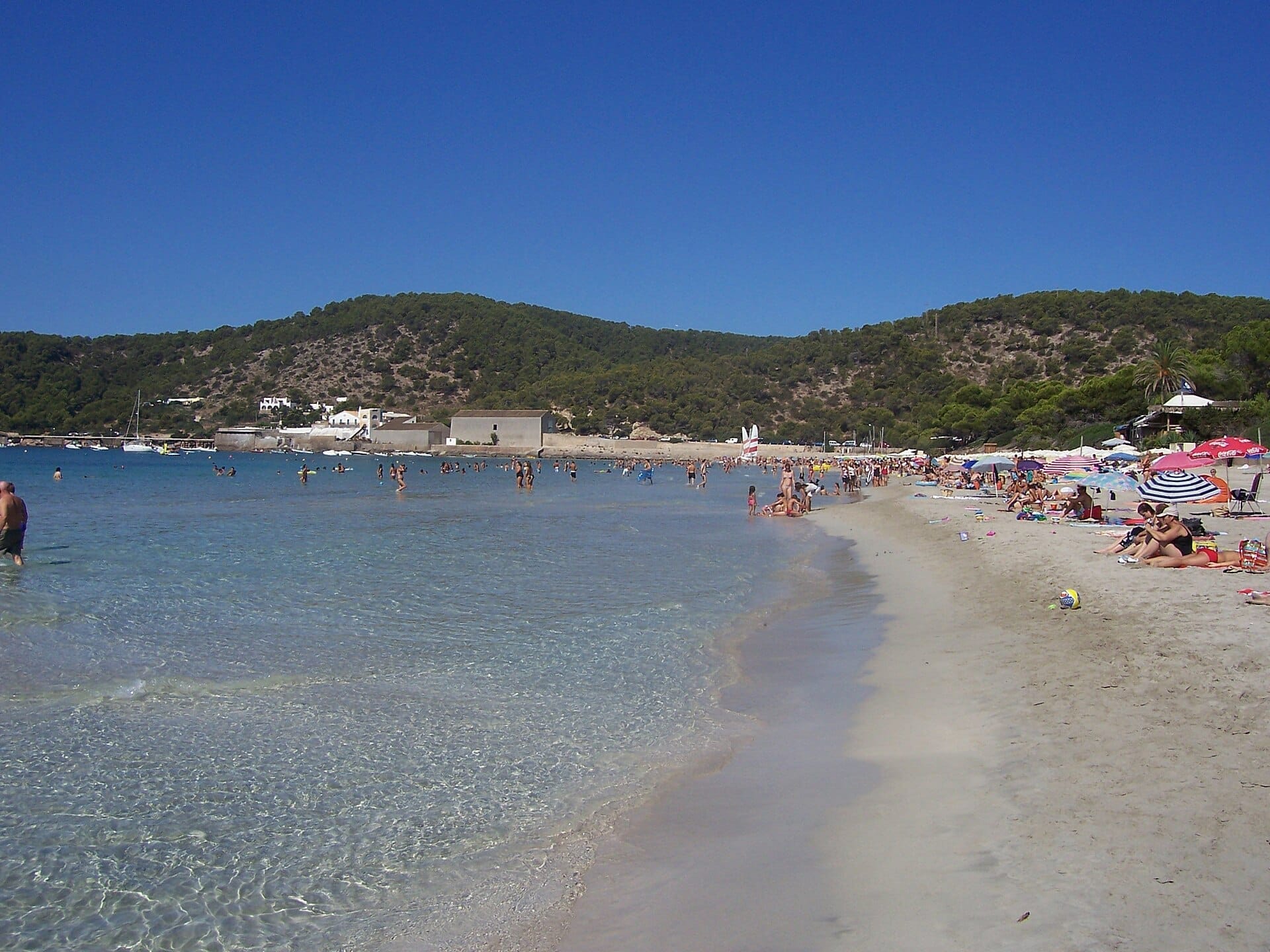
What Makes Las Salinas Different
Platja de Ses Salines earns its reputation not through a single dramatic feature but through the sum of its parts. The sand is fine and whitish, compacting just enough underfoot to walk without effort. The water colour shifts from pale aquamarine at the shoreline to a deeper blue-green further out, a quality produced in part by the protected Posidonia oceanica seagrass meadows beneath the surface. Those meadows, legally protected within the Parque Natural de ses Salines d'Eivissa i Formentera, are a core reason this coastline was included in Ibiza's UNESCO World Heritage designation.
The natural park designation shapes the experience in a way that distinguishes Las Salinas from Ibiza's more developed resort beaches. The pine trees behind the sand are intact. The salt lakes to the east, visible from the road in, attract flamingos and other wading birds during spring and autumn migration. Even on a busy July afternoon, the backdrop feels more alive and less constructed than at many comparable beaches.
ℹ️ Good to know
The beach itself is open access with no gates or fees. Parking: a small free sandy area near the main road fills quickly in summer. A larger paid car park sits near the roundabout — arrive before 10:00 in peak season if you want either option without a long walk.
The Beach Itself: Layout and What to Expect
The beach runs for approximately 1.5 km and is roughly 25–30 metres wide. That width matters: there is enough room for sunbeds near the bar areas without the rest of the beach feeling crowded, and the far ends of the strip stay noticeably quieter than the centre. The water entry is gradual and sandy, with no sharp rocks or sudden drop-offs in the main swimming areas — a detail that makes it accessible for children and less confident swimmers.
Wooden walkways provide access from the road down to the sand, including routes suitable for wheelchair users. Lifeguards are stationed along the beach during the main season. Toilets are available only through the beach bars and lounge areas rather than separate public facilities, so plan accordingly.
The central section of the beach is dominated by a cluster of well-established beach clubs and lounge bars. These are where the sunbed rows concentrate and where the visual signature of Las Salinas, tanned crowds, music at a conversational volume, and well-priced cocktails by the water, becomes most apparent. If that atmosphere is not what you are after, the northern and southern ends of the beach offer a quieter, more straightforward experience. For an even more secluded southern alternative, Es Cavallet Beach sits just a short walk over the dunes and has a distinctly different character.
Tickets & tours
Hand-picked options from our booking partner. Prices are indicative; availability and final rates are confirmed when you complete your booking.
Private Sunset Cruise on a Maritime Classic in Ibiza
From 750 €Instant confirmationFree cancellationIbiza sunset bus tour to Las Dalias market
From 40 €Instant confirmationFree cancellationSunset boat tour with tapas, open bar and water sports in Ibiza
From 70 €Instant confirmationFree cancellationEscape Tour self-guided, interactive city challenge in Ibiza
From 30 €Instant confirmation
How the Beach Changes Through the Day
In the early morning, before 09:00, Las Salinas is a different place. The light is low and golden, the sand raked clean from the previous day, and the only sounds are the sea and occasional birdsong from the salt flats. Locals and early-rising visitors walk the shoreline without any sense of competition for space. This window is brief but genuinely worth catching for photography or a first swim of the day when the water clarity is at its best.
By mid-morning the beach begins to fill steadily. The beach bars open their sunbed areas, music begins at a low level, and the crowd builds through noon. Peak hours run from roughly 12:00 to 16:00 in July and August, when free space on the sand is genuinely limited near the central bar areas. The afternoon light, hitting the water from the west, produces some of the most photogenic conditions of the day.
Late afternoon brings a gradual shift in mood. Some visitors leave for showers and dinner reservations, and the intensity of the midday heat eases. The golden hour light over the salt lake landscape to the east is worth staying for. Las Salinas does not offer the famous sunset views that the western side of the island is known for — the sun sets behind you rather than over the water — but the late afternoon quality of light is distinctive.
💡 Local tip
If visiting in July or August, arrive by 09:30 at the latest for a free parking spot and a choice position on the sand. Coming after 11:00 means navigating the paid car park and walking further.
The Natural Park Context: Salt Lakes and Protected Landscape
The salt lakes that give Ses Salines its name are not just a scenic backdrop. They have been harvested for salt since Phoenician and Roman times, making this one of the oldest continuously operating salt production sites in the western Mediterranean. The salterns remain active and the salt is still commercially extracted. During spring and autumn migration, the shallow pink-hued waters draw flamingos in numbers that surprise first-time visitors. This birdwatching dimension of a visit to Las Salinas is largely overlooked in mainstream travel coverage, but it is one of the reasons the area forms part of the Ses Salines Natural Park, which also extends south to Formentera.
The Posidonia seagrass meadows just offshore are equally significant. Posidonia grows slowly — as little as one centimetre per year — and the meadows in this area are ancient by ecological standards. They produce oxygen, support juvenile fish populations, and help maintain the exceptional water clarity that makes Las Salinas so appealing to swimmers. The protected status of these meadows is enforced: anchoring in certain zones is restricted, and the health of the seagrass is one reason the water retains its colour even on busy summer days.
Getting There and Getting Around
From Ibiza Town, follow the ring road south and pick up signs towards Sant Jordi and then Ses Salines. The drive takes around 10 minutes in normal traffic. In peak summer, the road approaching the beach slows considerably after 10:30, so an early start removes most of the friction.
By bus, route L11 runs from Ibiza Town to Ses Salines during the summer season. Timetables change seasonally, so check the current schedule with the Ibiza transport authority before travelling. A taxi from Ibiza Town is a short and straightforward option year-round.
If you are combining Las Salinas with other stops, it sits conveniently close to the airport, to Playa d'en Bossa to the north, and to the departure point for a day trip to Formentera from Ibiza Town's port, making it a logical inclusion in a southern Ibiza loop.
Beach Bar Culture and Food
The beach bar scene at Las Salinas is central to the experience, not an optional extra. The established venues here have been operating for years and offer a consistent quality — decent food, efficient service, and the right amount of music for an afternoon on the sand. Prices are higher than a supermarket, as expected, but comparable to other well-known Ibiza beaches rather than extortionate. Booking ahead for a sunbed package or lunch table at the more popular spots is advisable in July and August.
If you prefer to bring your own food and drink, the free stretch of beach at either end of the strip is entirely appropriate for that. There is no pressure to consume at the bars if you choose an independent spot on the sand.
⚠️ What to skip
There are no public toilets separate from the beach bars. If you set up far from the bar areas, factor in the walk. Facilities are available through the bar and lounge operators during their opening hours.
Photography Tips and Visual Character
Las Salinas photographs well at almost any time of day due to the pale sand and clear water, but the most distinctive images come from the contrast between the beach and the salt lake landscape behind it — the pink-tinted water of the salterns against the beach pine canopy. Walking back towards the car park road in the late afternoon puts this scene in front of you with good light. A wide-angle lens captures the full sweep of the bay; a longer lens picks out flamingo flocks in the salt pans when conditions are right.
For in-water shots, the clearest conditions are typically in the morning before wind picks up. The Posidonia meadows are visible through the surface in the shallower areas, giving an unusual texture to underwater or surface-level photography. Drone use over the natural park is subject to Spanish regulations and the protected area rules — check current restrictions before bringing equipment.
Who This Beach Suits and Who Might Want to Go Elsewhere
Las Salinas works well for a broad range of visitors. The beach bar atmosphere and the standard of the facilities make it a strong choice for those who want a beautiful beach with a social element but without the intensity of, say, Playa d'en Bossa at its loudest. The natural park context adds genuine interest for nature-minded travellers. Families with children will find the shallow entry and lifeguard presence reassuring, though the paid sunbed areas are geared more towards adults.
Travellers wanting complete solitude or a wild, uncommercialized beach experience will find Las Salinas too polished and too busy in high season. The beach has a curated quality — the scene is part of the appeal for many visitors, but those seeking Ibiza's quieter north-coast coves or cliff-backed beaches should look elsewhere. Budget travellers who want to avoid spending at beach bars entirely can use the free stretches but should expect to feel slightly outside the central experience of what the beach is known for.
Insider Tips
- The northern end of the beach, furthest from the main car park, receives the same quality of water and sand but a fraction of the crowd. Walk ten minutes from the centre and you'll find genuinely uncrowded space even in August.
- The salt lake flamingos are most reliably seen in April, May, and September-October during migration. If you're visiting in shoulder season, take five minutes to scan the salterns on the road in — binoculars help but they're visible to the naked eye when present.
- Bus route L11 from Ibiza Town drops you close to the beach entrance and avoids the parking situation entirely. For a summer visit without a hire car, this is the most stress-free option.
- The beach bars tend to be slightly less busy on weekday mornings than at weekends, when visitors from Ibiza Town treat Las Salinas as the local beach of choice. If you want a sunbed without pre-booking, a Tuesday or Wednesday arrival before 10:00 is your best window.
- Water shoes are not necessary for the main swimming area but the Posidonia seagrass can be felt underfoot at certain depths in the sections between the sand bars. If that bothers you, the shallowest entry near the bar areas is generally the clearest of vegetation.
Who Is Las Salinas Beach (Platja de Ses Salines) For?
- Visitors who want a genuinely beautiful beach with reliable facilities and a social atmosphere
- Nature and wildlife enthusiasts interested in UNESCO-protected landscapes and flamingo spotting
- Couples and groups looking for beach bar culture without full-scale club-level noise
- Photographers chasing the contrast between pale sand, aquamarine water, and the salt lake landscape
- Families with younger children who need shallow, gradual entry and lifeguard supervision
Nearby Attractions
Other things to see while in San José (Sant Josep de sa Talaia):
- Cala d'Hort
Cala d'Hort is a compact beach on Ibiza's southwest coast, in a formerly protected natural area and facing the sheer, mythologised rock of Es Vedrà. The scenery is unlike anywhere else on the island, but getting here takes effort, and the limited parking fills fast in summer.
- Cala Jondal
Cala Jondal is a sheltered south-coast bay in Sant Josep de sa Talaia, known for its remarkably clear turquoise water, white pebble shore, and high-end beach clubs. Access is free, but the scene here leans decidedly upscale. It rewards visitors who arrive early and leave before the midday sun turns the stones underfoot into a barefoot obstacle course.
- Cala Tarida
Cala Tarida is a large cove on Ibiza's western coast, stretching roughly 900 metres of fine white sand in the municipality of Sant Josep de sa Talaia. Calm, clear water and reliable afternoon light make it one of the most rewarding beaches on the island for a full day out.
- Cala Vadella
Cala Vadella is a 200-metre arc of fine white sand on Ibiza's southwest coast, tucked inside a deep natural inlet that keeps the water calm and the atmosphere unhurried. It currently holds a Blue Flag rating and is one of the few beaches on the island genuinely suited to families, swimmers, and anyone who prefers scenery over scene.