Formentera Island Day Trip: The Complete Guide from Ibiza
Formentera is the smallest of Spain's Balearic Islands, reachable in around 30 minutes by fast ferry from Ibiza Town. With 69 km of coastline around an island of about 83 km², crystal-clear shallows fed by protected Posidonia seagrass meadows, and a flat interior perfect for cycling, it offers a sharply different pace to its neighbour. This guide covers ferries, beaches, timing, and everything in between.
Quick Facts
- Location
- Formentera, Balearic Islands, Spain (ferry from Ibiza Town)
- Getting There
- Fast ferry from Ibiza Town (Estación Marítima) to La Savina port, approx. 35 min
- Time Needed
- Full day (7–9 hours on the island is ideal)
- Cost
- Ferry round-trip (prices vary by operator and season; check current fares with Trasmapi or Baleària). No island admission fee.
- Best for
- Beach lovers, cyclists, couples, nature seekers, and anyone needing a break from Ibiza's intensity
- Official website
- www.formentera.es
Why Formentera Is Worth a Full Day
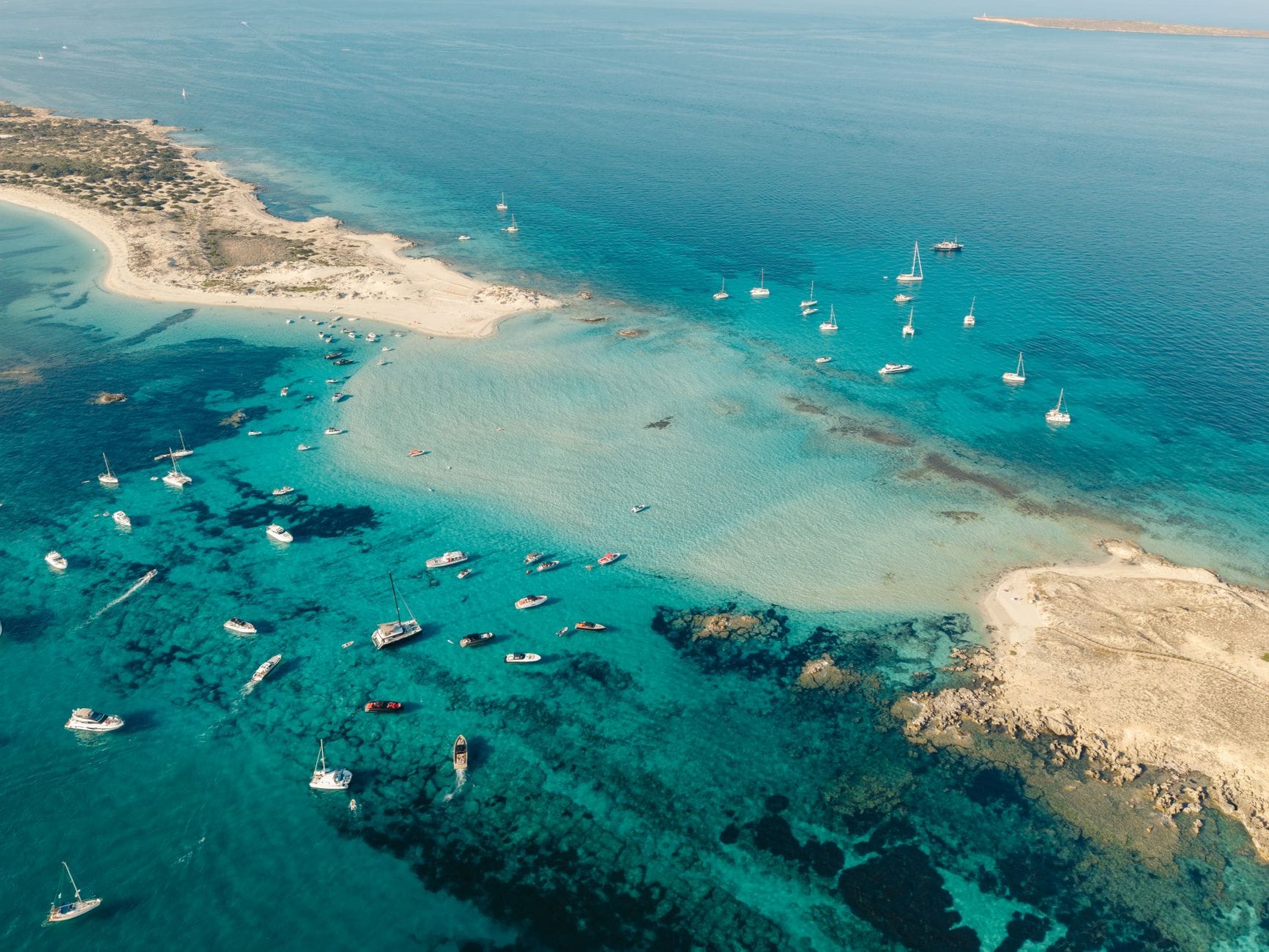
Formentera Island is, by most objective measures, one of the finest beach destinations in the western Mediterranean. It covers roughly 83.2 square kilometres, stretches about 19 km from end to end, and narrows to just 2 km at its waist. What it lacks in size, it compensates for in water quality. The shallow bays along its northern coast sit above vast meadows of Posidonia oceanica, a protected seagrass that filters seawater to an almost unsettling clarity. On a calm morning, you can see the sandy bottom in four metres of water as clearly as a swimming pool.
The contrast with Ibiza is part of the draw. Where Ibiza Town has a port full of superyachts and a nightlife calendar that shapes the whole rhythm of the island, Formentera moves slowly. There are no airports, no nightclubs of any international significance, and no high-rise hotels. The pace is set by cyclists on the PM-820, the single main road running 19 km from La Savina port to the La Mola lighthouse on the eastern plateau.
That said, Formentera is not undiscovered. In July and August, the ferries fill up, the beach bars along Ses Illetes get genuinely crowded, and you will share the water with day-trippers from across Europe. If you want the island closer to its quieter self, consider the advice in our guide to the best time to visit Ibiza, which also applies to Formentera: late May, June, and September are the sweet spots.
💡 Local tip
Book your ferry in advance during July and August. Sailings sell out, especially on weekends. Check current schedules and fares directly with operators like Trasmapi or Baleària before you travel.
Getting There: The Ferry from Ibiza
Formentera has no airport and never will, by design. The only way in is by sea, and the main connection runs from Ibiza Town's Estación Marítima to La Savina, Formentera's small port on the northwestern tip of the island. Fast ferries cover the crossing in approximately 35 minutes. Slower vessels take longer but are less common on the main tourist routes.
In peak season, departures can run as frequently as every 30 to 60 minutes throughout the day. In winter, services reduce considerably, so checking current timetables is essential. The crossing itself is pleasant on a calm day: open deck seating, views of the Pitiusan coastline receding, and the first glimpse of La Savina's lagoon as you approach. On choppy days in late autumn or early spring, the ride is rougher, and those prone to motion sickness should sit centrally.
In summer, some operators also run tourist ferries from other Ibiza resorts such as Playa d'en Bossa and Sant Antoni, though the Ibiza Town route is the most frequent and reliable. Round-trip fares vary by operator, season, and how far in advance you book. Always verify current prices directly with the ferry companies.
⚠️ What to skip
Do not assume you can buy a walk-up ticket on busy summer days. Ferries from Ibiza Town to Formentera fill quickly on Saturday mornings in high season. Book online the night before, at minimum.
Tickets & tours
Hand-picked options from our booking partner. Prices are indicative; availability and final rates are confirmed when you complete your booking.
Ibiza to Formentera boat trip with open bar and water sports
From 69 €Instant confirmationFree cancellationCatamaran day trip to Formentera from Ibiza with food and drinks
From 120 €Instant confirmationFree cancellationRound-trip Ferry to Formentera from Ibiza
From 30 €Instant confirmationFree cancellationIbiza Formentera bike tour with fast ferry
From 97 €Instant confirmationFree cancellation
What You Arrive To: La Savina and the Island Layout
La Savina is a small working port with a marina, a row of rental shops, and little else to detain you. Pick up your bicycle or scooter here if you plan to explore under your own power, which is genuinely the best way to experience the island. Formentera is almost entirely flat, with its highest point at La Mola reaching only 192 metres, making cycling accessible to almost anyone. Most rental shops are within a few minutes' walk of the ferry dock.
The main road, the PM-820, runs east across the island's thin middle section before climbing to the La Mola plateau. A northern spur leads quickly to the Ses Illetes and Cavall d'en Borràs beaches, which are the island's most celebrated. A southern road heads toward Migjorn, a long, more open beach facing the Mediterranean with a rougher character in windy conditions. Taxis and public buses also operate across the island, so you are not stranded if you skip the bike.
The Beaches: What to Expect and Where to Go
Ses Illetes and Cavall d'en Borràs
The narrow sand spit extending north from La Savina is where most day-trippers head first, and with reason. Ses Illetes is a finger of white sand flanked on both sides by water of a genuinely unusual colour: pale turquoise grading to deep cobalt where the Posidonia meadows begin. In the morning, before 11am, it is still possible to find a spot without feeling pressed against strangers. By early afternoon in August, the beach bars are full and the shallows are crowded.
The water temperature here is warm enough for comfortable swimming from June through to October. The seabed is sandy and the depth increases gently, making it suitable for families. At the very tip of the spit, a few small rocky islets (the illetes themselves) are visible, and on the calmest days, visitors wade or swim across to them.
Migjorn and Es Arenals
The southern coast offers a longer, less concentrated beach experience. Migjorn runs for several kilometres and is broken up by rocky sections and small beach bars. It faces south and catches afternoon sun well. The water here can be slightly choppier than the sheltered northern bays, but it is rarely rough enough to be unpleasant. This stretch rewards visitors who are willing to walk ten minutes from the nearest parking or bus stop to find a quieter section.
ℹ️ Good to know
Formentera's beaches are partly protected within the Ses Salines Natural Park, which extends between Ibiza and Formentera. The Posidonia seagrass meadows in the channel are a UNESCO-recognised natural heritage. Anchoring in protected zones is prohibited for boats.
Beyond the Beach: Cycling, La Mola, and the Lighthouse
If you limit yourself to one beach and a restaurant, you will see only one side of Formentera. The island rewards those who cycle or drive the full length of the PM-820 to the La Mola plateau. The road climbs steadily through pine and juniper scrub in the final few kilometres before levelling onto a high, wind-scoured plateau with views across to Ibiza in the northwest and open sea to the south and east.
At the eastern edge of La Mola stands the Far de la Mola lighthouse, built in 1861 and mentioned, according to local tradition, by Jules Verne in his novel Hector Servadac. The lighthouse itself is not generally open for interior visits, but the surrounding cliffs and the small artisan market that sets up nearby on certain days make the journey worthwhile. The drop from the plateau to the sea on the eastern and southern edges is sheer, and the light in late afternoon turns the whole headland gold.
Formentera's interior also has a network of green routes (camins verds), old stone tracks crossing agricultural land and salt flats. These are covered in more detail in the full Formentera day trip guide, which includes suggested cycling itineraries.
Eating and Drinking on the Island
Food on Formentera is not cheap, particularly at the beach bars along Ses Illetes, where a plate of grilled fish or a paella for two can climb significantly. This is partly the cost of the location and partly a reflection of the island's upmarket reputation in summer. The quality, however, is generally high. Fresh fish and shellfish come from local waters, and the simplest preparations, grilled sea bass with olive oil and lemon, are frequently the best.
Sant Francesc Xavier, the island's small capital, has a quieter restaurant scene away from the beach. It is a genuine town rather than a tourist strip: a small church, a covered market, a few cafes, and streets where locals actually live. Eating lunch here instead of at a beachfront chiringuito will save money and give you a clearer sense of what Formentera looks like at ground level.
If you are on a budget, the practical move is to bring provisions from Ibiza. Bakeries and supermarkets near the Ibiza Town ferry terminal open early. A bag with decent bread, cheese, and fruit will carry you through the middle of the day without needing to sit down anywhere.
Practical Information: Timing, Crowds, and the Return Ferry
The first ferry of the day from Ibiza Town is the right one to take. Arriving at La Savina before 9am lets you reach Ses Illetes before the mass of day-trippers, park a towel on the beach while it is still quiet, and swim in water that has not yet been churned by dozens of boats. By mid-morning, the atmosphere changes noticeably.
Plan your return ferry with a buffer. Missing the boat you intended to take is not a catastrophe (there will be another), but the last departures of the day do fill up, and in summer you may have to wait for the next one. Check the final sailing time of your operator before you leave La Savina heading to the beach, and do not count on walking from Ses Illetes to the port in under 20 minutes by bicycle, more if you are returning a rental, repacking, and queuing.
For broader context on planning your Ibiza stay around a Formentera excursion, the one-week Ibiza itinerary suggests dedicating day three or four to the crossing, when you have settled your bearings on the main island.
💡 Local tip
Bring cash. Some beach bars and smaller restaurants on Formentera prefer or require it, and the nearest ATM may be a bus ride away from wherever you end up.
Who Should Think Twice
Formentera is not the right choice for every visitor. Those with very limited time, say a single day in Ibiza and an early-morning flight, will spend a significant portion of that day on ferries and waiting around ports. The island is also not at its best in bad weather: the beaches are the main draw, and grey skies and wind transform Ses Illetes from a paradise into just another shore. Check the forecast before committing to the crossing.
Visitors expecting nightlife will find almost none. The island's energy winds down early, and there is nothing resembling the Ibiza club circuit. That is the point for many people, but worth stating plainly. Similarly, those with significant mobility restrictions should check with ferry operators and local transport providers about specific accessibility provision before travelling, as services vary.
Insider Tips
- Take the first ferry of the day. Arriving before 9am means you reach Ses Illetes while it is still genuinely quiet, before the flotillas of day boats moor offshore and the beach fills up.
- Rent a bicycle at La Savina immediately after disembarking, before the rental shops get busy. A basic bike lets you reach beaches that are a hot walk from the bus stops and cover the full length of the island in a day.
- The lagoons (estanys) between La Savina and Ses Illetes are flamingo habitat in spring and autumn. If you arrive early and look toward the salt flats before heading to the beach, you may see them wading in the shallows.
- Sant Francesc Xavier is the least touristy lunch stop on the island. It is 10 minutes by bicycle from La Savina, and the few restaurants here charge noticeably less than beachfront equivalents while serving the same fresh fish.
- The La Mola market (near the lighthouse) operates on summer Wednesday and Sunday evenings and sells local crafts, jewellery, and food. It is a manageable add-on if you have cycled to the plateau and want to rest before the descent.
Who Is Formentera Island (Day Trip) For?
- Beach purists who prioritise water quality and sand over facilities and convenience
- Cyclists and walkers who want to explore a flat, scenic island at their own pace
- Couples looking for a quieter, more romantic contrast to Ibiza Town's energy
- Nature-focused travellers interested in the Ses Salines Natural Park and Posidonia seagrass ecosystem
- Repeat Ibiza visitors who have already covered the main island and want something new
Nearby Attractions
Combine your visit with:
- Amnesia Ibiza
Amnesia Ibiza has been shaping dance music culture since the mid-1970s. Located between San Rafael and the highway connecting Ibiza Town and Sant Antoni, this 5,000-capacity venue has hosted some of the most significant nights in electronic music history. Here is what you need to know before you go.
- DC10 Ibiza
DC10 Ibiza is a converted finca on the road to Las Salinas, positioned steps from the end of the airport runway and operating as one of the world's most respected underground nightclubs since the late 1990s. Home to the legendary Circoloco parties and a terrace that feels more like a warehouse courtyard than a conventional club, it rewards the right crowd with a raw, no-frills experience that few venues anywhere can match.
- Privilege Ibiza
Once certified by Guinness World Records as the largest nightclub on the planet, Privilege Ibiza had a capacity of around 10,000 people and a floor area of about 6,500 square metres. The club closed after the 2019 season; the site reopened as UNVRS (a hyperclub) in 2025 and continues into the 2026 season. This guide covers Privilege's history, what made it iconic, and what travellers should know about the Sant Rafael site today.