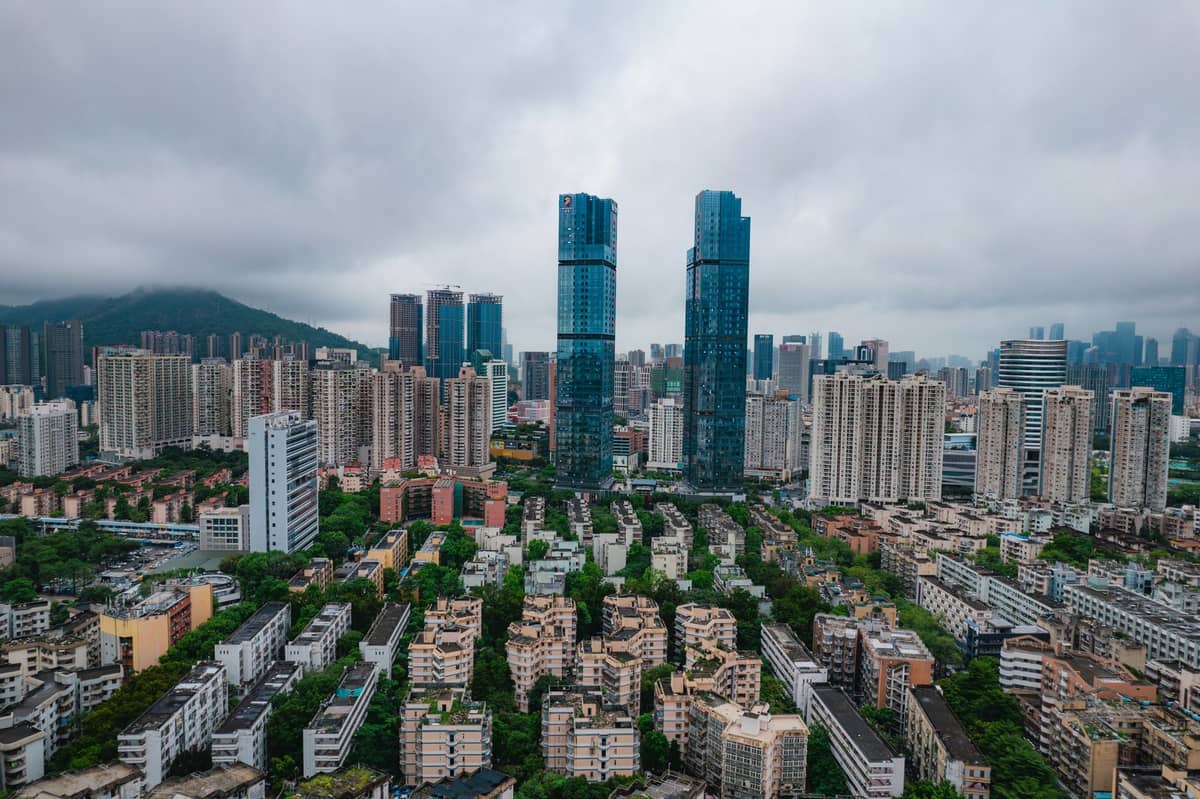
Longhua is Shenzhen's central inland district, covering roughly 175 square kilometers north of the city's commercial core. Anchored by Shenzhen North Railway Station, it functions as a major transit hub connecting the city to Guangzhou and beyond. Away from the polished tourist corridors of Nanshan or Futian, Longhua offers an unfiltered look at how contemporary Shenzhen actually lives and works.
Longhua is the part of Shenzhen that most visitors pass through but few stop to explore. Anchored by one of the busiest high-speed rail stations in southern China and positioned at the city's geographic center, it is a district of residential towers, electronics markets, factory zones, and the kind of street-level commerce that defines everyday life in a city of 18 million people.
Orientation
Longhua District sits at the geographic center of Shenzhen, covering approximately 175.6 square kilometers of inland terrain. To the south lie Futian, Luohu, and Nanshan, the districts that most travelers associate with Shenzhen. To the east is Longgang, to the west is Bao'an, and to the north the district edges toward Dongguan and Guangming. This position, sandwiched between the older commercial core and the outer suburban fringe, gives Longhua a character unlike any other part of the city.
The district is administratively divided into six subdistricts: Guanhu, Minzhi, Longhua, Dalang, Fucheng, and Guanlan. For practical purposes, most visitors orient themselves around the Longhua and Fucheng subdistricts in the south, which contain the main transit infrastructure and the densest concentration of commercial activity. Guanlan, in the north, is a different world entirely, with a preserved ancient town and a cultural arts complex that draws a more specific kind of visitor.
The single most important reference point in Longhua is Shenzhen North Railway Station, a sprawling transport hub that places the district squarely on the map for anyone arriving from or departing to Guangzhou, Hong Kong West Kowloon, or destinations across the national high-speed rail network. If you are planning a trip that involves day trips out of the city, read the day trips from Shenzhen guide — Longhua's rail access makes it one of the most practical base options in the city for regional travel.
Character & Atmosphere
The clearest way to describe Longhua is as a working district that was not built with tourism in mind. The streets around the main subdistrict centers are lined with mid-range restaurant chains, mobile phone accessories shops, logistics offices, and the kind of dense, informal commercial strips that spring up wherever a large workforce lives and shops. It is not polished. The pavements outside Shenzhen North Station are wide and functional, the adjacent malls are busy with commuters rather than leisure shoppers, and the scale of everything, the apartment blocks, the road widths, the pedestrian overpasses, reflects a city planning logic built around efficiency rather than aesthetics.
Early morning in Longhua, around 7am near any of the residential tower clusters, means wet market vendors arranging greens and fish beside the road, delivery scooters weaving through still-quiet lanes, and workers queuing at congee and youtiao stalls before the morning shift. By midday, the main commercial streets near Longhua Center metro station fill with office workers and shop staff on lunch breaks, and the air smells of rice and braised pork from the open-front canteens. After dark, the district settles into a domestic rhythm rather than a nightlife one: convenience stores do steady business, food delivery drivers stack up outside apartment lobbies, and the larger malls stay open until around 10pm.
Longhua is not a district that generates a strong tourist atmosphere in the way that Shekou or the OCT area does. The gap between local life and visitor experience is deliberately thin here: you are not observing Shenzhen from behind a tourist lens, you are in the middle of it. That is either the appeal or the drawback, depending on what you are looking for.
ℹ️ Good to know
Longhua has grown rapidly since becoming a standalone district in 2017, having previously been part of Baoan. Much of its built environment dates from the 2000s and 2010s, which means it lacks both the historical layers of Luohu and the polished modern planning of Futian.
What to See & Do
Longhua's main attraction for culturally curious visitors is in its northern subdistrict of Guanlan. The Guanlan area contains two distinct draws that are worth the journey from the city center: a preserved ancient town and a contemporary printmaking arts complex.
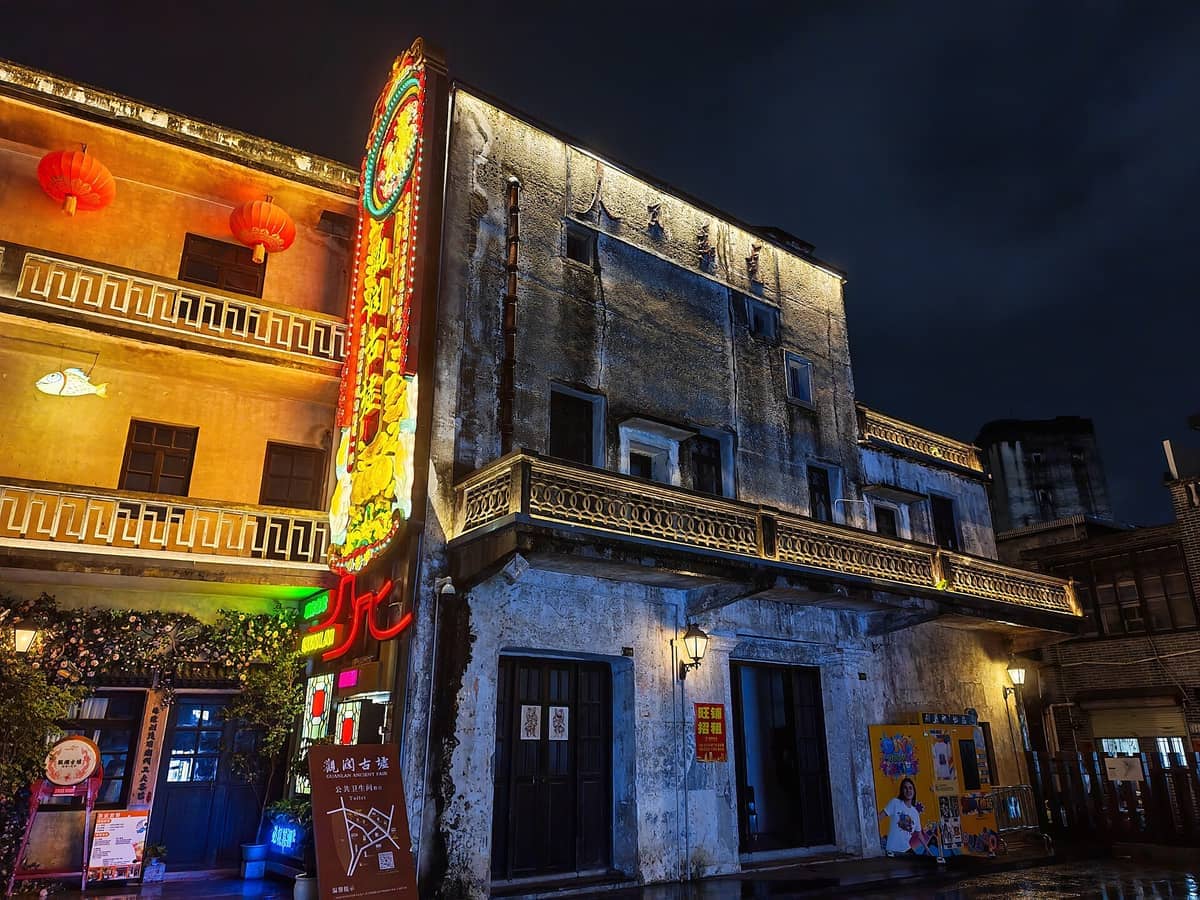
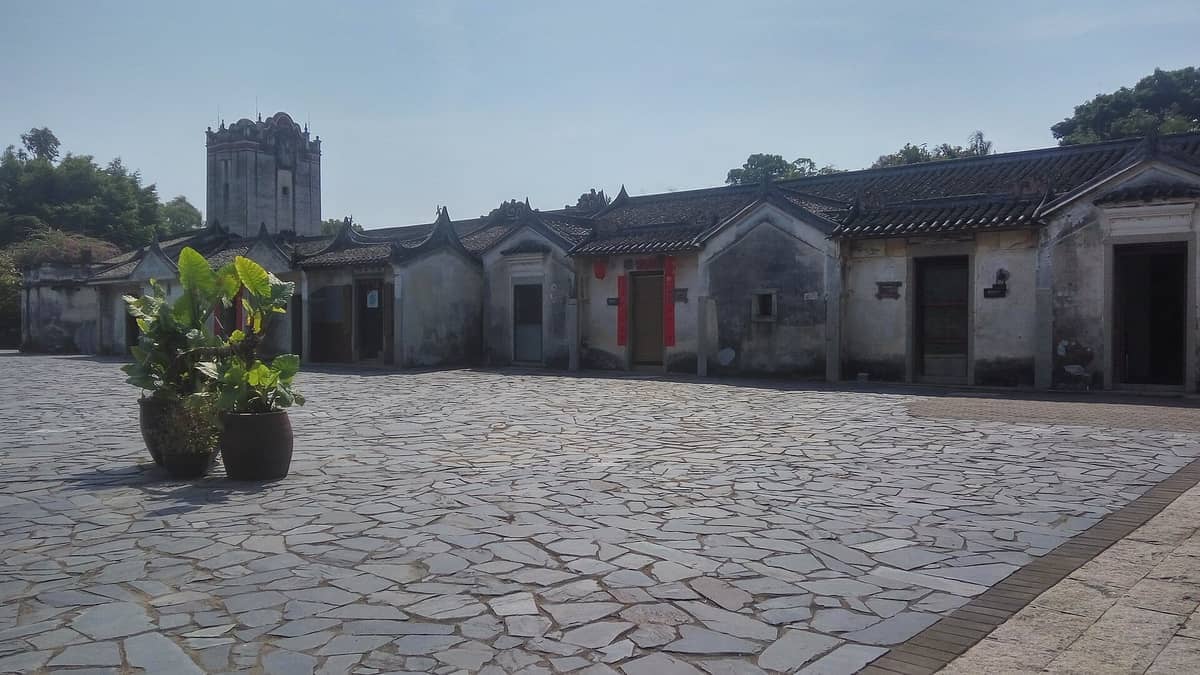
Guanlan Ancient TownGuanlan Ancient Town preserves a cluster of Hakka-era buildings and ancestral halls that date back several centuries, offering a rare physical counterpoint to Shenzhen's dominant narrative of radical newness. Walking through the old streets here, you pass weathered brick walls, stone doorframes, and temple structures that predate the city's transformation by hundreds of years. It is compact and manageable in two to three hours, and the surrounding modern neighborhood makes the contrast feel especially sharp.
Close to the ancient town, the Guanlan Print Village is a government-supported arts complex that has attracted printmaking artists and educators from across China and internationally. The village operates as a working studio and exhibition space, with galleries, open workshops, and an annual international print biennial that draws serious attention from the global arts community. It is an unusual find in what is otherwise a heavily industrial part of the city.
For visitors interested in Shenzhen's broader contemporary art scene, Longhua can be understood alongside other cultural districts covered in the Shenzhen contemporary art guide. The Guanlan complex is smaller in scale than the OCT Loft in Nanshan but has a more specialist, working-studio character that some visitors find more compelling.
Guanlan Ancient Town: Hakka heritage buildings, ancestral halls, and temple structures in the northern subdistrict
Guanlan Print Village: International-standard printmaking studios and galleries with rotating exhibitions
Shenzhen North Railway Station area: Worth a brief walk for the scale of its infrastructure and the commercial activity it generates
Local wet markets near residential clusters: Best visited before 9am for an unscripted picture of daily Shenzhen life
Longhua Central Park: A large urban green space in the Longhua subdistrict used heavily by local residents
💡 Local tip
If you are combining Guanlan Ancient Town and the Print Village in one trip, plan for a half-day minimum. The two sites are walkable from each other, but finding food in the immediate vicinity is easier near the ancient town end. Check exhibition schedules at the Print Village before visiting, as some gallery spaces operate on limited hours.
Eating & Drinking
Longhua's food scene is oriented entirely toward its resident population rather than visitors, which in practical terms means good value, high volume, and a strong bias toward Cantonese comfort food and the cuisines of the migrant workers who make up a large share of the district's workforce. Sichuan, Hunan, and Hubei restaurants sit beside Cantonese roast meat shops and Chaoshan congee stalls. The competition for the lunch-and-dinner trade is real, and the standard is generally reliable.
Around Longhua Center metro station and in the Fucheng subdistrict, the concentration of restaurants is at its thickest. You will find multi-story canteen-style operations serving set lunches for under 30 CNY per person, as well as slightly more composed Cantonese restaurants in the shopping mall basements that run to 60-100 CNY per head. Hot pot is well represented across the district, with both Sichuan-style and Cantonese clear-broth options available at multiple price points.
Street food in Longhua follows the rhythms of the working day. Morning stalls near residential blocks sell jianbing, steamed buns, and soy milk. Afternoon brings skewer vendors and bing stalls near school and metro exits. Late evening sees the barbecue tables appear on certain commercial streets, particularly on weekends. None of this is curated for photography; it is functional, affordable, and often very good.
For a broader picture of what to eat across Shenzhen before you arrive, the Shenzhen food guide provides context on regional cuisines and price expectations citywide. Longhua fits into the mid-to-budget range for the city overall.
⚠️ What to skip
English menus are rare to nonexistent in most Longhua restaurants outside hotel dining rooms and international chains in the larger malls. Having a translation app with a camera function, or the ability to point at dishes from other tables, will make eating here significantly easier.
Getting There & Around
Shenzhen North Railway Station is the defining transit fact about Longhua. It sits in the southern part of the district and serves as a hub for national high-speed rail services to Guangzhou South, Hong Kong West Kowloon, and a wide range of destinations across China. For travelers using Shenzhen as a base for regional exploration, or arriving from Hong Kong by rail, this station is the practical entry and exit point for the district.
The Shenzhen Metro's Longhua Line, also known as Line 4, runs north to south through the district, connecting Shenzhen North Station to the core city districts to the south. From Shenzhen North, you can transfer to Line 5 or Line 6 for cross-city connections, or continue south on Line 4 through the CBD toward the Futian border crossing. Guanlan in the north is served by Line 4's upper stations, making the ancient town and print village accessible by metro without needing a taxi for the main distance, though a short walk or ride-hail may be needed for the final stretch.
Ride-hailing via Didi is widely available across the district and is the most practical way to move between subdistricts or reach sites that are not directly metro-adjacent. For general navigation across the whole city, including bus route logic and metro transfer tips, the getting around Shenzhen guide covers the full network in detail.
From Shenzhen Bao'an International Airport to Longhua, metro journeys typically involve Line 11 with at least one transfer onto Line 4 or Line 5. Travel time is typically 45 to 60 minutes depending on your destination within the district. Taxis and Didi from the airport to Longhua take roughly 30 to 45 minutes in normal traffic, longer during peak hours.
Where to Stay
Longhua is not a district where most leisure travelers choose to base themselves, but it makes genuine practical sense for specific types of visitors. If your primary reason for being in Shenzhen involves high-speed rail connections, whether you are arriving from Hong Kong by train or using Shenzhen as a jumping-off point for trips to Guangzhou and beyond, staying near Shenzhen North Station places you at the center of the transport network rather than adding a metro journey to every departure.
The accommodation options around Shenzhen North tend toward business hotels rather than boutique properties. The typical profile is a four-star Chinese business chain with clean, functional rooms, reliable WiFi, and a Cantonese breakfast buffet. Rates are generally lower than equivalent rooms in Futian or Nanshan, which matters if you are spending multiple nights in the city. The surrounding area is not scenic, but it is quiet by Shenzhen standards after 10pm and efficiently connected to everywhere you might want to be.
For a full comparison of Shenzhen's neighborhoods by accommodation type and traveler profile, the where to stay in Shenzhen guide maps out the trade-offs between Longhua, Futian, Luohu, and Nanshan clearly.
💡 Local tip
If you are visiting from Hong Kong on the Guangzhou-Shenzhen-Hong Kong Express Rail Link, Shenzhen North Station is your arrival point in China. Rather than immediately transferring to Futian or Luohu, it is worth building at least one night in Longhua into your itinerary to use the district as a practical hub before heading south into the more tourist-oriented parts of the city.
Longhua in the Context of Shenzhen
Understanding Longhua means understanding something about how Shenzhen works as a city. The districts that visitors typically prioritize, Futian for its civic architecture and shopping, Nanshan for its tech campuses and Shekou waterfront, Luohu for its border history and older commercial energy, are all built on a foundation of manufacturing, logistics, and migrant labor that Longhua more visibly represents. The district is not a showcase; it is the engine room.
That context matters if you are trying to understand Shenzhen beyond its surface. The is Shenzhen worth visiting guide addresses the city's broader appeal for different types of travelers, and Longhua is the kind of district that tips the answer in either direction depending on what you want from urban travel. If you want a complete picture of the city rather than its curated highlights, a half-day in Longhua, especially the Guanlan end, adds a dimension that the tourist circuits do not provide.
Travelers who enjoy Longhua's unscripted character often find similar appeal in parts of Luohu, where the older commercial density and proximity to the Hong Kong border create another version of everyday Shenzhen. The two districts are different in texture but share a quality of being primarily for residents rather than visitors.
TL;DR
Longhua is Shenzhen's central inland district: practical, unpolished, and built around the rhythms of a working population rather than tourism infrastructure.
Best for: travelers arriving by high-speed rail from Hong Kong or Guangzhou, anyone seeking an unfiltered look at contemporary Shenzhen, and visitors with a specific interest in the Guanlan Ancient Town or Print Village.
Skip it if: your priority is Shenzhen's landmark attractions, waterfront dining, or the tech district corridor in Nanshan, all of which are better accessed from Futian or Nanshan bases.
Guanlan in the north is the district's most compelling draw for culturally curious travelers, combining Hakka heritage architecture with a working international printmaking arts complex.
Shenzhen North Railway Station makes Longhua the city's most connected point for regional rail travel, a practical advantage that outweighs its lack of tourist atmosphere for certain itineraries.
Two days in Shenzhen is enough to move through its most distinct neighbourhoods, from the electronics labyrinth of Huaqiangbei to the coastal parks of Nanshan and the art spaces of OCT Loft. This itinerary is built around the metro, keeps mornings efficient, and leaves room for the food and nightlife that most guides gloss over.
Shenzhen's climate is subtropical and unforgiving in summer. This guide breaks down every season clearly, from the ideal October–December window to the typhoon risks of July–September, so you can plan your trip around real conditions rather than brochure weather.
Shenzhen sits at the centre of one of the most connected corners of Asia. Within a few hours, you can reach Hong Kong, Guangzhou, Zhuhai, Macau, and the coastal villages of Dapeng. This guide covers the best day trips from Shenzhen with realistic travel times, transport logistics, and clear assessments of what each destination actually offers.
Shenzhen delivers far more than its reputation as a tech-and-shopping city. From coastal greenways and hilltop parks to art districts and Ming Dynasty fortresses, a remarkable amount of the city costs nothing to explore. This guide covers the best free attractions across every district.
Shenzhen has one of the most extensive metro systems in China, plus buses, taxis, and ride-hailing to fill the gaps. This guide breaks down every transport option, from airport arrival to cross-city metro trips, so you can move around confidently from day one.
Getting from Hong Kong to Shenzhen is straightforward once you know which crossing suits your itinerary. This guide covers every route — high-speed rail, MTR foot crossings, and 24-hour options — with realistic queue times, operating hours, and practical advice for first-timers.
Shenzhen is one of China's most misunderstood cities. It's not just a tech showcase or a shopping stopover from Hong Kong. This guide cuts through the clichés to help you decide if Shenzhen belongs on your itinerary, and what to prioritize if it does.
Shenzhen built more supertall skyscrapers in 40 years than most cities manage in a century. This guide covers the key landmarks, the best districts for architectural exploration, observation decks, design culture, and practical tips for getting around the skyline.
Chinese New Year in Shenzhen is neither a ghost town nor a nonstop party — it's something more interesting than either. This guide covers the real rhythm of the city during Spring Festival: which events are worth your time, how crowds shift, what actually closes, and how to make the most of one of China's most distinctive holiday periods.
Shenzhen has built one of China's most serious contemporary art ecosystems in under four decades. This guide covers the key museums, gallery districts, and creative spaces — from OCAT Shenzhen to Dafen Oil Painting Village — with practical details on getting there, what to expect, and when to visit.
Huaqiangbei is the world's largest electronics market district, but navigating it without a plan is a recipe for overpaying or leaving empty-handed. This guide covers which buildings to visit, realistic price expectations, negotiation strategy, payment methods, and practical advice on what is cheap versus what only looks like a deal.
Shenzhen's food scene reflects its identity as a migrant city: no single ancient cuisine, but an extraordinary range of Cantonese, Hakka, Teochew, Hunan, Sichuan, and international cooking all under one roof. This guide covers the dishes worth seeking out, the neighborhoods to find them in, and the practical details that make eating here genuinely easy.
Shenzhen is far more than tech malls and theme parks. This guide takes you to the ancient fortresses, artist communities, coastal trails, and architectural wonders that most visitors walk straight past.
Shenzhen surprises most visitors with the quality and variety of its hiking. Within the city limits you'll find a 944-meter mountain summit, a 15-kilometer coastal greenway, dramatic clifftop sea trails, and forested urban parks. This guide covers the best of all of them.
Shenzhen at night is more varied than most visitors expect. This guide breaks down the city's top nightlife districts by vibe and budget, covering rooftop bars, live music venues, megaclubs, and late-night food streets — with metro directions, realistic price ranges, and clear notes on what's worth your time.
Shenzhen is one of the most affordable major cities in Asia for travelers who know where to look. This guide breaks down realistic daily costs, the cheapest transport options, free and low-cost attractions, and the neighborhoods that give you the best value without sacrificing convenience.
Shenzhen takes its reputation as a City of Parks seriously. This guide covers the best parks in Shenzhen across every type, from hilltop viewpoints and wetland boardwalks to beach trails and sprawling botanical gardens.
Shenzhen is China's most concentrated hub of consumer tech, hardware manufacturing, and innovation showrooms. This guide covers the best stops, realistic routes, logistics, and practical advice for planning your own tech tour across Nanshan, Futian, and Huaqiangbei.
Shenzhen is far more than a tech hub. It has world-class theme parks, wildlife reserves, natural history museums, and coastal beaches that make it a genuinely rewarding destination for families. This guide covers the best of it, organized by what works for different ages and energy levels.
Shenzhen is one of Asia's great shopping cities, but it rewards those who know where to go. This guide breaks down the best markets, malls, and districts by category, with clear advice on prices, bargaining, and what's worth buying.
Shenzhen rewards visitors who look beyond the shopping malls. This guide covers the city's best experiences across parks, coastlines, heritage districts, and skyline viewpoints — organized by what kind of traveler you are, with practical details on getting there, what to expect, and what to skip.
Shenzhen has 10 districts and no single obvious center, which makes choosing where to stay genuinely confusing. This guide breaks down the best neighborhoods by trip type, with clear price ranges, metro access notes, and practical trade-offs for each area.