Singapore's Chinatown packs five distinct precincts into under one square kilometre, blending centuries-old temples and clan associations with revitalized shophouse streets, serious food culture, and a nightlife strip that draws as many locals as tourists. It is one of the few places in the city where the Raffles-era street grid is still legible, and where a ten-minute walk can take you from an incense-thick temple courtyard to a craft cocktail bar.
Singapore's Chinatown is the city's most layered historic district, where Hokkien temples stand metres from a Tamil Hindu shrine, where conservation-listed shophouses have been converted into wine bars and boutique hotels without losing their five-foot-way bones, and where one of Southeast Asia's great hawker complexes still feeds thousands of people every day. It rewards slow walking and repeat visits.
Orientation
Chinatown occupies a compact under 1 square kilometre in Singapore's Outram planning area, roughly south of the Singapore River and west of the CBD. Despite the small footprint, it is not a single neighbourhood so much as five precincts stitched together: Kreta Ayer at the historic core, Ann Siang Hill and Club Street to the northeast, Telok Ayer along the eastern edge, Tanjong Pagar and Duxton Hill to the south, and Bukit Pasoh to the west.
The main arterial road is South Bridge Road, which runs roughly north to south through the middle of the district and forms one of its defining spines. Neil Road and Tanjong Pagar Road trace the southern boundary. Pagoda Street, Trengganu Street, and Smith Street form the tourist-facing core around Chinatown MRT. Telok Ayer Street, running along the eastern fringe near the old shoreline, is where some of the area's oldest religious buildings are concentrated.
Chinatown's neighbours help calibrate its position in the city. To the north, across the river, sits the CBD and the waterfront. Walking east along Telok Ayer brings you toward Tanjong Pagar Plaza and eventually the Anson financial corridor. To the west, the district borders the Singapore General Hospital campus and Outram Park interchange. Marina Bay is roughly 1.5 kilometres northeast, easily reachable on foot or via a single MRT stop.
ℹ️ Good to know
Chinatown has three MRT stations within or adjacent to its boundaries: Chinatown (NE4/DT19), Outram Park (EW16/NE3/TE17), and Maxwell (TE18). This density of rail access makes the district one of the easiest in Singapore to reach from almost anywhere on the network.
Character and Atmosphere
Chinatown in the early morning is a different place from the one most visitors know. By 7am, the wet market on the lower floors of Chinatown Complex is already midway through its working day. Vendors call out prices in Hokkien and Cantonese, the air carries the sharp smell of fresh produce and fish, and the regulars who have been shopping here for decades move with the efficient choreography of long habit. The tourist stalls on Pagoda Street are shuttered, and the streets belong entirely to the neighbourhood.
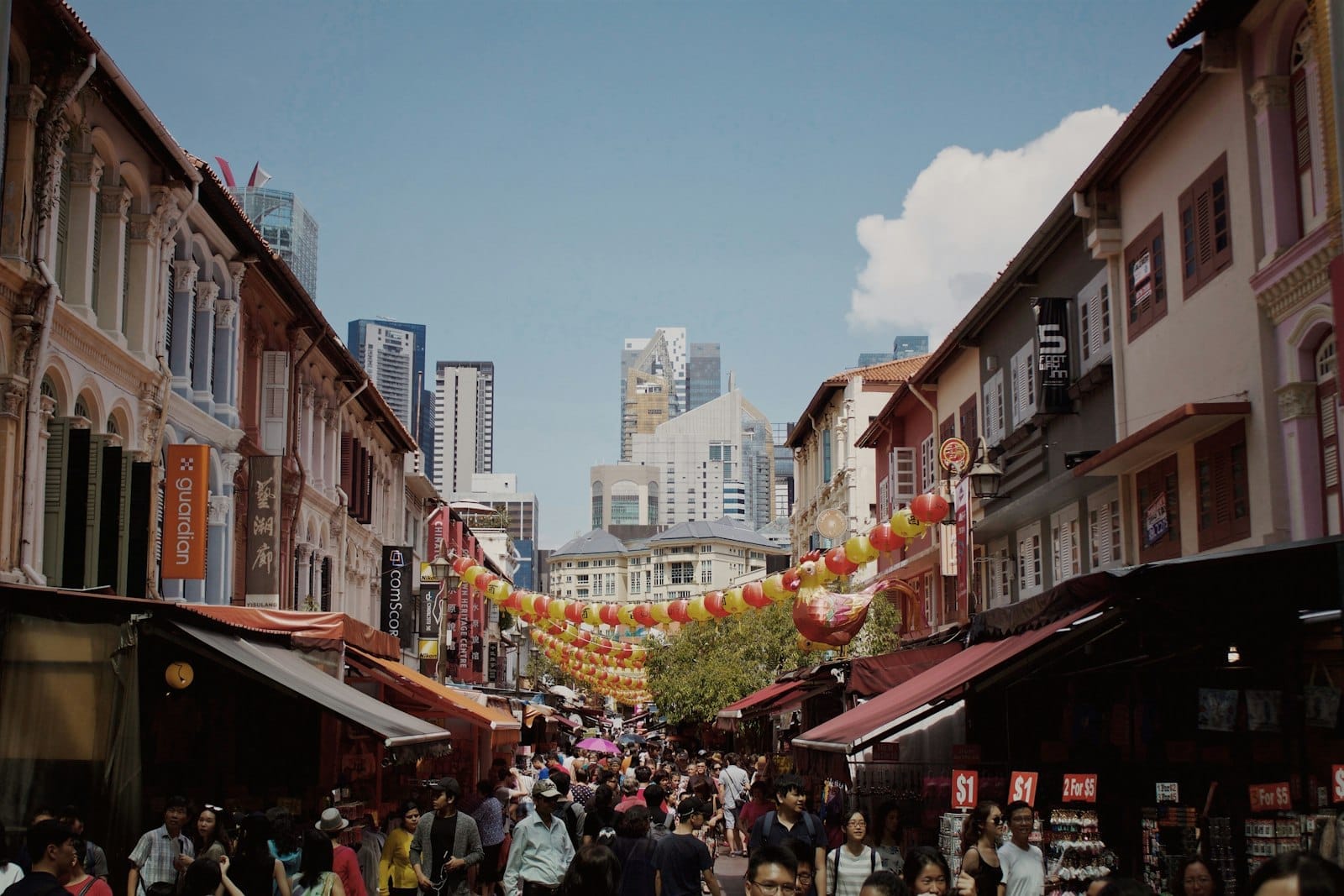
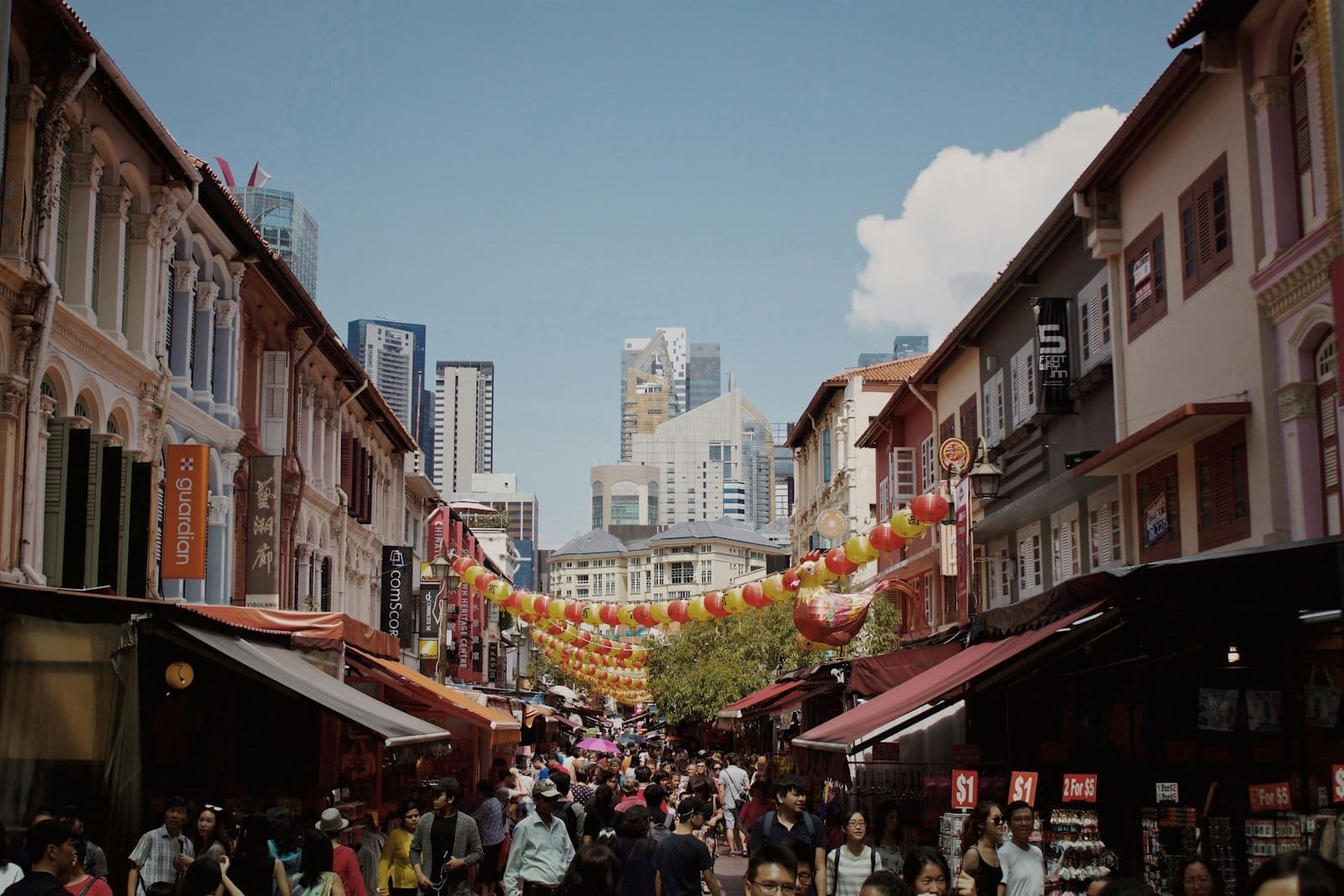
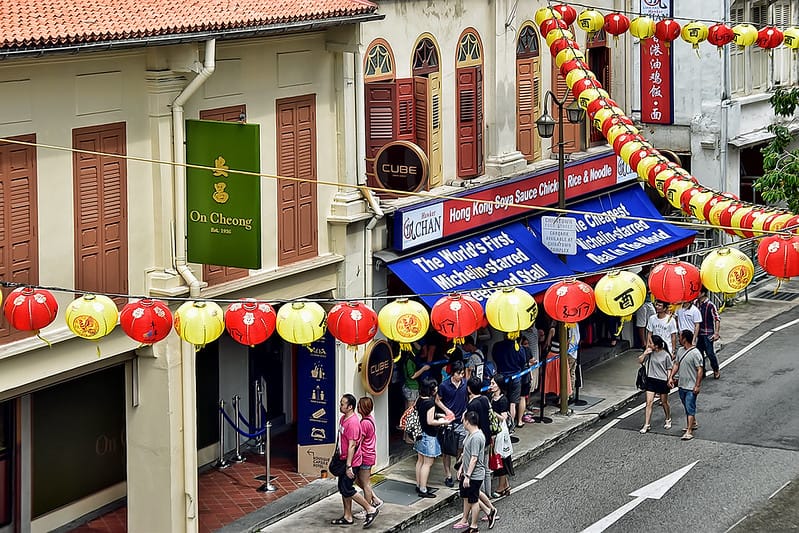
By mid-morning the character shifts. The five-foot-ways fill with visitors working through the souvenir strip between Pagoda and Trengganu Streets, and the coffee shops along Smith Street start their lunch preparations. Afternoon light falls hard on the shophouse facades facing south and west, picking out the ornamental plasterwork and painted shutters that make the conservation streetscapes worth photographing. Duxton Hill and Club Street, slightly elevated and shaded by mature trees, stay cooler than the flat streets below and feel noticeably quieter even during peak hours.
After dark, the district splits in two directions. Smith Street and Pagoda Street take on a carnival quality during Chinese New Year and Deepavali, strung with lights and packed well past midnight, but even on ordinary evenings the hawker stalls and the souvenir strip stay busy until around 10pm. A few streets away, Duxton Hill and Club Street operate at a completely different register: wine bars and restaurants with outdoor seating, groups of office workers from the nearby CBD, and almost no tour groups. The two atmospheres exist simultaneously, separated by about a five-minute walk.
Telok Ayer Street at dusk has its own particular quality. This was once the seafront before land reclamation pushed the shoreline east, and the density of temples, mosques, and clan association buildings along a single street reflects the religious geography of 19th-century immigrant communities who prayed at the first point of landfall. Walking it in the late afternoon, when the office workers from the surrounding towers are heading home and the temple caretakers are setting out evening offerings, gives a compressed sense of the layered history underneath the contemporary city.
What to See and Do
The district's religious architecture is its most architecturally significant asset and also its most undervisited. The Thian Hock Keng Temple on Telok Ayer Street, built in 1842 by the Hokkien community without a single nail in its original structure, is one of the finest examples of southern Chinese temple architecture in Southeast Asia. It was built to give thanks for safe sea passage, which explains its original seafront location. The ornate roof ridges covered in porcelain figures, the heavy granite columns from China, and the relative quiet of its courtyard even during busy periods make it worth a careful thirty minutes.
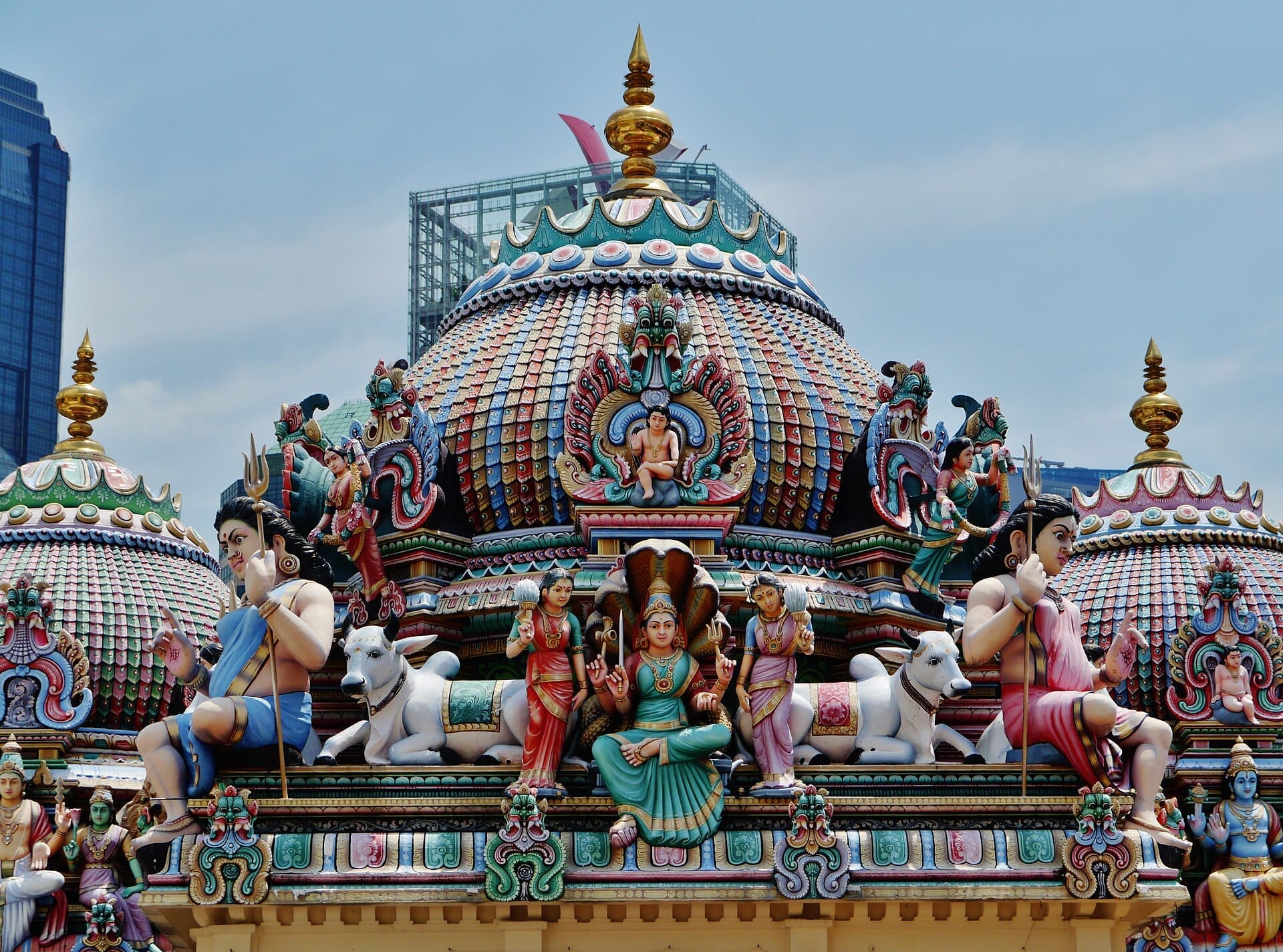
The Sri Mariamman Temple on South Bridge Road is another anchor of the precinct. Built in 1827 and the oldest Hindu temple in Singapore, its gopuram tower is a landmark visible from several streets away, covered in painted deities in the Dravidian style. The coexistence of this Tamil Hindu temple within an ethnic Chinese neighbourhood is characteristic of Singapore's layered urban history, and the temple remains an active place of worship used by the Hindu community from across the city.
The Chinatown Heritage Centre on Pagoda Street occupies three restored shophouses and tells the story of the Cantonese, Hokkien, Teochew, and Hakka communities who built the district. The recreated living quarters on the upper floors, showing how dozens of people shared a single shophouse unit, are more affecting than most museum displays in the city. It is a worthwhile two hours for anyone who wants the district to mean something beyond its street food and souvenir shops.
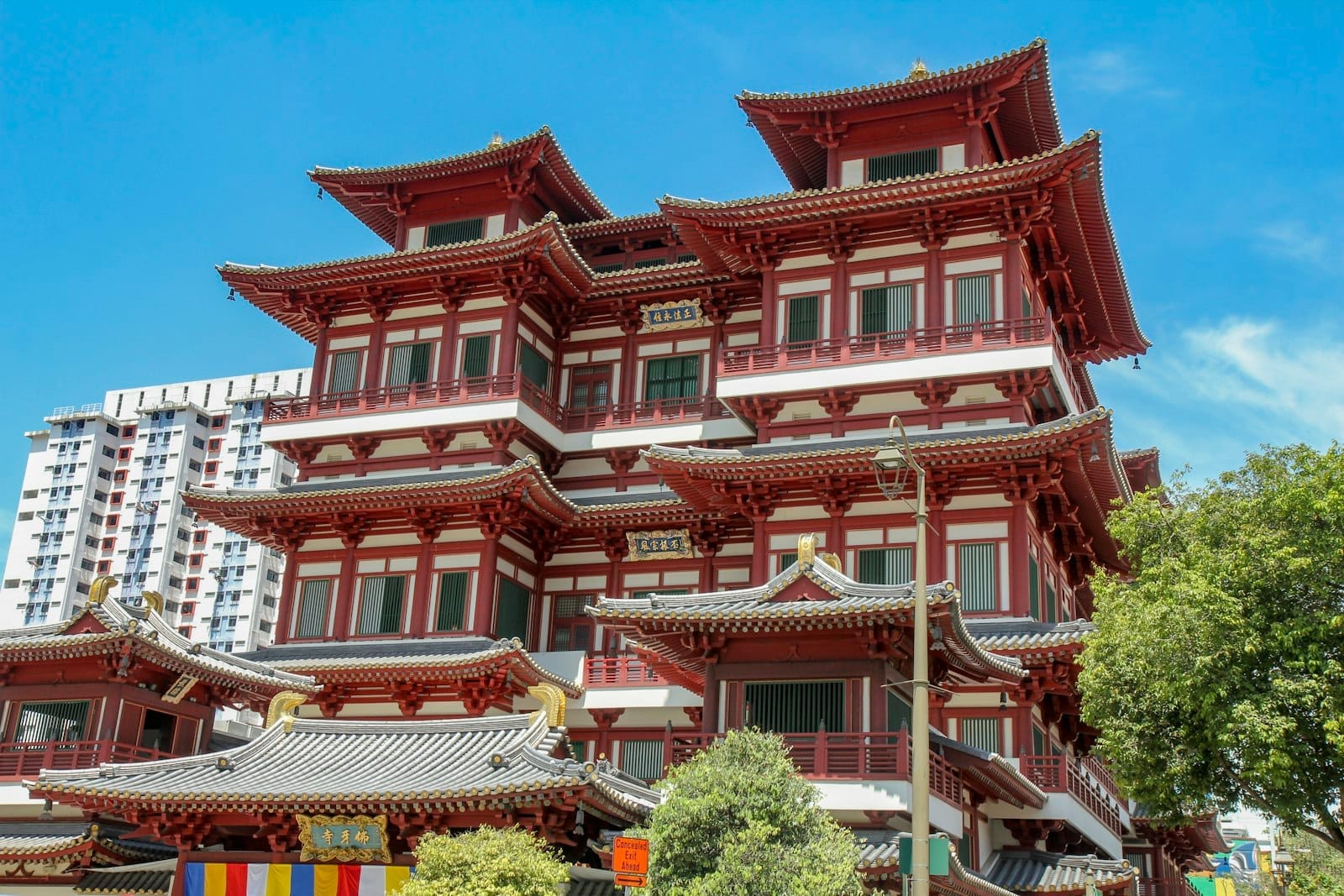
The Chinatown Street Market along Pagoda and Trengganu Streets is exactly as commercial as it looks, but it is also a legitimate place to buy Chinese New Year goods, dried goods, temple offerings, and souvenirs that are no more overpriced than equivalents elsewhere in the city. The Buddha Tooth Relic Temple on South Bridge Road, completed in 2007, is more recent but architecturally impressive: a Tang Dynasty-style complex built over five floors, housing a relic attributed to the Buddha and a rooftop garden with city views.
Thian Hock Keng Temple, Telok Ayer Street: free entry, open daily
Sri Mariamman Temple, South Bridge Road: small entrance fee for non-Hindus
Buddha Tooth Relic Temple, South Bridge Road: free entry, rooftop garden access included
Chinatown Heritage Centre, Pagoda Street: ticketed, allow 90 minutes
Ann Siang Hill Park: a small elevated park connecting Ann Siang Road to Club Street, good for a quiet break
Duxton Hill shophouse strip: best walked on weekend evenings when the bars have outdoor tables
Eating and Drinking
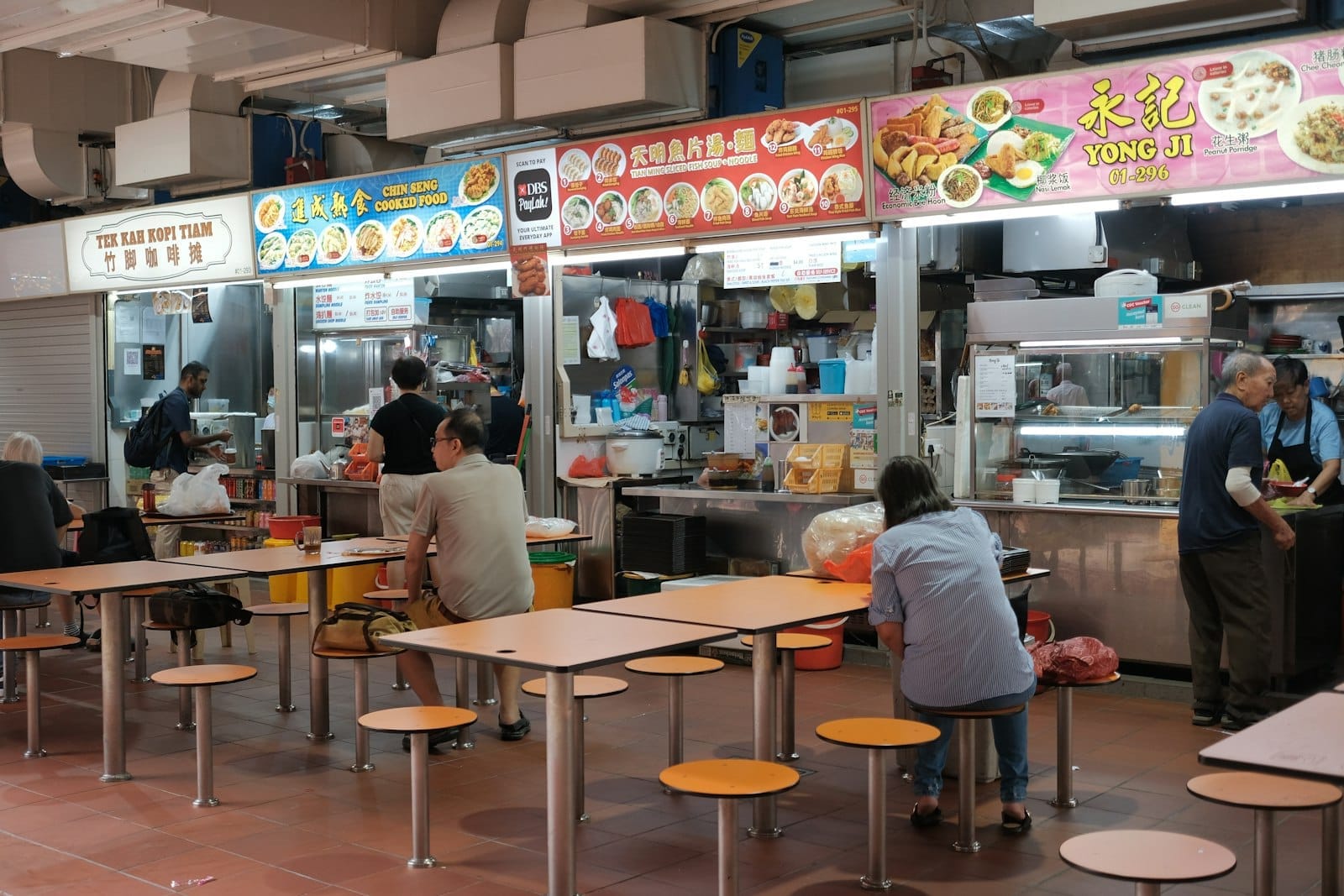
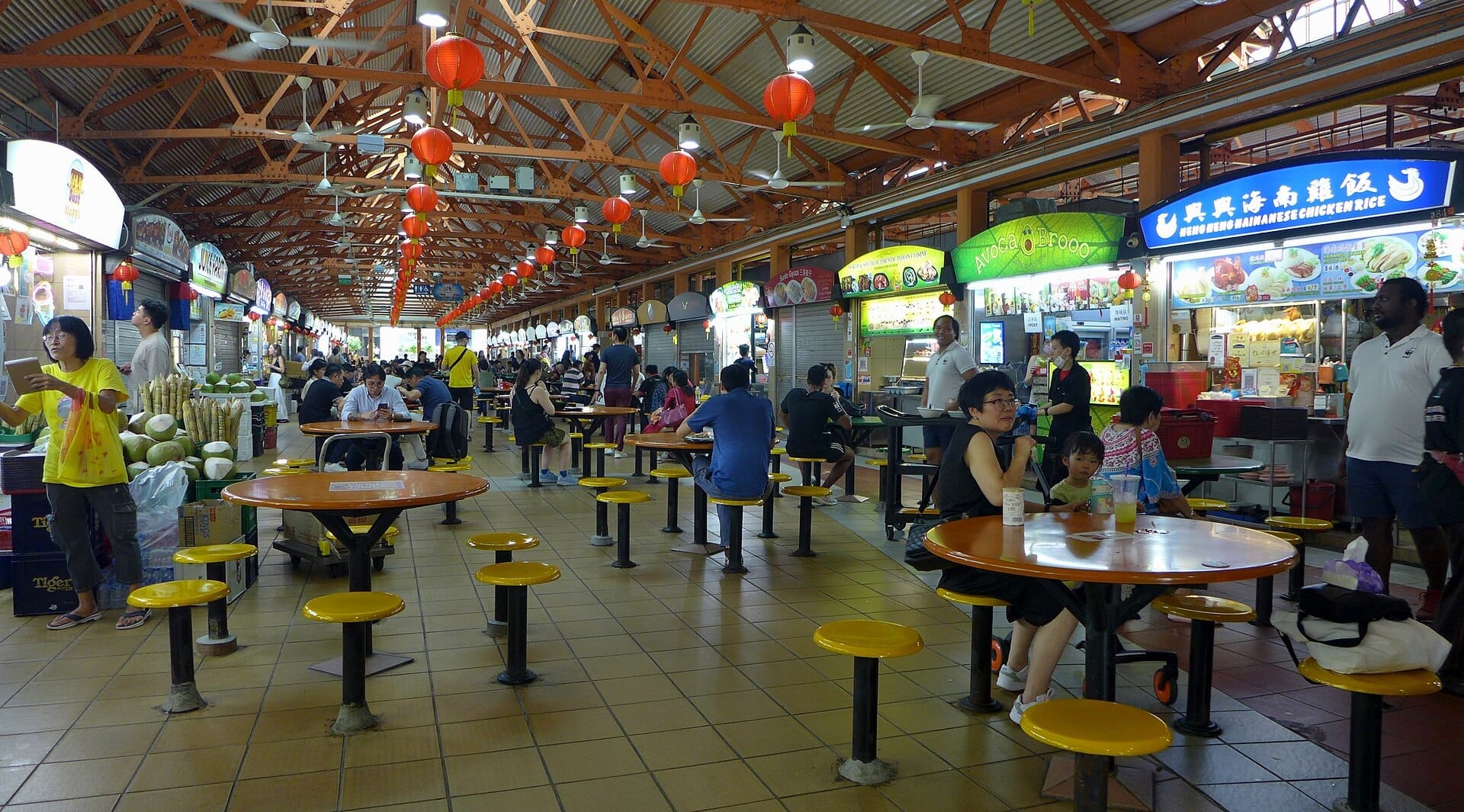
The Chinatown Complex Food Centre on Smith Street is the largest wet market and hawker centre in Singapore by number of stalls, and it is genuinely one of the best places in the city to eat. The upper floors hold over 200 hawker stalls serving Cantonese roast meats, claypot rice, char kway teow, wonton noodles, rojak, laksa, and an enormous range of other dishes for S$3 to S$8 a plate. It is loud, efficient, and almost entirely local in its clientele outside of peak tourist hours.
For a more curated experience, Maxwell Food CentreMaxwell Food Centre on Maxwell Road, just east of the Chinatown precinct boundary, is cleaner and slightly more visitor-friendly while still delivering serious food. It is the location of the Michelin-starred Tian Tian Hainanese Chicken Rice stall, which typically has a queue from late morning onwards. Hawker Chan, the world's cheapest Michelin-starred restaurant, originated in Chinatown Complex and now operates from a dedicated restaurant nearby on Smith Street.
Club Street and Ann Siang Road represent the other end of the eating spectrum: mid-range to high-end restaurants in conserved shophouses, with cuisine ranging from modern European to Japanese to contemporary Singaporean. The ground floors of these shophouses frequently have outdoor tables spilling onto the five-foot-way, and the streets are set at a slight angle to the prevailing wind, which makes alfresco dining more comfortable here than in more exposed parts of the CBD. Prices here are firmly restaurant-tier, generally S$40-100 per head with drinks.
Duxton Hill is the primary bar street, with a concentration of wine bars, cocktail bars, and gastropubs along a single elevated block. It draws a significant after-work crowd from the surrounding financial district on weeknights, and weekend evenings see it running at capacity from about 8pm onward. The street is compact enough that it never quite tips into the louder register of Clarke Quay, and the clientele skews toward professionals rather than backpackers. If you are looking for something quieter, the cafes and small bars along Keong Saik Road, just west of Duxton, tend to be less crowded.
💡 Local tip
The Chinatown Complex Food Centre is at its best for lunch on weekdays, when the full range of stalls is open and the crowds are manageable. Weekend afternoons see long queues at the most popular stalls. Go before noon or after 1:30pm to avoid the worst of it.
Getting There and Around
Chinatown MRT station (NE4/DT19) on the North East and Downtown Lines sits directly beneath the intersection of New Bridge Road and Eu Tong Sen Street, at the northern edge of the tourist core. Exit A delivers you to the Pagoda Street market within about a minute on foot. This is the most convenient entry point for first-time visitors. Outram Park station (EW16/NE3/TE17) serves the western and southern edges of the district and is a major interchange connecting the East West, North East, and Thomson-East Coast Lines, making it useful for journeys from Orchard Road, Harbourfront, or the eastern suburbs.
Maxwell station (TE18) on the Thomson-East Coast Line opened in 2022 and provides the most direct rail access to the Maxwell Food Centre and the southern portion of the district including the Buddha Tooth Relic Temple. From the CBD or Marina Bay, Tanjong Pagar station (EW15) on the East West Line drops you on the southern boundary and is a ten-minute walk to the heart of the precinct along Tanjong Pagar Road.
Chinatown is walkable from several adjacent areas without needing the MRT. From Marina Bay, it is roughly 25 minutes on foot heading southwest along the waterfront and up through Telok Ayer. From Clarke Quay, walking south along South Bridge Road takes about 12 minutes. The district is compact enough that walking between its own precincts, from the Pagoda Street market to Duxton Hill, takes under fifteen minutes at an easy pace.
Within the district itself, the terrain is mostly flat with the exception of Ann Siang Hill and the slight rise toward Bukit Pasoh in the west. Taxis and ride-hailing services (Grab is the primary platform in Singapore) are easy to pick up on South Bridge Road and New Bridge Road. Bicycle parking is available but the area's narrow five-foot-ways are not well suited to cycling during busy hours.
⚠️ What to skip
Parking in Chinatown is limited and expensive during daytime hours, and the streets around Pagoda Street are frequently crowded with tour buses. If you are coming from elsewhere in Singapore, the MRT is almost always faster and less stressful than driving.
Where to Stay
Chinatown is one of Singapore's better neighbourhoods for accommodation across multiple price points, partly because the density of conserved shophouses has created a natural fit for boutique hotels. The Tanjong Pagar and Duxton Hill end of the district tends to have quieter streets at night and is convenient for the East West Line at Tanjong Pagar station. Hotels here suit business travellers and visitors who prefer a calmer base. The Kreta Ayer and Pagoda Street end is livelier in the evenings but within easier walking distance of the hawker centres and temple precinct.
For travellers choosing between Chinatown and nearby options, the area competes directly with Kampong Glam for historic atmosphere at lower accommodation prices than the Marina Bay or Orchard Road hotel corridors. The trade-off is that Chinatown's tourist core can be noisy on weekend evenings and during major festivals. Rooms on Smith Street or Pagoda Street facing the street are likely to be louder than those on quieter side streets. For a broader overview of accommodation options across the city, the where to stay in Singapore guide covers the full range of neighbourhoods.
Practical Notes and Honest Assessment
Chinatown is safe by any standard, including late at night. The main practical friction points are congestion and commercialisation: the Pagoda and Trengganu Street souvenir strip is unavoidably touristy, and during Chinese New Year the entire area becomes extremely crowded, with street access sometimes restricted for crowd management. If you are visiting Singapore during the Lunar New Year period specifically for the decorations and atmosphere, Chinatown is the right place to be. If you are visiting at any other time and are sensitive to crowds, the more interesting parts of the district are Telok Ayer Street, Club Street, and Duxton Hill rather than the central souvenir core.
The area connects naturally to broader Singapore itineraries. The Lau Pa Sat hawker centre is a short walk east into the CBD. The Southern Ridges walking trail, which connects Mount Faber to Labrador Nature Reserve, begins within a few kilometres to the southwest. For travellers building a first-time itinerary, Chinatown makes an efficient half-day in combination with Marina Bay or a full day on its own if you include the Heritage Centre and take meals seriously. Check the Singapore hawker centres guide and the Singapore food guide before your visit to get the most out of the eating.
ℹ️ Good to know
Chinatown's 1,200 conservation buildings were gazetted in 1989 under the Urban Redevelopment Authority's conservation programme, one of the largest such exercises in Singapore. The result is that while the area has been heavily commercialised at street level, the architectural fabric, including the characteristic two-storey shophouses with their ground-floor arcaded walkways, remains largely intact.
TL;DR
Chinatown is Singapore's most architecturally coherent historic district, with five distinct precincts covering different characters: from the tourist-facing souvenir market around Pagoda Street to the quieter bar and restaurant strip on Duxton Hill.
The food is a genuine reason to visit: Chinatown Complex Food Centre and Maxwell Food Centre together represent some of the best and most affordable hawker eating in the city.
Three MRT stations serve the area, making it extremely easy to reach from anywhere on the network, and the district is flat and walkable once you arrive.
The tourist core around Pagoda and Trengganu Streets is commercial and can feel crowded; the more rewarding areas for independent exploration are Telok Ayer Street, Ann Siang Hill, and Duxton Hill.
Best suited to: first-time visitors to Singapore, food travellers, history and architecture enthusiasts, and anyone wanting a central base at a lower price point than Marina Bay or Orchard Road.
Singapore sits just one degree north of the equator, which means warm, humid weather all year round. But that doesn't mean every month is equal. This guide breaks down the best time to visit Singapore by weather, crowds, festivals, and budget so you can plan a trip that actually works.
Singapore has one of the most efficient public transport systems in the world. This guide covers everything from MRT fares and bus routes to taxis, ride-hailing apps, and how to get from Changi Airport to the city centre without overpaying.
Singapore is compact, well-connected, and surrounded by islands, jungle, and a whole other country just across the Causeway. Whether you want to cycle through mangroves, shop across the border, or laze on a beach, these are the day trips that actually deliver. Here is what to expect, how to get there, and what to skip.
Singapore packs more culinary diversity per square kilometre than almost any city on earth. This guide breaks down the essential dishes, the best hawker centres, neighbourhood food streets, and honest advice on where to spend your appetite and your Singapore dollars.
Singapore's hawker centres are where the city's food culture lives. With over 110 centres and 6,000 stalls serving Chinese, Malay, Indian, and fusion dishes for under $10 SGD, this guide covers everything from the best centres to visit, to unwritten rules locals actually follow.
Whether you have a long weekend or a full week, Singapore rewards every length of stay. This itinerary guide builds day by day, from the essential Marina Bay icons and multicultural neighborhoods to wildlife parks, island escapes, and local food pilgrimages.
Singapore is one of Asia's premier shopping destinations, with low import tariffs, world-class malls, and lively street markets all within a compact city. This guide cuts through the noise to tell you exactly where to shop, what to expect, and how to get the best value.
Singapore is one of the easiest cities in the world to travel with children. World-class wildlife parks, interactive museums, beach days, and theme park thrills are all packed into a compact, safe, and well-connected island. This guide covers the best family attractions in Singapore, organized by experience type so you can plan a trip that keeps kids genuinely excited from morning to night.
Singapore packs an extraordinary range of experiences into just 733 square kilometres. This guide covers the top things to do in Singapore, from world-class attractions and neighbourhood food trails to nature reserves and cultural landmarks, with honest assessments of what's worth your time and money.
Choosing where to stay in Singapore shapes your entire trip. This guide breaks down every major area by character, price range, and practical pros and cons, so you can book with confidence regardless of your budget or travel style.